translate English
 پارسی
English
Englishپارسی
English
Englishپارسی EnglishپارسیEnglishپارسی
The August 2026 oil-market outlook reveals severe short-term supply tightness, falling inventories and weakening global demand. This full analysis compares the IEA’s August report with July and examines OPEC and EIA forecasts, the Strait of Hormuz, refinery shortages, Brent prices and the effects on global financial markets. This article is an independent market analysis based on publicly available information from the IEA, OPEC, EIA and other official sources. It does not reproduce the IEA’s subscriber-only Oil Market Report and should not be considered personalised investment advice.
The EIA’s August 2026 energy outlook raises its oil and petroleum-product forecasts because of Hormuz disruptions and falling inventories, while lowering Henry Hub projections as record U.S. natural-gas production and LNG maintenance increase domestic storage. The EIA Short-Term Energy Outlook for August 2026 presents a sharply divided energy-market picture. The U.S. Energy Information Administration has raised its crude-oil and petroleum-product forecasts because of renewed disruptions around the Strait of Hormuz, falling global inventories and constrained refinery activity. At the same time, it has lowered its U.S. natural-gas price forecasts as record production, LNG-terminal maintenance and high storage levels weigh on Henry Hub prices.
The Federal Reserve kept its policy rate at 3.50%–3.75% in July 2026, but a 9–3 vote and three calls for a rate increase gave the decision a hawkish edge. Chairman Kevin Warsh stressed that the Fed’s inflation target remains firmly at 2% while examining higher bond yields, strong AI investment, and the role of its balance sheet.
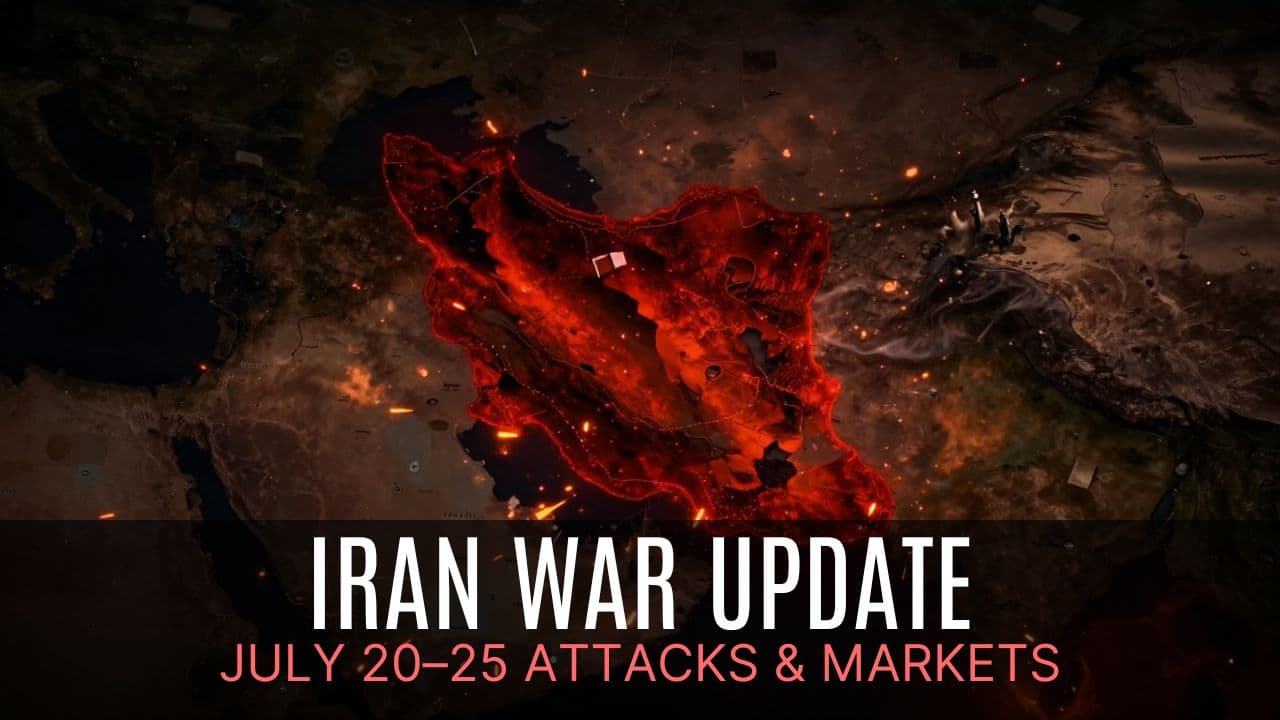
The Iran war expanded into the Red Sea this week as the United States continued strikes inside Iran, Tehran attacked U.S. positions across the Gulf, and the Houthis targeted Saudi oil infrastructure. Although direct U.S.-Iran attacks paused overnight into July 25, no ceasefire has been announced. The United States conducted repeated strikes across Iran, Tehran continued missile and drone attacks against U.S. military positions in neighbouring countries, and the Iran-aligned Houthis opened a second maritime front against Saudi Arabia.
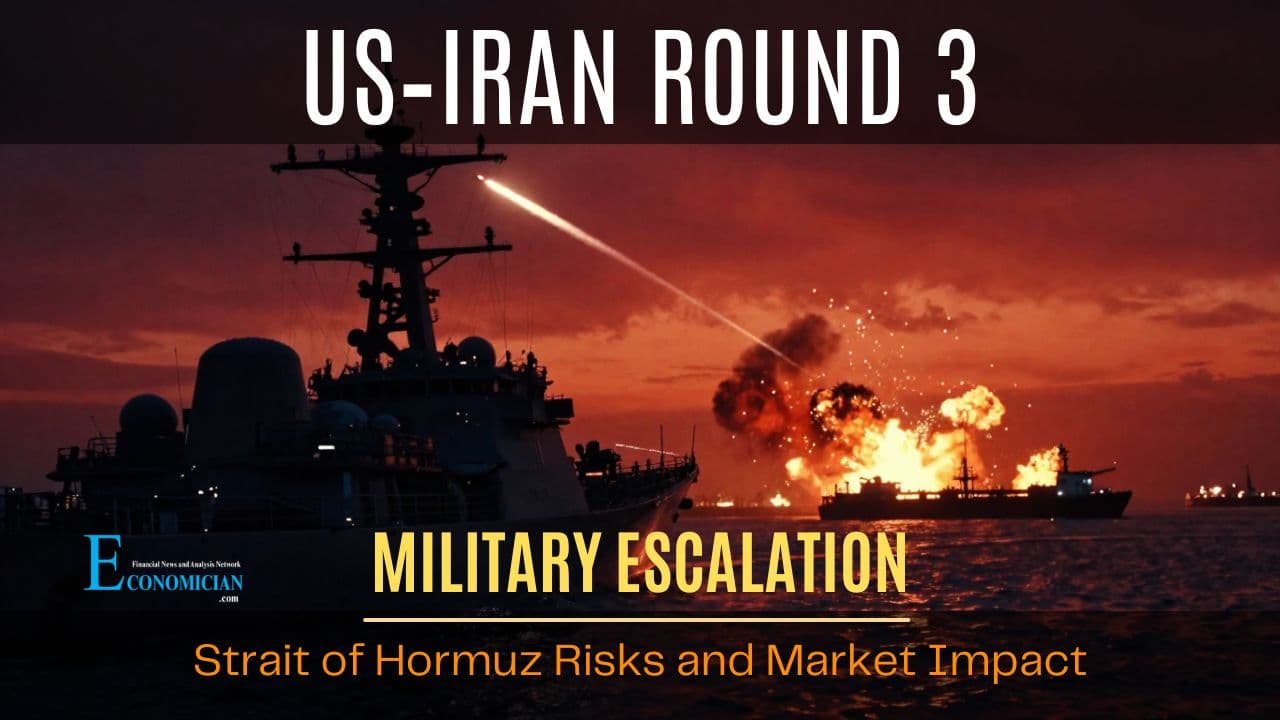
The third operational round of US–Iran hostilities intensified between July 13 and July 19, 2026, following the collapse of the June truce. The confrontation developed into a sustained air-maritime campaign involving nightly US strikes, a renewed naval blockade of Iranian ports and increasingly dispersed Iranian retaliation against regional military positions, commercial shipping and civilian-adjacent infrastructure. The United States concentrated its operations on Iran’s southern coastline and islands near the Strait of Hormuz. Iran, meanwhile, attempted to increase the regional and economic cost of the campaign by targeting US personnel, Gulf states, tankers and infrastructure supporting energy production and maritime trade.
The OPEC Monthly Oil Market Report for July 2026 shows a global oil market moving from geopolitical disruption toward supply normalization. This comprehensive analysis examines oil prices, global demand, production, refinery operations, tanker markets, trade flows, and commercial inventories, while comparing the report’s key forecasts with the June 2026 edition.

The Federal Reserve’s July 2026 Beige Book showed that economic activity expanded in 11 of 12 Districts, employment growth became more widespread, and inflation pressures moderated. However, consumers remained highly price-sensitive, agricultural conditions deteriorated, and growth increasingly depended on AI infrastructure, data centers, defense, and other capital-intensive industries.
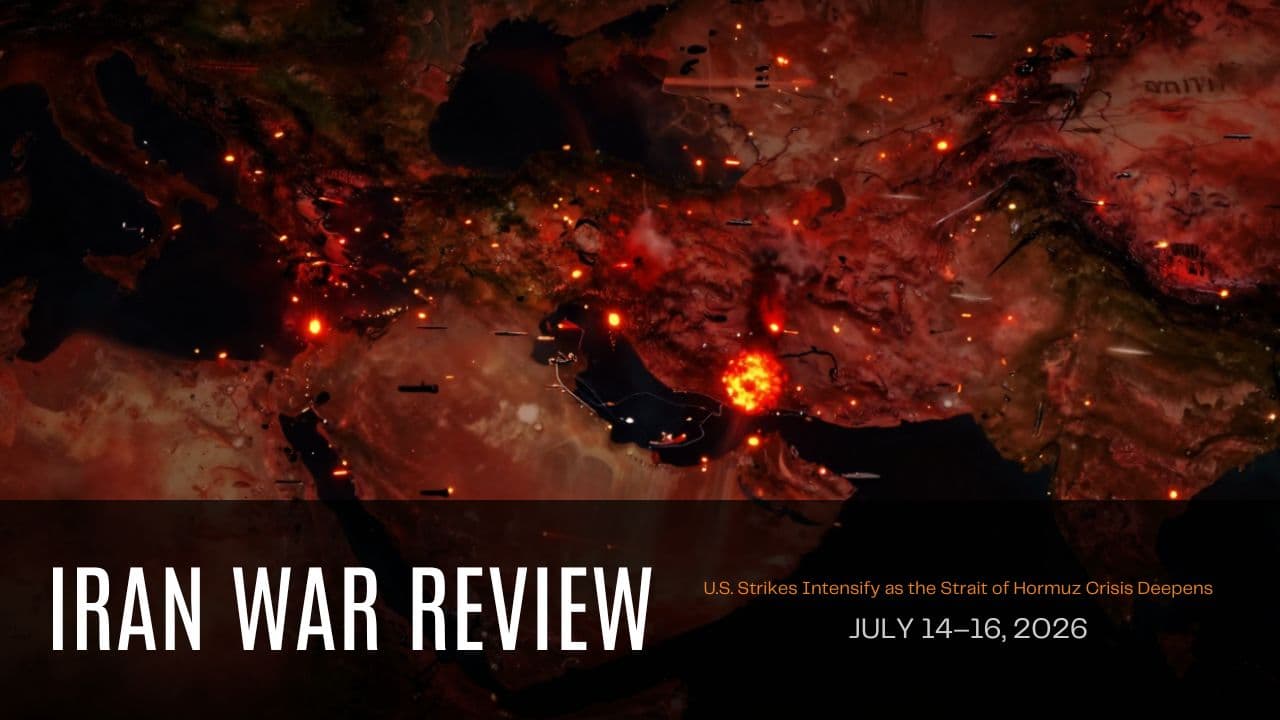
The Iran war escalated sharply during July 14–16, 2026, as the United States launched new attacks against Iranian coastal-defence, missile, drone and maritime capabilities while reactivating its naval blockade. Iran responded with regional missile and drone operations, and the Strait of Hormuz remained highly dangerous for commercial shipping. This report reviews the past 48 hours and explains the military, diplomatic, economic and geopolitical situation now.
The IEA’s July 2026 Oil Market Report shows that global crude oil supply is recovering as tanker traffic through the Strait of Hormuz improves. However, oil production remains well below pre-war levels, refined-product markets are tight, and renewed Persian Gulf hostilities threaten the expected transition toward an oil-market surplus.

The June 16–17, 2026 FOMC minutes marked Kevin Warsh’s first meeting as Federal Reserve Chair and delivered a clear communication reset. The Fed kept rates unchanged at 3.50%–3.75%, but removed the previous easing bias, emphasized price stability, and signaled that persistent inflation could still require policy firming. Compared with April, the Fed is now less worried about labor-market deterioration and more worried about inflation persistence. AI investment has become a central macro variable, supporting growth and productivity expectations while also increasing near-term demand and price pressure.
The EIA’s July 2026 Short-Term Energy Outlook marks a major turning point for global energy markets. After the U.S.–Iran memorandum to reopen the Strait of Hormuz, the agency sharply lowered its Brent crude and gasoline price forecasts, while still projecting record U.S. natural gas demand in the power sector. The report is broadly bearish for crude oil, positive for consumers, neutral to slightly bullish for natural gas demand, and negative for coal. The biggest change from the previous report is the removal of a major geopolitical supply-risk assumption. With the Strait of Hormuz reopening, the EIA no longer sees a sustained oil shortage. Instead, it expects production recovery, lower inventory draws, and a return to oversupply.
The Iran conflict entered a more dangerous phase over the past 72 hours as renewed U.S.-Iran strikes, tanker disruption near the Strait of Hormuz, and fresh regional security risks pushed oil higher at the start of the week. Markets reacted cautiously, but not in full panic mode. Markets opened the week with a cautious but not panic-driven reaction. Oil prices moved higher, Gulf stock markets were mixed, U.S. equity futures remained surprisingly firm, and Bitcoin continued to trade under pressure near the $60,000 level.