translate English
 پارسی
English
Englishپارسی
English
Englishپارسی EnglishپارسیEnglishپارسی
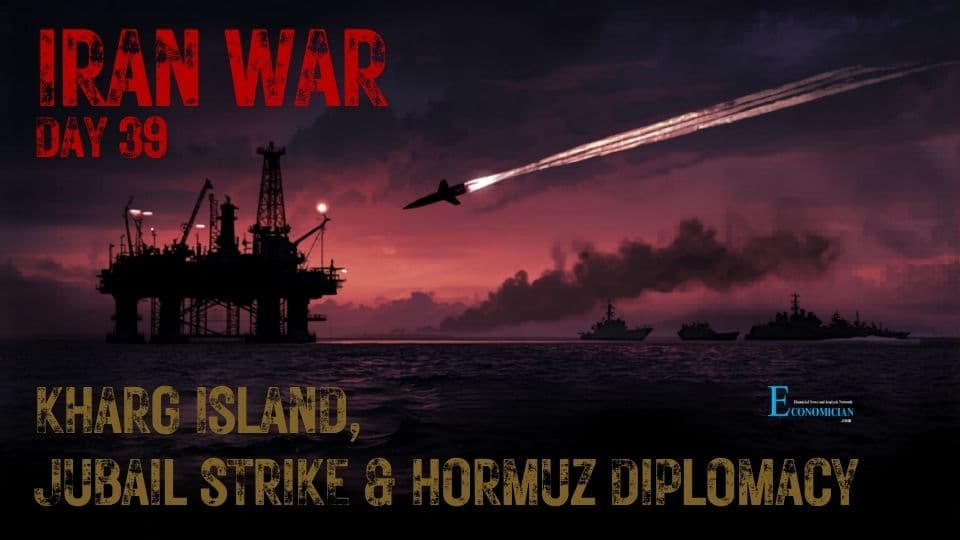
As Day 39 unfolds, the conflict is being shaped by three simultaneous pressures: U.S. strikes on sensitive Iranian military targets, Iranian retaliation against regional energy infrastructure, and a last-minute diplomatic push centered on the Strait of Hormuz in the Persian Gulf. In the past 24 hours, the United States struck military targets on Kharg Island, Iran hit Saudi Arabia’s Jubail petrochemical complex, and mediators tried to keep a collapsing negotiation track alive.
Day 38 looks like a dangerous hinge point. Militarily, Israel and the U.S. are signaling broader infrastructure targeting and higher sortie volume; Iran is proving it can still hit Israel, Gulf-linked energy nodes, and regional fronts. Diplomatically, there is still a channel, but Tehran wants a lasting settlement, while Washington is using a hard deadline and maximal pressure. That means the next 24 hours are likely to revolve around one question: does Hormuz move toward reopening, or does the war enter a sharper infrastructure phase?
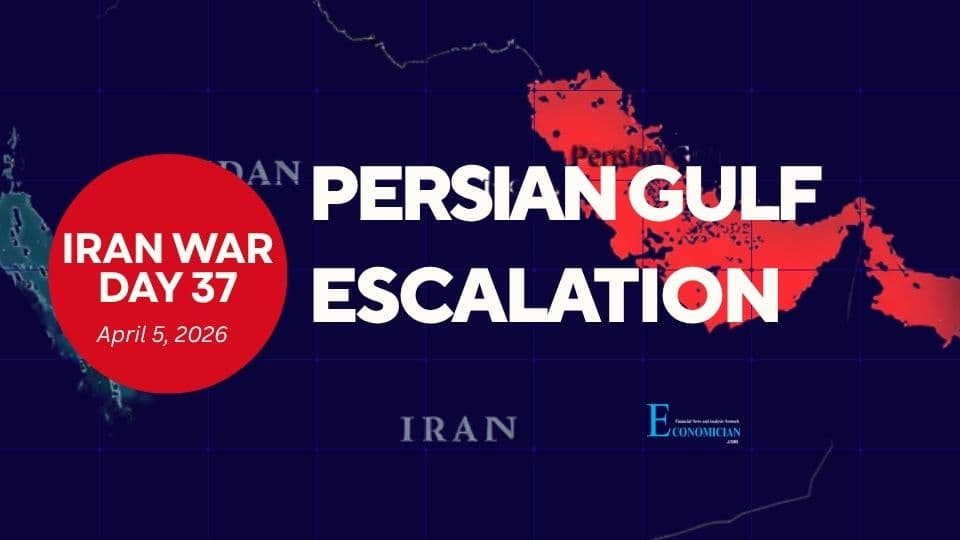
The short is that the war widened again. The biggest shift in this 24-hour window was Iran extending attacks beyond Israel and inside-Iran battlefields into the Persian Gulf energy space, while Washington sharply escalated pressure on Tehran over the Strait of Hormuz, threatening direct attacks on Iranian infrastructure if shipping is not restored by Tuesday, April 7 at 8:00 p.m. U.S. Eastern Time.
The clearest picture is that the war is still escalating, not stabilizing. Over these three days, the conflict widened across Iran, Israel, Lebanon, Kuwait, the UAE, the Strait of Hormuz, and possibly Iraq, while diplomacy remained active but weak. The biggest shift was the downing of two U.S. warplanes on April 3, followed by a missing American crew member inside Iran, fresh Iranian missile and drone strikes across the region, renewed Israeli/U.S. strikes on infrastructure inside Iran, and a hardening fight over the Strait of Hormuz.
The Iran-Israel war remained active and region-wide on day 33, with Israeli strike waves hitting Tehran and military infrastructure inside Iran, while Iran continued missile launches toward Israel and pressure on Gulf-linked targets. Lebanon, Yemen, Kuwait, Qatar, and Bahrain all featured in the wider conflict picture, while diplomatic efforts from the United States, Turkey, Egypt, Pakistan, France, and Japan showed that the political track is becoming more active even as the military escalation continues.
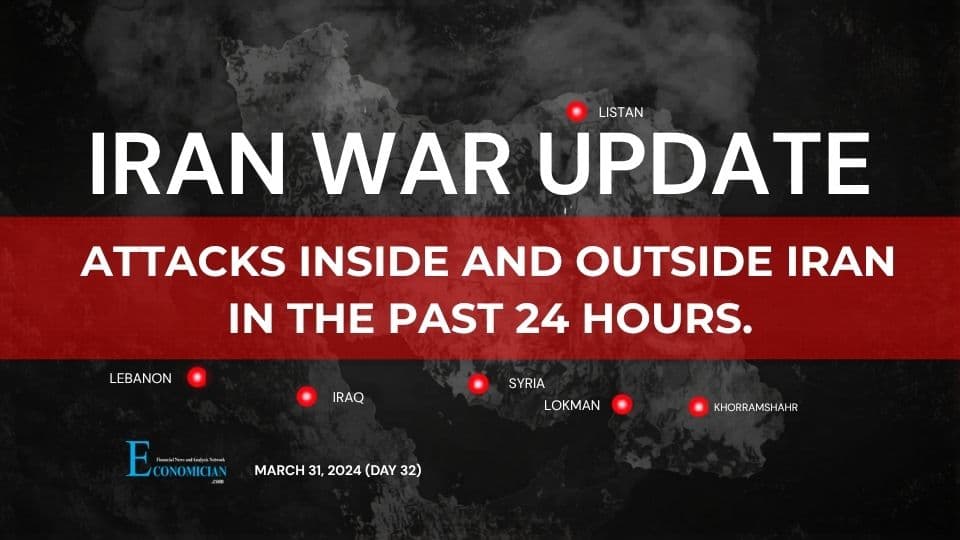
Over the past 24 hours of this conflict, around March 30–31, 2026, U.S.- and Israeli-led strikes continued to hit multiple Iranian cities, including Tehran, Karaj, Shiraz, Qom, Abadan, and Tabriz. These attacks struck military and dual-use infrastructure, including power grids, research facilities, and industrial sites, triggering blackouts in parts of Tehran and Karaj. Iran retaliated with missile and drone strikes on Israeli territory, including an attack on Haifa’s oil refinery, and on Persian Gulf Arab states, including Kuwait, the UAE, and Saudi Arabia. Officials confirmed that Iranian naval commander Admiral Alireza Tangsiri was killed in an Israeli airstrike early Monday.
Day 31 of the Iran war saw continued strikes inside Iran, attacks across the region, warnings from Washington and Tehran, rising pressure on Persian Gulf infrastructure, and growing international concern over the risk of wider escalation. Over the past 24 hours, the war continued to spread across the region. Israel launched around 140 airstrikes on central and western Iran. Iran and its allies continued missile and drone attacks outside Iran, U.S. reinforcements arrived in the region, NATO intercepted another Iranian missile over Turkey, and international bodies again called for restraint and ceasefire efforts.
This Iran War Day 30 update covers the most important developments from the past 48 hours, including strikes inside and outside Iran, proxy-linked attacks, official Iranian reactions, regional diplomacy, CPAC developments, Prince Reza Pahlavi’s speech, and Iranian diaspora rallies across the world.
Over the past 24 hours, the Iran war has entered a more dangerous and highly sensitive phase marked by intensified military strikes, sharper diplomatic pressure, and rising regional instability. From Israeli attacks on Iran’s nuclear and missile-related infrastructure in Arak, Yazd, and Tehran to Iran’s missile response toward southern Israel, the conflict has moved well beyond a limited confrontation and is now carrying broader geopolitical, security, humanitarian, and economic consequences. At the same time, embassy closures or staff reductions, international warnings, airspace and shipping disruptions, and renewed pressure around the Strait of Hormuz all show that the crisis is no longer confined to the battlefield alone.
The past 24 hours in the Iran war produced a mix of hard battlefield developments, maritime coercion, diplomatic signaling, and information-war noise. The clearest military development was the reported killing of IRGC Navy commander Alireza Tangsiri in Bandar Abbas, a strike announced by Israel and later confirmed by the United States through U.S. Central Command, turning southern Iran and the Strait of Hormuz into the central operational story of this phase of the war.
The past 24 hours showed that the Iran war remains in a dangerous intermediate phase: not yet a full regional collapse, but clearly no longer a contained bilateral exchange either. Tehran remained under pressure, Israel remained under active missile threat, Kuwait became the clearest example of regional spillover during the day, and diplomacy advanced only in the form of message-passing rather than breakthrough. The most important conclusion is that both sides appear to be testing whether they can maintain military pressure while still leaving a narrow channel open for negotiations. That combination is inherently unstable.

A full and detailed review of the ECB’s March 2026 statement and rate decision, including the choice to leave all key interest rates unchanged, the latest inflation and growth projections, Christine Lagarde’s policy message, and the Governing Council’s assessment of rising uncertainty. The article also examines how the war-driven energy shock is reshaping the euro area outlook and what the March meeting signals for the next phase of ECB policy.