 English
 پارسی


Military developments inside Iran
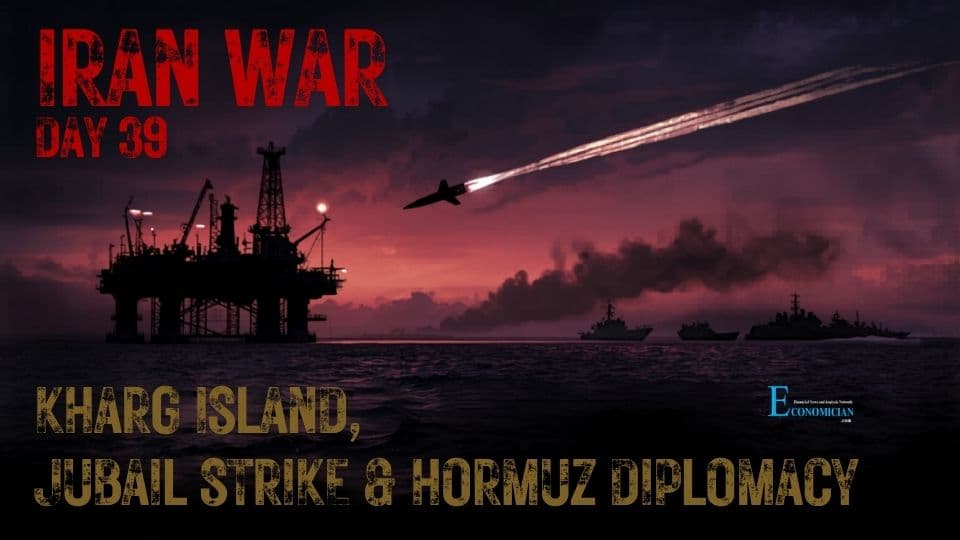
The most important development inside Iran in the last 24 hours was the U.S. strike on military targets on Kharg Island. Reuters reported that the attack was calibrated to avoid oil infrastructure for now, and U.S. Vice President JD Vance said the move did not represent a broader change in strategy. Even so, Kharg remains one of Iran’s most sensitive strategic nodes, making the strike highly significant.
At the same time, Israel signaled continued pressure on Iranian transport infrastructure. The Israeli military issued a Persian-language warning telling people in Iran not to use trains or go near railway lines until 21:00 local time, a message that strongly suggested further risk around rail-linked targets.
Iran also said its Asaluyeh petrochemical plants had been hit by overnight explosions. Tehran cited those blasts as the immediate reason for its later retaliation against Saudi Arabia’s Jubail complex, linking the Iranian and Saudi energy-site attacks into the same escalation cycle.
Another major strategic concern remains the Bushehr nuclear power plant. This was not a new strike in the last 24 hours, but Iran’s atomic energy chief said the site had been targeted four times overall, with the latest nearby strike on April 4 killing a security staff member and injuring others. The IAEA separately confirmed recent strike impacts near the plant’s perimeter.
Attacks outside Iran and regional spillover
Outside Iran, the clearest state-level escalation in the last 24 hours was Iran’s attack on Saudi Arabia’s Jubail petrochemical complex. Reuters reported that the IRGC said it used medium-range missiles and suicide drones, while Saudi defenses reportedly intercepted seven ballistic missiles headed toward the eastern region. The strike expanded the war’s energy dimension beyond Iran’s borders and directly threatened one of the Gulf’s most important industrial hubs.
The regional security atmosphere worsened further as companies in Saudi Arabia extended work-from-home guidance because of fears of additional Iranian retaliation. Reuters reported that Western and Saudi firms in Riyadh kept precautionary measures in place as the ultimatum on Iran approached.
In Turkey, a gunfight outside the building housing the Israeli consulate in Istanbul left one attacker dead and two others wounded. Israeli diplomats were not present, but the incident added to the sense that the war is feeding wider regional instability and copycat security threats.
Targeted assassinations
On targeted assassinations, the latest clearly confirmed high-level case in major wire reporting remains Majid Khademi, the head of the IRGC intelligence organization, whose death was announced by Iranian state media on April 6.
Official comments, diplomacy, and geopolitical pressure
Tehran’s political line hardened rather than softened. A senior Iranian official told Reuters that Iran would not accept a temporary ceasefire and instead wanted a full halt to strikes, guarantees against renewed attacks, and compensation for damage before any lasting peace arrangement. Iran also wants any permanent agreement to include the right to impose fees on ships passing through the Strait of Hormuz.
At the same time, Pakistan remained the key intermediary, but the diplomatic track looked more fragile after the Saudi strike. Reuters reported that Prime Minister Shehbaz Sharif sought a two-week extension to Donald Trump’s deadline, while Pakistani sources warned that the Jubail attack could derail the U.S.-Iran channel.
The sharpest rhetoric came from Donald Trump, who warned that “a whole civilization will die tonight” if Iran did not comply with his deadline on the Strait. That language drew condemnation from Pope Leo XIV, while France also publicly warned against further escalation. Reuters additionally reported wider criticism from international figures as concern mounted over threats to civilian infrastructure.
At the United Nations, a Security Council resolution aimed at protecting commercial shipping through the Strait of Hormuz was vetoed by China and Russia. That outcome weakened the multilateral track and left diplomacy with fewer formal tools at a moment of peak escalation.
France also emerged in the diplomatic picture after two long-detained French nationals were allowed to leave Iran, with Oman credited for mediation. The release underscored that back-channel diplomacy is still functioning in selective cases even as the broader military confrontation deepens.
Diaspora activity
On diaspora activity, the most important development in current major international reporting is not a newly reported mass rally but intensified pressure on exiled critics through their families inside Iran. The Associated Press reported that relatives of outspoken Iranians abroad have been detained and that property seizures are being used as a tool of intimidation as the war continues.
That means the diaspora dimension on Day 39 is centered less on visible mobilization and more on the regime’s effort to deter overseas activism at the very moment the war is becoming more internationalized and more dangerous.
Internet shutdown:
Iran’s internet is still largely shut off. Current reporting says the blackout has stretched beyond 38 days, making it the country’s longest national shutdown in this war period, with access to outside news and communications still heavily restricted. The squeeze is so severe that some Iranians have been traveling to Turkey just to get a usable connection.
Prince Reza Pahlavi’s latest call:
In a new statement published on April 7, Reza Pahlavi directly appealed to Iran’s armed forces to “remember your national and patriotic oath,” “take to the field,” and “stand alongside the nation,” while also urging the public to demand that the army fulfill its national duty. In practical terms, this is his latest call for the military to break with the ruling system and align with the people.
Inside the Strike Zone: Civilian and Open-Source Reports from Vahid Online and Ilia
The latest public reports on explosions, targeted sites, and infrastructure damage across Iran, as reflected in recent posts from Vahid Online and Ilia Hashemi.
- In the past 24 hours, reports gathered from the Vahid Online and ILIA Hashemi Telegram channels pointed to a broad wave of attacks across Iran, with transport infrastructure, military-linked sites, and selected urban locations appearing repeatedly in the flow of updates.
- One of the most significant reported strikes concerned Kharg Island, where Vahid Online, citing the Wall Street Journal, said U.S. forces targeted military positions and destroyed more than 50 military targets on the island, while oil export infrastructure was reportedly left untouched.
- In Tehran, Vahid Online also reported that the Rafiʿ-Nia Synagogue was hit in the early hours of Tuesday and completely destroyed, making it one of the most symbolically sensitive sites mentioned in the channel updates.
- A large share of the reported attacks focused on rail and bridge infrastructure. According to Vahid Online, strikes hit railway-related targets in Zanjan, Karaj, Kashan, Tabriz, and Shahre-Rey, while additional damage or disruptions were reported on parts of the Tabriz-Tehran route and other communication lines.
- The reported transport targets included the Amin-Abad railway bridge on the Zanjan-Mianeh line, the Yahya-Abad railway bridge near Kashan, the Heshtrud-Tabriz railway bridge, the rail intersection in Karaj, and a train bridge in Shahre-Rey south of Tehran.
- Vahid Online further reported that infrastructure in multiple provinces was affected, including closures near the Tabriz-Tehran highway, damage to road bridges in western Qom, and a strike on a site in Ahvaz.
- In southwestern Iran, the same channel said the Arvandan Shipbuilding Company in Khorramshahr was attacked again, while border posts on Minu Island were reportedly hit by rocket fire at around 14:50 local time.
- ILIA Hashemi’s channel overlapped with several of these reports and added more immediate field-style observations. It identified the Amin-Abad railway bridge near Zanjan and said the Karaj railway line was struck, while also reporting that a bridge on the Tabriz-Zanjan route was bombed.
- Around Tehran, ILIA Hashemi reported that several points near the end of the Mehrabad Airport runway were bombed, that an area near the Aerospace Research Institute in Shahrek-e Gharb was hit by a missile, and that an explosion was heard in eastern Tehran near Sepah Square.
- The same channel also noted a column of smoke behind Mellat Cinema on Niayesh Highway, a fire in western Tehran, and a blackout affecting the exterior lighting of Milad Tower, although in some of these cases the exact target or cause was not fully specified.
- Beyond Tehran, ILIA Hashemi reported that residents in Bushehr and Bandar Ganaveh heard explosions coming from the direction of Kharg Island, reinforcing the separate reporting about attacks there.
- Several posts from ILIA Hashemi functioned more as warnings than as confirmed strike reports. These included alerts telling people to stay away from rail lines, metro systems, bridges, tunnels, ports, power plants, petrochemical sites, steel facilities, military locations, police positions, and government buildings.
Conclusion
Taken together, the two channels suggest that the past 24 hours were marked by a coordinated pattern of attacks aimed largely at transport links, logistical corridors, military-linked facilities, and selected strategic sites, while Tehran and other urban centers remained under visible pressure from explosions, jet activity, air-defense responses, and infrastructure disruption.
Day 39 did not bring de-escalation. It produced a clearer infrastructure-war pattern: U.S. pressure on Iranian strategic sites, Israeli pressure on transport links, and Iranian retaliation against Saudi energy infrastructure. Diplomacy is still alive through intermediaries, but it is visibly weaker than it was a day earlier, and the risk of further escalation around the Strait of Hormuz in the Persian Gulf remains extremely high.
FAQ
What was the most important military development inside Iran in the last 24 hours?
The most important development was the U.S. strike on military targets on Kharg Island, a highly sensitive strategic location for Iran.
What was the main attack outside Iran?
Iran’s attack on Saudi Arabia’s Jubail petrochemical complex was the most important regional escalation outside Iran in the latest 24-hour window.
Was there a newly confirmed targeted assassination in the last 24 hours?
The latest clearly confirmed high-level case in major wire reporting remains the announced death of Majid Khademi on April 6; I did not find a comparably well-confirmed new assassination in the latest 24-hour period.
What is Iran demanding before lasting peace talks?
Iran is demanding an immediate halt to strikes, guarantees against renewed attacks, compensation for damage, and the right to impose fees on ships transiting the Strait of Hormuz.
What is the main diaspora-related development on Day 39?
The main reported development is a crackdown on exiled critics through detentions of relatives and asset pressure inside Iran.
Comments