translate English
 پارسی
English
Englishپارسی
English
Englishپارسی EnglishپارسیEnglishپارسی
A full and detailed review of the Bank of England’s March 2026 statement and policy decision, covering the MPC’s unanimous vote to keep Bank Rate at 3.75%, the Bank’s updated view on inflation, growth, labour market conditions, and how the Middle East energy shock has complicated the UK policy outlook. The article also explains what the March minutes suggest about the BoE’s next move and why the Bank is now taking a more cautious, data-dependent approach.
The Iran war remained fully active over the past 24 hours, with no verified ceasefire and no clear sign of immediate de-escalation. Instead, the period was defined by continued missile exchanges, a widening regional risk map, new diplomatic messaging, and mounting attention on the Persian Gulf and the Strait of Hormuz. At the same time, social media and Telegram channels circulated a large number of strike claims from inside Iran, although many of those reports remain unverified and should be treated with caution.
The past 24–30 hours did not produce a ceasefire, a breakthrough, or a clear military pause. Instead, they produced a more dangerous mix: continued operational pressure, a live threat to regional infrastructure, a still-choked Hormuz corridor, and public disagreement over whether diplomacy is real or performative. That is why the war remains highly unstable even as multiple actors talk about de-escalation.

Powell’s March 2026 press conference was not about a policy change. It was about a more complicated risk environment. The Fed held rates steady, but Powell made clear that inflation is still above target, tariff effects are still working through the economy, labor-market softness cannot be ignored, and a new oil shock has made the outlook harder to map. The Committee still sees a possible path to lower rates, but only if inflation improves. Until then, the message is clear: the Fed is waiting, watching, and keeping every option alive.
The March 2026 dot plot and SEP do not describe a recession scenario or a fast disinflation scenario. They describe an economy that still grows above longer-run trend, a labor market that softens only gradually, inflation that stays too high for longer, and a policy rate that remains restrictive well into the forecast horizon. For markets, that means the Fed’s updated projections lean more toward patience than pivot. This is an interpretation of the SEP, not quoted language from the Fed.
A full update on the Iran war on day 22, as week 4 begins on the first day of Nowruz, covering the latest US-Israel strikes, Tehran’s response, targets hit inside and outside Iran, developments around Natanz and the Strait of Hormuz, regional military escalation, international reactions, and the latest reported numbers of those killed and injured.
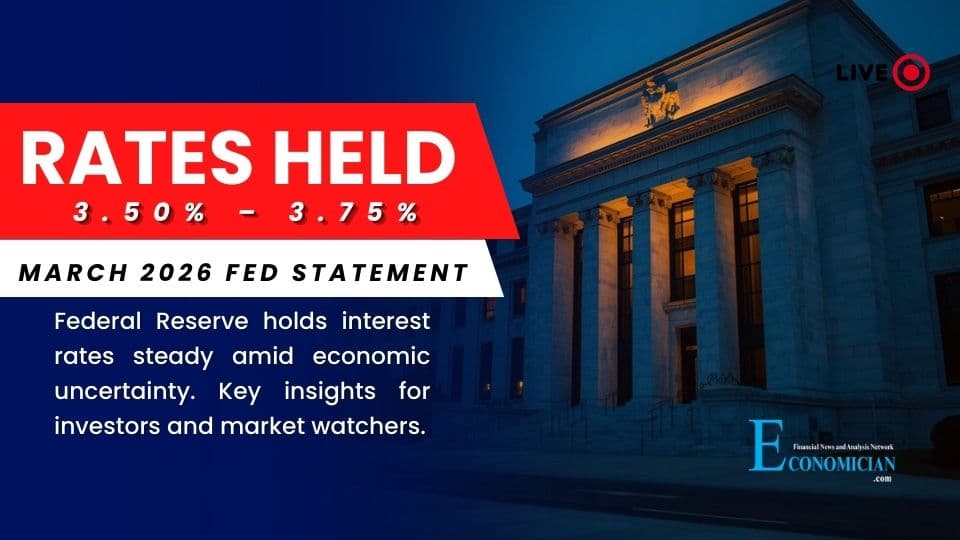
The Fed’s March 2026 message is straightforward: policy remains restrictive, inflation is not fully defeated, labor-market momentum is no longer strong, and geopolitical developments have become important enough to enter the formal statement. For markets, the key takeaway is that the Fed remains data dependent, risk aware, and in no rush to make its next move.
On day 20 of the Iran war, the conflict has entered a more critical and costly phase. Over the past 72 hours, strikes on targets inside Iran, Iran’s missile and drone retaliation against external targets, pressure on energy infrastructure, and rising regional tensions have all added new dimensions to the crisis. This report reviews the most important developments of the last three days on a day-by-day basis — from the targets hit inside Iran and Iran’s cross-border attacks to the latest statements from Tehran, Washington, Tel Aviv, Europe, and Prince Reza Pahlavi. It also includes an updated list of the most important senior Islamic Republic figures reported killed in the war so far.
A sharp new phase of the Iran war unfolded on day 17 as fresh strikes hit Tehran and other Iranian targets, while Iran kept up missile and drone pressure on Israel and Gulf states. At the same time, attacks near Dubai, Fujairah, and Abu Dhabi, along with the continued disruption in the Strait of Hormuz, showed that the conflict is now as much about regional energy security and shipping paralysis as it is about direct military confrontation. This report covers the last 48 hours of escalation, the main targets inside and outside Iran, and the international push to contain a war that has entered its third week with no clear end in sight.
A broader and more intense wave of reported attacks unfolded inside Iran from late Friday into Saturday, with Tehran, Isfahan, Shiraz, Tabriz, Kharg Island, and several other cities all seeing reported explosions, drone activity, air defense responses, or fighter jet movements. The pattern of strikes suggests the conflict is no longer limited to isolated incidents, but is increasingly hitting multiple locations in close succession, including military-linked, industrial, research, and strategically sensitive areas. This report reviews the latest reported targets, the spread of attacks across the country, and what this escalation may signal about the next phase of the war inside Iran.
The Iran war entered a more dangerous and entrenched phase on day 14, with fresh strikes inside Iran, continued pressure across the Persian Gulf, severe disruption in the Strait of Hormuz, and rising international concern. This report breaks down the latest military developments, regional spillovers, diplomatic reactions, and what the end of the second week means for the war’s next phase.
This report provides a comprehensive analysis of the Fourth Session of the 14th National People’s Congress of China, a key political event that helped define Beijing’s policy direction for 2026 and the broader framework of the 15th Five-Year Plan. It examines the session’s main outcomes, including China’s economic growth target, fiscal and budget priorities, major new legislation, technology and innovation goals, national security messaging, and the broader political significance of the meeting. The report also explores the domestic and international implications of the session, showing how it reflects the continued consolidation of centralized policymaking under China’s current leadership.