 English
 پارسی


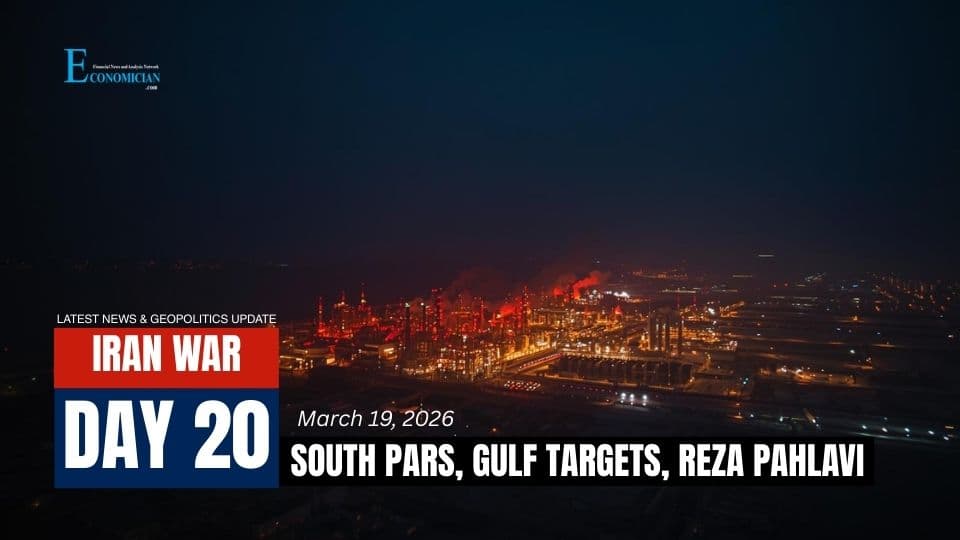
The Conflict Entered a More Dangerous Phase in the Past 72 Hours
The Iran war moved into a significantly more dangerous phase over the past 72 hours, as the conflict expanded beyond direct military targets and hit critical energy infrastructure, commercial shipping routes, and major regional economic assets. What had already been a high-intensity war between Iran, Israel, and the United States now appears to be evolving into a broader regional confrontation with major global market consequences.
The most important shift in the last three days was the move into what can best be described as an energy infrastructure phase of the war. Israeli strikes on Iran’s energy sector were followed by Iranian retaliation against major oil and gas facilities in the Persian Gulf, creating a new layer of risk for the region and for global energy markets. At the same time, missile and drone attacks continued against Israel, Hezbollah intensified pressure from Lebanon, and Washington signaled that it may be preparing for a longer and potentially broader military campaign.
Israeli Strikes Hit Iran’s Energy System
One of the most consequential developments of the last 72 hours was Israel’s strike on Iran’s South Pars gas field and the Asaluyeh gas-processing hub in Bushehr Province. These facilities are central to Iran’s domestic gas supply and broader energy system. This was not a symbolic strike. It directly targeted infrastructure that underpins electricity generation, industrial activity, and domestic fuel stability inside Iran.
The significance of this escalation is difficult to overstate. Iran relies heavily on natural gas for power generation, meaning damage to these facilities raises the risk of wider internal disruption, including electricity shortages, industrial pressure, and deeper stress on an already strained wartime economy. The Israeli campaign also continued its effort to degrade the regime’s internal control apparatus. During the same period, Israeli strikes reportedly killed Esmail Khatib, Iran’s intelligence minister, adding to the broader decapitation strategy aimed at weakening both Iran’s military leadership and its domestic repression network.
This combination of energy targeting and leadership targeting suggests Israel is not only trying to reduce Iran’s military capabilities, but also to pressure the regime’s ability to sustain war, maintain internal order, and manage public discontent.
Iran Responded With Missile Barrages Against Israel
Iran’s answer came quickly and on multiple fronts. Over the last 72 hours, Tehran launched repeated missile barrages at Israel, including major strikes on central Israel. Some of the reported missile types included more advanced long-range systems, and there were also claims that cluster-munition-capable warheads were used in parts of the assault.
These attacks killed civilians in Ramat Gan, injured others in Bnei Brak, and caused damage to infrastructure in the Tel Aviv area, including transport-related facilities. Iran also expanded its targeting of Israel’s energy sector. A missile strike hit the Haifa refinery area, causing a fire and temporary disruption to power infrastructure, although Israeli authorities said the overall damage was limited and quickly contained.
Even where the physical damage was not catastrophic, the strategic message was clear. Iran wants to demonstrate that it can hit critical economic nodes inside Israel, not only military bases. That matters because refinery, transport, and energy disruptions can have effects that go beyond the battlefield and influence investor sentiment, wartime confidence, and political pressure inside Israel.
The War Spread Across the Persian Gulf
The biggest regional escalation in the past 72 hours came from Iran’s direct attacks and threats against Gulf energy infrastructure. After Israeli strikes on Iranian gas facilities, Tehran issued warnings that energy sites in Saudi Arabia, Qatar, and the United Arab Emirates had become legitimate targets. Those warnings were then followed by real attacks involving missiles and drones.
Among the most serious incidents was the strike on Qatar’s Ras Laffan LNG complex, one of the most important liquefied natural gas facilities in the world. Damage there raised fears of long-term disruption, and estimates suggested that around 17% of Qatar’s LNG export capacity could be affected for years if repairs prove extensive. That is a major development not only for Qatar, but also for Europe and Asia, both of which depend heavily on Gulf gas flows.
Other attacks and interceptions were reported around Saudi and Emirati facilities. Saudi Arabia said it intercepted multiple ballistic missiles and drones, while the UAE also reported a large number of interceptions and temporary shutdowns at gas infrastructure. Kuwait, too, reported intercepting missiles and drones in its airspace. This means the conflict is no longer just spilling over into the Gulf. The Gulf is now one of the main theaters of escalation.
That shift changes the entire war. Once energy export infrastructure across the Persian Gulf becomes part of the target set, the conflict stops being a regional military crisis alone and becomes a direct threat to global energy security.
Strait of Hormuz Risks Remain Central
The Strait of Hormuz remains one of the most important pressure points in the war. Over the past 72 hours, fears around shipping disruption stayed elevated, and maritime incidents continued to shape the broader strategic picture. Reports of attacks or suspected attacks on commercial shipping reinforced the view that Iran is still using maritime pressure as part of its wider response strategy.
The Strait of Hormuz is critical because a substantial share of global oil flows through it. Any credible threat to transit there can move oil prices sharply, disrupt shipping insurance, slow tanker movements, and create broader instability across commodity and financial markets. Even when there is no full closure, a pattern of repeated incidents can be enough to reduce flows, raise costs, and inject persistent risk premiums into global markets.
This is why the Strait remains central not just militarily, but economically. The war is now as much about pressure on trade arteries and energy logistics as it is about direct battlefield exchanges.
Hezbollah Intensified the Northern Front
The northern front also remained active and dangerous. Hezbollah launched a high number of attacks against Israeli positions in northern Israel and southern Lebanon over the same 72-hour window. These attacks included drones, rockets, missiles, and mortar fire, showing that the Lebanon front is still an active part of the wider Iran-led response architecture.
Israel continued striking Hezbollah-linked sites in Lebanon in return. This matters because it keeps Israel under pressure on multiple axes at the same time. While the main war focus remains Iran, the northern theater prevents Israel from concentrating fully on one front and raises the risk of further regional widening if Hezbollah intensifies further or if Israel chooses a heavier campaign in Lebanon.
The United States Is Preparing for a Longer War
Washington’s posture over the past 72 hours suggests that the United States is not operating on the assumption of a quick end to the war. Reports indicate that the Trump administration is considering additional troop deployments to reinforce U.S. operations in the region. The options reportedly under discussion include securing maritime passage through the Strait of Hormuz and potentially supporting operations tied to Kharg Island, the main hub for Iran’s oil exports.
There were also reports that U.S. officials discussed scenarios related to securing Iran’s highly enriched uranium stockpiles. Even if no immediate decision has been made, the fact that such options are being discussed shows that Washington is thinking beyond short-term airstrikes and toward strategic endgame scenarios.
That is an important signal. It suggests U.S. planners increasingly see the conflict as one that may require sustained regional force posture, broader deterrence operations, and potentially more direct control over key strategic assets if escalation continues.
Netanyahu Has Gained Momentum, but the War Still Carries Political Risk
On the Israeli side, Prime Minister Benjamin Netanyahu appears to have gained near-term political benefit from the war. The shift in national focus from Gaza to Iran has helped consolidate attention around a more traditional security narrative, one that tends to favor Netanyahu politically. The campaign against Iran is widely seen inside Israel as strategically necessary, which has helped him frame the war as a national mission rather than a political gamble.
Still, the political picture is not one-directional. Military success does not automatically guarantee lasting political benefit. If the war drags on, if Iranian retaliatory capacity remains intact, or if major economic disruption grows inside Israel, the early gains could fade. At the moment, Netanyahu looks stronger than he did before the war, but that strength still depends on whether Israel can convert tactical success into a credible strategic outcome.
Iran’s Internal Leadership Situation Remains Unclear
Inside Iran, leadership uncertainty continues to hang over the war. Questions remain around the condition and whereabouts of Mojtaba Khamenei, who emerged as the new supreme leader after the death of Ali Khamenei. Rumors about injury, possible incapacitation, or even death have continued to circulate, although the picture remains unclear.
That uncertainty is politically important. In wartime, leadership visibility matters. If the regime cannot project internal coherence, public confidence weakens, elite tensions rise, and succession fragility becomes part of the broader conflict story. With Nowruz approaching, the absence of a clear and stable top-level leadership message could become even more symbolically powerful.
This also feeds into opposition dynamics. Exiled figures such as Reza Pahlavi have tried to use the moment to encourage public mobilization inside Iran, especially around traditional calendar events that could become platforms for anti-regime expression. Whether that turns into mass unrest remains uncertain, but the potential is now part of the war’s internal dimension.
Humanitarian Conditions Inside Iran Are Deteriorating
Beyond the battlefield, the humanitarian and social costs inside Iran appear to be rising. Reports point to fuel shortages, long queues at petrol stations, and continued internet disruption. For ordinary Iranians, the war is not only about airstrikes and political uncertainty. It is increasingly about daily survival, mobility, communication, and economic breakdown.
These pressures matter because wars are not sustained only through missiles and command structures. They are also sustained through functioning civilian systems. If fuel access worsens, communications stay restricted, and people lose income or confidence in the state’s ability to provide order, the internal cost of the war rises sharply.
At the same time, fear remains high. Civilians face the dual pressure of external strikes and internal security control. That makes the domestic Iranian environment one of the most volatile parts of the conflict going into the next phase.
Energy Markets Are Now Directly in the War Zone
The economic consequences of the past 72 hours were severe and immediate. Oil prices surged, European gas prices jumped sharply, and markets began to price in a more sustained energy shock scenario. This is not just about headline volatility. The deeper issue is that the war is now directly hitting the physical infrastructure that supports global energy supply.
When markets see attacks on the South Pars gas field, Ras Laffan, Saudi refining assets, UAE gas facilities, and tanker routes around the Strait of Hormuz, they stop treating the war as a contained geopolitical conflict. They begin treating it as a global inflation and supply-chain threat.
That has major macroeconomic implications. Higher energy prices feed directly into inflation expectations, weaken growth, pressure central banks, and raise the risk of a stagflationary environment. For Europe in particular, LNG disruption is especially serious. For Asia, the supply and pricing consequences are also substantial. For the global economy, the longer this phase lasts, the more likely it becomes that the Iran war shifts from being a regional security story to a global economic shock.
Outlook: What Matters Next
The central question now is whether the war continues to escalate through energy infrastructure, shipping routes, and broader regional retaliation, or whether outside powers can impose some form of limited de-escalation. At the moment, the trend still points toward more risk, not less.
The next phase will likely depend on five key variables. First, whether Israel continues targeting major Iranian economic infrastructure. Second, whether Iran expands attacks on Gulf oil and gas facilities. Third, whether the Strait of Hormuz sees a deeper disruption in shipping. Fourth, whether Hezbollah opens a heavier northern front. Fifth, whether the United States moves from reinforcement planning toward broader operational escalation.
For now, the past 72 hours show one clear reality: the Iran war is no longer a narrow Israel-Iran exchange. It is now a multi-theater regional conflict centered on military pressure, regime stability, energy security, and global economic fallout.
Major Iranian Leaders Killed (with Sources & Status):
According to the reports, Ali Khamenei, Iran’s Supreme Leader, was said to have been killed on February 28, 2026, during U.S. and Israeli strikes, with the claim described as confirmed by Iranian state media. On the same day, several other top Iranian military and security figures were also reported killed, including Ali Shamkhani, a senior adviser to Khamenei on national security issues; Mohammad Pakpour, Commander-in-Chief of the IRGC; Aziz Nasirzadeh, Iran’s Defence Minister; and Abdolrahim Mousavi, Chief of Staff of the Armed Forces. Later in the conflict, Ali Larijani, described as the incoming National Security Council secretary and security chief, was reported killed in an Israeli strike on March 17, 2026, with confirmation attributed to Iranian media and the announcement also made by Israel. On March 18, 2026, Intelligence Minister Esmail Khatib was also reported killed in an Israeli strike, according to Reuters, citing Iranian sources. In addition, Gholamreza Soleimani, commander of the Basij militia, was reported killed in strikes on March 17, 2026, with the claim attributed to state media.
A slightly more professional and publication-ready version would read like this:
The reported wave of high-level Iranian leadership losses began on February 28, 2026, when Ali Khamenei, Iran’s Supreme Leader, was said to have been killed in U.S. and Israeli strikes, according to claims cited as confirmed by Iranian state media. The same day also reportedly saw the deaths of several senior military and security officials, including Ali Shamkhani, a key national security adviser; Mohammad Pakpour, Commander-in-Chief of the IRGC; Aziz Nasirzadeh, the Defence Minister; and Abdolrahim Mousavi, Chief of Staff of the Armed Forces. As the conflict escalated, Ali Larijani, identified as the incoming National Security Council secretary and security chief, was reported killed in an Israeli strike on March 17, while Gholamreza Soleimani, head of the Basij militia, was also reported killed the same day. On March 18, Intelligence Minister Esmail Khatib was likewise reported killed in an Israeli strike, with the account carried by Reuters through Iranian sources. Together, these reported losses pointed to an extraordinary decapitation campaign targeting the upper ranks of Iran’s political, intelligence, and military establishment.
Prince Reza Pahlavi's statements
Reza Pahlavi’s newest message is not a simple “go now” call. In recent public comments reported by Iran International and the Jerusalem Post, he said the Islamic Republic’s grip is weakening and that a “final call” for nationwide demonstrations is getting closer, but he argued it should come only when the regime’s coercive apparatus is weakened enough. He also said the movement should proceed “intelligently” and that the final call would be issued “at the right moment.”
He has also kept pushing the broader line that he is prepared to help lead a post-Islamic Republic transition. Reuters reported earlier in the war that Pahlavi hoped outside military pressure would help people get “back in the streets” and ultimately bring about the regime’s fall, and Reuters previously reported that he has positioned himself as a national opposition figure seeking a leadership role in a transition.
On the Iranian response, I have not found a fresh top-level official statement from Tehran naming Pahlavi directly in the newest Reuters/AP reporting I checked. The clearest response has been practical rather than rhetorical: a wider internal crackdown. Reuters reports that Iran’s intelligence ministry has arrested 97 people accused of collaborating with Israel, and authorities in Alborz also arrested 41 people accused of sending videos to foreign-based opposition media.
Tehran has also paired that crackdown with a familiar narrative: that domestic unrest is being driven by foreign enemies. Reuters reported today that Iran executed three men detained over the January protests, with the judiciary accusing them of acting in favor of Israel and the United States. Reuters notes that Iranian authorities have consistently blamed external forces for the nationwide protests.
At the broader political level, Iran’s current leadership is signaling hardline escalation, not accommodation. Reuters reported that the new supreme leader rejected de-escalation proposals and demanded that the U.S. and Israel first be defeated, while other Reuters reporting today said Tehran is warning that any further strikes on its infrastructure will bring a harsher response and that officials are framing this as a “new stage in the war.”
So the clean read is this: Pahlavi is moving toward a “not yet, but soon” message on mass mobilization, while Tehran’s answer so far has been repression, arrests, executions, and a foreign-backed-subversion narrative rather than a detailed public rebuttal of him personally.
FAQ
What changed in the Iran war over the past 72 hours?
The conflict escalated into a broader regional crisis, with attacks expanding from military targets to energy infrastructure, Gulf facilities, and key shipping routes.
Why were the strikes on South Pars and Asaluyeh important?
Because those sites are central to Iran’s gas supply and energy system, the attacks raised pressure on Iran’s economy and electricity generation.
How did Iran respond?
Iran launched new missile barrages at Israel and expanded retaliation toward energy facilities in the Persian Gulf.
What happened at Haifa refinery?
Iran targeted the Haifa refinery area, causing fire and temporary disruption, though Israeli officials said the damage was limited.
Why does Ras Laffan matter?
Ras Laffan is one of the world’s most important LNG hubs, so any damage there raises global supply and pricing risks.
Has the war spread beyond Iran and Israel?
Yes. The conflict now directly affects the Persian Gulf, the Strait of Hormuz, Lebanon, and regional energy infrastructure.
Why is the Strait of Hormuz so important?
Because it is a major global energy chokepoint, and any disruption there can hit oil flows, shipping costs, and inflation expectations.
What role is Hezbollah playing?
Hezbollah has intensified attacks from Lebanon, keeping pressure on Israel’s northern front.
Is the U.S. preparing for a bigger role?
Washington appears to be preparing for a longer conflict, with discussions around reinforcements and regional security operations.
What is the biggest takeaway?
The war has entered a more dangerous phase centered on energy security, regional escalation, and wider global economic fallout.
Comments