 English
 پارسی


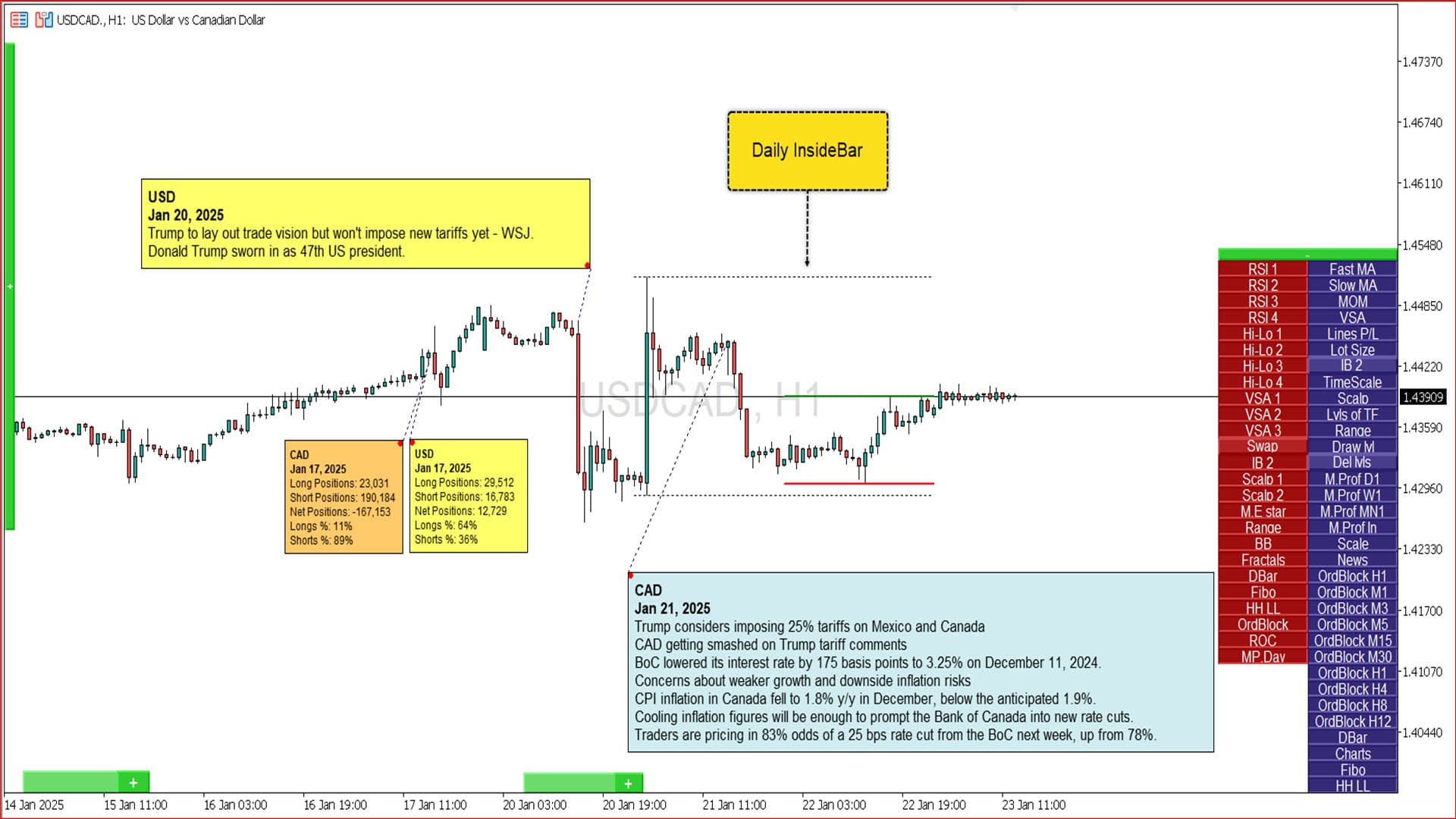
Market Overview
The USDCAD currency pair is currently steady around the 1.4400 level as traders brace for pivotal monetary policy decisions from both the Federal Reserve (Fed) and the Bank of Canada (BoC). This sideways movement demonstrates how the market is holding its breath due to uncertainty about upcoming interest rate announcements.
While the Federal Reserve is expected to maintain its current interest rate range of 4.25%-4.50%, the BoC is anticipated to take a more dovish approach by lowering rates to address concerns over a sluggish economy and potential risks of inflation undershooting its target. This positioning by the two central banks could significantly shape the dynamics of the USD/CAD pair moving forward.

In addition, external factors such as U.S. President Trump’s continued focus on tariffs and the escalating expectations around global trade frictions are creating further pressure. As the Bank of Canada prepares to announce its policy measures, the Canadian Dollar (CAD) remains under strain—especially with mounting pressure from these geopolitical and economic headwinds.
Fundamental Factors
The Canadian Dollar (CAD) is facing mounting pressure as a confluence of economic and geopolitical factors weigh heavily on its performance. The Bank of Canada (BoC) made a significant move in December 2024 by cutting interest rates by 175 basis points to 3.25%, citing concerns over slowing economic growth and downside risks to inflation. The latest inflation data revealed that CPI inflation in Canada dropped to 1.8% year-over-year in December, falling short of the anticipated 1.9%—a signal of continued cooling price pressures. As traders digest these developments, expectations for another 25-basis-point BoC rate cut are climbing. Altogether, these factors are creating a challenging environment for the CAD, with further declines conceivable as traders navigate heightened uncertainty and recessionary concerns.

Conclusion
The USD/CAD market is at a pivotal point, with its trajectory hinging on upcoming decisions from the Federal Reserve and the Bank of Canada. The Fed is expected to maintain its current interest rates, while the BoC is likely to cut rates, which could further weaken the appeal of the Canadian Dollar. Adding complexity to the outlook are geopolitical factors, such as tariffs and global trade disruptions, which might strengthen the US Dollar or reduce confidence in trade-sensitive currencies like the Canadian Dollar. This evolving landscape sets the stage for heightened volatility, urging traders to closely follow monetary policy updates and global developments to anticipate potential shifts in the pair's performance.
Comments