 English
 پارسی


Executive Summary
The latest CFTC speculative positioning report shows a market that is still divided between risk appetite and defensive positioning. Traders are not moving in one clear direction across all asset classes. Instead, they are rotating selectively into gold, silver, copper, euro, Mexican peso and natural gas, while reducing exposure to crude oil, Australian dollar, Canadian dollar, New Zealand dollar, corn and soybeans.
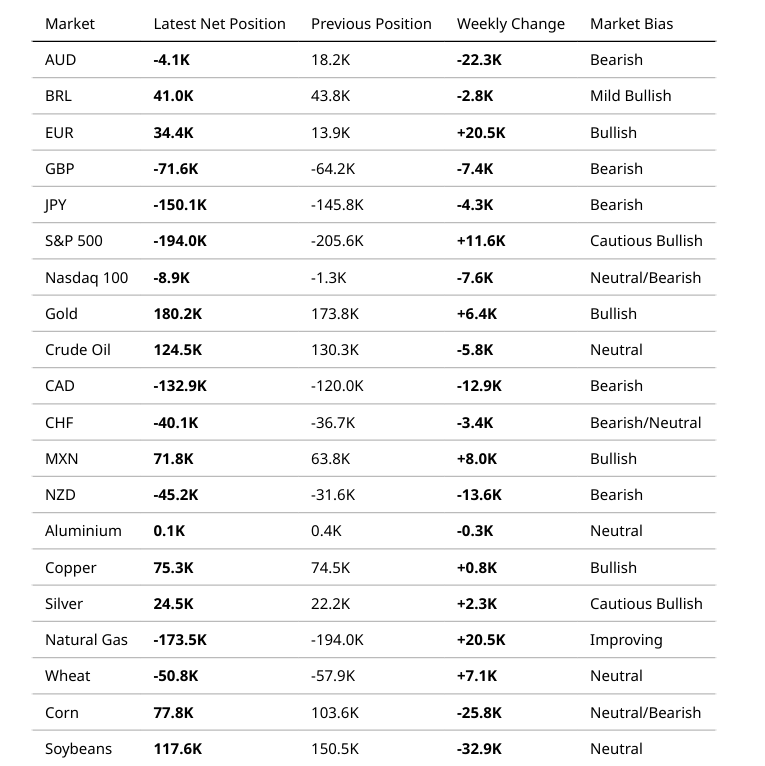
The biggest message from this report is that speculative traders are still looking for protection against inflation, geopolitical risk and policy uncertainty, but they are also reducing positions in assets where the bullish story has weakened. Gold longs increased to 180.2K contracts, euro longs rose sharply to 34.4K, and copper longs stayed strong at 75.3K. At the same time, crude oil longs dropped to 124.5K, corn longs fell to 77.8K, and soybean longs dropped sharply to 117.6K.
This positioning suggests that the market is moving from broad risk-taking into more selective trading. The strongest signals are in precious metals, EUR, MXN, copper, and short commodity-linked currencies such as CAD, AUD, and NZD.
CFTC Report Overview: What Changed This Week?
The latest CFTC data shows that traders are adjusting portfolios around three major market themes: geopolitical risk, a strong U.S. dollar, and uncertainty over central-bank policy.
The most important weekly changes were:
- EUR net longs jumped by 20.5K contracts, showing stronger bullish sentiment toward the euro.
- Gold net longs increased to 180.2K contracts, confirming strong safe-haven demand.
- Natural gas shorts were reduced by 20.5K contracts, showing short-covering and improving sentiment.
- AUD positions flipped from long to short, with a weekly change of -22.3K contracts.
- Corn and soybean longs were sharply reduced, showing weaker confidence in agricultural upside.
- CAD shorts increased to -132.9K contracts, reflecting pressure from weaker oil prices.
Overall, the CFTC report shows that traders are not abandoning risk completely, but they are becoming more selective and defensive.
Full CFTC Positioning Table
Currency Market Analysis
- AUD: Traders Turn Bearish on the Australian Dollar
The Australian dollar saw one of the biggest negative changes in the report. Net positioning moved from +18.2K to -4.1K, a weekly decline of 22.3K contracts. This shows that traders have shifted from mild optimism to a bearish stance.
The main reasons are weaker Chinese demand, pressure on commodity-linked currencies and the stronger U.S. dollar. Because Australia is closely linked to China and global commodities, any slowdown in Chinese growth can quickly hurt AUD sentiment.
Trading Signal: Bearish AUD
AUD/USD remains vulnerable unless China’s economic data improves or the U.S. dollar loses momentum.
- EUR: Euro Longs Increase Sharply
EUR positioning improved strongly, with net longs rising from 13.9K to 34.4K. This 20.5K increase is one of the clearest bullish signals in the report.
The euro appears to be benefiting from relative stability, lower energy-risk pressure and improving investor confidence compared with other major currencies. Traders are adding EUR exposure while reducing positions in commodity-linked currencies.
Trading Signal: Bullish EUR
EUR/USD may remain supported if European data stabilizes and the U.S. dollar stops rising aggressively.
- GBP: Pound Remains Under Pressure
GBP net shorts increased from -64.2K to -71.6K, showing that traders remain cautious on the British pound. Although the Bank of England may still sound hawkish, weak growth expectations and pressure on the UK economy are limiting upside.
Trading Signal: Bearish GBP
GBP/USD may stay under pressure unless UK inflation or wage data forces a more aggressive Bank of England stance.
- JPY: Yen Shorts Remain Extreme
JPY net shorts increased slightly to -150.1K, keeping the yen one of the most heavily shorted currencies in this report. This reflects the wide interest-rate gap between Japan and the United States.
However, because JPY shorts are already very large, the risk of a short squeeze is high if geopolitical tensions rise or if the Bank of Japan signals a stronger policy shift.
Trading Signal: Bearish JPY, but watch for short squeeze risk
USD/JPY remains supported, but traders should be careful near intervention or policy-warning levels.
- CAD, NZD and CHF: Defensive Positioning Continues
CAD shorts increased to -132.9K, NZD shorts widened to -45.2K, and CHF shorts rose to -40.1K. CAD weakness is strongly connected to weaker oil prices, while NZD remains exposed to weak Chinese demand and fragile risk appetite.
CHF is more complicated. It is usually a safe-haven currency, but current positioning shows that traders are still shorting it, likely because of yield differentials and expectations around Swiss monetary policy.
Trading Signals:
CAD: Bearish
NZD: Bearish
CHF: Neutral/Bearish
- MXN and BRL: Emerging-Market Carry Still Attractive
MXN positioning increased from 63.8K to 71.8K, confirming strong speculative demand for the Mexican peso. High interest rates, nearshoring trends and carry-trade demand continue to support MXN.
BRL remains net long at 41.0K, although positions declined slightly from 43.8K. This suggests that traders still like the Brazilian real, but momentum is not as strong as MXN.
Trading Signal: Bullish MXN, Mild Bullish BRL
MXN remains one of the strongest currency signals in the CFTC report.
Equity Market Analysis
- S&P 500: Large Shorts Remain, but Pressure Is Easing
S&P 500 speculative positions remained deeply negative at -194.0K, but shorts were reduced from -205.6K. This means traders are still heavily hedged, but bearish pressure has eased.
This is important because the S&P 500 has remained strong, supported by technology and AI-related optimism. When an index rises while speculative positioning remains short, it can create fuel for further upside if traders are forced to cover.
Trading Signal: Cautious Bullish S&P 500
The market can continue higher, but stretched valuations and hawkish Fed expectations make risk management essential.
- Nasdaq 100: Traders Increase Shorts Despite Tech Strength
Nasdaq 100 positioning moved from -1.3K to -8.9K, showing that traders added short exposure despite the strength in technology stocks.
This may reflect hedging after strong gains in AI and mega-cap technology names. The Nasdaq remains fundamentally strong, but the increase in short positioning shows that traders are becoming more careful.
Trading Signal: Neutral/Bearish Nasdaq 100
The index may stay strong in the long term, but short-term correction risk is rising.
Precious Metals Analysis
- Gold: Strong Safe-Haven Demand Continues
Gold remains one of the clearest bullish signals in the report. Net long positions increased from 173.8K to 180.2K. This confirms that institutional traders are still using gold as protection against inflation, geopolitical uncertainty, and central-bank policy risk.
Even if peace talks reduce some geopolitical premium, gold remains supported by long-term concerns around inflation and financial stability.
Trading Signal: Bullish Gold
Gold remains attractive on pullbacks, especially if inflation stays sticky or geopolitical tensions return.
- Silver: Cautious Bullish Momentum
Silver net longs rose from 22.2K to 24.5K, showing modest but positive speculative demand. Silver is benefiting from both precious-metal demand and industrial-metal support.
However, silver is more volatile than gold and has already experienced a sharp monthly correction. This makes position sizing very important.
Trading Signal: Cautious Bullish Silver
Silver may outperform if gold stabilizes and industrial demand improves, but volatility risk is high.
Energy Market Analysis
- Crude Oil: Longs Reduced as War Premium Fades
Crude oil net longs fell from 130.3K to 124.5K, showing that traders are reducing bullish exposure. This happened as peace talks and easing supply fears reduced the risk premium in oil.
The market is no longer pricing only geopolitical risk. Traders are now watching real supply, demand, inventories, and global growth.
Trading Signal: Neutral Crude Oil
WTI may remain range-bound unless Middle East tensions return or demand data improves.
- Natural Gas: Short Covering Begins
Natural gas remains heavily short at -173.5K, but this is a major improvement from -194.0K. The weekly change of +20.5K contracts shows that traders are reducing bearish bets.
This can be an early sign that the downside is becoming limited, especially if warmer weather increases power demand.
Trading Signal: Neutral to Constructive Natural Gas
Natural gas is not fully bullish yet, but aggressive bearish positioning is weakening.
Industrial Metals Analysis
- Copper: Strong Long Positioning Remains
Copper net longs increased slightly to 75.3K, confirming that traders remain positive on the metal. Copper is supported by long-term demand from electrification, data centers, AI infrastructure, power grids, and clean-energy investment.
Although the weekly increase was small, the level of positioning remains strong.
Trading Signal: Bullish Copper
Copper remains one of the strongest medium-term commodity signals, but it may correct if the U.S. dollar strengthens further.
- Aluminium: Market Stays Neutral
Aluminium speculative positioning is almost flat at 0.1K, showing no clear speculative conviction. The market is caught between supply recovery, weak Chinese demand, and long-term infrastructure demand.
Trading Signal: Neutral Aluminium
Wait for a clearer breakout or stronger demand signal before taking a directional view.
Agricultural Markets Analysis
- Wheat: Shorts Are Being Covered
Wheat remains net short at -50.8K, but shorts were reduced from -57.9K. This suggests that traders are becoming less bearish.
The main upside risks are weather-related, especially in Europe, where heatwaves could affect crop quality and yields. However, improving global supply and lower freight costs still limit the upside.
Trading Signal: Neutral Wheat
Wheat needs stronger weather or export-demand catalysts to turn clearly bullish.
- Corn: Long Positions Cut Sharply
Corn longs dropped from 103.6K to 77.8K, a large weekly decline of 25.8K contracts. This shows that traders are losing confidence in the bullish corn story.
A strong U.S. dollar makes U.S. agricultural exports more expensive, while improving crop expectations may reduce upside pressure.
Trading Signal: Neutral/Bearish Corn
Corn may remain under pressure unless weather risks in the U.S. Midwest intensify.
- Soybeans: Traders Reduce Long Exposure
Soybean net longs fell sharply from 150.5K to 117.6K, showing a major reduction in bullish exposure. Chinese demand is still supportive, but traders are clearly taking profit or reducing risk.
The market remains supported by biofuel demand and export interest, but high U.S. rates and a strong dollar are limiting gains.
Trading Signal: Neutral Soybeans
Soybeans need stronger China demand or weather-related supply concerns to regain bullish momentum.
Key Market Themes From the CFTC Report
1. Safe-Haven Demand Is Still Strong
Gold and silver longs increased, showing that traders are still hedging against uncertainty. Even with progress in peace talks, markets are not fully relaxed.
2. Commodity Currencies Are Under Pressure
AUD, CAD and NZD all weakened in positioning. This reflects concerns about China, oil prices and global demand.
3. EUR and MXN Are the Strongest Currency Signals
EUR saw a major increase in long exposure, while MXN remains strongly supported by carry demand.
4. Oil Bullishness Is Fading
Crude oil remains net long, but the reduction in long positions shows that the geopolitical premium has declined.
5. Agriculture Is Losing Momentum
Corn and soybean longs were cut aggressively, while wheat remains net short. This shows that traders are less confident about broad agricultural upside.
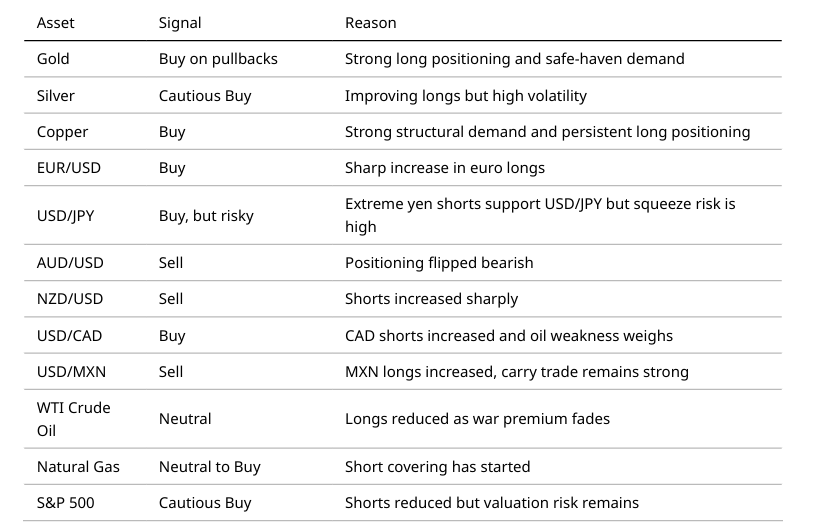
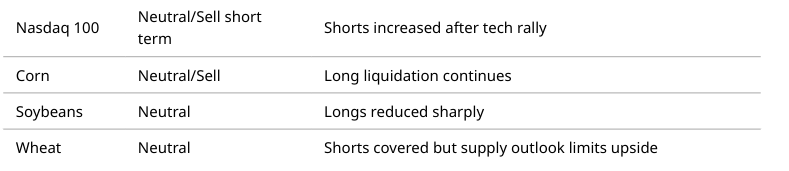
Trading Signal Summary
Final Outlook:
The latest CFTC report shows a market that is becoming more selective. Traders are not simply buying risk or selling risk. Instead, they are choosing specific assets with stronger macro stories. The strongest bullish positioning appears in gold, copper, euro, Mexican peso and silver. The strongest bearish signals appear in AUD, CAD, NZD, GBP and JPY. In commodities, crude oil has lost some bullish momentum, while natural gas is showing early signs of short covering. For traders, the key takeaway is clear: this is not a market for blind directional trading. It is a market for selective positioning, careful timing and strict risk management
FAQ
What is the CFTC report?
The CFTC report, also known as the Commitments of Traders report, shows how different market participants are positioned in futures markets. Traders use it to understand
nd whether speculative funds are net long or net short in assets such as currencies, commodities, metals, energy and equity futures.
What does the latest CFTC report show?
The latest report shows stronger bullish positioning in gold, euro, copper, silver and Mexican peso, while traders reduced exposure to crude oil, AUD, CAD, NZD, corn and soybeans. This suggests a more selective and defensive market environment.
Is gold bullish based on the latest CFTC data?
Yes. Gold net longs increased from 173.8K to 180.2K contracts, showing that traders are still buying gold as a hedge against inflation, geopolitical uncertainty and central-bank policy risk.
Why did crude oil longs decline?
Crude oil longs fell from 130.3K to 124.5K contracts as the geopolitical risk premium eased following progress in U.S.–Iran discussions and expectations of improved oil supply. This does not mean oil is bearish, but it shows weaker bullish conviction.
Which currency has the strongest bullish signal?
The Mexican peso and euro have the strongest bullish signals. MXN net longs increased to 71.8K contracts, while EUR net longs jumped to 34.4K contracts from 13.9K.
Which currencies look bearish in the CFTC report?
AUD, CAD, NZD, GBP and JPY look bearish. The biggest concerns are around commodity-linked currencies, especially AUD, CAD and NZD, due to weaker global demand, oil price pressure and a strong U.S. dollar.
Is copper still bullish?
Yes. Copper net longs remained strong at 75.3K contracts. The market continues to benefit from long-term demand linked to electrification, AI infrastructure, data centers and clean-energy investment.
What is the trading signal for natural gas?
Natural gas is improving. It remains net short, but shorts were reduced from -194.0K to -173.5K contracts. This indicates short covering and a possible shift from bearish to neutral or constructive sentiment.
Are agricultural commodities bullish or bearish?
Agricultural commodities are mixed. Corn and soybeans saw sharp reductions in long positions, which is bearish or neutral. Wheat remains net short, but short covering suggests traders are becoming less bearish.
How should traders use the CFTC report?
Traders should use the CFTC report as a sentiment and positioning tool, not as a standalone trading system. It works best when combined with price action, technical analysis, macroeconomic data, central-bank policy and risk management.
Is this CFTC analysis financial advice?
No. This report is for market analysis and educational purposes only. It should not be considered financial advice or a direct recommendation to buy or sell any asset.
Comments