 English
 پارسی


Technical Analysis
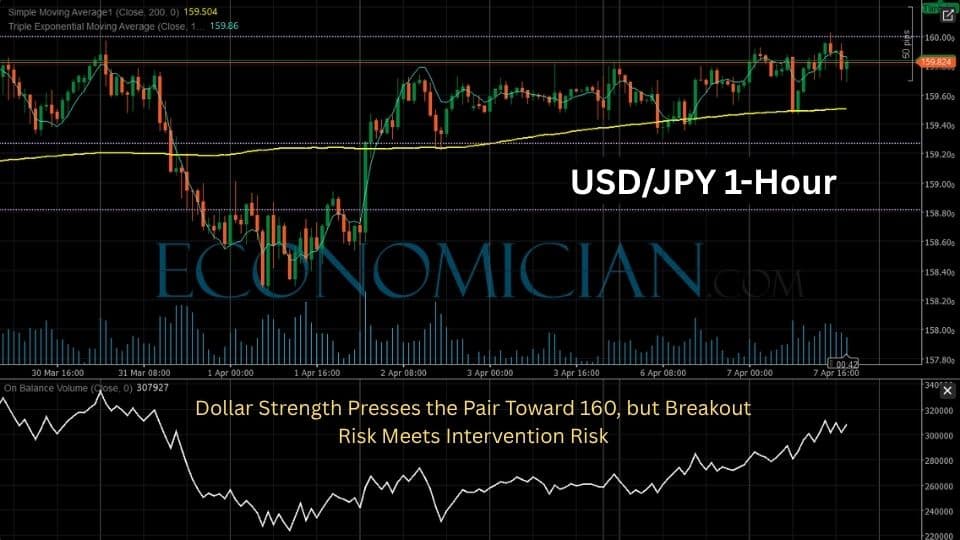
The pair is still trading above the 20-period SMA at 159.504 and just under the 14-period TEMA at 159.85, which keeps the near-term structure constructive rather than bearish. Price action since the early-April rebound has been building a sequence of higher lows, while repeated tests of the 160.00-160.10 area confirm that the market is pressing a major psychological resistance zone.
Momentum also leans mildly positive. The On Balance Volume line has been trending higher into the latest candles, which suggests underlying participation has improved during the recovery phase. That said, the pair is still trading immediately under a heavy resistance ceiling, so the setup is bullish only if buyers can force a clean break above 160. A confirmed move through 160.10 would open room toward 160.60 and then 161.00, while failure to break higher could pull the pair back toward 159.50 first and then the 159.20-158.80 support area.
Fundamental Note
The short-term macro backdrop still favors dollar strength against the yen. Reuters reported on April 7 that the U.S. dollar was trading close to its highest level in almost 11 months, supported by safe-haven demand ahead of the U.S. deadline tied to Iran and the Strait of Hormuz, while Brent hovered around $110 and USD/JPY was near 159.845. At the same time, Japan’s finance minister said Tokyo would stay in close contact with G7 partners as the yen lingered near 160, a level Reuters said analysts see as sensitive for possible official intervention. Reuters also reported that former BOJ board member Seiji Adachi sees scope for another BOJ rate hike by July, as higher oil prices add to inflation pressure in Japan.
Trading Signal
Signal: Buy on breakout
Entry: 160.05
Stop Loss: 159.40
Take Profit 1: 160.60
Take Profit 2: 161.00
This is a breakout setup, not a chase-at-market setup. The logic is straightforward: price is holding above the 20-hour average and is compressing just below 160, but the trade only becomes attractive if resistance is decisively cleared. The stop is kept relatively tight because intervention sensitivity around 160 remains a real headline risk.
Comments