 English
 پارسی


How far along are we?
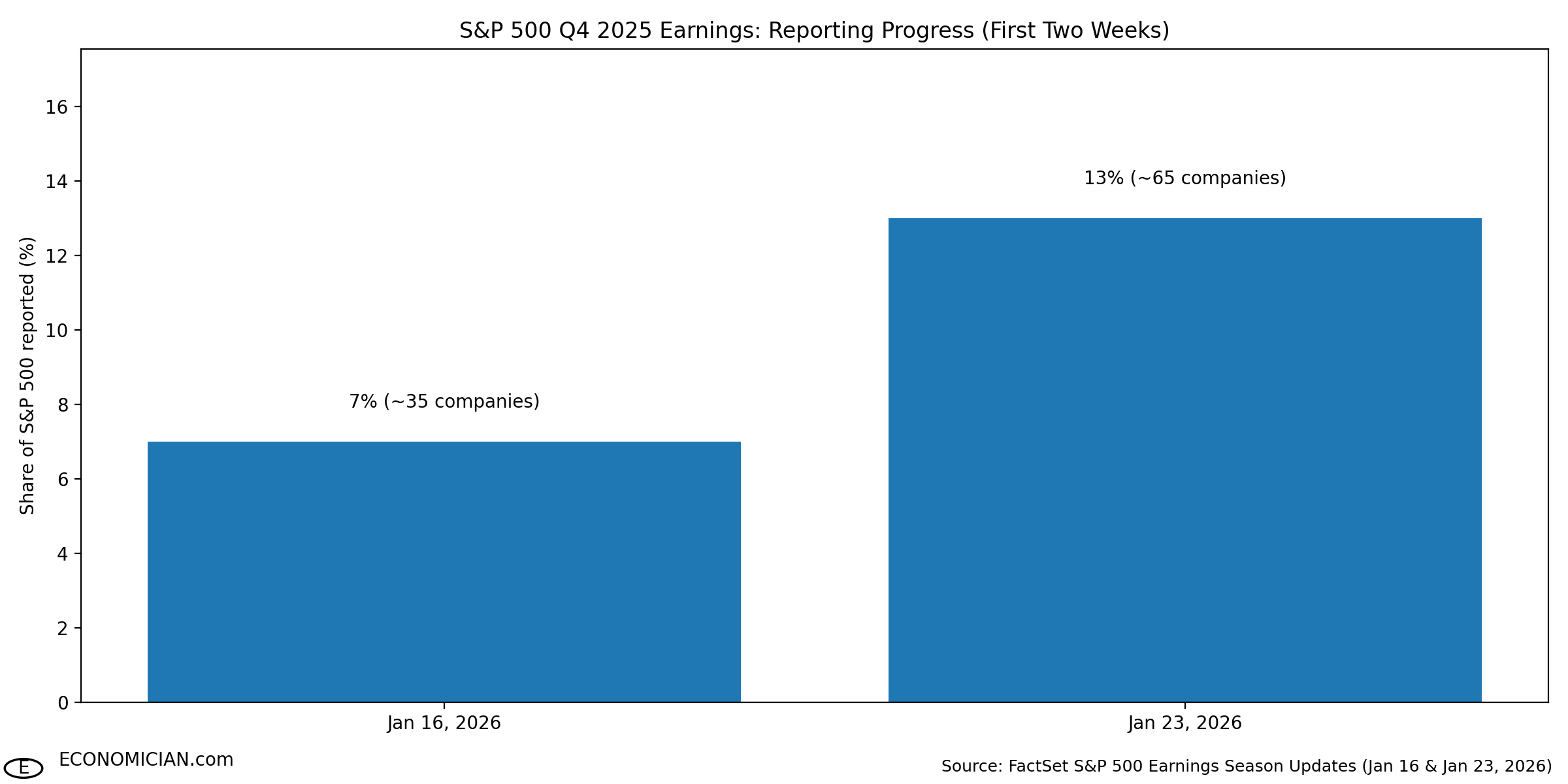
By Friday, January 23, 2026, about 13% of the S&P 500 had reported Q4 2025 results (roughly ~65 companies).
One week earlier (January 16, 2026), about 7% had reported (roughly ~35 companies).
Beat rates (EPS and revenue)
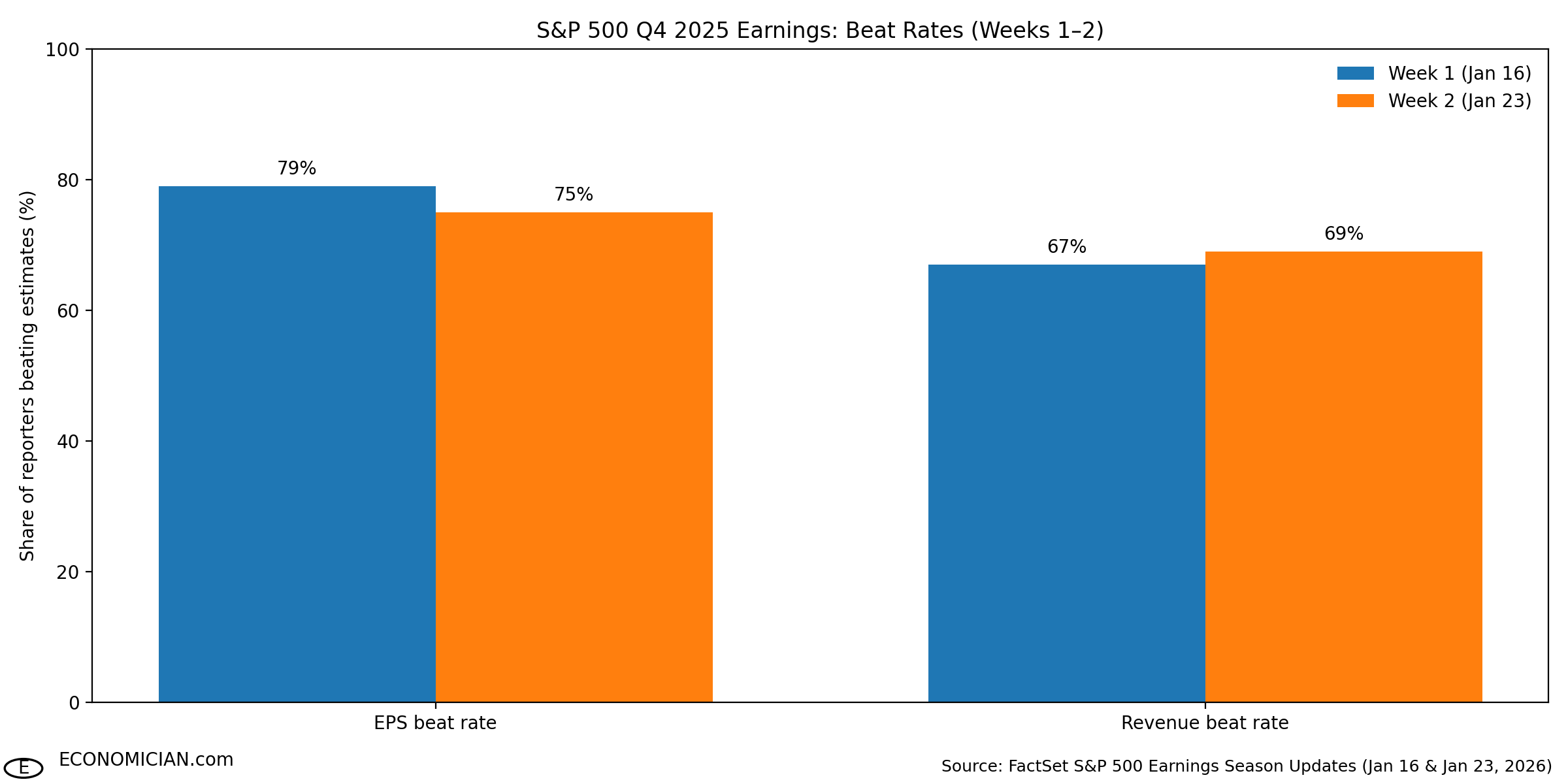
Week 1 (through Jan 16):
- EPS beat rate: 79% of reporters beat EPS estimates
- Revenue beat rate: 67% beat revenue estimates
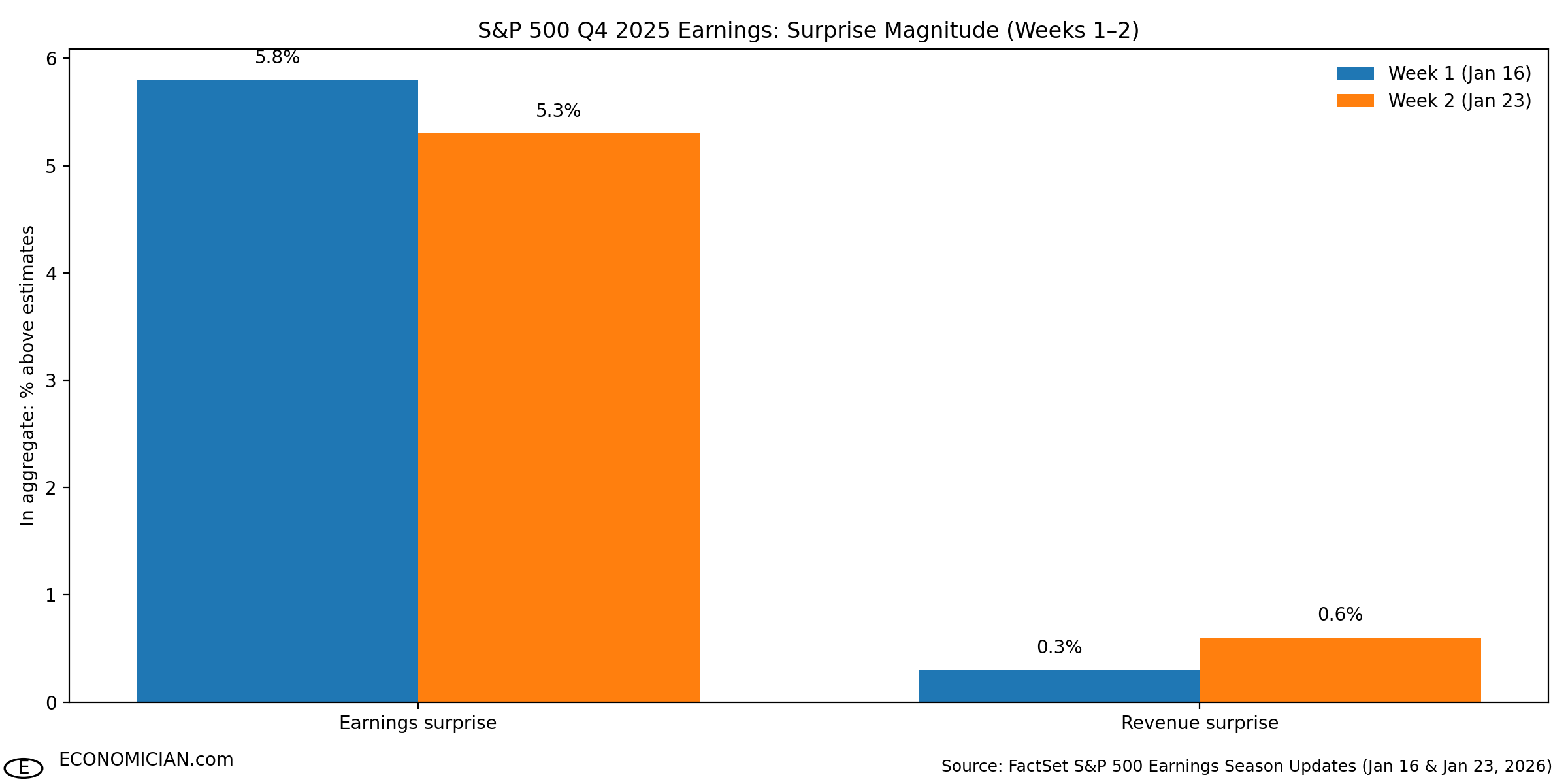
- Beat magnitude: earnings +5.8% vs estimates; revenues +0.3% vs estimates
Week 2 (through Jan 23):
- EPS beat rate: 75% of reporters beat EPS estimates
- Revenue beat rate: 69% beat revenue estimates
- Beat magnitude: earnings +5.3% vs estimates; revenues +0.6% vs estimates
Key takeaway: beats are still healthy, but EPS beat rates and beat magnitude are slightly below recent averages, while revenue beats are roughly in-line with history and the revenue surprise magnitude remains modest.
Growth: the season is tracking solid YoY expansion
FactSet’s blended view (actuals + estimates) as of Jan 23:
- Earnings growth: +8.2% YoY
- Revenue growth: +7.8% YoY
If these hold through the season, it will mark the 10th straight quarter of earnings growth and the 21st straight quarter of revenue growth for the index.
Sector shape: breadth improving, but Energy is a drag
- Earnings: 7 of 11 sectors are (so far / projected) showing YoY earnings growth, led by Information Technology and Materials. Declines are led by Energy, Health Care, and Consumer Discretionary.
- Revenues: 10 of 11 sectors are (so far / projected) showing YoY revenue growth; Energy is the notable laggard.
“Magnificent 7” concentration remains a defining feature
FactSet flags that the top contributors to S&P 500 earnings growth for Q4 2025 include NVIDIA, Boeing, Alphabet, Micron, and Microsoft—with 3 of the top 5 coming from the “Magnificent 7” cohort.
- FactSet estimates the Magnificent 7 are expected to deliver ~20.3% earnings growth in Q4, versus ~4.1% for the other 493 companies (blended).
Guidance tone: early read
As of the FactSet Jan 23 cut, for Q1 2026 guidance, more companies had issued negative EPS guidance than positive (6 negative vs 4 positive in the early tally).
This is still a small sample and will shift as megacaps and cyclicals report, but it reinforces that the market is scrutinizing forward commentary as much as “beat/meet/raise.”
Market context: valuations are not forgiving
- FactSet’s forward 12-month P/E was around 22.2 (above 5- and 10-year averages) in the first week update—meaning the bar for “good enough” results is elevated.
- Reuters also noted the market entering earnings with high valuations and heavy focus on whether AI investment is translating into tangible returns as mega-cap tech reports approach.
What matters most for the next phase (Weeks 3–5)
- Megacap tech read-through on AI monetization and capex discipline (a key driver of index-level growth expectations).
- Breadth outside the “Magnificent 7”—whether the “other 493” can keep pace as more industrials, health care, staples, and discretionary names report.
- Energy’s drag—both earnings and revenue headwinds remain a swing factor for aggregate results.
Comments