 English
 پارسی



The Consumer Price Index (CPI) for September rose by 2.97% (MoM), outpacing the forecasted 2.2% and accelerating from 2.47% in August. On a year-over-year (YoY) basis, inflation hit 49.38%, exceeding the 48.3% expectations, though slightly lower than the 51.97% recorded in August.
Inflation, excluding volatile categories such as Energy, Food, Beverages, Tobacco, and Gold (Ex E, F, B, T&G), saw even sharper increases. This core measure of inflation surged 3.6% (MoM) in September, up from 3.0% in August, while the YoY figure stood at 49.1%, down from 51.6% in the previous month but still significantly high.
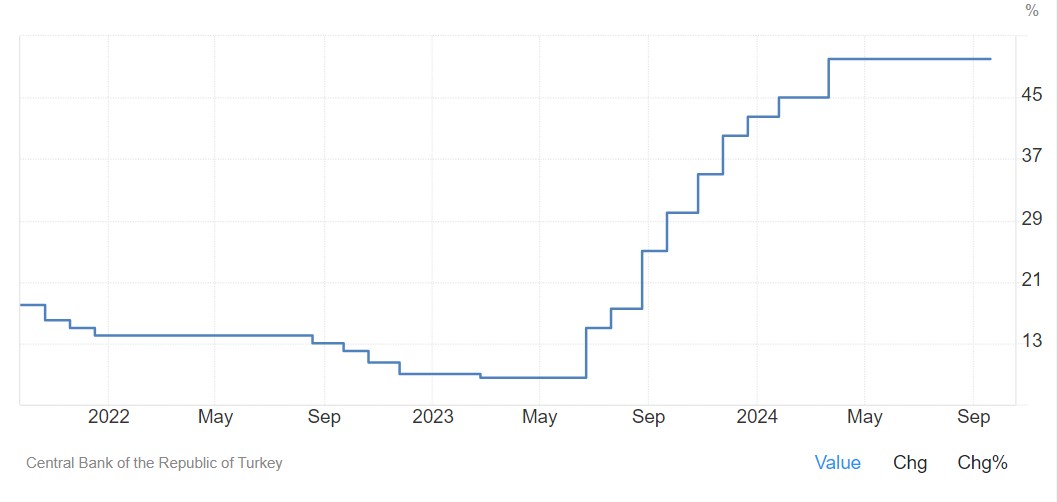
The central bank has maintained interest rates at 50% since May, following a series of gradual increases under new leadership. These hikes were introduced after a sharp reduction to 8.5% in 2023. Despite these aggressive efforts to combat inflation, rising prices continue to erode purchasing power, straining household budgets. The government now faces mounting pressure to tackle the broader economic instability. This suggests that the central bank's current policies have not yet achieved the desired effect of reining in inflation or stabilizing the economy.
Compounding these concerns, recent data indicates a sharp slowdown in retail sales, putting further pressure on businesses, especially small and medium-sized enterprises.
While higher interest rates offer temporary support to the Turkish lira, strengthening it slightly against the USD and other currencies, the overall weakening trend remains intact. From a technical standpoint, USD/TRY continues to move in a clear uptrend, with 35 being the next major target.
This persistent inflation, coupled with economic uncertainty, raises questions about Turkey’s ability to stabilize both its currency and its economy, with many analysts warning that prolonged inflationary pressures could further undermine confidence in the lira and the broader economic outlook.
Comments