 English
 پارسی


CFTC Positioning Analysis: What the Latest Speculative Flows Are Telling the Market
The latest CFTC speculative positioning report points to a market that is still active, but increasingly cautious. The broad pattern is not one of full risk liquidation. Instead, it is a pattern of long reduction, selective defensive rotation, and heavier pressure on weaker currencies. That is important, because in positioning analysis, direction matters, but the change in conviction often matters even more.
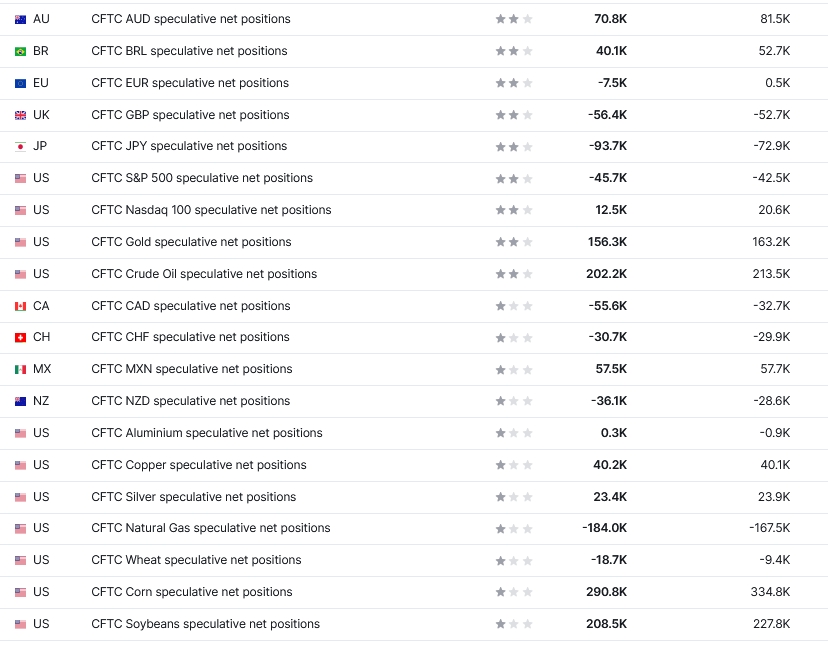
What stands out immediately is that speculators cut bullish exposure in several areas where sentiment had previously been strong. Australian dollar longs were reduced, Brazilian real longs were trimmed, Nasdaq 100 longs were scaled back, and net long exposure in gold and crude oil also moved lower. At the same time, bearish bets deepened in the euro, pound, yen, Canadian dollar, New Zealand dollar, natural gas, and wheat.
This combination usually reflects a market that is not panicking, but is becoming more tactical. Traders still hold conviction in some themes, especially in gold, oil, corn, soybeans, copper, and the Mexican peso, yet they are no longer adding aggressively. Instead, they are protecting gains, reducing crowding, and repositioning for a more uneven macro backdrop.
FX Positioning: The Dollar Still Has Relative Support
The currency section of the report is one of the clearest parts of this release. The euro moved from a small net long to a net short position, while sterling remained deeply net short and the yen short expanded sharply. The Canadian dollar and New Zealand dollar also saw deeper bearish positioning, while the Australian dollar stayed net long but lost momentum. The Mexican peso remained one of the strongest positioning stories, with longs largely intact.
This tells us that the market still favors the U.S. dollar on a relative basis, especially against currencies where growth looks softer, policy support looks weaker, or yield differentials remain unattractive. The euro’s move into net short territory is especially notable because it suggests the market is no longer treating the single currency as neutral. It is beginning to lean more actively bearish.
The yen is another major signal. Net shorts deepened materially, making it one of the most extreme bearish currency positions in the report. That reinforces the idea that markets still see Japan as the funding currency of choice and still expect wide policy divergence versus the United States and other higher-yield markets. But it also means the yen is becoming more crowded on the short side. Crowded shorts can remain in place for a while, but they also make the market vulnerable to a violent squeeze if a policy surprise or risk-off shock appears.
The Australian dollar positioning is more nuanced. It remains net long, which means the market has not abandoned the bullish AUD story. But the reduction in longs shows less confidence than before. That often happens when traders still like the medium-term story, but do not want to chase price in the short term.
Equity Index Positioning: Risk Appetite Is Still Alive, But Less Comfortable
The equity index picture is cautious rather than outright bearish. S&P 500 speculative positioning remained net short and became slightly more negative, while Nasdaq 100 longs were reduced, though they stayed positive overall.
That suggests speculators are not fully embracing a broad equity breakout. They are more comfortable with selective growth exposure than with broad index optimism. In other words, there is still some appetite for tech and high-beta leadership, but there is less confidence in the wider equity landscape.
This is consistent with a market that still wants upside participation, but only with tighter discipline. When the S&P stays net short while the Nasdaq remains modestly net long, it often signals a preference for concentrated leadership rather than broad cyclical strength. That kind of setup can work for a while, but it also means the market remains fragile if leadership starts to fail.
Metals Positioning: Gold Stays Strong, Copper Holds Firm
Gold speculative net longs were reduced, but they remained very elevated. Silver longs slipped only slightly, while copper positioning stayed firm and aluminium moved from a small net short to a slight net long.
That combination is important. Gold still carries one of the strongest bullish positioning structures in the report, which tells us that even after some profit-taking, investors continue to see value in defensive hard assets. This usually happens when markets remain uneasy about inflation persistence, geopolitical tension, macro instability, or the durability of real growth.
Copper’s stable long positioning suggests the market has not given up on the industrial or structural demand story. That matters because copper is often treated as a cleaner cyclical and supply-sensitive expression than broader commodity exposure. Aluminium’s move into a small net long adds to the impression that base metal sentiment is not weak, just selective.
The key message in metals is that traders trimmed, but did not exit. That keeps the broader bullish bias intact, especially in gold.
Energy and Agriculture: Oil Still Supported, Gas Still Under Pressure
Crude oil remained heavily net long, but the long position was reduced again. Natural gas remained deeply net short and became even more negative. Wheat shorts increased, while corn and soybean longs were cut but stayed very large.
Oil positioning still reflects a market that sees underlying support, but not clean upside acceleration. When longs stay high but are trimmed, it usually means the bullish thesis is still alive, but conviction is no longer expanding. Traders still see support in the market, but they are less willing to hold oversized positions into uncertainty.
Natural gas is the opposite story. It remains one of the most aggressively bearish markets in the report. The deeper short suggests traders still see weak fundamentals, abundant supply, or insufficient demand momentum. This does not automatically mean gas must fall immediately, because extremely crowded shorts can trigger sharp rebounds, but the dominant flow remains bearish.
In agriculture, corn and soybeans still show large bullish speculative exposure despite recent trimming. That means the market remains structurally supportive, but less euphoric than before. Wheat, however, moved further into net short territory, which suggests a much weaker sentiment profile than the rest of the grain complex.
Market Outlook: What This Means for the Next Phase
The broader takeaway from this CFTC release is that the market is not in full risk-off mode, but it is clearly becoming more selective. Traders are reducing exposure where positions were crowded, adding pressure to weaker currencies, and keeping their strongest conviction in a narrower set of themes.
The first major theme is continued dollar resilience. The euro, pound, yen, CAD, and NZD positioning all support the idea that the dollar still has relative macro backing.
The second theme is commodity divergence. Gold and crude oil remain supported, but the pace of bullish accumulation has slowed. Copper remains constructive. Natural gas remains decisively weak.
The third theme is more tactical risk appetite. Nasdaq longs still exist, but they are smaller. S&P shorts remain in place. That is not the structure of a market fully convinced about broad risk extension.
The fourth theme is crowding risk. The deeper the yen short and the natural gas short become, the greater the risk of countertrend squeezes. The same logic applies on the long side in markets such as gold, corn, and soybeans, where strong bullish positioning can become vulnerable if the macro narrative shifts.
Overall, the report supports a short-term outlook where traders should focus less on broad directional conviction and more on relative-value setups, asymmetric entries, and disciplined risk management.
Trading Ideas Based on the Latest CFTC Report
1) Short EUR/USD on Positioning Breakdown
The euro has shifted into net short territory, which is a meaningful sentiment deterioration. That weakens the medium-term EUR story and supports a tactical bearish bias.
Trade idea: Sell rallies in EUR/USD rather than chase breakdowns.
Why it works: Positioning has turned negative, and the market is no longer neutral on the euro.
Risk: A sudden improvement in eurozone data or a softer U.S. macro tone could trigger short covering.
2) Buy USD/JPY, But Respect Crowding Risk
The yen short deepened sharply, reinforcing the bearish yen theme and supporting USD/JPY upside.
Trade idea: Buy dips in USD/JPY while the trend remains intact.
Why it works: Positioning still favors yen weakness.
Risk: This is a crowded trade. Any Bank of Japan surprise or broader risk-off move could produce a fast reversal.
3) Buy Gold on Pullbacks
Gold longs were reduced, but they remain very strong. That suggests profit-taking rather than a bearish shift.
Trade idea: Buy dips in gold rather than chase spikes.
Why it works: The broader positioning structure is still constructive.
Risk: A stronger real-yield environment or sharp dollar rally could pressure gold temporarily.
4) Stay Constructive on Crude Oil, But Avoid Aggressive Chasing
Oil longs remain large, but the reduction in exposure warns that upside may be less clean than before.
Trade idea: Prefer tactical long entries on retracements instead of momentum chasing.
Why it works: The market still holds a bullish base, but conviction is softer.
Risk: Further long liquidation could cap rallies.
5) Keep a Bearish Bias on Natural Gas Until Positioning Starts to Improve
Natural gas remains one of the clearest bearish structures in the report.
Trade idea: Sell rallies or avoid bottom-fishing too early.
Why it works: Speculative flow still points lower.
Risk: Very heavy shorts can create abrupt short-covering rallies, so timing matters.
6) Watch Corn and Soybeans for Trend Continuation, But With Tighter Stops
The trimming of longs does not change the fact that both markets still carry large bullish speculative exposure.
Trade idea: Stay constructive, but tighten risk parameters.
Why it works: Positioning remains supportive overall.
Risk: If the market starts liquidating crowded longs, the correction can be sharp.
Q&A
What is the main message of this CFTC report?
The market is becoming more selective. Traders are cutting exposure in several bullish themes, adding pressure to weaker currencies, and keeping conviction in a smaller group of defensive or structurally supported assets.
Which currencies look weakest in this report?
The yen, pound, euro, Canadian dollar, and New Zealand dollar all show bearish positioning signals, with the yen standing out as one of the most crowded shorts.
Is gold still bullish according to positioning?
Yes. Long exposure was reduced slightly, but the position remains very strong, which keeps the broader bullish structure intact.
What does this report suggest for equities?
It suggests caution rather than full bearishness. The Nasdaq still holds a net long, but it is smaller, while the S&P 500 remains net short.
What is the most bearish market in the report?
Natural gas is one of the clearest bearish positioning stories, with a very deep net short that became even larger in the latest release.
Comments