 English
 پارسی



A Hold Is Likely, but the Message Matters
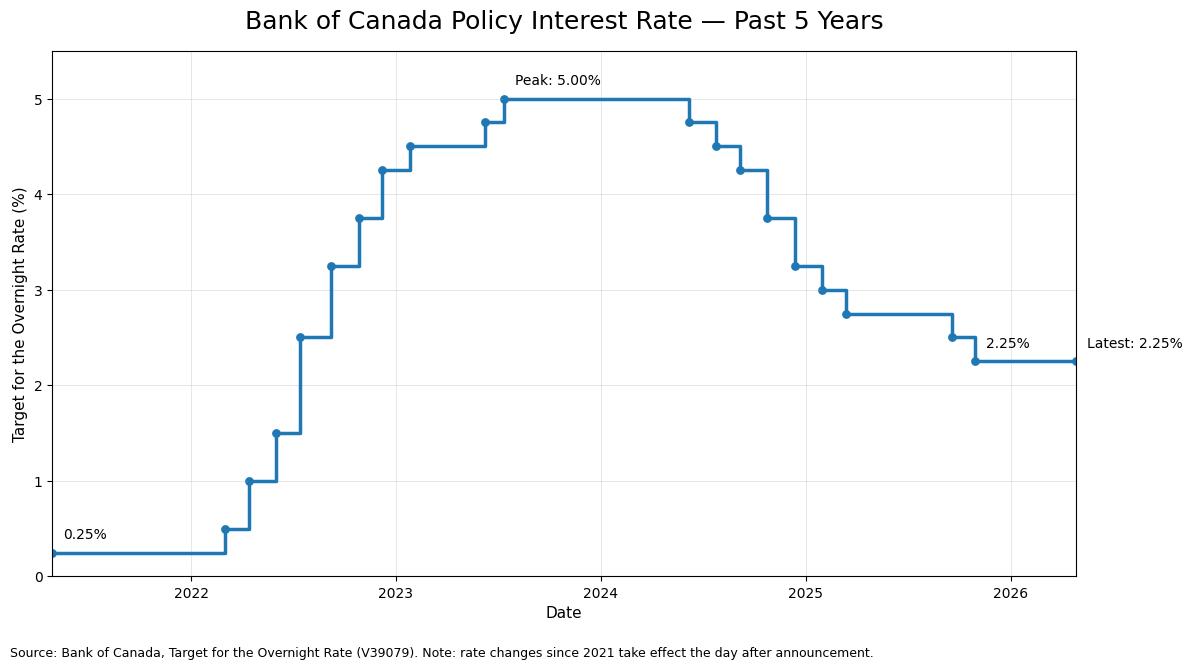
The Bank of Canada is widely expected to keep its benchmark overnight rate unchanged at 2.25% at its policy meeting on April 29, 2026, alongside the release of a new Monetary Policy Report. The decision would mark another pause after the BoC kept rates steady through recent meetings, following earlier rate cuts from 3.75% in mid-2025 as inflation cooled.
The rate decision itself may not be the market-moving part. Instead, traders will focus on Governor Tiff Macklem’s tone, the updated economic forecasts, and whether the BoC pushes back against market pricing for a possible rate hike later in Q4 2026.
Why the BoC Is Expected to Stay on Hold
The central bank is facing a difficult policy mix. On one side, Canada’s economy remains sluggish, with weak business investment, uneven GDP momentum, and labor-market softness. On the other side, the surge in energy prices linked to the U.S.-Iran war, disruptions around the Strait of Hormuz, and higher gasoline prices have lifted headline inflation risks.
Because the oil shock is supply-driven, the BoC is unlikely to react aggressively unless higher energy prices begin to feed into broader inflation expectations, wages, and core inflation. For now, the more likely strategy is a cautious “wait and see” approach.
Inflation: Headline CPI Is Hotter, but Core Inflation Is Still Contained
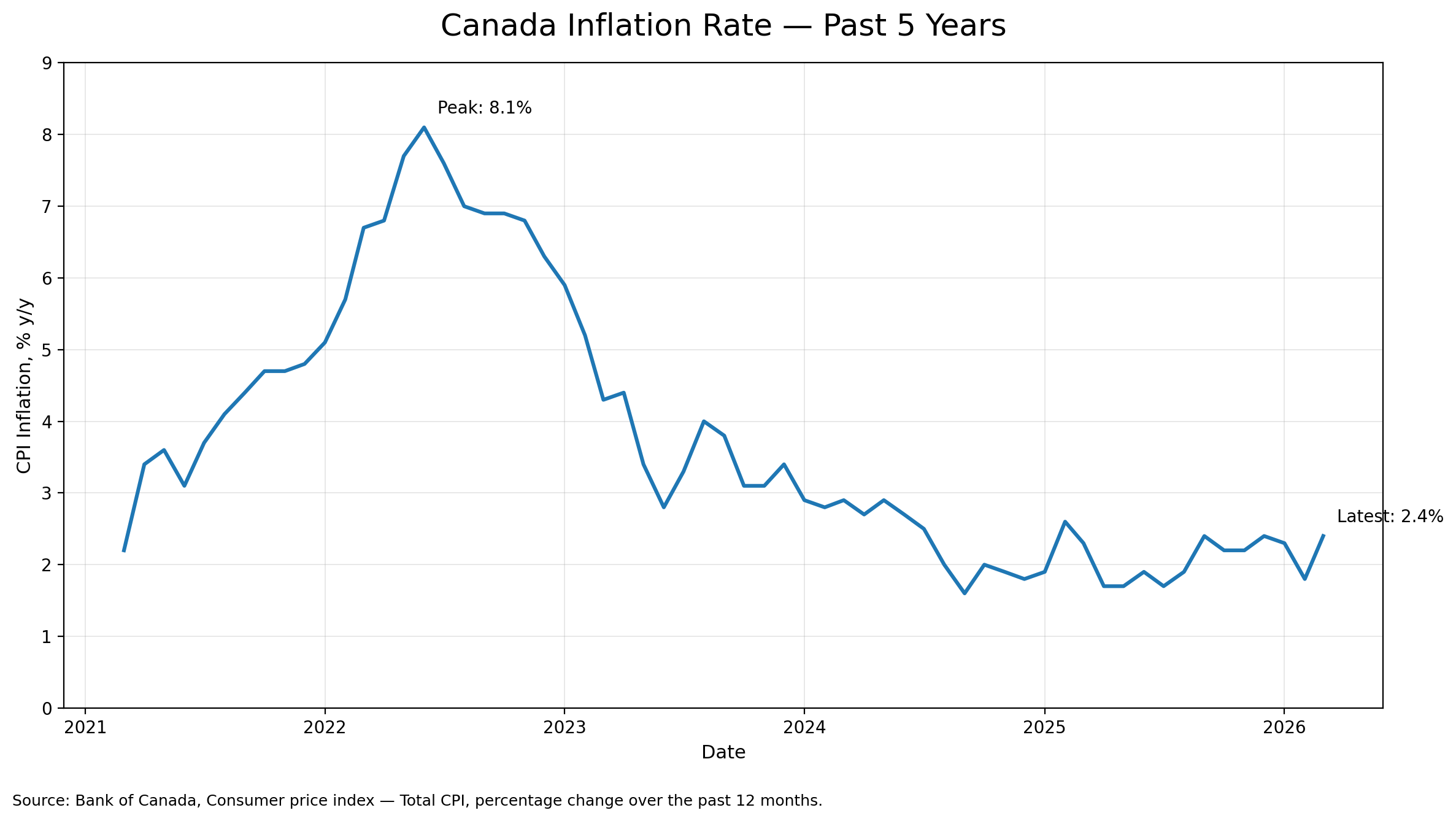
Canada’s March inflation report sent a mixed signal. Headline CPI rose 0.9% MoM, below the 1.1% forecast but above the previous 0.5%. On an annual basis, CPI increased to 2.4% YoY, up from 1.8%, but slightly below the 2.5% forecast.
Core data were less alarming. Core CPI rose 0.2% MoM, slowing from 0.4%, while annual Core CPI increased to 2.5% YoY from 2.3%. The BoC’s preferred measures were mixed: Common CPI rose to 2.6% from 2.4%, Median CPI held at 2.3%, below the 2.4% forecast, and Trimmed CPI slowed to 2.2% from 2.3%.
This matters because the trimmed CPI near 2.2% gives the BoC room to look through the energy-driven headline spike, especially if broader inflation pressures remain contained.
Producer Prices Show a Strong Upstream Inflation Shock
The bigger inflation warning came from producer-price data. Canada’s Raw Materials Price Index surged 12.0% MoM in March, far above the 9.3% forecast and sharply higher than the previous 0.9%. On a yearly basis, RMPI jumped 23.6% YoY, up from 9.1%.
The Industrial Product Price Index also accelerated, rising 2.4% MoM, above the 1.6% forecast and up from 0.6% previously. Annual IPPI increased to 7.8% YoY from 5.6%.
This shows that upstream price pressure is rising quickly. The key question for the BoC is whether this remains concentrated in commodities and energy, or whether it spreads into final consumer prices, wage demands, and inflation expectations.
Labor Market: Stabilization, but Not Strength
Canada’s March employment report improved after a very weak previous month, but it was not strong enough to force a hawkish policy shift.
The unemployment rate came in at 6.7%, below the 6.8% forecast and unchanged from the previous 6.7%. Employment increased by 14.1K, slightly below the 14.5K forecast, but a clear improvement from the prior -83.9K contraction.
The composition was mixed. Part-time employment rose 15.2K, while full-time employment remained slightly negative at -1.1K, though far better than the previous -108.4K. Average hourly wages for permanent employees accelerated to 5.1% from 4.2%, while the participation rate held steady at 64.9%.
The wage number is important. While job growth is not strong enough to justify immediate tightening, faster wage growth could become a concern if it combines with higher energy costs and rising inflation expectations.
Growth Outlook: Modest Momentum, but Risks Remain
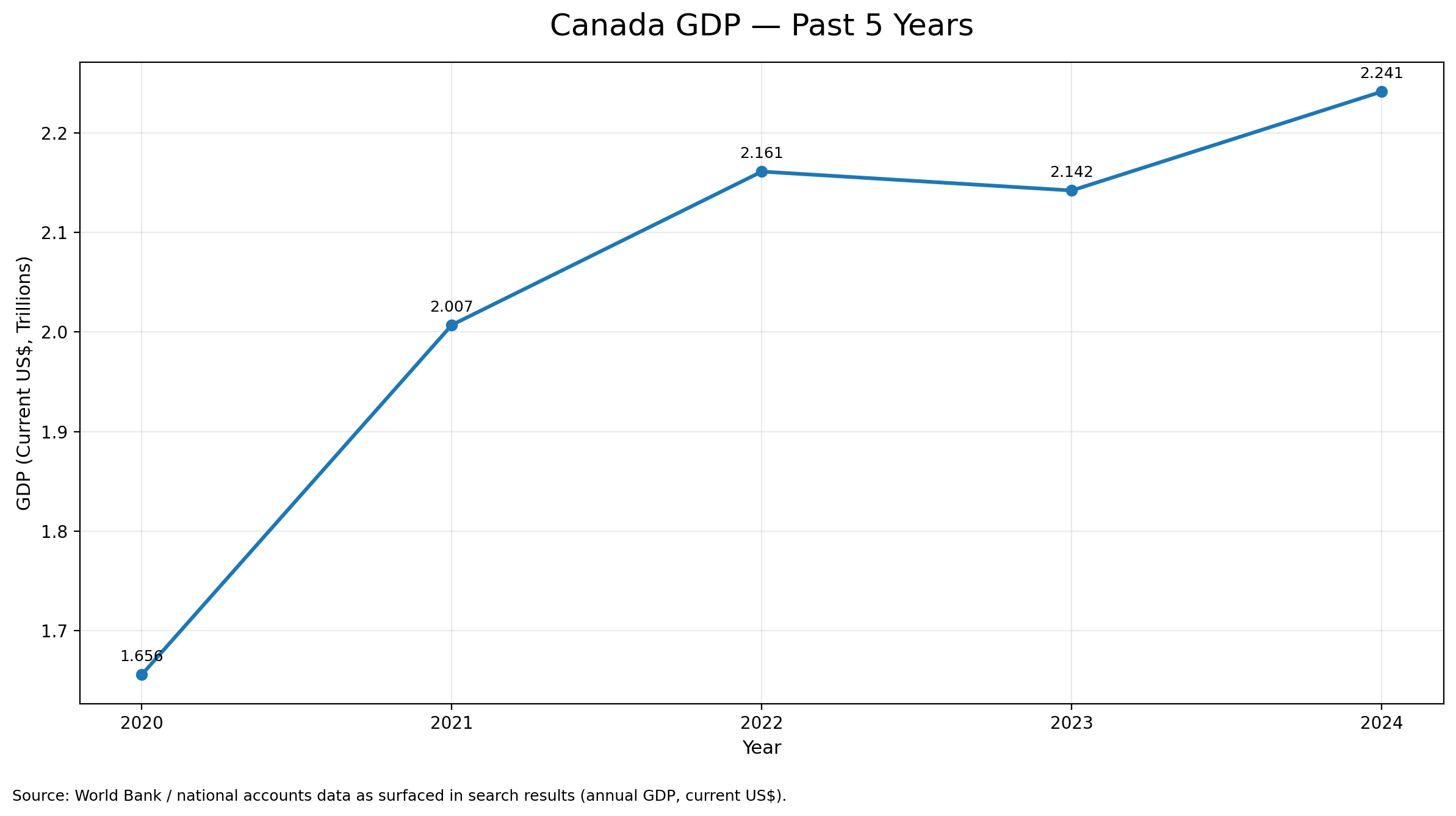
Canada’s growth picture remains uneven. Preliminary data suggest Q1 GDP growth is tracking between 1.3% annualized and the BoC’s January projection of 1.8%. February real GDP is expected to rise 0.2%, in line with Statistics Canada’s advance estimate.
Goods and services activity appears to have supported growth, with manufacturing and wholesale activity recovering as earlier auto-sector disruptions faded. Retail volumes rose 0.3%, showing some resilience in consumer spending.
However, housing activity remains a drag, home resales continue to decline, and non-conventional oil and gas extraction in Alberta appears to have pulled back in February. Early March indicators were more constructive, with hours worked up 0.2%, advance manufacturing sales rising 3.5%, and wholesale sales excluding petroleum-related products up 1.3%.
The BoC’s updated forecasts are likely to show higher inflation and weaker growth, mirroring the dilemma faced by other major central banks.
Oil Shock: A Complicated Issue for Canada
Unlike many major economies, Canada is a net oil exporter. That means higher crude prices can support national income and energy-sector revenues. However, the benefit is not automatic. Higher oil profits only become a broader growth driver if companies reinvest those gains into capital expenditure, hiring, and production expansion.
At the household level, higher gasoline prices still damage affordability and can pressure consumption. The Canadian government’s temporary removal of some federal fuel excise taxes lowered gasoline prices by 10 Canadian cents per liter and diesel by 4 Canadian cents, but fuel prices remain roughly 40% higher than at the start of 2026.
This creates a complex policy backdrop: higher oil prices can lift inflation and hurt consumers, while also supporting parts of Canada’s export economy.
Cross-Border Flows: Foreign Demand for Canadian Assets Cools
Canada’s February cross-border securities data showed weaker external demand. Foreign purchases of Canadian securities fell to 6.17B, far below the 23.81B forecast and sharply down from 46.79B previously.
At the same time, Canadian purchases of foreign securities rose to 25.36B from 11.42B. This points to a clear shift: foreign investors reduced buying of Canadian assets, while Canadian investors increased overseas exposure.
For the Canadian dollar, this matters because softer capital inflows can reduce support for CAD, especially if the BoC sounds cautious and global risk appetite remains unstable.
Main Risks for the BoC
The BoC’s policy challenge is not just about one CPI print. The central bank must assess whether the current inflation shock becomes persistent.
The main risks are:
- Second-round inflation effects from higher energy prices.
- Higher wage growth, especially after permanent employee wages rose to 5.1%.
- Weak growth and investment, which argue against tighter policy.
- U.S. tariffs on steel, aluminum, autos, and forestry sectors.
- CUSMA renegotiation uncertainty, which could weigh on trade and investment.
- Energy-market volatility linked to the U.S.-Iran war and the Strait of Hormuz.
Possible Market Reaction
A simple hold at 2.25% is already expected, so the market reaction will depend on the tone of the statement, the Monetary Policy Report, and Macklem’s press conference.
If the BoC emphasizes contained core inflation and weak growth, CAD could soften, Canadian yields may ease, and markets may reduce expectations for a 2026 hike.
If the BoC stresses energy inflation, wage growth, and rising inflation expectations, CAD could gain, short-end yields may rise, and traders may price a higher probability of an earlier rate hike.
The most likely outcome is limited immediate volatility, with the BoC avoiding firm forward guidance and keeping policy data-dependent.
FAQ
What is the expected Bank of Canada decision on April 29, 2026?
The Bank of Canada is widely expected to keep its benchmark overnight rate unchanged at 2.25%.
Why is the BoC likely to hold rates steady?
The BoC is likely to hold because inflation risks have risen due to energy prices, but core inflation remains relatively contained, and Canada’s economy still shows signs of weak growth and soft investment.
Is Canada’s inflation problem getting worse?
Headline inflation rose to 2.4% YoY in March, but underlying inflation was more mixed. The BoC’s Trimmed CPI slowed to 2.2%, suggesting that the broader inflation trend has not yet re-accelerated sharply.
Could the Bank of Canada raise rates later in 2026?
Markets are pricing some risk of a rate hike in Q4 2026, but the BoC is unlikely to pre-commit. A hike would become more likely if energy prices feed into wages, expectations, and broader inflation.
How could the BoC decision affect the Canadian dollar?
If the BoC sounds cautious and highlights weak growth, CAD could weaken. If it signals concern about inflation persistence and possible future tightening, CAD could strengthen.
Why does oil matter so much for Canada?
Canada is a net oil exporter, so higher crude prices can support national income and energy-sector revenues. However, higher gasoline prices also hurt households and can lift inflation, creating a mixed impact for the economy.
Comments