 English
 پارسی


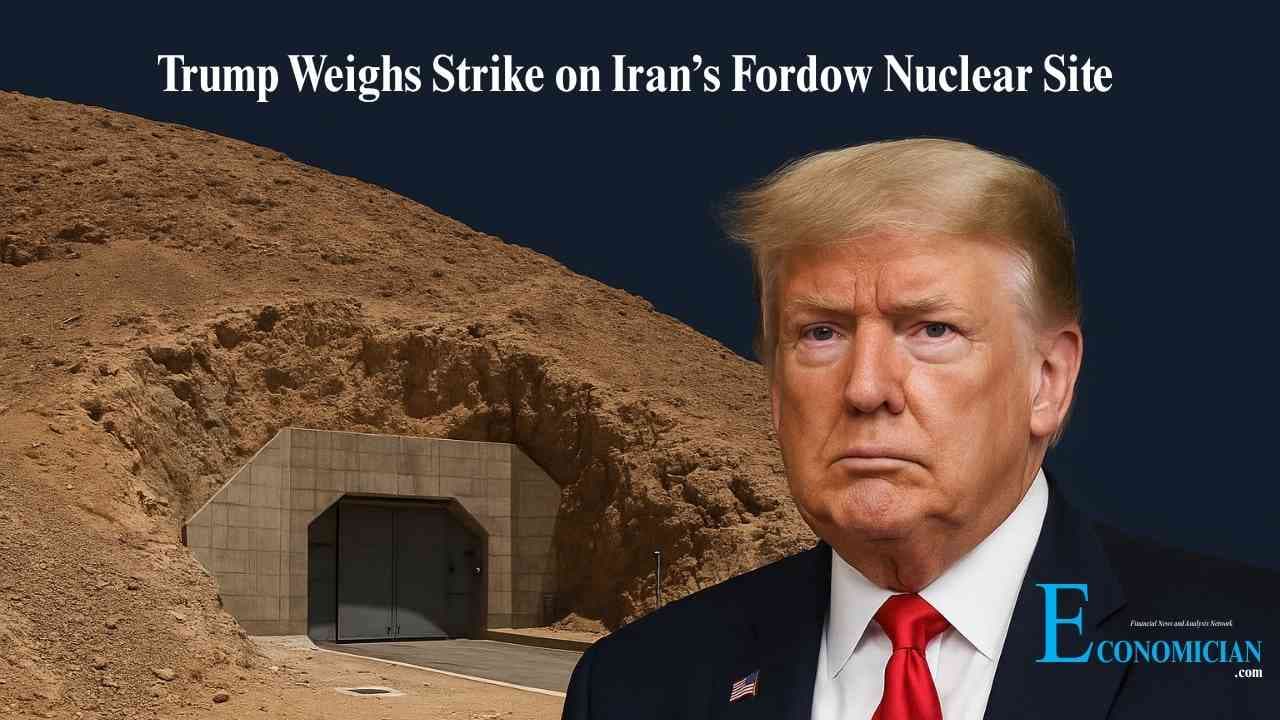
Trump has been briefed on both the risks and benefits of targeting Fordow—a site buried deep inside a mountain near the holy city of Qom, designed to withstand airstrikes and bunker-busting bombs. “He feels he doesn’t have much of a choice,” one source told CBS. “Shutting it down means destroying Fordow.”
While no final decision has been made, Trump has reviewed military options, including the use of powerful munitions capable of penetrating heavily reinforced underground facilities. He has reportedly considered one possible off-ramp: allowing Iran to voluntarily disable the site, should Tehran agree to abandon its nuclear ambitions. But as of Thursday morning, sources say, Trump had not yet committed to a course of action.
Why Fordow Matters
Fordow is not just another enrichment site. It is one of the most controversial facilities in Iran’s nuclear infrastructure. Built in secret and revealed to the world in 2009, Fordow is located in a hardened tunnel complex and designed to be immune to conventional military strikes. That fact alone has made it central to concerns in Washington, Tel Aviv, and European capitals about Iran's nuclear intentions.
Under the 2015 Joint Comprehensive Plan of Action (JCPOA)—commonly known as the Iran nuclear deal—Iran agreed to convert Fordow into a research center and halt uranium enrichment at the facility. However, after the Trump administration withdrew from the deal in 2018 and reimposed sweeping sanctions, Iran resumed enrichment activities at Fordow, enriching uranium to levels far beyond the JCPOA’s original limits.
Intelligence Warnings and Disputed Assessments
According to sources cited by CBS, recent intelligence briefings have suggested that Iran may be closer than ever to reaching weapons-grade enrichment capability. CIA Director John Ratcliffe reportedly told lawmakers in private that the pace of Iran’s uranium enrichment is accelerating dangerously. “Saying Iran isn’t close is like saying a football team on the one-yard line doesn’t want to score,” one official said, summarizing Ratcliffe’s remarks.
Still, the intelligence community remains divided. While some senior officials see evidence of technical progress, others maintain that Supreme Leader Ali Khamenei has not given the go-ahead for full weaponization. Congressional briefings by CIA analysts indicated that while enrichment has increased, Iran has not resumed research on warhead design or missile-based delivery systems.
The CIA declined to comment when asked by CBS News.
📍 Timeline: Iran’s Nuclear Standoff at a Glance
- 2002: Iran’s secret nuclear program is revealed by opposition groups.
- 2009: The Fordow enrichment site is exposed. Western intelligence reveals its hardened underground construction.
- 2015: JCPOA (Iran nuclear deal) signed by Iran, U.S., UK, France, Germany, Russia, and China. Fordow’s enrichment is suspended.
- May 2018: Trump withdraws from the JCPOA, calling it a “terrible deal.” Sanctions are reimposed.
- 2019–2022: Iran resumes enrichment at Fordow and other facilities. Uranium enrichment surpasses JCPOA limits.
- 2023–2024: IAEA reports show Iran enriching uranium up to 60%, near weapons-grade.
- June 2025: CBS reports Trump considering a military strike on Fordow.
Geopolitical Risks
A strike on Fordow would mark a major escalation in U.S.-Iran tensions, risking retaliation by Iran or its regional proxies. The facility’s location near a major religious city also adds potential for broader backlash, both domestically within Iran and across the Muslim world. Analysts warn that such a move could also fracture what remains of the international consensus around nonproliferation efforts and diplomacy with Tehran.
As military planners examine potential strike options, key questions remain unanswered: What is the readiness status of U.S. forces in the region? How long would it take to position assets for an effective attack? And what kind of response would the U.S. face from Iran and its allies?
For now, Trump is holding his decision. But with the intelligence picture growing more urgent, and diplomatic options thinning, sources say the window for a peaceful resolution is narrowing.
AI generated article
Comments