 English
 پارسی


Introduction
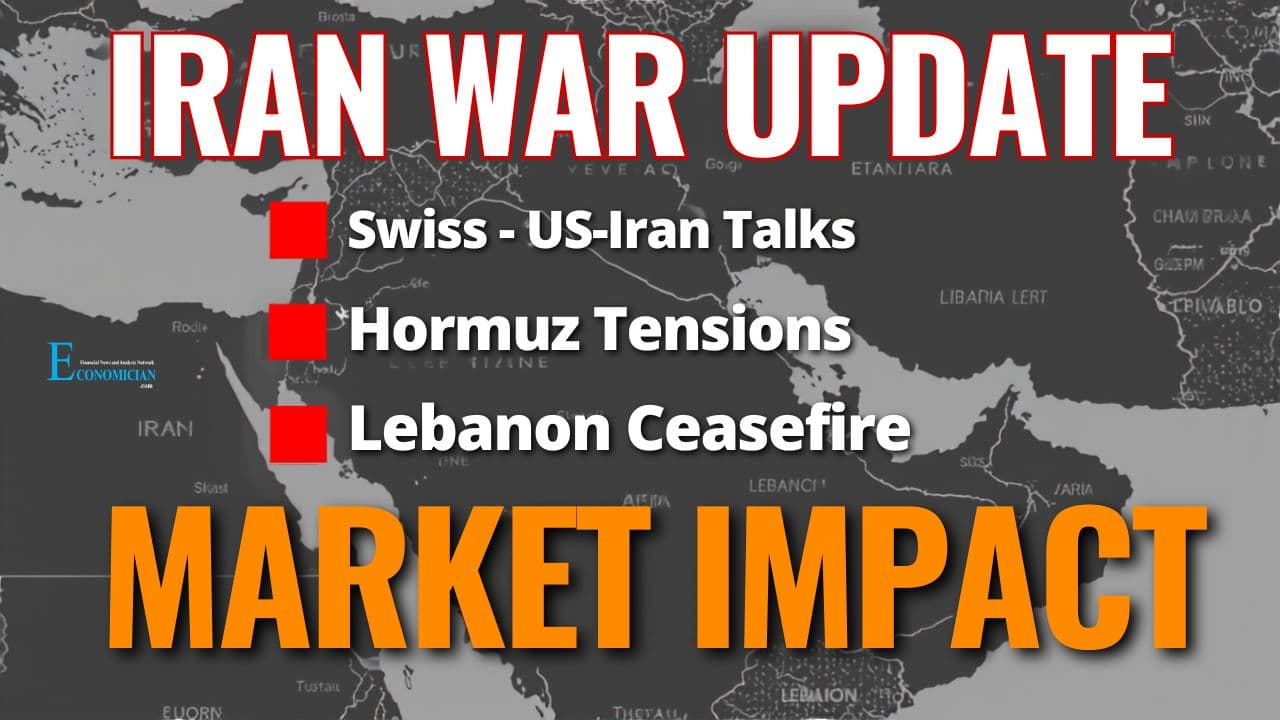
The Iran war entered a critical diplomatic phase over the past three days as high-level talks between the United States and Iran in Switzerland produced the first serious signs of de-escalation. The meetings, supported by mediation from Pakistan and Qatar, did not deliver a final peace agreement, but they created a framework for continued negotiations, temporary sanctions relief, a mechanism to protect shipping through the Strait of Hormuz, and a fragile path toward reducing the fighting connected to Lebanon.
The most important conclusion is clear: the immediate risk of a wider regional war has declined, but the conflict is not over. The Swiss talks reduced pressure on oil markets and helped calm fears of a full closure of the Strait of Hormuz, yet the most sensitive issues remain unresolved. These include Iran’s nuclear program, IAEA inspections, frozen Iranian assets, the future of sanctions relief, Israel’s military position in southern Lebanon, and the long-term security structure of the Gulf.
For traders, investors, and geopolitical analysts, this is not a final peace signal. It is a temporary de-escalation signal with major risks still active.
Key Takeaways
- The United States and Iran agreed to continue working toward a broader final deal within a 60-day framework.
- The U.S. issued temporary sanctions relief allowing Iranian oil, petroleum, and petrochemical transactions until August 21, 2026.
- A communication mechanism was created to reduce the risk of disruption in the Strait of Hormuz.
- The Lebanon ceasefire is holding only partially and remains the biggest immediate threat to the diplomatic process.
- Iran says it has not accepted new nuclear commitments, while U.S. officials say progress was made on IAEA inspection access.
- Oil prices reacted lower after the talks, but the geopolitical risk premium has not fully disappeared.
Background: Why the Swiss Talks Matter
The Swiss talks came after a dangerous escalation involving Iran, the United States, Israel, Hezbollah, and maritime security in the Gulf. The conflict had already expanded beyond a direct U.S.-Iran confrontation and had become connected to Lebanon, Israeli military operations, regional proxy networks, oil exports, and global shipping.
Switzerland became the diplomatic venue for the next phase of talks because both sides needed a neutral location to turn a fragile interim understanding into a more durable agreement. The earlier framework, referred to as the Islamabad Memorandum of Understanding, created the base for a temporary ceasefire and future negotiations. However, the agreement remained vulnerable because developments in Lebanon and the Strait of Hormuz could quickly collapse the process.
That is why the past three days were so important. The talks were not only about the nuclear file. They were also about war containment, sanctions relief, oil flows, shipping security, and regional ceasefire enforcement.
What Happened in the Past Three Days?
Day 1: Hormuz Pressure and Lebanon Fighting Threatened the Talks
The first major challenge came from the Strait of Hormuz. Iran again threatened or declared restrictions on the strait, arguing that the United States and Israel had failed to respect ceasefire commitments, especially because Israeli military activity continued in Lebanon.
This created immediate pressure on energy markets. The Strait of Hormuz is one of the world’s most important oil and gas shipping routes. Any serious disruption there can quickly raise oil prices, increase insurance costs for tankers, and create new inflation risks for energy-importing economies.
At the same time, Lebanon became the central battlefield risk. Israel and Hezbollah had entered a ceasefire phase, but reports of continued strikes and military activity created doubts about whether the truce could survive. Iran’s position was that a real regional deal must include a meaningful reduction in Israeli operations in Lebanon.
Day 2: Swiss Talks Begin Under Heavy Pressure
The second day showed that diplomacy was still alive, but extremely fragile. U.S. and Iranian officials continued indirect and high-level discussions with mediation support from Pakistan and Qatar. The main goal was to prevent the temporary ceasefire from collapsing and to keep open a path toward a final settlement.
The market focus remained on Hormuz. Tanker movement slowed compared with normal levels, even though the route was not completely shut. This distinction is important. Hormuz was not fully closed in practical terms, but the political and military risk around the waterway remained high enough to affect shipping decisions and oil-market pricing.
During this phase, negotiators focused on three urgent issues: keeping commercial shipping moving, preventing the Lebanon ceasefire from collapsing, and creating enough trust to continue discussions about sanctions, nuclear inspections, and frozen assets.
Day 3: De-Escalation Progress, but No Final Agreement
The third day produced the strongest diplomatic progress. U.S. officials said the talks created a good foundation for a final deal. The U.S. also moved forward with temporary sanctions relief by issuing a general license allowing Iranian oil-related transactions for a limited period.
This was the most concrete decision from the process so far. It gave Iran limited economic relief and gave the U.S. a practical incentive structure to keep Tehran inside the diplomatic process.
However, Iran pushed back against the idea that it had accepted new nuclear commitments. Tehran’s position remains that it did not negotiate away its core nuclear rights in this round. This means the diplomatic progress is real, but the final nuclear agreement remains unfinished.
Main Decisions and Understandings So Far
1. A 60-Day Roadmap Toward a Final Deal
The U.S. and Iran agreed to continue working toward a more complete final settlement within a 60-day framework. This does not mean a final peace deal has been signed. It means both sides accepted a negotiation timeline and a political structure for the next stage.
This is important because it gives markets and regional governments a temporary horizon. For the next two months, the diplomatic track will likely matter more than battlefield escalation unless a major violation occurs.
2. Temporary U.S. Sanctions Relief for Iranian Oil
The most important implemented decision is the U.S. temporary general license allowing transactions related to Iranian crude oil, petroleum products, and petrochemicals until August 21, 2026.
This is a major development because Iranian oil exports are central to both the Iranian economy and global supply expectations. The waiver also covers related services such as banking, insurance, transportation, and transactions connected to oil trade.
For markets, this is bearish for oil prices in the short term because it reduces fears of immediate supply disruption and creates the possibility of additional Iranian barrels entering the market.
3. Hormuz Communication Channel
A new communication mechanism was created to help keep commercial shipping moving through the Strait of Hormuz. This does not remove the risk, but it reduces the chance of accidental escalation.
The key issue is that Hormuz remains politically sensitive. Even if ships continue to pass, the market will remain alert to any military incident, drone activity, missile threat, tanker seizure, naval confrontation, or renewed Iranian closure declaration.
4. Lebanon De-Confliction Mechanism
The talks also produced a mechanism to support the Lebanon ceasefire and reduce the chance of a broader Israel-Hezbollah escalation.
This is one of the most important but fragile parts of the diplomatic process. Iran can influence Hezbollah, but Israel is not formally bound by a U.S.-Iran agreement. That means Lebanon can still become the trigger that breaks the broader peace process.
5. Nuclear Inspections Remain Disputed
U.S. officials say Iran has agreed to allow nuclear inspectors back into the country. Iran, however, says it has not accepted new nuclear commitments in the Swiss round.
This is a major gap. The final agreement cannot be stable unless the nuclear inspection issue is clearly defined. The next stage of negotiations will need to clarify IAEA access, monitoring rules, uranium stockpile management, and the future of enrichment.
6. Frozen Iranian Assets Are Still a Sensitive Issue
Another unresolved area is the use and release of frozen Iranian funds. The U.S. wants controlled mechanisms that limit how the money can be used. Iran wants broader access and rejects restrictions that make the funds politically symbolic rather than economically useful.
This issue matters because sanctions relief is not only about oil exports. It is also about banking access, payment channels, insurance, dollar transactions, and the ability to use foreign reserves.
Lebanon: The Biggest Immediate Risk to the Deal
Lebanon is the most dangerous short-term pressure point. The ceasefire between Israel and Hezbollah has reduced the intensity of fighting, but it remains fragile.
The problem is structural. Iran wants Lebanon included in any regional de-escalation package, while Israel wants to preserve freedom of military action against Hezbollah. These two positions are difficult to reconcile.
If the Lebanon ceasefire collapses, Iran may accuse the U.S. of failing to control Israel. That could lead Tehran to reduce cooperation on Hormuz, slow technical talks, or harden its position on nuclear inspections.
For this reason, the Lebanon front is not a side issue. It is central to the durability of the U.S.-Iran process.
Strait of Hormuz: Open, but Still a Major Risk
The Strait of Hormuz is functionally open, but not fully normalized. Tanker movement has improved, but shipping activity remains vulnerable to political signals and security incidents.
For oil markets, this means the worst-case scenario has been delayed, not eliminated. A full and sustained closure of Hormuz would be a major shock to global energy markets. Even a partial disruption could push oil prices higher, increase tanker insurance costs, and raise inflation concerns.
The new communication channel is positive, but it does not solve the deeper problem: Hormuz remains one of Iran’s strongest geopolitical pressure tools.
Market Impact: Oil Falls, but Risk Premium Remains
Oil prices moved lower after the talks because traders saw reduced risk of a full regional escalation and a lower probability of a serious Hormuz disruption. The temporary U.S. waiver for Iranian oil also added pressure to prices by improving the outlook for supply.
However, the oil market has not returned to a fully normal environment. The risk premium is smaller, but still present.
The market is now watching five key signals:
- Whether Iranian oil exports increase smoothly.
- Whether insurance and shipping companies return to normal operations.
- Whether Hormuz traffic returns to pre-war levels.
- Whether the Lebanon ceasefire continues.
- Whether technical nuclear talks produce real progress.
If these conditions improve, oil prices may face further downside pressure. If one of them fails, prices could quickly rebound.
Impact on Gold, the U.S. Dollar, and Risk Assets
Gold may lose some safe-haven demand if the talks continue successfully. However, gold is unlikely to fully price out geopolitical risk because the final deal is still far away.
The U.S. dollar reaction is more complex. A calmer geopolitical environment can reduce safe-haven demand for the dollar, but lower oil prices may also support global risk sentiment and reduce inflation concerns.
Wall Street and global equities may benefit from de-escalation because lower oil prices support consumer spending, corporate margins, and central-bank confidence. But equity markets will remain sensitive to headlines about Hormuz, Lebanon, and nuclear inspections.
What Is Still Unresolved?
The Swiss talks created diplomatic momentum, but the hardest issues remain open.
- Iran’s Nuclear Program
The biggest unresolved issue is the future of Iran’s nuclear program. The final deal must answer several difficult questions: Will Iran keep enrichment rights? What happens to enriched uranium stockpiles? How much access will the IAEA receive? Will inspections be permanent, temporary, or conditional?
- Full Sanctions Relief
The current U.S. move is temporary. Iran wants durable sanctions removal, not short-term waivers. The final deal must clarify whether oil, banking, insurance, shipping, and dollar transactions will be permanently reopened.
- Frozen Assets
The release and use of Iranian funds remain politically sensitive. Iran wants unrestricted access, while the U.S. prefers controlled mechanisms.
- Israel and Hezbollah
Israel’s role remains the most difficult external factor. Even if Washington and Tehran reach an understanding, Israel’s military posture in Lebanon could still destabilize the entire process.
- Strait of Hormuz Security
The new communication line is useful, but there is still no final security arrangement for long-term maritime stability in the Gulf.
Base Case Outlook
The base case is cautious de-escalation. The U.S. and Iran have strong reasons to keep negotiations alive for the next 60 days. Iran gains temporary economic relief, while the U.S. reduces the risk of a wider Middle East war and a global oil shock.
However, the risk of reversal remains high. The agreement can still be damaged by any major strike in Lebanon, a Hormuz incident, disagreement over nuclear inspections, or dispute over frozen assets.
For now, the diplomatic process is alive, but fragile.
Trading and Market Outlook
Oil
Short-term bias: bearish to neutral.
Oil prices may remain under pressure if Iranian exports increase and Hormuz traffic improves. However, traders should not ignore headline risk. Any renewed threat to Hormuz or collapse in Lebanon could quickly push prices higher.
Gold
Short-term bias: neutral.
Gold may lose part of its geopolitical premium, but unresolved nuclear and regional risks should keep safe-haven demand alive.
U.S. Dollar
Short-term bias: neutral to slightly bearish.
A calmer Middle East outlook may reduce safe-haven demand for the dollar, but the dollar’s direction will also depend on U.S. rates, inflation data, and global risk sentiment.
Equities
Short-term bias: cautiously positive.
Lower oil prices and reduced war risk can support equities, especially in energy-importing economies. But markets remain vulnerable to sudden geopolitical reversals.
Conclusion
The Swiss U.S.-Iran talks produced the most important diplomatic progress of the Iran war so far, but they did not end the conflict. The key achievements are the 60-day roadmap, temporary U.S. oil sanctions relief, a Hormuz communication channel, and a Lebanon de-confliction mechanism.
The next phase will be more difficult. Technical talks must address nuclear inspections, uranium stockpiles, sanctions architecture, frozen assets, and regional security guarantees. Lebanon remains the biggest immediate threat, while the Strait of Hormuz remains the most important market risk.
The correct interpretation is not “peace deal completed.” The correct interpretation is “temporary de-escalation with a real but fragile path toward a final agreement.”
For markets, this means lower immediate oil risk, softer safe-haven pressure, and better short-term sentiment. But the risk premium has not disappeared. It has only been reduced.
FAQ
Q: Did the Swiss US-Iran talks end the Iran war?
A: No. The talks reduced immediate escalation risk and created a roadmap for further negotiations, but they did not produce a final peace agreement.
Q: What was the most important result of the Swiss US-Iran talks?
A: The most important result was a temporary de-escalation framework, including a 60-day roadmap, temporary U.S. sanctions relief for Iranian oil-related transactions, a Hormuz communication channel, and a mechanism to support the Lebanon ceasefire.
Q: Did the United States lift Iran oil sanctions?
A: The U.S. issued a temporary general license allowing certain Iranian crude oil, petroleum, and petrochemical transactions until August 21, 2026. This is temporary relief, not full permanent sanctions removal.
Q: Is the Strait of Hormuz open?
A: The Strait of Hormuz appears functionally open, but the situation is not fully normal. Shipping has continued, but traffic remains vulnerable to political and military risk.
Q: Why is Lebanon important for the US-Iran talks?
A: Lebanon is important because fighting between Israel and Hezbollah can directly undermine the U.S.-Iran diplomatic process. Iran wants Lebanon included in regional de-escalation, while Israel wants to keep military freedom against Hezbollah.
Q: Did Iran agree to new nuclear commitments?
A: U.S. officials say progress was made on nuclear inspection access, but Iran says it did not accept new nuclear commitments during the Swiss round. This remains one of the biggest unresolved issues.
Q: How could the talks affect oil prices?
A: The talks are bearish for oil in the short term because they reduce the immediate risk of a Hormuz shutdown and allow temporary Iranian oil-related transactions. However, any breakdown in talks could quickly push oil prices higher again.
Q: What should markets watch next?
A: Markets should watch IAEA inspection access, Iranian oil export volumes, Hormuz shipping flows, Lebanon ceasefire stability, frozen-asset negotiations, and whether the 60-day roadmap produces real technical progress.
Q: Is this good news for global markets?
A: It is cautiously positive for global markets because it reduces immediate war and oil-supply risks. However, the situation remains fragile, and headline risk is still high.
Q: What is the main risk now?
A: The main risk is that the Lebanon ceasefire collapses or that U.S.-Iran technical talks fail over nuclear inspections, sanctions relief, or frozen assets.
Comments