 English
 پارسی


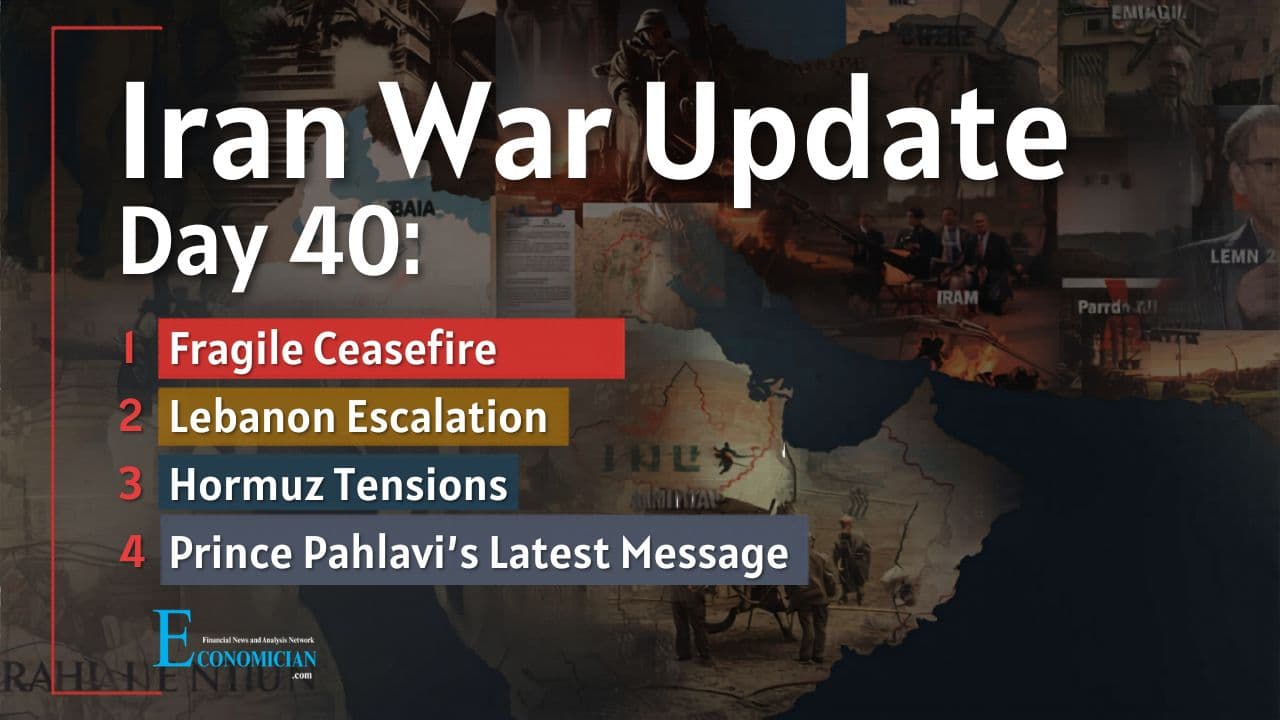
Fragile Ceasefire, Lebanon Escalation, Hormuz Tensions
The clearest reading for Wednesday, April 8 into early Thursday, April 9, 2026 is that the war has moved into a fragile diplomatic pause, not a stable peace. The U.S.-Iran ceasefire still exists on paper, but it is already under strain from three immediate fault lines: Israel’s mass strikes on Lebanon on April 8, renewed Hezbollah rocket fire into northern Israel early on April 9, and unresolved disputes over Hormuz access, enrichment, and the real scope of the truce ahead of talks in Islamabad.
What happened inside Iran
In the post-ceasefire reporting window, there was no fresh major-wire confirmation of a new large strike wave inside Iran, and also, I did not find a newly confirmed targeted assassination inside Iran in this same period. The center of gravity in reports shifted away from fresh inside-Iran attacks and toward Lebanon, the Strait of Hormuz, and the diplomacy track through Pakistan. Reuters’ coverage instead emphasizes that the U.S. paused attacks on Iran while both sides stayed militarily alert and argued over the terms of the next phase.
What happened outside Iran
The heaviest fighting after the ceasefire came outside Iran, especially in Lebanon. Reuters reported that Israel hit more than 100 Hezbollah command centers and military sites across Beirut, the Bekaa Valley, and southern Lebanon on April 8, with Lebanese civil defense reporting 254 killed and more than 1,100 wounded. Reuters also reported that Hezbollah resumed rocket fire into northern Israel, saying Israel had violated the truce. In parallel, Reuters’ ceasefire explainer said Iran had targeted oil infrastructure in Gulf countries, including a Saudi route used to bypass the Strait of Hormuz, while Kuwait, Bahrain, and the UAE also reported missile or drone attacks and alerts around the ceasefire period.
Targeted assassinations
There is one major new targeted-killing development outside Iran in this window: on Thursday, April 9, the Israeli military said it had killed Hezbollah chief Naim Qassem in an airstrike on Beirut. Reuters notes that this was an Israeli claim at the time of publication and described it as a potentially major blow to Hezbollah and to Iran’s regional network. By contrast, did not find comparable newly confirmed assassination inside Iran during the same post-ceasefire period.
Ceasefire and its latest condition
The ceasefire is still in place formally, but it is highly unstable operationally. Israel and the U.S. say Lebanon is excluded. Iran, Pakistan, France, Britain, the EU, and the U.N. position themselves much closer to the view that a credible ceasefire must extend to Lebanon as well. That dispute now defines the real condition of the truce: it exists, but the parties do not agree on what it covers. Iran’s diplomats are still heading to Islamabad for talks, but Tehran has made clear it sees continued attacks on Lebanon as a direct threat to the process.
Strait of Hormuz
The Strait of Hormuz is not back to normal. Reuters says passage remains restricted, ships are expected to provide vessel and cargo details, and movement is still happening only on a limited, conditional basis under Iranian control. The White House says Trump is pushing for full reopening without tolls, while Iran insists it retains authority over the chokepoint during the truce window. In practice, this is not a normal reopening; it is a tightly managed and politically contested partial passage regime.
Internet shutdown
Iran’s internet blackout is still in force. NetBlocks said on April 9 that the shutdown had entered its 40th day after 936 hours of near-total disconnection, while Wall Street Journal updates said the blackout had stretched past 40 days and continued after the ceasefire announcement. That means one of the most important conditions inside Iran remains unchanged: the public is still largely cut off from the global internet even as the war shifts into a negotiation phase.
Official comments and diplomacy
Trump said U.S. military forces would remain around Iran until Tehran fully complies with the deal, warning that if it does not, “the shootin’ starts” again. Iran’s ambassador in Geneva said Tehran would approach talks with deep caution and mistrust, while insisting that shipping through Hormuz would remain coordinated with Iranian forces during the truce. Netanyahu endorsed the pause on strikes against Iran but said Lebanon is not included. Reuters also reported that Turkish media said Turkey’s intelligence service helped keep channels open and support de-escalation around the ceasefire effort.
International reactions
The broad international reaction has been: welcome the pause, but warn that it may fail if Lebanon is left outside it. France said on April 9 that Lebanon must be covered. Britain called Israel’s pounding of Lebanon deeply damaging to the truce. The EU’s top diplomat said the U.S.-Iran truce should be extended to Lebanon. The U.N. sent envoy Jean Arnault to Iran and warned that continued regional violence could spoil the ceasefire before diplomacy has a chance to stabilize it.
Diaspora activities
Visible diaspora activity in this window was strongest in the United States, where AP reported anti-war protests on Wednesday, April 8 in San Francisco, Austin, and New York. AP also captured the emotional split among many Iranian-Americans: relief that a wider war may have been paused, but continuing fear for relatives because of the blackout and concern that a ceasefire leaving the regime in place could expose people inside Iran to renewed repression.
Prince Reza Pahlavi’s latest statement and message
Based on the Wednesday-night video message, Prince Reza Pahlavi’s latest line is that the two-week ceasefire should not be read as a setback for Iranians, but as proof that the Islamic Republic has been badly weakened and pushed toward defeat. He frames the last 40 days as a period of unprecedented damage to the regime, argues that airstrikes alone cannot finish it, and says the final blow must still come from the Iranian people. His operational message is threefold: do not lose hope, protect yourselves, remain patient, and stay ready for the decisive moment, while the diaspora continues to amplify the demand for an end to the Islamic Republic abroad. That broad thrust is also reflected in contemporaneous reporting and search results about his latest remarks.
Past 48-Hour Attack Report Based on Vahid Online and Ilia Hashemi
This combined review of the two Telegram channels points to a tense 48-hour period marked by reported strikes on energy infrastructure, drone-related incidents around Tehran and nearby cities, air-defense activations, explosions, and at least one reported outbound missile launch toward the southern side of the Persian Gulf. Some entries describe confirmed claimed targets, while others are field-style observations of explosions, fires, or defensive activity. These are public-source channel reports and should be treated as reported claims rather than independently verified battlefield assessments.
- At around 10:00 a.m. on Wednesday, 8 April, the clearest reported strike was on the Lavan oil refinery on Lavan Island. Vahid Online said Iranian reporting described the refinery facilities as having been targeted, and later relayed a claim that the attack was carried out by Mirage fighter jets said to be linked to the United Arab Emirates.
- On the same day, Ilia Hashemi reported that at 12:35 p.m., the Islamic Republic fired a missile from Sirik in Hormozgan Province toward the south of the Persian Gulf, with the likely direction described as toward the UAE. This was one of the few outward-directed strikes mentioned in the two-source review.
- During the evening of 8 April, both channels pointed to a wave of unrest around Tehran and nearby areas. Vahid Online reported that around 9:30 p.m., air-defense systems were active in Tehran and parts of Alborz Province, reportedly in response to hostile small drones. The same post added that targets around Tehran were said to have been attacked, while defensive activity was also reported in Isfahan, Kerman, Parand, and Robat Karim, with additional reports of explosions in Isfahan.
- Ilia Hashemi’s posts gave a more granular, real-time picture of that same evening. At 7:30 p.m., air defense was reportedly active in eastern Tehran. At 7:50 p.m., air defense in western Tehran was briefly activated. At 8:00 p.m., the Tarasht area in west Tehran was reported to be under active air-defense response, with a drone visible in the sky. At 8:01 p.m., an explosion was heard in Karaj, although the precise point of impact was not yet clear. At 8:45 p.m., another explosion was reported in Tehran’s Marzdaran district.
- Ilia Hashemi also narrowed one of the Karaj-related incidents, saying the explosion heard there appeared to come from the direction of Bidganeh and Malard. This is notable because the Karaj-Malard corridor has repeatedly appeared in open-source war reporting as a zone of military and logistical sensitivity.
- Looking back to the evening of 7 April, Ilia Hashemi reported that at 7:41 p.m., a location in west Tehran was on fire. While the exact site was not identified, the report suggested direct visible damage rather than only defensive interception. Later that night, at 10:50 p.m., air defense was again reported active in eastern Tehran, and at 10:55 p.m., Milad Tower was said to still be dark, reinforcing the sense of continuing disruption in the capital.
- One additional infrastructure-related note from Ilia Hashemi referred to the Bushehr weather radar, which the channel described as having been previously hit by a missile. Although that strike was not presented as a same-day event, it was included in the reporting context around the past two days and indicates continued attention to communications and monitoring infrastructure.
- Across both channels, the main pattern over the last 48 hours appears to be a mix of strategic infrastructure pressure and urban-area aerial threat activity. The most concrete named target was the Lavan refinery. The most sustained sequence of live developments centered on Tehran, Karaj, and western/eastern suburban belts, where explosions, drone sightings, and repeated air-defense activation were reported within a relatively short window.
- In geographic terms, the combined source picture covers Lavan Island, Sirik, Tehran, Tarasht, Marzdaran, Karaj, Bidganeh, Malard, Isfahan, Kerman, Parand, Robat Karim, and background reference points including Bushehr. Outside Iran, the only clearly described reported target direction in this 48-hour window was the missile fired toward the southern Persian Gulf, likely toward the UAE.
Bottom line
Taken together, the two channels suggest that the last 48 hours were defined by one reported strike on a major oil facility, one reported missile launch toward the Persian Gulf, and a broader sequence of drone-related alerts, explosions, and air-defense activity across the Tehran-Karaj axis. Vahid Online provided the more strategic and target-specific framing, while Ilia Hashemi supplied the more immediate time-stamped field observations. Used together, they create a fuller picture of both the claimed strikes and the atmosphere on the ground.
For day 40, the war is best described as a ceasefire under immediate strain, not a real settlement. The key changes after Wednesday’s truce were not a clean halt in violence, but a shift in the battleground: Lebanon remained on fire, Hormuz stayed only partially functional, the internet blackout inside Iran continued, and diplomacy moved toward Islamabad with both sides still openly disputing the core terms.
Comments