 English
 پارسی


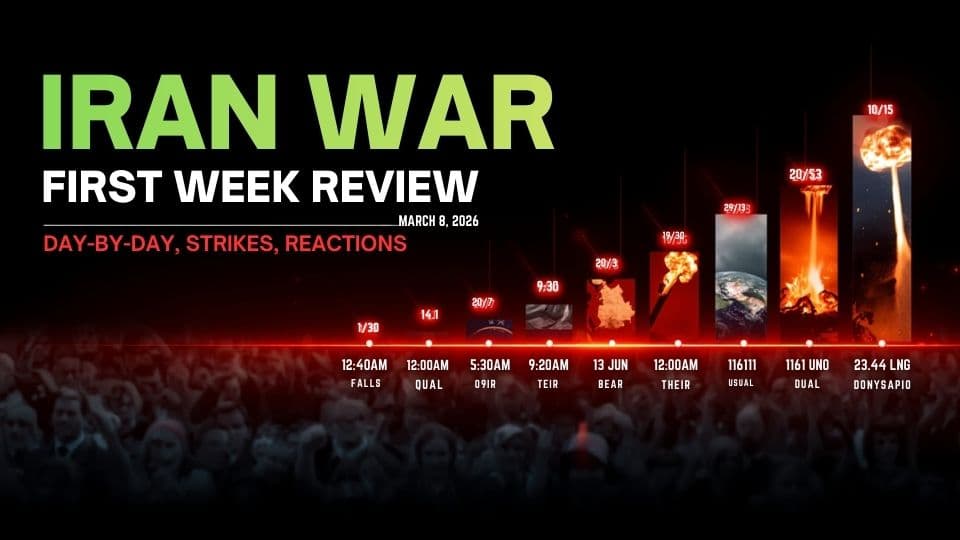
Iran war started
Since late February 2026, a major US–Israel campaign has bombarded Iran in what both governments described as a pre-emptive war to destroy Tehran’s military and nuclear capabilities. The opening salvo – launched Feb. 28 by the United States and Israel – killed Supreme Leader Ayatollah Ali Khamenei along with several top IRGC and government officials. Iranian forces immediately retaliated by firing drones and missiles at U.S. bases and Gulf Arab states (Saudi Arabia, Bahrain, UAE, Kuwait, Oman, Qatar), broadening the conflict across the region. Over the following week, Israeli warplanes struck deep inside Iran (targeting missile sites, command bunkers, even Tehran’s “military command” centers), while Hezbollah and other Iran-backed militias opened a Lebanon front. Casualties have mounted on both sides: Iranian sources report hundreds to over a thousand killed in Iran, including many civilians; U.S. and allied forces have suffered at least 6 U.S. soldiers killed plus several base-attendant personnel; Israel reports about 10 civilian deaths from Iranian strikes; and Gulf states and Iraq have lost dozens in missile/drone attacks (e.g. 3 Kuwaiti soldiers, 1 Bahraini, 1 Omani, 3 UAE nationals).
Internationally, reactions have been mixed. The U.S. Congress (Senate and House) gave broad support to the operation, blocking resolutions to curtail President Trump’s war-making. NATO and EU officials pressed for restraint: EU foreign policy chief Kaja Kallas called on “maximum restraint, protection of civilians and full respect of international law”; UN experts condemned attacks on civilians as war crimes and warned the campaign risks a humanitarian catastrophe. Russia and China sharply criticized Washington and Jerusalem: China’s FM Wang Yi demanded an “immediate cessation” of strikes and Russia’s FM Lavrov warned that war might spur nuclear proliferation. Gulf Arab states (Saudi, UAE, Qatar, Bahrain, Kuwait) condemned Iran’s attacks on their territory, while demanding Iran avoid civilian casualties.
Key leaders have issued strong statements. President Trump, aboard Air Force One, vowed to keep up strikes “until our objectives [are] achieved”, said there is “no timetable… whatever it takes”, and insisted Iran must face “unconditional surrender”. Israeli Prime Minister Netanyahu echoed this resolve – telling Fox News the war “may take some time, but it’s not going to take years… it’s not an endless war” – and urged heightened operations in Lebanon against Hezbollah. Iran’s interim leaders (President Masoud Pezeshkian, Foreign Minister Amir-Ali Hajizadeh, and the unelected “leadership council”) expressed defiance. Pezeshkian apologized to Gulf neighbors for incidental damage but rejected Trump’s demand for surrender as a “dream”. Iran’s UN envoy reported 1,332 Iranian civilians killed and “thousands” wounded, and warned any foreign attempt to name Iran’s next leader is a violation of sovereignty. Exiled crown prince Reza Pahlavi hailed the strikes as a “humanitarian intervention” against the regime, urged Iranian forces to cease resisting and join the people, and declared “the aid… to the brave people of Iran has now arrived”.
Day-by-Day Chronology (28 Feb – 8 Mar 2026)
- Day 1 – 28 February 2026:
The war began with Operation Epic Fury / Lion’s Roar, a large coordinated U.S.–Israeli strike launched at 1:15 a.m. ET (9:45 a.m. Iran time). More than 100 aircraft, along with cruise missiles and precision-guided munitions, hit targets across Iran, including IRGC headquarters, air-defense systems, ballistic-missile launchers, command facilities, and naval assets. Multiple senior Iranian figures were reported killed in the opening wave, including Ayatollah Ali Khamenei, Ali Shamkhani, Mohammad Pakpour, Abdolrahim Mousavi, and Aziz Nasirzadeh, along with other regime-linked figures named in the two drafts. Civilian areas were also hit, including a girls’ school in Minab, described as one of the deadliest civilian incidents of the opening phase.
Iran responded immediately with large-scale missile and drone attacks against Israel and against U.S. and allied targets in Kuwait, Iraq, Qatar, the UAE, Bahrain, Saudi Arabia, and Oman. Air raid sirens, fires at port facilities, and regional disruption followed, while oil prices surged on fears over the Strait of Hormuz. Donald Trump declared that Iran’s top leadership had been eliminated and vowed to continue until U.S. objectives were achieved, while Benjamin Netanyahu framed the campaign as necessary to eliminate a major threat. Russia and China condemned the strike as a violation of Iranian sovereignty.
- Day 2 – 1 March 2026:
The bombardment continued with follow-on strikes on Iran’s presidential compound, leadership complex, state broadcaster, police facilities, Tehran-area targets, and nuclear-linked sites at Natanz and Isfahan. Iranian naval losses were also reported, including the sinking of multiple vessels. An interim leadership structure reportedly emerged, centered on President Masoud Pezeshkian, Chief Justice Gholam-Hossein Mohseni-Ejei, and senior Guardian Council figures.
Iran intensified its retaliation, launching repeated missile and drone waves at Israel, U.S. bases in Kuwait and Qatar, and sites in the Gulf. Attacks were also reported near Dubai, Fujairah, and ports in Oman, while Iran was described as having closed the Strait of Hormuz. Casualty estimates inside Iran climbed sharply, with early reports ranging from hundreds of civilian dead by the end of the day. The United States announced that six U.S. Marines had been killed in the earlier Kuwait strike. Trump said the campaign would continue “as long as it takes” and warned Iran’s military to surrender. Gulf states held emergency consultations, and Kaja Kallas called for de-escalation even as regional actors such as Hamas, Hezbollah, Turkey, and North Korea condemned the attacks.
- Day 3 – 2 March 2026:
By the third day, the war had widened decisively. Inside Iran, strikes hit the Law Enforcement Command (LEC) headquarters in Sanandaj and Marivan, as well as the LEC Intelligence Organization headquarters in Tehran, while attacks also continued on missile and naval targets in Isfahan, Kerman, Parchin, and Bushehr. Tehran was described as paralyzed by explosions, debris, and traffic stoppages, with reports of civilians trying to flee southward.
Outside Iran, retaliation shifted more toward regional infrastructure and diplomatic sites: drones reportedly struck the ports of Salalah and Duqm in Oman, while missiles and drones targeted U.S. embassies in Riyadh and Kuwait, prompting closures. On the Lebanon front, Hezbollah opened a more active second front with rockets and UAVs into northern Israel, and Israel responded with strikes in south Beirut and southern Lebanon. Iranian officials simultaneously tried to manage regional fallout: President Pezeshkian apologized to neighboring states for incidental damage from Iran’s counterstrikes, while Iran’s U.N. envoy reported a sharply rising death toll among civilians. In Washington, the U.S. Senate backed Trump and blocked efforts to restrain the war.
- Day 4 – 3 March 2026:
Israeli strikes moved more aggressively against Iran’s political and security leadership structure. Targets reportedly included the Supreme National Security Council, the Presidential Office, and the Assembly of Experts in Tehran, including what was described as a session related to succession after Khamenei’s death. Israeli and allied reporting also claimed that more than 300 ballistic-missile launchers had been destroyed, significantly reducing Iran’s strike capacity.
Iran nevertheless continued attacks against Gulf and U.S.-linked targets, including reported strikes involving Kuwait City airport, a Bahraini base, the U.S. consulate in Dubai, and broader disruptions to regional port infrastructure. Iran-backed militias in Iraq claimed multiple attacks on U.S. targets, while Hezbollah intensified rocket fire from Lebanon. The U.N. human rights office condemned attacks on civilians, particularly the strike on the girls’ school in Minab. Qatar’s foreign minister accused Iran of dragging neighboring countries into the war, and Russia warned that the fighting could endanger the Bushehr nuclear plant. Despite hopes in some foreign capitals, no major anti-regime uprising materialized inside Tehran.
- Day 5 – 4 March 2026:
Israel escalated into what was described as a second phase of the campaign, focusing more heavily on deep underground missile and nuclear-related bunkers while also conducting the 10th wave of attacks against police, Basij, and state-security facilities in Tehran, Karaj, and Isfahan. The IAEA said buildings near the Isfahan nuclear complex had been damaged, though without a radiation leak.
Iran’s missile fire toward Israel appeared to slow somewhat, possibly because of interceptions and pressure on launch capacity, but Iran maintained drone and missile salvos toward Israel and Gulf states. Bahrain reported a hit on a desalination plant, while Saudi Arabia and the UAE intercepted additional incoming missiles. The IRGC ground forces entered the battle more visibly and reportedly deployed 230 drones. Internationally, calls for restraint intensified: Europe warned that a drawn-out war would devastate the region, Qatar’s prime minister demanded a halt to Iran’s strikes, Spain refused U.S. access to its bases, and China called for an immediate ceasefire. In Washington, the House blocked a war-powers resolution, reinforcing congressional support for the operation.
- Day 6 – 5 March 2026:
The air campaign deepened further. U.S. and Israeli officials said they had destroyed around 60% of Iran’s ballistic-missile launchers and had begun systematically striking underground missile facilities. B-2 bombers reportedly dropped 2,000-pound penetrator bombs on hardened underground targets, while the U.S. Navy was said to have sunk around 30 Iranian ships, including a large drone carrier.
Iran kept up attacks on Israel, the UAE, Qatar, Bahrain, Iraqi Kurdistan, and areas near Erbil, while additional incidents were reported involving Azerbaijan and maritime zones further afield. In Lebanon, Hezbollah launched fresh barrages into northern Israel, and Israel reportedly struck the headquarters of al-Manar TV in Beirut. Civilian suffering inside Iran kept mounting, with the death toll widely described as having passed 1,000, and another school-related incident in Tehran was reported after a missile or interception caused fire damage. International reaction sharpened: Wang Yi called for an immediate halt to the strikes, and Sergei Lavrov warned that the war could accelerate nuclear proliferation. Trump said the U.S. had enough munitions for an open-ended campaign and even suggested Washington wanted influence over Iran’s postwar leadership, while polls indicated limited public support inside the United States.
- Day 7 – 6 March 2026:
By the seventh day, the conflict had fully entered a grinding regional phase. Heavy bombing continued inside Iran, including reported strikes on underground laboratories, missile-production sites, and IRGC intelligence facilities, with satellite imagery indicating extensive damage to the IRGC Intelligence Organization headquarters.
Iranian retaliatory attacks slowed but did not stop, with continued strikes or claimed strikes involving Israel, Qatar, the UAE, and shipping in the Gulf. In Lebanon, Israel warned civilians in Beirut’s Shiʽa suburbs to evacuate as attacks intensified, while U.N. agencies counted growing numbers of displaced Lebanese. President Trump, speaking aboard Air Force One, said there was “no timetable” for the war and that it would continue for “whatever it takes”, while boasting that the United States had wiped out much of Iran’s leadership. He also clashed publicly with allies over burden-sharing. Iranian casualty figures kept climbing sharply, with official and diplomatic statements describing well over 1,000 killed and thousands wounded.
- Day 8 – 7 March 2026:
The Lebanon front surged again. Israel carried out a new wave of strikes in Beirut, including a strike on a downtown hotel that reportedly killed at least four IRGC Quds Force officers. At the same time, Iran remained under heavy pressure, with images emerging of burning factories, damaged residential blocks, and continuing destruction at security and military sites.
The six U.S. soldiers killed in Kuwait were given a formal transfer ceremony in the United States, underscoring that the war had imposed visible U.S. losses as well as massive Iranian casualties. Diplomatically, Qatar’s emir spoke with Trump and warned of the consequences of continued escalation, while Spain evacuated its embassy in Tehran as a precaution. Pezeshkian again signaled a desire to limit the regional spillover by apologizing to neighbors and indicating that strikes on their territory should stop, though he still rejected demands for surrender. Reza Pahlavi condemned Iran’s missile attacks on Arab states and said Iranians had asked him to lead a transitional government.
- Day 9 – 8 March 2026:
On 8 March, the war continued without a ceasefire. Trump again demanded “unconditional surrender,” language Iranian officials dismissed as “a dream.” Iran’s interim leadership insisted that any succession after Khamenei would be handled through constitutional procedures, rejecting outside interference in choosing the country’s next leader.
European and U.N. channels circulated ceasefire proposals, but no truce emerged. The humanitarian toll kept rising, with aid groups describing large-scale destruction of homes and civilian infrastructure, while both sides continued accusing the other of deliberately or recklessly striking civilian targets. The conflict had by then become not only a war over Iran’s military and nuclear capacity, but also a regional political crisis stretching from the Gulf to Lebanon.
Major targets and damage inside Iran
- Leadership and command centres: The residences and offices of Khamenei and senior commanders; IRGC headquarters; the Supreme National Security Council; Presidential Office; Assembly of Experts; and Law Enforcement Command headquarters in Sanandaj and Marivan.
- Ballistic‑missile infrastructure: At least 300 missile launchers destroyed; underground missile bunkers and production facilities bombed with penetrator munitions.
- Air‑defence and intelligence: Radar and surface‑to‑air missile batteries, electronic‑warfare hubs and the IRGC Intelligence Organization headquarters were destroyed; the state broadcasting authority was hit.
- Navy and maritime: Over 30 Iranian ships sunk, including a large drone carrier; Bushehr naval base and naval units targeted.
- Economic infrastructure: Airstrikes hit oil storage depots and refineries; Iran’s closure of the Strait of Hormuz caused major disruptions to global shipping.
Iranian strikes outside Iran
- Israel: Iran fired waves of ballistic missiles and drones; there were 25 attack waves on day 1 and 62 on day 2.
- Persian Gulf states: U.S. bases and energy infrastructure in Qatar, UAE (Minhad base and Fujairah), Saudi Arabia (Riyadh embassy), Oman (Salalah and Duqm), Kuwait (Camp Arifjan and a tanker) and Bahrain (refinery and desalination plant) were hit.
- Naval shipping: Iran attempted to disrupt maritime trade; an Iranian frigate was sunk by a U.S. submarine off Sri Lanka, and Iran claimed to hit a U.S. tanker in the northern Gulf.
- Other regions: Iranian drones were fired into Azerbaijan, and Hezbollah increased rocket fire from Lebanon
Key Statements and Reactions
- U.S. – President Donald Trump:
Trump has made belligerent public remarks since the war began. On Feb 28 he vowed “there will be no deal with Iran except UNCONDITIONAL SURRENDER”. In subsequent days he refused to negotiate, insisting Iran’s government be removed and even “we should have a say in selecting” Khamenei’s successor. Speaking to Reuters on March 8, Trump said he might only end the war once “there will be nobody left maybe to say 'We surrender'”. Aboard Air Force One on Mar 7, he declared “whatever it takes” to finish the fight and boasted that U.S. strikes had “wiped out” Iran’s leadership ability. He also publicly sought credit from allies (thanking Italy’s PM Meloni for support) and openly criticized British PM Starmer for limited involvement.
- Israel – Prime Minister Benjamin Netanyahu:
Netanyahu has framed the campaign as limited and attainable. In a Fox News interview on Mar 3 he said the war “may take some time, but it’s not going to take years – it’s not an endless war”. He asserted that U.S.-Israel strikes have already decapitated Iran’s leadership. Netanyahu repeatedly stated Israel’s military would “do whatever it takes” to eliminate Iran’s threats. Domestically he has urged a wider mobilization against Iran: “Now... it’s up to the people of Iran to change the government, but we are creating the conditions for them to do so”, he remarked. On Lebanon, Netanyahu warned Hezbollah of a “very heavy price” and pledged increased strikes there.
- Iranian leadership:
Iran’s surviving officials have struck defiant but careful tones. President Masoud Pezeshkian labeled the strikes an “open declaration of war” on Shia Muslims, but on Mar 6 he publicly “apologize[d] to neighboring countries” hit by Iranian retaliations and urged them to stay out of the conflict. He denied Trump’s surrender demand, calling it a “dream”. Iran’s UN ambassador Iravani has emphasized that all civilian deaths (1,332 and counting) are the fault of the U.S.-Israeli strikes and warned that “the selection of Iran’s leadership…will take place strictly in accordance with our constitutional procedures”, rejecting foreign involvement. Deputy Foreign Minister Majid Takht-Ravanchi added that any country joining the attacks would become a legitimate target for Iran’s own strikes. Supreme National Security Council chief Ali Larijani took pains to project unity, insisting on state TV that there is “no rift among Iranian officials” over the crisis.
- Exiled Opposition – Prince Reza Pahlavi:
Crown Prince Pahlavi (son of the late Shah) has publicly supported the strikes as an opportunity for regime change. He praised the U.S.-Israeli action as a “humanitarian intervention” aimed at the regime, not Iran’s people. He urged Iranian military and security personnel “to join the people and help bring about a stable…transition” or else “go down with [Khamenei’s] sinking ship”. Pahlavi exhorted compatriots to stay vigilant for a final uprising, writing that “now the aid… to the brave people of Iran has arrived”. (These statements, carried by Israeli media, further polarize views of the conflict’s legitimacy.)
- International Organizations:
The United Nations and EU have been vocally alarmed. The UN High Commissioner for Human Rights deplored “indiscriminate and disproportionate” strikes on civilians in Iran and condemned the killing of scores of children. A UN-appointed fact-finding mission called attacks on Tehran and Beirut illegal, warning of a regional humanitarian disaster. UN Secretary-General António Guterres and envoys have quietly lobbied for immediate ceasefire, though without public multilateral action yet. The European Union’s High Representative issued a statement on Mar 1 stressing “maximum restraint, protection of civilians and full respect of international law,” noting “the Middle East stands to lose greatly from any drawn-out war”. The EU condemned Iran’s breaches of neighbor states’ sovereignty as “inexcusable”, and expressed solidarity with Gulf partners hit by Iran.
- Major Governments:
U.S. allies (UK, France, Germany, EU) have largely supported the de-escalation of violence. Britain granted use of bases for U.S. defensive strikes but refused to join offensive operations. Germany’s Chancellor praised backing U.S. aims but quietly urged restraint, while Spain and Italy evacuated personnel and called for dialogue. Among regional actors, Saudi Arabia, Kuwait, Bahrain, Qatar and the UAE condemned Iran’s missile/drone attacks on their territory as “reckless” and warned of retaliation. They supported U.S. defensive actions but pressed for the cessation of hostilities. Russia and China explicitly sided with Iran diplomatically: Russia’s FM Lavrov denounced the U.S.-Israeli war as “unprovoked aggression” and warned it risks nuclear proliferation, while China’s FM Wang Yi on Mar 4 demanded an immediate halt to strikes and called force “incapable of solving problems”.
Losses among Iranian officials
The opening strike killed Iran’s Supreme Leader Ali Khamenei, Secretary of the Supreme National Security Council Ali Shamkhani, Chief of General Staff Abdolrahim Mousavi, Defence Minister Aziz Nasirzadeh and IRGC ground‑forces commander Mohammad Pakpour. Many deputies and provincial commanders were also killed, and 175 schoolgirls and staff were among the civilian victims.
Key Statements and Reactions
- U.S. – President Donald Trump:
Trump has made belligerent public remarks since the war began. On Feb. 28, he vowed that “there will be no deal with Iran except UNCONDITIONAL SURRENDER.” In the following days, he refused to negotiate, insisting that Iran’s government must be removed and even saying that “we should have a say in selecting” Khamenei’s successor. Speaking to Reuters on March 8, Trump said he might end the war only once “there will be nobody left maybe to say, ‘We surrender.’” Aboard Air Force One on March 7, he declared that he would do “whatever it takes” to finish the fight and boasted that U.S. strikes had “wiped out” Iran’s leadership capability. He also publicly sought credit from allies, thanking Italy’s Prime Minister Meloni for her support, while openly criticizing British Prime Minister Starmer for his limited involvement.
- Israel – Prime Minister Benjamin Netanyahu:
Netanyahu has framed the campaign as limited and achievable. In a Fox News interview on March 3, he said the war “may take some time, but it’s not going to take years—it’s not an endless war.” He asserted that U.S.-Israeli strikes had already decapitated Iran’s leadership. Netanyahu repeatedly stated that Israel’s military would “do whatever it takes” to eliminate Iran’s threats. Domestically, he has urged wider mobilization against Iran, saying, “Now... it’s up to the people of Iran to change the government, but we are creating the conditions for them to do so.” On Lebanon, Netanyahu warned Hezbollah that it would pay a “very heavy price” and pledged increased strikes there.
- Iranian leadership:
Iran’s surviving officials have adopted a defiant but cautious tone. President Masoud Pezeshkian labeled the strikes an “open declaration of war” against Shia Muslims, but on March 6 he publicly “apologize[d] to neighboring countries” hit by Iranian retaliatory strikes and urged them to stay out of the conflict. He rejected Trump’s demand for surrender, calling it “a dream.” Iran’s U.N. ambassador, Iravani, has emphasized that all civilian deaths (1,332 and counting) were caused by the U.S.-Israeli strikes and warned that “the selection of Iran’s leadership… will take place strictly in accordance with our constitutional procedures,” rejecting any foreign involvement. Deputy Foreign Minister Majid Takht-Ravanchi added that any country joining the attacks would become a legitimate target for Iranian strikes. Supreme National Security Council chief Ali Larijani also sought to project unity, insisting on state TV that there was “no rift among Iranian officials” over the crisis.
- Exiled Opposition – Prince Reza Pahlavi:
Crown Prince Reza Pahlavi (son of the late Shah) has publicly supported the strikes as an opportunity for regime change. He praised the U.S.-Israeli action as a “humanitarian intervention” aimed at the regime, not the Iranian people. He urged Iranian military and security personnel “to join the people and help bring about a stable… transition” or else “go down with [Khamenei’s] sinking ship.” Pahlavi also urged compatriots to remain vigilant for a final uprising, writing that “now the aid… to the brave people of Iran has arrived.” These statements, widely carried by Israeli media, have further polarized views on the conflict’s legitimacy.
- International Organizations:
The United Nations and the European Union have voiced strong alarm. The U.N. High Commissioner for Human Rights deplored “indiscriminate and disproportionate” strikes on civilians in Iran and condemned the killing of scores of children. A U.N.-appointed fact-finding mission called the attacks on Tehran and Beirut illegal and warned of a regional humanitarian disaster. U.N. Secretary-General António Guterres and other envoys have quietly lobbied for an immediate ceasefire, though no public multilateral action has yet been taken. The European Union’s High Representative issued a statement on March 1 stressing “maximum restraint, protection of civilians and full respect of international law,” while noting that “the Middle East stands to lose greatly from any drawn-out war.” The EU also condemned Iran’s violations of neighboring states’ sovereignty as “inexcusable” and expressed solidarity with Gulf partners hit by Iranian attacks.
- Major Governments:
U.S. allies—the UK, France, Germany, and the EU—have largely supported efforts to de-escalate the violence. Britain granted the use of its bases for U.S. defensive strikes but refused to join offensive operations. Germany’s chancellor supported U.S. objectives but quietly urged restraint, while Spain and Italy evacuated personnel and called for dialogue. Among regional actors, Saudi Arabia, Kuwait, Bahrain, Qatar, and the UAE condemned Iran’s missile and drone attacks on their territory as “reckless” and warned of retaliation. They supported U.S. defensive actions but also pressed for an end to hostilities. Russia and China, by contrast, explicitly sided with Iran diplomatically: Russia’s Foreign Minister Lavrov denounced the U.S.-Israeli war as “unprovoked aggression” and warned that it risked nuclear proliferation, while China’s Foreign Minister Wang Yi, on March 4, demanded an immediate halt to the strikes and said that force was “incapable of solving problems.”
Implications and Near-Term Outlook
By the end of the second week (March 8), the Iran war remains deeply unsettled. The Assad regime-style decapitation of Iran’s hierarchy has not produced a quick surrender; instead, Iran’s revolutionary system appears to have reconfigured its leadership through emergency councils. Civilians continue to bear the brunt of the conflict: schools and residential areas have been hit, and the death toll in Iran likely exceeds 1,300. Israel’s multi-front retaliation, especially against Hezbollah in Lebanon, risks widening the war. Global markets and sea lanes have already been disrupted: oil surged to multi-year highs as some supply was cut, and shipping companies rerouted vessels away from potentially perilous waters.
In the near term, the conflict may harden into a protracted war of attrition. Israeli and U.S. air forces have largely suppressed Iran’s air defenses, but Iranian proxy forces remain capable of sporadic strikes, as seen in Kuwait and Oman. Neither side has shown any willingness to negotiate while hostilities continue. The international community is pressing for de-escalation: China and Qatar are quietly mediating, and the United Nations continues its shuttle diplomacy. Yet Trump’s maximalist stance, calling for Iran’s surrender and leadership change, clashes directly with Tehran’s vow to resist.
Key uncertainties include whether Iran’s military can sustain continued strikes, as it reportedly still holds thousands of missiles and UAVs, and whether Iranian society will fracture or rally under fire. Some experts warn that the ferocity of Israel’s campaign could eventually provoke Iranian remnants to use tactical nuclear weapons or unleash asymmetric terror, although no credible sign of such plans has emerged. U.S. politics are also likely to become more unsettled: Congress and the public have so far been broadly supportive, but mounting casualties and rising costs could shift opinion over time. Regionally, the danger of spillover into Syria, Iraq, or even Gaza remains significant.
Likely near-term scenarios
A diplomatic breakthrough still seems distant. One possibility is a temporary lull: Iran may tacitly agree to halt strikes on neighboring states if U.S. forces withdraw from certain Gulf bases, buying time while the new Iranian leadership consolidates. Another scenario is Iran turning back to its nuclear sites: given that Israel and the U.S. have claimed Iran’s nuclear program was neutralized in 2023, the remaining risk may lie in the clandestine buildup of weapons-grade material. Alternatively, a ground conflict looms as a last resort. Although President Trump claims he does “not want to see the Kurds get hurt,” he has not ruled out future troop commitments if deemed “very necessary.”
This war has defied many expectations: a swift victory for either side appears unlikely. Its outcome will depend on internal Iranian dynamics, including opposition protests and regime resilience, as well as external pressures such as allied support and economic sanctions. For now, the region is mired in one of its most dangerous crises since 1979, and global powers face a difficult choice between letting the conflict run its course and imposing a ceasefire to prevent unpredictable escalation.
Conclusion
In its first week, the Iran war saw the United States and Israel achieve overwhelming air and maritime supremacy, decapitate Iran’s leadership and destroy a large portion of its missile arsenal. Iranian retaliation inflicted limited damage yet demonstrated an ability to threaten energy infrastructure across the Gulf. As the conflict entered its second week, President Trump demanded unconditional surrender while Iranian leaders refused to capitulate but sought to avoid dragging neighbours into war. The regional and global repercussions—ranging from economic shocks to potential political upheaval—make the war’s trajectory highly uncertain.
Comments