 English
 پارسی


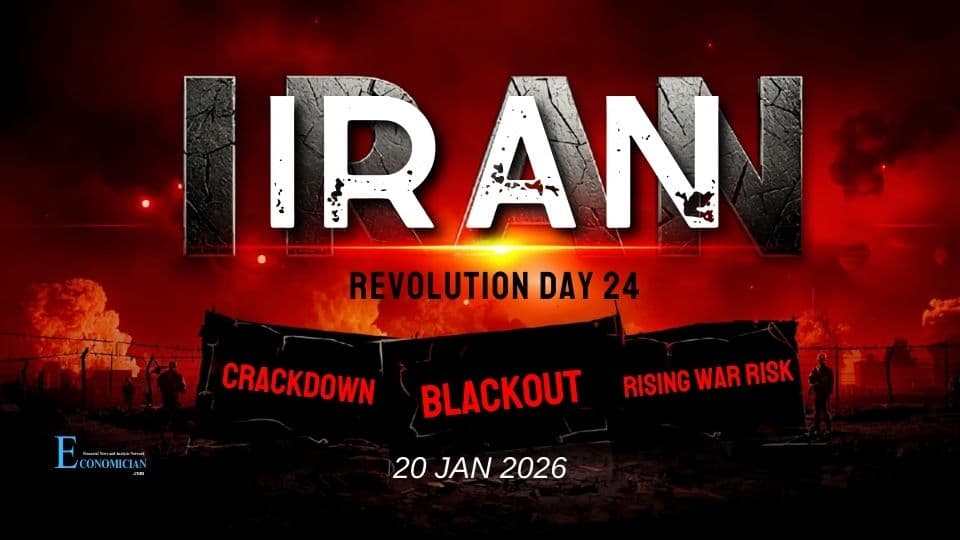
What happened inside Iran
1) Security clampdown and “militarised streets”
Citizen accounts across Tehran and other cities describe a hard-security posture: visible armed units (including plainclothes), checkpoints, phone inspections, and de facto curfews where streets “turn fully military” after a certain hour. Multiple accounts also describe live fire as the dominant source of gunfire and an environment in which assistance to wounded protesters is deliberately constrained—conditions compounded by rolling or near-total communications outages. (Independent verification remains limited due to connectivity restrictions.)
2) Hospitals under pressure; families searching morgues
Several reports circulated of overwhelmed hospitals, mass casualties, and alleged withholding of bodies from families. These claims echo a broader pattern noted by international rights bodies: severe violence against protesters and pressure on information flows that impedes documentation. The severity of some eyewitness descriptions cannot be independently confirmed under current blackout conditions.
3) Arrest wave and intimidation of civil society
Reports described arrests framed by authorities as targeting “leaders” of unrest, alongside intimidation of journalists and cultural figures. Separate international advocacy groups called for releases and restoration of communications, warning that the internet shutdown is directly enabling abuses by limiting scrutiny.
4) Internet blackout enters the “whitelisting” phase
Connectivity restrictions remained central to the operational environment on Day 24. Monitoring and UN sources describe a near-total shutdown since 8 January with signs of partial, selective access (“whitelisting”/filtered connectivity) emerging—consistent with a strategy of controlling narrative and coordination rather than restoring normal service. Reuters also reported debate inside Iran about whether and when to lift the blackout.
Opposition messaging: Prince and Queen statements
Prince Reza Pahlavi: accountability language and mobilisation cues
Prince Reza Pahlavi’s latest messaging—circulating widely on Persian-language outlets and social platforms—sharply emphasised criminal accountability for senior officials and rejected any notion of immunity, while urging Iranians to remain prepared for renewed street mobilisation. Commentary from analysts aligned this shift with a move from reconciliation framing toward “criminal justice” framing and more structured, goal-oriented mobilisation. (As always, framing and excerpts vary by outlet; verify against primary video statements where possible.)
Queen Farah Pahlavi: “National Mourning” call
A statement attributed to Queen Farah Pahlavi dated 30 Dey 1404 declared national mourning and called on Iranians worldwide to observe a moment of silence at 12:00 local time on Friday 3 Bahman 1404, explicitly linking the appeal to reported mass killings and the wider revolutionary trajectory.
International reactions and diplomatic track
1) UN: Emergency/special session set for Friday
A major Day 24 development was confirmation that the UN Human Rights Council will hold a special session on Friday 23 January to address the “deteriorating” situation and “alarming violence.” Reuters reported the session is backed by 21 countries and comes amid international pressure for accountability and expanded investigative capacity.
2) EU: Sanctions tightening and political signalling
European officials and institutions continued to harden posture. Public statements described plans to intensify sanctions and add export restrictions—particularly focused on drone/missile-related technologies—while senior EU voices condemned repression and the communications cutoff. Separately, the European Parliament marked the deaths with a moment of applause rather than silence, explicitly framing it as rejecting enforced silence.
3) United States: internet-access signalling and escalation deterrence
Washington messaging maintained two parallel themes: (1) support for Iranian access to communications tools (including sanction carve-outs cited publicly by U.S. officials), and (2) deterrence language against threats to U.S. officials and forces. In parallel, U.S. posture in the region has been visibly reinforced through additional air and missile defence deployments and higher readiness, according to major U.S. reporting.
4) Regional diplomacy: Gulf states urge de-escalation; Russia signals continuity
Day 24 also featured continued regional positioning: Gulf messaging (including Qatar) emphasised preference for a diplomatic track on Iran’s nuclear file and avoiding escalation, while Russia signalled it would not halt trade with Iran despite U.S. tariff threats.
Military-risk track: why the “war shadow” deepened on Day 24
U.S. options discussion remains active
Reporting indicates that—even after a reported pullback from strikes the prior week—discussion of military options has not ended, and U.S. planners continue to evaluate “decisive” scenarios alongside force-protection measures.
Israel readiness and missile-salvo risk
Israeli reporting described heightened preparedness measures (reservists, air-defence posture, air-force readiness). Separately, Israeli media reporting cited internal assessments arguing that even severe missile barrages could be “manageable,” while other analysts warned Iran could shift to saturation salvos designed to overwhelm defences—raising mass-casualty tail risk if escalation occurs. (Treat the most extreme figures as scenario claims unless independently corroborated.)
Iran’s signalling: “fiery” response framing
Iran’s senior diplomatic messaging has increasingly framed retaliation as comprehensive if attacked, warning of wider regional spillover—language echoed in international reporting tied to an opinion piece attributed to Iran’s foreign minister.
What to watch next (Day 25+)
- UNHRC special session outcomes: whether the session expands mandates, resources, or calls for evidence preservation and targeted measures.
- Internet restoration vs. “tiered access”: signals that “whitelisting” becomes semi-permanent would materially change mobilisation, documentation, and economic functioning.
- Execution risk and detainee pressure: watch for credible updates on death sentences and international intervention effects.
- U.S.–Israel posture shifts: additional deployments, embassy advisories, and any explicit redlines.
- On-the-ground tempo: whether curfews/raids expand, and whether protests reconstitute in decentralised forms under blackout conditions.
Comments