 English
 پارسی


Overview
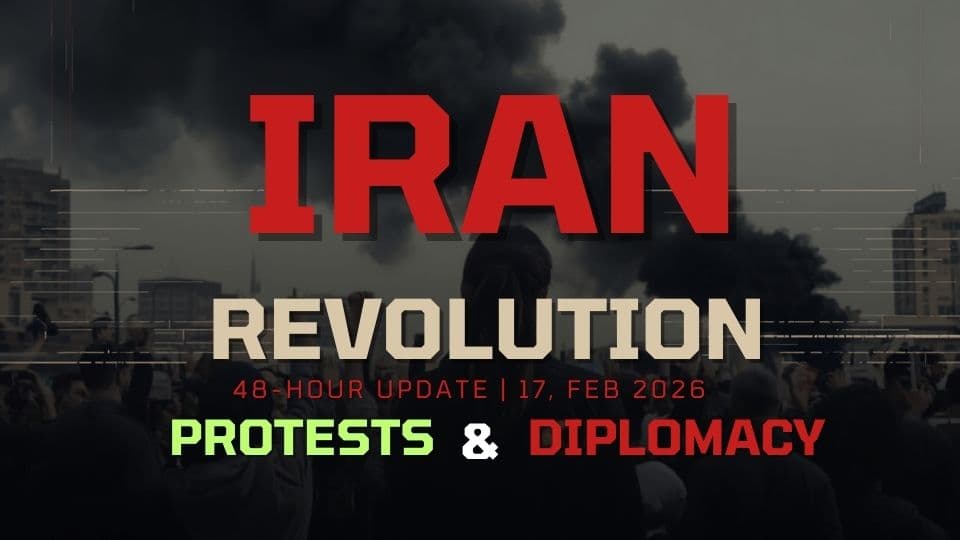
In mid‑February 2026 Iranians at home and abroad experienced one of the most intense periods since the 2025‑26 protest wave began. The diaspora organised large‐scale demonstrations under the banner “Global Day of Action” to demand an end to clerical rule and to show solidarity with protesters inside Iran. At the same time the Islamic Republic launched naval exercises in the Strait of Hormuz and entered indirect nuclear talks with the United States. This report summarises developments between 15 February and 17 February 2026 (Europe time) and places them in context with recent statements from exiled royalty and international reactions.
Timeline of events
- 14–15 Feb
Global Day of Action – Rallies in Munich, Los Angeles, Toronto, London and other cities attracted hundreds of thousands of people from the Iranian diaspora. Exiled crown prince Reza Pahlavi told a crowd of about 250,000 in Munich that he was ready to lead a “transition to a secular democratic future” and urged supporters inside Iran to chant from homes and rooftops in tandem with the rallies. Demonstrators carried photographs of those killed during recent protests and chanted anti‑government slogans.
- 15 Feb
Death toll and arrests – The US‑based Human Rights Activists’ News Agency (HRANA) estimated that at least 7,010 protesters were killed and 53,845 people arrested during the crackdown on protests that peaked in January. These figures underscore the unprecedented scale of state violence.
- 16 Feb
Post‑protest repression exposed – A report by the Center for Human Rights in Iran described a “sustained campaign of violent post‑protest repression.” Security forces were conducting mass nighttime raids and operating secret detention sites outside the formal prison system; entire communities were terrorised, and detainees included teenagers, bystanders, doctors and nurses. Many detainees were held incommunicado in makeshift facilities, creating high risks of torture and death.
- 16–17 Feb
Naval drills in the Strait of Hormuz – Iran’s Islamic Revolutionary Guard Corps (IRGC) began live‑fire naval exercises in the Strait of Hormuz. The semi‑official Fars news agency reported that Iran temporarily closed parts of the strait during the drills. IRGC Navy commander Admiral Alireza Tangsiri said the force was “ready to close the Strait of Hormuz if the country’s top leaders decide so”, highlighting Tehran’s longstanding threat to disrupt the key oil route. State television said the exercises were safety measures and that Iran has “no red lines when it comes to protecting the security of the Strait”. About a quarter of global seaborne oil flows through the narrow waterway.
- 17 Feb
Nuclear talks progress and continued tensions – Iranian Foreign Minister Abbas Araqchi said indirect talks in Geneva with US envoys had yielded agreement on “guiding principles” for resolving their nuclear dispute but cautioned that a deal was not imminent. The talks were mediated by Oman and came as Iranian state media announced the temporary closure of parts of the Strait of Hormuz for IRGC drills. US President Donald Trump told reporters that he would participate “indirectly” and warned that Iran did not want to face the consequences of not making a deal. Iran’s Supreme Leader Ayatollah Ali Khamenei responded that even the world’s strongest army could be “slapped so hard it cannot get up”.
- 17 Feb
Regional significance of Hormuz drills and talks – Egypt’s Ahram Online stressed that the drills underscored rising tensions in the Persian Gulf as Washington deployed additional naval assets to press Tehran over its nuclear programme. The article noted that the manoeuvres began on 16 Feb to prepare for “potential security and military threats” and coincided with indirect nuclear talks. Trump said he would participate indirectly and emphasised that Iran would face consequences if no deal was reached.
Statements from exiled royal family
Prince Reza Pahlavi
- Call for sanctions and condemnation of violence – During a press conference on 14 February on the sidelines of the Munich Security Conference, exiled crown prince Reza Pahlavi argued that further restricting the Islamic Republic’s access to revenue would hasten its collapse. He said cutting off sources of income would weaken the regime’s ability to sustain its security forces and accelerate its fall. He described the government as fragile and contended that financial pressure could limit negative regional consequences.
- Protests persist despite crackdown – Pahlavi told Iran International that despite an “industrial‑level massacre” many Iranians continued to chant nightly slogans. He said tens of thousands were imprisoned and urged strikes to neutralise security forces. He dismissed negotiations with Tehran, warning that every delay would cost more lives.
- Transition plan and inclusion – In Munich he pledged to be a leader of transition and said he could guarantee Iran’s move to a secular democratic future, but that the final political system should be determined via a free election. He said democracy was about inclusion and that he did not claim unanimous support.
- Official statements – Pahlavi published several statements on his official website in the days around the Global Day of Action:
- Appreciation for the Global Day of Action (16 Feb 2026): he thanked those who responded to his call, saying their trust was his greatest asset and pledging to devote his life to Iran’s freedom.
- Message to Iranians abroad (11 Feb 2026): he urged diaspora communities to act as worthy representatives of the Iranian nation and to uphold the dignity of Iran through their conduct.
- The only acceptable deal (5 Feb 2026): he stated that the only acceptable agreement was one where the Islamic Republic surrendered to the people of Iran, adding that such a deal would bring peace to the region and the world.
Queen Farah Pahlavi
- Appeal to security forces – The exiled former empress continued to back the protest movement. In early January she called on members of Iran’s security forces to “join your brothers and sisters before it is too late” and reminded them that no benefit justified shedding the blood of compatriots. She told protesters she believed they would soon celebrate freedom and that “light will triumph over darkness”.
- Encouragement and call for unity – A post shared on 3 January quoted Farah saying that Iran has a proud history of culture and innovation and that the future belongs to those who dare to fight for a better tomorrow. She urged people to “stand together, with love in your hearts” and called on security forces to join the people’s movement. Although these statements pre‑date the 48‑hour window, they continued to circulate widely during the Global Day of Action and were referenced by diaspora protesters.
Situation on the ground in Iran
Repression and human‑rights abuses
The Iranian state responded to the January protest wave with severe violence. Rights groups estimate that thousands were killed and tens of thousands imprisoned. Protesters face night‑time raids, enforced disappearances and mass detentions; CHRI reports that whole communities are terrorised by security forces operating outside the legal system. Detainees include teenagers, bystanders, medical workers and lawyers. Many are held in secret facilities where the risk of torture or death is high. Hospitals have been turned into surveillance sites, leading injured protesters to avoid treatment.
Military activities
Iran’s decision to hold live‑fire drills in the Strait of Hormuz during nuclear talks underscores its willingness to raise the stakes. The temporary closure of parts of the strait and statements by Admiral Tangsiri that the IRGC is ready to close the waterway drew international concern because roughly a quarter of global seaborne oil transits the strait. The drills followed weeks of U.S. military build‑up in the Gulf; Washington has deployed a second aircraft‑carrier strike group and has threatened further action if Tehran does not agree to a deal. Iranian leaders responded with defiance: Khamenei warned that even the strongest army could be “slapped so hard it cannot get up”, and state television insisted Iran would defend the strait without red lines.
Nuclear negotiations
Indirect talks in Geneva made modest progress: Foreign Minister Araqchi said the sides had agreed on guiding principles but emphasised that a comprehensive deal remained distant. Omani mediation continues, and both sides indicated that clear next steps had been identified. The U.S. wants restrictions on Iran’s missile programme and regional activities, whereas Tehran insists discussions are limited to its nuclear programme. President Trump signalled involvement and warned of consequences if talks fail.
Geopolitical reactions
- United States – The U.S. deployed additional naval assets to the Gulf and sent a second aircraft carrier; President Trump called regime change in Tehran the “best thing that could happen” and threatened the use of B‑2 bombers. However, the U.S. also engaged in indirect talks, signalling a dual strategy of pressure and negotiation. Trump claimed that Iran and the U.S. were “seriously talking”.
- European Union – In late January the EU designated Iran’s Islamic Revolutionary Guard Corps a terrorist organisation, citing the killing of thousands of protesters. EU foreign policy chief Kaja Kallas said repression could not go unanswered. Iran retaliated by labelling European armies “terrorist groups”.
- Regional neighbours – Countries such as Oman and Qatar mediated the nuclear talks, emphasising regional stability. Iranian President Masoud Pezeshkian thanked regional leaders for preventing a U.S. attack and insisted Iran could resolve its issues peacefully. Al Ahram noted that the Gulf states were concerned that U.S.–Iran tensions could disrupt energy markets.
Diaspora activism and public sentiment
The diaspora rallies underscored the movement’s global reach. Demonstrations were held in at least 20 cities, with Munich (more than 250,000 participants) and Los Angeles, Toronto (more than 350,000 participants) and Washington each drawing tens of thousands. Protesters honoured those killed and demanded regime change. Prince Pahlavi’s speech offered a vision of a secular, democratic Iran and promised a transitional leadership. People inside Iran responded by chanting from rooftops despite internet shutdowns, showing that communication between the diaspora and domestic protesters remained resilient.
Analysis and implications
Momentum and morale
The Global Day of Action and subsequent rallies demonstrated that the protest movement has not abated despite severe repression. By calling for nightly chants and strikes, Pahlavi and other leaders are attempting to sustain momentum while minimising casualties. The size of the diaspora rallies indicates continued support among Iranians abroad and may reassure protesters at home that they have international backing.
Regime resilience and risks
The Islamic Republic has shown a willingness to use extreme violence and to risk international escalation to survive. The IRGC drills in the Strait of Hormuz served as a reminder that Iran can threaten global energy supplies. Khamenei’s defiant rhetoric and the regime’s refusal to expand negotiations beyond the nuclear programme suggest that Tehran is not ready to capitulate. However, the large death toll and mass arrests have eroded the regime’s legitimacy, and the EU’s designation of the IRGC as a terrorist organisation signals growing international isolation.
Prospects for change
While the Geneva talks produced an agreement on guiding principles, the gulf between U.S. and Iranian positions remains wide. Iran’s insistence on retaining its missile programme and controlling regional proxies may prove unacceptable to Washington. At the same time the scale of domestic unrest and the economic impact of prolonged sanctions could pressure Tehran to compromise. Should the regime continue to violently suppress dissent, further international sanctions or even limited military strikes cannot be ruled out.
Role of exiled leaders
Prince Reza Pahlavi has emerged as the most visible opposition figure. His pledge to lead a transition but leave the final political system to a referendum appeals to both republicans and monarchists. Queen Farah’s statements, although largely symbolic, resonate with many Iranians who remember pre‑revolutionary Iran. The involvement of exiled royalty introduces the possibility of a constitutional monarchy, but Pahlavi’s critics emphasise his father’s autocratic legacy and his support for Israel. Whether he can unify disparate opposition groups remains uncertain.
Comments