 English
 پارسی


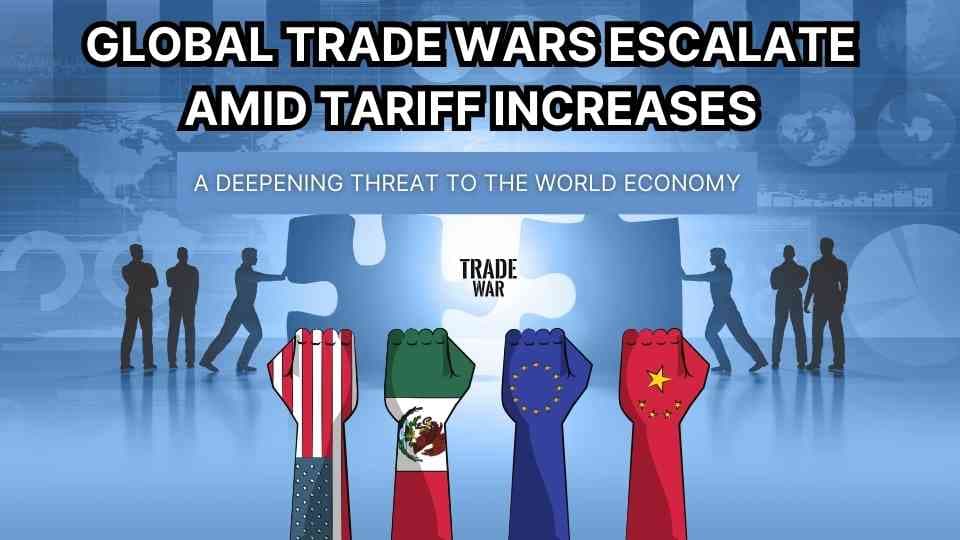
🇺🇸 U.S.–China Trade War Reaches New Heights
Since President Donald Trump's return to office in January 2025, the United States has aggressively ramped up tariffs on Chinese imports:
- February 1: 10% tariff imposed on Chinese goods.
- March 3: Tariffs increased to 20%, alongside a 25% tariff on imports from Mexico and Canada.
- April 2: A sweeping 10% baseline tariff was introduced on nearly all imports, with higher rates for specific countries:
- China: 34%, later raised to 145% after Chinese retaliation.
- EU: 20%
- Vietnam: 46%
- Taiwan: 32%
- Thailand: 36%
- April 3: A 25% tariff on imported vehicles took effect, severely disrupting production for automakers like Nissan, which halted Infiniti production in Mexico.
- April 9: Further hikes pushed tariffs on Chinese goods to 125%, and soon after to 145%.
In retaliation, China imposed a 125% tariff on all American imports effective April 12, while also suspending exports of critical minerals and magnets—key materials for automotive, technology, and aerospace industries.
The World Trade Organization (WTO) reported that U.S.–China merchandise trade has collapsed by 80%, effectively "decoupling" the two economies. The WTO warns that global GDP growth could slow to 2.2% in 2025, with risks of further deterioration if the conflict escalates.
🇺🇸 Tensions with Canada and Mexico
The trade battles are not limited to China. In February, the U.S. slapped 25% tariffs on all goods from Mexico and Canada, citing concerns over drug trafficking and border security. While USMCA-compliant goods were exempt, retaliation soon followed:
- Canada imposed a 25% tariff on a wide range of U.S. goods and threatened additional measures.
- Mexico introduced retaliatory tariffs ranging from 5% to 20% on American products.
These moves have strained North American trade relations and disrupted regional supply chains.
🇬🇧 UK Caught Between the U.S. and EU
Under Prime Minister Keir Starmer, the United Kingdom is navigating tricky waters between aligning with the European Union’s Carbon Border Adjustment Mechanism (CBAM) and maintaining favorable ties with the U.S. President Trump has vocally opposed EU-style green taxes, raising the specter of a new U.S.-UK trade conflict.
Simultaneously, the UK is negotiating a potential trade deal with the U.S., which could reduce tariffs on British goods. However, these discussions are complex: British concessions under consideration include reductions to the digital services tax and revisions to online safety laws. UK parliamentarians have demanded a parliamentary vote before finalizing any deal, citing its wide-reaching implications.
Sector-Specific Tariffs Emerging
New threats are looming beyond general tariffs:
- Semiconductors and Pharmaceuticals: Under Section 232 investigations, the U.S. is considering tariffs of 25% or higher, which could severely impact medical and technology supply chains.
- Copper and Lumber: National security probes are underway, potentially leading to tariffs that could disrupt the construction and energy sectors.
Negotiations: A Brief Pause Amid Uncertainty
While tensions run high, there are some mixed signals:
- On April 9, President Trump announced a 90-day suspension of higher reciprocal tariffs for most countries (excluding China), signaling a willingness to strike deals.
- However, confusion remains. Trade advisor Peter Navarro initially claimed tariffs were "not a negotiation," only for Trump to suggest flexibility later, adding to market uncertainty.
📉 Economic and Market Impacts
The global economy is already feeling the shockwaves:
- The WTO forecasts a 0.2% decline in global trade volumes for 2025, with a potential 1.5% contraction if conflicts worsen.
- U.S. tariffs represent the largest tax increase since 1993, projected to raise $2.2 trillion over the next decade.
- Global supply chains for autos, technology, and luxury goods are severely disrupted. Major companies like Boeing (-10%) and Swatch (-4%) have already seen significant losses.
- European markets fell 2.7%, while the Dow Jones Industrial Average dropped by 2,200 points over two days, marking one of the steepest short-term declines in years.
- Inflation and recession fears are mounting. The Federal Reserve has warned that tariffs could both spike inflation and slow economic growth, risking stagflation. Analysts predict a 0.8%–1.0% drop in U.S. GDP for 2025.
- Consumers are beginning to feel the pinch, with rising prices expected for everyday items such as coffee, bananas, toilet paper, and lumber.
Meanwhile, the European Union is preparing countermeasures and seeking new alliances with countries like China, India, and Vietnam to mitigate the impact of U.S. tariffs.
Conclusion
The widening trade wars and tariff escalations are reshaping global commerce and investment patterns at a rapid pace. Without a clear resolution, the world economy faces a period of prolonged uncertainty, slower growth, and increased volatility across markets.
The next few months will be critical as countries navigate negotiations, retaliations, and efforts to stabilize an increasingly fractured global trading system.
Small
Normal
Large
Huge
Comments