 English
 پارسی


Summary
The FOMC announced a 0.5% rate cut to support economic growth and employment, noting progress in reducing inflation and maintaining a strong labor market.
📉 Rate Cut: The FOMC reduced the policy interest rate by half a percentage point.
💼 Labor Market: Payroll job gains have slowed, but the unemployment rate remains low at 4.2%.
📊 Inflation Progress: Inflation has eased from a peak of 7% to an estimated 2.2% as of August.
🌱 Economic Growth: GDP grew at an annual rate of 2.2% in the first half of the year.
⚖️ Balanced Risks: The committee views risks to inflation and employment as roughly balanced.
📅 Future Outlook: The FOMC will assess data and adjust policies as necessary, meeting by meeting.
🏡 Housing Market: Housing inflation remains a concern, but market rents are stabilizing.
📉 Rate Adjustment Strategy: The FOMC’s decision to lower interest rates reflects confidence in sustaining economic growth while managing inflation. This strategy aims to prevent a recession while promoting employment.
💼 Labor Market Dynamics: Despite cooling job gains, the labor market is still robust. The current unemployment rate suggests a strong labor force, indicating that the FOMC’s policies are effectively supporting employment.
📊 Inflation Control: The significant drop in inflation signals the effectiveness of past monetary policies aimed at stabilizing prices, benefiting consumers and the economy.
🌱 Consistent Economic Growth: The GDP growth of 2.2% indicates a healthy economy, suggesting that consumer spending and investment are on the rise, fostering further confidence in economic resilience.
⚖️ Risk Assessment: The committee’s assessment of balanced risks is crucial, as it allows for proactive policy adjustments that can mitigate potential downturns in both inflation and employment.
📅 Data-Driven Decisions: The FOMC emphasizes a meeting-by-meeting approach, ensuring that monetary policy remains responsive to changing economic indicators and forecasts.
🏡 Housing Market Challenges: Persistent housing inflation requires careful monitoring and adjustment, significantly impacting overall inflation trends and consumer affordability.
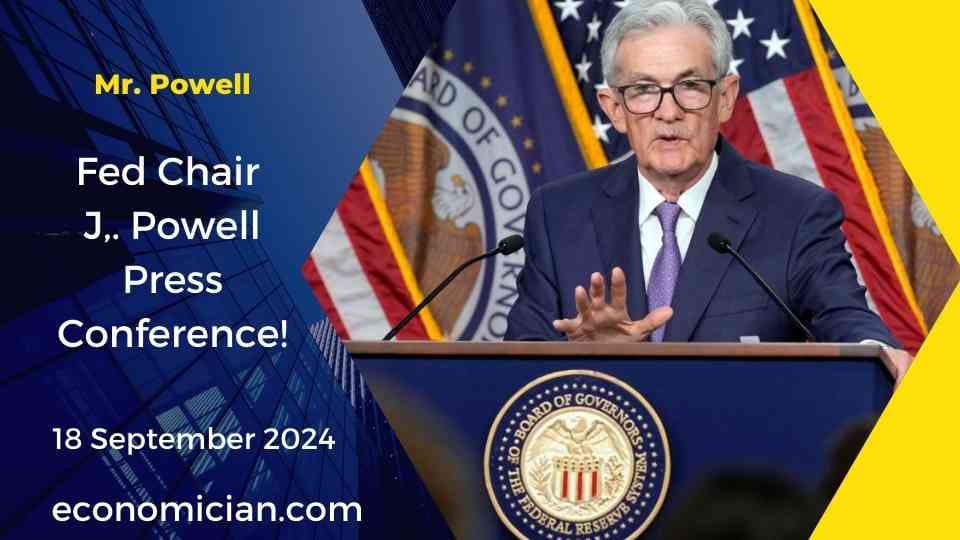
Transcript of Chair Powell's Press Conference (Speech before Q&A)
Good afternoon uh my colleagues and I remain squarely focused on achieving our dual mandate goals of maximum employment and stable prices for the benefit of the American people. Our economy is strong overall and has made significant progress toward our goals over the past two years. The labor market has cooled from its formerly overheated State inflation has eased substantially from a peak of 7% to an estimated 2.2% as of August. We're committed to maintaining our economic strength by supporting maximum employment and returning inflation to our 2% goal.
Today the Federal Open Market Committee decided to reduce the degree of policy restraint by lowering our policy interest rate by a half percentage point. This decision reflects our growing confidence that with an appropriate recalibration of our policy stance strength in the labor market can be maintained in a context of moderate growth and inflation moving sustainably down to 2%. We also decided to continue to reduce our Securities Holdings. I will have more to say about monetary policy after briefly reviewing economic developments.
Recent indicators suggest that economic activity has continued to expand at a solid Pace. GDP Rose at an annual rate of 2.2% in the first half of the year and available data point to a roughly similar pace of growth. This quarter growth of consumer spending has remained resilient and investment in equipment and intangibles has picked up from its anemic Pace last year. In the housing sector investment fell back in the second quarter after Rising strongly in the first quarter improving. Supply conditions have supported resilient demand and the strong performance of the US economy over the past year, in our summary of economic projections.
Committee participants generally expect GDP growth to remain solid with a median projection of 2% over the next few years. In the labor market conditions have continued to cool. Payroll job gains averaged 116,000 per month over the past 3 months a notable step down from the pace seen earlier in the year. The unemployment rate has moved up but remains low at 4.2%. Nominal wage growth has eased over the past year and the jobs-to-workers Gap has narrowed overall a broad set of indicators, suggesting that conditions in the labor market are now less tight than just before the pandemic in 2019. The labor market is not a source of elevated inflationary pressures. The median projection for the unemployment rate in the SCP is 4.4% at the end of this year, higher than the 4.0% projected in June.
Inflation has eased notably over the past two years but remains above our longer-run goal of 2% estimates based on the Consumer Price Index. Other data indicate that total PCE Prices rose 2.2% over the 12 months ending in August and that excluding the volatile food and energy categories Core PCE prices Rose 2.7%. Longer-term inflation expectations appear to remain well anchored as reflected in a broad range of surveys of households’ businesses and forecasters as well as measures from financial markets. The median projection in the SCP for total PCE inflation is 2.3% this year and 2.1% next year. Somewhat lower than projected in June thereafter the median projection is 2%.
Our monetary policy actions are Guided by our dual mandate to promote maximum employment and stable prices for the American people. For much of the past 3 years, inflation ran well above our 2% goal and labor market conditions were extremely tight. Our primary focus had been on bringing down inflation appropriately. So, we are acutely aware that high inflation imposes significant hardship as it erodes purchasing power, especially for those least able to meet the higher costs of Essentials like food, housing, and transportation.
Our restrictive monetary policy has helped restore the balance between aggregate supply and demand, easing inflationary pressures and ensuring that inflation expectations remain well anchored. Our patient approach over the past year has paid dividends. Inflation is now much closer to our objective, and we have gained greater confidence that inflation is moving sustainably toward 2% as inflation has declined and the labor market has cooled the upside risks to inflation have diminished and the downside risks to employment have increased.
We now see the risks of achieving our employment and inflation goals as roughly in balance and we are attentive to the risks to both sides of our dual mandate in light of the progress on inflation and the balance of risks.
At today's meeting the committee decided to lower the target range for the federal funds rate by a half percentage point to four 4 and 3/4 percent to 5% this recalibration of our policy stance will help maintain the strength of the economy and the labor market and will continue to enable further progress on inflation as we begin the process of moving toward a more neutral stance.
We are not on any preset course; we will continue to make our decisions meeting by meeting we know that reducing policy restraint too quickly could hinder progress on inflation. At the same time reducing restraint too slowly could unduly weaken economic activity and employment in considering additional adjustments to the target range for the federal funds rate.
The committee will carefully assess incoming data, the evolving Outlook, and the balance of risks in our SCP FOMC. Participants wrote down their assessments of an appropriate path for the federal funds rate based on what each participant judged to be the most likely scenario going forward if the economy evolves as expected.
The median participant projects that the appropriate level of federal funds will be 4.4% at the end of this year and 3.4% at the end of 2025. These median projections are lower than in June consistent with the projections for lower inflation and higher unemployment as well as the changed balance of risks in these projections.
However, is not a committee plan or decision as the economy evolves monetary policy will adjust to best promote our maximum employment and price stability goals if the economy remains solid and inflation persists. We can dial back policy restraint more slowly if the labor market were to weaken unexpectedly or inflation were to fall more quickly than anticipated. We are prepared to respond policy is well positioned to deal with the risks and uncertainties that we face in pursuing both sides of our dual mandate.
The FED has been assigned two goals for monetary policy maximum employment and stable prices. We remain committed to supporting maximum employment bringing inflation back down to our 2% goal and keeping longer-term inflation expectations well angered. Our success in delivering on these goals matters to all Americans we understand that our actions affect communities’ families and businesses across the country. Everything we do is in service to our public Mission. We at the FED will do everything we can to achieve our maximum employment and price stability goals.
Thank you. I look forward to your questions.
Comments