 English
 پارسی


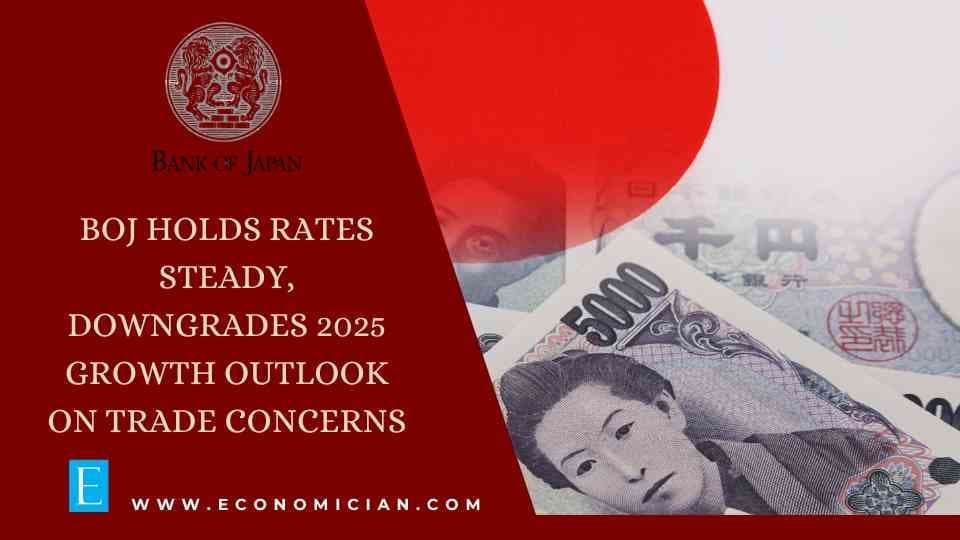
Amid rising global trade tensions—especially stemming from newly introduced U.S. tariffs—the BOJ now anticipates real GDP growth for fiscal 2025 to fall within a range of just 0.4% to 0.6%. This marks a sharp cut from its previous projection of 0.9% to 1.1% published in January.
In its quarterly report, the central bank also lowered its core inflation forecast for the same period to 2.0%–2.3%, down from 2.2%–2.6%. Policymakers acknowledged that achieving their 2% inflation target in a stable and sustainable manner may take longer than previously anticipated.
According to the BOJ’s statement, economic activity in Japan is likely to moderate as external demand weakens. Slower growth in global markets—partly driven by widespread tariffs and disruptions in international trade—is expected to drag on both headline and underlying inflation.
Despite external pressures, the bank highlighted some resilience in domestic demand. Strong wage increases are expected to support private consumption in the months ahead, although shrinking corporate earnings may cap overall momentum.
Officials also emphasized that ongoing uncertainty surrounding trade policy—especially the prospect of further U.S. tariffs—poses a major risk to global sentiment. For Japan, such developments could result in elevated import prices, potentially dampening consumer spending and slowing economic recovery.
This cautious policy stance comes amid a tense global economic environment. Earlier this year, the U.S. administration under President Donald Trump imposed sweeping tariffs on multiple countries, including a planned 24% tariff on Japanese goods. Although the enforcement of this tariff was delayed by 90 days, Japanese officials are preparing for high-level trade negotiations with their U.S. counterparts.
While Japan's inflation remains relatively sticky and consumption shows signs of strength, the BOJ appears hesitant to resume tightening policy in the face of such widespread global uncertainty.
Comments