translate English
 پارسی
English
Englishپارسی
English
Englishپارسی EnglishپارسیEnglishپارسی
EU foreign policy chief Kaja Kallas condemned Iran’s protest crackdown as unprecedented, saying authorities respond to citizens’ demands with batons and live fire while cutting communications to conceal the масштаب of repression. She called violence against peaceful protesters unacceptable, urged the release of detainees and restoration of internet access, and said the EU is moving to tighten existing measures—preparing additional sanctions targeting those responsible for the crackdown on top of the bloc’s broader Iran sanctions linked to human-rights abuses, nuclear proliferation concerns, and support for Russia’s war in Ukraine.
Mohammad Mokhber, an adviser to Iran’s Supreme Leader Ali Khamenei, dismissed Donald Trump’s recent remarks about the “time” for leadership change in Iran, saying Khamenei “has a place in the hearts of Muslims” and that “Americans can’t do a thing.”
European Commission President Ursula von der Leyen said in a post on X that Europe stands in “full solidarity” with Iran’s “brave women and men” who are risking their lives to demand freedom for themselves and future generations. She added that the EU has already imposed far-reaching sanctions on Iran over human rights abuses, nuclear proliferation concerns, and Iran’s support for Russia’s war against Ukraine.
A Polish member of the European Parliament, speaking in a session backing Prince Reza Pahlavi, said the situation in Iran should be treated as an international and global issue—not merely a human-rights case—framing Tehran’s crisis as something with broader geopolitical consequences for Europe and the wider international order.
Charlie Weimers, a Swedish member of the European Parliament, called for Islamic Republic embassies across Europe to be emptied until the Lion and Sun flag is raised again. Addressing the EU’s foreign policy chief, he said Europe should listen to Iranians chanting “Long live the Shah,” and urged officials to invite Prince Reza Pahlavi.
U.S. Treasury Secretary Scott Bessent said Washington’s “maximum pressure” strategy against Iran—sanctions and tariffs targeting buyers of Iranian oil—has been effective. He claimed that in March he warned the rial was “one step away from collapse” and said that if he were Iranian he would move his money out of the country. Bessent also alleged that in December a major Iranian bank failed, the central bank was forced to print money, and the country lacked sufficient dollars for imports—arguing that these pressures pushed people into the streets and showed the policy succeeded “without firing a single bullet.”
Israel Hayom reported that Israel is preparing for a potential conflict scenario with the Islamic Republic by calling up reserve forces, deploying air-defense systems, and placing the air force on full alert. Iran International correspondents Babak Eshaqi and Samira Gharai also reported on the developments.
Dutch Foreign Minister David van Weel said he met Saudi Foreign Minister Faisal bin Farhan on the sidelines of the Davos meetings and discussed developments in Iran alongside Gaza, Sudan, and Ukraine. In a post on X, van Weel described Saudi Arabia as a trusted partner and said cooperation with Riyadh matters for navigating regional and international developments.
A Ukrainian official told Reuters President Volodymyr Zelenskyy has not decided whether to travel to Davos because the U.S. has not clarified whether a substantive meeting with President Trump will happen. The official said Ukraine would be ready to sign documents on security guarantees or prosperity if the U.S. side is ready.
Market impact: Ukraine-related event risk remains binary—progress headlines can lift European risk sentiment; delays favor energy/security hedges and keep a risk premium in the region.
Reuters reports national security advisers from several countries planned a Davos sidelines meeting with Greenland on the agenda, though participation/level varied and details were closely held.
Market impact: Adds headline-driven volatility for European FX, defense names, and Arctic logistics/shipping narratives; supports safe-haven positioning when tensions spike.
European Commission President Ursula von der Leyen announced a planned EU package to strengthen Arctic security and resilience, linked to discussions around Greenland amid U.S. tariff threats. She emphasized that Greenland’s sovereignty is “non-negotiable” and outlined investment and defense cooperation initiatives as part of the EU response.
Market impact: Boosts defense and infrastructure spending narratives in Europe; raises risk premia in transatlantic trade and Arctic-resource sectors.
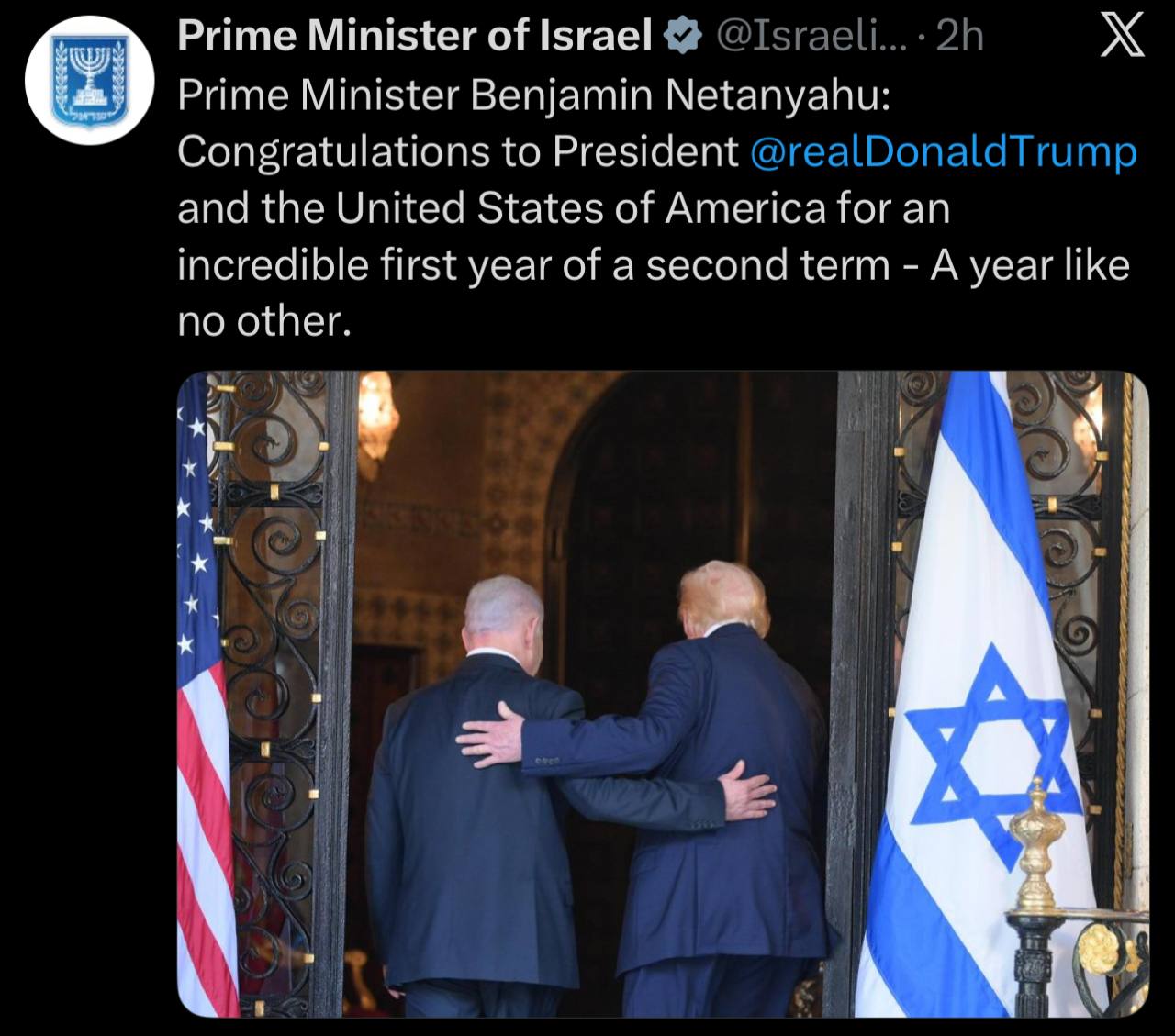
Israeli Prime Minister Benjamin Netanyahu publicly congratulated U.S. President Donald Trump on what he called an “incredible first year” of Trump’s second term, underscoring the pace of high-level coordination by noting five face-to-face meetings during 2025 (alongside additional calls), according to reporting that tracks their engagements since Trump returned to office in January 2025. Other policy chronologies count the December 29, 2025 Mar-a-Lago session as the sixth Trump–Netanyahu meeting since January 20, 2025—illustrating both the intensity and frequency of their contacts as the U.S. and Israel coordinate on Gaza and regional security files.