translate English
 پارسی
English
Englishپارسی
English
Englishپارسی EnglishپارسیEnglishپارسی
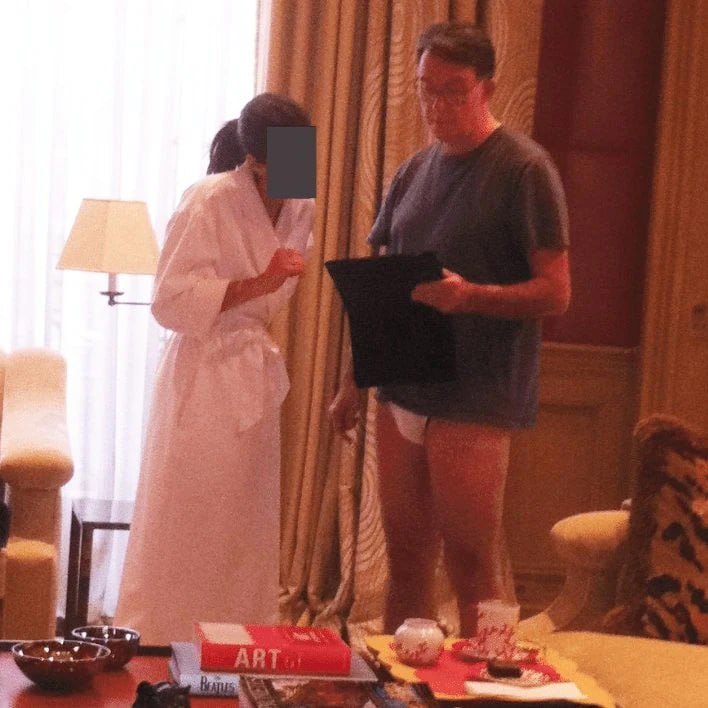
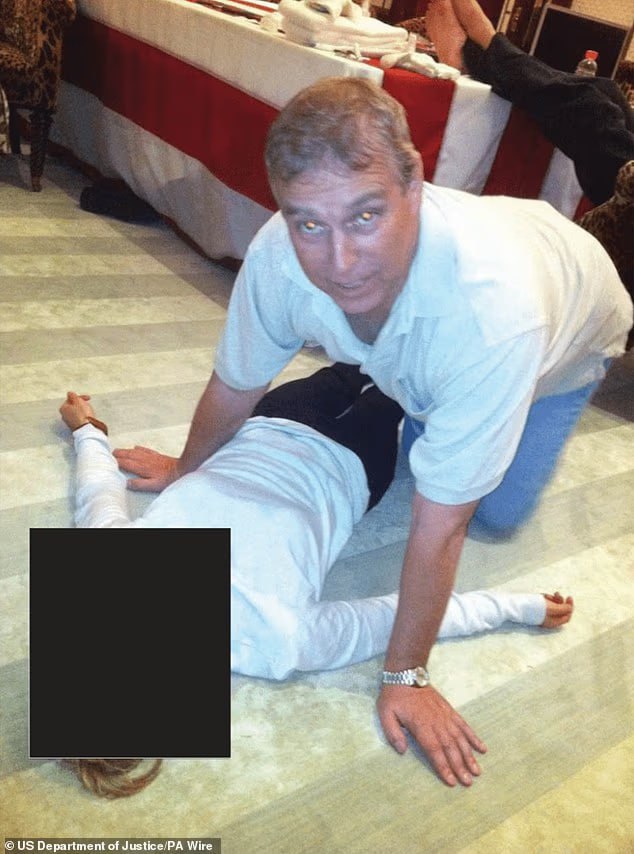
Fresh releases from the U.S. Justice Department’s Epstein-related records have reignited scrutiny of Prince Andrew’s past ties to Jeffrey Epstein, with UK police confirming they are reviewing a new allegation that a woman was trafficked to the UK in 2010 to spend a night with him at Royal Lodge in Windsor. Andrew has denied wrongdoing, but the renewed attention coincided with him leaving Royal Lodge and relocating to the King’s Sandringham estate, reportedly in a discreet, night-time move. Separately, media reporting on the newly surfaced material highlights an email exchange in which “A” (reported as Andrew) wrote to Epstein that he wished he was still a “pet” in Epstein’s “family,” while noting that being named in the document trove is not, by itself, proof of criminal conduct.
--------
Prince Andrew, son of Elizabeth II and brother of the King of Britain, bought a minor from Epstein, raped her and killed her — according to the files
-;The only punishment he previously received for this was that Andrew was stripped of all titles and royal patronage. No criminal case was opened.
- Now the prince has been evicted from his residence in Windsor amid the Epstein scandal — The Sun reports.
- Andrew left the residence earlier than scheduled.
- Sources claim that King Charles is increasingly concerned about the "shocking revelations" that have resurfaced in the media. Andrew Mountbatten-Windsor's departure from the mansion was so humiliating that he decided to do it at night.
- The scandal surrounding Andrew, who was previously stripped of his titles and duties, continues to undermine the reputation of the monarchy. It emerged from the declassified files that the ex-duke wrote to the financier about wanting to become his "pet". One of the financier's victims claimed that she was forced to have sex with Andrew three times when she was 17 years old.
--------
Social-media posts are claiming the online “Epstein files” total has fluctuated and that some entries mentioning the Rothschilds “disappeared,” presenting it as evidence of coordinated censorship. What’s confirmed so far is different: the U.S. Justice Department has acknowledged pulling thousands of documents/media from its Epstein files site after redaction failures exposed victim-identifying information, and a federal judge said the DOJ and victims’ lawyers reached an agreement on steps to better safeguard identities—meaning files can be temporarily removed while being corrected and re-posted. Separately, mainstream reporting indicates Rothschild-related names have appeared in the newly released material (e.g., Nat Rothschild referenced in the Mandelson email fallout), which cuts against the idea that “Rothschild mentions” were uniquely scrubbed. Bottom line: there’s no independent confirmation that Rothschild references were selectively deleted; the most evidenced driver of “missing” documents right now is the ongoing cleanup of privacy/redaction mistakes.
Screenshots circulating online and attributed to newly released “Epstein files” claim Jeffrey Epstein derided Ukraine’s President Volodymyr Zelensky as an “Eastern European adventurer” in a 2019 exchange with former U.S. Treasury Secretary Lawrence Summers, while Summers allegedly replied that Zelensky had received substantial financial backing. The broader DOJ document dump does include Ukraine-related correspondence and references to Zelensky and Summers, but the specific screenshots and wording are not independently verifiable from the images alone and should be treated as unconfirmed until authenticated against the original records.
UK Prime Minister Keir Starmer said former UK ambassador to the US Peter Mandelson will be removed from the Privy Council amid the Epstein-linked scandal, after Starmer said Mandelson “lied repeatedly” during vetting and brought the body into disrepute. Starmer also said documentation around Mandelson’s appointment will be published, with sensitive elements handled through parliamentary intelligence oversight and withheld where disclosure could harm national security (and related considerations).
Poland’s government has ordered an official review of newly released Epstein-related files, with Prime Minister Donald Tusk saying authorities will examine whether there were any Polish victims/links and whether there is any basis to suspicions of involvement by Russian secret services—a claim he framed as growing “speculation” rather than an established fact. The work will be handled by a government team involving the justice ministry and security services; officials say they may seek additional material from U.S. authorities once the initial screening is complete. Importantly, this is not a confirmed finding that Epstein “was a Russian spy”—it’s an inquiry into allegations; and other countries (including Latvia and Lithuania) have also announced parallel checks.
Israel and Azerbaijan signed a memorandum of understanding on artificial intelligence in Jerusalem, with Prime Minister Benjamin Netanyahu attending the ceremony. The MoU was signed by Azerbaijan’s digital development and transport minister Rashad Nabiyev and Israel’s national AI chief Erez Eskel/Askel, and is set to focus on high-performance (supercomputing) infrastructure, AI applications in key civilian sectors, human-capital development, and joint research. Netanyahu also asked that his “warmest greetings” be conveyed to President Ilham Aliyev and invited him to visit—adding the line: “We always say ‘next year in Jerusalem’ — tell him ‘this year in Jerusalem.’”
The UK Cabinet Office has referred material to police after an initial review of newly surfaced “Epstein files” correspondence linked to Lord Peter Mandelson, with Sky News reporting the documents appear to include market-sensitive/confidential information from the 2008 financial crisis era and suggest official safeguards may have been compromised. Police said they will decide next steps after assessing the information, as the Metropolitan Police confirmed it has opened an investigation into alleged misconduct in public office connected to the disclosures. Reports have also highlighted claims that Mandelson may have tipped Epstein in 2010 about a planned €500bn EU stabilisation facility, though the details remain under investigation and not adjudicated.
A viral post claims “shocking 2023 footage” shows celebrities and politicians at Jeffrey Epstein parties taking part in “Spirit Cooking” rituals allegedly staged by performance artist Marina Abramović—and adds that Abramović was “recently appointed Ukraine’s ambassador” under President Volodymyr Zelensky. The problem: the visuals most often circulated with this narrative have been fact-checked as misattributed, including a widely shared image that comes from a 2013 New York charity art event, not Epstein’s island or “rituals.” In parallel, multiple outlets have documented how “Spirit Cooking” (an Abramović performance concept) has been repeatedly misrepresented in conspiracy-driven narratives, including claims linking her, Lady Gaga, and Epstein/Maxwell without evidence.
As for the “ambassador” claim, Abramović has said Zelensky invited her to act as an “ambassador” to support efforts such as rebuilding schools—best understood as a cultural/charity envoy-type role, not a diplomatic ambassadorship—and this does not substantiate allegations about Epstein parties.


South Africa’s S&P Global Manufacturing PMI surged to 50.0 in January from 47.7 previously, lifting the sector to the breakeven line after a period of contraction. While 50.0 signals stabilization rather than clear growth, the move is a meaningful improvement in factory momentum—an incremental positive for ZAR sentiment if follow-through shows up in output and new orders.
South Korea’s foreign-exchange reserves fell to $425.91 billion in January from $428.05 billion previously, a decline of about $2.14 billion. The drop can reflect valuation effects and/or interventions and liquidity operations; for KRW, the level remains sizable, but the direction will be watched if reserve drawdowns persist.
Mexico’s S&P Global Manufacturing PMI ticked up to 46.30 in January from 46.10 previously but remained well below the 50 thresholds—signaling manufacturing is still in contraction. The marginal improvement suggests the downturn may be easing slightly, yet the level points to continued weakness in output and orders, a backdrop that can be a mild headwind for MXN sentiment if sustained.
Brazil’s December industrial production data disappointed on both fronts. Output rose just 0.4% YoY (vs 1.0% expected, -1.4% prior), showing the annual pace improved from contraction but came in well below forecasts. More concerning for near-term momentum, production fell -1.2% MoM (vs -0.8% expected, -0.2% prior), a deeper monthly drop that points to a softer end to the year for factory activity. For BRL, the mix is marginally negative as weaker real-economy momentum can weigh on growth sentiment, even if disinflation and rates expectations remain key drivers.