translate English
 پارسی
English
Englishپارسی
English
Englishپارسی EnglishپارسیEnglishپارسی
The Iran war expanded into the Red Sea this week as the United States continued strikes inside Iran, Tehran attacked U.S. positions across the Gulf, and the Houthis targeted Saudi oil infrastructure. Although direct U.S.-Iran attacks paused overnight into July 25, no ceasefire has been announced. The United States conducted repeated strikes across Iran, Tehran continued missile and drone attacks against U.S. military positions in neighbouring countries, and the Iran-aligned Houthis opened a second maritime front against Saudi Arabia.
The third operational round of US–Iran hostilities intensified between July 13 and July 19, 2026, following the collapse of the June truce. The confrontation developed into a sustained air-maritime campaign involving nightly US strikes, a renewed naval blockade of Iranian ports and increasingly dispersed Iranian retaliation against regional military positions, commercial shipping and civilian-adjacent infrastructure. The United States concentrated its operations on Iran’s southern coastline and islands near the Strait of Hormuz. Iran, meanwhile, attempted to increase the regional and economic cost of the campaign by targeting US personnel, Gulf states, tankers and infrastructure supporting energy production and maritime trade.
The Iran war escalated sharply during July 14–16, 2026, as the United States launched new attacks against Iranian coastal-defence, missile, drone and maritime capabilities while reactivating its naval blockade. Iran responded with regional missile and drone operations, and the Strait of Hormuz remained highly dangerous for commercial shipping. This report reviews the past 48 hours and explains the military, diplomatic, economic and geopolitical situation now.

The Iran conflict entered a more dangerous phase over the past 72 hours as renewed U.S.-Iran strikes, tanker disruption near the Strait of Hormuz, and fresh regional security risks pushed oil higher at the start of the week. Markets reacted cautiously, but not in full panic mode. Markets opened the week with a cautious but not panic-driven reaction. Oil prices moved higher, Gulf stock markets were mixed, U.S. equity futures remained surprisingly firm, and Bitcoin continued to trade under pressure near the $60,000 level.
The latest Swiss talks between the United States and Iran have created a fragile but important path toward de-escalation in the Iran war. While no final peace agreement has been reached yet, the negotiations produced a 60-day roadmap, temporary U.S. sanctions relief for Iranian oil-related transactions, a communication channel for the Strait of Hormuz, and a mechanism to support the Lebanon ceasefire. This report explains what changed in the past three days, what remains unresolved, and how these developments could affect oil, gold, the U.S. dollar, Wall Street, and global market sentiment.
A complete analysis of the reported Iran–US peace framework, covering the latest developments from the past 48 hours, the expected signing process, the role of Pakistan’s mediation, and the possible reopening of the Strait of Hormuz. This report reviews international reactions, Iran’s domestic response, Israel and Lebanon-related risks, and the potential impact on oil prices, gold, the US dollar, global equities, and broader geopolitical sentiment. It also explains the main unresolved issues, including Iran’s nuclear program, sanctions relief, frozen assets, and the 60-day negotiation window that could determine whether this preliminary framework becomes a lasting agreement.
The 2026 Iran war ceasefire has reduced the scale of direct military confrontation, but it has not ended the regional crisis. Israel, Iran, the United States and Hezbollah remain locked in a fragile military and diplomatic standoff, while the Strait of Hormuz, oil prices, inflation expectations and global market sentiment continue to drive policy decisions.
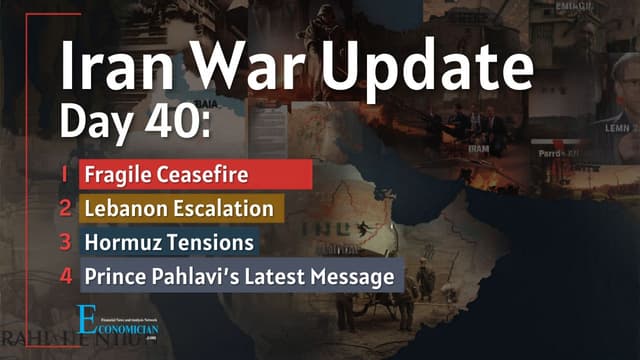
This report covers the latest developments in the Iran war on day 40, focusing on what happened after the Wednesday ceasefire and into early Thursday. It reviews the latest attacks inside and outside Iran, the condition of the ceasefire, tensions in Lebanon, the status of the Strait of Hormuz, the ongoing internet blackout, international reactions, diaspora activity, and Prince Reza Pahlavi’s latest message.
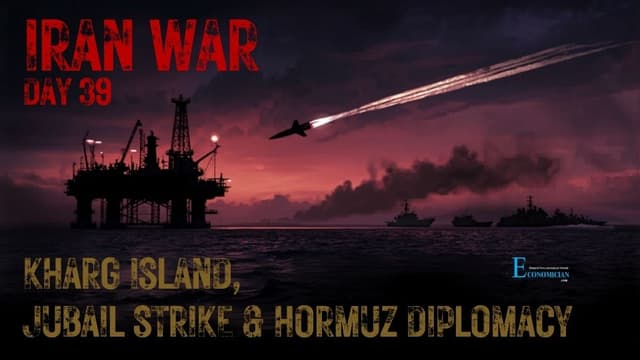
As Day 39 unfolds, the conflict is being shaped by three simultaneous pressures: U.S. strikes on sensitive Iranian military targets, Iranian retaliation against regional energy infrastructure, and a last-minute diplomatic push centered on the Strait of Hormuz in the Persian Gulf. In the past 24 hours, the United States struck military targets on Kharg Island, Iran hit Saudi Arabia’s Jubail petrochemical complex, and mediators tried to keep a collapsing negotiation track alive.
Day 38 looks like a dangerous hinge point. Militarily, Israel and the U.S. are signaling broader infrastructure targeting and higher sortie volume; Iran is proving it can still hit Israel, Gulf-linked energy nodes, and regional fronts. Diplomatically, there is still a channel, but Tehran wants a lasting settlement, while Washington is using a hard deadline and maximal pressure. That means the next 24 hours are likely to revolve around one question: does Hormuz move toward reopening, or does the war enter a sharper infrastructure phase?
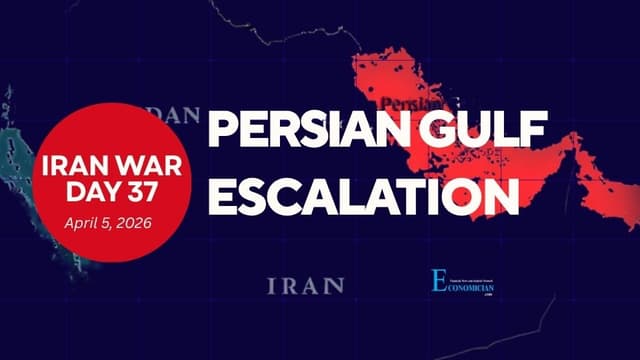
The short is that the war widened again. The biggest shift in this 24-hour window was Iran extending attacks beyond Israel and inside-Iran battlefields into the Persian Gulf energy space, while Washington sharply escalated pressure on Tehran over the Strait of Hormuz, threatening direct attacks on Iranian infrastructure if shipping is not restored by Tuesday, April 7 at 8:00 p.m. U.S. Eastern Time.
The clearest picture is that the war is still escalating, not stabilizing. Over these three days, the conflict widened across Iran, Israel, Lebanon, Kuwait, the UAE, the Strait of Hormuz, and possibly Iraq, while diplomacy remained active but weak. The biggest shift was the downing of two U.S. warplanes on April 3, followed by a missing American crew member inside Iran, fresh Iranian missile and drone strikes across the region, renewed Israeli/U.S. strikes on infrastructure inside Iran, and a hardening fight over the Strait of Hormuz.