translate English
 پارسی
English
Englishپارسی
English
Englishپارسی EnglishپارسیEnglishپارسی
A broader and more intense wave of reported attacks unfolded inside Iran from late Friday into Saturday, with Tehran, Isfahan, Shiraz, Tabriz, Kharg Island, and several other cities all seeing reported explosions, drone activity, air defense responses, or fighter jet movements. The pattern of strikes suggests the conflict is no longer limited to isolated incidents, but is increasingly hitting multiple locations in close succession, including military-linked, industrial, research, and strategically sensitive areas. This report reviews the latest reported targets, the spread of attacks across the country, and what this escalation may signal about the next phase of the war inside Iran.
The Iran war entered a more dangerous and entrenched phase on day 14, with fresh strikes inside Iran, continued pressure across the Persian Gulf, severe disruption in the Strait of Hormuz, and rising international concern. This report breaks down the latest military developments, regional spillovers, diplomatic reactions, and what the end of the second week means for the war’s next phase.
Day 13 of the Iran war marked another major escalation, with new strikes across Iranian territory, attacks affecting Gulf states, and continued disruption in one of the world’s most important energy chokepoints, the Strait of Hormuz. This report examines the last 24 hours in detail, including military developments, regional spillover, global diplomatic reactions, and the economic impact on oil, shipping, and market sentiment.
The war between the United States/Israel and Iran, which began on 28 February 2026, entered its twelfth day on 11 March 2026. Fighting intensified and extended beyond Iran's borders, with air raids, missile and drone attacks, and naval clashes. The Persian Gulf and Strait of Hormuz, the world’s busiest oil route, saw renewed attacks on shipping and efforts by the U.S. to neutralize Iranian minelaying. This briefing summarizes developments over the previous 24 hours and situates them within the broader conflict.
Day 11 of the Iran war saw the heaviest U.S.-Israeli strikes so far, fresh Iranian missile and drone attacks, rising regional spillover across the Persian Gulf, and growing pressure on energy markets and the Strait of Hormuz. This update covers the past 24 hours, including targets hit, casualties, official statements, regional reactions, and what they mean for the next phase of the conflict.
This full update covers the most important developments in the Iran war over the past 36 hours, including Israeli and US strikes across multiple targets inside Iran, Iran’s retaliatory attacks across the region, and the latest military, political, and diplomatic changes surrounding the conflict. The report also reviews key official statements, international reactions, the selection of Mojtaba Khamenei, and the broader implications of these events for the direction of the war and regional stability.
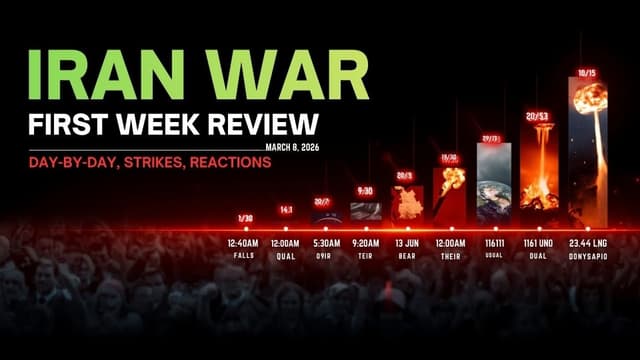
On 28 February 2026 the United States and Israel launched Operation Epic Fury and Operation Lion’s Roar, a coordinated attack on Iran. The opening salvo decapitated much of Iran’s leadership, targeted its military infrastructure and triggered widespread retaliation. By 7 March, more than 1,200 people had been killed in Iran and dozens more across the region. Below article provides a day‑by‑day summary, followed by sections on the main targets, Iranian strikes outside Iran, leadership statements, casualties among Iranian officials and international reactions.
A comprehensive Day 7 update on the Iran war, covering the most important developments from the last 48 hours: heavy U.S.-Israeli strikes across Tehran and other Iranian cities, the military and strategic sites that were targeted, Iran’s retaliatory missile and drone attacks across the region, and the expanding role of regional actors and international powers. The report also examines official statements, humanitarian damage, displacement, diplomatic reactions, and what the latest escalation may mean for the next phase of the conflict.
The U.S.–Israel–Iran war has rapidly escalated into a wider regional crisis, with major strikes inside Iran, retaliatory attacks across the Persian Gulf, high-profile Iranian leadership losses, and mounting international pressure for de-escalation. This report covers the latest developments, the most important events of the past 48 hours, key targets, official statements, and the broader geopolitical and market fallout.

The Israel–US attack on Iran that began on February 28, 2026, marked the most significant direct escalation between Iran, Israel, and the United States in years. What started as a coordinated air campaign against Iranian military, nuclear, and leadership targets quickly expanded into a regional confrontation involving missile strikes, drone attacks, Gulf military bases, shipping routes, and civilian infrastructure across multiple countries. This full report explains how the Israel–US attack on Iran started, why it happened, how the fighting unfolded from the first strike until now, the casualties on all sides, which places were hit inside Iran and outside Iran, and what the conflict means at this stage.
A historical deep-dive into Iran’s student movement—from the Constitutional era and Student Day (16 Azar/1953) to the 1979 Revolution, the Cultural Revolution, 18 Tir 1999, the 2009 Green Movement, and the Mahsa (Woman, Life, Freedom) uprising. It also explains the recent campus shift toward national symbols—including burning the Islamic Republic flag, raising the Lion and Sun flag, and calling to restore pre-1979 university names—showing how Iran’s universities remain a frontline of political identity and change.
A deeper look at Iran’s ongoing protest movement and revolutionary unrest, this update covers the latest developments inside the country, the key events of the past 72 hours, the regime’s continuing crackdown, and the broader social and economic pressures driving public anger. It also examines international reactions, Prince Reza Pahlavi’s latest statements, the newest developments in the Geneva nuclear talks, fresh travel warnings issued by foreign governments, and the military scenarios now shaping the risk of escalation and possible wider war.