translate English
 پارسی
English
Englishپارسی
English
Englishپارسی EnglishپارسیEnglishپارسی
White House press secretary Karoline Leavitt said President Donald Trump “wants to see if a deal can be struck” with Iran as high-level nuclear talks are set to take place in Oman (Muscat), but stressed the president has “many options at his disposal” beyond diplomacy. Leavitt framed the warning in military terms, describing Trump as commander-in-chief of “the most powerful military in the history of the world,” underscoring that Washington is pursuing diplomacy while keeping escalation tools on the table if negotiations fail.
German Chancellor Friedrich Merz said he is “deeply concerned” about a potential military escalation involving Iran, and called on Tehran to refrain from “military threats” against Israel and other countries in the region. Speaking in Doha during his Gulf trip, Merz urged Iran’s leadership to enter serious talks, end what he called “aggression,” and end its nuclear program, saying Berlin is coordinating closely with Washington as U.S.–Iran nuclear talks are set to take place in Oman.
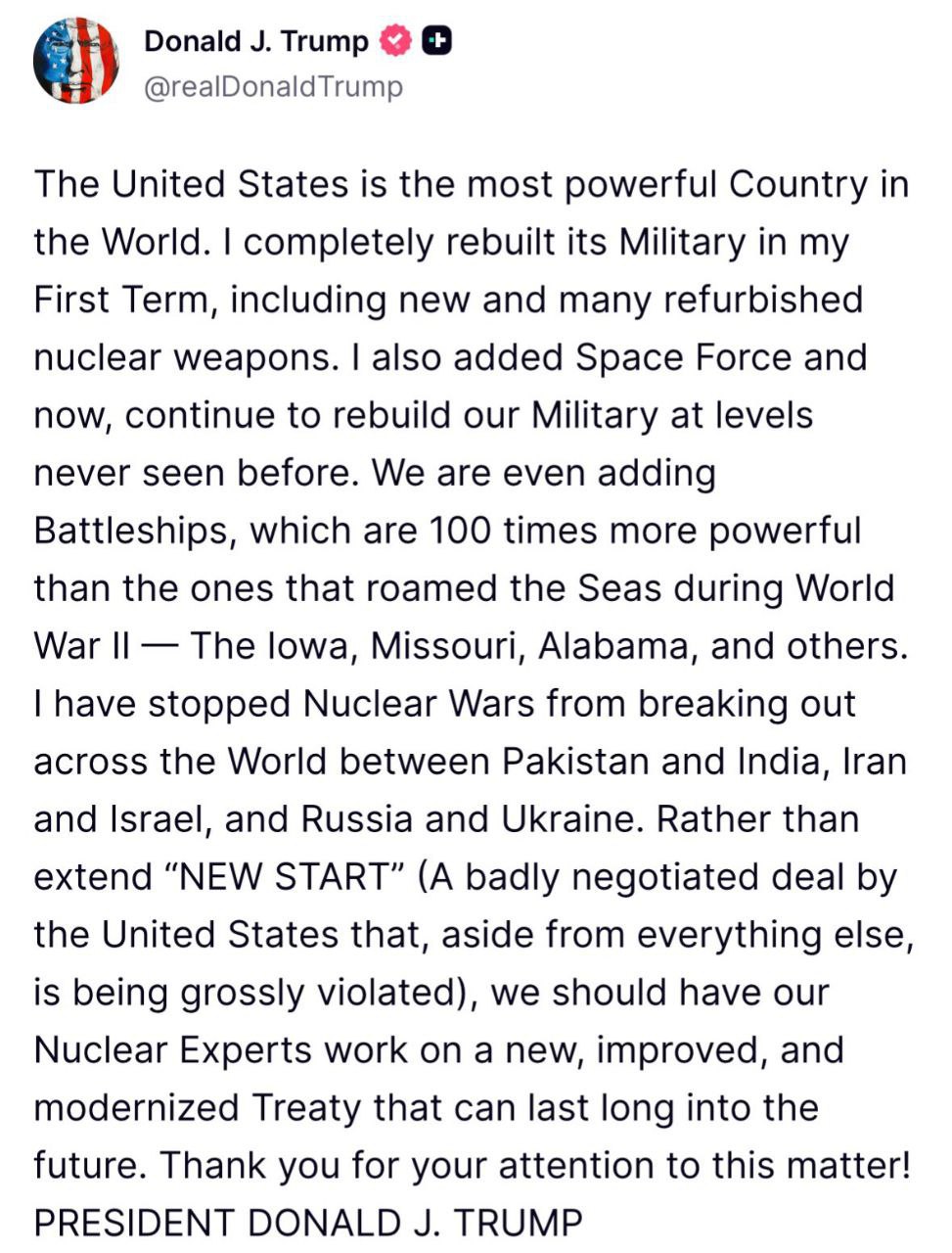
President Donald Trump said the United States should not extend the New START nuclear arms reduction treaty, arguing instead that Washington should task “nuclear experts” with drafting a new, modernized agreement that can “last long into the future.” In a social-media statement issued as New START expires on Feb. 5, 2026, Trump called the accord “badly negotiated” and claimed it has been “grossly violated,” while also boasting about U.S. military modernization and asserting he prevented nuclear wars in multiple flashpoints—claims he did not substantiate in the post. The expiry ends the last major U.S.–Russia bilateral framework limiting strategic arsenals, prompting warnings from international officials that the lapse raises global nuclear risk and underscores the need for a new verifiable arrangement.
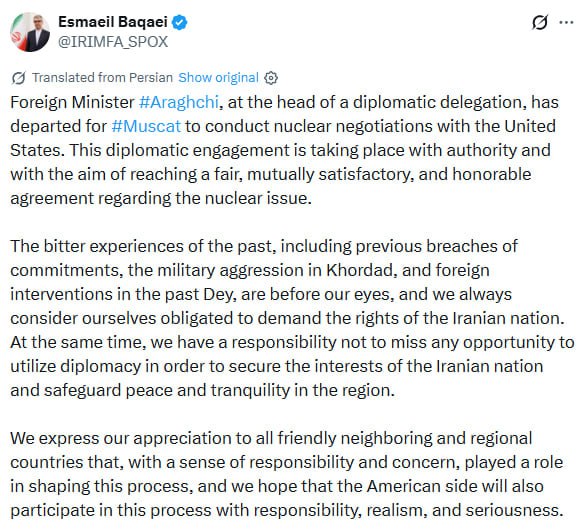
Iran’s Foreign Minister Abbas Araghchi has departed for Muscat, Oman, leading a diplomatic delegation for nuclear talks with the United States scheduled for Friday. Foreign Ministry spokesperson Esmail Baghaei said Tehran is pursuing a “fair, mutually satisfactory and honorable” understanding on the nuclear file, while stressing Iran’s “bitter experiences” from past breaches and saying Iran will use diplomacy to protect national interests—urging Washington to engage with “responsibility, realism and seriousness.” The talks come amid unresolved disputes over the scope of negotiations, with Iran pushing to keep them limited to nuclear issues.
Israel has created a new military liaison role under the IDF’s Northern Command to coordinate outreach and communication with Druze communities in Syria and Lebanon, Israeli media reported. Major General Ghassan Alian (a Druze officer and outgoing head of COGAT) is set to take the newly created post, in a move that comes as Israel has sought closer ties with Syrian Druze since the December 2024 fall of Bashar al-Assad’s regime. The step is politically sensitive: some Druze figures—including a faction linked to cleric Hikmat al-Hijri—have publicly voiced support for Israel and called for greater backing and autonomy, while other Druze leaders, including Lebanon’s Walid Joumblatt, have warned against Israeli influence.
The U.S. and Russia have reached (or are finalizing) an informal understanding to keep observing New START’s limits and transparency measures after the treaty’s February 5, 2026, expiration, with six months reportedly on the table, according to Axios. The discussions were said to have taken place in Abu Dhabi alongside separate talks on Ukraine, and would not constitute a formal legal extension—meaning the treaty would still lapse on paper while both sides “operate in good faith” and explore an updated framework.
President Donald Trump said the U.S. is “working hard” to end the war in Sudan and claimed Washington is “very close” to getting it done, adding it would be his “number nine” conflict resolved (depending on whether Russia–Ukraine is settled first), in remarks delivered at the National Prayer Breakfast in Washington on February 5, 2026. The comments come as U.S. officials and partners are simultaneously pushing a truce track ahead of Ramadan (Feb. 17) and ramping up humanitarian financing, amid a worsening civilian crisis and famine warnings — but with no public confirmation yet of an agreed ceasefire between the warring sides.
President Donald Trump said Hamas “will” disarm despite skepticism, adding that “if they don’t, they won’t be around any longer,” in remarks delivered during a wide-ranging, unscripted speech in Washington on February 5, 2026. The comments underscore the U.S. push to make Hamas disarmament a central condition for the next stage of the Gaza framework, as funding and reconstruction discussions remain constrained by uncertainty over whether disarmament talks will actually begin.
Lebanon’s security establishment is reportedly worried that a U.S. strike on Iran could trigger a wider spillover—potentially opening a Lebanon–Syria front involving Hezbollah—according to a report attributed to the pro-Hezbollah daily Al-Akhbar. The report points to Syrian announcements of military drills and “unusual” activity monitored along the Lebanon–Syria border as warning signs that regional escalation could quickly spread beyond Iran and Israel, complicating Beirut’s efforts to keep the country insulated from a broader conflict.
Australia’s Senate adopted a resolution on February 5, 2026 (۱۶ بهمن ۱۴۰۴) condemning what it described as the brutal repression of protesters in Iran and declaring solidarity with Iranians and the Iranian-Australian community. The motion cites reports of civilian killings, the targeting of women and children, mass arrests, and suppression of basic freedoms through internet/communications shutdowns, and urges Canberra to support independent international investigations, pursue accountability for crimes against civilians, expand targeted sanctions on responsible individuals and entities, push for an immediate end to violence, restore full connectivity and internet access, seek a permanent halt to executions, and ensure civilian protection.
Egypt’s foreign ministry says Foreign Minister Badr Abdelatty, acting on presidential directives, held intensive phone calls over the past two days with Iran’s Abbas Araghchi, Qatar’s PM/FM Sheikh Mohammed bin Abdulrahman Al Thani, Oman’s Badr bin Hamad Al Busaidi, and U.S. Middle East envoy Steve Witkoff to discuss the latest regional developments and push de-escalation via diplomacy and dialogue, warning against a broader slide into instability.
An Israeli court in Jerusalem sentenced Elimelech Stern, a Beit Shemesh resident, to three years in prison (plus a suspended sentence and a fine) after convicting him of contact with a foreign agent and conspiracy to issue threats tied to alleged cooperation with Iranian operatives. Israeli media say Stern carried out assignments requested by his handlers, including producing and posting posters linked to Gaza, and prosecutors had sought a much harsher sentence (reported at seven years) before the court’s final ruling.