translate English
 پارسی
English
Englishپارسی
English
Englishپارسی EnglishپارسیEnglishپارسی
Irish investigative outlet The Ditch reports it gained access to Jeffrey Epstein’s FedEx account after spotting an unredacted password inside the DOJ’s recent Epstein document release—an entry that the outlet says was later deleted. The outlet says the FedEx account was still active and shows shipments as recently as 2024, including invoices tied to aviation-related addresses in Georgia and deliveries to entities linked to Epstein’s jet operations.
The Ditch also says the account’s address book includes nearly 100 contacts, including Ghislaine Maxwell and Les Wexner, plus a former Israeli Air Force lieutenant colonel described as a “strategic consultant” on diplomatic matters. The outlet notes the account lists an administrator and still presents Epstein as the account holder.
One detail amplifying the optics: The Ditch points to a dissolved jet company tied to Epstein and cites reporting that Donald Trump chartered a jet formerly owned by Epstein during the 2024 campaign after his own plane had issues—something the Trump campaign said it wasn’t aware of at the time.
Context matters: The DOJ has acknowledged large-scale document takedowns to fix redaction problems and protect victims, which makes the broader data environment noisy—and increases the need for independent verification of specific claims beyond what any single outlet publishes.
France says a pro-Russia disinformation operation circulated fabricated email screenshots (via a fake site mimicking France-Soir and amplified on X) to link President Emmanuel Macron to Jeffrey Epstein. French authorities say the content is forged and part of an interference campaign.
At the same time, the genuine DOJ document dump is creating real political spillover in France: Paris has now referred to prosecutors a French diplomat accused of sending confidential UN material to Epstein in emails between 2010 and 2016.
On claims that “DOJ emails show Macron doing business with Epstein in 2016” or that “Macron sought Epstein’s help in 2018”: France’s warning specifically concerns fake screenshots, and major outlets have not uniformly published verifiable primary documents proving a direct Macron-Epstein operational relationship. Macron has publicly sought to distance France from the scandal, saying it mainly concerns the U.S.
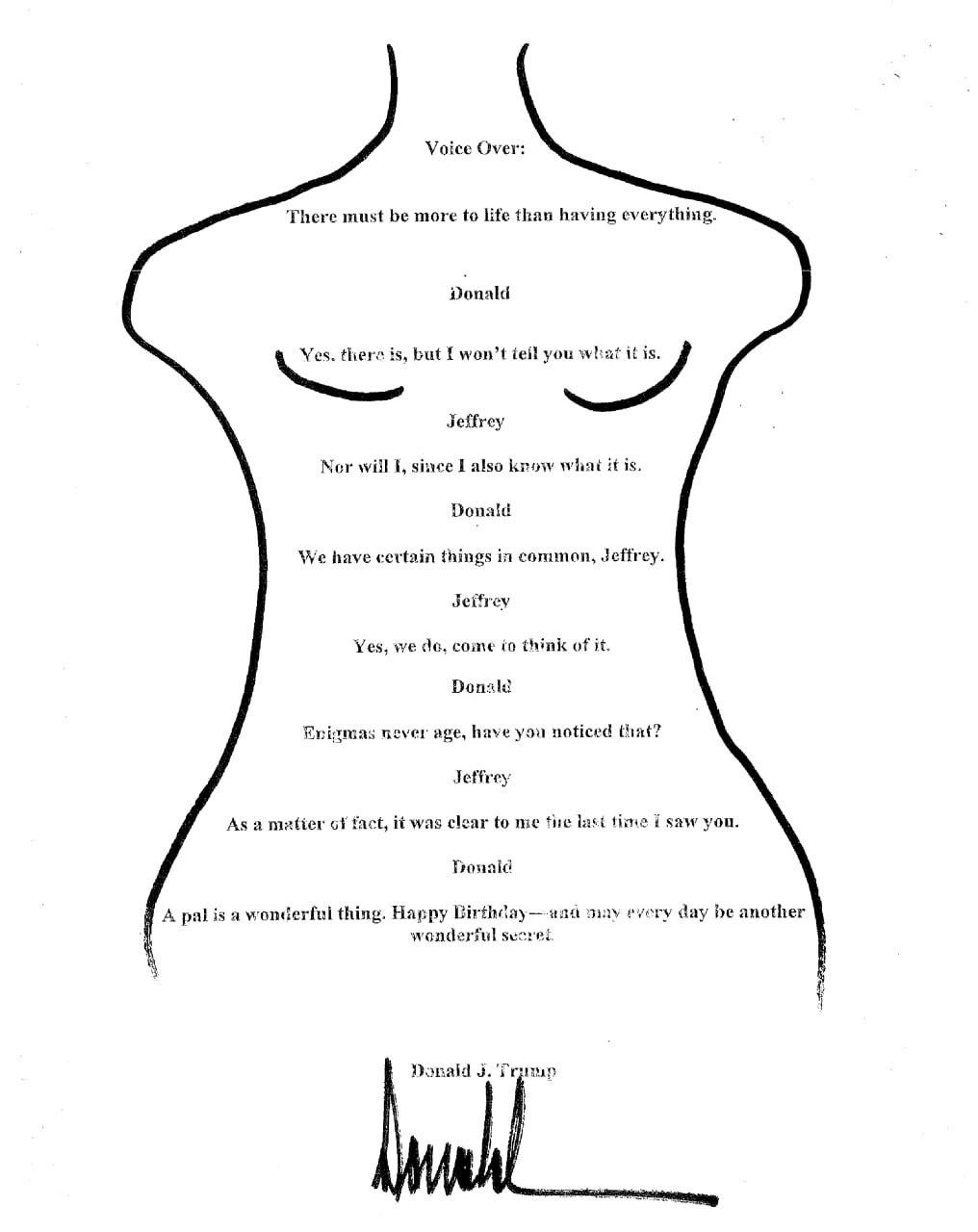
A photo of a cake iced with “JEFFREY’S GIRL” and a female silhouette is circulating online, with viral posts claiming the outline matches the nude-style silhouette shown in the alleged Trump contribution to Epstein’s 50th-birthday “birthday book.”
What’s solid vs. what’s not: the birthday book letter itself has been widely reported and images have been published after it was obtained by the House Oversight Committee; Trump denies authorship and has pushed back on authenticity claims.
But the cake image has no publicly established chain-of-custody in reputable reporting so far. Without an original source, metadata, or independent verification, the “silhouette match” remains pattern-spotting, not proof.
Practical takeaway: treat the cake as unverified until a credible outlet ties it to a specific date, event, and provenance—and be cautious about amplifying anything that could implicate victims or misidentify people.

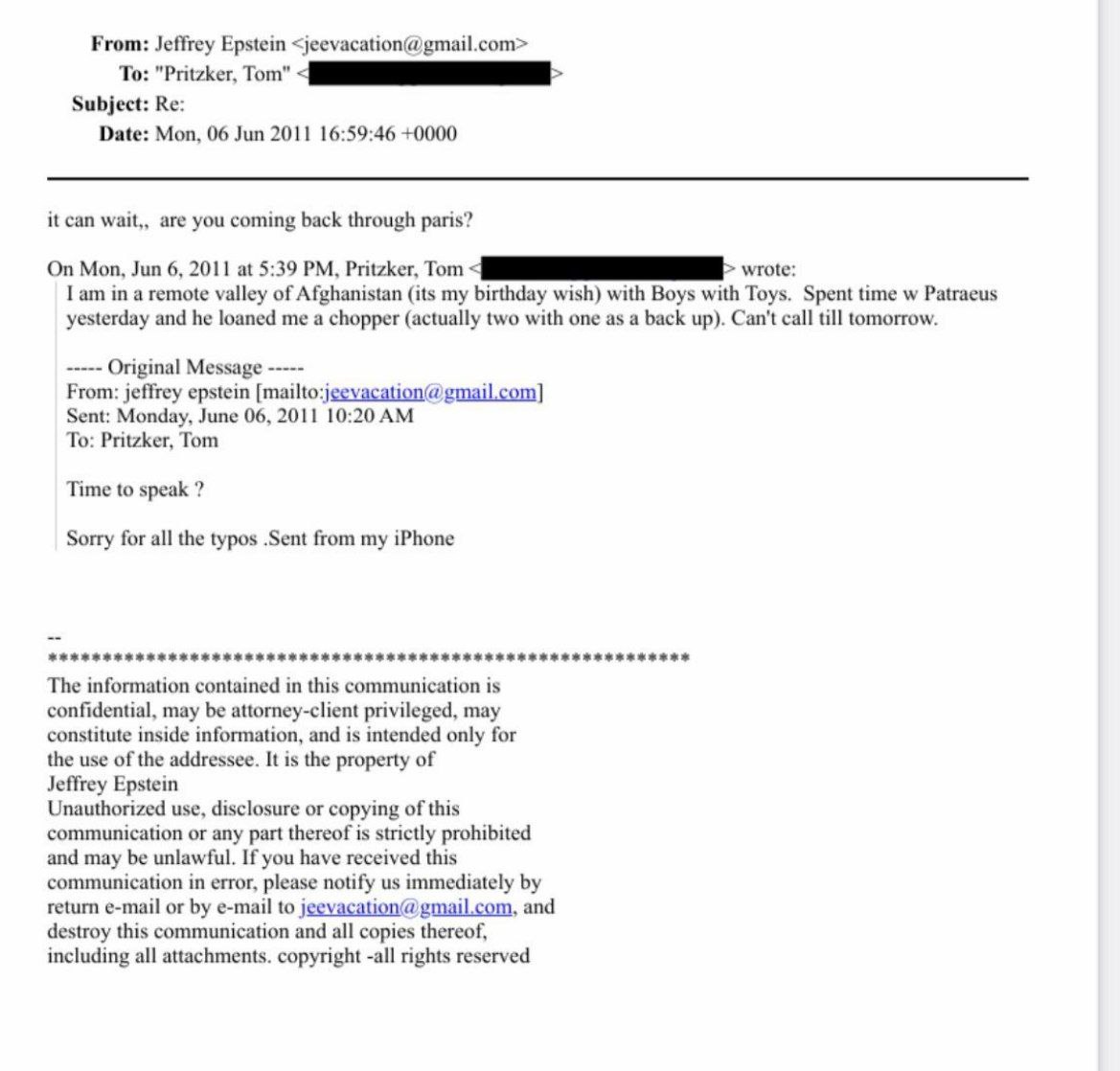
A resurfaced DOJ-released Epstein email is being shared online showing Hyatt heir Tom Pritzker writing to Jeffrey Epstein in June 2011 that he was in “a remote valley of Afghanistan” for his “birthday wish” with “Boys with Toys,” adding that he “spent time w[ith] Patraeus” and that Gen. David Petraeus “loaned me a chopper (actually two with one as a back up).”
The excerpt is triggering renewed scrutiny over how far Epstein’s network reached—and, separately, what the email implies (or doesn’t) about elite access to military assets in an active war theater. The document text itself shows a claim made in correspondence; it does not, on its own, establish illegality or provide the operational context behind the helicopter reference.
ABC News reports that a newly surfaced FBI report summarizing a 2019 interview with former Palm Beach police chief Michael Reiter says Donald Trump called the department in 2006—after the Epstein investigation became known—and told them: “thank goodness you’re stopping him… everyone has known he’s been doing this.”
The key nuance: this is an FBI summary of what Reiter told investigators, not a recording or transcript of the alleged 2006 call. Still, it adds fuel to the political fight over what prominent figures knew about Epstein and when.
Newly surfaced reporting around the latest “Epstein files” is reviving scrutiny of Jeffrey Epstein’s networking role with elite political, legal, and tech circles—particularly around William Burns and Kathryn Ruemmler.
Key point of correction up front: William Burns is not the current CIA Director. The CIA says John Ratcliffe has served as Director since Jan. 23, 2025.
What the credible reporting says: The Wall Street Journal previously reported from Epstein’s private calendar that Burns had meetings scheduled with Epstein in 2014 when Burns was Deputy Secretary of State, and later a meeting at Epstein’s townhouse was described in follow-on coverage. Being listed in a calendar does not prove the meeting occurred or imply criminality; even the WSJ-linked coverage notes the limitation that calendars are not proof of attendance or wrongdoing.
Separately, new WSJ reporting says documents show Epstein had significant contact with Kathryn Ruemmler (now Goldman’s top lawyer), portraying him as a recurring point of contact around her professional and personal matters—another example of Epstein positioning himself as a connector.
Bottom line: these files reinforce a pattern—Epstein cultivated proximity to powerful people—but the leap from “contact/calendar entries” to “proof of criminal conduct or intelligence operations” still requires primary documents and independent corroboration.
Brazil’s producer price data showed a mild rebound in upstream inflation, with the PPI turning positive in December after a prior-month decline.
The shift suggests cost pressures at the producer level picked up slightly, which can feed into consumer prices over time—though the magnitude is modest.
BRL angle:
A firmer PPI is typically BRL-supportive at the margin if it reinforces “inflation stickiness” and keeps rates restrictive. But as a standalone print, it’s usually a second-tier driver versus the real’s bigger catalysts: carry, fiscal headlines, commodities, and capital flows.
Mexico’s industrial sector ended the year with a clear upside surprise, as December production grew faster than expected and marked a sharp turnaround from the prior contraction.
MXN angle:
Stronger industrial activity is generally MXN-supportive via the growth channel, especially given Mexico’s tight linkage to U.S. manufacturing and supply chains. Still, the peso’s near-term direction often hinges more on rates/carry and U.S. macro risk sentiment than one domestic print.
Brazil’s Thomson Reuters/Ipsos PCSI signaled a weaker consumer tone in February, dropping notably from the prior month.
The decline suggests households are becoming more cautious, which can translate into softer discretionary spending if the trend persists—especially in a high-rate, inflation-sensitive environment.
BRL angle:
This is typically a secondary FX input, but softer confidence can be mildly BRL-negative via the growth channel. Still, the real is usually driven more by rates/carry, fiscal headlines, commodity prices, and capital flows than by sentiment surveys alone.
Mexico’s Thomson Reuters/Ipsos PCSI showed a month-on-month decline in February, pointing to a slightly softer consumer mood.
The drop suggests households’ confidence eased at the margin, which can hint at more cautious spending behavior if the trend persists.
MXN angle:
This is usually a low-impact indicator for FX. For the peso, the bigger drivers remain rates/carry, U.S. macro, and risk sentiment—but softer confidence can add a mild headwind to the domestic growth narrative.
Brazil’s latest foreign exchange flows swung back into negative territory, showing a -$0.294B reading versus a strong +$4.180B previously—an abrupt reversal that signals net dollar demand and reduced external support at the margin.
For BRL, a move from sizable inflows to a mild outflow can be a near-term headwind, especially if it reflects weaker portfolio appetite or more cautious positioning. Traders will watch whether the shift persists in coming weeks and how it interacts with the broader drivers—rates/carry, risk sentiment, and commodity prices.
Turkey’s retail sector ended the year on a strong note, with December retail sales rising sharply month-on-month and accelerating year-on-year, pointing to resilient consumption momentum.
TRY angle:
Stronger retail activity can be supportive for growth sentiment, but for the lira, the dominant drivers remain inflation dynamics, real rates, and policy credibility. Robust consumption can also be a double-edged sword if it adds to inflation persistence, keeping markets sensitive to the policy mix.