translate English
 پارسی
English
Englishپارسی
English
Englishپارسی EnglishپارسیEnglishپارسی
A new snippet circulating online alleges Jeffrey Epstein wrote to a contact that he’d been shown a photo of French President Emmanuel Macron’s “boyfriend,” followed by a quip about “hypocrisy.” The claim is being amplified through screenshots and reposts, but its provenance remains murky and—critically—Paris says doctored Epstein-related material is already being used in a coordinated foreign influence push.
French officials have publicly warned that a pro-Russia disinformation operation pushed fabricated “DOJ email” screenshots to falsely link Macron to Epstein, using a fake site and social amplification.
Separately, the real DOJ dump has triggered a genuine French legal response: France has alerted prosecutors over a diplomat accused of sharing confidential UN material with Epstein. That is a verifiable, document-linked thread—unlike viral “boyfriend” claims that currently sit in the gray zone of unauthenticated excerpts.
South Korea’s latest money data points to easier domestic liquidity, with broad money growth accelerating and the headline M3 stock rising further.
Market takeaway:
Faster M2 growth and a rising M3 base can support activity and risk appetite domestically, but they can also keep an eye on future inflation/asset-price pressures if liquidity continues to build.
KRW angle:
This is usually a second-tier driver for FX. If rising liquidity is read as supportive for growth without stoking inflation, it can be marginally KRW-positive. In practice, KRW is still more sensitive to global USD moves and the semiconductor/export cycle.
South Korea’s consumer mood brightened in February, with the Thomson Reuters/Ipsos Primary Consumer Sentiment Index (PCSI) rising to 45.89 from 44.81 previously—an improvement, though still below the 50 threshold.
Market takeaway:
The uptick suggests households are less pessimistic, but sentiment remains subdued, implying confidence is recovering gradually rather than snapping back.
KRW angle:
This is typically a secondary FX input. A firmer confidence read can be marginally KRW-supportive via the growth narrative, but KRW is more directly driven by global risk sentiment, USD moves, and the semiconductor cycle.
South Korea’s January price data delivered a favorable terms-of-trade shift: import prices fell into negative territory, while **export prices accelerated sharply—often a margin tailwind for exporters.
KRW / macro angle:
This mix can be supportive for KRW at the margin via improved external pricing dynamics, while also easing the inflation impulse from imports. The key watch is whether the export-price strength reflects real demand/pricing (bullish) or mainly FX/commodity base effects (less durable).
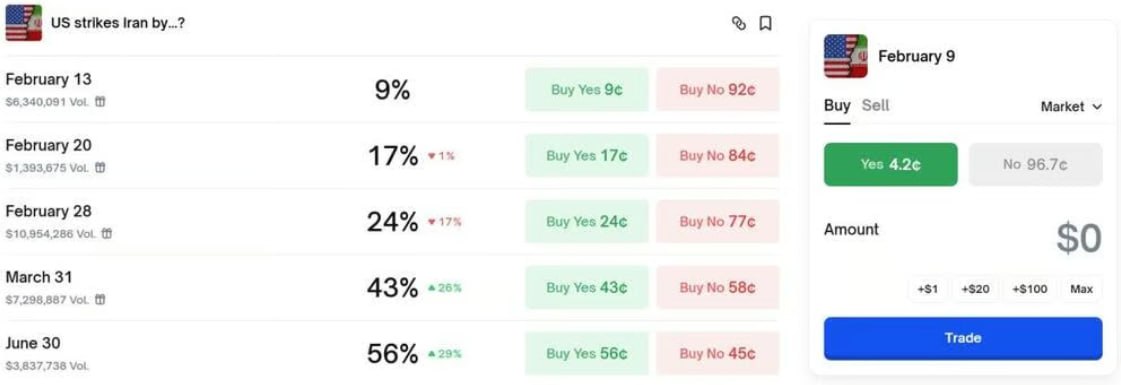
Israeli outlet Ynet reports that an IDF reservist and a civilian have been charged for allegedly using classified military information to place bets on Polymarket tied to military operations. The case spotlights how prediction markets can become targets for insider intelligence, raising fresh questions around operational security, market integrity, and platform monitoring. The screenshot circulating shows a contract on “US strikes Iran by…?” with shifting odds across dates—illustrating how sensitive, nonpublic info could translate into tradable probability.
Turkey’s latest reserve update pointed to a weaker FX buffer, with gross reserves falling and the net reserve metric also slipping versus the prior read.
Market takeaway:
A decline in reserves is typically read as reduced firepower for FX management and can raise sensitivity around liquidity, intervention, and external funding needs—especially when global USD conditions tighten.
TRY angle:
This is TRY-negative at the margin because shrinking reserves can undermine confidence in the currency’s buffer. That said, reserve moves can reflect seasonal flows, valuation effects, and tactical operations, so the market will watch whether the downtrend persists and how it interacts with inflation, real rates, and policy signaling.
South Africa’s latest data showed a small dip in consumer sentiment, while manufacturing remained in contraction—though both the monthly and annual declines were less severe than previously.
Market takeaway:
The factory sector is still shrinking, but the pace of contraction moderated. Meanwhile, confidence cooled slightly—suggesting the recovery impulse is not yet broad-based.
ZAR angle:
Mixed signals are typically FX-neutral unless they shift the outlook for rates or the trade balance. ZAR will remain most sensitive to global risk sentiment, commodity prices, and domestic policy credibility.
Israel’s consumer mood improved sharply in February, with the Thomson Reuters/Ipsos Primary Consumer Sentiment Index (PCSI) jumping back above 50—often viewed as a psychological “better-than-neutral” zone.
Market takeaway:
The jump suggests households are feeling materially less pessimistic, which can support near-term spending confidence if sustained.
FX angle (ILS):
Stronger consumer sentiment is mildly supportive for the shekel via the domestic-demand narrative, but near-term ILS pricing is still typically dominated by risk sentiment, geopolitical headlines, and relative rates.
Brazil’s services sector sent a mixed signal in December: activity contracted on the month, but accelerated on a year-on-year basis, keeping the broader demand backdrop constructive.
BRL angle:
The weaker MoM print is a short-term caution flag, but stronger YoY services growth can be BRL-supportive via growth. Still, the real’s main drivers remain rates/carry, fiscal headlines, and flows/commodities—so the market will watch whether this monthly dip is a one-off or the start of a trend.
Israel’s January trade data showed a cooling in both exports and imports, with the trade deficit narrowing modestly—an improvement driven more by lower imports than stronger external demand.
Market takeaway:
A smaller deficit is directionally positive for the external balance, but the decline in exports suggests demand conditions may still be soft, while lower imports can reflect either weaker domestic demand or shifting purchasing patterns.
FX angle (ILS):
A narrowing trade deficit can be marginally supportive for the shekel, but near-term ILS moves are typically driven more by risk sentiment, geopolitical headlines, and relative rates than monthly trade prints.
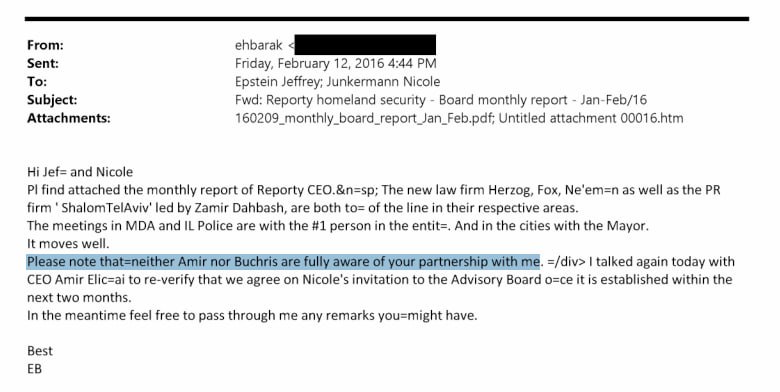
A screenshot circulating from the latest DOJ Epstein document releases shows an email attributed to Ehud Barak (Feb. 12, 2016) telling Jeffrey Epstein and Nicole Junkermann: “Please note that neither Amir nor Buchris are fully aware of your partnership with me.” If the message is authentic and complete, it points to an effort to keep Epstein’s involvement in Reporty Homeland Security (later renamed Carbyne) from key company partners—raising governance questions about disclosure, reputational risk, and investor transparency.
The broader relationship itself is not new: reporting in Israel previously described Epstein as a significant financier behind Barak’s 2015 investment vehicle for Reporty/Carbyne, with Barak acknowledging a legal private-business relationship at the time. Separately, coverage of Carbyne’s board structure has long named Amir Elichai (CEO/co-founder) and Pinhas Buchris among senior figures—making the “not fully aware” line particularly explosive if verified. Recent reporting also frames Epstein’s Carbyne stake as quiet/opaque and potentially financially significant had it remained intact.
Bottom line: this isn’t proof of illegality on its own—but it’s a classic red-flag pattern in compliance terms: undisclosed beneficial involvement + politically exposed counterpart + later public scandal.
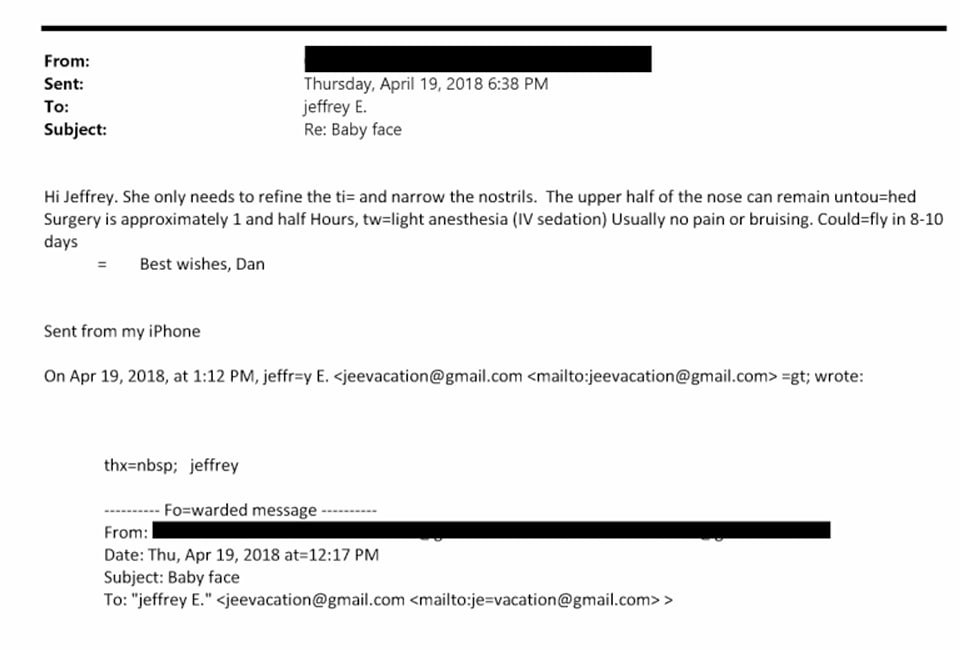
A newly shared screenshot attributed to the “Epstein files” claims to show an exchange between Jeffrey Epstein and a contact identified only as “Dan,” discussing a young woman referred to as “Baby Face,” a cosmetic procedure, and subsequent air travel arrangements.
If authentic and in full context, the tone points to logistical coordination around a vulnerable person—adding to longstanding questions about who enabled Epstein’s broader network and how movements were arranged.