translate English
 پارسی
English
Englishپارسی
English
Englishپارسی EnglishپارسیEnglishپارسی
Stock markets across the Gulf mostly fell on Thursday, as investors priced in renewed US–Iran conflict risk alongside soft corporate earnings. Dubai slipped 0.2% (with Emaar Properties -0.6%), Abu Dhabi dipped 0.1% (led by ADNOC Drilling -0.7%), and Qatar dropped 0.5% (with Industries Qatar -1.4%). Saudi Arabia was the outlier, edging 0.1% higher.
The risk tone followed Donald Trump’s post-meeting message with Benjamin Netanyahu that nothing definitive was decided but talks with Iran will continue, while U.S. force-posture headlines (including discussion of an additional carrier deployment) kept traders cautious.
Oil, meanwhile, turned lower after the IEA flagged softer demand growth and a likely surplus, limiting the usual tailwind that higher crude can provide to Gulf equities.
The European Parliament has adopted a resolution condemning what it calls the Iranian regime’s systemic oppression, including arbitrary arrests, enforced disappearances, torture, extrajudicial killings, and inhumane detention conditions. The text cites estimates putting the death toll from recent protests at “several thousand to over 35,000”, and says the documented acts may meet the threshold for crimes against humanity.
MEPs demanded an end to violence against civilians and executions, the release of all people held in arbitrary detention (including foreign and dual nationals), and an immediate halt to targeting doctors and healthcare workers treating injured protesters. The resolution also urges UN bodies to independently document atrocities and preserve evidence for prosecutions, calls for expanded targeted sanctions and stronger enforcement, and presses the EU to support solutions that restore internet access and counter hostage diplomacy.
Russia’s Deputy Foreign Minister Sergei Ryabkov said Moscow does not exclude the possibility of a new U.S. military operation against Iran, warning that the Middle East situation looks “alarming.”
Speaking at the Zhirinovsky Readings forum, Ryabkov claimed the United States has again deployed a large number of strike systems in the region, continues to threaten force, and is pursuing efforts he described as aimed at destabilizing Iran’s internal political situation—keeping the risk of escalation on the table.
These remarks come as U.S.–Iran nuclear talks continue via Oman while Washington’s regional force posture remains under scrutiny.
Turkey’s foreign minister Hakan Fidan told the Financial Times that the U.S. and Iran appear increasingly flexible and that Washington seems willing to tolerate Iranian enrichment within clearly defined limits—but warned that expanding negotiations to include Tehran’s ballistic missiles would bring “nothing but another war.”
Tehran is holding the missile line: Foreign Minister Abbas Araghchi has said Iran’s missile capabilities are not negotiable and will not be part of the agenda in indirect U.S. talks.
From Washington, Donald Trump has framed a “good deal” as one with “no nuclear weapons, no missiles,” even as he says talks should continue.
Israel’s Prime Minister’s Office said Benjamin Netanyahu told Donald Trump at the White House that Israel’s security needs are his top priority in the context of U.S.-Iran nuclear negotiations, adding the two leaders agreed to coordinate and stay in close contact.
Israeli media reported the closed-door meeting lasted nearly three hours. Afterward, Trump said no definitive decision was reached—except that he insisted negotiations with Iran continue to determine whether a deal is achievable, and that a deal would be his preferred outcome.
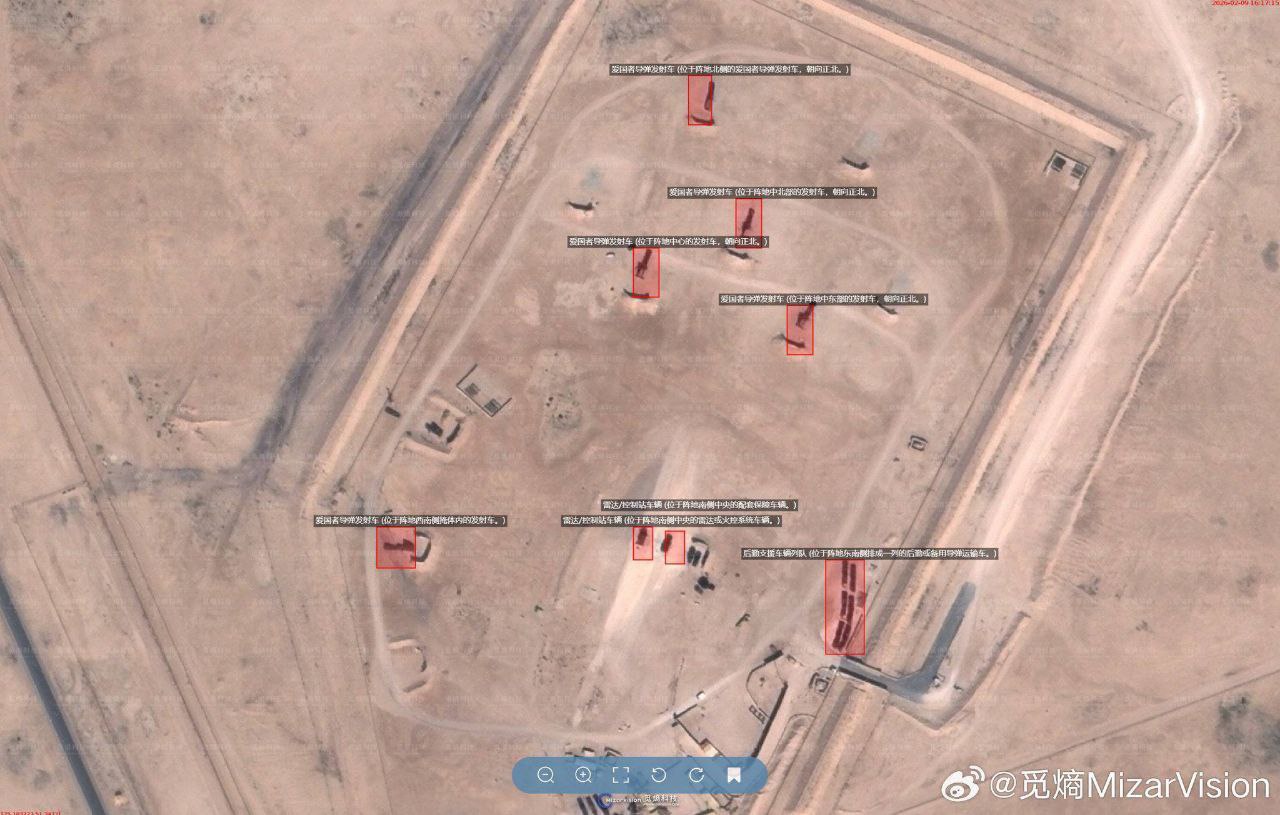
Satellite images circulating online—attributed in some reports to a Chinese commercial provider—are being used to spotlight the apparent deployment and siting of U.S. Patriot air-defense assets at Al Udeid Air Base in Qatar, framed as preparations to blunt a potential Iranian retaliation.
Separately, Reuters reported that satellite photos reviewed by a forensic imagery analyst showed U.S. forces at Al Udeid mounting Patriot missiles onto mobile HEMTT truck launchers in early February—an adjustment that increases survivability and repositioning speed if the threat picture changes.
The broader context is a visible U.S. posture shift across regional hubs, with open-source imagery showing more aircraft and equipment moving into theater as tensions with Iran rise.
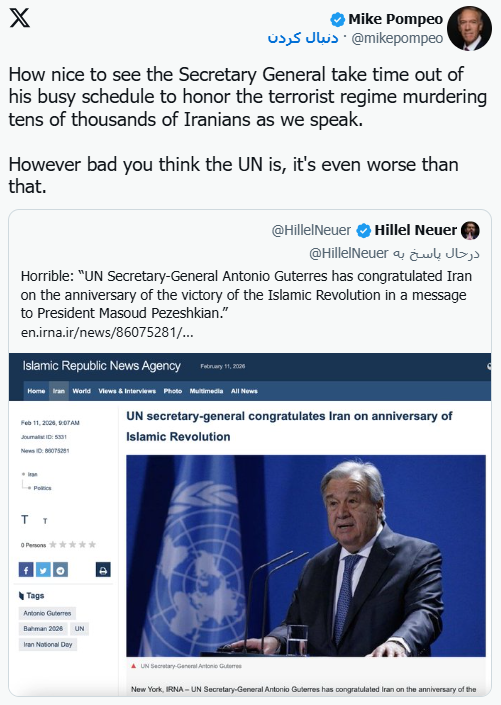
Former U.S. Secretary of State Mike Pompeo slammed UN Secretary-General António Guterres after Iranian state media reported that Guterres sent a congratulatory message to Iranian President Masoud Pezeshkian for Iran’s National Day / Islamic Revolution anniversary. Pompeo wrote that it was “interesting” the UN chief “took time” to pay tribute to what he called a “terrorist regime,” adding that the regime is killing tens of thousands and that “however bad you think the UN is, it’s worse.”
Iran’s state outlet IRNA said Guterres’ letter offered “warmest congratulations” and framed national days as a chance to reflect on a country’s path and role in the international community. A UN spokesperson, cited in reporting, said such messages are part of a long-standing protocol and “should not be interpreted” as endorsing a government’s policies.
The dispute lands amid renewed global focus on Iran’s internal crackdown and high-stakes diplomacy over the nuclear file, with the U.S. signaling contingency planning if talks fail.
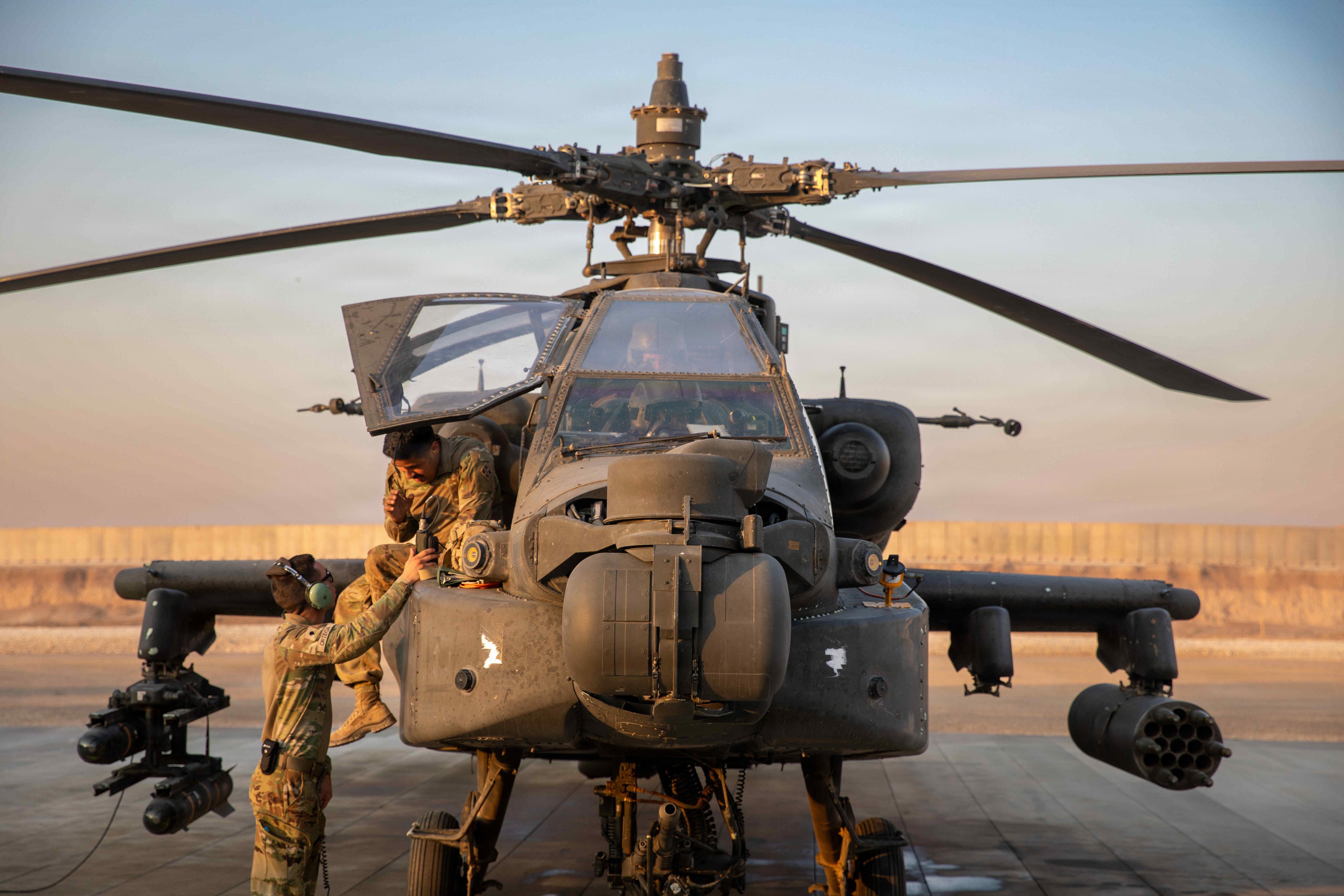
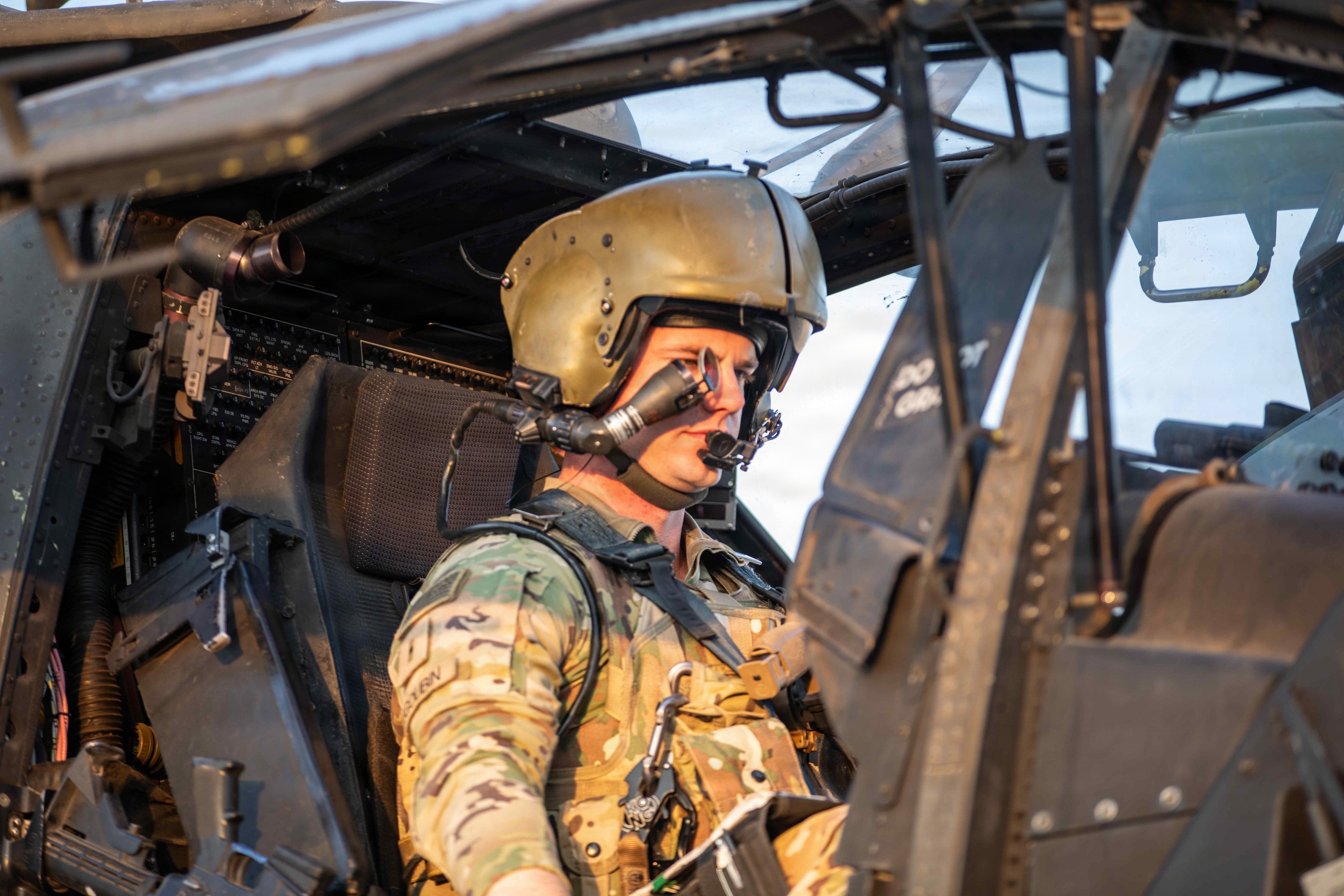
U.S. Central Command (CENTCOM) published new images showing U.S. Army pilots preparing to fly AH-64 Apache attack helicopters in the Middle East. CENTCOM said the Apaches can provide close air support for ground forces and deliver offensive capability through long-range missiles—a public messaging move that highlights visible combat-readiness posture in the region.
The Pentagon has instructed a second U.S. aircraft carrier strike group to prepare for possible deployment to the Middle East as tensions with Iran stay elevated, according to the Wall Street Journal citing three U.S. officials. Trump has not issued a formal deployment order and plans could still change, but officials said the carrier could sail within ~two weeks, likely from the U.S. East Coast—with the USS George H.W. Bush (currently wrapping exercises off Virginia) seen as a leading option.
One official said an order to deploy could be issued within hours, underscoring how quickly force posture could shift alongside ongoing diplomacy.
If deployed, it would join the USS Abraham Lincoln, which has been operating in the U.S. 5th Fleet area—raising the signal of two-carrier presence and boosting the short-term geopolitical risk premium watched by energy and safe-haven markets.
U.S. Republican Senator John Kennedy told Iran International’s reporter Marzieh Hosseini that President Donald Trump will follow through on his pledge to support the Iranian people and will soon become disillusioned with negotiations with the Islamic Republic.
Italian MEP Isabella Tovaglieri tore up a picture of Iran’s Supreme Leader Ali Khamenei during a European Parliament session on 22 Bahman, denouncing what she described as Europe’s accommodation of radical Islam and warning Lebanon-style “dominance or defeat” narratives are being normalized in Europe. She ended the gesture with the slogan “Long live the West, long live democracy.”
Tovaglieri had previously staged a similar protest outside the Parliament building, where she burned Khamenei’s photo and called for the fall of Tehran’s leadership, according to earlier reporting.
US Treasury Secretary Scott Bessent said in a Fox News interview that Iran responds to “brute force”—in markets, on the battlefield, and through Treasury pressure—adding that the US will keep “maximum pressure” in place.
Asked whether President Donald Trump might need to resort to military action again, Bessent said he wouldn’t get ahead of ongoing talks, but confirmed that Trump and Secretary Pete Hegseth are “moving military assets toward Iran” and will face decisions soon.
Bessent also said Washington is tracking funds being moved abroad by Iran’s leadership and claimed the US could recover those assets “for the Iranian people” if called upon.