translate English
 پارسی
English
Englishپارسی
English
Englishپارسی EnglishپارسیEnglishپارسی
Brazil’s IBC-Br economic activity index slipped -0.20% in December (better than -0.50% expected), after a +0.70% prior reading—signaling a softer end to the year.
Market lens: A weaker activity pulse can reinforce rate-cut expectations if inflation allows, while keeping BRL sensitive to global risk and local fiscal headlines.
Source: Central Bank of Brazil (Banco Central do Brasil, BCB).
South Korea’s January trade data showed a still-strong external sector, though momentum cooled from prior highs. Exports rose 33.8% YoY (vs 33.9% expected; prior 13.3%) and imports rose 11.6% YoY (vs 11.7% expected; prior 4.6%). The trade balance posted a surplus of $8.72B (vs $8.74B expected; prior $12.17B).
Market lens: Exports remain a major support pillar, but the smaller surplus suggests imports and pricing dynamics are eating into the headline balance.
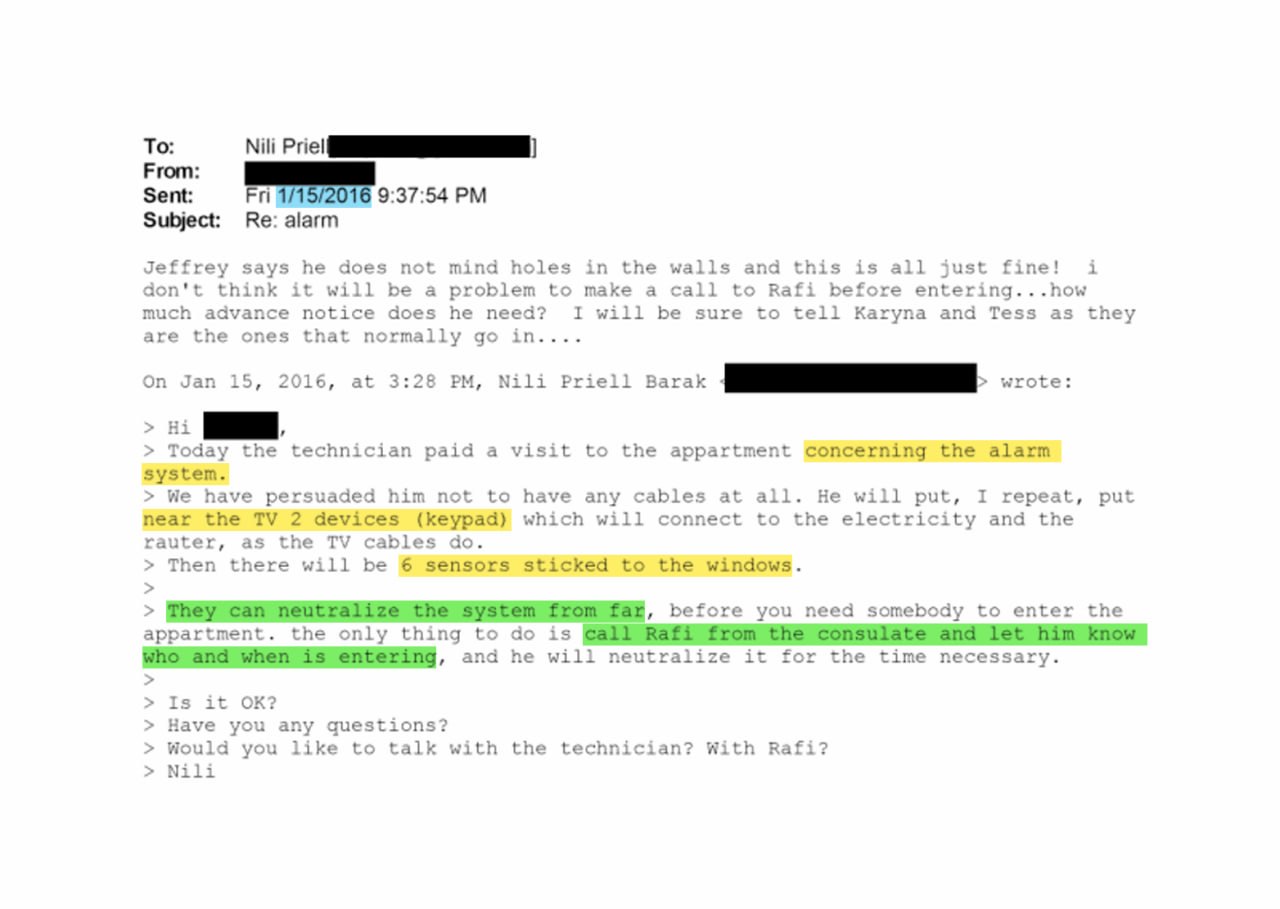
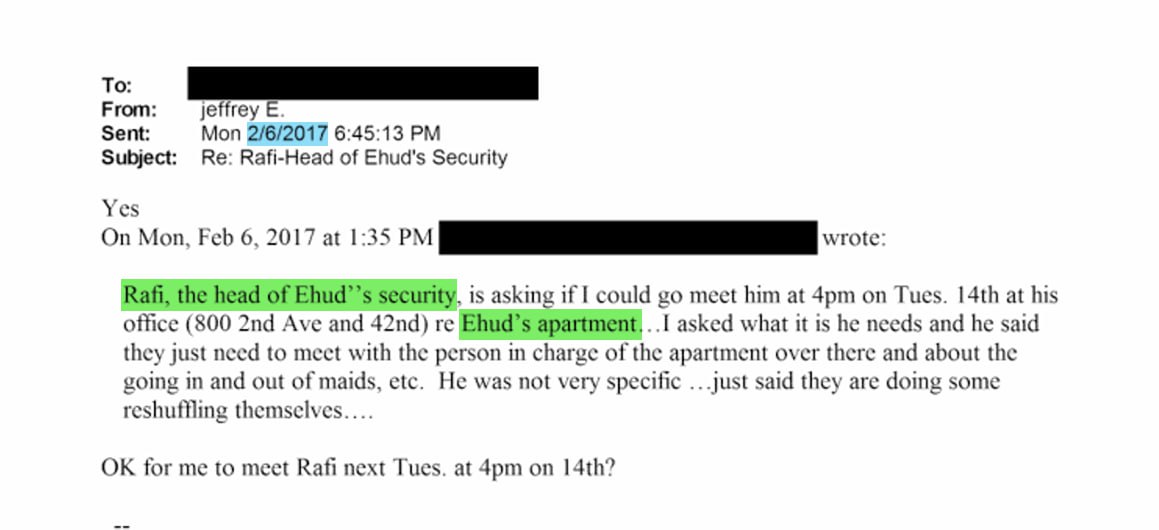
A new allegation circulating online claims security personnel linked to Israel installed surveillance equipment at a Manhattan apartment controlled by Jeffrey Epstein, allegedly set up for visits by former Israeli PM Ehud Barak, and kept active for around two years in coordination with Epstein’s staff.
At this stage, the specific “Israeli security installed surveillance” claim is not independently verifiable from a clearly attributable, public, unredacted DOJ document or corroborated reporting that identifies the exact document/serial/docket reference needed to validate the email context.
What is documented in mainstream reporting is that Barak’s contacts with Epstein have drawn scrutiny, and senior Israeli figures have publicly rejected broader claims that Epstein worked for Mossad, calling them categorically false.
What to watch next: release (or publication) of the underlying document ID(s) (full email headers + attachments, docket/serial numbers) or an on-the-record clarification from relevant authorities. Until then, treat the allegation as unconfirmed.
South Africa’s retail sales growth slowed in December to +2.6% YoY, down from +3.6% previously hinting at softer consumer momentum into year-end.
Market lens: A cooler retail print can weigh on near-term growth expectations and keep ZAR sensitive to domestic demand signals.
Fresh screenshots circulating from the so-called Epstein files are reigniting scrutiny over allegations that Jeffrey Epstein ran covert surveillance across his properties and used recordings as leverage.
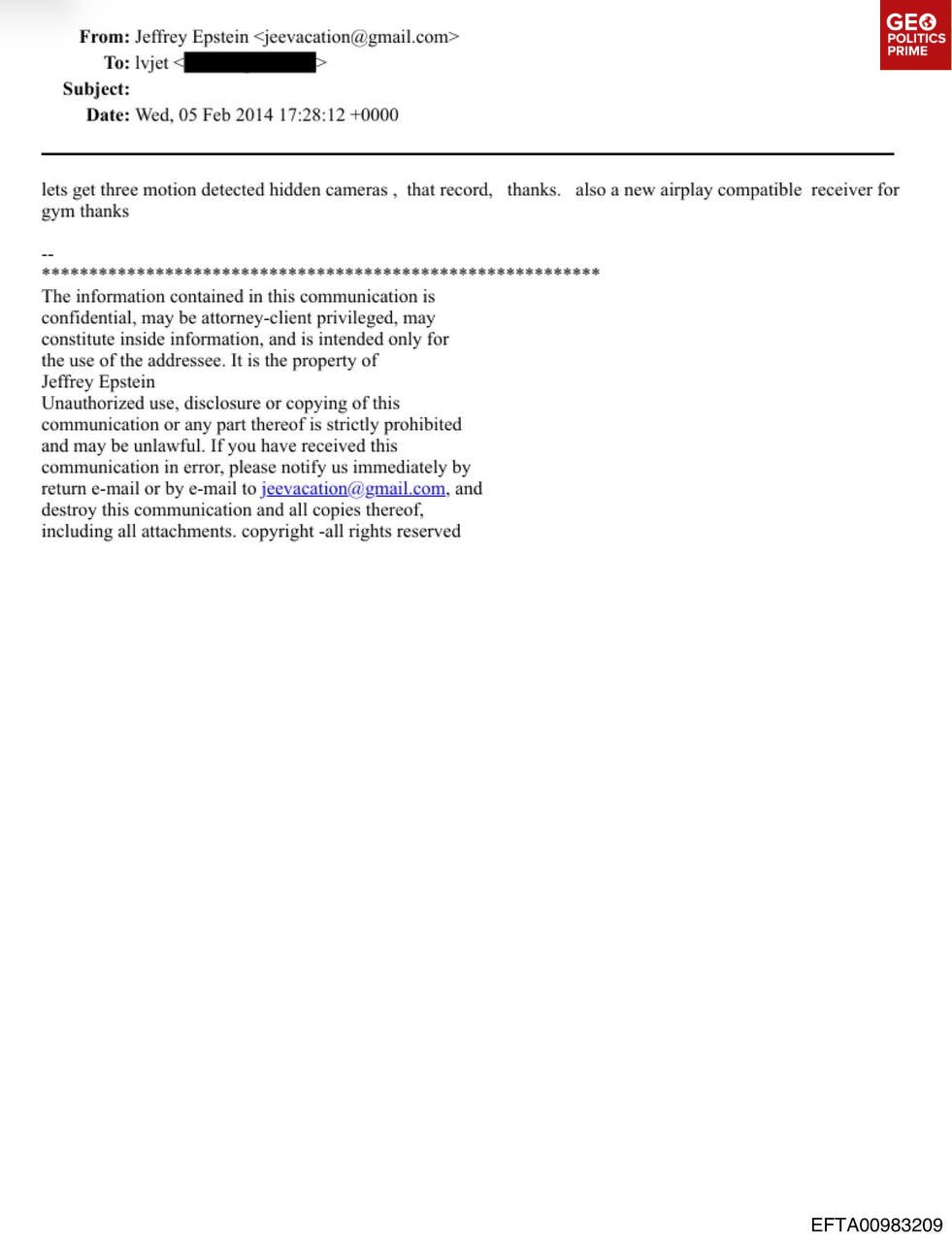
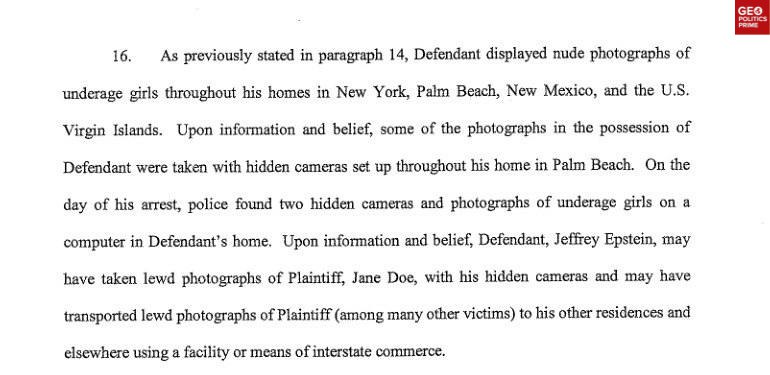
In one email dated 5 Feb 2014, the sender listed as Epstein appears to request “three motion-detected hidden cameras… that record” and also asks for an AirPlay-compatible receiver for the gym. A separate excerpt from a court filing alleges that hidden cameras were installed throughout his Palm Beach home and that, on the day of his arrest, police found two hidden cameras and a computer containing illegal sexual material involving minors, with claims the content may have been transported to other residences.
The documents and screenshots shared online should be treated with caution until authenticated and placed in full context, but the combination of surveillance-hardware requests and court-file allegations is fueling renewed questions about whether Epstein’s operation extended beyond abuse into systematic kompromat-style recording.
New Mexico lawmakers have approved a bipartisan “truth commission” to investigate allegations tied to Jeffrey Epstein’s Zorro Ranch near Santa Fe—an effort aimed at documenting what happened, who knew, and whether any public corruption or systemic failures helped enable abuse.
Key points:
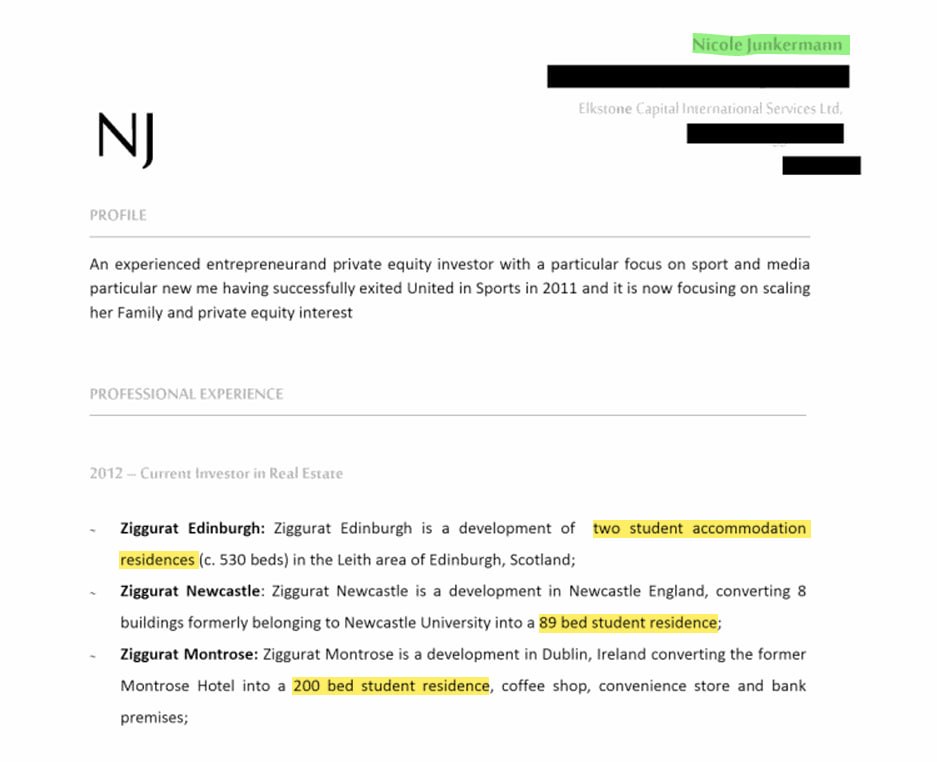
An Irish outlet, The Ditch, reports that investor Nicole Junkermann—a figure whose long-running email correspondence with Jeffrey Epstein appears in recently unsealed “Epstein files”—channeled Epstein-linked funds into multiple Irish student-accommodation projects, including developments in Dublin that have charged students up to €435 per week.
Key points cited by the outlet:
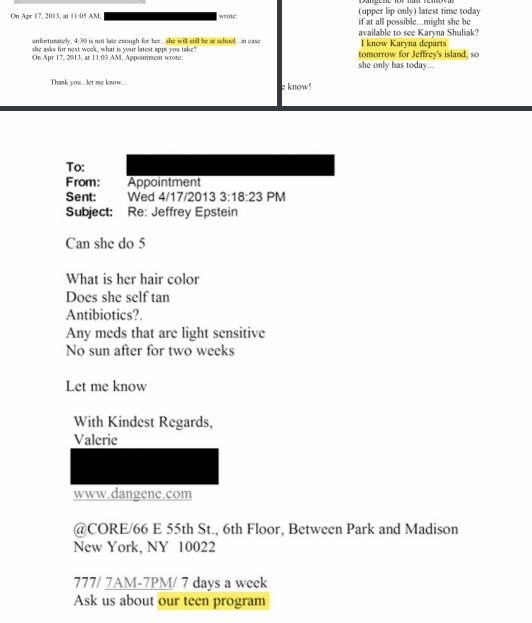
A newly circulated set of alleged Epstein-related emails shows staff rescheduling a young girl’s appointment because “she’s still at school,” while referencing a “TEEN PROGRAM” and providing routine post-treatment care instructions (including avoiding sun exposure for a period). The timing of the messages is also framed around travel logistics connected to Epstein’s island.
The exchanges are being shared online as another example of how Epstein’s network allegedly handled day-to-day coordination for minors—blending ordinary scheduling language with cues that critics say indicate grooming and facilitation. The material’s provenance cannot be confirmed from screenshots alone, and the identity of any alleged victim is not disclosed.
A fresh claim circulating online alleges a 2022 letter outlines an arrangement in which a woman—said to be communicating from prison—pressured/blackmailed Ghislaine Maxwell and received money and schooling connected to Jeffrey Epstein in exchange for a daughter’s blood, with the message framing the arrangement as “silence guaranteed” while payments continued.
The allegation, as presented, layers a new—and highly disturbing—dimension onto the broader Epstein-Maxwell dossier: a purported quid-pro-quo involving continued financial support and an expectation of ongoing discretion.
Important context: based on the description alone, the authenticity of the letter and the full circumstances are not independently verified. The claims should be treated as unconfirmed unless corroborated by official records, court filings, or credible primary-source reporting.
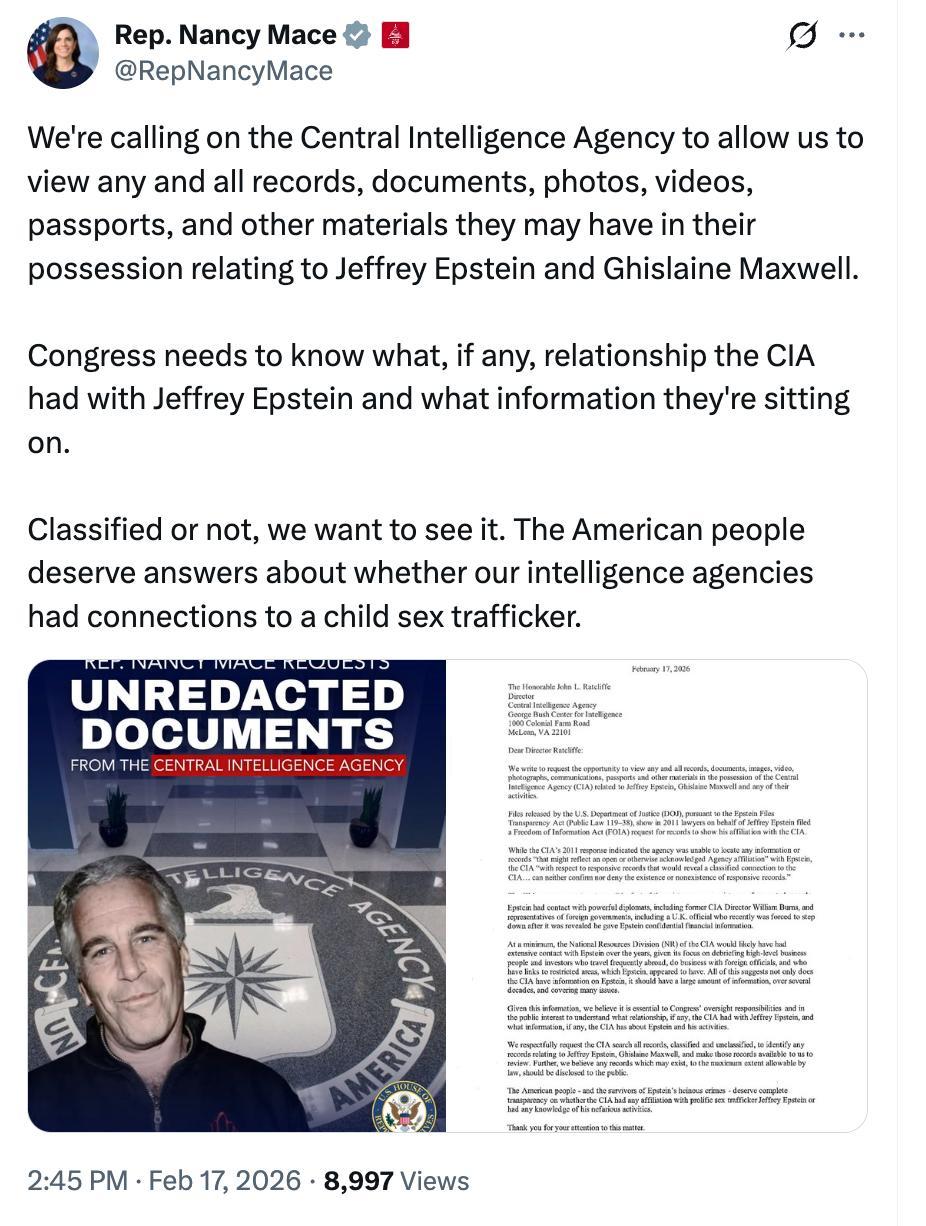
Rep. Nancy Mace says she is calling on the CIA to allow Congress to review all records—including documents, photos, videos, passports, and related materials—that the agency may hold on Jeffrey Epstein and Ghislaine Maxwell.
In her statement, Mace argues Congress needs to know whether the CIA had any relationship with Epstein and what information, if any, the agency is “sitting on.” She says lawmakers want access “classified or not,” framing the request as an accountability test over potential intelligence-community links to a child sex trafficker.
Note: This is a demand for disclosure/oversight, not proof that the CIA had such ties.
South Africa’s business confidence edged higher in January, with the index rising to 133.2 from 132.3—a modest improvement in the sentiment pulse.
Market lens: Incremental confidence gains help, but investors will look for confirmation in activity and employment trends.
South Africa’s January inflation print stayed contained, with headline CPI easing to 3.5% YoY (from 3.6%) and CPI (MoM) steady at 0.2%. But core inflation firmed at the margin: Core CPI (MoM) 0.3% (from 0.1%) and Core CPI (YoY) 3.4% (from 3.3%).
Market lens: Headline cooling supports a “contained inflation” narrative, but the uptick in core keeps attention on underlying price persistence.