translate English
 پارسی
English
Englishپارسی
English
Englishپارسی EnglishپارسیEnglishپارسی
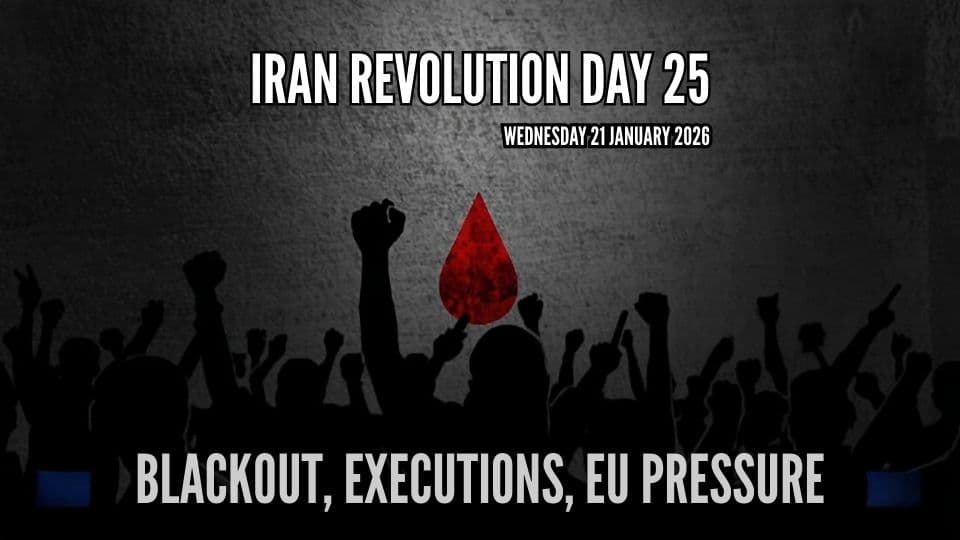
Day 25 unfolded as a high-pressure convergence of (1) continued large-scale information suppression, (2) intensifying fear signals inside Iran (executions, arrests, “no timeline” messaging on connectivity), and (3) sharper external alignment—most notably in Europe—around accountability, sanctions expansion, and support for censorship circumvention. Alongside the domestic crackdown narrative, two Davos-linked storylines amplified the international dimension: the IAEA chief warning that the nuclear standoff cannot persist indefinitely, and U.S. officials framing any diplomatic pathway as contingent on a major shift in Tehran’s conduct.
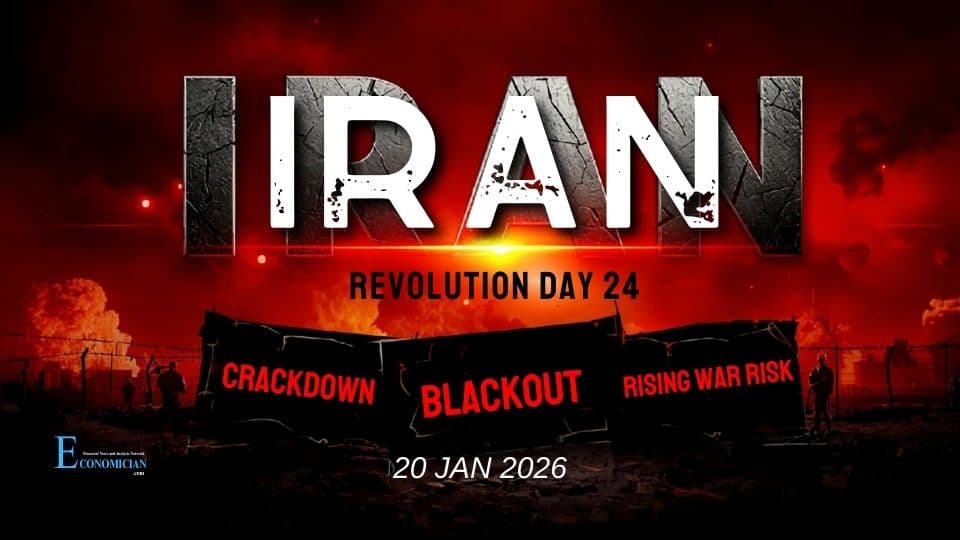
Iran’s Day 24 was defined by three concurrent tracks: (1) persistent, militarised internal repression and an information blackout that continues to obstruct independent verification; (2) intensifying international scrutiny, including a UN Human Rights Council special session scheduled for Friday; and (3) a widening risk premium around regional escalation, as the U.S. reinforces air/missile defence posture and Israel signals high readiness.
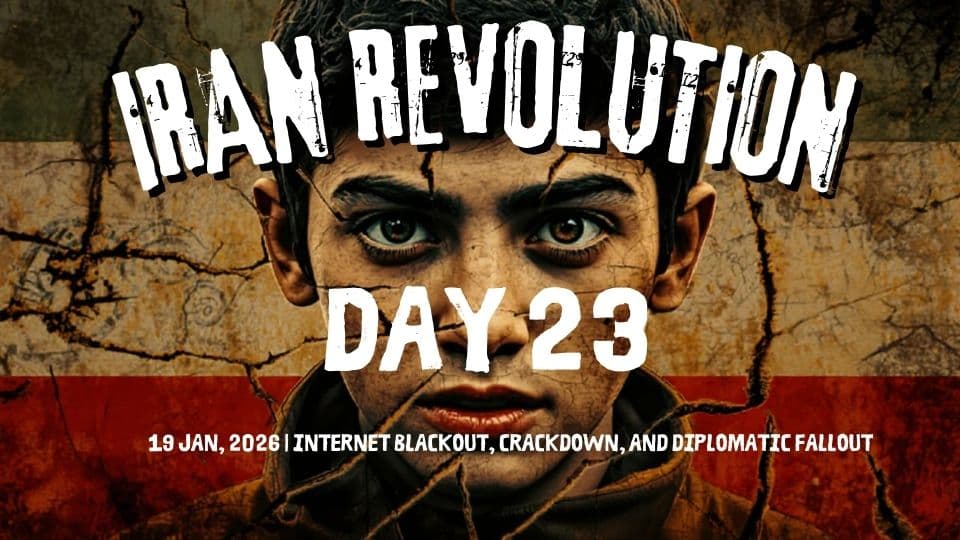
Day 23 unfolded under two defining dynamics: a sustained communications blackout inside Iran and an accelerating international pushback against Tehran’s handling of the unrest. With independent verification constrained, casualty and detention figures remain contested; however, the combination of documented internet suppression, widening security deployments, and mounting diplomatic consequences points to a crisis entering a harder, more internationalized phase.
Tehran and multiple provinces remained under a heavy security posture as authorities pushed a “restored order” narrative while reporting and witness accounts continued to describe lethal crackdowns and mass arrests. The information environment stayed constrained: NetBlocks reported the blackout entering day 12 with only highly filtered, partial service restoration in places. Diplomacy and legitimacy pressure rose: the World Economic Forum said Iran’s foreign minister would not attend Davos this year, citing the “tragic loss of lives of civilians in Iran.” Regional risk premium increased amid reports of expanded U.S. naval movements and shifting control over energy infrastructure in Syria.
Day 21 unfolded as a convergence of three dynamics: (1) a near-total communications blackout showing small “leaks” but no broad restoration, (2) continued heavy security posture and tighter control of hospitals, narratives, and arrests, and (3) a widening international and diaspora response—ranging from street mobilization abroad to sharper political messaging in Washington and parts of Europe. NetBlocks’ monitoring indicated connectivity remained at only a tiny fraction of normal levels, despite a modest overnight uptick.
Day 19 and Day 20 were defined less by mass street mobilization and more by the regime’s effort to freeze the internal situation—through a heavy security footprint, communications suppression, and deterrence messaging—while external actors accelerated crisis diplomacy to prevent a regional spillover. Independent verification remained difficult due to the prolonged internet blackout.
Day 18 unfolded under a tightening security lockdown, a deepening communications blackout, and rising regional war-risk chatter, even as activists and witnesses described flash, neighborhood-level gatherings following calls linked to Prince Reza Pahlavi. Inside Iran, multiple reports alleged continued coercion of families of the casualties (including pressure for forced narratives and financial extortion tied to the return of bodies), while international actors accelerated diplomatic pressure and contingency planning.
Day 17 marked a sharper turn in both the domestic crackdown and the international response. Activists and rights monitors reported a rapidly rising death toll alongside mass detentions, while Iranian authorities signaled accelerated prosecutions and potential executions amid an extended communications blackout that continues to limit independent verification.
Day 16 of Iran’s protest movement—described by supporters as the “National Revolution”—unfolded under a sustained communications blackout and intensifying international pressure. While authorities pushed a narrative of “foreign-instigated” unrest and showcased pro-government mobilization, reports and videos continuing to circulate from inside Iran pointed to ongoing street protests, heavy security deployment, and widening fear over the scale of casualties—made harder to verify as internet restrictions persisted.
Sunday, 21 Dey 1404 (January 11, 2026) marked a pivotal Day 15 in Iran’s unfolding national uprising: street mobilization continued despite an entrenched communications blackout, reports of lethal force and mass casualties mounted, and external actors—from the UN to key Western capitals—sharpened their messaging as Washington weighed escalation paths.
Saturday, January 10, 2026 (20 Dey 1404) marked a decisive escalation in the street phase of Iran’s revolution: larger nighttime turnouts across multiple cities, heavier reliance on satellite links to move images out of the country, and a widening international focus on Tehran’s crackdown and communications blackout. With independent verification constrained by the outage, much of what emerged on Day 14 came through scattered videos, eyewitness accounts, and diaspora networks—yet the pattern was consistent: sustained mobilization despite intimidation, drones, and live-fire reports.
Day 13 consolidated the protest movement’s shift from a currency-and-cost-of-living spark into an explicitly political, multi-city revolt—while the state’s response hardened around three levers: lethal-force deterrence, communications blackout, and intimidation messaging.