translate English
 پارسی
English
Englishپارسی
English
Englishپارسی EnglishپارسیEnglishپارسی
A fast, high-signal 48-hour review of Iran Revolution Day 34–35—covering the latest arrest wave, campus and civil resistance, internet pressure and VPN reliance, EU action on the IRGC, Qatar’s de-escalation channel in Tehran, U.S./allied military posture, and the key signals to watch next, including Prince Reza Pahlavi’s messaging and diaspora mobilization.
Day 33 recap: the EU’s IRGC terrorist designation and fresh sanctions collide with Tehran’s warnings, rising U.S. military signaling, and a still-stalled diplomacy track led by regional mediators. Inside Iran, reports point to intensified pressure across hospitals, schools, and teacher networks under blackout conditions, while new videos circulating online allege live fire and bodies being moved—claims that remain difficult to independently verify.
Day 32 saw Europe step up pressure on the IRGC—via fresh sanctions and growing support for a terrorist listing—while reports from inside Iran pointed to continued repression, execution-risk warnings, and a “whitelist” internet that remains unstable. Prince Reza Pahlavi amplified international outreach, urging coordinated action against the IRGC’s repression infrastructure as war-risk rhetoric and Hormuz headlines kept geopolitical and energy risk elevated.
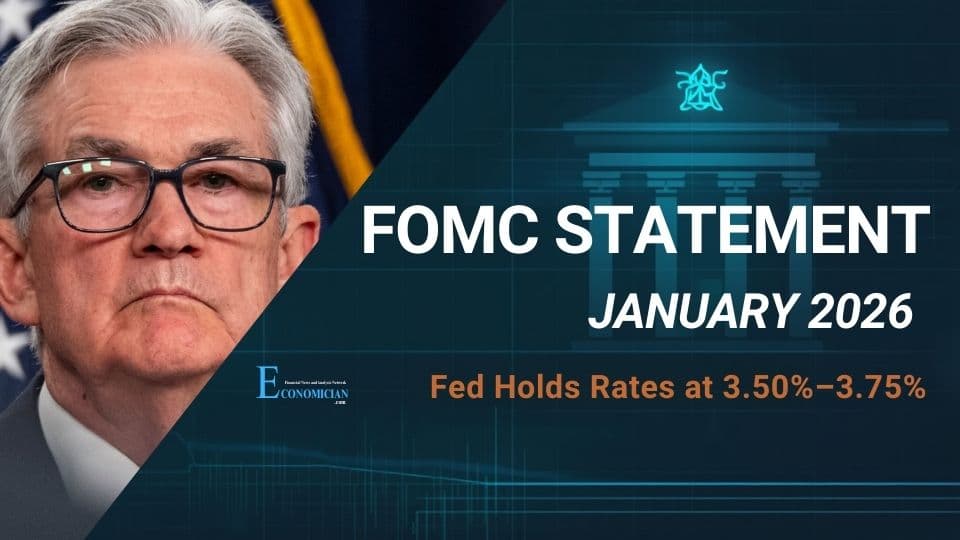
In the January 2026 standard FOMC meeting statement, the Federal Reserve kept the federal funds target range unchanged and updated its assessment of growth, employment, and inflation. The statement also reiterated a data-dependent approach and highlighted risks shaping the policy path—making it a key guide for rate, USD, and broader market expectations.
The Federal Open Market Committee unanimously reaffirmed its “Statement on Longer-Run Goals and Monetary Policy Strategy” at its annual organization meeting, underscoring continuity in the Fed’s policy framework. The reaffirmed statement is identical to the version adopted in August 2025.
Day 31 of Iran’s national uprising saw fresh reports of intensified repression—from pressure on victims’ families and heightened intimidation of medical staff to university flashpoints—alongside a new judicial escalation narrative. Markets mirrored the stress: the rial kept sliding as domestic hedges and risk premiums stayed elevated. Internationally, the EU sanctions track gathered momentum, intermediaries kept channels open, and regional military/aviation disruptions reinforced the sense that Iran’s internal crisis is increasingly feeding into broader geopolitical risk.
Past 24 hours snapshot (≈ Jan 26–27, Tehran time): a tightening internal security crackdown—now including reported detentions of wounded protesters from hospitals—ran in parallel with a sharper international escalation: the USS Abraham Lincoln carrier group entered the Middle East, Washington reiterated it is “open for business” for contact, and Italy pressed the EU to move toward designating the IRGC as a terrorist organization—prompting Tehran to summon Italy’s ambassador.
Davos 2026 (19–23 January) closed with a notably hard-edged backdrop: geopolitical brinkmanship, trade weaponization, and AI-driven economic disruption dominated the conversations more than “classic” globalization optimism. The World Economic Forum said the meeting hosted a record 400 top political leaders, including nearly 65 heads of state/government, across roughly 200 sessions and workshops—and framed the week explicitly around restoring “dialogue” in a more contested world.
A full Day 29 situation review of Iran’s national uprising: renewed international internet disruptions, intensified security pressure and arrests, and growing economic strain visible in markets and inflation. The report also tracks the surge in diaspora demonstrations from Europe to North America and Australia, summarizes Prince Reza Pahlavi’s latest messaging, and maps the evolving military posture around Iran—where deployments and aviation disruptions are increasingly signaling escalation risk.
A two-day situation review of Iran Revolution Day 27–28 (Fri–Sat, 23–24 Jan 2026 / 3–4 Bahman 1404), tracking the crackdown inside Iran, diaspora mobilization across Europe and beyond, and the parallel escalation in regional war-risk. The report covers the UN Human Rights Council action, fresh U.S. “shadow fleet” sanctions, indications of an internet restoration order, and Prince Reza Pahlavi’s latest messaging on a secular democratic transition and free elections—set against intensified U.S.–Israel defense coordination.
Day 26 unfolded under a tightening security posture and an increasingly internationalized information war: inside Iran, multiple accounts described heavy repression, interference in medical treatment, and active efforts to erase physical evidence of shootings; outside Iran, diaspora activity remained elevated and more coordinated around a set of specific asks; diplomatically, the U.N. Human Rights Council’s emergency session track and high-profile Davos remarks kept Iran’s crisis on the top tier of global agenda-setting.
The mid-week Davos review highlights how the 2026 World Economic Forum struggled to foster genuine cooperation in an era of escalating geopolitical tensions. Day 1 set a hopeful tone with an AI-infused concert and Swiss President Guy Parmelin’s call for unity and responsible innovation. However, the themes of fragmentation quickly surfaced when Canadian Prime Minister Mark Carney declared the rules-based order in “rupture,” urging middle powers to stop “living within the lie” and forge a new architecture of resilience.