IFC Markets Live Quotes

Market news roundup: Wednesday, 21 January 2026

88 short market news items, grouped by 10 sections.

Iran

EU Parliament Applauds Iran Protesters: “They Don’t Need Silence”

Members of the European Parliament paid tribute to Iranian protesters with about a minute of standing applause instead of a traditional moment of silence. Parliament President Roberta Metsola told lawmakers that many wanted to honor those killed “with silence,” but argued Iranians “do not need silence” after being “forcefully silenced” for decades. Metsola had also barred Iranian diplomatic staff and representatives from entering European Parliament premises in Brussels, Strasbourg, and Luxembourg, saying the institution would not help legitimize a regime sustained by repression.
Prince Reza Pahlavi: “No Immunity” for Killers—Khamenei Will Face Justice

In a video message, Prince Reza Pahlavi called Ali Khamenei an “anti-Iranian criminal” whose hands are “stained with the blood of tens of thousands of Iranians,” and warned that Khamenei, his regime, and “all their mercenaries” will be held accountable “for every drop of blood—without exception.” Invoking the Nuremberg trials of Nazi war criminals, he said there would be “no escape” and “nowhere to hide,” arguing that that responsible will be tried and punished. Addressing Iranians, he said “you are not alone,” praised their resilience as history-changing, urged faith in unity and courage, and said grief must be transformed into “conscious anger” and an unbreakable will against Khamenei and all internal and external enablers. He also told people to “be ready,” saying “the moment to return to the streets will come.”

Shirin Ebadi: “Reform Is Over” — Push Pressure on the Core of Power

Nobel Peace Prize laureate Shirin Ebadi says the Islamic Republic is fundamentally unreformable, arguing that past “inside-the-system” fixes are structurally blocked. In a new interview, she criticized Western governments’ pragmatic accommodation of Tehran and urged the international community to stand with Iranians by concentrating pressure on the regime’s core decision-makers rather than betting on gradual reform.

“Film It for the World”: Graphic Clip From Fardis Claims Protester Killed by Live Fire

A graphic video circulating online and attributed to Fardis, Alborz province shows the body of a killed protester as a voice urges others to document and share the footage—“Film it and send it to foreigners.” The sender’s caption says the victim was “next to me” and was hit in the head by live ammunition on Thursday, 18 Dey 1404 (January 8, 2026). The location and details have not been independently verified.


Clip: IRGC-Uniformed Officer Captured as Tehranpars Death Toll Claim Circulates

A video circulating on social media is described as showing a government crackdown officer in an official IRGC uniform who was “caught by people.” The accompanying caption claims the incident took place in West Tehranpars, Tehran, and alleges that 12 youths under 30 were killed there during the crackdown on Thursday, 18 Dey 1404 (January 8, 2026). The footage, location, and casualty claim have not been independently verified.

Three Days Among Corpses: Family Finds Protester Alive at Kahrizak — IHRDC

The Iran Human Rights Documentation Center (IHRDC) says it received a harrowing account in which a family spent three days searching for their son—checking hospitals, then Behesht Zahra—before reaching Kahrizak, where graphic images of large numbers of bodies have circulated. The family reportedly found him alive but critically wounded by gunfire, having remained motionless for three days without food or water inside a plastic body cover, fearing he would be “finished off” if discovered; they then managed to transfer him to a hospital. IHRDC noted that independent verification is difficult amid severe internet restrictions.

“They Killed My Friend”: Graphic Videos Claim Two Deaths Near Tehran’s Sarsabz Metro

Graphic videos circulating online and described as coming from Narmak, Tehran, near the Sarsabz metro station, appear to show the aftermath of two people being killed, with a voice heard saying, “Oh! They killed my friend!” The posts suggest the incidents likely occurred on Thursday 18 Dey or Friday 19 Dey 1404 (January 8–9, 2026) during the crackdown. The footage, location, and the reported death count have not been independently verified.


Cinema House: Security Summons Target Filmmakers as “Judicial Case” Claims Spread

Mehdi Kouhian, the legal director of Iran’s Cinema House, said two Cinema House managers and several filmmakers have already been summoned and interrogated by a security body—not the prosecutor’s office—adding that Cinema House has received no formal judicial notice confirming a court case has entered an official prosecutorial phase. His remarks come as Tasnim and judiciary-linked outlets reported that Tehran’s prosecutor has opened cases against 15 athletes/actors, 10 signatories of Cinema House’s statement, and 60 Tehran cafés, with some reports citing asset seizures. Separately, rights media reported that directors Majid Barzegar and Behtash Sanaeeha were summoned by the IRGC Intelligence Organization and questioned for hours, reportedly over filmmakers’ public opposition to violence against protesters—an allegation Kouhian rejects as “incitement,” saying Cinema House will defend its official stance.

Kahrizak Search: Family Identifies Reza Eskandarpour, 37, Two Days After He Joined Protests

Radio Farda reported that Reza Eskandarpour, a 37-year-old protester, handed his mother his phone and car keys on 18 Dey before going out to demonstrate; two days later, his family identified his body at Kahrizak among a large number of corpses. His uncle, Alireza Zarehzadeh (based in London), said Eskandarpour was shot—allegedly by snipers—while trying to help an injured person. Human-rights groups say the protest crackdown has killed thousands, but the true toll remains difficult to independently verify amid severe internet restrictions.

US Says It’s Closely Tracking Reza Valizadeh Case as Iran Detentions Draw Scrutiny

A senior U.S. administration official told CBS News on Tuesday, January 20, 2026 (30 Dey 1404) that the Trump administration is “closely monitoring” the case of Reza Valizadeh, an Iranian-American journalist imprisoned in Iran, adding that President Trump wants “every wrongfully detained American returned home.” Valizadeh, a former Radio Farda journalist who became a U.S. citizen in 2022, was detained by Iran’s security services and later sentenced to 10 years on a national-security charge; his lawyer has now filed a petition with the U.N. Working Group on Arbitrary Detention, arguing the case amounts to a wrongful detention as tensions between Washington and Tehran intensify.

Mahshahr: 25-Year-Old Arab Citizen Reportedly Killed; Family Allegedly Barred From Mourning

IranWire reported that Mohammadhossein Aman (Alboghobish), a 25-year-old Arab citizen from Mahshahr, was killed during protests on 18 Dey 1404 (January 8, 2026) after security forces allegedly shot him in the heart. Sources close to the family said they were able to receive and bury his body only after signing a pledge not to hold any mourning ceremony. The Karun Human Rights Organization also said at least 9 people were killed in Mahshahr during protests on 18–19 Dey (January 8–9).

Wikipedia Under Pressure: Watchdog Claims Pro-Regime Editors Are Sanitizing Iran Crackdown Pages

UK-based outlet Neutral Point of View (NPOV) says it has identified a coordinated pattern of Wikipedia editing that allegedly removes or softens references to Iran’s human-rights abuses and protest killings, using tactics such as Talk Page voting blocs, “authorship dominance” (maintaining control over most of an article’s text), and source-reliability disputes to justify deletions. NPOV and follow-on reporting cite examples ranging from edits affecting coverage of the 1988 mass executions, Hamid Nouri’s Sweden conviction, and past diplomatic incidents, warning that because major platforms and AI tools often ingest Wikipedia, narrative shifts can propagate well beyond the encyclopedia.

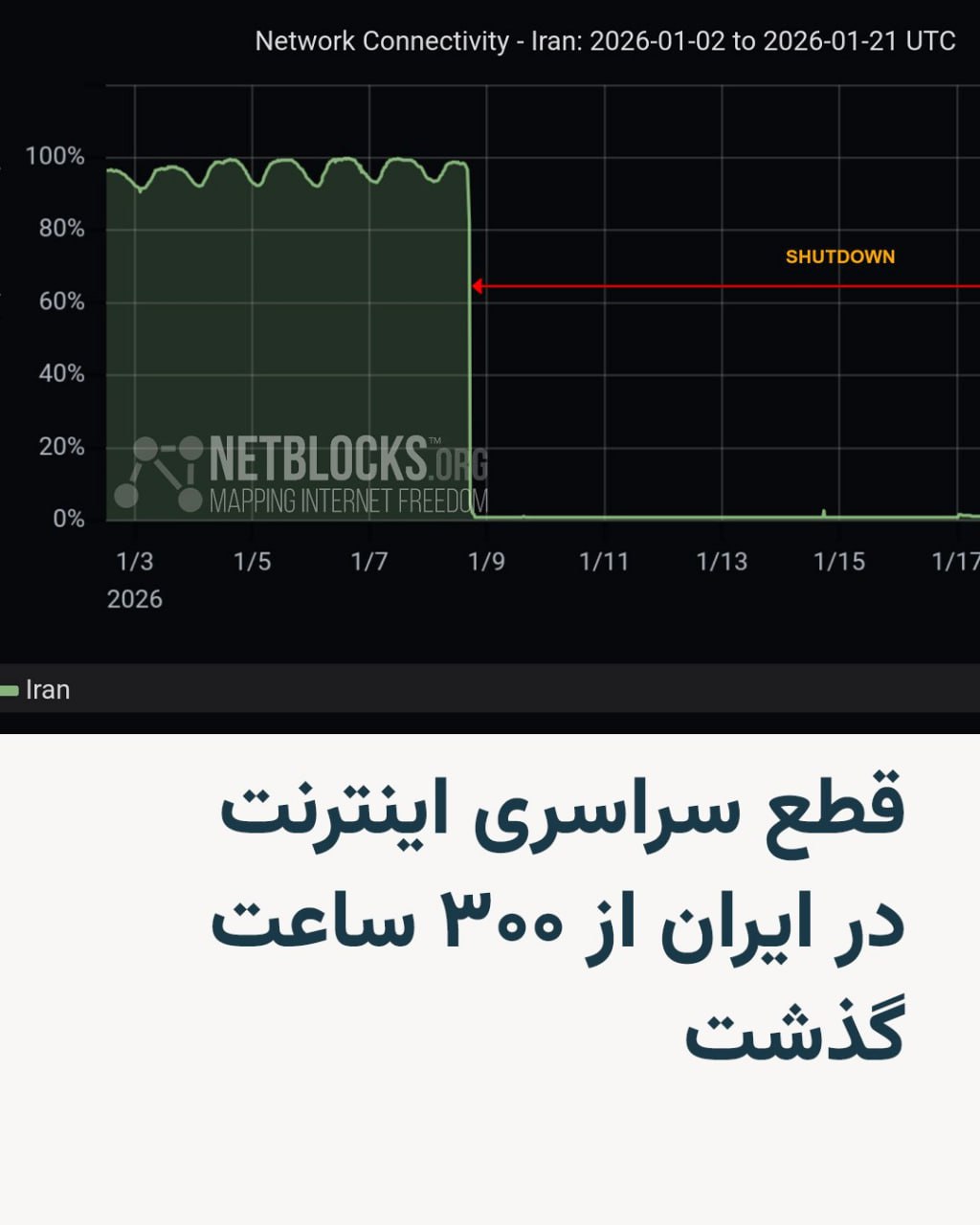
NetBlocks: Iran Internet Blackout Passes 300 Hours as “Whitelist” Access Expands

NetBlocks says Iran’s nationwide internet shutdown has now exceeded 300 hours since it began on January 8, 2026 (18 Dey 1404), with national connectivity still near-flatline levels. The group adds that traffic patterns point to a tiered “whitelisting” approach—allowing limited access for select, approved services while most platforms remain blocked—an architecture that can both restrict coordination and constrain the information flow during the crackdown.

Telegram Channel Claims IRGC Is Moving Heavy Munitions Across Iranian Cities

A Telegram channel branded “IRGC News” published images of trucks and flatbed trailers carrying heavy military equipment, claiming the Islamic Revolutionary Guard Corps is relocating war munitions between multiple Iranian cities. The footage and the channel’s assertions cannot be independently verified, but the claim—if accurate—would point to heightened internal security posture and force repositioning amid escalating tensions and nationwide unrest.

IranWire: Amir-Mohsen Elahyari Killed in Fardis; Six Others Unidentified

IranWire reports that Amir-Mohsen Elahyari (born 1357 / 1978–79) was killed on 19 Dey 1404 (January 9, 2026) in Fardis, Karaj, with the outlet saying he was shot during the crackdown after going out to protest; IranWire adds that six other people present at the scene also died, but their identities have not yet been confirmed. The report says a burial permit attributes the cause of death to a firearm projectile.

Ex-Envoy Backs Armed Crackdown: “Unarmed Forces Was Never a Point of Pride”

Mohammad-Hassan Ghadiri Abyaneh, a former Islamic Republic ambassador to Australia and Mexico, defended the arming of police, security forces, and the Basij during protests in remarks to state-linked media. He argued that past claims—presented “with pride”—about sending forces unarmed among protesters were misplaced, saying it was “not something to be proud of.”

Tehran Witness: Armed Forces Patrol Streets, Break Up Small Gatherings and Check Phones

An eyewitness in Tehran says the city remains under heavy security pressure, with armed agents visibly patrolling streets and, at times, celebrating what they describe as a “victory” while displaying Islamic Republic flags. The witness adds that gatherings of more than three people are challenged or dispersed, and that checkpoints have been set up where officers conduct body searches and inspect phones, reinforcing a climate of intimidation and tight control over movement and communication.

IranWire: Bahá’í Citizen Adib Shahbazpour Detained in Kerman

IranWire reports that security agents raided the family home of Adib Shahbazpour, a 30-year-old Bahá’í citizen and tennis coach in Kerman, and arrested him on 29 Dey 1404 (January 19, 2026) before transferring him to an undisclosed location. The detaining authority and any formal charges have not been made public.

IranWire Video: Alireza Rahimi Buried at Behesht Zahra in a Quiet, Symbolic Farewell

A video shared with IranWire shows the burial and mourning ceremony for Alireza Rahimi, a 26-year-old Tehran protester, at Behesht Zahra. IranWire reports Rahimi was shot from behind by government forces on Thursday, 18 Dey 1401 (January 8, 2023) in Tehranpars and later died. In a symbolic break from convention, attendees reportedly did not recite the Qur’an, and his car was decorated with flowers to resemble a wedding vehicle.


Negin Ghadimi, 28, Killed in Tonekabon Protest—Died in Her Father’s Arms

Reports say Negin Ghadimi, 28, was killed by direct live fire during protests in Shahsavar (Tonekabon), Mazandaran province, on Friday, 19 Dey 1404 (January 9, 2026). She had attended the protest with her father and reportedly died in his arms. Ghadimi studied biotechnology engineering and was described as a joyful young woman passionate about art and sport—she painted, swam, and read extensively—and had hoped to emigrate to Australia before she was killed.

US Urges Iran to Halt Execution of 19-Year-Old Protester Amirhossein Ghaderzadeh

The U.S. State Department condemned Iran’s death sentence for Amirhossein Ghaderzadeh (19), calling it a sign the Islamic Republic is escalating repression to silence protesters, and urged an immediate توقف/وقف of the execution. The statement—posted by the State Department’s Persian-language account—frames the case as punishment for peaceful protest and comes amid wider international warnings about the use of capital punishment during Iran’s crackdown.

Farah Pahlavi: “No Turning Back” After Iran’s Protest Wave

Empress Farah Pahlavi, the widow of Iran’s last shah, said on January 21, 2026 (1 Bahman 1404) that after the latest nationwide protests against the Islamic Republic there is “no turning back,” arguing the trajectory is one-way and will ultimately lead to a free Iran. In an interview with Agence France-Presse, she addressed Iran’s youth, praising their courage for “writing a new chapter of history” with significance beyond Iran, and urged them to hold on to hope and resolve—saying they will prevail despite the imbalance of power.

Iran Universities Move Final Exams Online as Tensions Persist

Several major universities—including Allameh Tabataba’i, the University of Tehran, Shahid Beheshti, Alzahra, Farhangian, and Sharif University of Technology—announced in separate statements that end-of-semester exams will be held online. Commenting on the decision, Ali Sharifi Zarchi wrote on X that the situation is “so normal” that, for the first time in history (outside the COVID period), the Ministry of Science has moved university finals online, adding that “after the massacre, nothing will be like before.” Sharif University also said its exams will be postponed by one week. The shift comes amid nationwide protests in which universities and student dormitories have been key sites of student demonstrations.

Report: Former Iran Beach Soccer Goalkeeper Killed in Rasht Protests

Sports journalist Mojtaba Pourbakhsh said in a social-media post that Mohammad Hajipour, a former goalkeeper for Iran’s national beach soccer team, died during protests in Rasht. Iran International and IranWire also reported the death, citing information they said they had received, as the case adds to the growing toll reported around the nationwide unrest.

Front Line Defenders: Iran “Targeting” Rights Defenders in Protest Crackdown

Front Line Defenders said on January 21, 2026 (1 Bahman 1404) it is alarmed by the targeted pursuit, arrests, and judicial pressure on human rights defenders amid Iran’s crackdown on nationwide protests. The group condemned the arrest of women’s rights defender and lawyer Shima Ghooseh on January 16, 2026 (26 Dey 1404) following a raid on her home in Tehran, and said lawyers Nazanin Salari, Mahmoud Taravat-Roi, and Masoud Ahmadian are facing judicial harassment and criminalisation, while Seyed Mehdi Karimi Farsi has been detained in connection with the protest period. The organisation urged Iranian authorities to halt what it described as harassment, drop charges, and provide information on detainees’ whereabouts and safety.

Iran Lawyer Arrested as Crackdown Targets Rights Defenders

IranWire reported that attorney and human-rights activist Mohammad-Hadi Jafarpour was arrested on Jan. 18, 2026 (28 Dey 1404) and transferred to Adelabad prison; a separate legal-rights monitor (Dadban) described the facility as Shiraz Central Prison (Adelabad). The case comes amid a wider wave of arrests and judicial pressure on lawyers, including recent detentions such as Shima Ghooseh and Osman Mazin, according to the same reporting.

Iran’s Martyrs Foundation Claims 3,117 Dead in 1404 Protests

Iran’s Martyrs and Veterans Affairs Foundation released what it called preliminary figures for the 1404 nationwide protests, putting total deaths at 3,117 and classifying 2,427 of them as “martyrs.” After the number circulated, the secretary of Iran’s national security council claimed the remaining 690 were “terrorists,” “rioters,” or people who attacked military sites. The protests began on 7 Dey 1404 over economic grievances, quickly escalated into explicitly anti-regime demonstrations, and peaked on 18–19 Dey following a call by Prince Reza Pahlavi; reports of a violent crackdown intensified alongside a full internet shutdown and broader communication restrictions.

Iran Internet Blackout Deepens as Officials Drop Timeline

Ali-Akbar Pourjamshidian, the Interior Ministry’s security deputy and secretary of the National Security Council, said on state TV that there is no clear timing for restoring internet access. The shutdown has now lasted more than 3,000 hours, cutting off connectivity for over 90 million people. Internet infrastructure analyst Doug Madory wrote on X that Iran is experiencing one of the world’s most severe outages, noting that core IPv4 routes were not withdrawn from BGP—meaning Iran remained technically reachable while traffic was effectively blocked at the network edge. The statement contrasts with earlier comments from Vice President for Science Hossein Afshin, who said internet access would return to normal by the end of the week, and with reports that President Masoud Pezeshkian urged Ali Larijani to lift restrictions quickly.

Report: Mother of Two Killed in Chaf During Iran Protests

Human-rights and activist outlets reported that Sholeh Setoudeh, 38, a mother of two from Chaf (Langarud County, Gilan), was killed during local protests, with some accounts placing the incident around 20 Dey 1404 and attributing her death to gunfire by security forces. Details remain difficult to independently verify amid information restrictions and reliance on social-media reporting.

A Medical Student’s Message Alleges Ransom for Bodies and Forced “Basij” Burials

A medical student in Iran, in an urgent message sent to his sister abroad during a brief return of internet access, alleged a sweeping crackdown that includes home raids, confiscation of phones and satellite equipment, and intimidation that has made people afraid to carry a mobile outside. He claimed a top-ranked medical sciences student in Mashhad was killed by a bullet, and the family was told to pay 700 million tomans to receive the body—then pressured to sign a form stating the victim was a Basij member, under threat of being denied burial and having the body placed in a mass grave. The student said similar cases are recurring, describing a pattern of financial extortion and forced reclassification of victims to obscure the scale of killings. He also alleged most street participants were hit with pellets, tear gas, and paintballs, while the deadliest shootings escalated after 11 p.m., and claimed some bank arsons were carried out by government-linked agents to build cases and justify repression—citing one alleged incident in Mashhad where a suspected attacker had a radio under his clothes.

Alvand Protest Death Reported; Claims of “Ransom” for Bodies

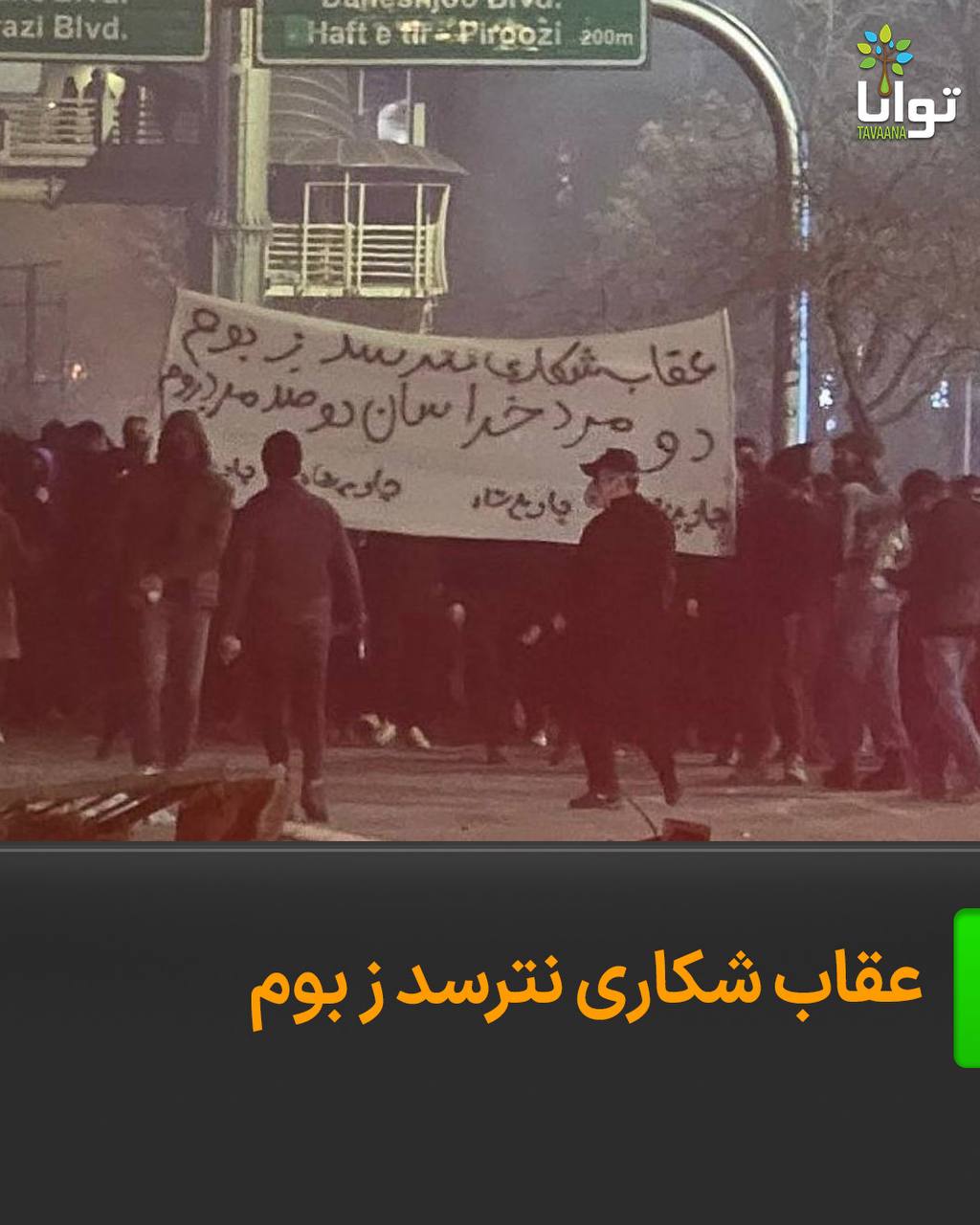
Rights group Tavaana reported that Mohammad-Hossein Khalaj, a man in his 20s from Alvand (Qazvin), was fatally shot with live ammunition during the protest period (reported around 17–18 Dey 1404 / mid-January 2026). Citing a local source, the report alleges some families were pressured to pay 300 million tomans as “bullet costs” and up to 1 billion tomans to retrieve bodies—while other bodies were not returned. Khalaj was reportedly buried on 20 Dey under heavy security presence; limited information says he worked at a juice-and-ice-cream shop on Sohrevardi Street and was shot directly there.

HRANA: 12 Executions Reported Across Iran Amid Information Blackout

Human rights outlet HRANA said at least 12 prisoners were executed on Wednesday, Jan. 21, 2026 (1 Bahman 1404) in prisons across Khorramabad, Mahabad, Sabzevar, Kashmar, Bushehr, Chabahar, Mashhad, Shahrekord, Damghan, Shiraz, and Malayer, adding that the convictions related mainly to drug and murder charges and that authorities had not officially announced the executions at the time of reporting. HRANA noted that the ongoing internet shutdown and severe limits on reporting have sharply reduced independent access to case details and fair-trial assessments. Separately, HRANA-linked reporting on 2025 indicates a major surge in executions—at least 1,922 recorded for Jan. 1–Dec. 20, 2025, while HRANA has also cited at least 2,063 executions for the Jan. 1, 2025–Jan. 1, 2026 period—underscoring both scale and opacity.

Tehran’s Khak-Sefid: A Witness Account of Live Fire and Dozens Down

Human-rights activist Rima Shirmohammadi has published a first-person account describing two consecutive nights of protest and violent repression in Tehran’s Khak-Sefid (also known as Golshan), a neighborhood bounded by Jashnvareh Street, 137 Street, and 35-Metri Ehsan, near parts of Hemmat Highway. She says that on Thursday local youths briefly blocked the Hemmat entry with trash bins and urged drivers to honk in protest before reopening the route, after which a short clash ended with security forces retreating. In her telling, a young man she identifies as “Majid” spoke emotionally about entrenched poverty, executions in local families, and being pushed toward crime by lack of opportunity. She writes that on Friday around 7:30 p.m. roughly 1,500 people returned to the same area, where protesters lit fires and used concrete blocks as barricades; after police left, she alleges Basij, IRGC, and plainclothes forces moved in and fired live ammunition, with sustained shooting as crowds fled. She claims she then saw the same young man from Thursday on the ground with a head wound and reports about 40 people were down—killed or wounded—by the end of the confrontation.

800+ Film Figures Condemn Iran Protest Crackdown

More than 800 filmmakers, writers, and artists from multiple countries have signed a joint statement condemning the Islamic Republic’s reported killing and torture of Iranians during the latest nationwide protests. High-profile signatories cited in reporting include Juliette Binoche, Marion Cotillard, Yorgos Lanthimos, and Florian Zeller, alongside Iranian cultural figures such as Golshifteh Farahani, Zar Amir Ebrahimi, Shirin Neshat, and Sepideh Farsi. The statement argues no political power has the right to massacre its own people to preserve itself or suppress the truth, and it urges international bodies, film festivals, and cultural institutions to condemn the abuses and reconsider official engagements with Islamic Republic institutions.

A $37m-a-Day Internet Blackout

The U.S. State Department’s Persian-language account said Iran’s ongoing internet shutdown is not only aimed at silencing people, but also at keeping them economically constrained—claiming that each day offline costs Iran more than $37 million, paralyzing businesses and worsening household hardship. The figure is attributed to NetBlocks’ “Cost of Shutdown” estimate, which models economic losses using public indicators (including sources such as the World Bank and the ITU), while separate reporting also cites materially lower “official” loss estimates—highlighting a wide gap between government and independent assessments.

Starlink Advisory Circulates in Iran Amid Thermal-Detection Fears

A safety advisory shared by an Iran-based activist is circulating among Starlink users, warning that certain device modes can materially increase heat output and may raise the risk of detection by thermal-imaging surveillance. The message also stresses operational caution around visible rooftop placement and notes that thermal cameras tend to be more effective at night—underscoring the broader climate of heightened risk as connectivity restrictions and security pressures persist.

“A Hunting Eagle Fears No Owl”: Mashhad Protest Image Spreads Online

A widely shared photo said to be from Mashhad shows a large crowd of protesters holding a banner bearing a line attributed to Nader Shah Afshar— “A hunting eagle fears no owl”—a slogan supporters say evokes Iran’s historical resistance to coercion and occupation. The image is being framed as a symbol of a national uprising rooted in culture and dignity, as reports of a severe crackdown continue; activists also allege authorities have relied on affiliated forces and foreign-linked militias—claims that are difficult to independently verify amid sweeping communications restrictions.

“Either Death or Khamenei” Banner at Tehran University Sparks Outrage

A banner reading “Ya Marg Ya Khamenei” (“Either Death or Khamenei”) reportedly installed over the entrance of the University of Tehran is being widely cited online as a provocation after weeks of lethal repression and mass casualties during nationwide protests. Critics say the display turns a campus long associated with dissent and anti-Khamenei slogans into a forced showcase of state power, arguing the message signals not strength but a deep political dead-end—framed in the language of intimidation, coercion, and death.

Birthday Without Him: Memorial for 26-Year-Old Alireza Rahimi After Tehranpars Shooting

A video circulating on social media shows a group of people clapping and marking the birthday of Alireza Rahimi, a young man who is absent—his family has set up a memorial display, and neighbors gather outside his home despite the climate of repression. Rahimi, 26, was reportedly killed on Thursday, Jan. 8, 2026 (18 Dey 1404) in Tehranpars (Flakeh Sevom) after being shot with live ammunition in the back of the head. A witness claims the gunfire came from rooftops; Rahimi reportedly collapsed in his uncle’s arms and died about 45 minutes after being transferred to hospital. The footage and accounts have been shared as part of a broader online effort to memorialize those killed during the protest crackdown.


Two Friends Killed in Bandar Abbas, Reports Say

Social-media reports say Mehrshad Ragbar (26) and Mohammadamin Khatam (20)—close friends—were shot dead on the evening of 19 Dey 1404 (Jan. 9, 2026) in Bandar Abbas. According to the accounts, the two were traveling by motorcycle when they were targeted by gunfire and died at the scene or shortly after. Posts also note that Khatam’s “hejleh” memorial was held in the local Bandari style, a rite often used to mourn young people who die prematurely underscoring the sense of collective grief around their deaths.

More Iran news

Political

Pentagon Signals Quiet NATO Pullback: ~200 U.S. Roles to Be Phased Out

The Pentagon is planning to reduce U.S. participation in parts of NATO’s force structure and nearly 30 NATO-linked advisory groups, affecting roughly 200 military personnel, according to reports citing officials familiar with the matter. The approach is gradual—roles would be left unfilled as tours end, rather than an immediate withdrawal—potentially taking years to fully play out. Reported areas include advisory work tied to energy security, naval/maritime operations, special operations, and intelligence, with cuts also touching roles across several NATO command centers.

Market impact: Increases the risk premium around transatlantic cohesion and may accelerate expectations for higher European defense spending (supportive for EU defense stocks), while adding headline risk for EUR assets if allies perceive a broader U.S. retrenchment.

France Pushes NATO Drill in Greenland as Rift With U.S. Deepens

France has asked NATO to stage a military exercise in Greenland and said it is ready to contribute, according to President Emmanuel Macron’s office. The move comes as Greenland has become a new flashpoint in transatlantic politics, with European leaders pushing back against U.S. pressure and warning against intimidation tactics.

Market impact: Adds to geopolitical risk premium and supports the case for higher European defense spending (tailwind for EU defense names). It may also reinforce risk-off undercurrents—supportive for havens—if the Greenland dispute continues to spill into trade and alliance cohesion headlines.

Bessent Calls Denmark “Irrelevant” as Greenland Tariffs Loom

U.S. Treasury Secretary Scott Bessent, speaking on the sidelines of the World Economic Forum in Davos on January 21, 2026, brushed off concerns that European investors could pressure Washington by selling U.S. Treasuries, saying “Denmark’s investment in U.S. Treasury bonds, like Denmark itself, is irrelevant,” while arguing Treasury auctions continue to draw strong foreign demand. The comments land as President Trump threatens 10% tariffs from February 1, rising to 25% from June 1 if no Greenland deal is reached—raising the risk of EU retaliation and a wider transatlantic trade dispute. Separately, Bessent also aimed Europe’s energy stance, arguing that continued purchases of Russian oil “four years later” amount to financing the war against itself.

Market impact: Elevated headline risk for EUR and European cyclicals; supportive for safe-haven positioning (gold, CHF/JPY) and volatility premia; watch U.S. term-premium sensitivity and EU energy pricing given Europe’s growing reliance on U.S. LNG.

Bessent Hits Macron: “Fix Your Budget”

U.S. Treasury Secretary Scott Bessent criticised French President Emmanuel Macron after France pushed for a NATO exercise in Greenland, saying that if “this is all” Macron has to focus on while France’s budget is in poor shape, he should prioritise domestic issues. The remarks, delivered around the Davos meetings, add fresh heat to the Greenland dispute that is already spilling into broader transatlantic tensions and trade-war risk.

Market impact: Heightens EU political/trade headline risk, supportive for defence names and safe-haven positioning (gold/CHF/JPY), while keeping EUR sentiment and volatility premia fragile if escalation continues.

Von der Leyen Draws a Red Line on Greenland, Pushes EU “Power Levers”

European Commission President Ursula von der Leyen said Europe must move faster toward strategic independence in an “increasingly lawless” world—built on a strong economy, the single market, tech/innovation, unity, and credible defence—while stressing that Greenland’s future is for Greenlanders to decide. She also criticised the idea of extra U.S. tariffs justified on security grounds as wrong/a mistake, arguing the EU and U.S. are already aligned on Arctic security and cooperate via NATO.

Market impact: Adds to EU–U.S. geopolitical and trade headline risk, which can pressure EUR sentiment and European cyclicals while supporting defence names and safe-haven positioning (gold, CHF/JPY).

Witkoff Heads to Moscow: Putin Meeting Set for Thursday

U.S. President Donald Trump’s special envoy Steve Witkoff said he will travel to Moscow on Thursday to meet President Vladimir Putin, with reporting also saying Jared Kushner will join the trip. Witkoff said the meeting was requested by the Russian side, as Washington intensifies diplomacy around a potential framework to end the Russia–Ukraine war.

Market impact: Event risk rises for EUR assets, energy, and FX—a credible de-escalation signal would typically support risk assets and weigh on havens, while a stall/harsh terms narrative could keep gold, volatility, and oil risk premia firm.

Witkoff Bets on “Yes” for Peace Board as Ukraine Talks Broaden

Trump’s special envoy Steve Witkoff said he hopes both Russia and Ukraine will join the administration’s proposed “Board of Peace,” adding: “I have a feeling we’re going to get a positive answer.” The remark comes as Witkoff confirmed he is set to meet President Vladimir Putin in Moscow on Thursday, following what Reuters described as constructive Davos talks between U.S. and Russian envoys on a possible Ukraine settlement.

Market impact: A credible diplomatic track can reduce geopolitical risk premia (supporting European risk assets and pressuring gold/volatility), but headline risk stays high until concrete terms emerge—keeping EUR, energy, and rates sensitive to fast-moving updates.

UN Envoy: Iran Death Toll Rising, “Crimes Against Humanity” Review Possible

Mai Sato, the UN Special Rapporteur on human rights in Iran, warned that the death toll from Iran’s recent protest crackdown is continuing to climb and said the scale and pattern of violence could create grounds for international bodies to examine potential crimes against humanity. She urged an independent investigation and noted that existing UN mechanisms—such as the fact-finding framework created after the 2022 protests—could be expanded or renewed to scrutinize the latest abuses.

Trump Warns Iran: Any Assassination Attempt Would Mean “Wiped Off the Face of the Earth”

U.S. President Donald Trump said in a Tuesday interview on NewsNation’s Katie Pavlich Tonight that he has issued “very firm instructions” for an overwhelming U.S. response if Iran acts on alleged assassination threats against him, saying Iran would be “wiped off the face of this earth” and that the response would be unprecedented. Trump also criticized the previous U.S. administration’s handling of Tehran’s threats, arguing a lack of toughness encouraged continued intimidation.

Strike Options Stay on the Table: U.S. Moves Carrier, Fighters and Missile Defenses as Iran Tensions Rise

Reporting citing U.S. officials says President Donald Trump—despite holding back from strikes last week—is still pressing the White House and Pentagon for what he calls “decisive” military options against Iran and has not ruled out action. In parallel, the U.S. is visibly reinforcing its Middle East posture, with an aircraft carrier group moving toward the region, F-15E fighters deploying to Jordan, and additional air and missile defenses—including Patriot and THAAD—being sent to bolster protection against potential retaliation.

Austria’s SPÖ Calls Iran “Illegitimate,” Likens IRGC to ISIS and al-Qaeda

Austria’s Social Democratic Party (SPÖ) issued a statement to Iranians in Austria describing the Islamic Republic as an “illegitimate regime” and portraying the IRGC as an Islamist violent organization, comparing it to ISIS and al-Qaeda. The party said it understands Iranians’ concerns about the crackdown and pledged to push for the IRGC’s designation as a terrorist organization at the EU level.

Araghchi to WSJ: Iran Will “Fire Back With Everything” if Attacked Again

In an opinion piece published by The Wall Street Journal, Iranian Foreign Minister Abbas Araghchi warned that if Iran comes under renewed attack, Tehran will respond with a “fiery” retaliation and said Iran’s armed forces would have “no qualms about firing back with everything we have.” The message comes as U.S.–Iran rhetoric and military signaling intensify amid the crackdown inside Iran and rising regional tension.

IAEA’s Grossi Warns Iran Could Face Non-Compliance Finding

IAEA Director General Rafael Grossi warned on January 21, 2026 (1 Bahman 1404) that the ongoing impasse between Iran and the agency—over the status of enriched uranium stockpiles and access to inspect nuclear facilities that were bombed—could lead to a formal determination that Iran is not meeting its international obligations. Speaking at the World Economic Forum in Davos, Grossi said Iran has yet to submit a promised special report on the issue, stressing that the situation cannot continue “forever,” according to Reuters.

EU floats an “Arctic security package” — plus investment talk for Greenland

European Commission President Ursula von der Leyen said in Davos the EU is working on a package to strengthen Arctic security, while stressing Denmark/Greenland’s sovereignty is “non‑negotiable.” She also referenced investment ambitions tied to Greenland’s economy/infrastructure, framing Trump-linked tariff pressure as a strategic mistake.

Market impact: Supports European defence/Arctic-capability themes (e.g., icebreakers, surveillance, logistics); adds a geopolitical premium that can lift safe havens and volatility.


Macron Warns of a “World Without Rules” at Davos

News: French President Emmanuel Macron warned at the World Economic Forum that the world is increasingly drifting toward a system where international rules and norms are disregarded, risking geopolitical instability. He criticized unilateral power plays and emphasized the need to reinforce multilateral cooperation—echoing the Spirit of Dialogue theme amid tensions, including disputes around Greenland.

Market impact: Heightened geopolitical risk pricing and increased volatility in markets sensitive to international norms and global cooperation frameworks.

Witkoff: No Formal Talks With Tehran, But Contact Continues

Steve Witkoff, Donald Trump’s special envoy for the Middle East, said on Wednesday, Jan. 21, 2026 (1 Bahman 1404) on the sidelines of the World Economic Forum in Davos that the killing of protesters in Iran is appalling and that any diplomatic outcome would hinge on a serious shift in Tehran’s conduct. He indicated Washington is not in formal direct negotiations with Iran at this stage, while acknowledging that channels of communication with Iranian officials have remained active; he has also framed diplomacy as the preferred path, with any deal expected to tackle core issues including uranium enrichment, missiles, Iran’s existing stockpiles, and its proxy network.

Trump Claims Greenland Framework, Cancels Feb. 1 Tariffs

In a social-media statement, President Trump said he had a “very productive” meeting with NATO Secretary General Mark Rutte and that the two sides have formed a framework for a future deal on Greenland and the wider Arctic region. Trump added that, based on this understanding, he will not impose the tariffs previously scheduled to take effect on February 1, and said further discussions are ongoing around a “Golden Dome” concept tied to Greenland. He also named Vice President JD Vance, Secretary of State Marco Rubio, and special envoy Steve Witkoff among those leading negotiations and reporting directly to him.

Market impact: Near-term risk-on relief (supportive for equities and EUR, negative for safe havens like gold/JPY/CHF) if confirmed by NATO/Europe; however, the story remains headline-sensitive until formal statements and concrete terms are published.

Graham Slams Iran Deal Talk: “You Can’t Bargain With Evil”

U.S. Senator Lindsey Graham said on Wednesday, January 21, 2026 (1 Bahman 1404) that he is concerned about suggestions from people involved in the Iran file that a deal could be possible if Ayatollah Ali Khamenei changes course. In a post on X, Graham argued that anyone expecting a meaningful shift misunderstands the regime’s history, likening the idea to believing one could have negotiated with Adolf Hitler; he further described Khamenei as a “religious Nazi” and insisted that “you can’t deal with evil—you have to confront it,” framing that as standing behind the Iranian people. His comments came after Steve Witkoff, Donald Trump’s envoy, said diplomacy could be possible if Tehran demonstrates serious behavior change.

More Political news

Others

South Africa Inflation Firms Slightly: CPI at 3.6%, Core at 3.3%

South Africa’s headline CPI edged up to 3.6% y/y in December (in line with expectations, up from 3.5% prior), while monthly CPI rose 0.2% m/m (after -0.1% previously). Core inflation also ticked higher to 3.3% y/y (from 3.2%), with core CPI at 0.1% m/m. Overall, inflation remains contained in the lower half of the SARB’s target range, but the upward drift suggests disinflation is not one-way.

Market impact: Largely neutral for SARB near term, but slightly reduces immediate cut urgency; ZAR impact is modest unless paired with growth or risk-sentiment shocks—though firmer inflation can add some yield support.

Norway Says “No” to Trump’s Peace Board

Norway has declined President Trump’s invitation to join the proposed “Board of Peace,” with State Secretary Kristoffer Thoner saying the U.S. proposal “raises several questions” and requires further dialogue. Oslo added it will not attend a signing ceremony in Davos, while stressing it will continue close cooperation with Washington through existing frameworks.

Market impact: Marginally risk-negative for European geopolitics if more allies hesitate—supportive for defence spending narratives and safe-haven bids—but broad market effects should remain limited unless refusals trigger visible diplomatic escalation.

China at Davos: “Trade wars have no winners” — vows to import more

China’s Vice Premier He Lifeng told Davos that China did not deliberately pursue a trade surplus and will expand imports, positioning Beijing as a stable trade partner while criticizing protectionism and security-justified trade restrictions.

Market impact: Can steady China/Asia risk sentiment at the margin; supportive for exporters to China and global cyclicals if investors price a lower probability of escalation.


“Tariff fears are back” — retailers slide as inventory buffers thin

Renewed tariff worries tied to Davos geopolitics hit U.S. retail names; Amazon and Walmart fell, and Amazon CEO Andy Jassy indicated earlier tariff-era inventory stockpiles have largely been used up, implying more cost pass-through risk.

Market impact: Bearish for consumer discretionary/retail margins; can lift near-term inflation sensitivity and worsen the outlook for import-heavy supply chains.


Social pulse: WEF and global health leaders amplify “Spirit of Dialogue”

Official and high-profile posts highlighted Day 2 momentum at #Davos and linked the theme to policy cooperation (WEF’s account; WEF CEO Børge Brende) and global health coordination (WHO’s Tedros referencing “A Spirit of Dialogue” and #HealthForAll).

Market impact: Mostly narrative, but reinforces investor attention on ESG/health resilience tracks and public-private coordination themes.


Arts & Culture Take Center Stage at Davos with Dialogue Focus

At the World Economic Forum Annual Meeting 2026 in Davos, the Arts and Culture Programme was highlighted as an active part of this year’s agenda — not just as an add‑on, but as a mechanism to promote authentic dialogue and human connection among attendees. Organizers said artistic expression helps bridge divides when political and economic talks fall short, aligning closely with the forum’s A Spirit of Dialogue theme by deepening cultural empathy and shared understanding.

Market impact: Reinforces the positioning of cultural engagement and soft diplomacy as part of global leadership narratives; can support softer assets like tourism, cultural industries, and related philanthropy sectors.

Chinese Vice Premier Reiterates Multilateralism in Special Address

Chinese Vice‑Premier He Lifeng delivered a special address at Davos, urging global leaders to reject unilateralism and protectionism. He stressed the importance of multilateral economic cooperation, arguing that economic development cannot be achieved as a zero‑sum game, and emphasized listening and building mutual trust — in line with the Spirit of Dialogue theme.

Market impact: Positive influence on risk sentiment for global trade — can ease concerns about escalating trade tensions and support markets tied to cross‑border commerce and supply chains.


Guardian: Trump’s Presence Seen as Test for World Order at Davos

Commentary from The Guardian suggests Davos 2026 — under A Spirit of Dialogue — may be a last‑chance forum to defend the existing global order amid Donald Trump’s prominent participation. Analysts noted expectations of pushback against Trump’s policies (including tariffs), framing the gathering as a potential turning point for international cooperation.

Market impact: Heightens geopolitical risk pricing and volatility in markets sensitive to U.S.–Europe relations and trade policy outlook.

Business Coalition Highlights Energy & Clean Tech Dialogue in Davos

The We Mean Business Coalition reported that Davos 2026 includes business‑focused sessions emphasizing energy transition, electrification, and climate investment within the Spirit of Dialogue framework. Events like the Business Leaders Breakfast are designed to drive cooperation on clean technology, resilient energy systems, and climate‑aligned capital allocation.

Market impact: Supports clean energy and tech sectors, potentially boosting investment flows into electrification and decarbonization themes.


China’s He Lifeng Delivers Full Special Address Emphasizing Globalization

Chinese Vice‑Premier He Lifeng delivered a full special address at Davos under the Spirit of Dialogue banner, urging countries to resist protectionism and unilateralism and to embrace multilateralism. He stressed that globalization is not zero‑sum and underscored the importance of listening, learning and building trust, echoing earlier remarks with expanded detail on cooperation and shared destiny.

Market impact: Supports multilateral trade sentiment, potentially easing fears around trade fragmentation and aiding markets dependent on global commerce.

IMF Flags Tariff Escalation Risk Ahead of Davos

The International Monetary Fund (IMF) warned that tariff escalations linked to tensions around Greenland and broader trade friction could trigger a “spiral of escalation” that threatens global economic stability. The IMF’s World Economic Outlook foresees moderate growth, but warns that a full‑blown trade war would significantly hurt markets and global GDP.

Market impact: Adds a risk premium to global equities and credit markets; supportive for safe havens (gold, sovereign debt) amid trade uncertainty.

BlackRock CEO Critiques Capitalism and AI at Davos

Larry Fink, CEO of BlackRock, criticized modern capitalism at Davos for failing to equitably distribute wealth and warned that AI technology could worsen inequality if not managed inclusively. He called for broader stakeholder participation in AI gains and urged the forum to enhance transparency and relevance to rebuild trust.

Market impact: Raises policy and regulatory awareness around AI and inequality; could pressure tech valuations and shape long‑term ESG investor focus.

WEF Leaders Discuss Possible Relocation of the Annual Meeting

Senior leadership at the World Economic Forum is considering relocating the Annual Meeting from Davos to other cities due to capacity, cost and inclusivity concerns. Potential alternatives include Detroit, Dublin, Jakarta, and Buenos Aires — part of a broader discussion about forum relevance and accessibility amid record attendance and logistical challenges.

Market impact: Signals long‑term organizational strategy shift that could impact Davos’s brand premium and global stakeholder engagement; unlikely to have immediate market effects.


Massive Global Leader Turnout Underlines Dialogue Theme

Nearly 3,000 leaders from over 130 countries — including ~65 heads of state and government as well as top CEOs — are attending the World Economic Forum Annual Meeting in Davos, reinforcing the A Spirit of Dialogue theme. These gathering spans political, business, civil society, scientific, and cultural figures, underlining efforts to confront fragmentation and build cooperation amid complex geopolitical and economic challenges.

Market impact: Reinforces global cooperation momentum, providing confidence to cross‑border investment flows and multilateral engagement narratives.


European Commission President Speaks on Unity & Dialogue

Ursula von der Leyen, President of the European Commission, delivered remarks at the Davos Annual Meeting emphasizing unity, multilateralism, and the need to uphold dialogue among nations — aligning with the Spirit of Dialogue theme. Her address highlighted the EU’s vision on global cooperation and collective problem‑solving.

Market impact: Boosts European policy predictability, likely easing regulatory risk premiums in EU‑linked markets.


More Others news

Commodities

Gold Smashes $4,800 as Platinum Breaks $2,500

Safe-haven demand stayed dominant, pushing spot gold up about 1.5% to above $4,800/oz, extending the record run as geopolitical and trade-policy tensions keep investors defensively positioned. In the same “hard-assets” bid, platinum crossed $2,500/oz for the first time, underscoring how risk-off flows are spilling beyond gold into the broader precious-metals complex.

Market impact: Supports precious metals and miners, reinforces risk-off positioning (tailwind for havens, headwind for high-beta risk), and can keep FX/rates volatility elevated if the underlying geopolitical/trade uncertainty persists.

Gold Blasts Past $4,800 on Greenland-Driven Risk-Off

Gold extended its record run on Wednesday as escalating Greenland-linked tensions and renewed trade-friction fears pushed investors into safe havens. Reuters reported spot gold up about 2.1% to $4,862/oz, firmly above $4,800/oz, with prices trading near fresh highs on major pricing feeds.

Market impact: Supports gold/miners and reinforces risk-off positioning (pressure on high-beta equities, bid for JPY/CHF); sustained tariff/geopolitical escalation can keep cross-asset volatility elevated.

Silver Pauses After Record, Platinum Gives Back Gains

Silver edged down to ~$94.5/oz after hitting a fresh all-time high of $95.87/oz on Tuesday, as traders took profits following a sharp, risk-off-driven run in precious metals. Platinum briefly surged to a new record $2,519.51/oz on Wednesday, but later pared gains and slipped ~0.6% to $2,450.9/oz, signaling early consolidation after an overheated rally.

Market impact: Profit-taking may cool the near-term momentum in precious metals, but ongoing geopolitical/trade uncertainty can keep a safe-haven premium and volatility elevated across metals and related miners.

Oil Gives Back Gains as Kazakhstan Outage Looks Temporary

Brent slid $0.76 (-1.2%) to $64.16/bbl and WTI fell $0.60 (-1.0%) to $59.76/bbl in early trade, as markets looked past the near-term supply shock from Kazakhstan. Prices had jumped nearly $1/bbl (~1.5%) in the prior session after OPEC+ producer Kazakhstan halted output at the Tengiz and Korolev fields due to power-distribution issues, with sources saying the disruption could last another 7–10 days.

Market impact: Near-term headline support remains for crude (supply-risk premium), but fading disruption fears and U.S. inventory expectations can cap upside and keep intraday volatility elevated.

More Commodities news

UK

UK Inflation Re-Accelerates: Headline CPI Jumps to 3.4%

UK headline CPI rose to 3.4% y/y in December, above 3.3% expected and up from 3.2% previously. On the month, CPI printed +0.4% m/m (as expected), reversing -0.2% prior. Core CPI held at 3.2% y/y (below the 3.3% forecast) with +0.3% m/m (in line). The broader CPIH measure also ticked up to 3.6% y/y (vs 3.5% expected). The mix points to renewed stickiness in headline inflation even as core pressures are not accelerating.

Market impact: Slightly hawkish for BoE pricing via the headline upside (supportive for GBP, upward pressure on gilts), but the softer-than-expected core print may temper a full repricing; markets will likely focus on whether services inflation and wages validate this re-acceleration.

UK Factory Inflation Cools: Input Prices Dip, Output Stalls

UK producer-price data pointed to easing pipeline pressure in December. PPI input prices fell -0.2% m/m (vs -0.1% expected, after +0.5% prior) and slowed to +0.8% y/y (vs +1.1% expected). At the factory gate, PPI output was flat at 0.0% m/m (vs +0.1% expected, +0.1% prior) with output inflation holding at 3.4% y/y. Core measures were softer: core output PPI fell -0.1% m/m (vs +0.1%) and core output PPI eased to 3.2% y/y (from 3.6%). Overall, the PPI mix suggests goods-price pressure is cooling even as consumer inflation remains sticky.

Market impact: Mildly dovish for BoE pricing at the margin (pipeline disinflation), potentially supportive for gilts; GBP impact is usually limited, but softer PPI can temper upside inflation fears if echoed in services and wage data.

UK RPI Rebounds: Retail Inflation Jumps to 4.2%

UK RPI inflation accelerated in December, with RPI (y/y) rising to 4.2% (vs 4.1% expected, 3.8% prior) and RPI (m/m) at 0.7% (vs 0.5% expected, -0.4% prior). Core RPI also firmed, with core RPI (y/y) at 4.1% (vs 3.7% prior) and core RPI (m/m) at 0.7% (vs -0.5% prior). The print reinforces that UK retail-price inflation remains sticky, even if policy focus stays primarily on CPI/CPIH.

Market impact: Mildly hawkish for UK inflation perceptions and index-linked gilts; GBP reaction may be limited, but stronger RPI can lift inflation-sensitive pricing and contract indexation expectations at the margin.

More UK news

Japan

Japan Long Bonds Melt Down: 40-Year JGB Near 4.3% on Fiscal Fears

Japan’s long-end selloff intensified, with 40-year JGB yields surging to record highs (around 4.2%–4.3%) as investors price a higher fiscal risk premium under Prime Minister Sanae Takaichi’s pro-spending agenda—especially proposals to suspend/zero out the consumption tax on food. The spike highlights growing concern that expanded stimulus and tax cuts could widen issuance needs and strain already-stretched public finances.

Market impact: Higher long yields raise Japan funding-cost and duration risk, typically supporting bank stocks but pressuring rate-sensitive equities; spillover into global rates and JPY volatility can rise if markets demand an even larger fiscal premium.

Japan’s Food-Tax Cut Sparks Debt Alarm

Japan’s new prime minister Sanae Takaichi is facing rising market scrutiny after proposing a two-year suspension of the 8% sales tax on food and beverages—a move analysts warn could meaningfully widen fiscal strain. OCBC estimates the plan could cost roughly 0.75% of GDP in lost revenue, while economist and former Goldman Sachs FX strategist Robin Brooks warned that campaigning against “excessive” austerity with debt around 240% of GDP invites a harsh market response. The debate is feeding concerns that Japan’s long-end yields could remain under pressure as investors demand a higher fiscal risk premium.

Market impact: Higher JGB long-end yields and JPY volatility; supportive for banks via a steeper curve, but a headwind for rate-sensitive equities and a potential drag on risk sentiment if fiscal credibility concerns deepen.

More Japan news

Oceania

Australia’s Leading Index Ticks Up: Westpac-MI at +0.1%

Australia’s Westpac–Melbourne Institute Leading Index edged higher in December, rising +0.1% m/m versus 0.0% previously. The small uptick suggests the forward-looking growth impulse has stabilised at the margin into year-end, consistent with a slow-moving, non-recessionary baseline—but still far from a strong acceleration signal.

Market impact: Mildly AUD-supportive at the margin and slightly constructive for domestic cyclicals; unlikely to move RBA pricing on its own, with markets still focused on inflation and labour-market momentum.

RBNZ Offshore Holdings Ease: Share Slips to 57.5%

The Reserve Bank of New Zealand’s offshore holdings share edged down to 57.50% in December, from 58.00% previously. The modest decline suggests a small shift in the composition of holdings rather than a major policy signal. Still, it is worth monitoring as portfolio allocation can affect liquidity and FX-related flows at the margin.

Market impact: Typically limited and NZD-neutral on its own; meaningful market implications would require a sustained trend or accompanying policy/operations commentary from the RBNZ.

More Oceania news

USA

Lutnick in Davos: U.S. Q1 growth “above 5%” — warns EU not to retaliate

U.S. Commerce Secretary Howard Lutnick said he expects U.S. first‑quarter growth above 5% (even higher if rates fall), and cautioned the EU against retaliatory tariffs amid the Greenland-linked dispute.

Market impact: Nudges expectations toward higher growth / rate‑cut debate; can lift rate-sensitive volatility and widen dispersion across sectors.


Bessent urges Europe: don’t “tit-for-tat” — markets watch escalation risk

U.S. Treasury Secretary Scott Bessent told Davos Europeans should avoid retaliatory moves to Trump’s proposed tariffs, warning against a replay of damaging trade spirals; European countermeasures remain a key talking point.

Market impact: Keeps a headline-driven risk premium in place; supportive for gold/FX havens on escalation headlines, while cyclicals may lag.

More USA news

Forex

Asia FX Diverges: Rupee Hits Record Low, Won Outperforms

The Indian rupee weakened further as USD/INR rose 0.3% to a record 91.38, reflecting pressure from global trade tensions and persistent capital outflows. In contrast, the South Korean won strengthened, with USD/KRW down about 0.8% to 1,468.90 on Wednesday, signaling relative resilience versus broader EM FX volatility.

Market impact: INR downside keeps India’s imported-inflation and policy-risk premium in focus, while KRW strength can support Korean risk sentiment; the gap highlights a market preference for higher-quality Asia exposures during risk-off episodes.

More Forex news

India

High‑Profile Political Withdrawal Spurs Speculation

DK Shivakumar, Deputy Chief Minister of Karnataka (India), cancelled his planned appearance at Davos after a high‑profile meeting at home, triggering political buzz. While not directly linked to forum decisions, the withdrawal of a significant political figure highlights how national politics intersect with global agenda settings at Davos.

Market impact: Limited direct market impact, though notable for emerging market political sentiment narratives.

More India news