IFC Markets Live Quotes

Market news roundup: Tuesday, 20 January 2026

141 short market news items, grouped by 14 sections.

Iran

Islamic Republic’s Three-Branch Statement: “Leniency” for “Misled,” “Decisive Punishment” for “Seditionists”

In a joint statement dated Monday, 29 Dey 1404, the heads of Iran’s three branches—President Masoud Pezeshkian, Parliament Speaker Mohammad Bagher Ghalibaf, and Judiciary Chief Gholamhossein Mohseni-Ejei—labeled protesters “seditionists” and said authorities would treat “misled” individuals who did not play a central role in “terrorist incidents” with “leniency” and “Islamic compassion.” The same statement also called for “decisive punishment” for what it described as “killers” and “terrorist seditionists,” reinforcing a two-track approach that offers off-ramps to some while threatening maximal penalties for alleged organizers.
Ham-Mihan Suspended: Regulator Cites Two Recent Pieces

Ham-Mihan’s editor-in-chief says Iran’s Press Supervisory Board has ordered the newspaper’s suspension, citing two specific items as the basis: an editor’s note titled “From Dey 1357 to Dey 1404” published in Issue 983 (25 Dey / Jan 15), and a piece by Elaheh Mohammadi titled “When the Sanctity of Treatment Was Broken” published in Issue 976 (17 Dey / Jan 7)—which ran on the cover under the headline “Hospitals from Ilam to Sina.”

Iran Crackdown Allegations: Fatemiyoun, Zeynabiyoun Named in Proxy-Militia Reports

Multiple reports have alleged that the Islamic Republic has relied on allied proxy forces to help suppress nationwide protests inside Iran, including fighters linked to the Fatemiyoun (Afghan Shiite militia network), the Zeynabiyoun (Pakistani Shiite militia network), and several Iraqi Shiite armed groups. While verification remains difficult, the claims—if substantiated—would signal a more militarized posture and a readiness to internationalize domestic repression, likely raising the stakes for accountability efforts, sanctions exposure, and regional escalation risk.

IRIB Denies Cyberattack, Blames “Signal War” Disruption

A senior IRIB (state broadcaster) manager told Tasnim the recent disruption was not a cyberattack but a case of “signal warfare,” claiming a strong interfering signal from outside Iran was transmitted on the same frequency, overpowering their carrier and temporarily replacing IRIB’s content. He said Intelsat was also affected by the issue, describing the event as deliberate, high-power jamming rather than an internal technical failure.

Internet “Back by Friday”? NetBlocks Says Iran Still Flatlining

Iran’s vice president for science, technology and the knowledge-based economy, Hossein Afshin, said on Monday (29 Dey / Jan. 19) that internet access will gradually return and be “normalized” by the end of the week (Friday), but NetBlocks reported the blackout is in its 12th day and national connectivity still “remains minimal,” with only intermittent, tightly managed access (“filternet”) suggesting a test of a heavily filtered intranet. President Masoud Pezeshkian has also urged a swift rollback, saying he recommended to Ali Larijani (Supreme National Security Council) that restrictions be lifted—underscoring that the final decision appears to sit with top security bodies rather than line ministries.

Channel 14 “Bombshell” Meets Pushback: Zarif–Pahlavi Call Claim, Arrest Rumor Unverified

Israeli outlet Channel 14 and affiliated social-media circulation claim former Iranian FM Mohammad Javad Zarif held multiple contacts with Prince Reza Pahlavi, then briefed Hassan Rouhani, and that the IRGC later detained both men—but no official Iranian confirmation has surfaced and independent verification is not currently available. IranWire, citing “contrary to recent rumors,” reports Zarif and Rouhani are not under arrest and remain in contact with senior state bodies on security and diplomacy, highlighting a widening information gap between viral claims and verifiable reporting.

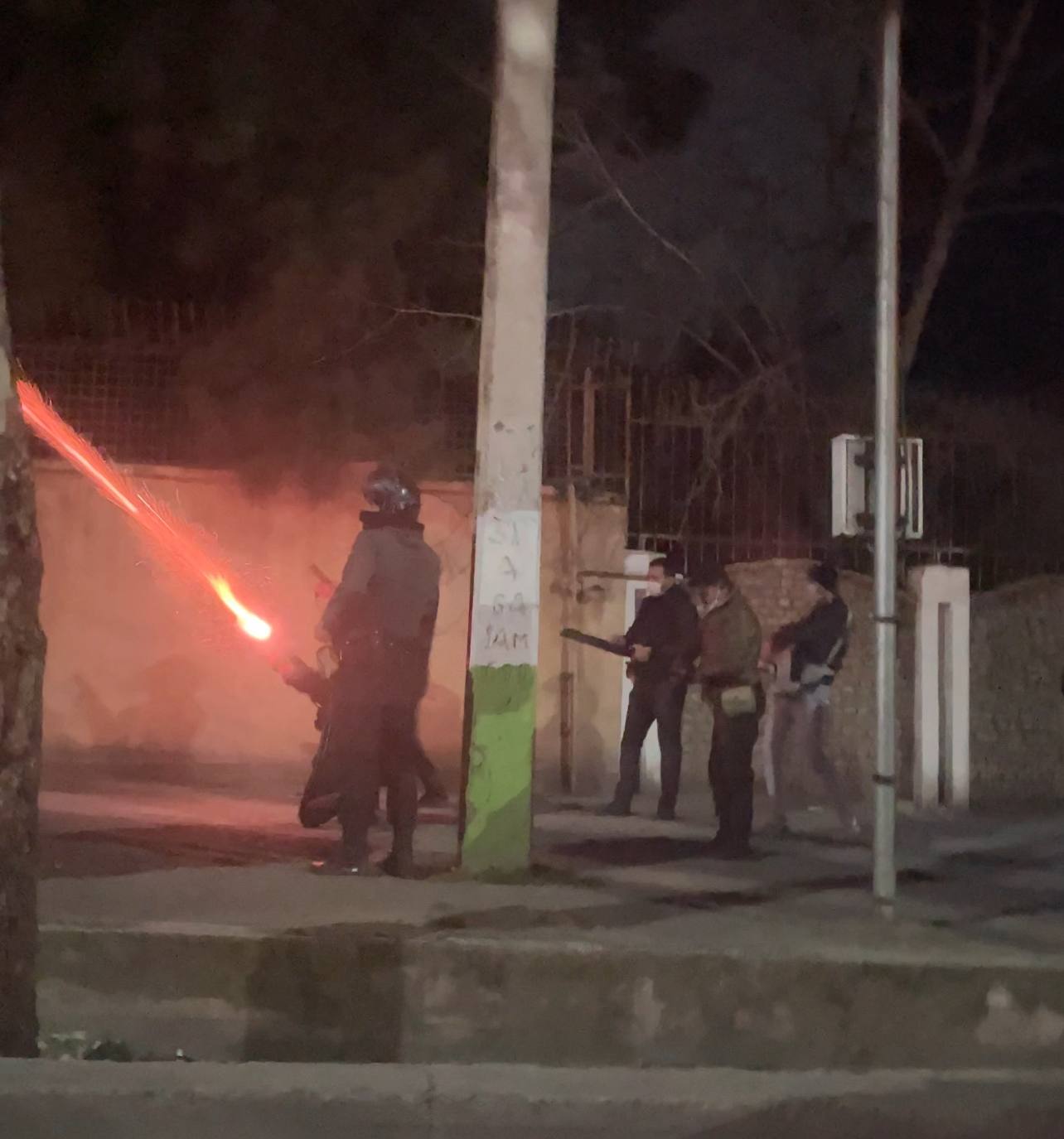
Gorgan Snap: Security Line Seen Just 100 Meters From Protesters

A photo received with the caption “Gorgan, about 100 meters from the protesting crowd, Friday 19 Dey (Jan. 9, 2026)” suggests security forces were positioned extremely close to demonstrators, highlighting the tightened street-level posture and the heightened risk of direct confrontation during that day’s unrest.

Shiraz Video Claim: Young Man Reportedly Killed Near Saadi Cinema

A video received with the caption says that on Thursday night in Shiraz near Saadi Cinema, security forces shot an approximately 20-year-old in the throat and chest with a pellet gun, and he later died from his wounds. The caption says people attempted to take him to Pars Hospital near the cinema, but he did not survive. This account is based on the video description and remains unverified without independent confirmation.


CPR in the Street: Sadeghieh Protest Video Shows Desperate Rescue Attempt

A video received with the caption “Thursday protests, Sadeghieh (Aryashahr), Tehran — 18 Dey (Jan. 8, 2026)” shows people attempting to revive a young man with CPR (chest compressions) amid unrest. The footage underscores how quickly crowd-control situations are turning into medical emergencies on the street—often before professional help can reach the scene. The identity and medical outcome are not confirmed based on the caption alone.


Kahrizak Morgue Footage Circulates: Unverified Videos Show Bodies and Grieving Families in Tehran

Images and videos shared with the caption “Kahrizak Legal Medicine Center, Tehran — Saturday 20 Dey” claim to show the bodies of people killed and grieving families at the facility. The sender also attached a separate third clip described as showing bodies at Tehranpars Hospital (Third Square, Tehranpars, Tehran). The material is being circulated via the Vahid Online Telegram channel; the footage and its exact location/time cannot be independently verified from the captions alone and may be distressing to view.


Blood on the Pavement: Conflicting Captions Around a Tehran Shooting Video

A graphic video circulating on social media shows gunfire sounds, people carrying wounded individuals across bloodied sidewalks, and frantic calls for a belt—apparently to use as a tourniquet. The clip has been variously captioned as Tehran on Thursday 18 Dey or Friday 19 Dey, while an update says the source may be a tweet claiming it was Saturday 20 Dey. Some users also suggest the location is Haft-Hoz (Narmak), below the Sarsabz intersection. The precise date and location remain unverified given the conflicting metadata, but the footage reflects the intensity of street-level violence and the improvisation of emergency care under fire.


Cities Draped in Mourning: Obituaries Everywhere, Blood Stains Still Visible

Reports describe urban streets across Iran lined with mourning notices, while traces of violence remain in public view—bloody handprints and stains still visible on walls, kiosks, and along curbside gutters. The imagery points to a crackdown leaving both a human toll and a physical imprint that’s difficult to erase, reinforcing the sense of grief and simmering anger in neighborhoods even after the most intense confrontations have passed.

Report Alleges Iraqi Militia Role in Hamedan, Targeting Girls

A report circulating claims that Iraqi Popular Mobilization Forces (PMF/Hashd al-Shaabi) were present in Hamedan and that they deliberately targeted girls, with the account alleging extreme brutality, including abuse even toward lifeless bodies. These are very serious allegations and, based on the information provided, cannot be independently verified; if substantiated, they would point to an escalation in violence and a potential international dimension to the crackdown.

Shiraz’s Moaliabad: Report Describes Heavy Gunfire and Widespread Death

A report circulating claims IRGC forces opened sustained automatic fire on people in Moaliabad, Shiraz, describing a scene so violent that, beyond human casualties, dead cats’ bodies were seen scattered around the area. This is an extreme allegation and cannot be independently verified from the report alone, but it underscores the portrayal of an indiscriminate, high-intensity crackdown in residential streets.

Journalists Targeted: Reports of Death Threats in Iran

Reports indicate that some journalists in Iran have received death threats, adding to concerns about a widening intimidation campaign as authorities and affiliated actors seek to suppress coverage and deter reporting. While details vary and specific cases require verification, the pattern—if confirmed—signals escalating pressure on the media ecosystem, increased self-censorship, and higher personal-security risk for reporters, editors, and their families.

Sa Pinto’s Mixed Signal: “Iran Is Safe” After Seeking Refuge at Portugal’s Embassy

Esteghlal head coach Ricardo Sá Pinto told reporters after the Tractor match on 28 Dey 1404 (Jan. 18, 2026) that he is not willing to leave Iran, saying “as far as I know, everyone has security,” and arguing Europeans are seeing only foreign-media images and should be told Iran is safe. The comments come days after he said he had gone to Portugal’s embassy in Tehran because he had been without internet and phone signal for days, while noting some foreign players and staff left because they did not feel safe.

Four Bullets in Andisheh: Report Says 27-Year-Old Alireza Salmani Killed

A report says Alireza Salmani (27) was shot dead during protests in Andisheh township (Phase 1) on Thursday 18 Dey 1404 (Jan. 8, 2026). A source close to the family claims he was chanting with friends when security forces opened fire from an unclear position and four live rounds hit him. The account says friends dragged him back home while he was still able to speak—asking his mother for water and saying he was hungry—before he suddenly began bleeding heavily from his nose and mouth and died. This is a witness-style narrative and has not been independently verified.

IranWire: Rustam Mobarakabadi Reportedly Shot Dead in Mobarakeh, Isfahan

IranWire reports that Rustam Mobarakabadi was killed by gunfire from security forces during Iran’s nationwide protests in the city of Mobarakeh, in Isfahan province. Further details—such as the exact date, circumstances, and any official response—have not been independently confirmed based on the information provided.

Khamenei Channel Recycles 1981 Rhetoric: “God of Year 60 Is the Same as This Year”

IranWire reports that a Telegram channel attributed to Ali Khamenei shared a page from the latest issue of Khat-e Hezbollah, republishing excerpts from speeches by Khamenei and Ruhollah Khomeini. The page repeats a line attributed to Khamenei: “The God of year 60 is the same God as this year”—language widely read as invoking the Islamic Republic’s early-decade repression narrative to frame the current unrest.

Arak Death Toll: Identities of Five Slain Protesters Reported

IranWire says it has obtained the identities of five citizens killed by Islamic Republic security forces during the crackdown on January (Dey 1404) protests in Arak: Babak Jamali (father of two, Radman and Nikan), Esmail Ganj-Goli (laborer), Farzaneh Tavakoli, Arman Haji-Yousefi, and Meysam Saberi (auto body repair worker, father of a 5-year-old). IranWire reports eyewitness accounts alleging Saberi was first shot in the leg and then run over by a water-cannon vehicle, while the others were shot with live ammunition—claims that remain difficult to independently verify.

Statue Talk: Esteghlal Coach Calls for a Monument to Sá Pinto

Esteghlal goalkeeping coach Behzad Gholampour told Tasnim that the Islamic Republic should build a statue of head coach Ricardo Sá Pinto as a “minimum” gesture of appreciation, praising him for staying in Iran despite recent turmoil and claiming foreign media has misled Europeans about security conditions. The remarks follow Sá Pinto’s own public comments portraying Iran as “safe,” a line that has drawn scrutiny given parallel reports about foreign staff seeking shelter or leaving Tehran.

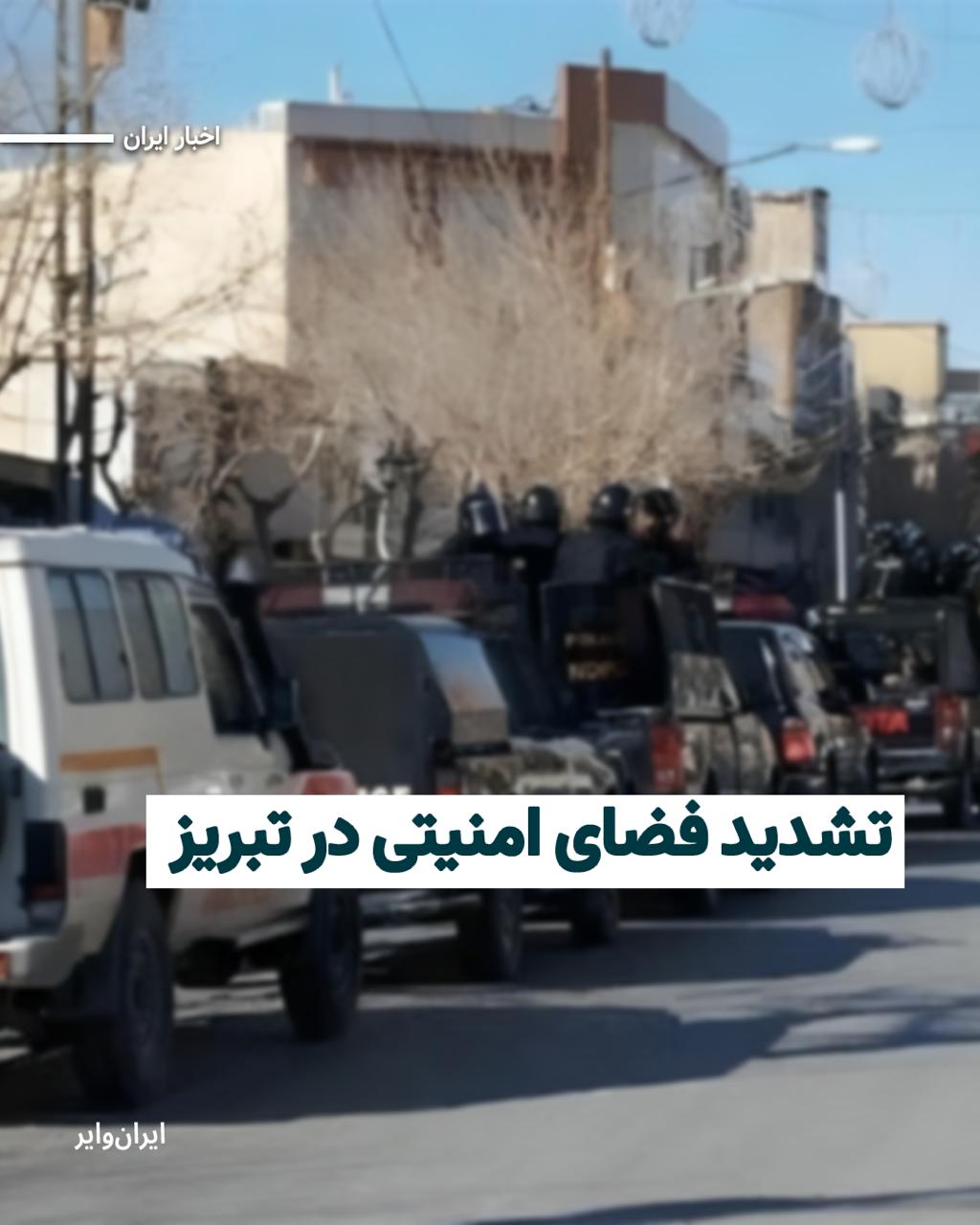
Tabriz Tightens: Checkpoints, Car Searches, Phone Inspections Reported

Human-rights lawyer Sina Yousefi said on Monday, 29 Dey 1404, that the security atmosphere in Tabriz has intensified, with forces setting up checkpoints across many main streets, searching vehicles, and inspecting passengers’ mobile phones—steps that suggest a shift toward tighter street-level control and pre-emptive surveillance amid ongoing unrest.

Ali Karimi in Los Angeles: One-Minute Silence, Renewed Call to Amplify Iran’s Voice

Iran football icon and Islamic Republic critic Ali Karimi addressed a Los Angeles rally on Sunday, 28 Dey 1404 (Jan. 18, 2026), asking attendees to hold a one-minute silence for those killed and for the people of Iran. He told the crowd that living in freedom carries a responsibility to keep showing up—urging demonstrators to again bring Iranians’ voices to the world, as during the post–Mahsa Amini protest wave. When supporters chanted that he was “honorable,” Karimi replied that the truly honorable are those who sacrificed their lives and property for Iran’s freedom, adding that many in the crowd had recently lost a loved one—or, even if not, had lost a compatriot. The speech came amid a wider surge of diaspora protests across multiple countries demanding international support and condemning killings linked to the Dey 1404 unrest.

Street Protests Turn Militarised as Communications Go Dark

A local account says security forces and plainclothes agents were present among crowds during recent protests, with live ammunition reportedly used and spent rounds allegedly found in a residential garage. The same source describes streets becoming fully militarised after a certain hour, including phone checks, body searches, and tightening control. They add that conditions have recently calmed slightly, but largely because people have little visibility into what is happening in other cities amid disrupted communications—no SMS, no calls, and near-total call cutoffs after a set time—apparently to prevent protesters from coordinating or helping one another.

Hospitals Overwhelmed as Residents Report Mass Killings in Isfahan and Gorgan

Amid ongoing crackdown in Iran, messages from residents in Isfahan and Gorgan describe a sharp surge in casualties, heavy strain on hospitals, and bodies allegedly piling up in medical centres without being handed to families. In Isfahan, reports say Feyz Hospital faced a wave of severe eye injuries on 19 Dey, with so many bleeding patients that some were laid on hallway floors and the smell of blood filled the building. In Gorgan, one local account claims roughly 600 people were killed during protests, with residents saying at least 100 were shot outside the governor’s office on the night of 18 Dey; they add that martial-law-like conditions followed, with NOPO special forces, heavy weapons (including DShK), and motorcycle units deployed, the city largely shutting after 5 p.m., and bodies reportedly accumulating at Panj Azar Hospital without release to families.

Mourners in Marvdasht Chant Against Khamenei After Protester’s Killing

Videos circulating on social media appear to show mourners in Marvdasht chanting “Death to Khamenei” and a revenge slogan after the reported killing of Mansour Mokhtari (also referred to as Mansour Bakhtiyari in some posts), who was said to have been shot by government agents during Iran’s ongoing protests, described by some activists as the “Iranian national revolution.”

Iran Parliament Commission Calls for “Qisas” Against Trump, Warns of “Jihad” if Khamenei Is Targeted

Iran’s parliament national security commission issued a statement on January 20, 2026 warning that any “attack” on Supreme Leader Ali Khamenei would amount to a declaration of war against the “entire Islamic world,” and said the U.S. should expect religious scholars to issue a decree of jihad and a response by “soldiers of Islam” globally. The statement also described U.S. President Donald Trump as “mentally ill” and said he should face “qisas” (retaliatory punishment), citing the killing of Qassem Soleimani and alleging the deaths of “thousands” of Iranians during the ongoing protests; it further claimed the U.S. should suffer an equivalent number of American military casualties.

Market impact: Elevated U.S.–Iran escalation risk typically lifts geopolitical risk premia—supportive for crude oil and safe havens (gold, USD/CHF/JPY) while weighing on regional risk assets and EM FX.

Punak Witness Says Bladed Weapons Used as Ammunition Ran Low

A resident from Tehran’s Punak neighbourhood told Iran International that, during recent nights of unrest, forces appeared to resort to bladed weapons—suggesting ammunition for guns had been exhausted. The witness said they went out at night to have pellet injuries removed and encountered multiple people with severe stab or slash wounds, adding that at least one person later died from injuries to the neck.

Gottheimer: Stand With Iranians Protesting the Regime

U.S. Representative Josh Gottheimer said the Iranian government is “our enemy,” accusing it of attacking U.S. bases, killing American forces, and supporting terrorism worldwide. He added that the United States should stand with “brave Iranians” who are protesting against the government.

Analyst: Prince Reza Pahlavi’s New Message Shifts From Forgiveness to Criminal Justice

Political analyst Behzad Mehrani told Iran International that Prince Reza Pahlavi’s latest message marks a major turning point in the “national revolution” narrative, arguing its tone and priorities differ meaningfully from previous statements. Mehrani said the message no longer calls on military and security forces to join the people and, for the first time, moves the language from “forgiveness” toward “criminal justice,” signaling an end to leniency toward the repression apparatus. He also highlighted the message’s explicit legitimisation of “anger” as a driving force—describing it as “conscious anger” rooted in collective experiences of violence, killings, and widespread mourning. Mehrani added that, unlike earlier calls for emotionally charged street presence, the new message stresses a more organised, targeted approach; he pointed to the explicit idea of “taking Tehran” as evidence of a shift from dispersed protest to a decisive phase aimed at settling the question of the Islamic Republic’s future, framed as a historical necessity after mass casualties.

Nadimi: U.S. Stopovers Suggest Europe Aligning With Possible Iran Strike

Defense and security researcher Farzin Nadimi said European countries—including Germany, the UK, France, and Italy—appear to be aligning with a potential U.S. attack on the Islamic Republic, arguing that U.S. aircraft have made stopovers at military bases located in those countries, which he frames as a practical signal of coordination.

Tehranpars Witness Describes “Close-Quarters War” as Gunfire Rained Down

An eyewitness account sent to Iran International describes Tehran’s Tehranpars district on the nights of 18–19 Dey (January 8–9, 2026) as “hand-to-hand war,” alleging widespread firing by security forces toward crowds. The witness said armed vehicles moved into the middle of protesters and opened sustained bursts of fire. They added that, while fleeing, protesters carried the bodies of those killed into nearby homes so they would not be collected from the streets, describing scenes of bodies being gathered and spent casings piling up—later collected by agents.

Iran Protester Ali Sadeghi Reportedly Killed in Tehran Crackdown

Information received by Iran International says Ali Sadeghi, a young protester, was killed by government forces during the suppression of demonstrations in Tehran on 20 Dey (approximately January 10, 2026). The report adds that he was the son of a person killed in the eight-year Iran–Iraq war, and that Sadeghi was buried on 24 Dey (approximately January 14, 2026).

19-Year-Old Champion Swimmer Arnika Dabbagh Reportedly Killed in Gorgan

Information received by Iran International says Arnika Dabbagh, a 19-year-old swimmer and national-level champion, was killed in Gorgan amid a severe crackdown and what the outlet describes as direct fire by government agents. Her death had previously been reported by citizens on social media, and a source familiar with the case said her family is now mourning. The report adds that many athletes have allegedly been killed during the armed suppression of mass protests, with fuller reporting hindered by internet disruptions.

CPJ Demands Immediate Release of Bahá’í Photographer Navid Zarrehbin Irani

The Committee to Protect Journalists (CPJ) called on Iranian authorities to immediately release freelance documentary photographer Navid Zarrehbin Irani, a Bahá’í citizen based in Mashhad, and to end what it described as systematic harassment and intimidation of journalists in Iran. CPJ said he was arrested at his home in Mashhad on January 16, 2026, amid a wider pressure campaign and communications disruptions linked to the ongoing unrest.

Iran International: Unnamed Interior Ministry Official Urges Trump to “Act” as Crackdown Intensifies

Iran International reported that an unidentified Interior Ministry official—who says he joined recent protests and stayed away from work following a call by Prince Reza Pahlavi—urged U.S. President Donald Trump to intervene, including calling for a military strike on the Islamic Republic. In an audio message dated 28 Dey (approximately January 18, 2026), the source alleged widespread use of live ammunition and deliberate targeting of protesters, including claims that agents used G3 rifles, while cities faced martial-law-like conditions with controlled movement, motorcycle units, and armoured patrols to prevent gatherings. The official said the crowds on 18–19 Dey were “unprecedented,” claimed authorities tried to block videos and shape the narrative, and warned that if Trump does not act, anti-Trump sentiment among Iranians could grow—while noting Trump has previously warned that U.S. action could follow if protesters are shot.

Zarif’s Office Denies “Baseless” Arrest Claims After Israeli TV Report

Former Iranian foreign minister Mohammad Javad Zarif’s office issued a statement rejecting allegations circulated about him as “lies,” “forged,” and “baseless,” after Israel’s Channel 14 claimed Zarif had multiple contacts with Prince Reza Pahlavi, allegedly informed Hassan Rouhani, and that both men were then detained by the IRGC. Iranian outlets carrying Zarif’s response said the office described the story as an opportunistic fabrication amplified by Israeli media and denied the arrest narrative.

Amnesty: Stop the Execution of 19-Year-Old Protester Amirhossein Ghaderzadeh

Amnesty International urged Iranian authorities to immediately halt any plans to execute Amirhossein Ghaderzadeh, a 19-year-old protester, after receiving information that his family had been told the execution is scheduled for 1 Bahman 1404 (January 21, 2026). Amnesty said the case reflects escalating pressure on detainees amid the crackdown and called for urgent action to prevent an irreversible outcome.

US Says It’s Backing Iranians’ Internet Access as Blackout Nears Two Weeks

The U.S. State Department’s Near Eastern Affairs bureau said in a post on X on Tuesday, January 20, 2026 (30 Dey 1404) that Washington supports Iranians’ access to the internet, arguing U.S. sanctions “target the Iranian government, not the people.” It pointed to Iran General License D-2 as the mechanism that exempts certain internet, communications, and connectivity-related services and technologies from sanctions so Iranians can stay connected with the world, adding that Tehran tries to cut the internet “because it is afraid.” The message came as Iran’s near-total connectivity shutdown—reported to have started around January 8—has effectively kept the country offline for close to two weeks.

Rouhani and Zarif Reappear at Funeral as Detention Rumors Are Denied

Iranian outlets with internet access published photos on Tuesday showing former President Hassan Rouhani and former Foreign Minister Mohammad Javad Zarif attending a memorial ceremony for the mother of ex-official Mohammad Shariatmadari, undercutting recent social-media claims and an Israeli Channel 14 report alleging Zarif had contacted Prince Reza Pahlavi during the protests, informed Rouhani, and that both were subsequently detained by the IRGC. Zarif’s office responded with a sharply worded statement, calling the allegations a “big lie” and warning that the amplification of such claims—attributed to a figure it described as a serial liar and echoed by Israeli media—was a “dangerous affliction.”

Unverified Video Shows Armed Convoy Chanting in Iran Street

New footage circulating on social media appears to show armed individuals in military-style uniforms and gear moving through an Iranian street in vehicles, seemingly aiming to intimidate residents. The exact time and location are unclear, but the video captures armed forces chanting slogans such as “Labbaik ya Khamenei” and “Ya Heydar,” while a heavy weapon appears mounted on one of the vehicles; gunfire can also be heard in the background.


Lavrov: Russia Won’t Stop Trading With Iran Despite Trump’s 25% Tariff Threat

Russia’s foreign minister Sergei Lavrov said Moscow “sees no reason” to halt trade with Iran and will continue commercial cooperation whenever it deems appropriate, despite U.S. threats of tariffs and sanctions. His remarks follow President Donald Trump’s January 12, 2026 announcement that any country doing business with Iran would face a 25% tariff on all trade with the United States. Lavrov pointed to ongoing joint projects—such as work tied to the Bushehr nuclear power plant and the International North–South Transport Corridor—as evidence that Russia intends to keep implementing bilateral agreements regardless of U.S. pressure.

UN Rights Council to Hold Emergency Iran Session on Friday

Reuters reports the UN Human Rights Council will convene a special (emergency) session in Geneva on Friday, January 23, 2026 (۳ بهمن ۱۴۰۴) to address what proponents describe as “alarming violence” against protesters. The request was submitted by a cross-regional group (including Germany, the UK, and Iceland) in a letter by Iceland’s ambassador Einar Gunnarsson, arguing the situation is urgent due to credible reports of severe violence, crackdowns, and international human-rights violations; 21 countries have backed the move so far. Human Rights Watch is urging the UN’s existing Iran fact-finding mechanism (created after 2022 protests) to also examine the latest killings and receive additional funding, while Iran has circulated rebuttals denying the allegations and claiming unrest began after armed attacks on security forces.

Iran Provinces Close Schools for 1 Bahman as Cold Snap Bites

Iranian media report that schools in Tehran, Alborz, Zanjan, Mazandaran, North Khorasan, and Qazvin will be closed on Wednesday, January 21, 2026 (1 Bahman 1404), with some provinces also extending the closure to government offices. Local statements cite low temperatures and energy-consumption management as key drivers, as forecasts point to continued chilly conditions in the capital.

18th Birthday Planned, Bullet Fired: Erfan Faraji Killed While Filming Protests in Naziabad

As his family prepared balloons for a surprise party for his 18th birthday, Mohammad Erfan Faraji was standing in Naziabad, Tehran, filming protesters’ courage—hoping to go home later and describe what he had witnessed. A relative told IranWire that Erfan was shot from behind around 8 p.m. on 18 Dey near Meydan Behesht, the bullet passing through his heart and exiting his chest. Faraji, who lived in Shahr-e Rey, reportedly collapsed silently moments after being hit.

IRGC Intelligence Claims 166 Arrests in Qazvin Amid Protest Crackdown

Iran’s Tasnim news agency, citing the IRGC Intelligence Organization in Qazvin province, said 166 people described as “agents of the main protest leaders” were detained following “intelligence monitoring” and “public cooperation.” Rights groups have warned that the crackdown is being accompanied by widespread arrests and elevated risks of abuse in detention, as international scrutiny grows—including an upcoming UN Human Rights Council emergency session on violence against protesters.

EU Tightens Tech Screws on Iran’s Drone–Missile Programs

European Commission President Ursula von der Leyen said Tuesday, January 20, 2026 (30 Dey 1404) the EU is proposing additional bans on exports of critical drone and missile technologies to Iran following the bloody crackdown on protesters. She reiterated that Europe stands in full solidarity with “brave” Iranians, and noted the bloc has already imposed wide Iran-related sanctions tied to human rights, nuclear proliferation concerns, and Iran’s support for Russia’s war in Ukraine.

Teacher-Environmentalist Arash Nikhoo Reportedly Detained

Social-media reports, echoed by IranWire, say Arash Nikhoo—a teacher and environmental activist—was arrested by security forces on Tuesday, January 19, 2026 (29 Dey 1404). Details such as the detaining authority, location of detention, and formal charges have not been publicly confirmed; posts circulating online suggest his family has not been informed of his condition or where he is being held.

ABC Interview: U.S. Basketball Player Describes Escape From Iran During Internet Blackout

ABC News correspondent Linsey Davis spoke with Taylor Jones, an American professional basketball player, who described fleeing Iran amid a violent crackdown and widespread communications outages. Jones said she witnessed armed forces firing at people and realized she could not reach her family because both phone service and the internet were down.


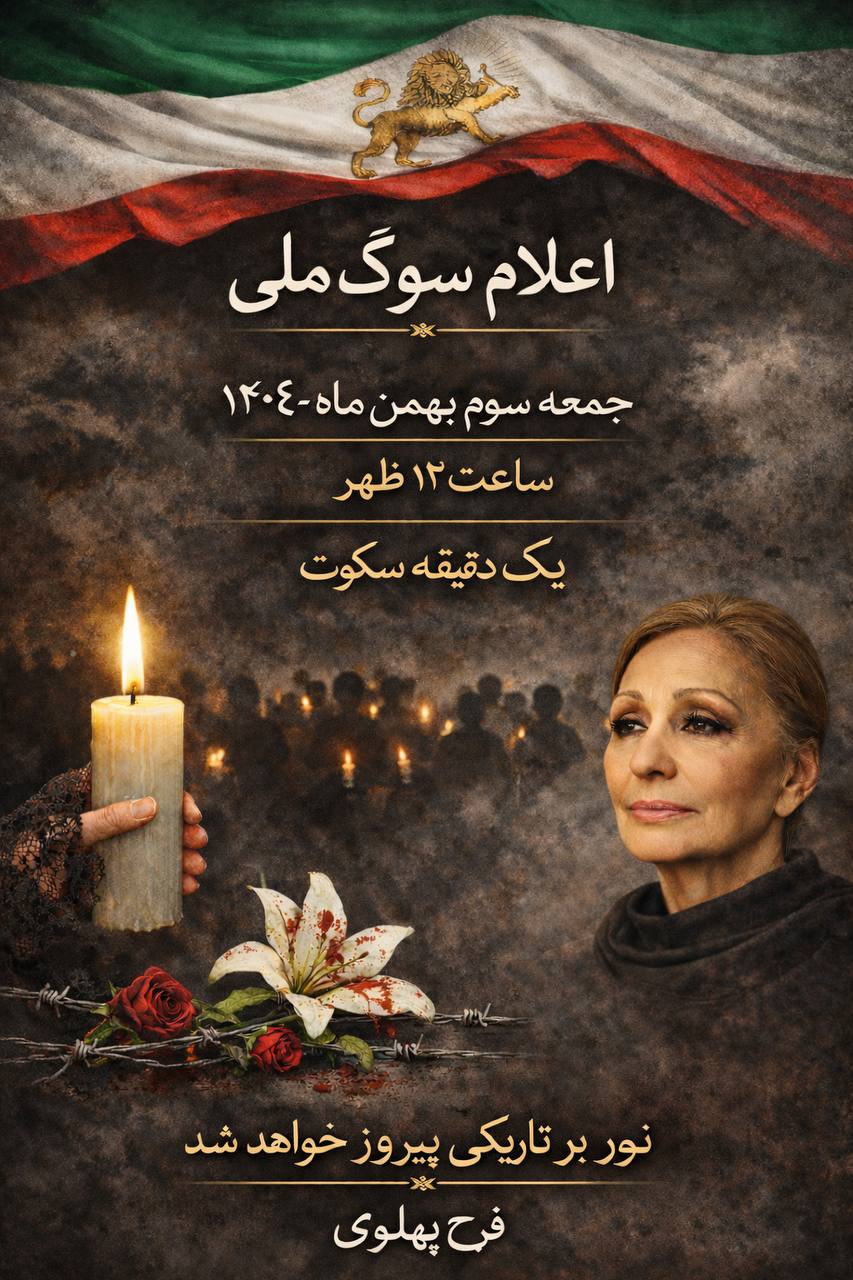
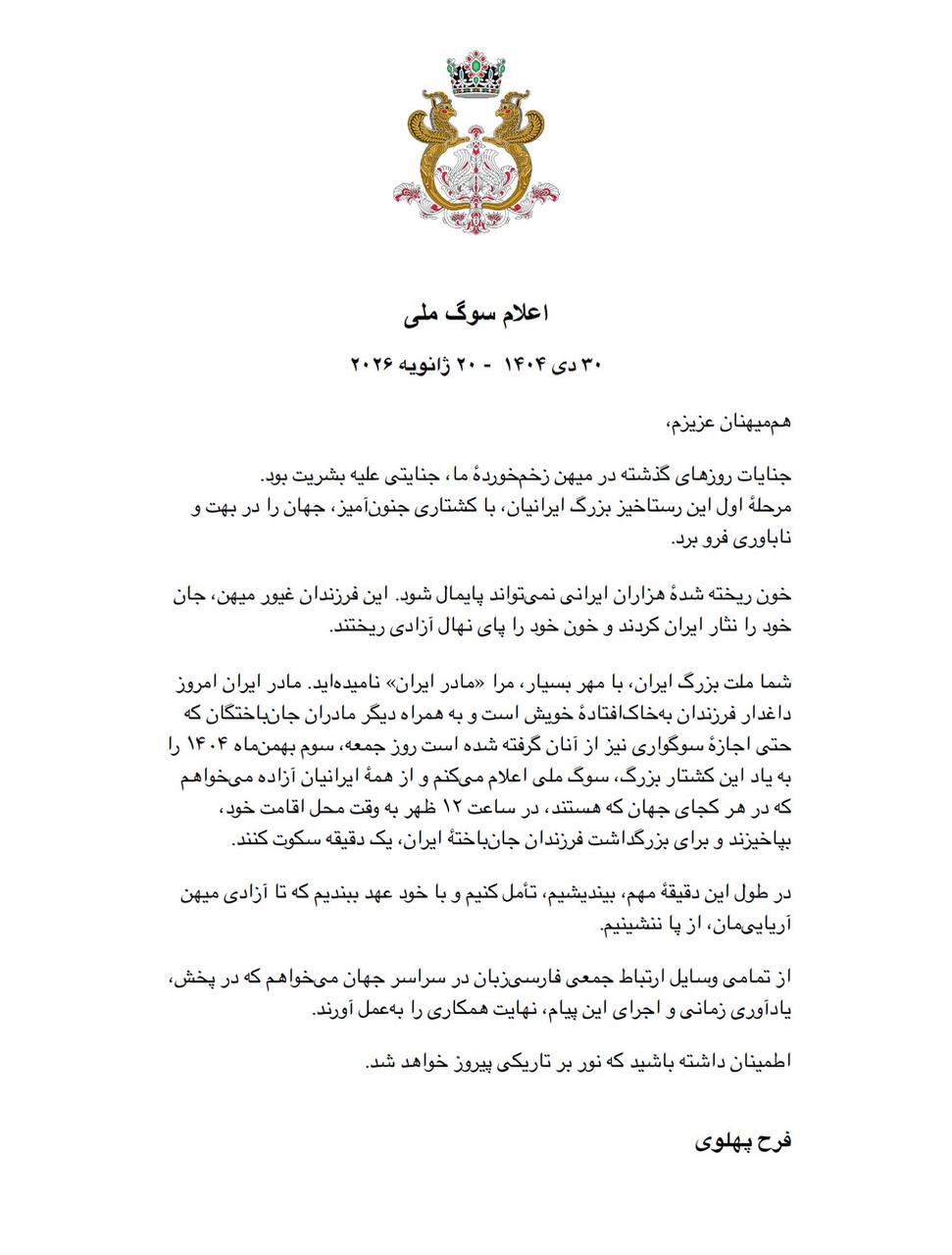
Farah Pahlavi Declares Jan. 23 a “National Mourning” Day, Calls for Global Minute of Silence

In a statement published on January 20, 2026 (30 Dey 1404), Empress Farah Pahlavi announced that Friday, January 23, 2026 (3 Bahman 1404) is being marked as “national mourning” in memory of young Iranians killed during the protests. The message calls on Iranians worldwide to stand at 12:00 noon local time and observe one minute of silence, and asks Persian-language media outlets to help publicize the timing and support the coordinated observance.

Market impact: Primarily a sentiment and risk-premium catalyst—could keep international attention on Iran’s unrest elevated, with spillovers into geopolitical risk pricing (notably regional assets and any Iran-related energy-risk narrative).

More Iran news

Others

Korea Producer Prices Firm: PPI Holds 1.9% y/y, Momentum Picks Up

South Korea’s producer price inflation stayed unchanged at 1.9% y/y in December, while monthly PPI accelerated to 0.4% m/m (vs 0.3% prior). The steady annual rate with a firmer monthly print suggests upstream price pressures are not easing decisively into year-end, keeping an eye on pass-through risk to consumer inflation in early 2026.

Market impact: Slightly hawkish at the margin for BoK pricing—potentially KRW-supportive and a modest headwind for rate-sensitive risk if markets trim easing expectations; equity impact is mixed (pricing power vs margin pressure depending on sector).

Day 2 “Power Block”: EU, China, France, Ukraine, Canada Take the Stage

WEF’s official Day 2 rundown spotlights a dense sequence of special addresses in Davos today (Jan 20), including Ursula von der Leyen, He Lifeng, Emmanuel Macron, Volodymyr Zelenskyy, and Mark Carney, alongside opening remarks from WEF CEO Børge Brende. Expect the “Spirit of Dialogue” framing to be tested on trade frictions, security, and the governance of fast-scaling technologies.

Market impact: High headline sensitivity for EUR, European defense, and global risk sentiment; watch for tariff/trade language that could move cyclicals vs defensives.


Davos AI Push: WEF Publishes “Proof over Promise” + Names New MINDS Cohort

WEF released a fresh report on real-world AI adoption and announced a new cohort of 20 “MINDS” AI pioneers, highlighting patterns behind measurable gains: embedding AI in strategy, redesigning work for human–AI collaboration, strengthening data foundations, and responsible governance. The MINDS examples span areas like disease detection, energy optimization, and supply-chain resilience.

Market impact: Supports bullish narratives for AI enablers (data platforms, cloud, semis) and enterprise software, while reinforcing governance/compliance as a budget line item.

“Structural Volatility” Becomes the New Supply-Chain Baseline

A new WEF report argues global value chains have moved into structural (not cyclical) volatility, with 74% of business leaders prioritizing resilience investments as a growth driver. WEF also launched a Manufacturing & Supply Chain Readiness Navigator tool to help governments and companies assess risks and location/investment readiness.

Market impact: Tailwind for logistics, industrial automation, nearshoring/reshoring beneficiaries, and firms selling resilience tooling; adds risk premium for highly globalized, single-source supply models.

Global Lighthouse Network Adds 23 Sites and Launches “Lumina” AI Platform

Ahead of the Annual Meeting, WEF’s Global Lighthouse Network announced 23 new “Lighthouse” industrial sites and launched Lumina, an AI-powered benchmarking/decision platform aimed at moving manufacturers from pilots to scaled transformation. The announcement underscores a pivot from experimentation toward operational AI at scale (often combined with IoT, cloud, and digital twins).

Market impact: Positive read-through for industrial software, IIoT, digital twins, and consultancies/system integrators; reinforces capex toward productivity and efficiency upgrades.

Davos Opens Under Inequality & Tariff Shockwaves; Protests and Security Tighten

As Davos formally opens, coverage highlights heightened public anger over inequality and billionaire wealth, with protests and heavy security—while markets digest renewed tariff threats tied to U.S. politics. The WEF theme (“A Spirit of Dialogue”) is being framed against a backdrop of distrust in institutions and rising geopolitical pressure.

Market impact: Favors safe havens (gold/JPY/CHF) on escalation headlines; keeps European exporters and cyclicals sensitive to tariff rhetoric and retaliation risks.

Social Pulse: “Spirit of Dialogue” Messaging Spreads + New On-the-Move Video Format

Public-facing posts and updates amplify the “Spirit of Dialogue” narrative: WEF’s own social messaging emphasizes shared understanding, while attendee posts highlight tech/AI as a center of gravity. WEF’s live coverage also teases a new “Ideas on the Move” video format—quick interviews captured between sessions—to push bite-sized takeaways beyond closed rooms.

Market impact: Soft signal, but reinforces that AI commercialization (not just hype) is the week’s dominant narrative—supportive for “AI adoption” baskets vs pure R&D stories.

Pakistan’s PM Lands in Davos to Push “Dialogue in a Divided World”

Pakistan’s Prime Minister Shehbaz Sharif arrived in Switzerland to lead a high-level delegation to the World Economic Forum 2026, with his agenda framed around strengthening dialogue in what officials describe as a “divided world.” He is expected to join the WEF’s Informal Gathering of World Economic Leaders (IGWEL) session titled “Restoring a Spirit of Dialogue in a Divided World” and to chair a Pakistan-focused business roundtable aimed at attracting foreign investment.

Market impact: Positive sentiment for emerging-market engagement themes, especially in South Asian investment and trade ties; may support incremental inflows into Pakistan-linked assets.

rump Lines Up a Davos Address on the U.S. Economy and Affordability

U.S. President Donald Trump is scheduled to deliver a special address at the World Economic Forum on January 21, with messaging expected to focus on domestic economic concerns—particularly housing affordability reforms—and his broader growth agenda. Ahead of the address, Davos discussions have highlighted claims of potential U.S. growth of 4–5% in 2026, while noting lingering “inflation PTSD” among voters.

Market impact: Could move U.S. Treasury yields and risk assets depending on inflation and policy signals; housing- and consumer-linked sectors may see event-driven volatility.

Davos Day 2: AI Meets Jobs — “Bring Workers into the Design”

Day 2 discussions at Davos emphasized how AI adoption intersects with jobs, inclusion, and reskilling. Panels featuring major tech leadership—including Microsoft CEO Satya Nadella—and labor voices stressed that scaling AI requires bringing workers into implementation choices and building credible upskilling pathways, while policymakers highlighted the tension between strategic competition and human-centric growth.

Market impact: Supports “AI + human capital” investment narratives; constructive for enterprise AI platforms, training/reskilling providers, and workforce-transformation tools.

Business Coalition Pushes “Clean Energy Momentum” in Davos Side Events

The We Mean Business Coalition used Davos platforms and side events to emphasize momentum in the clean-energy transition and corporate climate action. Messaging linked investment in clean power, electrification, and nature-positive finance to resilience and competitiveness—positioning climate cooperation as compatible with industrial strategy during a geopolitically tense year.

Market impact: Reinforces energy-transition narratives (clean power, grids, electrification, climate finance); supportive for ESG-aligned equities and green infrastructure capital flows.

BYD Warns: Stop Whiplash EV Rules — Policy Uncertainty Is Costly

A senior BYD executive told a Davos panel that shifting or inconsistent government EV policies are creating setbacks for automakers, calling for clearer, more stable regulatory signals to sustain investment and innovation across the EV supply chain.

Market impact: Highlights regulatory risk premium for EV makers and battery suppliers; could weigh on policy-sensitive auto names while benefiting firms operating under clearer subsidy/standard frameworks.

Morocco’s PM Uses Davos Stage to Sell a 2026 Growth-and-Competitiveness Pitch

Morocco’s Head of Government Aziz Akhannouch joined a Davos session to outline national priorities for 2026, emphasizing growth, competitiveness, and regional cooperation in the context of global resilience debates. The appearance aims to position Morocco as a stable partner for trade, investment, and infrastructure development amid a fragmented global backdrop.

Market impact: Incrementally supportive for North Africa investment narratives, potentially improving sentiment toward regional infrastructure, trade partnerships, and sovereign-credit perceptions.

Trade Wars, AI Rules and Energy Limits Crowd Davos Agenda

With the 2026 forum underway, trade conflicts, potential tariff escalations, artificial intelligence regulation, and energy security issues are dominating agendas. These themes reflect global economic anxieties against a backdrop of geopolitical shifts and technological disruption.

Market impact: Reinforces volatility risks for global equities and commodities, especially in trade-exposed sectors; energy markets may reprice on policy signals.

BlackRock’s Larry Fink Delivers a Stark Capitalism Critique

At Davos, BlackRock CEO Larry Fink said capitalism must evolve to better distribute prosperity, warning that inequality pressures and social trust are becoming central constraints—especially as AI reshapes economies. The remarks set a reflective tone for system-level debates at the forum.

Market impact: Supports ESG/inclusive-growth framing; may revive regulation/tax overhang narratives for mega-caps and finance.

Blue Davos Goes Big: WEF Frames 2026 as the “Year of Water”

WEF’s “Blue Davos” track says water will be a headline theme across the meeting, linking ocean and freshwater risks to trade, food systems, livelihoods, and climate resilience. WEF says the “Blue Davos” page will be updated throughout the week as new water initiatives are announced, including the Water Resilience Challenge (UpLink + partners) with 10 selected innovators to be officially announced during the Annual Meeting.

Market impact: Positive read-through for water infrastructure, industrial water tech, utilities, and adaptation/resilience financing themes; can support ESG-flows into water-focused strategies.

“AI That Pays”: WEF Unveils New MINDS Cohort + Real-World Scaling Playbook

WEF released a new report on organizations achieving measurable performance gains from AI, and announced a new cohort of MINDS (20 pioneers) building high-impact AI solutions (e.g., disease detection, energy optimization, supply-chain resilience). WEF highlights success factors like embedding AI into enterprise strategy, redesigning work for human‑AI collaboration, and strengthening data foundations.

Market impact: Supports AI “second wave” trades—enterprise software, IT services, data infrastructure, and firms positioned around deployment/ROI, not just model-building hype.

Factory AI Gets a Benchmark: WEF Adds 23 “Lighthouses” and Launches Lumina

WEF’s Global Lighthouse Network added 23 new industrial sites and launched Lumina, an AI-powered industrial intelligence platform meant to provide benchmarks and help leaders scale advanced tech with lower risk. WEF also published its annual analysis on how lighthouse sites are embedding AI and improving resilience and sustainability at scale.

Market impact: Tailwind for industrial automation, IIoT, enterprise AI for manufacturing, and consultancies/vendors selling “pilot-to-scale” transformation; bullish for productivity narratives.

CEOs Blink: Revenue Confidence Hits a 5‑Year Low as AI ROI Splits Leaders

A PwC global CEO survey (4,000+ CEOs across 95 countries) shows revenue-growth confidence fell to a five-year low (about 30% very/extremely confident). Concerns cited include geopolitical uncertainty, cyber risks, and the pace of technological change; PwC also flags a sharp divide in whether AI is producing measurable gains.

Market impact: Caution signal for cyclicals and discretionary capex; supportive for cybersecurity and “AI efficiency” vendors that can prove savings/revenue lift.

Turkey Debt Climbs: Central Government Debt Stock Tops ₺13.66T

Turkey’s central government debt stock rose to ₺13,656.0B in December, up from ₺13,325.0B previously. The increase underscores ongoing financing needs and the sensitivity of the debt trajectory to interest costs, FX-linked liabilities, and rollover conditions as policy aims to balance disinflation with growth.

Market impact: Mildly TRY-negative at the margin if markets read it as higher fiscal/rollover risk, potentially supportive of higher local yields; the impact will depend on the debt mix (FX vs lira) and Treasury funding conditions.

Fear Gauge Flashes: VIX Jumps Above 20 as Europe Pulls Back from Treasuries

Wall Street’s “fear index” surged to around 20.5–20.7, its highest level since November, as tariff and Greenland-related tensions reignited a broad risk-off move across U.S. assets. Adding to the signal, Denmark’s AkademikerPension said it will exit its U.S. Treasury holdings (approximately $100 million) by the end of January, citing concerns about U.S. fiscal sustainability—while acknowledging that the geopolitical backdrop made the decision easier.

Market impact: Higher volatility typically tightens financial conditions—negative for high-beta equities and supportive for safe havens (gold/JPY/CHF). If more European institutions follow, the market may price a higher U.S. fiscal/credibility premium, keeping rates and USD choppy.

Swiss President Parmelin Frames Dialogue as Core to Davos Opening

Swiss Confederation President Guy Parmelin delivered a special address at the opening of the 56th World Economic Forum Annual Meeting, stressing the need for dialogue, unity, and resilience in confronting global challenges. He thanked international partners for solidarity after the recent disaster in Crans-Montana, saying that global cooperation must extend beyond isolated crises into sustained collective action.

Market impact: Reinforces multilateral cooperation sentiment and can support confidence in global risk-management frameworks; mildly positive for risk assets if markets view political cohesion as stabilizing.

Davos Faces Environmental Backlash Over Private Jet Usage

As leaders gather in Davos, critics are sharply condemning the rise in private jet travel by participants, calling the event “hypocritical” given its sustainability goals. Reports highlight a significant surge in private jet arrivals, drawing protests from environmental groups who argue this undermines the forum’s credibility on climate and emissions dialogue.

Market impact: Heightens scrutiny of carbon footprint reporting and brings potential regulatory attention to business aviation and travel emissions; could spur demand for carbon offset products.


Business Aviation Coalition Pushes Sustainable Aviation Fuel Dialogue

Ahead of and during Davos, the Business Aviation Coalition for SAF (Sustainable Aviation Fuel) called on world leaders and industry to embrace a “spirit of dialogue” for scaling sustainable fuels for travel to and from the forum. The coalition argues that advancing SAF deployment is essential for aligning global mobility with climate goals.

Market impact: Supportive signal for SAF producers, advanced biofuel tech companies, and aviation decarbonization plays; could attract early-stage investment interest.

More Others news

Political

Greenland Misread: Europe Says NATO Recon Was About Russia, Not Pressuring Washington

European leaders say the White House misinterpreted a small European/NATO presence in Greenland, arguing the deployments were intended to **assess Arctic security risks—especially Russian activity—**rather than to challenge the United States. UK Prime Minister Keir Starmer has framed the mission as monitoring Russian activity and urged de-escalation to avoid a transatlantic trade clash, while Italy’s Giorgia Meloni said Washington “misunderstood” the move and that it was aimed at security against “other actors.”

The backdrop is Trump’s threat to impose 10% tariffs from Feb. 1, rising to 25% in June, absent an agreement on Greenland—prompting EU preparations for countermeasures. In parallel, some personnel have already rotated out: Germany’s small reconnaissance team has returned home after a brief deployment, and other participating countries have confirmed limited, short-duration missions.

Market impact: Keeps a policy-risk premium embedded in EUR assets and trade-exposed European cyclicals; supports safe-haven demand (gold/CHF/JPY) if tariff timelines harden into implementation and retaliation.

Trump Reposts “Free Iran” Forecast on Truth Social

U.S. President Donald Trump reshared a Fox News clip from Life, Liberty & Levin on Sunday night, January 18, 2026 (28 Dey 1404), highlighting a remark by Fox contributor Marc Thiessen predicting Trump will visit a “free Iran,” “free Havana,” and “free Caracas” before leaving office—an amplification that reads as political signaling rather than a formal policy commitment, but underscores the administration’s increasingly public alignment with regime-change rhetoric amid rising Iran tensions.

US Surge Signal: Carrier Group and F-15s Flow Toward CENTCOM, Jerusalem Post Says

The Jerusalem Post reports the U.S. has significantly reinforced its military posture in the Middle East in recent days as Iran tensions rise, including the USS Abraham Lincoln carrier strike elements moving toward CENTCOM’s area of responsibility and around 12 F-15 fighter jets arriving in Jordan in the past 24 hours; the report also cites additional aircraft en route and cargo flights landing at Diego Garcia, framing the build-up as widening Washington’s “all options on the table” menu if a strike on Iran remains on the table.

Trump’s Nobel Grievance Meets Greenland Row: “No Longer Obliged to Think Purely of Peace”

U.S. President Donald Trump told Norway’s Prime Minister Jonas Gahr Støre that, because he was not awarded the Nobel Peace Prize, he no longer feels an obligation to “think purely of peace” and will instead focus on what is “good and proper” for the United States—comments reported as part of an escalating transatlantic dispute tied to Trump’s renewed pressure campaign over Greenland. (The Nobel Peace Prize is decided by an independent Norwegian Nobel Committee, not Norway’s government.)

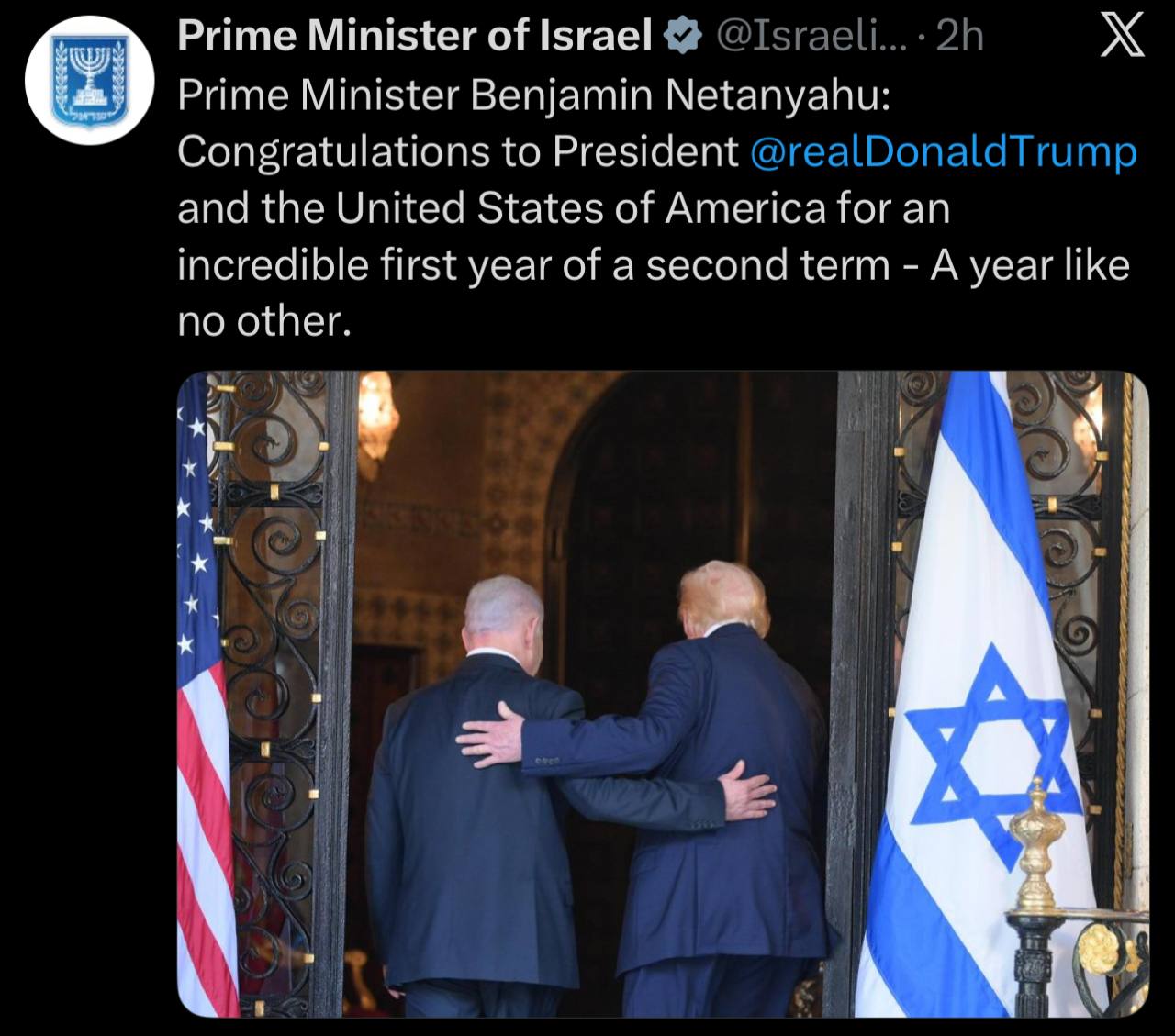
Netanyahu Salutes Trump’s “Incredible” Year 1 — and Highlights Five 2025 Meetups

Israeli Prime Minister Benjamin Netanyahu publicly congratulated U.S. President Donald Trump on what he called an “incredible first year” of Trump’s second term, underscoring the pace of high-level coordination by noting five face-to-face meetings during 2025 (alongside additional calls), according to reporting that tracks their engagements since Trump returned to office in January 2025. Other policy chronologies count the December 29, 2025 Mar-a-Lago session as the sixth Trump–Netanyahu meeting since January 20, 2025—illustrating both the intensity and frequency of their contacts as the U.S. and Israel coordinate on Gaza and regional security files.

EU Plans Arctic Security Package Amid Greenland Tensions

European Commission President Ursula von der Leyen announced a planned EU package to strengthen Arctic security and resilience, linked to discussions around Greenland amid U.S. tariff threats. She emphasized that Greenland’s sovereignty is “non-negotiable” and outlined investment and defense cooperation initiatives as part of the EU response.

Market impact: Boosts defense and infrastructure spending narratives in Europe; raises risk premia in transatlantic trade and Arctic-resource sectors.

Backroom Diplomacy: National Security Advisers Convene on Greenland

Reuters reports national security advisers from several countries planned a Davos sidelines meeting with Greenland on the agenda, though participation/level varied and details were closely held.

Market impact: Adds headline-driven volatility for European FX, defense names, and Arctic logistics/shipping narratives; supports safe-haven positioning when tensions spike.

Kyiv Keeps Options Open: Zelenskyy “Not Decided Yet” on Davos Trip

A Ukrainian official told Reuters President Volodymyr Zelenskyy has not decided whether to travel to Davos because the U.S. has not clarified whether a substantive meeting with President Trump will happen. The official said Ukraine would be ready to sign documents on security guarantees or prosperity if the U.S. side is ready.

Market impact: Ukraine-related event risk remains binary—progress headlines can lift European risk sentiment; delays favor energy/security hedges and keep a risk premium in the region.

Dutch–Saudi Talks in Davos Spotlight Iran and Regional Flashpoints

Dutch Foreign Minister David van Weel said he met Saudi Foreign Minister Faisal bin Farhan on the sidelines of the Davos meetings and discussed developments in Iran alongside Gaza, Sudan, and Ukraine. In a post on X, van Weel described Saudi Arabia as a trusted partner and said cooperation with Riyadh matters for navigating regional and international developments.

Israel Raises Readiness for Possible Iran Clash

Israel Hayom reported that Israel is preparing for a potential conflict scenario with the Islamic Republic by calling up reserve forces, deploying air-defense systems, and placing the air force on full alert. Iran International correspondents Babak Eshaqi and Samira Gharai also reported on the developments.

Bessent: “Maximum Pressure Worked—Without Firing a Bullet”

U.S. Treasury Secretary Scott Bessent said Washington’s “maximum pressure” strategy against Iran—sanctions and tariffs targeting buyers of Iranian oil—has been effective. He claimed that in March he warned the rial was “one step away from collapse” and said that if he were Iranian he would move his money out of the country. Bessent also alleged that in December a major Iranian bank failed, the central bank was forced to print money, and the country lacked sufficient dollars for imports—arguing that these pressures pushed people into the streets and showed the policy succeeded “without firing a single bullet.”

Swedish MEP Urges Europe to “Empty” Iran’s Embassies Until Lion-and-Sun Flag Returns

Charlie Weimers, a Swedish member of the European Parliament, called for Islamic Republic embassies across Europe to be emptied until the Lion and Sun flag is raised again. Addressing the EU’s foreign policy chief, he said Europe should listen to Iranians chanting “Long live the Shah,” and urged officials to invite Prince Reza Pahlavi.

Polish MEP: Iran Is a Global Security Issue, Not Just Human Rights

A Polish member of the European Parliament, speaking in a session backing Prince Reza Pahlavi, said the situation in Iran should be treated as an international and global issue—not merely a human-rights case—framing Tehran’s crisis as something with broader geopolitical consequences for Europe and the wider international order.

Von der Leyen: Europe Stands “Fully” With Iranians

European Commission President Ursula von der Leyen said in a post on X that Europe stands in “full solidarity” with Iran’s “brave women and men” who are risking their lives to demand freedom for themselves and future generations. She added that the EU has already imposed far-reaching sanctions on Iran over human rights abuses, nuclear proliferation concerns, and Iran’s support for Russia’s war against Ukraine.

Mokhber to Trump: “Americans Can’t Do a Thing”

Mohammad Mokhber, an adviser to Iran’s Supreme Leader Ali Khamenei, dismissed Donald Trump’s recent remarks about the “time” for leadership change in Iran, saying Khamenei “has a place in the hearts of Muslims” and that “Americans can’t do a thing.”

Kallas: Iran’s Rule Built on Relentless Repression—EU Readies More Sanctions

EU foreign policy chief Kaja Kallas condemned Iran’s protest crackdown as unprecedented, saying authorities respond to citizens’ demands with batons and live fire while cutting communications to conceal the масштаب of repression. She called violence against peaceful protesters unacceptable, urged the release of detainees and restoration of internet access, and said the EU is moving to tighten existing measures—preparing additional sanctions targeting those responsible for the crackdown on top of the bloc’s broader Iran sanctions linked to human-rights abuses, nuclear proliferation concerns, and support for Russia’s war in Ukraine.

Report: Israel Told Washington It Could “Absorb” 700 Iranian Missiles if It Topples Tehran

Israeli officials have reportedly told the U.S. that even an extreme Iranian barrage of around 700 ballistic missiles would be “manageable” given Israel’s layered air defenses—and that the strategic cost would be “worth it” if a military campaign produced regime collapse in Iran, according to a Ynet (Yedioth Ahronoth group) report that references senior U.S. sources. The same discussion comes as Israeli and regional assessments warn Iran has rebuilt its heavy-missile stockpile to roughly 2,000 only months after the June 2025 12-day war, and that Tehran may seek to overwhelm defenses by launching far larger salvos at once rather than staggered waves over days.

Qatar Urges Washington to Pursue a Diplomatic Iran Nuclear Deal

Qatari Prime Minister and Foreign Minister Sheikh Mohammed bin Abdulrahman Al Thani said Doha does not want to see military escalation in the region and has advised Washington— “as a partner”—that the best way forward is a diplomatic resolution to Iran’s nuclear file. He also warned against a regional nuclear arms race and argued the current moment could be an opportunity for the wider region to come together and address mutual security concerns.

China Confirms It Got Trump’s Gaza “Board of Peace” Invite — No Decision Yet

China’s foreign ministry said it has received a U.S. invitation to join President Donald Trump’s proposed “Board of Peace” focused initially on Gaza, but Beijing did not say whether it will participate. The initiative is being pitched as a new conflict-resolution mechanism, and diplomats have raised concerns it could compete with or sideline the United Nations.

Iraq’s FM Meets Pezeshkian in Tehran as “Foreign Militia” Claims Swirl

Iraqi Foreign Minister Fuad Hussein met Iranian President Masoud Pezeshkian in Tehran during an official visit, after separate talks with Iran’s foreign minister Abbas Araghchi and Iran’s top security official Ali Larijani. Iraqi media and Iranian readouts say Hussein stressed in contacts with other leaders that regional security is interconnected, framing the Iran–Iraq channel as key to wider stability. The visit comes amid unconfirmed reports—cited by outlets including CNN via Iran International—that Iran-aligned Iraqi militia fighters crossed into Iran to assist the crackdown, alongside eyewitness claims that some forces involved were not Iranian; neither government has publicly verified those allegations.

Geopolitical Tensions Flare: Trump, EU and Greenland Clash Widely Covered

Tensions at Davos escalated as global leaders vigorously debated U.S. President Donald Trump’s policy toward Greenland and tariff threats. European officials — including French President Macron and EU Commission President von der Leyen — condemned the U.S. stance as undermining international norms, while Canadian leadership urged calm and defense of stability. Financial markets reacted with stocks dropping and gold rising.

Market impact: A risk-off swing as geopolitical friction takes center stage; supportive for safe havens (gold, sovereign bonds) and increases volatility pricing.

More Political news

Commodities

Oil Edges Up as China Growth Lifts Demand Hopes, Greenland Tariffs Loom

Oil prices ticked higher early Tuesday as stronger-than-expected China growth data improved demand optimism, while markets continued to monitor President Trump’s threat to escalate U.S. tariffs on several European countries over Greenland—raising broader trade-war risk. Brent was around $64.1/bbl, while WTI hovered near $59.6/bbl ahead of the February contract’s expiry (with the more-active March contract slightly lower). Trading was also catching up after U.S. markets were closed Monday for Martin Luther King Jr. Day.

Market impact: Modestly supportive for crude near term (China demand + weaker dollar tailwinds), but tariff-driven risk-off sentiment could cap gains if growth expectations or trade flows are hit; watch the roll from Feb to Mar WTI and any escalation in EU–U.S. retaliation talk.

China Scoops Barrels: Venezuelan Discounts and Urals Pivot Ahead of EU Ban

Vitol is offering Venezuelan crude to Chinese buyers for April delivery at a narrower discount of about $5/bbl to ICE Brent, testing renewed “legal” demand channels into Asia, according to trade sources. At the same time, China is taking in its largest volumes of Russia’s Urals crude since 2023, with Urals now trading cheaper than Iranian barrels after India—previously a key buyer—cut Russian purchases sharply amid tighter Western sanctions. The timing is notable: the EU’s ban on importing refined products made from Russian crude is set to take effect on January 21, 2026, likely reshaping product and crude flows and pushing more discounted Russian barrels toward Asia.

Market impact: Bearish for Urals differentials (more supply searching for Asian outlets) and supportive for Asia refining margins if feedstock stays discounted; could lift tanker demand/rates and raise oil trade-flow volatility as the EU ban bites and arbitrage patterns reset.

Gold Breaks $4,700 as Greenland Tariff Fears Spark Safe-Haven Rush

Gold pushed to fresh records as markets digested renewed uncertainty around President Trump’s Greenland stance and related tariff threats, driving a classic flight-to-safety bid. Spot gold rose 0.4% to $4,696.07/oz, after briefly touching a record $4,701.78/oz, while February gold futures gained 0.5% to $4,701.96/oz. The move reflects heightened geopolitical and trade-policy risk premia, alongside a softer dollar backdrop.

Market impact: Supports precious metals and miners; sustained policy uncertainty can keep a risk-off premium in place (pressure on cyclicals, support for havens) and raise cross-asset volatility.

Metals Cool After the Surge: Silver and Platinum Take Profits, Copper Holds Near Highs

Silver and platinum paused after the recent safe-haven-driven rally, with spot silver easing around $94.3/oz after a fresh record ($94.72/oz) and spot platinum slipping to roughly $2,356/oz as traders locked in gains. Industrial metals also saw some profit-taking: LME copper dipped about 0.4% to around $12.93k/tonne, but remained close to record territory after this month’s sharp run-up that pushed prices above $13,000/tonne.

Market impact: Consolidation in precious metals can cool momentum near the highs, but persistent policy/geopolitical uncertainty keeps the upside tail-risk bid intact; copper’s resilience supports the broader “hard assets” theme, though volatility remains elevated.

South Africa Mining Slumps: Gold Output -6% y/y, Broad Production Turns Negative

South Africa’s mining sector weakened sharply in November. Gold production fell -6.0% y/y (from -0.3% prior), while overall mining production dropped -2.7% y/y versus +3.9% expected and +6.1% previously. The miss signals a material loss of momentum in a key export sector, likely reflecting a mix of operational constraints, grade/maintenance issues, and potential power/logistics headwinds—factors that can quickly feed into growth and trade dynamics.

Market impact: Near-term ZAR-negative at the margin (weaker growth and export momentum) and potentially supportive for a more dovish SARB narrative if weakness persists; watch for spillovers into current account expectations and mining-linked equities.

U.S. Milk Auction Activity Picks Up: Volume Rises to 3,615

U.S. milk auction volumes increased to 3,615 from 3,533 previously, pointing to slightly stronger participation and liquidity in dairy trading. While auction volume alone does not map one-to-one to prices, the uptick suggests more active positioning and can precede greater price discovery in related dairy benchmarks.

Market impact: Typically limited for broad USD markets, but mildly supportive for dairy-sector sentiment; watch for follow-through in wholesale dairy prices and farm-gate income indicators to gauge any wider inflation pass-through.

U.S. Seizes “Sagitta” in Caribbean as Venezuela Oil Crackdown Expands

U.S. Southern Command said it apprehended the tanker Sagitta without incident in the Caribbean, marking the seventh seizure in the Trump administration’s recent push to control or restrict Venezuela-linked oil flows. Reporting indicates the vessel is Liberian-flagged and has been tied to sanctioned trade activity, as Washington intensifies enforcement actions against tankers accused of operating in defiance of U.S. measures.

Market impact: Potentially supportive for near-term crude risk premia (shipping/compliance disruption), while adding headline volatility across energy and sanctions-sensitive flows; watch for spillovers into tanker rates and differentials for sanctioned barrels.

Gold Prints New Record Near $4,766 as Safe-Haven Rush Intensifies

Gold hit a fresh all-time high around $4,766/oz amid a surge in safe-haven demand, as investors reacted to rising geopolitical and trade-policy tensions (notably the U.S.–Europe tariff escalation tied to Greenland). Spot prices were trading in the mid-$4,700s after the record, with continued momentum also lifting other precious metals.

Market impact: Bullish for gold and miners; typically USD-negative and risk-asset-negative at the margin as uncertainty boosts havens and volatility.

More Commodities news

Equities

China & Hong Kong Slip as Risk-Off Lingers

Mainland China equities and Hong Kong stocks eased as broader risk sentiment stayed fragile. The CSI 300 and Shanghai Composite both fell about 0.5%, while Hong Kong’s Hang Seng slipped about 0.3%, with investors cautious amid rising geopolitical and trade-policy noise tied to the Greenland dispute.

Market impact: Mild risk-off signal for Asia—typically a near-term headwind for China/HK cyclicals and sentiment-sensitive sectors; can be modestly supportive for defensives and safe havens if volatility persists.

BHP Drags Australia, Korea Holds Near Highs

Australia’s ASX 200 fell 0.6%, led lower by a ~2% drop in BHP after the miner reported record iron ore output but warned that realized prices on future sales could be softer. In contrast, South Korea’s KOSPI stayed an outperformer—reversing early losses to trade roughly flat near record highs after Hyundai’s rally helped push the index to new peaks on Monday. Singapore’s Straits Times was flat, while India’s NSEI (Nifty) futures dipped 0.1%.

Market impact: Near term, weaker iron-ore pricing signals can pressure Australian miners and weigh on the ASX’s commodity-heavy leadership, while Korea’s resilience keeps the KOSPI risk-on/AI-industrials theme intact unless global risk sentiment deteriorates further.

Netflix Edges Past Q4 2025 Estimates, Beats EPS and Revenue

Netflix (NFLX) reported EPS of $0.56, slightly above expectations of ~$0.55, while revenue came in at $12.05B versus $11.97B forecast. The modest beat suggests steady execution into quarter-end, with earnings marginally outperforming consensus assumptions and the top line holding firm as the company balances subscriber growth, pricing, and ad-tier monetisation trends. Netflix’s market capitalization stands at $402.21B, keeping it firmly in mega-cap territory as investors look to 2026 for sustained engagement and margin trajectory.

Interactive Brokers Posts Strong Q4 2025, Beats EPS and Revenue

Interactive Brokers (IBKR) reported EPS of $0.65, topping expectations of ~$0.59, while revenue came in at $1.64B versus $1.61B forecast. The beat points to a solid quarter for the electronic brokerage platform, with stronger-than-expected earnings and a modest top-line outperformance suggesting supportive client activity and improved monetisation dynamics versus consensus assumptions. IBKR’s market capitalization stands at $124.43B, reinforcing its position as a scaled beneficiary of elevated market participation heading into 2026.

U.S. Bancorp Beats Q4 2025 Estimates, Tops EPS and Revenue

U.S. Bancorp (USB) reported EPS of $1.26 per share, above expectations of $1.19, while revenue reached $7.36B versus $7.32B forecast. The beat suggests a steadier quarter than consensus anticipated, with both earnings and top-line outperformance pointing to resilient core banking trends and operating discipline. U.S. Bancorp’s market capitalization stands at $84.13B, supporting confidence in its earnings durability as 2026 begins.

3M Edges Past Q4 2025 Estimates, Beats EPS and Revenue

3M (MMM) reported EPS of $1.83, slightly above expectations of $1.80, while revenue came in at $6.10B versus $6.01B forecast. The modest beat suggests steady execution through the quarter, with earnings and the top line both coming in a touch ahead of consensus as the company continues to navigate demand normalization and cost discipline. 3M’s market capitalization stands at $82.75B, with investors likely focused on margin trajectory and any incremental signals on the pace of industrial recovery into 2026.

United Airlines Tops Q4 2025 Estimates, Beats EPS and Revenue

United Airlines Holdings (UAL) reported EPS of $3.19, above expectations of $2.96, while revenue came in at $15.4B versus $15.39B forecast. The results point to a solid quarter with profitability outperforming consensus assumptions and the top line essentially in line-to-slightly ahead, suggesting resilient demand and disciplined execution through the period. United’s market capitalization stands at $35.04B, with investors likely watching unit revenue trends, capacity plans, and margin durability as 2026 unfolds.

Tariff Shock Smashes Wall Street: Worst Day Since October, $1.2T Hit

U.S. stocks suffered their worst session since October, with the S&P 500 down 2.1% to 6,796.86, the Dow off 1.8% (about -870 points), and the Nasdaq down 2.4%. More than $1.2 trillion was wiped from the S&P 500’s market value as investors de-risked on renewed White House tariff threats toward European countries linked to the Greenland dispute, reigniting trade-war anxiety and cross-asset volatility.

Market impact: Risk-off pricing favors safe havens (gold/CHF/JPY) and pressures cyclicals and high-beta tech; sustained tariff escalation risks tighter financial conditions and higher volatility until clarity emerges on EU retaliation and U.S. policy follow-through.

More Equities news

Europe

Germany Producer Prices Sink Further: PPI -2.5% y/y

Germany’s producer price index (PPI) fell -2.5% y/y in December, slightly weaker than expected (-2.4%) and down from -2.3% previously. The deeper negative print reinforces ongoing disinflation in upstream pricing—consistent with easing input-cost pressure across Europe and a softer pipeline for goods inflation.

Market impact: Marginally dovish for ECB pricing (supportive for core euro bonds, mildly EUR-negative at the margin) and potentially constructive for rate-sensitive equities; disinflationary producer prices can also help margins for downstream manufacturers if demand holds.

Swiss Producer Prices Drop: PPI -1.8% y/y as Deflationary Pulse Lingers

Switzerland’s producer prices stayed in negative territory in December, underscoring persistent disinflation in the pricing pipeline. PPI fell -0.2% m/m (vs +0.2% expected, after -0.5% prior), while PPI was -1.8% y/y, deeper than the -1.6% previous reading. The data reinforce that upstream price pressure remains subdued—consistent with Switzerland’s low-inflation regime and a still-strong currency dampening imported cost pressures.

Market impact: Marginally dovish for SNB expectations and supportive for Swiss bonds; CHF reaction is typically modest, but in risk-off episodes the franc can still strengthen on haven flows regardless of soft inflation.

Eurozone External Surplus Shrinks: Current Account Slumps to €8.6B

The euro area’s current account surplus narrowed sharply in November, falling to €8.6B (vs €20.3B expected, €26.7B prior). On a non-seasonally adjusted basis, the balance printed €12.6B, down from €33.0B previously. The weaker surplus points to a softer net external contribution—either from a smaller trade surplus, weaker income flows, or both—at a time when Europe’s terms-of-trade and energy-import dynamics remain sensitive to global price swings.

Market impact: Marginally EUR-negative at the margin (less structural FX support from external balances) and mildly supportive for a more cautious growth narrative; impact is typically second-order versus rates and geopolitics, but persistent deterioration would matter for medium-term EUR resilience.

Spain’s Trade Gap Widens: Deficit Deepens to €5.68B

Spain’s trade balance showed a wider deficit in November, with the gap expanding to -€5.68B from -€4.69B previously. The deterioration suggests net trade was a bigger drag than in the prior month, likely reflecting a mix of softer exports, firmer imports, and/or price effects in key categories.

Market impact: Modestly negative for Spain’s near-term external contribution and, at the margin, slightly EUR-negative if similar weakness appears across the bloc; typically a second-order market driver versus ECB policy and broader risk sentiment.

Spain Bills Ease: 3-Month Letras Yield Slips Below 2%

Spain’s 3-month Letras auction cleared at 1.954%, down from 1.974% previously, signaling steady demand and slightly easier front-end funding conditions. The marginal drop is consistent with a broader market bias toward lower short-end yields as disinflation trends gain traction across Europe.

Market impact: Mildly supportive for Spanish front-end debt (lower yields) and, at the margin, slightly dovish for ECB-rate expectations—typically EUR-neutral to slightly negative if the easing theme strengthens.

Eurozone Mood Improves: ZEW Sentiment Jumps to 40.8

Eurozone ZEW Economic Sentiment rose to 40.8 in January, beating expectations (36.7) and improving from 33.7 previously. The stronger reading signals a firmer outlook among financial-market participants, suggesting confidence is rebuilding even as the macro backdrop remains shaped by disinflation, growth uncertainty, and geopolitical risk.

Market impact: Mildly supportive for EUR and European cyclicals at the margin, but the sustainability of the improvement will matter; rates and geopolitical headlines are still likely to dominate near-term pricing.

Germany ZEW Surprise: Outlook Soars, But Conditions Still Deeply Weak

Germany’s ZEW survey delivered a strong improvement in forward-looking confidence. ZEW Economic Sentiment jumped to 59.6 in January (vs 50.0 expected, 45.8 prior), signaling a sharp pickup in expectations for the next six months. However, the Current Conditions gauge remains severely negative at -72.7—even though it improved versus -81.0 previously and beat the -75.5 forecast—highlighting that the present-day economy is still in a weak spot while optimism builds about the outlook.

Market impact: Modestly EUR-supportive and constructive for Germany/Europe cyclicals at the margin, while also nudging rates higher if markets read it as reduced recession risk; however, the very weak current-conditions level keeps a growth caution flag in place.

Eurozone Construction Slips Again: Output Falls -1.06% m/m

Eurozone construction output declined -1.06% m/m in November, reversing the prior month’s +1.66% gain. The pullback underscores continued volatility and softness in a rate-sensitive sector still dealing with tighter financing conditions and uneven demand across residential and commercial activity.

Market impact: Mildly growth-negative for the euro area at the margin and supportive for a cautious rates outlook; limited direct FX impact, but persistent weakness would reinforce a dovish tilt in ECB expectations.

More Europe news

Forex

Weak Yen Puts BoJ Back on the Clock

Since Prime Minister Sanae Takaichi took office in October, the yen has fallen about 8% versus the dollar, briefly touching 159.45 last week before rebounding to around 158.18 on Tuesday. The continued downtrend is amplifying import-cost inflation and broader price pressures, reinforcing market expectations that the Bank of Japan may need to accelerate rate hikes to prevent inflation from running too hot—though the policy outlook is complicated by rising bond yields and looming political uncertainty.

Market impact: Supports JPY on any shift toward faster tightening, but keeps JGB yields and FX volatility elevated; Japanese equities may see a rotation risk (benefit to banks, pressure on rate-sensitive growth).

Greenland Shock Revives “Sell America” as Dollar Slips to a Week Low

The U.S. dollar fell for a second straight day in Asian trading on Tuesday, as White House threats toward Europe over Greenland triggered a broader “Sell America” move across U.S. equities and government bonds. The dollar index slid as much as 0.3% to 98.70, its lowest level since January 13, as investors reassessed exposure to U.S. assets amid rising policy and geopolitical uncertainty.

Market impact: Near-term USD-negative and supportive for EUR/JPY/CHF on risk-premium repricing; if the tariff dispute escalates, expect higher cross-asset volatility and pressure on U.S. duration and global risk sentiment.

Offshore Yuan Breaks Higher: USD/CNH Hits 6.9540, Lowest Dollar Since May 2023

The U.S. dollar weakened further against the offshore yuan, slipping 0.1% to 6.9540 in Hong Kong—the greenback’s weakest versus CNH since May 2023—as broader “Sell America” flows pressured the dollar. Separately, the PBoC kept benchmark lending rates unchanged for an eighth straight month, leaving the 1-year LPR at 3.00% and the 5-year LPR at 3.50%, in line with expectations.

Market impact: CNY-positive at the margin and supportive for Asia FX/risk sentiment, but sustained strength may tighten financial conditions; watch for any official “leaning” if the move accelerates.

Ghalibaf’s Rare Admission: “Thousands Killed” in Two Days of Protests

Iran’s parliament speaker Mohammad Bagher Ghalibaf said in a Monday address that “thousands” were killed during the 18–19 Dey protests (Jan 8–9, 2026), according to Radio Azadi/Radio Farda reporting—an unusually direct acknowledgment by a senior official of the scale of fatalities. Independent verification remains difficult amid restrictions and conflicting counts, but Reuters separately cited an Iranian official saying at least 5,000 deaths had been “verified” nationwide during the unrest.

More Forex news

USA

Treasury Yields Edge Higher as Fed “Hold” Bet Stays Near-Certain

The U.S. 10-year Treasury yield rose 3.0 bps to 4.2586% on Tuesday, while Fed funds futures continue to price an implied 95% probability the Fed will keep rates unchanged at its Jan. 27–28 meeting, little changed from Friday (per CME FedWatch).

Market impact: A steady “hold” baseline limits near-term policy surprises, but higher long yields can keep equity duration under pressure and support the USD on rate differentials if the move extends.

Supreme Court Sidesteps Trump Tariffs Again, Keeping Markets in Limbo

The U.S. Supreme Court released decisions on Tuesday but did not issue a ruling on the closely watched case challenging President Trump’s global tariffs, leaving the legality of the levies unresolved. The court did not provide a timetable for when it will take up the tariff case, consistent with its practice of not pre-announcing which opinions it will release on a given day—meaning the decision could still arrive on any future opinion day, with timing uncertain.

Market impact: Prolongs policy uncertainty around trade—and by extension USD, U.S. rates, and global risk sentiment—as investors keep a “legal-risk premium” in pricing until the court clarifies the scope of presidential tariff authority.

ADP Weekly Hiring Cools: Jobs Gain Slows to 8K

The latest weekly ADP employment change came in at +8.0K, down from +11.25K previously, pointing to a modest cooling in near-term private-sector hiring momentum. While weekly ADP data can be noisy and doesn’t always track nonfarm payrolls closely, the softer print adds to evidence that the labor market may be normalizing at the margin.

Market impact: Slightly USD- and yields-negative at the margin if reinforced by other labor indicators, supporting a “Fed can stay on hold” narrative; equities may take mild comfort from reduced overheating risk, but the broader reaction typically hinges on official payrolls and inflation prints.

U.S. T-Bill Yields Nudge Up: Auctions Price Slightly Higher Across Tenors

U.S. Treasury bill auction yields edged higher, signaling marginally firmer short-term funding rates. The 3-month bill cleared at 3.590% (vs 3.570% prior), the 6-month bill at 3.520% (vs 3.490%), and the 52-week bill at 3.390% (vs 3.380%). The uptick is consistent with steady money-market demand but slightly tighter pricing at the front end as investors keep a close eye on Fed timing.

Market impact: Mildly supportive for the USD and front-end yields at the margin; limited broader impact unless bills continue to reprice higher or spill over into funding stress indicators.

More USA news

Oceania

New Zealand Services Rebound: PSI Jumps Back Into Expansion

New Zealand’s Performance of Services Index (PSI) rose to 51.5 in December from 46.9 previously, moving back above the 50 threshold that separates contraction from expansion. The improvement suggests service-sector activity stabilized into year-end after a weak prior month, potentially signaling less downside momentum for domestic demand and business confidence.

Market impact: Mildly NZD-supportive and can reduce near-term recession pricing, but the durability of the rebound will matter for the RBNZ path; if follow-through continues, markets may trim aggressive easing expectations.

Australia’s #2 Pension Fund Hedges for a Weaker Dollar

Australian Retirement Trust (ART) is increasing its currency hedging to cut exposure to a forecast weaker U.S. dollar, even while keeping its U.S. equity holdings intact. ART’s Andrew Fisher said the market setup—priced U.S. rate cuts in 2026 versus expected rate hikes in Japan and Australia and steadier policy in Europe—could tilt FX dynamics against the greenback, prompting ART (A$353bn AUM) to lean more defensive on USD exposure.

Market impact: Supports a milder USD path narrative (tailwind for AUD and unhedged non-USD assets) and reinforces cross-market focus on rate divergence as a key FX driver in 2026.

Dairy Prices Rise, But Momentum Slows: GDT Index +1.5%

New Zealand’s GlobalDairyTrade (GDT) Price Index increased +1.5% at the latest auction, extending gains but slowing sharply from the prior +6.3% surge. The result still signals firm underlying demand for dairy commodities, though the smaller rise suggests the recent rally may be moderating rather than accelerating.

Market impact: Mildly NZD-supportive and constructive for farm-gate income expectations, but less of a tailwind than the previous auction; sustained strength would help the external balance, while any stalling could cap NZD upside.

More Oceania news

Japan

BoJ Signals More Hikes, but Politics Cloud the Timing

The Bank of Japan is expected to upgrade its growth outlook in its quarterly report due Friday, Jan. 23, and underscore that conditions are increasingly in place for further rate hikes, as a weaker yen and expectations of solid wage gains keep policymakers focused on inflation risks. But Governor Kazuo Ueda is likely to avoid clear guidance on when the next hike could come, with rising JGB yields and fresh political uncertainty after Prime Minister Sanae Takaichi called a Feb. 8 snap election, adding complexity to the outlook.

Market impact: Supports a hawkish BoJ bias (JPY-supportive, upward pressure on JGB yields), but election-driven fiscal uncertainty can keep rate/FX volatility elevated into late January and early February.

JGB Selloff Escalates: 10-Year Yield Hits 2.30%, a 27-Year High

Japan’s bond rout intensified as fiscal concerns drove yields sharply higher since early November, with the 10-year JGB yield touching 2.30% on Tuesday—its highest in about 27 years. The move reflects rising “fiscal premium” fears ahead of February’s snap election, as investors scrutinize proposed tax cuts and spending plans and demand more compensation for long-duration Japanese debt risk.

Market impact: Higher JGB yields can be JPY-supportive (via wider rate differentials vs past), but also raise rate volatility and pressure duration-sensitive assets; Japan bank stocks may benefit from higher yields, while global rates can see spillover during sharp JGB repricings.

Takaichi Calls Snap Vote as Bonds Revolt

Japan’s Prime Minister Sanae Takaichi said she will dissolve the lower house on Friday (Jan. 23) and hold a snap election on Feb. 8, seeking a fresh mandate for her agenda of bigger fiscal stimulus and tax cuts. Markets are increasingly questioning Japan’s fiscal headroom: the announcement has coincided with a sharp selloff in Japanese government bonds—especially at the long end—as investors price a higher “fiscal premium,” while the yen remains vulnerable amid expectations the BoJ may face pressure to tighten policy faster if currency weakness feeds inflation.

Market impact: Higher JGB yields + higher JPY volatility; supportive for Japanese banks (steeper curves) but a headwind for rate-sensitive equities. If election rhetoric escalates toward larger tax cuts/spending, markets may demand an even bigger fiscal premium.

More Japan news

China

PBoC Holds the Line: China Leaves LPRs Unchanged

China’s central bank kept benchmark lending rates steady in January, leaving the 5-year Loan Prime Rate (LPR) at 3.50% and the 1-year LPR at 3.00%, both unchanged and in line with expectations. The decision signals a preference for targeted, incremental support rather than broad rate cuts, even as policymakers balance growth stabilization with currency considerations after recent yuan strength.

Market impact: Mildly CNY-supportive and a small positive for bank margin stability, but neutral for near-term growth expectations; markets may refocus on liquidity tools, fiscal support, and property-specific measures as the main policy levers.

China’s 2026–30 Consumption Push Targets “Strong Supply, Weak Demand”

China’s top economic planner (NDRC) said Beijing will roll out new 2026–2030 policies to boost domestic consumption and address “prominent” supply-demand imbalances, with the services sector set to become a key focus. Officials reiterated leaders want household consumption to rise “significantly” as a share of the economy over the next five years, but offered no numeric target and provided few details on the upcoming measures—underscoring that demand remains the weak spot despite solid output.

Market impact: Supportive for China consumer/services themes and potentially CNY-positive if policy leans toward demand stabilization; however, lack of specifics may limit the immediate risk-on impulse until concrete tools (income support, services subsidies, credit channels) are clarified.

Hong Kong Labour Market Steady: Unemployment Holds at 3.8%

Hong Kong’s unemployment rate was unchanged at 3.8% in December, matching the prior reading. The flat print suggests labour conditions are stable into year-end, even as sentiment and activity remain sensitive to regional growth and market volatility.

Market impact: Largely neutral for HKD (given the currency peg) and modestly supportive for local confidence; market direction will remain more driven by China macro signals, rates, and risk sentiment than by this print alone.

More China news

Cryptocurrency

Crypto Dips: Bitcoin Near $91K, Ether Slides Toward $3.1K

Bitcoin eased about 0.8% to ~$91,200, while ether fell roughly 0.9% to ~$3,100, extending a mild pullback after recent volatility. On the latest check, BTC was around $90,988, and ETH was near $3,123, with both trading close to their session lows.

Market impact: Slightly negative for near-term crypto beta (alts/miners), supportive for volatility if price breaks key technical levels; watch whether spot demand stabilizes flows or if another deleveraging leg emerges.

Bitcoin Dumps to ~$88K as $875M Liquidations Hit; Gold Acts Like the Haven

Bitcoin slid to around $88,000 (roughly -4.7% on the day), with ~$875 million in crypto liquidations over the past 24 hours, driven largely by long positions. The move highlights a clear short-term divergence versus gold, which has been pushing to record territory as investors rotate into traditional safe havens amid escalating geopolitical and trade-policy risk.

Market impact: Pressure on crypto beta (alts/miners), wider near-term volatility, and a tailwind for safe havens if risk-off positioning persists.

More Cryptocurrency news

India

India Infra Output Accelerates: Core Sectors Up 3.7% y/y

India’s infrastructure (core sectors) output rose 3.7% y/y in December, up from 2.1% previously, pointing to improved momentum in key industrial inputs such as coal, electricity, steel, cement, and refinery products. The rebound suggests a firmer base for near-term industrial activity into early 2026.

Market impact: Mildly supportive for Indian growth sentiment and cyclicals; may be INR-supportive at the margin if it reinforces a “higher-for-longer” rates bias, though FX will remain sensitive to global dollar moves and risk appetite.

India’s Largest Ever Delegation Showcases Economic Pitch at Davos

India is sending its largest delegation ever to the World Economic Forum this year, including top business and political leaders aiming to project the country as a major global growth engine. The delegation’s engagements focus on trade, investment, and India’s expanding role in global innovation and markets.

Market impact: Positive for India-linked equities, investment flows, and EM trade narratives; supportive for EM sentiment if the pitch yields deals or commitments.

More India news

UK

UK Jobs Surprise: Hiring Jumps, Wage Growth Cools Slightly

UK labour data showed a sharp upside surprise in employment, with employment change (3M/3M) rising 82K versus 27K expected (and -16K prior). At the same time, the claimant count increased 17.9K (vs 15.6K expected, after -3.3K previously), while the unemployment rate held at 5.1% (in line). Wage growth eased a touch: average earnings incl. bonus slowed to 4.7% y/y (vs 4.6% expected, 4.8% prior) and ex-bonus held at 4.5% y/y (in line, vs 4.6% prior). The mix points to a still-tight labour market, but with wage pressures gradually cooling—supportive for a “sticky but easing” inflation narrative.

Market impact: Slightly hawkish on the employment strength but dovish-leaning on softer wage momentum; overall, this is GBP-neutral to mildly supportive, while gilts may stay supported if markets focus on easing pay growth. BoE pricing likely remains sensitive to the wage trend over the next prints.

More UK news