IFC Markets Live Quotes

Market news roundup: Monday, 19 January 2026

94 short market news items, grouped by 15 sections.

Others

Shadow Launch: Falcon 9 lifts NROL-105 from California

SpaceX launched a Falcon 9 carrying the classified NROL-105 mission for the U.S. National Reconnaissance Office (NRO) from Vandenberg Space Force Base (SLC-4E) on Jan. 16, 2026, deploying an undisclosed number of reconnaissance satellites into low Earth orbit. The payload is widely believed to support the NRO’s “proliferated architecture” (often linked to Starshield, SpaceX’s government-focused offering built on Starlink-derived technology), designed to improve coverage, resilience, and revisit rates through large numbers of smaller satellites. The first-stage booster B1100 returned to land at Landing Zone 4 about 7.5 minutes after liftoff.

Market impact: Reinforces strong U.S. national-security demand for rapid-launch capacity and LEO reconnaissance networks—supportive for the listed defense/space supply chain (launch services, payload manufacturing, satellite components) and a constructive signal for contract momentum in the broader space economy.

Greenland Leverage: Trump Threatens Tariffs on Eight European Allies

President Donald Trump said the U.S. will impose a 10% tariff on imports from Denmark, Norway, Sweden, France, Germany, the United Kingdom, the Netherlands, and Finland starting February 1, 2026, linking the move to those countries’ opposition to Washington’s push to acquire Greenland and to recent allied activity tied to Greenland security. Trump said the tariff would rise to 25% on June 1 and remain in place until a deal is reached for the “complete and total” U.S. purchase of Greenland. European officials have publicly pushed back, and reporting notes uncertainty around the legal/implementation path for such measures.

Market impact: Higher transatlantic trade-war risk can pressure European cyclicals/exporters and lift volatility, while supporting defensive positioning (USD strength/safe-haven demand) if retaliation escalates; watch for EU response signals and affected-sector guidance (autos, industrials, luxury, aerospace/defense supply chains).

Greenland Row Goes Trade-War: Trump Threatens EU Tariff Escalation

President Donald Trump said the U.S. will impose additional 10% import tariffs from Feb. 1 on goods from Denmark, Norway, Sweden, France, Germany, the Netherlands, Finland, and the UK, linking the move to those countries’ opposition to Washington’s push to acquire Greenland. Trump said the tariff would rise to 25% in June if no agreement is reached. European officials condemned the threat—one Dutch minister called it “blackmail”—while reports say the EU is weighing countermeasures, including reviving tariffs on about €93 billion of U.S. goods and potentially using the EU’s anti-coercion instrument.

Market impact: Raises the transatlantic trade-dispute risk premium, a near-term headwind for European exporters and cyclicals and a potential support for defensives/safe havens if retaliation accelerates; watch for EU response details, sector targeting, and concrete implementation steps ahead of Feb. 1.

WEF Drops Iran FM From Davos Lineup After Backlash

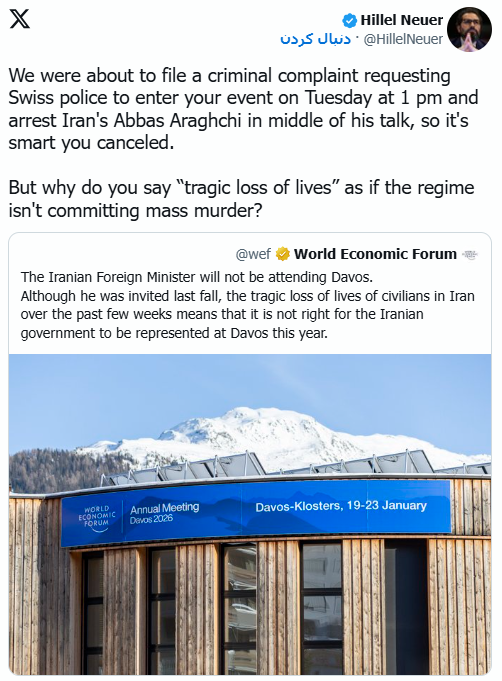
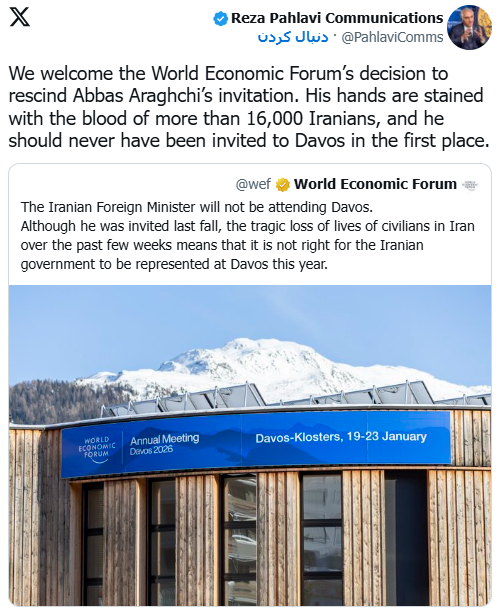
The World Economic Forum said Iran’s foreign minister, Abbas Araghchi, will not attend Davos, noting he was invited “last fall” but that the “tragic loss of lives of civilians in Iran” in recent weeks makes it inappropriate for a representative of the Iranian government to participate this year. The reversal comes just ahead of the WEF Annual Meeting in Davos (January 19–23) and follows intensifying pressure from advocacy groups and politicians, including UANI’s public campaign and US Senator Lindsey Graham’s criticism of giving Tehran a platform amid the crackdown; UN Watch’s Hillel Neuer had also warned of a potential criminal complaint in Switzerland if Araghchi appeared.

Davos Opens With “A Spirit of Dialogue” — and a Packed Power List

The World Economic Forum Annual Meeting runs Jan 19–23 in Davos under the theme “A Spirit of Dialogue.” WEF signals a high-intensity week across geopolitics, AI, trade, and energy, with major political and corporate attendance and a heavy emphasis on dealmaking and risk management as global uncertainty rises.

Market impact: Elevated headline beta across FX (USD/CHF, JPY), defense/energy, and global equities as policy signals and geopolitical soundbites hit tape.

AI Becomes the Davos Concierge: “EVA” Rolls Out for Attendees

A new AI assistant is being promoted to help participants navigate sessions, connect with delegates, and surface personalized agenda recommendations—an explicit signal that “agentic” enterprise AI is no longer a concept demo but a front-of-house product at the world’s biggest policy/business gathering.

Market impact: Supports the enterprise AI capex + software stack narrative; reinforces bid for AI infrastructure themes where macro risk doesn’t dominate.

Davos Agenda Shifts Toward Realpolitik — Climate Moves Down the Bill

Reuters Breakingviews frames this year’s meeting as notably more aligned with U.S. political and trade realities, with more oxygen for deals, hard security, and bargaining—and far less prominence for climate. It highlights that only four programme sessions reference “climate change,” vs 16 in 2022 (per its review of the official programme).

Market impact: Potentially less Davos tailwind for climate-policy momentum trades; marginally increases focus on defense, energy security, and industrial policy.

Ukraine Signals a Davos Track for U.S. Talks

Ukraine’s defence minister/lead negotiator Rustem Umerov said talks with the U.S. would continue in Davos, keeping the meeting as a live venue for security discussions alongside the economic agenda.

Market impact: Any credible movement on negotiation frameworks can swing European risk, energy, and defense names—while setbacks reinforce risk premia.

Oxfam’s Davos Headline: Billionaire Wealth Hits $18.3T

Timed to Davos opening day, Oxfam says global billionaire wealth rose 16% in 2025 to $18.3 trillion, arguing the concentration of wealth is translating into political influence. Reuters notes Oxfam’s estimate that $2.5T added to billionaire fortunes last year is roughly equal to the wealth stock held by the poorest 4.1 billion people.

Market impact: Fuels the wealth-tax / windfall-tax / antitrust policy drumbeat; watch sentiment for large-cap tech, private capital, and high-visibility billionaires.

Greenland Tariff Shock Bleeds Into Davos Week — Risk-Off, Gold/Silver at Records

Markets turned risk-off after President Trump threatened extra tariffs tied to a Greenland demand. Reuters reports global stocks softer, S&P futures down ~0.8% and Nasdaq futures ~1.2%, STOXX 600 down ~0.9%, and a rotation into havens (JPY/CHF) with gold and silver at all-time highs; Reuters explicitly flags this as setting up “a fraught few days” with leaders gathering at Davos.

Market impact: Bullish tailwind for gold/CHF/JPY, pressure on cyclicals and exporters most exposed to renewed trade-war pricing; higher volatility risk premium into policy headlines.

IMF: 2026 Growth Seen at 3.3%, but AI + Trade Risks Cut Both Ways

The IMF nudged its 2026 global growth forecast to 3.3% (up 0.2pp vs October), citing adaptation to tariff disruption and an AI investment boom—but also warns of downside risks from trade flare-ups and an AI-driven market correction if productivity/profit expectations disappoint.

Market impact: Keeps the soft-landing baseline intact, but reinforces a barbell: AI winners + defensives outperform if trade/geopolitics keep volatility elevated.

Israel Jobs Hold Steady: Unemployment Stays at 3.1%

Israel’s quarterly unemployment rate was unchanged at 3.10% in December, matching the prior reading. The steady print suggests the labor market remains resilient despite a volatile macro and security backdrop, helping to stabilize household income expectations even as growth and inflation dynamics remain sensitive to geopolitical risk.

Market impact: Neutral-to-slightly supportive for ILS at the margin, but FX and rates will remain primarily driven by geopolitical headlines and Bank of Israel policy expectations; local equities may take modest comfort from labor-market stability.

Denmark Skips Davos as Greenland Feud Escalates

Denmark will not send government representatives to the World Economic Forum in Davos this week, according to a WEF statement to Bloomberg confirming the Danish government “will not be represented.” The absence comes as the Greenland dispute intensifies, with Washington’s tariff threats and allied coordination pushing Copenhagen into crisis-management mode—while national security advisers are also expected to discuss Greenland on the sidelines in Davos.

Market impact: Another signal the Greenland row is becoming a high-level policy event, sustaining a transatlantic risk premium (supportive for safe havens; negative for trade-exposed European cyclicals). Direct DKK impact is typically limited due to the euro peg, but EU-U.S. escalation risk remains the key driver.

Greenland Becomes a Davos Security Flashpoint

National security advisers from several countries are set to discuss Greenland on the Davos sidelines, after the issue was reportedly added to the agenda following U.S. tariff threats tied to Greenland’s status.

Market impact: Risk-off bias for Europe-exposed cyclicals; supportive for defense and safe havens (CHF/JPY) if rhetoric escalates.

EU Readies a Bigger “Retaliation Toolkit” — With Davos as a Pressure Venue

European officials are signaling they have “tools” to respond if tariffs materialize, while reporting points to a €93bn retaliation package and possible use of the EU’s anti-coercion instrument—with leaders expected to push back during Davos conversations.

Market impact: Raises tail risk for transatlantic trade, weighing on autos/luxury/exporters; can lift volatility and favor domestic/defensive European names.


A Tariff-Court Cliffhanger Adds Fuel to Davos Week

Reporting indicates the U.S. Supreme Court is expected to rule soon on the legality of using emergency powers to impose tariffs—an extra uncertainty layer as leaders converge in Davos.

Market impact: Binary legal risk can swing USD, European equities, and rates; encourages hedging into options and safe havens.


Davos’ “New Management” Moment: Schwab Out, Fink & Hoffmann In — and AI Star Power Arrives

AP reports this is the first Davos without founder Klaus Schwab, with Larry Fink and André Hoffmann as co-chairs, alongside heightened attention on AI—including the debut Davos appearance of Nvidia CEO Jensen Huang—and visible protests around inequality and trust.

Market impact: Keeps AI in the spotlight (supportive for AI infrastructure/semis/software), while inequality rhetoric can revive tax/regulation overhang for mega-caps.


“Blue Davos” Launches the 2026 “Year of Water” — New Initiatives Teed Up

WEF is pushing a “Blue Davos” thread across the meeting, calling 2026 a “Year of Water” and previewing multiple launches (e.g., water innovation winners, blue-food innovation hub, and ocean-transition initiatives) tied to water security, trade, livelihoods, and resilience.

Market impact: Incremental tailwind for water infrastructure, treatment/utility tech, and adaptation themes; supportive for firms positioned for public-private climate resilience spend.


First Movers Coalition Publishes a Fresh Impact Brief on Net-Zero Demand Signals

WEF published a new First Movers Coalition Impact Brief highlighting how member companies are using coordinated demand commitments to help scale near-zero solutions across high-emitting sectors.

Market impact: Supports “demand-pull” decarbonization plays (industrial tech, materials, clean supply chains), though headline impact is gradual rather than immediate.

Trump to Meet Global CEOs, US Policy Takes Center Stage in Davos

U.S. President Donald Trump is expected to meet with top global business leaders at Davos on Wednesday, where he will also deliver a special address and accompany key officials including Treasury Secretary Scott Bessent. National security advisers are also planning discussions on the sidelines of the Forum.

Market impact: Heightened policy focus on U.S. commitments may increase market volatility in global equities and FX as investors price in trade and regulatory direction.


GCC Model of Cooperation Highlighted at Davos

Forum discussions spotlight the Gulf Cooperation Council (GCC) as a regional model of economic integration, emphasising shared infrastructure and coordinated policy as a template for growth in a fragmented global economy.

Market impact: Positive sentiment for regional trade and investment frameworks, potentially boosting assets tied to GCC economic alignment.

OpenAI Flags a “Capability Overhang” at Davos

OpenAI has highlighted the issue of “capability overhang” — the gap between AI’s technical abilities and how much users actually leverage them — advocating for broader adoption to unlock productivity and economic benefits.

Market impact: Reinforces the need for enterprise and government adoption of AI tools, supportive for AI infrastructure and services segments.

IMF Warns Trade Tensions Could Trigger Escalation

The International Monetary Fund has cautioned that U.S. tariff threats around Greenland could spark a “spiral of escalation” in global trade tensions, potentially destabilizing markets and dampening growth, even as tech investment supports baseline forecasts.

Market impact: Heightened trade risk could pressure global equities and elevate risk premia, while reinforcing safe-haven demand.

UAE Brings a Mega-Delegation to Davos

The United Arab Emirates arrived at Davos 2026 with one of the largest national delegations, sending 100+ ministers and senior officials to engage on AI, economic priorities, sustainability, and regional cooperation. The scale of the UAE presence underlines the expanding role Gulf states are playing in global economic governance and technology strategy.

Market impact: Increased visibility for GCC-linked investment themes, supportive of capital flows into AI, infrastructure, and energy-transition sectors.

Larry Fink: Capitalism Must Evolve

BlackRock CEO Larry Fink, serving as interim Forum co-chair, argued in Davos remarks that capitalism must evolve to maintain legitimacy and reduce inequality pressures. His message emphasized systems that broaden prosperity and adjust to social expectations—an argument likely to resonate in policy-heavy Davos conversations.

Market impact: Revives focus on regulatory/ESG overhangs for large corporates, especially in finance and mega-cap sectors.

Davos Opens with a Symbolic “Dialogue” Concert

Organisers opened Day 1 with a cultural concert featuring Jon Batiste and the Mahler Chamber Orchestra, positioning it as a symbolic push for cross-cultural dialogue before the week’s heavier geopolitical and economic sessions.

Market impact: Sentiment-positive but symbolic; limited direct market transmission unless paired with policy announcements.

“Visions of 2050” Open Forum Sessions Go Public

WEF’s Open Forum launched publicly accessible sessions under “Visions of 2050: Tomorrow Starts Now,” spanning themes such as space, medicine, food systems, and the future of mountain regions. The format broadens participation beyond closed-door meetings and frames long-horizon innovation as part of the Davos agenda.

Market impact: Keeps long-duration innovation themes on investors’ radar (healthtech, agri-tech, space-related ventures).

STEM Gender Parity Returns to the Main Stage

A senior WEF leader stressed that gender parity in STEM is a prerequisite for a sustainable global economy, tying inclusion and talent development to productivity and long-term competitiveness.

Market impact: Supports governance and human-capital narratives; marginally favorable for firms with strong inclusion metrics.

More Others news

Iran

China’s Consumer Stays Soft: Retail Sales Miss Again

China’s retail sales rose just 0.9% y/y in December (vs 1.1% expected, 1.3% prior), while retail sales YTD slowed to 2.73% y/y from 3.01% previously. The downside surprise reinforces that household demand remains the weak link in the growth mix, with confidence and discretionary spending still constrained even as parts of the industry have shown better momentum.

Market impact: Mildly CNY-negative and supportive of expectations for continued consumption-focused stimulus; a softer consumer backdrop is a headwind for China-facing discretionary names and can temper the positive impulse to commodities from stronger industrial data.

Iran Judiciary Chief: Faster Sentences, Swift Punishment as “Deterrence”

Iran’s judiciary chief Gholamhossein Mohseni Ejei labeled protesters “rioters” and said their punishment is a key element of deterrence, arguing that rapid case processing and quick issuance of verdicts will make sentences “more effective.” Speaking on Monday, he also stressed that timely enforcement without delay is essential and insisted authorities would not allow “the smallest postponement” in handling protest-related cases—signaling an acceleration of prosecutions amid the nationwide crackdown.

NetBlocks: Iran’s Internet Blackout Enters Day 12

NetBlocks said Iran’s nationwide internet blackout has entered its twelfth day, with data showing overall connectivity still at minimal levels. The monitor added that in recent days Iran’s “filternet” has sporadically allowed some messages through, a pattern it says may indicate authorities are testing a tightly controlled domestic network (intranet) with heavier filtering rather than restoring normal access.

Behbahan Eyewitness: 40–50 Eye Injuries Reported After Heavy Gunfire

A medical staff member in Behbahan, Khuzestan, told Iran International that an initial estimate puts the number of eye-injury victims at 40 to 50, amid reports of intense violence on 18–19 Dey 1404 (Jan. 8–9, 2026). The witness alleged that vehicles mounted with machine guns were deployed in the city and that security forces fired on people with those weapons—claims that remain difficult to independently verify under severe information restrictions.

Israel Hayom: Netanyahu, Regional Leaders Said to Back Near-Term Push to Topple Tehran

Israel Hayom reported on Sunday, January 18, 2026 (28 Dey 1404)—citing senior diplomatic sources—that Prime Minister Benjamin Netanyahu and at least two other regional leaders support an “active approach” aimed at toppling Iran’s ruling system in the near term, and have committed to providing “all necessary support” toward that goal. The report says President Donald Trump’s decision to hold off on an immediate strike followed consultations with multiple regional leaders, while U.S. force posture is being shaped to preserve a wider menu of options—ranging from strike plans to intensified economic and strategic pressure—framed by the sources as a question of “not if, but when.”

Australia Media Focus: Trump vs Khamenei as Iran Blackout Persists

Australian outlets highlighted escalating rhetoric and the ongoing crackdown in Iran, with the Australian Financial Review reporting on Donald Trump’s stance toward Ali Khamenei and the protest bloodshed, and Sky News reporting that Iran’s broad internet disruption is still in place even as images of violence continue to circulate. Separately, Reuters and ABC reported Trump urging Iranians to keep protesting—posting “HELP IS ON ITS WAY”—as reports of casualties and arrests continue to mount, while verification remains difficult under severe connectivity restrictions.

Iran MP: Shootings Outside Basij Posts Confirmed, “Thousands Killed”

Iran parliament’s National Security Commission chief Ebrahim Azizi said protesters were shot and killed in front of Basij and police posts, adding that authorities “dealt with” demonstrators at those sites. He also claimed “thousands” have been killed during the “Iranian national revolution,” said the final death tally is being prepared for announcement, and derided Donald Trump as “self-absorbed” and “delusional.” The comments come as casualty figures remain sharply contested; a separate Iranian official told Reuters authorities had verified at least 5,000 deaths nationwide.

London Rally: Iranians Urge UK to Expel Envoy, Shut Embassy, List IRGC

Diaspora demonstrations continued worldwide on Sunday, 28 Dey 1404 (Jan. 18, 2026), with reports saying thousands of Iranians gathered in London outside the UK Prime Minister’s office to amplify support for protests in Iran. Organizers’ core demands centered on a tougher UK line toward Tehran—expelling the Islamic Republic’s ambassador, closing the Iranian embassy, and designating the IRGC as a terrorist organization—as overseas groups seek to translate street pressure into concrete diplomatic and legal action.

Calgary Rally Backs Iran Protesters, With Victims’ Family in Attendance

Hundreds of Iranians in Calgary, Canada, gathered on Sunday, 28 Dey (Jan. 18) to support protesters in Iran and back Prince Reza Pahlavi, with reports saying a relative of someone killed in the recent unrest attended the rally. Iran International also reported that Iranians in Calgary have been rallying outside City Hall as part of broader diaspora actions seeking to keep international attention on the crackdown and to amplify the demands of demonstrators inside Iran.

Los Angeles March Draws Thousands in Solidarity with Iran Protesters

Around 4,000 demonstrators gathered in downtown Los Angeles near City Hall on Sunday, 28 Dey (Jan. 18) to amplify the voice of protesters in Iran and protest the Islamic Republic’s crackdown, with marchers carrying pre-revolution Iranian flags and organizers framing the rally as a show of international solidarity. Police reported no major incidents or arrests at the event.

Night Chants Under “Martial Law” Signal Protest Strength, Sociologist Says

Iranian sociologist Hossein Ghazian said the continuation of nighttime chants by residents—despite what he described as “martial law” conditions and reports of security forces firing at people’s homes—is a clear indicator that protest capacity in society remains strong, framing the rooftop-style slogans as a form of sustained resistance even under heavy coercion.

Qazvin Witness Claims Death Toll Surpassed 1,000 Over Three Nights

A witness in Qazvin told Iran International that the number of people killed in the city during three nights of protests from 18 to 20 Dey 1404 exceeded 1,000, claiming hospitals were overwhelmed and filled with bodies and injured victims. The account has not been independently verified, but it adds to a growing set of eyewitness reports describing extreme violence and severe strain on medical facilities during the crackdown.

Crowds Gather in Nasim Shahr for Faramarz Foroughi Burial, Video Shows

A video sent to Iran International shows a large crowd attending the funeral of Faramarz Foroughi on Tuesday, 23 Dey 1404 (Jan. 13, 2026) at “Bagh-e Behesht” cemetery in Nasim Shahr, where he was remembered as one of the fallen of the “Iranian national revolution.” The turnout, captured on video, underscores how public mourning ceremonies have become another visible channel for solidarity and protest amid the ongoing crackdown.

Lion-and-Sun Flag Raised at a Protester’s Memorial in Lordegan

Prince Reza Pahlavi’s office shared a video on X showing the Lion-and-Sun flag being raised at a memorial ceremony for Ali Khaledi in Lordegan, Chaharmahal and Bakhtiari province. The post said Khaledi was a protester killed by Islamic Republic forces, framing the flag as a national symbol tied to public mourning and continued resistance messaging.


Hashtgerd Eyewitness: Police Fired on a Family With a Small Child

An Iran International source citing an eyewitness account from Hashtgerd in Alborz province says police opened fire on a family accompanied by a small child on Friday, 19 Dey. The account says the 6–7-year-old was hit in the leg by a pellet shot, causing serious injury and heavy bleeding. The witness, quoting the child’s mother, said the family had just stepped outside and was not chanting, but officers fired as soon as they saw them. The same account adds that security force presence in Hashtgerd surged noticeably that day, and the witness’s own family briefly went out, but returned home after seeing widespread deployments, despite driving around and chanting.

Davos Reversal: Prince Reza Pahlavi’s Office Cheers Araghchi Disinvite

Prince Reza Pahlavi’s office said it welcomed the World Economic Forum’s decision to withdraw Abbas Araghchi’s invitation to Davos, arguing he should not have been invited in the first place and alleging his “hands are stained with the blood of more than 16,000 Iranians.” The WEF said Araghchi—invited last fall—would not attend this year, citing recent civilian deaths in Iran and saying it would not be “right” for an Iranian government representative to participate under the circumstances.

Berlin Rally: Call for Europe to Recognize Iran’s National Revolution

Political activist Mojtaba Elhani, speaking at a gathering of Iranians in Berlin in support of Prince Reza Pahlavi, urged European governments to formally recognize what he described as the Iranian people’s “national revolution,” framing international recognition as a key step in strengthening political legitimacy for the opposition movement abroad.

Brussels Protesters Urge Security Forces to “Join the National Revolution”

Iranians in Brussels held a protest in support of the national revolution and Prince Reza Pahlavi, with participants calling on Iran’s military and law-enforcement forces to align with the public “as soon as possible.” The message underscores an opposition push to accelerate defections and weaken the state’s coercive capacity—an issue that often becomes decisive when protest movements move from street pressure to political rupture.

Tehran Theater Scene Mourns: Actor Ahmad Abbasi Reportedly Shot Dead

Iran International reported that Ahmad Abbasi—an Iranian theater actor and stage designer—was killed after being shot by government agents on Thursday, January 8, 2026 (18 Dey), on Pirouzi Street in Tehran. Abbasi was reportedly working on the production Setareh at Helaj Theater (where he handled stage design) and had previously served as production manager for Khomari and acted in Lahze-ye Za. The report said he managed to contact his family through another person after being hit, but died before they arrived; separate unverified accounts also claim authorities demanded one billion tomans as “haq-e tir” (a claimed “bullet fee”) to release his body.

Zahedan Under Heavy Security: Reports of De Facto Undeclared Martial Law

Human-rights outlets in Sistan and Baluchestan report a broad deployment of riot-control equipment and large numbers of security forces across Zahedan, alongside a noticeable rise in checkpoints. The build-up is described as creating an “undeclared martial law” atmosphere—tightening movement, increasing street-level intimidation, and signaling heightened regime readiness to pre-empt or crush further demonstrations.

Shot in the Chest: Reported Killing of Matin Montazerzohour in Shahroud

Iran International says information it received indicates Matin Montazerzohour (born 1993) was killed on 18 Dey during protests in Shahroud after being shot in the chest. Eyewitnesses said he travelled from Gorgan to Shahroud with friends to join demonstrations and was still in contact with his family until around 8 p.m.; hours later, his friends returned to Gorgan and informed the family he had been shot. The report claims the bullet destroyed heart tissue, causing his death. His body was reportedly withheld for four days, then handed over on Monday, 22 Dey, and moved to Gorgan, where he was buried on Tuesday without a religious ceremony. Iran International added he was self-employed, active in bodybuilding, and had planned to migrate to Türkiye.

Irancell CEO Ousted Over “Defying Security Orders,” Fars Says

Fars News Agency, which is affiliated with Iran’s IRGC, reported that Irancell CEO Alireza Rafiei was removed for “refusing to comply with security agencies’ directives and communicated rules under crisis conditions.” If accurate, the claim signals tighter political oversight of critical communications infrastructure—raising operational and governance risk for telecom operators, particularly around compliance with shutdowns, traffic controls, and emergency regulations.

Karaj Eyewitness: Allegations of “Finishing Shots” on the Wounded

An eyewitness speaking to Iran International alleged that during protests on 19 Dey at Taleghani Square in Karaj, security forces used live fire and then deliberately shot wounded protesters at close range. The witness also claimed officers blocked the transfer of the injured to hospitals. These are grave allegations that, if corroborated, point to escalation from crowd-control to lethal targeting and medical access denial—two markers of a sharply intensifying crackdown.

Isfahan Strike Pressure: Shopkeepers Summoned, Bank Accounts Reportedly Frozen

Messages received by Iran International say the IRGC Intelligence in Isfahan has summoned shopkeepers who joined the strikes, and that some protesting merchants have had their bank accounts blocked. If confirmed, the move would signal a shift toward financial coercion—using summons and account restrictions to break strike participation and deter broader commercial shutdowns.

Lawyers Warn of “Field Courts” as Judiciary Blocks Legal Representation

Several human-rights lawyers in Iran told Iran International they are being denied permission by the judiciary to formally announce representation for detainees arrested during the Iranian national revolution, raising alarm over due-process violations. They warned that “field court”-style proceedings and mass sentences—including executions and long prison terms—cannot be ruled out. One Tehran-based attorney with years of experience in political and human-rights cases said detainees’ charges are not being disclosed to them or their families, and that families often have no reliable information on the number of detainees or where they are being held. Another lawyer urged families to pursue detainees’ status through prosecutors’ offices without fear, framing follow-up as essential to protecting lives.

Forensic Alarm: Medical Experts Claim 20,000+ Dead in Three Days in Iran

A group of medical specialists and health experts has issued a medico-legal report based on analysis of publicly available videos and images, alleging widespread human-rights violations and systematic abuse during Iran’s recent unrest—including claims that more than 20,000 people died within three days. The report alleges bodies were collected and moved without formal confirmation of death, alongside severe violence against victims and the abandonment of the wounded; it also raises allegations of illegal organ removal and deliberate destruction of forensic evidence, calling for urgent international attention and independent investigation—claims that remain difficult to independently verify amid restricted access and major communications disruptions.

Second Brother Lost: Report Says Emad Shoush Killed in Lahijan

Reports on social media say Emad Shoush—brother of Ali Shoush, one of the “Javid-nam” victims of the 2021–22 protest movement—was killed by Islamic Republic forces on 18 Dey 1404 (January 8, 2026) in Lahijan. Pouyan Khoshhal wrote that Emad, a barista who had previously been detained in 1401, was shot with “four bullets,” adding that the Shoush family has now lost two of its five sons. He also shared a photo of Emad with his mother and brothers during a remembrance for Ali, underscoring the renewed focus on family-level losses and the intergenerational weight of the crackdown; the claims are based on eyewitness-style and social-media reporting and have not been independently verified.

Three-Day Deadline: Iran Police Offers “Leniency” for Surrender, Warns “Leaders” of Tough Punishment

Iran’s national police chief, Ahmad-Reza Radan, said on January 19, 2026 that people he described as “deceived” into joining unrest have three days to turn themselves in and may receive more lenient treatment (framed by officials as “compassion”), while “leaders” and “instigators” will face strict punishment under the law—a message widely seen as an effort to split rank-and-file participants from organizers as the crackdown and arrests continue.

More Iran news

Political

Germany’s Recon Team Heads to Greenland in a Danish-Led NATO Signal

Germany’s Defence Ministry says it has deployed a 13-person Bundeswehr reconnaissance team to Greenland at Denmark’s invitation, joining a small European contingent arriving in Nuuk for what officials and media have described as a limited, symbolic mission linked to NATO-allied coordination. The stated purpose is to assess the framework for potential military support for Denmark’s regional security posture—often framed around surveillance and situational awareness—as Arctic geopolitics intensify around Greenland’s strategic location.

Market impact: A mild positive for the European defence/ISR and surveillance supply chain on expectations of incremental Arctic-related activity, but it also raises headline risk for transatlantic trade relations amid Greenland-linked political tensions, including U.S. tariff threats reported in recent coverage.

Europe Pushes “Terror State” Label as Iran Crackdown Focus Sharpens

Günter Fehlinger-Jahn—who describes himself as chair of the Austrian Committee for NATO Enlargement—urged the EU to designate the Islamic Republic as a “terrorist state,” while Finnish MEP Sebastian Tynkkynen warned that global indifference enables Tehran to continue executions. Separately, reporting circulated citing Der Spiegel on the possible involvement of foreign Shiite militias in suppressing protests—an allegation that remains difficult to independently verify.

Alarm From Brussels: Claims of Mass Killings, Foreign Militia Reports

Darya Safai, an Iranian-born member of Belgium’s parliament, wrote on X, urging the world to “be our voice” and to act now, describing what she called “one of the biggest massacres in history” unfolding in Iran. Separately, Der Spiegel reported on the possible involvement of foreign Shia militias in the crackdown on protests, while Israel Hayom reported that Israel’s prime minister and at least two other regional leaders support a more proactive approach aimed at toppling the Islamic Republic in the near term—claims that remain based on public statements and media reporting.

UN Watch to WEF: “This Isn’t a Tragedy—It’s a Massacre”

Hillel Neuer, executive director of UN Watch, criticized the World Economic Forum’s wording after the WEF referenced Abbas Araghchi’s cancelled Davos appearance on X. Neuer said UN Watch was preparing to file a criminal complaint seeking Araghchi’s arrest by Swiss police during any speech, calling the cancellation a “smart decision.” He also challenged the WEF’s phrasing about a “tragic loss of civilian lives,” arguing it understates what he described as an ongoing, organized massacre in Iran rather than an ambiguous “tragedy.”

France Urged to Move From Condemnation to Sanctions

Bruno Retailleau, described as a former French interior minister, wrote on X in support of Iran’s national revolution that “condemnation with fear and caution is no longer enough,” calling on France to impose sanctions on what he termed Iran’s “criminal regime.” The message adds pressure on Paris to shift from statements to coercive measures, reflecting a broader push in Europe for tighter economic and diplomatic constraints.

Macron’s Security Huddle: Greenland, Syria, Iran on the Table

French President Emmanuel Macron is convening a Defence and National Security Council meeting on Monday, 19 January, at noon in Paris, with the Élysée saying discussions will cover Greenland, Syria, and Iran—signaling elevated attention to fast-moving international dossiers amid intensifying diplomatic and security pressures.

EU Closes Ranks on Greenland Sovereignty

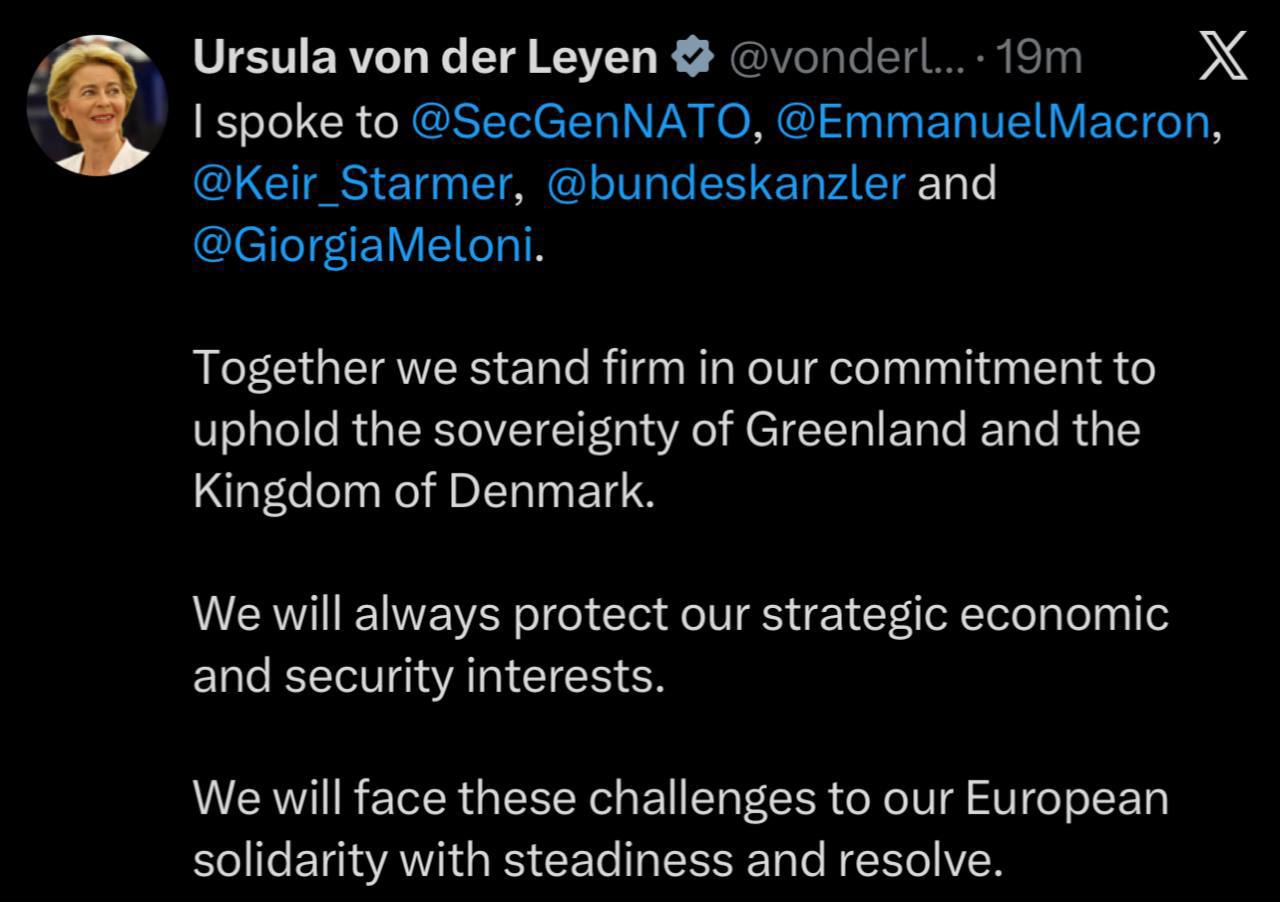
In a post on X, the European Commission president said she spoke with NATO’s secretary general and the leaders of France, the United Kingdom, Germany, and Italy, stressing a firm commitment to uphold the sovereignty of Greenland and the Kingdom of Denmark. The statement also emphasized protecting Europe’s strategic economic and security interests and responding to challenges to European solidarity with “steadiness and resolve.”

Market impact: Reinforces a more unified European posture in the Greenland dispute—raising the odds of coordinated EU countermeasures if U.S. tariff threats escalate. Near-term, this can add a policy-risk premium for EUR and trade-exposed European sectors, while supporting defense/Arctic-security narratives.

“This Isn’t a Phase”: Europe Sees a Permanent U.S. Shift Over Greenland

European officials privately describe President Trump’s push to acquire Greenland as “crazy” and “mad,” according to a Politico analysis cited by multiple outlets, warning that the shift in U.S. policy is “in many ways… permanent” and that “waiting it out” is not a strategy. The comments underscore how the Greenland dispute is accelerating a broader European debate about strategic autonomy, as the EU also weighs retaliation tools and suspended tariff packages in response to Trump’s tariff threats tied to Greenland.

Market impact: Raises the structural risk premium for transatlantic trade and security—typically EUR-negative on headlines, supportive for European defense/strategic autonomy themes, and a headwind for export-heavy cyclicals if escalation risks harden into policy.

Europe’s “Washington Group” Chat Signals a Faster, Harder Line on Trump

Politico’s analysis—cited by multiple outlets—says a small circle of European leaders has been using a private group chat dubbed the “Washington Group” to quickly coordinate responses when President Trump makes abrupt moves, with Greenland and tariff threats adding fresh urgency. The reported participants include leaders from the UK, France, Germany, Italy, Finland, and European Commission President Ursula von der Leyen, and some accounts say Ukraine’s Zelenskyy is also looped in. Separately, an AI-generated image circulating online that purports to show the chat should be treated as illustrative rather than evidence of the discussion itself.

Market impact: Highlights a more coordinated European stance—raising the probability of retaliatory trade steps if the dispute escalates. Near-term, this can lift EUR and European equity volatility, weigh on trade-exposed cyclicals, and support defense/strategic autonomy themes, while keeping safe-haven demand elevated when headlines intensify.

Beijing Pushback: China Rejects “China Threat” Framing in Greenland Row

China’s Foreign Ministry urged the United States to stop using the so-called “China threat” as a pretext to pursue what it called selfish interests, in comments linked to the unfolding Greenland dispute. The message signals Beijing’s intent to push back on narratives that frame Arctic or Greenland-related moves through a China-security lens, and it adds another layer of geopolitical tension to an already sensitive U.S.–Europe standoff over Greenland.

Market impact: Adds marginal geopolitical risk premium (supportive for safe havens such as gold and CHF/JPY on headline escalation), while keeping trade-policy volatility elevated; China-sensitive cyclicals and global shippers can see higher headline beta if rhetoric hardens.

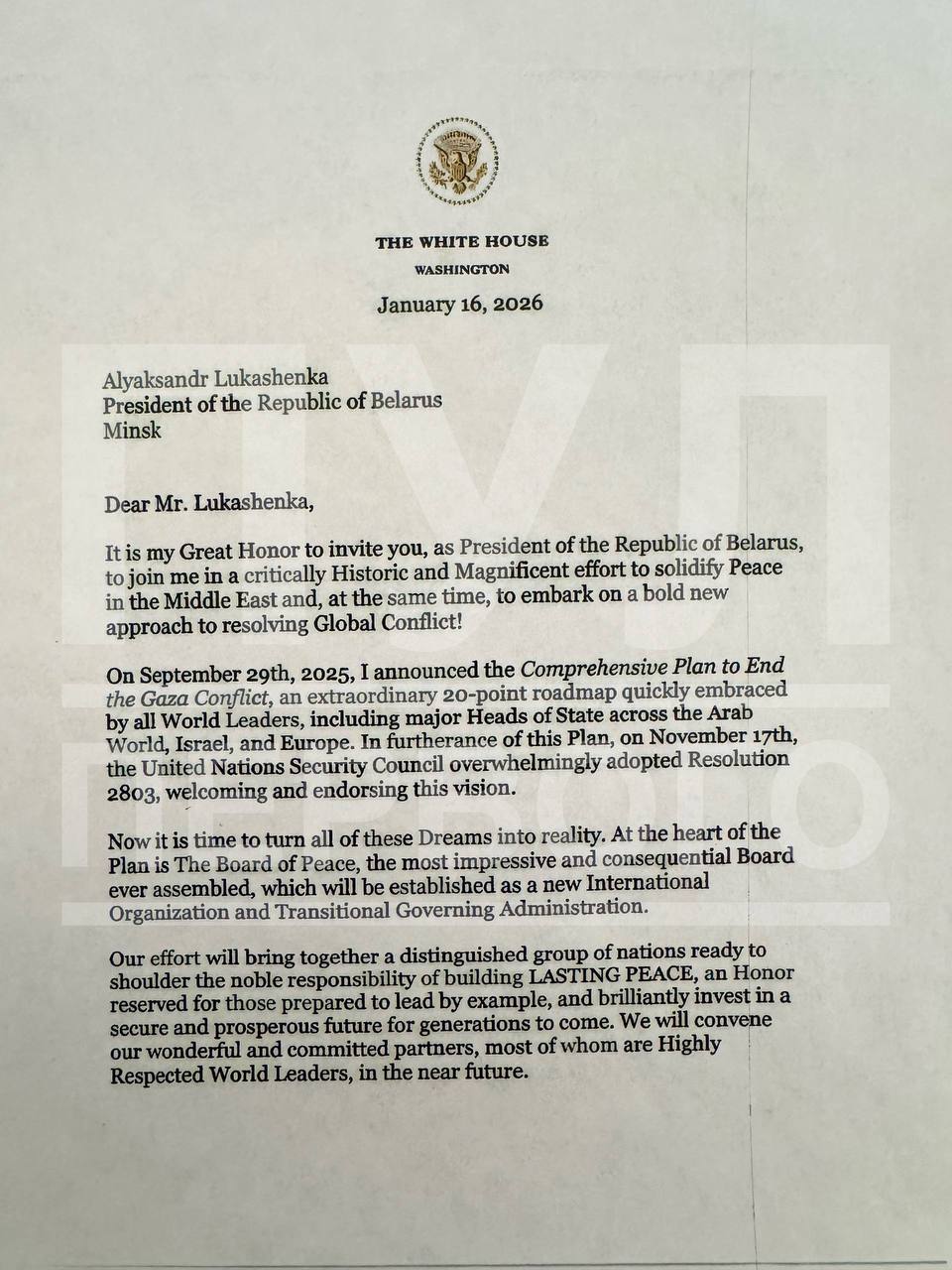
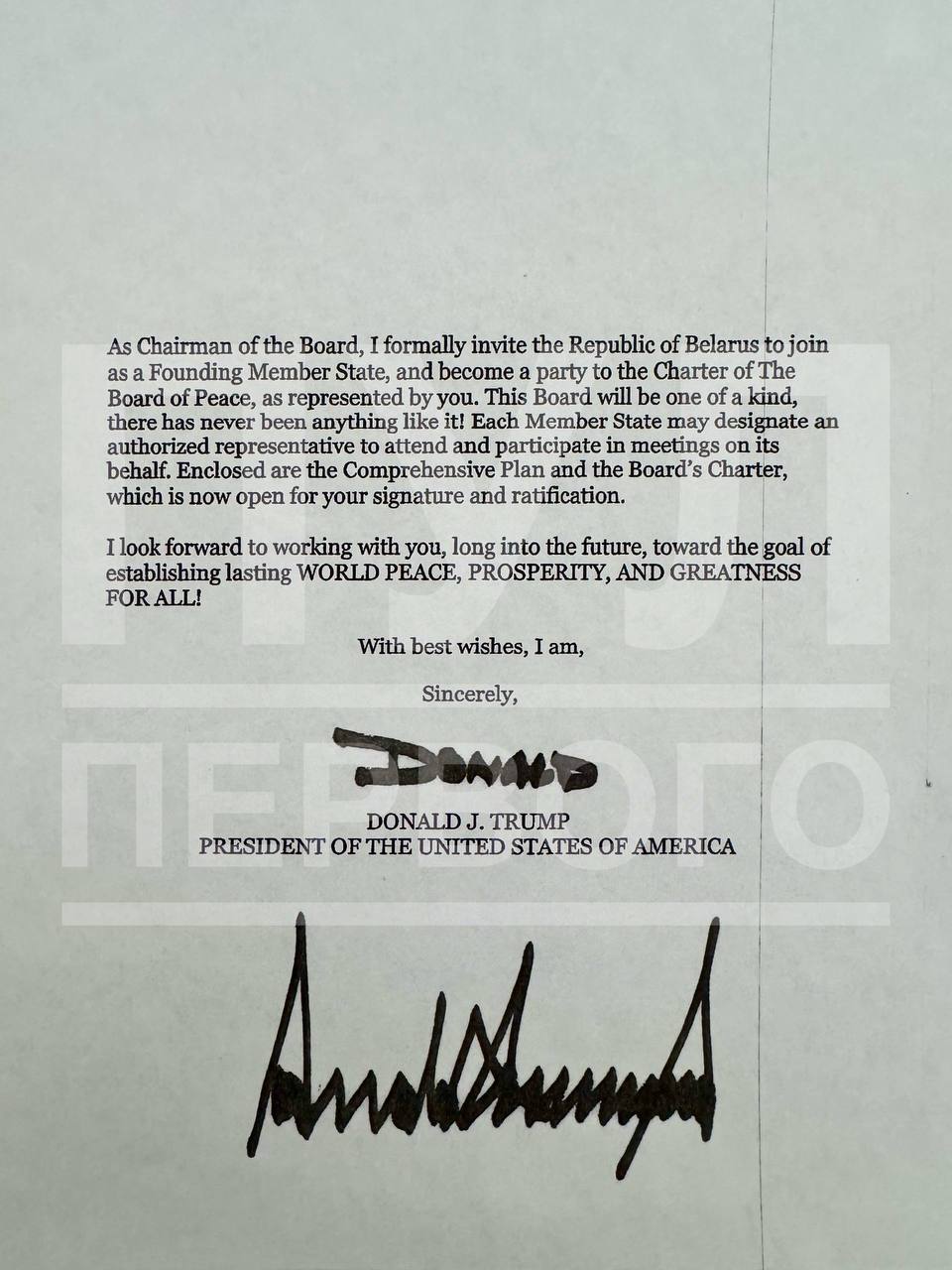
Putin Invite: Kremlin Reviews Trump’s Gaza “Peace Board” Offer

The Kremlin said President Vladimir Putin has received an invitation to join President Donald Trump’s proposed Gaza-focused “Board of Peace,” and is studying the details before responding. Kremlin spokesman Dmitry Peskov said Moscow hopes to contact the U.S. side to clarify “all the nuances,” signaling the proposal is under consideration but not yet accepted.

Market impact: Adds near-term headline volatility across FX and rates; any credible Gaza governance/ceasefire mechanism could be risk-supportive, but controversy around the structure and participation keeps a geopolitical risk premium in play—typically supportive for safe havens (gold, CHF/JPY) if tensions rise.

Orbán: “German War Troika” Runs Europe’s War Policy

Hungary’s Prime Minister Viktor Orbán said Europe is “actually controlled by a German war troika,” naming European Commission President Ursula von der Leyen, German Chancellor Friedrich Merz, and European People’s Party leader Manfred Weber as the three figures who “shape Europe’s war policy today.” Orbán made the remarks during a domestic political address, framing EU support for Ukraine as “pro-war” and arguing Hungary must stay out of the conflict.

Market impact: Mainly headline risk—can add to HUF and Central Europe asset volatility if it feeds EU cohesion concerns, while reinforcing the defense/spending narrative elsewhere in Europe; broader EUR impact is usually limited unless it triggers tangible policy friction inside the EU.

Lukashenko Says “Yes” to Trump’s Gaza Peace Board Invite

Belarus says President Alexander Lukashenko has received a personal invitation from President Donald Trump to join the Gaza-focused “Board of Peace” as a founding member, and that the proposal was “received positively,” according to the Belarusian Foreign Ministry. Minsk said it is ready to participate, while urging the body to expand its scope beyond Gaza and help build a “new international security architecture.”

Market impact: Mostly headline-driven; marginally supportive for Belarus country-risk sentiment if it signals deeper U.S. engagement, but the dominant effect is broader geopolitical volatility—typically supportive for safe havens (gold/CHF/JPY) when rhetoric escalates.


Netanyahu’s Iran Warning: “Force Iran Has Never Known”

Israeli Prime Minister Benjamin Netanyahu said in the Knesset on January 19, 2026 that if Iran “makes a mistake” and attacks Israel, Israel will respond with “a force [Iran] has never known,” adding that Iran “will not return to what it was.” The remarks land amid elevated regional tension tied to Iran’s internal unrest and wider escalation risks, keeping a bid under geopolitical risk premia—most directly in oil, regional FX risk, and safe-haven positioning.

More Political news

China

China’s Home-Price Slide Deepens

China’s house prices fell 2.7% y/y in December (previous -2.4%), pointing to a renewed deterioration in the property backdrop and suggesting policy support has yet to generate a durable turn in demand. A deeper housing downturn typically weighs on household confidence, developer cash flows, and local-government revenue linked to land sales—reinforcing the case for ongoing targeted easing and stabilization measures.

Market impact: Mildly CNY-negative at the margin and supportive of expectations for continued policy support; potential headwind for China-sensitive risk (property developers, some banks) and for industrial commodities tied to construction demand if the downtrend persists.

China Capex Slump Deepens: FAI Misses Signals Softer Domestic Demand

China’s fixed-asset investment fell -3.8% y/y in the latest release (vs -3.1% expected, -2.6% prior), underscoring that domestic investment remains a key drag even as external demand has helped stabilize headline growth. Official data continue to highlight a difficult backdrop for property-linked activity, keeping pressure on confidence and reinforcing expectations for further targeted support.

Market impact: Typically CNY-negative at the margin and supportive for China rates/bonds on stimulus expectations; a persistent investment contraction can weigh on China-linked cyclicals and industrial commodities tied to construction and capex.

China’s Factories Accelerate Into Year-End

China’s industrial production rose 5.2% y/y in December (5.1% expected, 4.8% prior), pointing to a modest re-acceleration in manufacturing momentum into year-end. However, industrial production YTD eased to 5.9% y/y from 6.0%, suggesting the full-year pace still cooled slightly even as the latest month improved—consistent with a growth mix where pockets of industry hold up better than property-linked demand.

Market impact: Slightly CNY-supportive and constructive for China cyclicals and industrial commodities (metals/energy) on better activity data; however, the broader risk tone will still hinge on whether this strength is durable amid ongoing property and confidence headwinds.

China Jobs Steady: Unemployment Holds at 5.1%

China’s surveyed unemployment rate came in at 5.1% in December, slightly better than the 5.2% expected and unchanged versus the 5.1% prior reading. The steady print suggests labor conditions remain broadly stable into year-end, even as the broader growth mix stays uneven—supportive industrial pockets alongside ongoing property and confidence headwinds.

Market impact: Mildly risk-supportive for China assets at the margin (less near-term pressure for aggressive stimulus), but the impact is limited unless accompanied by stronger income growth and demand signals; CNY reaction is typically modest.

China’s Q4 Growth Meets the Bar, but Momentum Mixes

China’s Q4 GDP grew 4.5% y/y, in line with expectations (4.5%) but down from 4.8% previously, confirming a modest year-end slowdown on an annual basis. However, Q4 GDP rose 1.2% q/q (vs 1.0% expected, 1.1% prior), suggesting sequential momentum improved more than forecast. For the full year, GDP YTD eased to 5.0% y/y (prior 5.2%), reinforcing the picture of steady-but-cooling expansion where short-term stabilization is not yet a decisive re-acceleration.

Market impact: Near-term CNY and China risk reaction is likely balanced—the q/q beat can support sentiment and cyclicals, but the y/y slowdown keeps the door open for additional policy support; commodities may take a modest lift on better sequential growth, while bonds can stay supported if markets price continued easing bias.

More China news

Japan

Japan’s Capex Pulse Turns Red

Japan’s core machinery orders—a key leading indicator for business investment—came in sharply weaker in November, with YoY falling -6.4% (vs +4.9% expected, +12.5% prior) and MoM dropping -11.0% (vs -5.2% expected, +7.0% prior). The double miss and abrupt reversal from the previous month’s strength point to a meaningful cooling in capex momentum, reinforcing the risk that domestic demand and corporate spending soften into early 2026 even as inflation dynamics remain in focus.

Market impact: Dovish-leaning for the BoJ path at the margin—typically JPY-negative (USD/JPY higher), supportive for JGBs, and mixed for Japanese equities (exporters may benefit from a weaker yen; domestic cyclicals/banks may lag if growth expectations cool).

Japan’s Activity Triple-Whammy

Japan’s Tertiary Industry Activity Index slumped to -2.40 in November (vs 0.00 expected, -0.70 prior), alongside a sharp drop in capacity utilization (-5.3% m/m vs +3.3% expected) and a renewed contraction in industrial production (-2.7% m/m vs -2.6% expected, +1.5% prior). The synchronized weakness across services and manufacturing signals a broader loss of momentum into year-end, raising downside risks for near-term growth and keeping the focus on whether softer demand begins to cool price and wage pressures.

Market impact: Marginally dovish for BoJ expectations—typically JPY-negative, supportive for JGBs, and mixed for equities (exporters may benefit from a weaker yen, while domestic cyclicals could face pressure).

BoJ Survey: Japan Households Still See Persistent Inflation

A Bank of Japan survey for December shows Japanese households continue to expect prices to rise over the next few years, keeping the backdrop supportive for further rate increases from still-low levels. 86.0% of households expect prices to be higher one year from now (vs 88.0% three months earlier), and the average expected price rise is 11.6% (vs 11.9% previously). Looking five years ahead, 83.0% expect prices to rise (vs 84.8%).

Market impact: Elevated inflation expectations keep the BoJ’s tightening bias intact—typically JPY-supportive and a modest upward pressure on JGB yields, while Japanese equities may react mixed (yen-sensitive exporters vs rate-sensitive domestics).

Japan Opposition Unveils “Education Bonds” Plan, Pitches Temporary Sales-Tax Cut

Japan’s opposition Democratic Party for the People (DPP) plans to propose issuing ¥5 trillion ($32bn) of “education bonds” annually to double spending on child care, education, and scientific research, according to a draft campaign platform seen by Reuters. The draft also calls for cutting the consumption tax to 5% from 10% until wage growth exceeds inflation by 2 percentage points. To fund the broader package, the party proposes using proceeds from investing ¥180 trillion in FX-intervention reserves, ¥280 trillion in pension reserves, and ¥90 trillion in ETFs held by the Bank of Japan—an approach likely to intensify debate over fiscal sustainability as tax-cut politics heat up ahead of an election.

Market impact: Increased fiscal-loosening risk is typically bearish for JGBs (higher yields) and can add JPY volatility; Japanese equities may see a mixed read-through (growth/consumption support vs higher rates and fiscal-premium concerns).

More Japan news

Equities

Wipro Slides 10% as Q3 Miss and Soft Q4 Outlook Revive Deal-Win Fears

Wipro (NSE: WIPRO) fell nearly 10% on Monday (January 19, 2026), hitting around ₹241.55 (a two-month low), after the IT services firm missed Q3 profit expectations and guided to a weaker-than-expected March-quarter trajectory—adding to concerns about deal momentum. Net profit for the quarter ended Dec. 31 slipped about 7% y/y to ₹31.19bn, pressured by costs and one-off provisions linked to new labour codes, while revenue rose roughly 6% to ₹235.56bn (broadly in line). IT services revenue was about $2.63bn, with marginal sequential constant-currency growth, and the operating margin improved to ~17.6% on cost optimisation. Management guided IT services revenue of roughly $2.635bn–$2.688bn for the March quarter (about 0%–2% constant-currency sequential growth), while media reports also highlighted underwhelming deal wins versus peers.

Market impact: Pressure on Indian IT sentiment and near-term multiple compression risk for names exposed to slower deal conversion; spillover weakness can weigh on the Nifty IT complex in the session.

Hyundai’s “AI + Robotics” Rally Ignites KOSPI

Hyundai Motor surged more than 13% to a record high, making it the biggest single boost to South Korea’s KOSPI, while sister company Kia rallied roughly 11%. The move extends a strong 2026 run as investors price in upside from AI, software-defined vehicles, and robotics, amplified by speculation about deeper ties with NVIDIA following Hyundai leadership's meeting with CEO Jensen Huang at CES 2026. Sentiment has also been supported by Hyundai’s physical AI positioning and Boston Dynamics’ Atlas showcase, as well as the group’s decision to bring in Milan Kovac (formerly a senior leader on Tesla’s humanoid robotics efforts) as an adviser to strengthen commercialization and strategy.

Market impact: Positive read-through for Korean autos and tech-adjacent names tied to AI/robotics capex, while raising expectations for broader KOSPI leadership rotation toward “AI industrials.” Watch for follow-through on any NVIDIA-linked collaboration headlines and concrete robotics commercialization timelines.

More Equities news

Cryptocurrency

Crypto Pullback: Bitcoin Slips Below $93K, Ether Slides

Bitcoin fell about 3% to ~$92,563, while ether dropped more than 4% to ~$3,200, reflecting a broad risk-off move across majors. The pullback comes as traders de-risk and reduce leverage after a strong run, with spot selling and liquidations typically amplifying intraday swings in a headline-sensitive rates/liquidity backdrop. BTC was last around $93.2K and ETH near $3,211 on the latest check.

Market impact: Near-term negative for crypto beta (alts, miners, high-leverage venues) and supportive for volatility; key levels in BTC/ETH will matter for whether this is a shallow reset or a deeper deleveraging leg.

ETF Bid Returns: Spot Bitcoin Funds Pull $1.4B in Best Week Since October

U.S. spot Bitcoin ETFs recorded roughly $1.42 billion in net inflows over the past week—their strongest weekly intake since early October—signaling a renewed institutional (and retail) bid for regulated BTC exposure. The flow strength suggests dip-buying remains active even as spot prices stay volatile (BTC recently around $92.9K).

Market impact: Supportive for BTC’s medium-term setup (better “demand under the market”), typically positive for crypto-linked equities and on-chain liquidity; near-term price action still hinges on rates/liquidity headlines and whether inflows persist for multiple weeks.

More Cryptocurrency news

Commodities

Tariff Shock Sends Metals Vertical: Gold and Silver Hit Fresh Records

Gold and silver surged to new record highs as investors rushed into safe-haven assets after President Trump threatened new tariffs on eight European countries tied to the Greenland dispute, raising the risk of a broader transatlantic trade conflict. Spot gold rose to about $4,666/oz after touching ~$4,689/oz, while spot silver jumped to around $93.50/oz after hitting ~$94.08/oz. The move coincided with a broader risk-off tone, including demand for other havens such as the yen and Swiss franc, as markets priced higher geopolitical and trade-policy uncertainty.

Market impact: Supports precious-metals momentum and miners, while reinforcing risk-off positioning (haven FX bid, pressure on cyclicals). If EU retaliation escalates, expect higher cross-asset volatility and a wider “policy-risk premium” across equities, FX, and rates.

Europe’s New Gas Trap: U.S. Supply Nears “Half” by Decade-End

European officials are increasingly uneasy that the bloc’s pivot away from Russian gas is creating a new strategic vulnerability: heavier reliance on U.S. LNG. Politico reports the EU is on track to source nearly half of its gas from the United States by the end of the decade, at a time when transatlantic politics and trade risks are rising. Recent EU data already show the U.S. dominating Europe’s LNG inflows (around ~58–60% of EU LNG in mid/late 2025), reinforcing concerns that Europe’s energy security and pricing could become more exposed to U.S. policy shifts and LNG market volatility.

Market impact: Higher dependence on spot LNG typically increases European gas-price volatility (TTF) and can pressure energy-intensive equities and power markets during supply shocks; it is structurally supportive for U.S. LNG export volumes/margins, while keeping an energy-security premium embedded in European inflation and rate expectations.

More Commodities news

Europe

Euro Inflation Eases: Headline CPI 1.9%, Core Steady at 2.3%

December inflation data came in slightly softer on the headline. CPI rose 1.9% y/y (vs 2.0% expected, 2.1% prior), while core CPI held at 2.3% y/y (in line with 2.3% expected, vs 2.4% prior). On the month, CPI increased 0.2% m/m (in line with expectations, vs -0.3% prior) and core CPI rose 0.3% m/m (in line, vs -0.5% prior). The inflation index (CPI n.s.a) printed 129.54 (vs 129.56 expected, 129.30 prior), while HICP ex energy & food stayed at 2.3% y/y and 0.2% m/m (both in line with forecasts).

Market impact: Slightly dovish for ECB pricing at the margin—typically modestly EUR-negative, supportive for core euro rates (lower yields), and potentially constructive for rate-sensitive equities if disinflation confidence improves.

French Bills Ease: BTF Yields Tick Lower Across the Curve

France’s latest Treasury-bill (BTF) auctions priced slightly lower across maturities, pointing to steady demand and reinforcing the market’s disinflation/easing narrative. The 12-month BTF cleared at 2.085% (prior 2.098%), the 6-month at 2.048% (prior 2.068%), and the 3-month at 2.019% (prior 2.026%).

Market impact: Mildly supportive for French front-end rates/OATs (lower yields) and constructive for rate-sensitive risk; typically EUR-neutral to slightly negative at the margin if it feeds easier ECB pricing.

More Europe news

Canada

Canada Inflation Mix: Headline CPI Re-Accelerates, Core Measures Cool

Canada’s headline CPI rose 2.4% y/y in December (vs 2.2% expected, 2.2% prior), even as monthly inflation was softer with CPI -0.2% m/m (vs -0.4% expected, +0.1% prior). Under the hood, inflation looked more encouraging for disinflation: core CPI eased to 2.8% y/y (from 2.9%) and core CPI fell -0.4% m/m (from -0.1%). The BoC’s preferred core gauges were steady-to-lower: Common CPI held at 2.8% y/y (unchanged), Trimmed CPI held at 2.7% y/y (in line, down from 2.9%), and Median CPI slowed to 2.5% y/y (vs 2.7% expected, 2.8% prior).

Market impact: Net dovish-leaning for BoC at the margin due to cooling core trends—typically CAD-neutral to slightly negative and supportive for front-end bonds; the headline upside may limit the move unless it persists into January.

Canada Auto Demand Softens: Vehicle Sales Drop to 150.8K

Canada’s new motor vehicle sales fell to 150.8K in the latest month, down from 165.6K previously, signaling softer consumer demand for big-ticket purchases amid still-tight affordability and elevated financing costs. The pullback is consistent with a cooling in discretionary spending as households remain sensitive to interest-rate and income dynamics.

Market impact: Mildly growth-negative at the margin and potentially CAD-neutral to slightly negative if it reinforces a softer-demand narrative; supports the case for BoC easing if weakness persists across other consumption indicators.

More Canada news

Oceania

Australia’s Inflation Gauge Jumps to a Two-Year High

Australia’s Melbourne Institute (TD-MI) Monthly Inflation Gauge rose 1.0% m/m in December (previous 0.3%), marking the fastest monthly increase since December 2023 and signaling a re-acceleration in near-term price momentum. While this is not the official CPI, the gauge is designed to track month-to-month inflation using a CPI-like basket, and the sharp pickup will likely keep markets alert to upside inflation risks into early 2026.

Market impact: Typically AUD-supportive and rate-cut negative at the margin (front-end yields can firm as easing expectations are pared back); equities may see a mixed reaction if higher inflation implies a longer “higher-for-longer” RBA stance.

More Oceania news

UK

Rightmove Surprise: UK Asking Prices Jump in January

The UK’s Rightmove House Price Index showed a sharp January rebound, with asking prices up 2.8% m/m (prior -1.8%) and up 0.5% y/y (prior -0.6%). The swing back into positive annual territory suggests sellers’ pricing power improved after late-2025 softness, even as a higher stock of homes for sale keeps competition elevated and caps how far pricing can run without stronger demand follow-through.

Market impact: Mildly GBP-supportive at the margin via a firmer housing signal, but also rate-cut negative if housing resilience feeds sticky services inflation expectations; UK homebuilders and retail banks may see a near-term sentiment lift, with gilt direction hinging on whether the move translates into sustained activity.

More UK news

Forex

Yuan Hits 32-Month High After Strongest PBoC Fixing in Over Two Years

China’s onshore yuan (CNY) climbed to a fresh 32-month peak of 6.9630 per dollar, brushing off mixed macro signals after the PBoC set its strongest daily midpoint fixing in more than two years—a market cue that authorities are, for now, tolerating further currency strength even as they manage the pace of the move.

Market impact: A firmer CNY is generally supportive for China risk sentiment and Asia FX and can help contain imported inflation, but it may also tighten financial conditions and pressure exporters’ margins; watch for any policy “pushback” if the rally accelerates.

More Forex news

Russia

Russia’s Buffers Weaken: Reserves Slip as Budget Flips to Deficit

Russia’s central bank reserves fell to $752.5B (from $763.9B previously), while the budget balance swung sharply to a -2.6% of GDP deficit in December (from a +2.0% surplus previously). The combination points to a weaker near-term external buffer and a more expansionary fiscal impulse, which can complicate the inflation and policy mix if sustained.

Market impact: Marginally RUB-negative and potentially supportive of higher local yields if markets price a looser fiscal stance; reserve trends also matter for confidence and FX stability during periods of higher sanction/geopolitical risk.

More Russia news

India

Gujarat Seeks Strategic Investments at Davos

At Davos 2026, the Indian state of Gujarat is actively pitching for global investment in defense, semiconductors, and renewable energy, with a delegation led by Deputy Chief Minister Harsh Sanghavi. The aim is to boost innovation and position the state as an industrial hub.

Market impact: Positive for emerging market investment flows, particularly in tech, green energy, and defense sectors as global capital looks for strategic growth targets.

More India news