IFC Markets Live Quotes

Market news roundup: Wednesday, 17 December 2025

33 short market news items, grouped by 13 sections.

Equities

MetaX Shares Rocket ~700% in Shanghai Debut as China’s AI-Chip Self-Sufficiency Push Accelerates

China’s AI chipmaker MetaX Integrated Circuits surged about 700% in its Shanghai debut, underscoring strong investor appetite for domestic semiconductor plays as Beijing pushes to reduce reliance on U.S. AI chip leaders. The IPO raised roughly $600 million and comes amid a broader rally in local GPU names, though the move also revives concerns about frothy valuations in parts of the sector.

Market impact: Bullish for China AI-chip equities and sentiment in the STAR/tech complex; mixed for broader risk given valuation froth and ongoing U.S. export-control overhang.
Amazon Said to Be in Early Talks to Invest ~$10B in OpenAI at >$500B Valuation

Amazon is in discussions to invest about $10 billion in OpenAI, in a potential deal that could value the ChatGPT developer at over $500 billion, according to a source familiar with the matter. The talks are described as very early and fluid, and come as OpenAI has been laying groundwork for a possible IPO that could value the company up to $1 trillion—potentially reshaping the AI funding landscape and the competitive dynamics among cloud and chip providers.

Market impact: Positive for AI infrastructure and cloud capex narratives; supportive for Amazon’s AI ecosystem optionality, while adding competitive pressure across hyperscalers. For broader tech risk, fundraising momentum can be sentiment-positive, but valuation scale increases “crowded trade” and regulatory/headline sensitivity.

OpenAI Said to Eye Amazon Trainium Chips as Funding Talks Highlight a Shift in AI Compute Strategy

The Information reported that OpenAI plans to use Amazon’s Trainium AI chips—AWS’s in-house accelerators that compete with Nvidia and Google silicon—as OpenAI explores deeper infrastructure diversification alongside reported funding discussions with Amazon. The move would underscore a broader industry push to reduce dependence on Nvidia GPUs by mixing hyperscaler-designed chips with traditional GPU capacity.

Market impact: Constructive for AWS’s AI chip roadmap and cloud attach, but adds competitive pressure across hyperscalers; for broader AI equities, it reinforces the “custom silicon” trend that can reshape margins and capex priorities.

Asia Tech Rebounds on Bargain Buying After Steep Losses; KOSPI and Hang Seng Up 0.8%

Tech-heavy Asian markets recovered some ground on Wednesday after a string of sharp declines, as bargain buying emerged across the sector. South Korea’s KOSPI rose 0.8%, while Hong Kong’s Hang Seng gained 0.8%, suggesting short-covering and dip-buying helped stabilize regional tech sentiment after the recent selloff.

Market impact: Mildly positive for regional risk appetite and tech sentiment; rebound may be fragile and remain sensitive to U.S. tech direction, yields, and upcoming macro data.

Hong Kong Robotaxi Stocks Jump After Tesla Signals Driverless Testing Progress

Robotaxi operators Pony AI (2026.HK) and WeRide (0800.HK) rose more than 3% in Hong Kong trade, tracking gains in Tesla after CEO Elon Musk said the company is testing robotaxis without human safety drivers. The move helped revive risk appetite in autonomous-driving names, with investors reading it as a step toward broader commercialization, even as regulatory scrutiny around self-driving claims remains a key overhang.

Market impact: Supportive for HK-listed AV/robotaxi names and AI-mobility sentiment; volatility likely stays elevated as headlines on safety, regulation, and rollout timelines drive positioning.

Japan Stocks Edge Higher on Strong Export Signal as Trade Data Lifts Growth Optimism

Japanese equities rose modestly on Wednesday, supported by optimism after November trade data showed exports grew much more than expected, reinforcing the view that overseas demand could help support Japan’s economy in the current quarter. The Nikkei 225 gained 0.3%, while the broader TOPIX was flat, suggesting a cautious improvement in sentiment rather than a broad risk-on move.

Market impact: Mildly supportive for Japanese equities and cyclical exporters; supportive for JPY at the margin via a stronger external-demand signal, though broader direction still hinges on BoJ expectations and global risk tone.

More Equities news

Commodities

API Reports Sharp Crude Draw of 9.3M Barrels, Much Larger Than Expected

The API weekly report for the week ended Dec. 13 showed U.S. crude oil inventories fell -9.300M barrels (vs -2.200M expected; prior -4.800M), signaling a significantly tighter near-term stock picture and potentially stronger implied demand and/or lower supply flows during the week.

Market impact: Bullish for crude in the near term and supportive for oil-linked equities; could add a mild inflation tailwind if the move is confirmed by the EIA data.

Oil Jumps as Trump Orders “Total and Complete” Blockade of Sanctioned Venezuelan Tankers

Oil prices rose more than 1% on Wednesday after U.S. President Donald Trump ordered a “total and complete” blockade of all sanctioned oil tankers entering and leaving Venezuela, injecting a fresh geopolitical risk premium into a market already wrestling with fragile demand. Brent climbed to $59.71/bbl and WTI to $56.04/bbl around 0500 GMT, rebounding after the prior session’s selloff tied to optimism around Russia–Ukraine peace talks and the prospect of easier sanctions on Moscow.

Market impact: Near-term bullish for crude (headline-driven risk premium), supportive for heavy crude differentials; upside may be capped if demand concerns dominate or if markets doubt enforcement durability.

Trump’s Venezuela Tanker Blockade Raises Supply-Risk Premium as Traders Flag 0.4–0.5 mb/d at Risk

U.S. President Donald Trump ordered a “total and complete” blockade of all sanctioned oil tankers entering and leaving Venezuela and said he now regards the country’s rulers as a foreign terrorist organization, escalating geopolitical risk around Venezuelan crude flows. A U.S. oil trader estimated the move could disrupt roughly 0.4–0.5 million bpd, potentially lifting crude prices by $1–$2/bbl if enforcement proves effective. China—the largest buyer of Venezuelan crude—could be a key transmission channel, with Venezuelan barrels estimated at roughly ~4% of China’s imports.

Market impact: Bullish for crude on a renewed headline risk premium (especially heavy grades); downside risk for Venezuela-linked supply chains, while enforcement uncertainty could keep moves choppy.

Gold Rises in Asia as U.S. Uncertainty Fuels Haven Demand; Silver Hits Record High

Gold prices climbed in Asian trade on Wednesday as renewed uncertainty around the U.S. economic outlook boosted demand for safe-haven assets. Spot gold rose 0.8% to $4,334.68/oz, while February gold futures gained 0.8% to $4,365.30/oz by 00:27 ET (05:27 GMT), leaving spot prices roughly $50 shy of fresh record highs. Silver extended its momentum and surged to a record high, underscoring strong haven and momentum-driven flows.

Market impact: Supportive for gold and precious-metals sentiment; strengthens the defensive positioning theme, while elevated levels can increase volatility and profit-taking risk.

Silver Hits Record High as Haven Demand Surges and 2026 Supply Deficit Fears Build

Spot silver rallied 3.6% to a record $66.3135/oz, while silver futures jumped 4.5% to $66.430/oz, as investors leaned into safe-haven exposure and an improving demand outlook. Markets are increasingly positioning for a potential silver supply deficit in 2026, and silver’s designation as a U.S. critical metal has added to its strategic appeal. Heavy haven inflows this year—helped by silver’s lower “entry cost” versus gold—have amplified the upside move.

Market impact: Bullish for silver and precious-metals momentum; supports miners and silver-linked ETFs, but elevated volatility and profit-taking risk rise after outsized gains.

More Commodities news

Others

OpenAI Said to Pitch Enterprise ChatGPT to Amazon; Shopping-Feature Integration Unclear

OpenAI is reportedly exploring a commercial deal to sell an enterprise version of ChatGPT to Amazon, though it remains unclear whether any agreement would include integrating ChatGPT capabilities into Amazon’s own AI-powered shopping features under development. The reported discussions come alongside broader Amazon–OpenAI talks that could deepen infrastructure cooperation, including OpenAI’s potential use of AWS’s Trainium chips.

Market impact: Constructive for AWS enterprise AI monetization and custom-silicon adoption; competitive pressure rises across hyperscalers and consumer-AI commerce, with execution and partnership scope the key swing factors.

Bank of Korea Warns Weak Won Could Push 2026 Inflation Above Forecasts

South Korea’s central bank said headline inflation next year could run higher than previously projected if the KRW/USD exchange rate stays around 1,470 through 2026, citing exchange-rate pass-through into consumer prices. In its biannual inflation report, the Bank of Korea said a sustained weak won could lift CPI growth into the early-to-mid 2% range, and the currency traded near 1,480 per dollar in Wednesday dealings.

Market impact: KRW-negative and bond-bearish at the margin—persistent FX weakness raises imported inflation risks and can constrain BoK easing flexibility.

South Africa Leading Indicator Edges Up to 116.70 in October

South Africa’s leading indicator rose to 116.70 in October from 116.30, pointing to a modest improvement in the forward-looking activity signal. While the move is small, it suggests near-term growth momentum may be stabilizing rather than deteriorating.

Market impact: Mildly supportive for ZAR and domestic risk sentiment at the margin; limited impact unless confirmed by harder growth data and improved power/logistics conditions.

South Africa Inflation Softens Slightly as Headline CPI Slips to 3.5%

South Africa’s November inflation print came in a touch softer than expected. Headline CPI eased to 3.5% y/y (vs 3.6% expected; 3.6% prior) and fell -0.1% m/m (vs 0.1% prior), indicating a mild monthly cooling. Core inflation was steady-to-firmer: core CPI rose 0.1% m/m (unchanged from prior) and ticked up to 3.2% y/y (from 3.1%), suggesting underlying price pressures remain contained but not falling as quickly as the headline.

Market impact: Mildly supportive for South African bonds and a more patient SARB stance; ZAR impact is mixed—softer headline inflation helps rate-cut optionality, but FX still depends heavily on risk sentiment and domestic power/logistics conditions.

More Others news

Europe

Germany Ifo Slips as Expectations Miss; Business Climate Softens into Year-End

Germany’s December Ifo survey weakened slightly, pointing to a softer confidence backdrop. The Ifo Business Climate Index fell to 87.6 (vs 88.2 expected; 88.0 prior), driven by weaker expectations. Business Expectations declined to 89.7 (vs 90.5 expected; 90.5 prior), while the Current Assessment held at 85.6 (vs 85.7 expected; 85.6 prior), indicating the main disappointment came from the outlook rather than present conditions.

Market impact: Mildly negative for EUR and German cyclicals; supports a more cautious ECB pricing bias as confidence signals align with broader euro-area growth softness.

Eurozone Inflation Eases as Headline CPI Slips to 2.1%, Keeping Disinflation Story Intact

Eurozone November inflation came in softer than expected on the headline, reinforcing the disinflation narrative. Headline CPI slowed to 2.1% y/y (vs 2.2% expected; 2.2% prior), while core CPI held at 2.4% y/y (in line and unchanged). On a monthly basis, prices fell: CPI -0.3% m/m (vs -0.3% expected; prior +0.2%) and core CPI -0.5% m/m (in line and unchanged). CPI ex-tobacco also declined -0.3% m/m (vs +0.2% prior) and held 2.1% y/y. The CPI index (n.s.a.) printed 129.30 (vs 129.35 expected; 129.70 prior).

Market impact: Mildly dovish for ECB pricing—headline cooling supports easing expectations; supportive for euro-area bonds, while EUR may face a modest headwind if rate differentials reprice lower.

Eurozone Underlying Inflation Steady as HICP ex Energy & Food Holds at 2.4%

Eurozone “supercore” inflation (HICP excluding energy and food) remained unchanged in November, reinforcing a stable underlying inflation trend. The annual rate held at 2.4% y/y (in line with expectations and unchanged), while the monthly reading fell -0.4% m/m (vs -0.4% expected; prior +0.2%), pointing to a notable monthly cooling after the previous uptick.

Market impact: Mildly dovish for ECB pricing at the margin—steady 2.4% keeps the disinflation narrative intact, and the negative monthly print supports bonds; EUR impact is modest unless subsequent prints confirm a broader slowdown.

Eurozone Wage Growth Cools in Q3, Easing Domestic Inflation Pressure

Eurozone wage dynamics softened in Q3, reinforcing the disinflation backdrop. Wages rose 3.0% y/y (down from 3.8% previously), while the Labour Cost Index increased 3.3% y/y (vs 3.5% expected; 3.9% prior). The cooling in labor costs suggests easing underlying services inflation pressure—an important input for ECB policy as it assesses the persistence of domestically generated inflation.

Market impact: Dovish for ECB pricing and supportive for euro-area bonds; modest headwind for EUR if rate-cut expectations build further, especially alongside softer activity data.

More Europe news

UK

UK Inflation Cools Sharply as CPI Misses; Core Drops to 3.2%

UK inflation surprised to the downside in November, reinforcing a disinflation trend and easing pressure on policymakers. Headline CPI slowed to 3.2% y/y (vs 3.5% expected; 3.6% prior), while core CPI also eased to 3.2% y/y (vs 3.4% expected; 3.4% prior). On a monthly basis, prices fell: CPI -0.2% m/m (vs 0.0% expected; 0.4% prior) and core CPI -0.2% m/m (vs 0.3% prior). The CPI index (n.s.a.) printed 139.50 (vs 139.80 prior). Inflation expectations also eased to 3.2% (vs 3.5% expected; 3.6% prior).

Market impact: Dovish for BoE pricing—supports earlier/more confident easing expectations; bearish for gilt yields and supportive for rate-sensitive UK assets, while GBP may soften if rate differentials reprice lower.

UK Producer Prices Firm at the Input Level, but Retail Inflation Cools as RPI Falls

UK inflation signals were mixed in November: pipeline costs picked up modestly, but retail inflation eased more clearly. PPI input prices rose 1.1% y/y (vs 0.4% expected; 0.8% prior) and 0.3% m/m (vs 0.2% expected; 0.0% prior), pointing to a mild re-acceleration in upstream cost pressures. Output prices were steadier: PPI output slowed to 3.4% y/y (from 3.6%) and held at 0.1% m/m (in line), while core PPI output eased to 3.5% y/y (from 3.6%) and was flat m/m (0.0%) (vs 0.1% prior).

Retail price inflation cooled: RPI fell -0.4% m/m (vs 0.3% prior) and slowed to 3.8% y/y (vs 4.2% expected; 4.3% prior). Core RPI dropped -0.5% m/m (vs 0.3% prior) and eased to 3.7% y/y (from 4.2%).

Market impact: Mixed but broadly dovish—softer RPI supports disinflation and BoE easing expectations, while firmer input PPI is a watchpoint for future goods inflation; GBP may stay pressured if rate-cut pricing builds, while gilts remain supported.

UK Factory Orders Improve Slightly as CBI Order Book Balance Rises to -32

The UK’s CBI Industrial Trends Orders balance improved in December to -32 (vs -35 expected; -37 prior), indicating the manufacturing order book remains weak but is contracting less severely than in previous months. The reading suggests a modest stabilization in demand conditions, even as the sector continues to face a soft growth backdrop.

Market impact: Mildly supportive for GBP and UK industrial sentiment at the margin; limited impact overall unless followed by improvement in PMIs and hard production data.

More UK news

Oceania

New Zealand Current Account Deficit Widens to -NZ$8.37B in Q3, Missing Forecasts

New Zealand’s current account deficit widened sharply in Q3, with the quarterly balance at -NZ$8.37B (vs -NZ$7.62B expected; prior -NZ$1.30B). On an annual basis, the deficit was -NZ$15.37B, and the current account remained at -3.50% of GDP, underscoring a persistent external funding gap despite stability in the headline ratio.

Market impact: Mildly negative for NZD via weaker external balance and funding optics; could increase sensitivity to global risk sentiment and offshore funding conditions.

Australia MI Leading Index Flat at 0.0% in November, Signaling Stalling Forward Momentum

Australia’s MI Leading Index was unchanged in November at 0.0% m/m, slowing from 0.1% previously. The flat reading suggests forward-looking momentum is stalling, consistent with a softer growth backdrop as high rates and cost pressures weigh on activity.

Market impact: Mildly negative for AUD via weaker growth optics; supportive for bonds and a more patient RBA stance if other leading indicators also soften.

More Oceania news

Japan

Japan Machinery Orders Surge, Signaling Stronger Capex Momentum

Japan’s October core machinery orders—an important proxy for business investment—rose sharply, signaling a stronger capex impulse. Orders jumped 7.0% m/m (vs -1.8% expected; 4.2% prior) and accelerated to 12.5% y/y (vs 3.6% expected; 11.6% prior), marking a clear upside surprise and reinforcing resilience in corporate spending.

Market impact: Supportive for JPY and Japan equities via firmer growth/capex optics; strengthens the case for BoJ normalization, though FX reaction will hinge on BoJ guidance and global risk tone.

Japan Trade Swings to Surplus as Exports Beat Forecasts; Import Growth Softens

Japan’s November trade data improved sharply, with exports accelerating and the headline balance swinging back into surplus. Exports rose 6.1% y/y (vs 4.8% expected; 3.6% prior), while imports increased 1.3% y/y (vs 2.5% expected; 0.7% prior), pointing to softer import momentum than forecast. The trade balance came in at ¥322.2B (vs ¥71.2B expected; -¥226.1B prior), marking a notable turnaround. The adjusted trade balance was ¥0.06T (vs -¥0.20T expected; ¥0.07T prior), indicating seasonally adjusted trade remained slightly positive.

Market impact: Supportive for JPY via stronger external balance and export momentum; mildly positive for Japan cyclicals, while softer imports can also hint at cooler domestic demand.

More Japan news

India

Apple Explores Chip Packaging in India, Reportedly in Early Talks With CG Semi in Gujarat

Apple has held early-stage discussions with CG Semi—building an outsourced semiconductor assembly and test (OSAT) facility in Gujarat—about assembling and packaging certain iPhone-related chips in India, according to an Economic Times report. If it progresses, it would mark Apple’s first serious consideration of moving chip packaging/assembly steps into India, extending its local footprint beyond iPhone assembly already done via partners including Foxconn, Pegatron, and Tata.

Market impact: Constructive for India’s semiconductor/EMS ecosystem and a modest long-term positive for AAPL supply-chain resilience; near-term equity impact likely limited given “exploratory” status, but supportive for the broader “China+1” manufacturing narrative.

RBI Governor Malhotra Signals “Low for Longer” Rates as India’s “Goldilocks” Stretch Continues

RBI Governor Sanjay Malhotra said he expects interest rates to remain low for a prolonged period, arguing that the rate cuts delivered since he took office a year ago helped engineer a “Goldilocks” mix of brisk growth and subdued inflation. India’s headline CPI was 0.71% in November—below the RBI’s 2% lower bound—though it is projected to rise to 2.9% in the January–March quarter, while RBI forecasts point to GDP growth moderating to 6.7% in the April–June period from 8.2% in July–September.

Market impact: INR-supportive at the margin via a pro-growth policy signal, but “low for longer” can also widen rate differentials against the USD if U.S. yields stay elevated; Indian rates and equities may benefit from the dovish carry backdrop.

More India news

China

China Vanke Seeks Longer Grace Period for 2B Yuan Bond Payment, Highlighting Property Stress

China Vanke is seeking to extend the grace period for a 2 billion yuan ($283.6 million) bond payment to 30 trading days, up from the current five-day window. The request underscores ongoing liquidity strain and refinancing challenges across China’s property sector, where weak sales and tight funding conditions continue to pressure developers.

Market impact: Negative for China property credit and developer equities; could widen sector spreads and reinforce expectations of incremental policy support, with spillovers for CNH sentiment if stress broadens.

More China news

Forex

Indian Rupee Rebounds 1% From Record Lows as USD/INR Pulls Back

The Indian rupee strengthened more than 1% against the dollar after hitting successive record lows earlier this week. USD/INR was last down 0.6% at 90.385 after sliding as much as 1.2% to 89.785 intraday, following Tuesday’s record peak of 91.077. Despite the bounce, the currency remains exposed to persistent foreign portfolio outflows, strong importer demand for dollars, and uncertainty around U.S.–India trade ties.

Market impact: Near-term supportive for INR sentiment, but volatility likely remains elevated; sustained stabilization would require easing outflows and clearer trade/rate signals.

More Forex news

USA

U.S. Mortgage Demand Softens as Rates Tick Up; MBA Applications Fall 3.8%

U.S. mortgage activity weakened in the latest MBA data as borrowing costs inched higher. The MBA 30-year mortgage rate rose to 6.38% (from 6.33%), and mortgage applications fell -3.8% w/w (reversing from +4.8% prior). The pullback was broad-based: the Purchase Index slipped to 176.5 (from 181.6), the Mortgage Market Index fell to 315.6 (from 327.9), and the Refinance Index declined to 1,148.3 (from 1,190.6).

Market impact: Mildly negative for U.S. housing activity and housing-sensitive equities; supportive for the “slowing demand” narrative that can help contain inflation, with limited direct USD impact unless housing weakness broadens.

More USA news

Canada

Canada Sees Stronger Capital Inflows as Foreign Buying Jumps; Canadians Turn Net Sellers Abroad

Foreign investors bought C$46.62B of Canadian securities in October (vs C$21.84B expected; C$31.32B prior), marking a notable upside surprise in inflows. At the same time, Canadians were net sellers of foreign securities (-C$11.58B) after +C$21.62B previously, suggesting repatriation and a sharp reversal in outbound flows—together pointing to a materially stronger net flow backdrop for Canadian assets.

Market impact: Supportive for CAD at the margin via stronger net inflows; may help Canadian bonds and risk assets, though durability depends on global risk sentiment and rate differentials.

More Canada news

Day Trade Signals

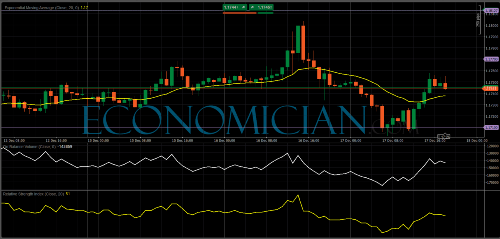
EUR/USD (H1) — Sell below 1.1765 | 17 Dec 2025

Bias: Bearish while below 1.1765

Pivot: 1.1770

Primary downside target: 1.1710

Our preference (Base case):

  • Action: Sell (short) below 1.1765
  • Targets: 1.1725 (TP1) → 1.1710 (TP2 / extension)
  • Key decision level: 1.1770 (pivot)

Alternative scenario (If pivot breaks):

  • Trigger: Move above 1.1770
  • Action: Look for further upside
  • Upside targets: 1.1790 (TP1) → 1.1812 (TP2)

Trading implication: Below 1.1765, downside remains favored toward 1.1725/1.1710. A break and hold above 1.1770 shifts the setup to bullish targets at 1.1790/1.1812.

More Day Trade Signals news
Market news roundup: Wednesday, 17 December 2025