 English
 پارسی


Crypto Scalping Explained: Strategies, Risks, and a Practical Trading Guide
What Is Crypto Scalping?
Scalping is one of the shortest-term trading styles used in financial markets. It is applied in stocks, foreign exchange, futures, and cryptocurrencies.
A scalper focuses on minor price fluctuations rather than attempting to predict the market’s direction over an extended period. A typical position may remain open for only a few seconds or minutes.
Crypto scalping generally involves:
- Monitoring low time-frame charts
- Identifying short-term momentum or price imbalances
- Entering near a predefined technical level
- Using a relatively close invalidation level
- Taking profits quickly
- Repeating the process when another valid setup appears
Although scalping may appear simple because trades are short, it is one of the most demanding trading styles. It requires rapid decision-making, sustained concentration, consistent execution, and the ability to accept frequent small losses without abandoning the trading plan.
Scalping has also become increasingly automated. Some traders use algorithms, trading bots, alerts, or order-management tools to execute predefined strategies faster and more consistently. Nevertheless, automation does not eliminate market risk or guarantee profitability.
How Does Crypto Scalping Work?
A crypto scalper usually begins by identifying the broader market structure on a higher time frame, such as the 15-minute, 30-minute, or one-hour chart. The trader then moves to a lower time frame—often one, three, or five minutes—to look for an entry.
For example, a trader may determine that Bitcoin is trending upward on the 30-minute chart. Instead of buying immediately, the trader waits for a pullback toward short-term support on the five-minute chart.
The position may be opened when:
- The pullback reaches a predefined support area.
- Selling momentum begins to weaken.
- Price confirms a short-term reversal.
- The potential reward justifies the risk.
- Market liquidity remains sufficient for efficient execution.
The trader then closes the position near a short-term resistance level, momentum target, or predetermined profit objective.
This process may be repeated several times during a trading session. However, taking more trades does not automatically increase profitability. Poor-quality trades, excessive fees, and emotional overtrading can quickly erase a series of small gains.
Why Are Cryptocurrency Markets Used for Scalping?
Crypto markets have several characteristics that attract short-term traders.
High short-term volatility
Cryptocurrencies can experience frequent price movements within short periods. These fluctuations may create repeated trading opportunities for scalpers.
However, volatility is not automatically beneficial. Extremely unstable conditions can increase slippage, widen spreads, trigger stop-loss orders, and make execution less predictable.
Continuous market access
Unlike traditional stock exchanges, cryptocurrency markets normally operate 24 hours a day, seven days a week. Traders can therefore select sessions that match their schedules.
The continuous market also creates a risk: traders may feel pressured to monitor prices constantly. A defined trading schedule is important for preventing fatigue and impulsive decisions.
Strong liquidity in major markets
Large cryptocurrency pairs, particularly those involving Bitcoin and Ethereum, often provide better liquidity than small altcoins.
Greater liquidity can contribute to:
- Tighter spreads
- Faster order execution
- Reduced slippage
- More reliable technical levels
- Easier entry and exit management
Liquidity can still change during major news events, exchange disruptions, weekends, or periods of market stress.
Frequent technical setups
Crypto markets frequently form short-term trends, consolidation ranges, support and resistance zones, breakouts, and momentum reversals. These structures can be used to develop rule-based scalping strategies.
Nevertheless, technical patterns can fail without warning. Every strategy therefore requires a defined invalidation point.
Which Cryptocurrencies Are Best for Scalping?
The most suitable cryptocurrency depends on the trader’s strategy, experience, risk tolerance, and trading platform.
In general, scalpers tend to prefer markets with:
- High trading volume
- Deep order books
- Tight bid-ask spreads
- Reliable price data
- Consistent execution
- Sufficient volatility
- Low trading costs
Bitcoin
Bitcoin is frequently used for scalping because it is the largest and generally one of the most liquid cryptocurrency markets.
Compared with smaller altcoins, Bitcoin may offer:
- More stable liquidity
- Tighter spreads on major exchanges
- Larger trading volume
- More widely observed technical levels
- Lower manipulation risk than illiquid tokens
Bitcoin is not immune to operational or security risks. Its decentralized network does not protect traders from exchange failures, compromised wallets, phishing, account theft, liquidation, or poor risk management.
Ethereum
Ethereum is another widely traded cryptocurrency with substantial liquidity. It can offer active intraday movement while generally maintaining better market depth than many smaller tokens.
Large-cap altcoins
Some large-cap altcoins may also provide scalping opportunities, particularly when volume and volatility increase.
However, traders should carefully evaluate:
- Spread size
- Order-book depth
- Historical slippage
- Exchange liquidity
- Funding costs
- Sudden volatility risk
Small and illiquid tokens
Low-cap cryptocurrencies may move aggressively, but they can be dangerous for scalping. A trader may enter easily and then struggle to exit without significant slippage.
Rapid price changes do not necessarily represent good trading conditions. Liquidity and execution quality are often more important than volatility alone.
Advantages of Crypto Scalping
- Rapid trade resolution
Scalpers normally discover relatively quickly whether a setup is working. They do not need to wait several days for the market to reach a distant target.
- Limited overnight exposure
Because positions are usually closed quickly, scalpers may avoid some of the risks associated with holding trades through extended market events.
This does not mean scalping is low risk. Losses can develop rapidly, particularly when leverage is involved.
- Multiple potential setups
Active markets can produce several opportunities during a single session. This allows a disciplined trader to wait for setups that match a predefined strategy.
- Less dependence on long-term forecasts
Scalpers focus primarily on immediate price structure, momentum, liquidity, and execution. Long-term economic or industry forecasts may have less influence on individual trades.
Major macroeconomic announcements, regulatory developments, exchange problems, and cryptocurrency-specific news can still disrupt short-term price action.
- Potential for automation
Some scalping rules can be programmed into alerts, scripts, or trading systems. Automation may reduce hesitation and support more consistent execution.
A strategy should be properly tested before being automated or used with meaningful capital.
Main Risks of Crypto Scalping
Crypto scalping carries substantial risk and is generally more suitable for experienced, disciplined traders.
- Leverage risk
Leverage allows a trader to control a larger position with a smaller amount of capital. It magnifies both profits and losses.
A minor adverse price movement can produce a substantial account loss or liquidation when leverage is excessive.
Leverage should never be treated as a shortcut to profitability.
- Trading fees
Scalpers may execute many transactions in a single session. Even a seemingly small fee can become significant when multiplied across numerous entries and exits.
Traders should calculate:
- Maker and taker fees
- Spread costs
- Funding rates
- Withdrawal fees
- Conversion charges
- Borrowing costs
- Platform commissions
A strategy that appears profitable before fees may become unprofitable after all costs are included.
- Slippage
Slippage occurs when an order is executed at a different price from the expected price. It can become especially severe during:
- News releases
- Market breakouts
- Liquidations
- Low-liquidity periods
- Exchange outages
- Sudden volatility spikes
Because scalping targets are often small, modest slippage can materially change the trade’s result.
- Competition with automated systems
Crypto markets contain professional market makers, high-frequency systems, arbitrage algorithms, and trading bots.
Manual traders may be slower than automated participants. Competing through speed alone is therefore difficult. A manual scalper needs a clear process, selective entries, and disciplined risk control.
- Psychological pressure
Scalping requires repeated decisions under time pressure. This can lead to:
- Revenge trading
- Fear of missing out
- Overtrading
- Hesitation
- Premature profit-taking
- Moving stop-loss orders
- Increasing position size after a loss
- Ignoring daily loss limits
Mental fatigue can reduce execution quality even when the underlying strategy is sound.
- Technical and platform risk
Internet failures, exchange disruptions, delayed charts, order-entry errors, and platform outages can prevent a trader from managing an open position.
Scalpers should understand their platform’s emergency procedures and avoid using capital they cannot afford to lose.
When Can Crypto Scalping Strategies Be Used?
Scalping can be applied under different market conditions, but the strategy must match the environment.
During an established trend
A trader can identify the broader direction on a higher time frame and use a lower time frame to enter during pullbacks. This approach attempts to align short-term trades with the dominant market direction.
Inside a trading range
When price is moving between clear support and resistance levels, a scalper may buy near support and sell near resistance. Range trading becomes less reliable when price begins to break decisively beyond the established boundaries.
During uncertain higher-time-frame conditions
The daily chart may appear bearish while the one-hour chart remains bullish. Instead of taking a large directional position, a trader may focus on shorter intraday movements. This does not eliminate uncertainty. Position size should reflect the lack of clear higher-time-frame direction.
During high-volatility periods
Volatility may create rapid opportunities, but it also increases execution risk. Stop-loss placement, position size, and order type become especially important. During extreme volatility, remaining out of the market may be the most disciplined decision.
While waiting for a longer-term trade
Some swing traders use separate scalping strategies while waiting for a longer-term setup to develop.
These strategies should be managed independently. A failed scalp should not be converted into a long-term position simply to avoid accepting a loss.
Six Popular Crypto Scalping Strategies
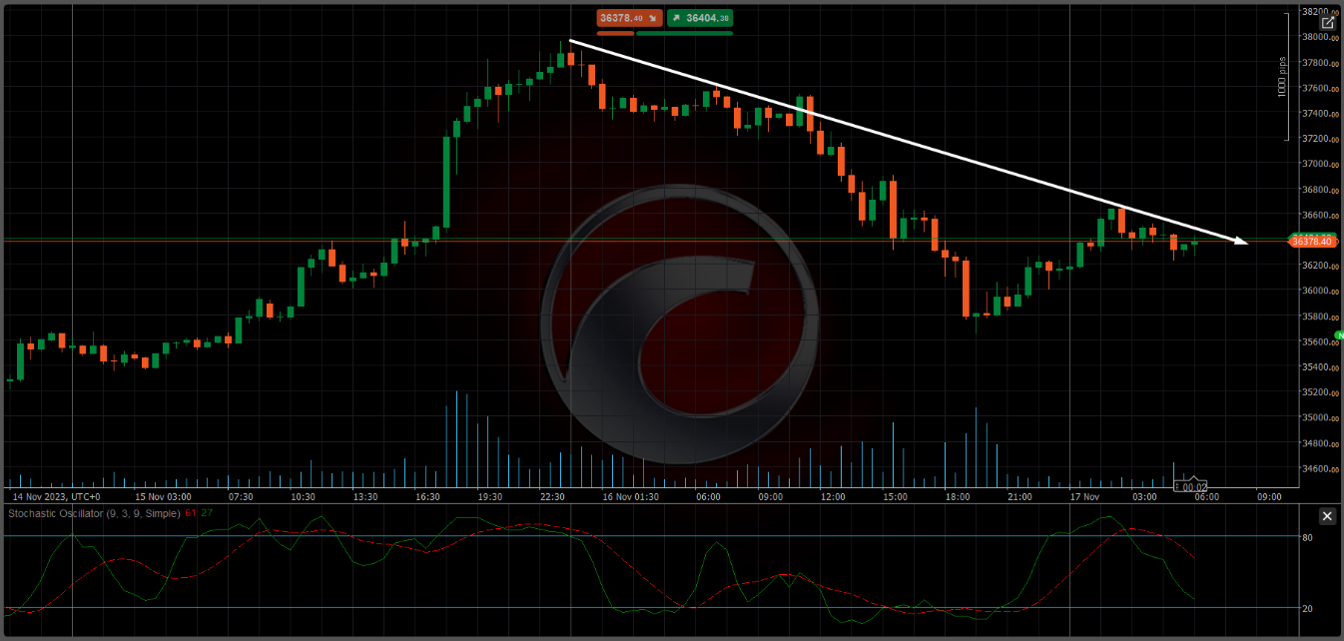
1. Trend-Following Scalping
Trend-following scalping begins with identifying the market’s dominant direction.
A trader may:
- Determine the trend on the 30-minute chart.
- Mark important support, resistance, and moving-average areas.
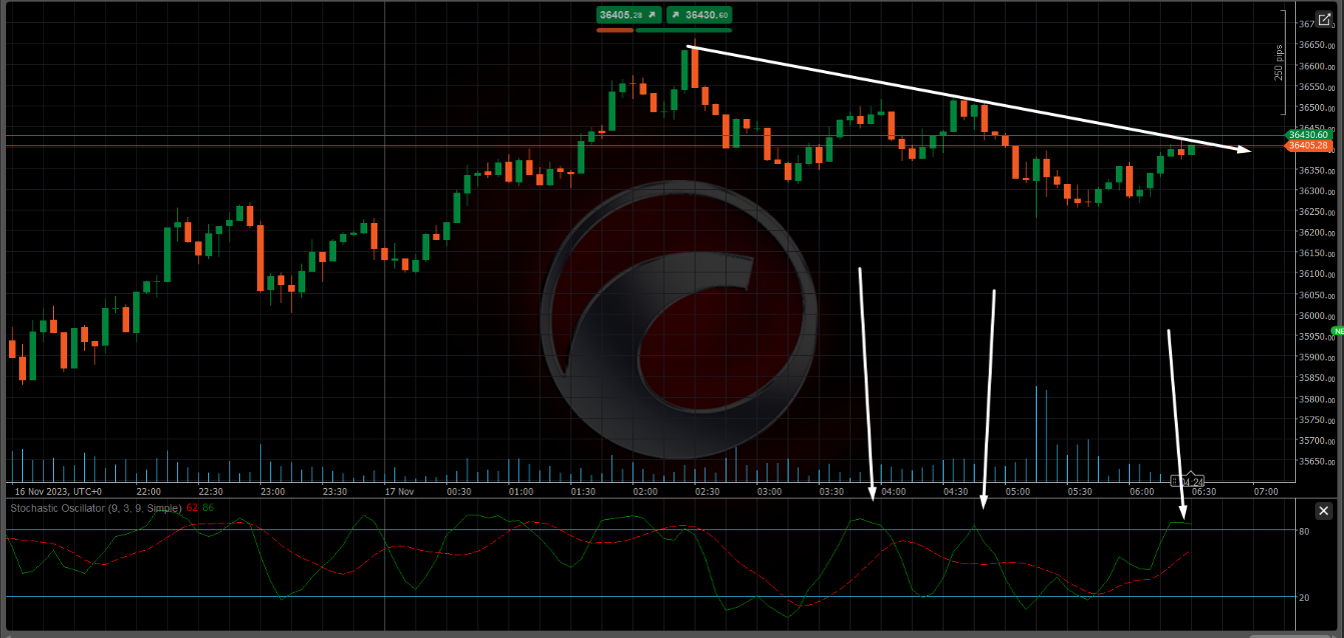
- Move to the one-minute or five-minute chart.
- Wait for a pullback in the direction of the trend.
- Use momentum confirmation for entry.
- Exit near the next technical level.
Oscillators such as the Stochastic indicator may help assess short-term momentum, but they should not be used without price structure and risk controls.
2. Range-Trading Scalping
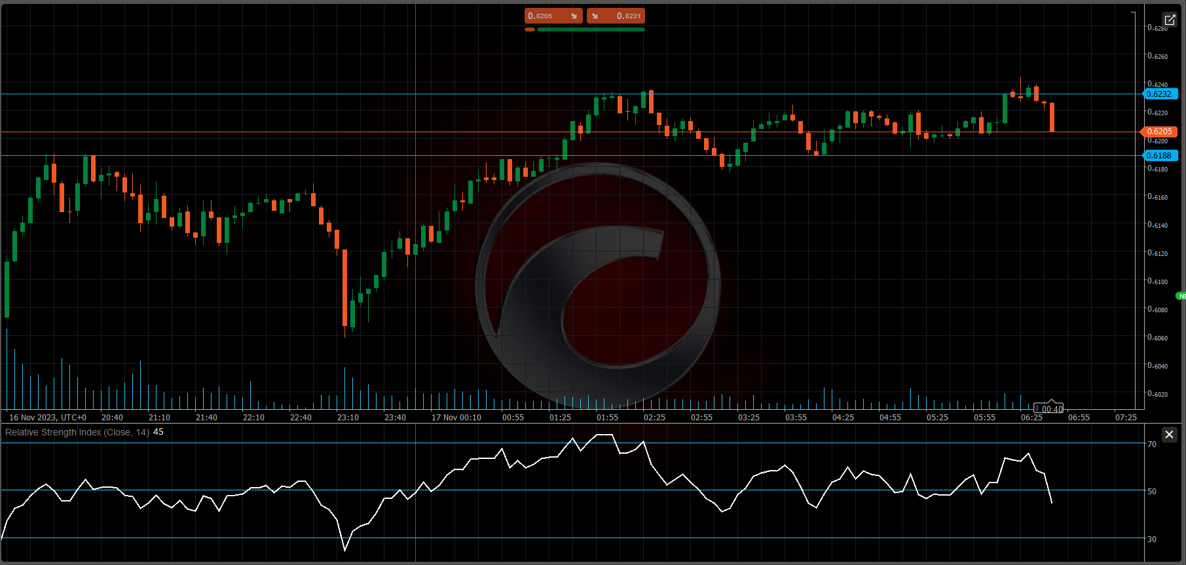
Range trading is based on repeated price movement between support and resistance. The trader attempts to:
- Buy near the lower boundary
- Sell or take profit near the upper boundary
- Sell short near resistance when permitted
- Exit near the middle or opposite side of the range
Indicators such as the Relative Strength Index may help identify overbought or oversold conditions. However, an overbought reading does not guarantee that price will decline, and an oversold reading does not guarantee a recovery. A confirmed breakout can invalidate the range strategy.
3. Renko Chart Scalping
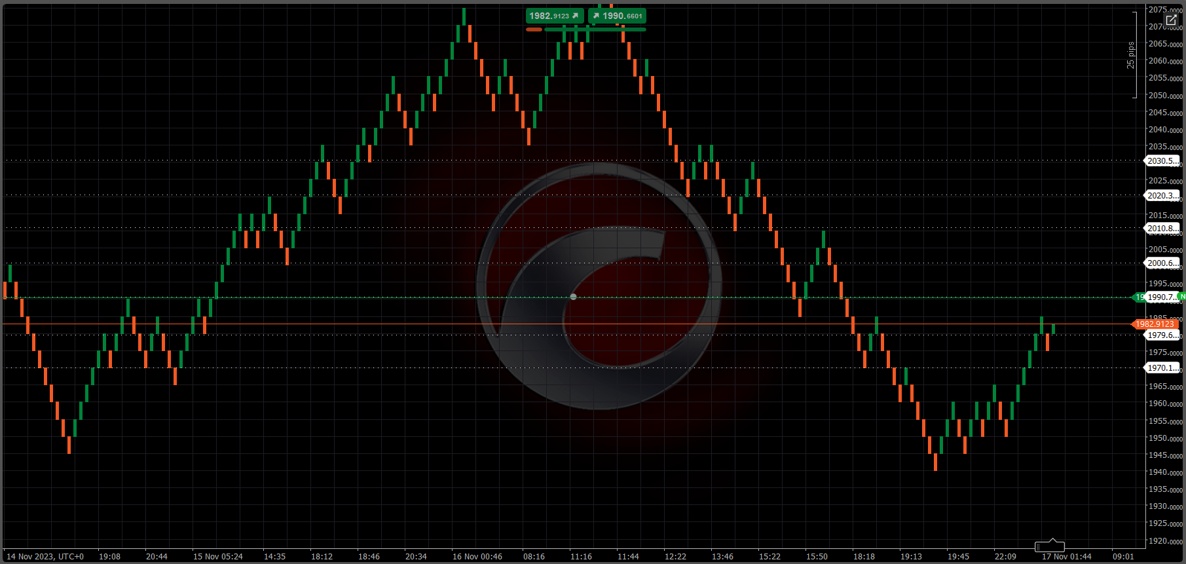
Renko charts display price movement using bricks rather than conventional time-based candles. They can help reduce some visual market noise and make trends or support and resistance areas easier to identify. A Renko-based scalper may:
- Identify the dominant brick direction
- Mark a key support or resistance level
- Enter after continuation or reversal confirmation
- Use a nearby technical invalidation point
- Exit when momentum weakens, or an opposite brick pattern develops
Renko settings should be tested carefully because changing the brick size can materially alter signals.
4. Breakout Scalping
Breakout scalping attempts to capture acceleration when price moves beyond an important support or resistance level.
A typical breakout setup includes:
- A clearly defined consolidation area.
- Repeated tests of a key level.
- Increasing volume or momentum.
- A decisive move outside the range.
- Confirmation that price can remain beyond the broken level.
False breakouts are common. Some traders wait for a retest rather than entering immediately after the first price spike.
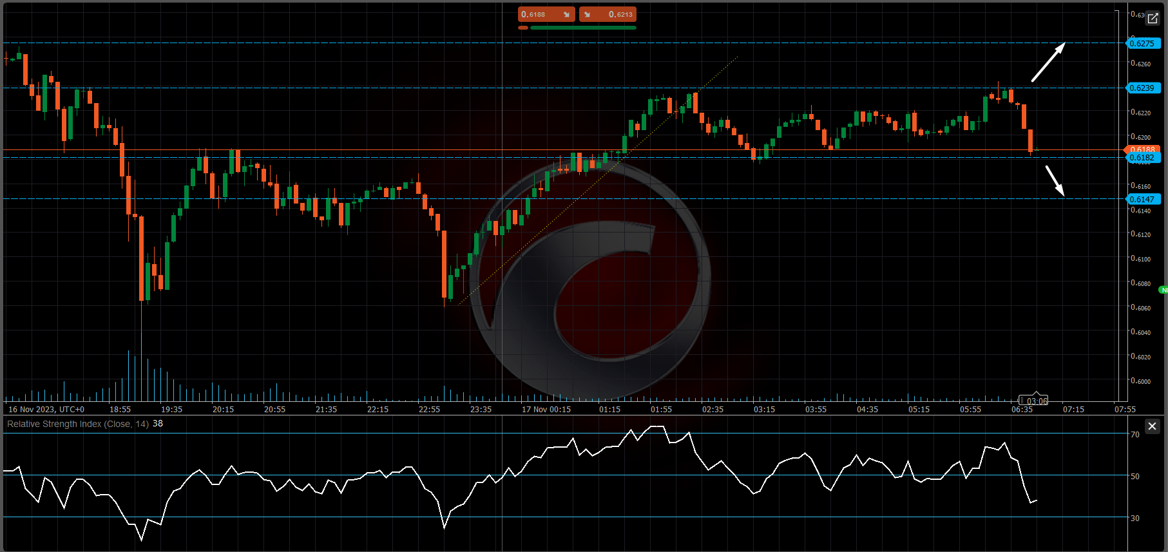
5. Session-Based Scalping
Cryptocurrency trading activity can vary throughout the day. Volume may increase when major financial centres become active or when U.S. equity markets open.
A session-based trader focuses on periods that historically provide:
- Stronger volume
- Better liquidity
- More consistent movement
- Tighter spreads
- Greater institutional participation
Traders should test session behaviour rather than assuming that the same period will always produce the best conditions.
6. News-Based Scalping
News-based scalping focuses on sudden price movements following important announcements.
Potential catalysts include:
- Inflation reports
- Central-bank decisions
- Employment data
- Cryptocurrency regulation
- Exchange-related developments
- Protocol updates
- Security incidents
- Exchange-traded fund developments
- Major legal rulings
News trading is extremely risky because spreads and slippage can increase sharply. Price may also reverse before a manual trader can react.
Checking the economic calendar and cryptocurrency news schedule is essential before opening a short-term position.
A Practical Crypto Scalping Process
A structured process can help reduce impulsive trading.
- Step 1: Select a liquid market
Choose a cryptocurrency pair with sufficient volume, a narrow spread, and reliable execution.
- Step 2: Define the market condition
Determine whether the market is trending, ranging, breaking out, or behaving unpredictably.
- Step 3: Mark the key levels
Identify support, resistance, consolidation boundaries, previous highs and lows, and areas of concentrated trading activity.
- Step 4: Define the exact entry rule
The entry should be based on objective conditions rather than intuition alone.
For example:
- Price retests support.
- Selling momentum declines.
- A bullish confirmation candle forms.
- Volume supports the reversal.
- The trade offers an acceptable reward relative to risk.
- Step 5: Set the invalidation level
The stop-loss should be located where the trading idea is no longer valid—not at an arbitrary distance.
- Step 6: Calculate position size
Risk should be determined before the order is placed. Increasing risk simply because a setup appears attractive is not a disciplined process.
- Step 7: Define the exit
A scalper should know where to take profit before entering. Possible exits include:
- A fixed price target
- The next resistance or support level
- A predetermined risk-to-reward ratio
- Momentum deterioration
- A trailing stop
- A time-based exit
- Step 8: Record the trade
A trading journal should include:
- Market and time
- Entry and exit price
- Position size
- Strategy used
- Screenshot
- Fees and slippage
- Reason for entry
- Reason for exit
- Emotional condition
- Result
- Lesson learned
Repeated review helps determine whether a strategy has a genuine statistical advantage.
Essential Risk-Management Rules
A scalping plan should establish clear boundaries before live trading begins.
Recommended rules include:
- Risk only a small portion of capital on each trade.
- Set a maximum daily loss.
- Stop trading after reaching the daily limit.
- Avoid increasing leverage after a losing trade.
- Include fees and slippage in performance calculations.
- Do not remove a stop-loss simply because price is approaching it.
- Avoid trading during abnormal platform conditions.
- Reduce position size during extreme volatility.
- Test the strategy on historical data and a demo account.
- Evaluate results across a meaningful sample of trades.
A few winning trades do not prove that a strategy is profitable. Performance should be assessed across different market conditions and a sufficiently large number of executions.
Common Crypto Scalping Mistakes
Trading without a defined setup
Entering simply because price is moving often leads to buying near short-term peaks or selling near temporary lows.
- Overtrading
A trader does not need to participate in every price movement. Scalping should involve frequent evaluation, not uncontrolled execution.
- Ignoring fees
Small targets can be consumed by commissions, spreads, funding costs, and slippage.
- Using excessive leverage
High leverage can turn a normal market fluctuation into a forced liquidation.
- Moving the stop-loss
Expanding the permitted loss after entering changes the original risk calculation and can cause a small loss to become much larger.
- Revenge trading
Attempting to recover losses immediately often leads to lower-quality decisions and excessive position sizes.
- Trading while fatigued
Scalping requires sustained attention. Performance may deteriorate significantly after long periods in front of a screen.
- Using too many indicators
A chart filled with conflicting indicators can create confusion. A simple system with clear rules is generally easier to test and execute.
- Failing to adapt to market conditions
A strategy designed for a range may perform poorly during a strong breakout. Traders must first classify the market environment.
- Crypto Scalping Checklist
Before entering a trade, ask:
- Is the market sufficiently liquid?
- What is the higher-time-frame direction?
- Is the market trending, ranging, or breaking out?
- Where are the nearest support and resistance levels?
- What exactly confirms the entry?
- Where is the strategy invalidated?
- What is the maximum possible loss?
- Does the expected return justify the risk?
- Have fees, spreads, and slippage been considered?
- Is a major announcement approaching?
- Am I following the plan or reacting emotionally?
- Have I reached my daily loss or trade limit?
When any essential condition is unclear, avoiding the trade may be the better decision.
- Is Crypto Scalping Suitable for Beginners?
Scalping is popular among newer traders because results appear quickly. However, quick feedback should not be confused with simplicity. Beginners may struggle with:
- Fast execution
- Emotional pressure
- Trading costs
- Leverage
- Position sizing
- Platform mechanics
- False breakouts
- Discipline after losses
A beginner should first learn order types, risk management, chart structure, and trading costs. The strategy should then be tested extensively through historical review, paper trading, or a demo account. Starting with small exposure is more appropriate than immediately using high leverage.
Final Thoughts
Crypto scalping can provide frequent short-term opportunities, particularly in liquid markets with active price movement. Its main appeal is the ability to enter and exit quickly without relying heavily on long-term forecasts.
However, short holding periods do not make the strategy safe. Transaction costs, slippage, leverage, platform problems, emotional pressure, and execution errors can all materially affect performance.
A professional scalping approach requires:
- A clearly defined strategy
- Objective entry and exit rules
- Strict position sizing
- Realistic cost calculations
- Consistent journaling
- Extensive testing
- Emotional discipline
- A firm daily loss limit
The objective should not be to trade as often as possible. It should be to execute only when market conditions match a tested strategy, and the potential return justifies the risk. *This article is adapted from the educational webinar “Crypto Market Scalping,” presented by financial-market analyst and Economician founder Ahura Chalki. *
Frequently Asked Questions
1. What is crypto scalping?
Crypto scalping is a short-term trading style in which traders attempt to profit from relatively small cryptocurrency price movements. Positions may remain open for seconds or minutes, and several trades may be executed during one session.
2. Is crypto scalping profitable?
Crypto scalping can be profitable for some disciplined traders, but profitability is not guaranteed. Results depend on the strategy, execution quality, trading fees, slippage, position sizing, leverage, market conditions, and the trader’s discipline.
3. Which cryptocurrency is best for scalping?
Bitcoin and Ethereum are commonly used because they generally offer substantial volume and liquidity. Other cryptocurrencies may also be suitable when they have deep order books, tight spreads, reliable execution, and sufficient volatility.
4. Is Bitcoin safe for scalping?
Bitcoin is usually more liquid than smaller cryptocurrencies, but trading it is not risk-free. Traders remain exposed to price volatility, leverage, exchange failures, wallet security risks, slippage, and execution errors.
5. What time frame is best for crypto scalping?
Many scalpers use one-minute, three-minute, or five-minute charts for entries while reviewing 15-minute, 30-minute, or one-hour charts to understand the broader trend and market structure.
There is no universally superior time frame. The selected combination should be tested with the specific strategy and market.
6. How much money is needed for crypto scalping?
No fixed minimum guarantees success. The account should be large enough to support appropriate position sizing without requiring excessive leverage. A trader should never use money needed for essential expenses or capital they cannot afford to lose.
7. Can beginners use crypto scalping strategies?
Beginners can study and test scalping, but it is one of the more demanding trading styles. New traders should begin with education, historical testing, paper trading, or a demo account before risking meaningful capital.
8. What are the best indicators for crypto scalping?
Commonly used tools include:
- Moving averages
- Relative Strength Index
- Stochastic oscillator
- Volume indicators
- Support and resistance
- VWAP
- Average True Range
- Price-action patterns
Indicators should support a defined trading process rather than being used as automatic buy or sell signals.
9. Is leverage necessary for crypto scalping?
No. Leverage is not necessary, and it can significantly increase risk. A profitable strategy should not depend on extreme leverage to produce acceptable results.
10. How do trading fees affect scalping?
Fees can have a major effect because scalpers place many orders while targeting relatively small price movements. Commissions, spreads, funding rates, and slippage should all be included when calculating actual profitability.
11. What is breakout scalping?
Breakout scalping involves entering when price moves beyond a clearly defined support or resistance level. Traders attempt to capture the initial acceleration and exit quickly.
Because false breakouts are common, confirmation and strict risk management are essential.
12. What is range scalping?
Range scalping involves buying near support and selling near resistance while price remains inside an established trading range. The strategy becomes invalid when price breaks and holds outside the range.
13. Can crypto scalping be automated?
Yes. Some scalping strategies can be automated through algorithms, trading bots, alerts, or order-management systems. Automation may improve consistency and speed, but it does not eliminate losses, technical failures, overfitting, or market risk.
14. How many trades should a crypto scalper make each day?
There is no ideal number. The number of trades should be determined by the availability of valid setups—not by a daily target. Taking fewer high-quality trades is generally more disciplined than forcing frequent entries.
15. What is the biggest risk in crypto scalping?
The largest risk usually comes from the combination of excessive leverage, poor position sizing, rapid market movement, emotional decision-making, and accumulated transaction costs. A predefined maximum daily loss is one of the most important protections for a scalper.
-----------------------------------------------------------------------------------------
Risk Disclaimer
This material is provided solely for educational and informational purposes. It does not constitute investment advice, financial advice, trading advice, a recommendation, or independent investment research. Cryptocurrency trading involves substantial risk. Leveraged products can magnify both profits and losses, and traders may lose all or more than their initial margin, depending on the product and platform. Past market behaviour does not guarantee future results. Every trader is solely responsible for evaluating the risks, costs, legal restrictions, and suitability of any trading decision.
Comments