translate English
 پارسی
English
Englishپارسی
English
Englishپارسی EnglishپارسیEnglishپارسی
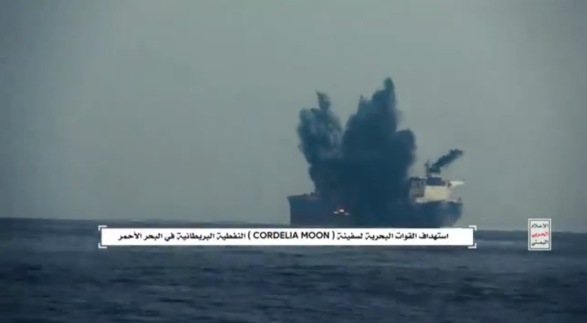
The release of footage showing the Houthi attack on the Cordelia Moon oil tanker in the Red Sea adds tension to the already volatile situation in the Middle East. The Houthis' use of ballistic and cruise missiles, as well as drones and unmanned surface vehicles (USVs), highlights their growing military capabilities, likely supported by Iran, and their intent to retaliate against Israel's actions in Gaza.
Brigadier General Yahya Saree's declaration links the attacks directly to the Israeli-Palestinian conflict, framing them as a response to what he calls "Israeli aggression" and the Gaza blockade. This incident underscores how the conflict is extending beyond Israel and Gaza, with regional actors like the Houthis engaging in military operations that could disrupt global oil shipments and escalate tensions across the Middle East.
These developments raise concerns about the security of international trade routes, especially in the Red Sea, and could provoke stronger responses from the U.S., Israel, or other Western allies, given the strategic importance of this maritime region.
Nikki Haley's comments reflect a call for stronger U.S. support for Israel amid its conflicts with groups like Hamas, Hezbollah, and the Houthis. These groups are backed by Iran, which Haley suggests the Biden administration is too lenient toward. Her statement emphasizes concerns about American safety and the perceived alignment of U.S. foreign policy with Iran. This rhetoric resonates with her tough stance on national security, often critical of U.S. adversaries in the Middle East. Haley has consistently advocated for a strong alliance with Israel and tougher actions against Iran and its regional proxies.
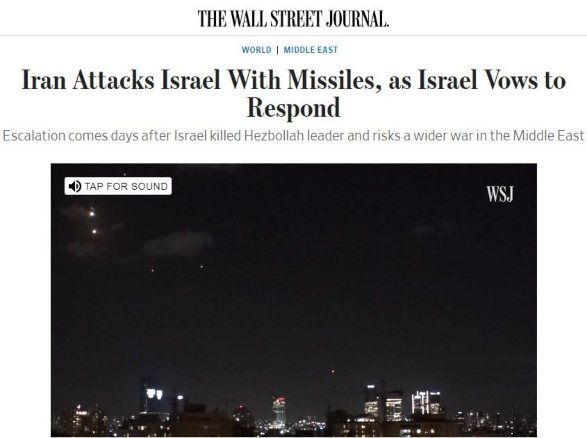
According to The New York Times, Iranian President Masoud Pezeshkian was not informed before the missile attack on Israel, which was conducted by the Islamic Revolutionary Guard Corps (IRGC) Air Force, rather than the regular army. This suggests a divide within Iran's leadership concerning the operation, with the IRGC seemingly acting independently of the president's knowledge. The NYT's report highlights a possible split in decision-making at the highest levels of the Iranian government.
Iran is preparing for a potential Israeli response following the recent missile attacks. The head of Iran's Foreign Ministry confirmed that the armed forces are ready for any action Israel might take. Meanwhile, US President Joe Biden commented that there are no immediate plans for an attack on Thursday, but the US supports Israel's right to respond.
An anonymous member of Iran's Islamic Revolutionary Guard Corps (IRGC) revealed that hundreds of missiles have been prepared in anticipation of a possible retaliation. Additionally, all flights in Iran have been suspended until October 3 to ensure safety amid the escalating tensions.
A senior Israeli security official, in an interview with the Jerusalem Post, has issued a stark warning, stating that Israel may target government centers in Tehran and even consider the direct elimination of Iran's Supreme Leader, Ayatollah Ali Khamenei. This follows escalating tensions after Iranian missile attacks on Israel, further intensifying the conflict between the two nations.
The official's comments signal a significant escalation in Israel's rhetoric and military posture, suggesting that the Israeli government is prepared to target Iran’s leadership directly in response to any further aggression. Such statements reflect the high stakes of the ongoing conflict and the possibility of broader regional instability if Israel were to follow through on these threats. The situation remains fluid, with both countries engaged in a highly volatile confrontation.
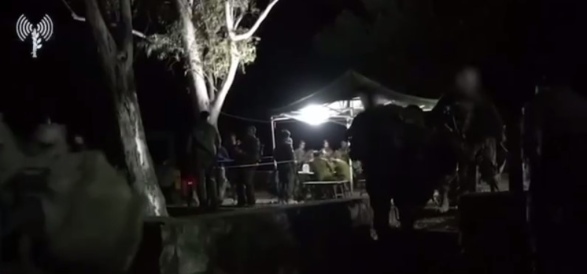
The Israel Defense Forces (IDF) has released footage showing the 98th Division entering Lebanon for ground operations. This represents a significant escalation in the ongoing conflict between Israel and Hezbollah. The IDF's 98th Division, known for its elite units, includes the Paratroopers Brigade and the Egoz commando unit, both of which are experienced in ground operations.
Key Developments from the Ground Operations:
Paratroopers Brigade Operations: The brigade reportedly found dozens of weapons during their entry into Lebanese territory. This discovery highlights the extensive arms stockpiling by Hezbollah in the region.
Egoz Commando Unit: The specialized commando unit discovered multiple rocket launchers, which are often used by Hezbollah for cross-border attacks on Israel. This reinforces the group's preparedness for long-range strikes.
These actions are part of Israel's broader military strategy to dismantle Hezbollah’s military infrastructure near the Israeli-Lebanese border. The ground incursion marks a more aggressive phase of the conflict and indicates Israel’s intent to neutralize Hezbollah’s capability to launch further attacks. As the conflict intensifies, the risk of regional escalation involving more actors grows.
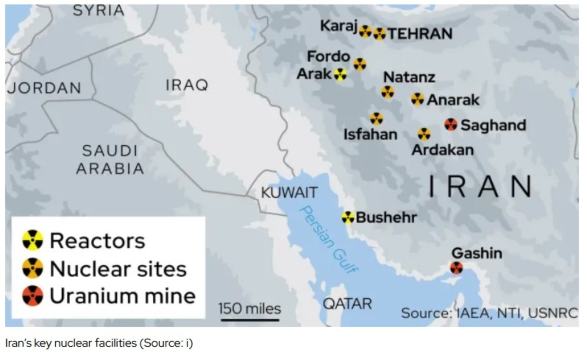
Israeli Prime Minister Benjamin Netanyahu declared that Iran made a grave mistake by attacking Israel and would face severe consequences. In response to the escalating tensions, the Wall Street Journal reported that Israel has warned Iran of potential direct strikes on its nuclear and oil facilities if any further aggression occurs. This message underscores the high stakes in the conflict and signals Israel's readiness to target critical infrastructure in Iran as part of its retaliation strategy. The situation continues to fuel concerns over broader regional instability.
Danish authorities are investigating two explosions reported near the Israeli embassy in Copenhagen, according to Reuters. The cause of the blasts remains unclear, and there are no immediate details regarding potential damage or casualties. Danish police are actively investigating the incident as tensions continue to rise amidst geopolitical unrest in the Middle East.
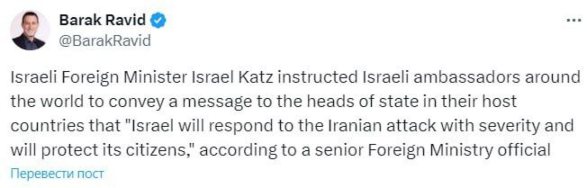
Israel is poised to take decisive action in response to an attack by Iran, as confirmed by Israeli Foreign Minister Eli Cohen. Cohen has instructed Israeli ambassadors to convey a clear message to world leaders that Israel's retaliation will be severe. This information was shared by journalist Barak Ravid on X (formerly Twitter), citing a senior official from the Israeli Foreign Ministry.
The development highlights escalating regional tensions, which could further destabilize the already volatile Middle East.
According to a report by Axios on Tuesday, Iran is allegedly preparing a ballistic missile strike against Israel, a development that could significantly escalate tensions in the oil-rich Middle East. Such a move raises concerns of broader regional involvement, potentially drawing in major powers, including the U.S.
This report comes on the heels of Israeli forces conducting "limited" raids on Hezbollah targets along the Lebanon-Israel border, further heightening the risk of regional conflict.
Washington Examiner Chief Political Correspondent Byron York and Palantir co-founder Joe Lonsdale criticized Ukrainian President Volodymyr Zelensky's decision to support Democrats in Pennsylvania on Sunday.
“Team Kamala is so concerned about Pennsylvania; they’re using military assets to fly in Zelensky to campaign!” Lonsdale wrote on X, referring to the US Air Force plane used to transport Zelensky.
“They're implying their war creates jobs and are forcing Zelensky to attack Trump and Vance... Funding a foreign leader and using the military to bring him to campaign with them in a battleground state.”
According to Al Jadeed TV channel, Hezbollah missile forces commander Talal Hamieh may have been killed in an Israeli strike on Beirut. Footage circulating online shows the aftermath of what the IDF describes as a 'targeted' strike on the Lebanese capital.