IFC Markets Live Quotes

Market news roundup: Wednesday, 18 February 2026

75 short market news items, grouped by 13 sections.

Political

Cuba’s Fuel Crunch Leaves Cars Parked as Cities Slow Down

South American and Spanish-language outlets say streets in multiple Cuban cities are increasingly dotted with cars left parked or stranded as drivers struggle to find gasoline amid a deepening fuel crisis.

International reporting shows the squeeze is intensifying: Cuba has moved to ration fuel to protect essential services, while many drivers now face months-long waits to refuel under a mandatory appointment system (“Ticket” app).

Reuters also reports the shortage is pushing residents toward electric tricycles, scooters, and bicycles, effectively reshaping urban mobility as the island confronts one of its worst fuel shortages in years.

The disruption is tied to a sharp drop in supply over recent months, with Venezuela halting shipments in mid-December and Mexico also stepping back after U.S. pressure, while Russia has been reported as preparing fuel deliveries without a clear timeline.
Geneva Nuclear Talks: “Dead End” Rumors Clash With ‘Guiding Principles’ Progress

Israeli media chatter—attributed to Channel 12—suggests the White House has signaled to Israel that the Iran nuclear track is hitting a dead end, arguing Tehran won’t meet President Trump’s core demands.

But reporting from Geneva points to a more mixed (and still fluid) reality: Iran’s FM Abbas Araqchi said negotiators reached a broad understanding on “guiding principles”, while a U.S. official said Iran will return within two weeks with detailed proposals to narrow remaining gaps—though no deal is imminent and Washington has not issued a full public readout.

Where the “red lines” are

  • Israel’s Prime Minister Netanyahu has publicly pushed that any deal must dismantle enrichment infrastructure and see enriched material leave Iran, not just a pause in enrichment.
  • The Wall Street Journal has also described U.S. frustration that Iran is not meeting key U.S. demands—especially around ending enrichment—raising the odds of a stall even if talks continue.

Market angle (why traders care)

Araqchi’s “principles” comments helped ease immediate conflict premium, with Brent dropping more than 1% during the reaction window—classic “reduced war-risk” pricing. The next two-week window is now the key catalyst: headline risk remains high, but any credible framework tends to weigh on crude risk premium, while a breakdown tends to re-price escalation risk fast.

Smotrich Calls to Scrap Oslo, “Encourage Migration” From Gaza and the West Bank

Israel’s Finance Minister Bezalel Smotrich said he wants the next Israeli government to cancel the Oslo Accords, advance Israeli sovereignty in the West Bank, and “encourage migration” of Palestinians from Gaza and the West Bank—remarks reported by Israeli outlets from a Religious Zionism event.

Smotrich also used the phrase “destroy the idea of an Arab terror state” while describing these goals, according to the same reports.

The comments are highly contentious because international humanitarian law prohibits forcible transfers/deportations of protected persons from occupied territory (Fourth Geneva Convention, Article 49).

They also come as Israel’s cabinet has recently approved steps (including West Bank land registration) that Palestinians and critics describe as deepening control and risking de facto annexation.

Vatican Opts Out of Trump’s “Board of Peace,” Citing Holy See’s Special Status

The Vatican signaled it will not join President Donald Trump’s “Board of Peace,” with Secretary of State Cardinal Pietro Parolin saying the Holy See “will not participate… because of its particular nature, which is evidently not that of other States.”

Parolin also underscored the Vatican’s view that major international crises should be handled primarily through the United Nations, rather than ad-hoc political boards.

Mexico Turns Down Full Role in Trump’s “Board of Peace,” Demands Palestinian Seat — May Send Observer

Mexico’s President Claudia Sheinbaum has rejected taking a full seat on President Donald Trump’s U.S.-led “Board of Peace,” arguing the forum lacks Palestinian representation.

Sheinbaum stressed that for any peace framework tied to Gaza, both Israel and Palestine must participate, noting Mexico recognizes Palestine as a state. She added that Mexico may send an observer instead of joining as a member.

The decision adds to a broader pattern of cautious or limited participation by several U.S. partners, with some countries choosing observer status rather than formal membership amid questions about the board’s mandate and structure.

Six AWACS to Europe? Flight-Tracking Signals U.S. Radar Surge as Middle East Posture Tightens

Reports from the Clash Report claim the U.S. is deploying six E-3 AWACS aircraft to Europe as a staging move, with an expectation that they could continue onward toward CENTCOM bases.

What’s independently visible so far via defense reporting and flight-tracking:

  • At least two E-3 Sentry aircraft have been tracked arriving at RAF Mildenhall (UK) on Feb. 17, with more E-3s reported en route to Europe.
  • The Aviationist reported two E-3s (DENALI callsigns) flew from Elmendorf AFB (Alaska) to RAF Mildenhall, describing them as en route toward the Gulf.
  • The War Zone noted E-3 radar aircraft among a broader wave of U.S. airpower moving east, while officials have declined to comment on specific aircraft movements.

Why it matters: The E-3 AWACS is a flying radar + command-and-control node that builds the air picture and coordinates air operations—often a key enabler when a force posture shifts toward higher readiness.

Hezbollah Rejects Lebanon’s Four-Month Disarmament Timeline, Calls It “Serving Israel”

Lebanon’s Hezbollah said it rejects the government’s decision to give the Lebanese army at least four months to advance Phase 2 of a nationwide disarmament plan, arguing it will not accept what it views as an action “in the service of Israel.”

The four-month window is tied to the next stage of a state plan to extend control over weapons in parts of the country, a move Lebanon’s government says is needed to consolidate state authority and implement security commitments amid continued cross-border volatility.

Geneva Peace Talks End Without Breakthrough After Short Second Day

U.S.-mediated Russia–Ukraine negotiations in Geneva ended without a concrete breakthrough, after the second day of talks lasted about two hours—far shorter than the first day, which stretched roughly six hours and was described as “very tense” by a Russian source.

Despite U.S. envoy Steve Witkoff striking an upbeat tone after day one—saying the process produced “meaningful progress”—both Kyiv and Moscow publicly described the talks as difficult, and Ukraine’s President Volodymyr Zelenskiy accused Russia of dragging out the process. Further rounds were signaled, but without a date.

Axios: Trump’s Iran Clock Ticks Toward War Scenario After Geneva Talks

Axios reports the Trump administration is closer to a major Middle East war with Iran than most Americans realize, and that any operation would likely be a massive, weeks-long campaign—more like a full war than last month’s pinpoint Venezuela operation—and potentially a joint U.S.–Israeli effort broader than last June’s Israeli-led 12-day war (which Axios says the U.S. later joined).

Axios says U.S. advisers Jared Kushner and Steve Witkoff met Iran’s FM Abbas Araghchi for three hours in Geneva on Tuesday. While both sides spoke of “progress,” Axios reports U.S. officials are not optimistic the wide gaps can be closed, and the U.S. expects Iran to return within two weeks with a detailed proposal.

Military posture highlighted by Axios

  • Two aircraft carriers, ~a dozen warships, hundreds of fighter jets, and multiple air-defense systems in the regional build-up
  • 150+ U.S. military cargo flights moving weapons/ammunition to the Middle East
  • ~50 additional fighters (F-35 / F-22 / F-16) headed to the region in the past 24 hours

Separately, Reuters has reported U.S. military planning includes the possibility of sustained, weeks-long operations if Trump orders an attack, and noted the Pentagon has been sending additional carrier capability and other firepower to the region.

The War Zone: “Final Pieces” Sliding Into Place in U.S. Military Buildup Near Iran

The War Zone reports that the U.S. is now moving key “missing” capabilities into position that would be typical ahead of a sustained air campaign—even though it remains unclear whether President Donald Trump will ultimately order strikes.

According to the report, online flight-tracking shows F-22 Raptors, F-16 Fighting Falcons, E-3 Sentry (AWACS) aircraft, and a U-2 “Dragon Lady” spy plane either crossing the Atlantic or newly arrived in Europe, a common staging path before onward movement toward the Middle East.

On the naval side, The War Zone says a seventh Arleigh Burke-class guided-missile destroyer (USS Pinckney) has deployed into the CENTCOM area of responsibility, adding to an already expanded maritime posture.

The $12 Trillion Bargain? Zelensky Cites Intel on U.S.–Russia Sanctions Relief Talk

Ukraine’s President Volodymyr Zelensky says Ukrainian intelligence has briefed him on a Russian pitch of “$12 trillion” worth of potential U.S.–Russia economic deals tied to sanctions relief, and The Economist reports that one insider believes a sanctions-relief package may already be agreed in principle—a claim that remains unconfirmed publicly.

The Washington Post describes the framework as a “Dmitriev package,” allegedly linked to Russia’s sovereign wealth fund chief Kirill Dmitriev, with elements that could touch Ukraine (including contested regions) and a phased sanctions rollback—fueling European concern that Trump could pressure Kyiv into concessions to unlock those commercial incentives.

Separately, Reuters has reported Zelensky’s comments that Washington wants the war track wrapped up before summer / by June, reinforcing European fears about a compressed timetable and leverage dynamics in any grand bargain narrative.

Axios: Rubio Backchannels Raul Castro’s Grandson as Washington Hunts a “Venezuela-Style” Off-Ramp for Cuba

Axios reports U.S. Secretary of State Marco Rubio has been holding secret talks with Raúl Guillermo Rodríguez Castro (“Raulito”)—Raúl Castro’s grandson and caretaker—bypassing official Cuban government channels as the Trump administration ramps up pressure on Havana.

According to Axios sources, Rubio’s team views the 41-year-old and his circle as younger, business-minded insiders who could facilitate a U.S. rapprochement and possible transition scenario. One source summed up the search as: “They’re looking for the next Delcy in Cuba”—a reference to Washington’s Venezuela playbook, where Maduro’s allies (including Delcy Rodríguez) remained central after the U.S. operation.

Cuba’s government, per Axios, denied any “high-level dialogue” with the U.S., while the State Department did not dispute that Rubio spoke with Raulito but declined to comment.

Russia–Iran Navy Operations in Gulf of Oman Spotlight “Civilian Navigation Safety”

Russia and Iran conducted joint naval operations in the Gulf of Oman, with Russia’s Defense Ministry saying the activities were focused mainly on ensuring the safety of civilian navigation.

Russian reporting says the drill involved coordinated maneuvers and communications procedures, and it followed a port call in Bandar Abbas, where protocol events were held with the Iranian side.

Vienna “Triad” Meets Grossi: Russia–China–Iran Close Ranks at the IAEA After Geneva Talks

Russia’s Mikhail Ulyanov, Iran’s Reza Najafi, and China’s Li Song met IAEA Director-General Rafael Grossi in Vienna to discuss Iran’s nuclear programme, according to Iranian state media and diplomatic reporting.

The meeting comes immediately after the second round of U.S.–Iran nuclear talks in Geneva, where Iran said it reached an understanding on broad “guiding principles,” while officials cautioned that a final deal is not imminent.

RT Commentator: Iran’s Fall Would Be an “Existential Crisis” for Russia & China — Calls Russia-Iran Drills a “Don’t Do It” Warning to U.S.

Former U.S. Army officer Stanislav Krapivnik, speaking to RT host Rick Sanchez, argued that an Iranian collapse would amount to an “existential crisis” for Russia and China, and portrayed recent Russia-Iran naval activity as a direct deterrent message to Washington: “Don’t do it.”

The comments land as Iran and Russia have announced/held naval drills/operations in the Gulf of Oman, framed by both sides as focused on maritime security and civilian navigation—but occurring amid elevated U.S.–Iran tensions.

In the wider backdrop, satellite imagery and official reporting point to Iran fortifying sensitive sites while the U.S. military posture in the region remains heightened as diplomacy continues.

Lavrov: New Strikes on Iran Would Be “Playing with Fire”

Russian Foreign Minister Sergey Lavrov said in an interview with Al Arabiya that any new strikes on Iran would bring “adverse consequences” for the international community, arguing that the June 2025 U.S.-Israeli strikes on Iran’s IAEA-supervised nuclear facilities undermined both the IAEA’s authority and the NPT, and created “real risks of a nuclear incident.”

Lavrov added that those strikes pushed Iran to think about physical protection of nuclear materials that are under IAEA control, and said he is closely watching reactions in the region—especially among Arab countries and Gulf monarchies—stressing that “no one wants further escalation.”

He also argued Iran has rights to peaceful uranium enrichment under the NPT, and said Tehran had previously signaled readiness to reduce enrichment to levels needed for peaceful purposes (around 3–6%) under IAEA oversight if inspections return to normal working conditions.

Six Warning Lights: Newsweek Says U.S.–Iran War Risk Is Rising Fast

Newsweek argues that the escalating U.S.–Iran standoff is entering a high-risk phase, listing six signals that, in its view, make a conflict more likely: a rapid U.S. show of force in the Middle East; planning for a “massive, weekslong” campaign; nuclear talks stuck on red lines; satellite evidence Iran is fortifying key facilities; growing domestic unrest and pressure inside Iran; and Tehran’s temporary closure of the Strait of Hormuz for live-fire drills.

Newsweek notes war is not guaranteed, but says the “warning signs” are stronger than they have been in years.

Trump to Starmer: Diego Garcia + RAF Fairford Could Be Needed to “Neutralize” an Iran Threat

President Donald Trump said he told UK Prime Minister Keir Starmer that Britain is making a “big mistake” over the Diego Garcia basing arrangement, warning that if Iran refuses a nuclear deal, the U.S. might need to use Diego Garcia and the airfield at RAF Fairford to “eradicate/neutralize” a potential attack from what he called a “highly unstable and dangerous regime.”

Trump’s comments—posted on Truth Social—land amid a UK–Mauritius understanding to transfer sovereignty of the Chagos Islands while keeping the U.S.–UK base on Diego Garcia operating under a long-term lease arrangement, a setup Washington has viewed as strategically important for Middle East and Indo-Pacific operations.

Israel Puts Home Front on “Maximum Alert” as Iran-War Preparations Accelerate

Israeli Prime Minister Benjamin Netanyahu has instructed emergency/rescue agencies and the IDF Home Front Command to prepare for the possibility of war with Iran, with Israeli media describing a state of “maximum alert” across multiple security bodies.

Israel’s public broadcaster KAN also reported that a security cabinet meeting originally slated for Thursday to review Iran-related developments was postponed to Sunday, underscoring elevated readiness amid rising U.S.–Iran tensions.

White House: “Still Far Apart” With Tehran, Only Modest Progress in Nuclear Talks

White House Press Secretary Karoline Leavitt said the U.S. and Iran made “a little bit of progress” in the latest round of talks, but remain “very far apart on some issues.”

Leavitt added that Iran is expected to return in the next couple of weeks with more detailed proposals, and that President Trump will keep watching how the process develops.

Ynet: Israel Sees Trump Leaning Toward “Soon” Broad Iran Strike; Houthis Expected to Join, Hezbollah Could Follow

Israel’s Ynet reports that Israeli officials assess President Donald Trump is inclined to approve a broad military strike on Iran “soon” after Tehran failed to meet U.S. demands in the latest negotiations, with Trump aides believing Iran is stalling and misleading Washington.

Ynet says the mood in Israel is that a decisive moment is approaching and timelines have compressed from “two weeks” (and earlier “a month”) to potentially “within days.” It adds that Israel’s working assumption is Iran could launch missiles at Israel even if the IDF doesn’t take part, prompting maximum defensive alert and instructions to emergency services and the Home Front Command to prepare.

On escalation scenarios, Ynet writes that Israel expects the Houthis would immediately enter the fight with missiles and drones, and that there is also a plausible scenario where Hezbollah does not stay on the sidelines (unlike the “12-day war”), potentially opening another front.

Separately, Reuters reports Iran is expected to return with a written proposal in the coming weeks as U.S. officials continue to weigh military options, including planning for weeks-long operations if ordered.

Herzog to Iranians: Ramadan Wishes—and a Hope the “Reign of Terror” Ends

Israel’s President Isaac Herzog issued a Ramadan message addressed to the people of Iran, saying he hopes and prays that the Islamic Republic’s “reign of terror” will end and that the region will enter a new era in which Iran’s proxies “have gone away,” bringing a different future for Middle East children. The remarks were delivered during a visit to Israel’s Gaza Civil-Military Coordination Center in Kiryat Gat, Israeli media reported.

Reuters: U.S. to Complete Regional Force Deployment by Mid-March as Iran Prepares Written Proposal

A senior U.S. official told Reuters that Iran is expected to submit a written proposal after Tuesday’s Geneva talks, addressing issues President Donald Trump has raised in order to avoid a U.S.–Iran confrontation.

The same official said White House national security advisers were told in a Wednesday Situation Room meeting that all U.S. forces being sent to the region must be in place by mid-March (reported as around March 16 / 25 Esfand). The official also said Secretary of State Marco Rubio plans to travel to Israel for talks with Prime Minister Benjamin Netanyahu over the Feb. 28 weekend to discuss Iran.

White House to Tehran: “Be Wise—Make a Deal” as Talks Remain “Very Far Apart”

White House Press Secretary Karoline Leavitt said Iran “would be very wise” to reach an agreement with President Donald Trump, while acknowledging that the latest Geneva talks delivered only “a little bit of progress” and that Washington and Tehran are still “very far apart on some issues.”

Leavitt added that Iran is expected to return in the coming weeks with more detailed proposals, but declined to specify a firm deadline—saying diplomacy remains Trump’s first option even as she argued there are “many reasons and arguments” that could be made for a strike.

More Political news

Others

Wednesday, February 18, 2026 — Global Bonds Diverge: U.S. & Japan Yields Up, Core Europe and UK Ease

Bond markets opened Wednesday with a split tone across major curves. The U.S. 10-year ticked up to 4.071% (+0.007), while Japan’s 10-year climbed to 2.144% (+0.017). In Europe, Germany’s 10-year eased to 2.740% (-0.017) and Spain’s 10-year slipped to 3.119% (-0.012), while Italy’s 10-year moved higher to 3.370% (+0.015). The UK 10-year fell to 4.383% (-0.019).

Read-through: Early price action suggests mild U.S./Japan upward pressure on yields, while core Europe and the UK are leaning lower—leaving spreads and relative rate expectations in focus.

South Africa Inflation Eases on the Headline, While Core Ticks Up

South Africa’s January inflation print stayed contained, with headline CPI easing to 3.5% YoY (from 3.6%) and CPI (MoM) steady at 0.2%. But core inflation firmed at the margin: Core CPI (MoM) 0.3% (from 0.1%) and Core CPI (YoY) 3.4% (from 3.3%).

Market lens: Headline cooling supports a “contained inflation” narrative, but the uptick in core keeps attention on underlying price persistence.

South Africa Business Confidence Improves: Index Rises to 133.2

South Africa’s business confidence edged higher in January, with the index rising to 133.2 from 132.3—a modest improvement in the sentiment pulse.

Market lens: Incremental confidence gains help, but investors will look for confirmation in activity and employment trends.

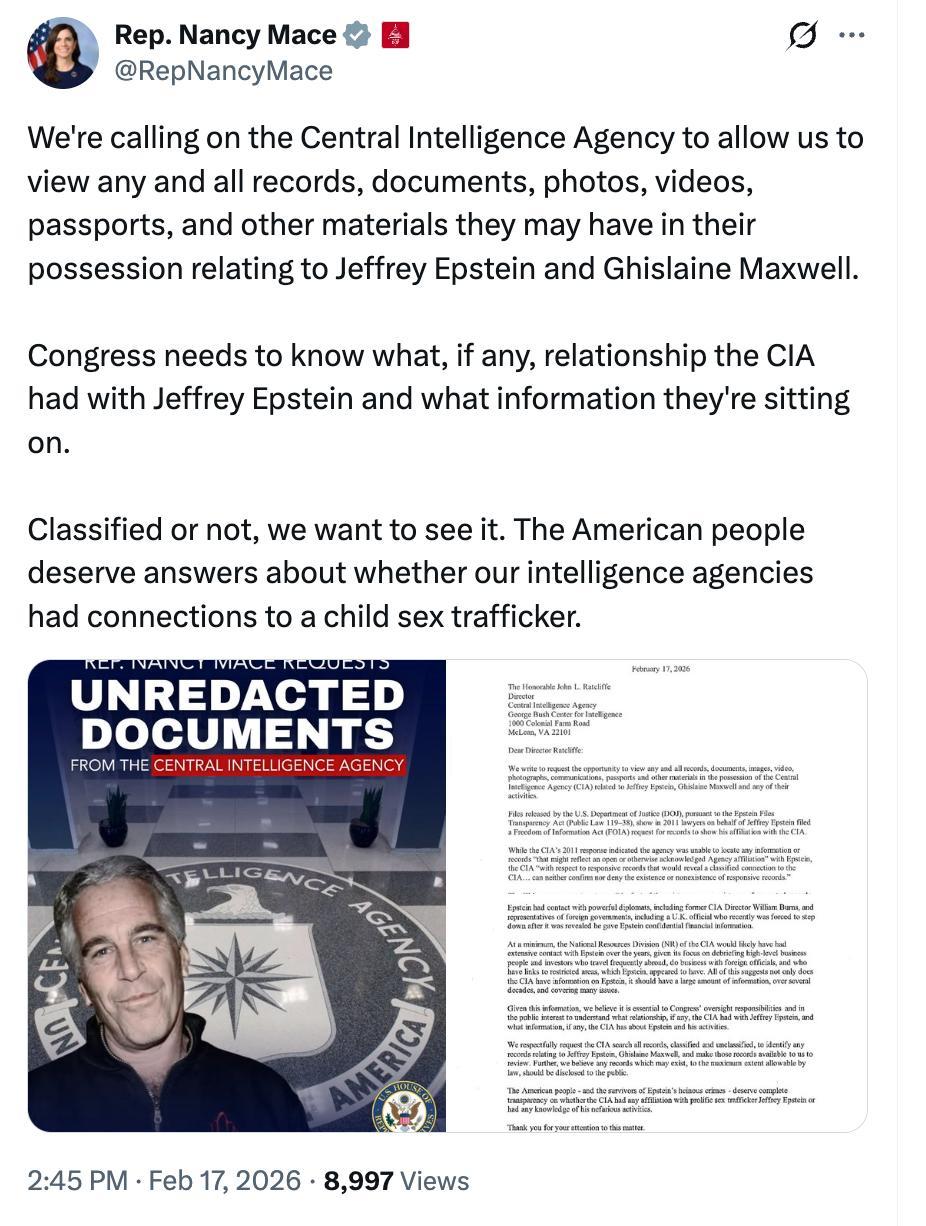
Nancy Mace Demands CIA Files on Epstein and Maxwell

Rep. Nancy Mace says she is calling on the CIA to allow Congress to review all records—including documents, photos, videos, passports, and related materials—that the agency may hold on Jeffrey Epstein and Ghislaine Maxwell.

In her statement, Mace argues Congress needs to know whether the CIA had any relationship with Epstein and what information, if any, the agency is “sitting on.” She says lawmakers want access “classified or not,” framing the request as an accountability test over potential intelligence-community links to a child sex trafficker.

Note: This is a demand for disclosure/oversight, not proof that the CIA had such ties.

A Dark New Allegation: “Blood-for-Benefits” Deal Tied to Epstein–Maxwell Circle

A fresh claim circulating online alleges a 2022 letter outlines an arrangement in which a woman—said to be communicating from prison—pressured/blackmailed Ghislaine Maxwell and received money and schooling connected to Jeffrey Epstein in exchange for a daughter’s blood, with the message framing the arrangement as “silence guaranteed” while payments continued.

The allegation, as presented, layers a new—and highly disturbing—dimension onto the broader Epstein-Maxwell dossier: a purported quid-pro-quo involving continued financial support and an expectation of ongoing discretion.

Important context: based on the description alone, the authenticity of the letter and the full circumstances are not independently verified. The claims should be treated as unconfirmed unless corroborated by official records, court filings, or credible primary-source reporting.

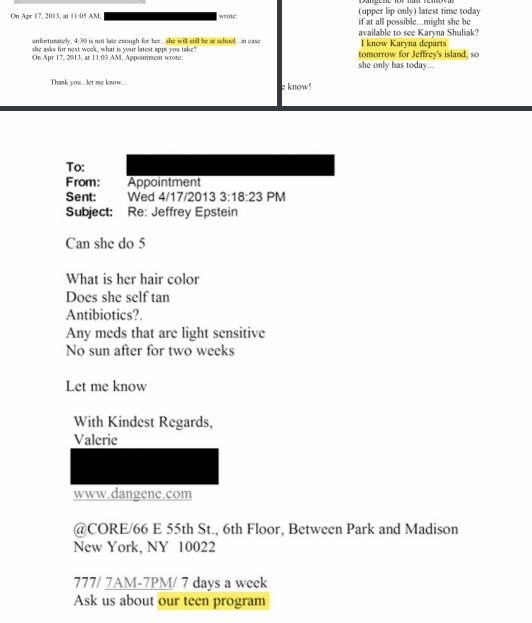
‘Still at School’: Epstein Emails Point to “Teen Program” Scheduling Around Island Trip

A newly circulated set of alleged Epstein-related emails shows staff rescheduling a young girl’s appointment because “she’s still at school,” while referencing a “TEEN PROGRAM” and providing routine post-treatment care instructions (including avoiding sun exposure for a period). The timing of the messages is also framed around travel logistics connected to Epstein’s island.

The exchanges are being shared online as another example of how Epstein’s network allegedly handled day-to-day coordination for minors—blending ordinary scheduling language with cues that critics say indicate grooming and facilitation. The material’s provenance cannot be confirmed from screenshots alone, and the identity of any alleged victim is not disclosed.

Epstein-Linked Cash Allegedly Backed High-Cost Irish Student Housing

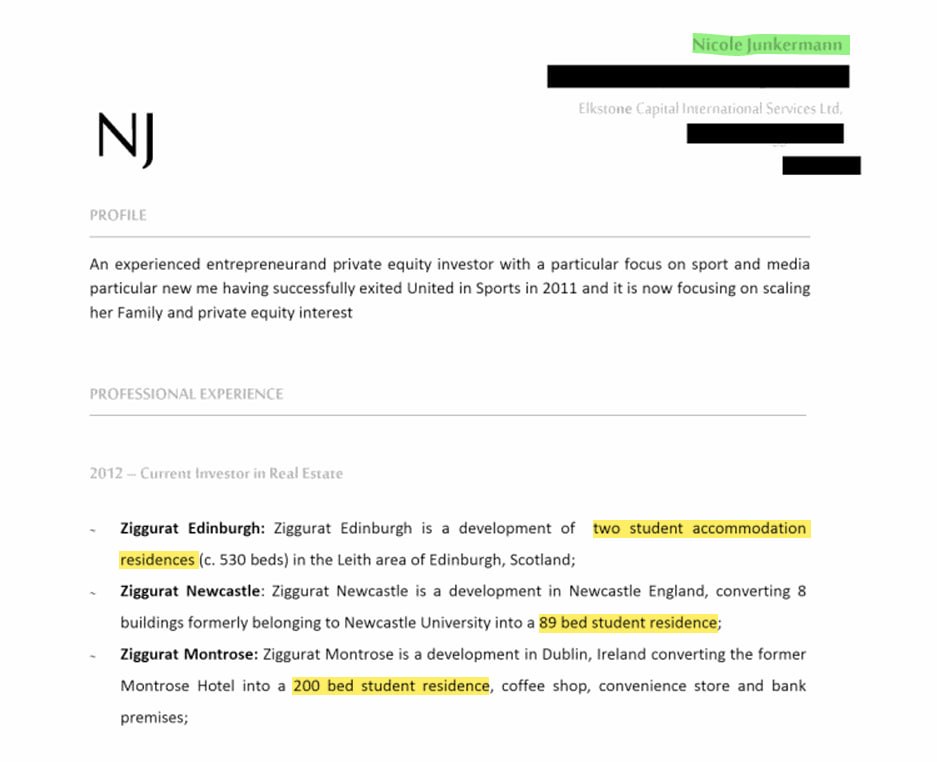
An Irish outlet, The Ditch, reports that investor Nicole Junkermann—a figure whose long-running email correspondence with Jeffrey Epstein appears in recently unsealed “Epstein files”—channeled Epstein-linked funds into multiple Irish student-accommodation projects, including developments in Dublin that have charged students up to €435 per week.

Key points cited by the outlet:

  • Junkermann’s materials describe investments tied to multiple “student residence” projects in Ireland and the UK, including a 200-bed Dublin development.
  • The Ditch links the funding trail to a March 2018 legal filing referencing a €400,000 “charge satisfied” involving an Epstein-associated entity and an Irish company.
  • The report adds that scrutiny intensified after correspondence surfaced with a forwarded email bearing the subject line “Will you have a baby with me?”
  • Separately, UK media have reported Junkermann stepped down from a trustee role at the Royal Marsden Cancer Charity amid the renewed attention.

New Mexico Launches Epstein “Truth Commission” for Zorro Ranch Allegations

New Mexico lawmakers have approved a bipartisan “truth commission” to investigate allegations tied to Jeffrey Epstein’s Zorro Ranch near Santa Fe—an effort aimed at documenting what happened, who knew, and whether any public corruption or systemic failures helped enable abuse.

Key points:

  • A four-member state House panel will gather testimony from survivors and examine claims that the property was used for sexual abuse and trafficking, along with questions about official oversight and accountability.
  • The move follows renewed attention from recently released DOJ material that references the ranch, including an anonymous email allegation that has prompted calls for law-enforcement review (the claim remains unverified).
  • The ranch was sold in 2023 to Texas businessman Donald Huffines, who has said he will cooperate with investigators.

Epstein “Hidden Camera” Trail Resurfaces in New Screenshots

Fresh screenshots circulating from the so-called Epstein files are reigniting scrutiny over allegations that Jeffrey Epstein ran covert surveillance across his properties and used recordings as leverage.

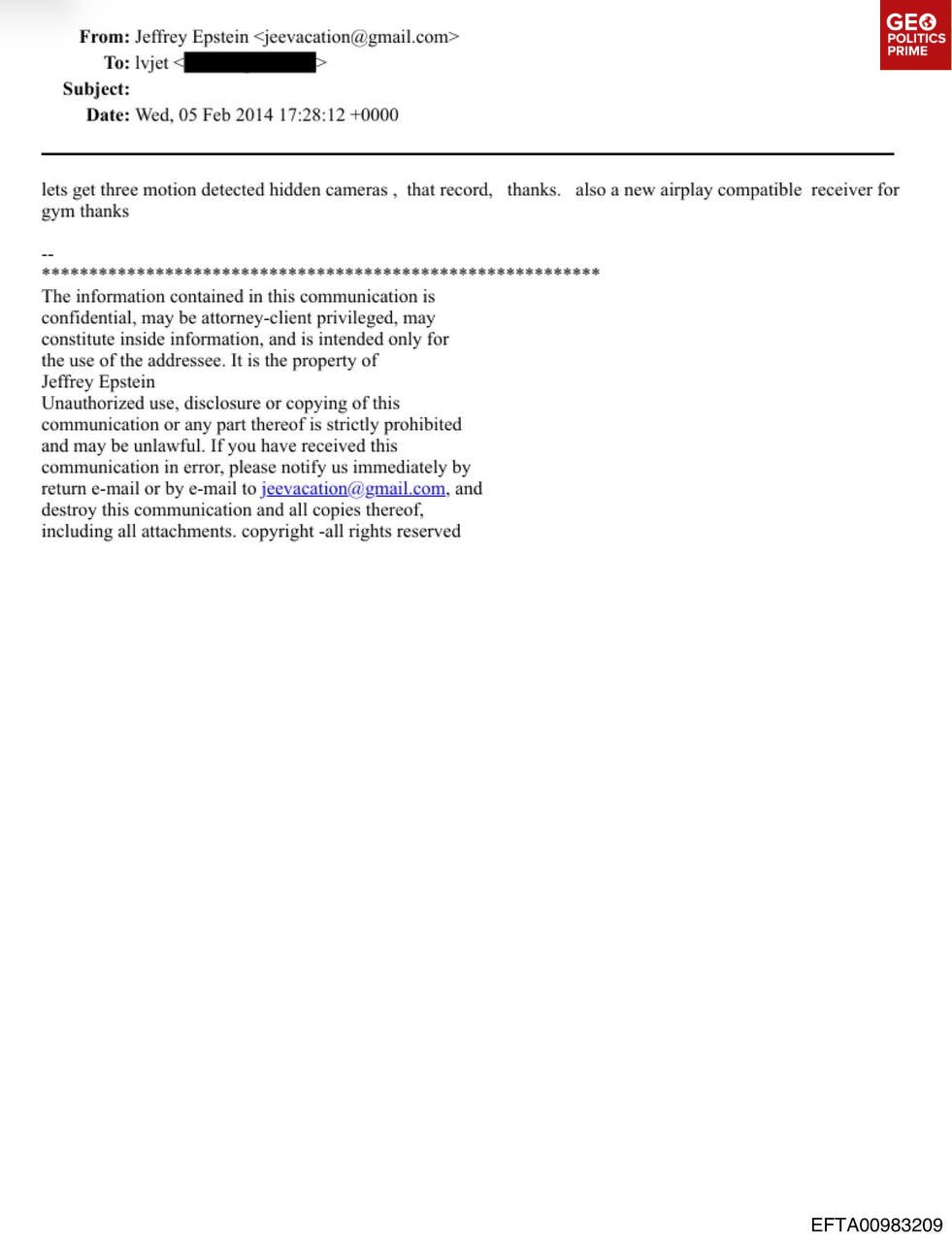
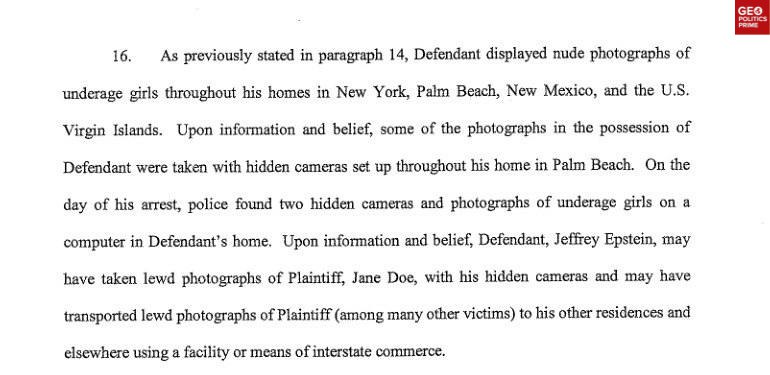
In one email dated 5 Feb 2014, the sender listed as Epstein appears to request “three motion-detected hidden cameras… that record” and also asks for an AirPlay-compatible receiver for the gym. A separate excerpt from a court filing alleges that hidden cameras were installed throughout his Palm Beach home and that, on the day of his arrest, police found two hidden cameras and a computer containing illegal sexual material involving minors, with claims the content may have been transported to other residences.

The documents and screenshots shared online should be treated with caution until authenticated and placed in full context, but the combination of surveillance-hardware requests and court-file allegations is fueling renewed questions about whether Epstein’s operation extended beyond abuse into systematic kompromat-style recording.


South Africa Retail Sales Cool: +2.6% YoY in December

South Africa’s retail sales growth slowed in December to +2.6% YoY, down from +3.6% previously hinting at softer consumer momentum into year-end.

Market lens: A cooler retail print can weigh on near-term growth expectations and keep ZAR sensitive to domestic demand signals.

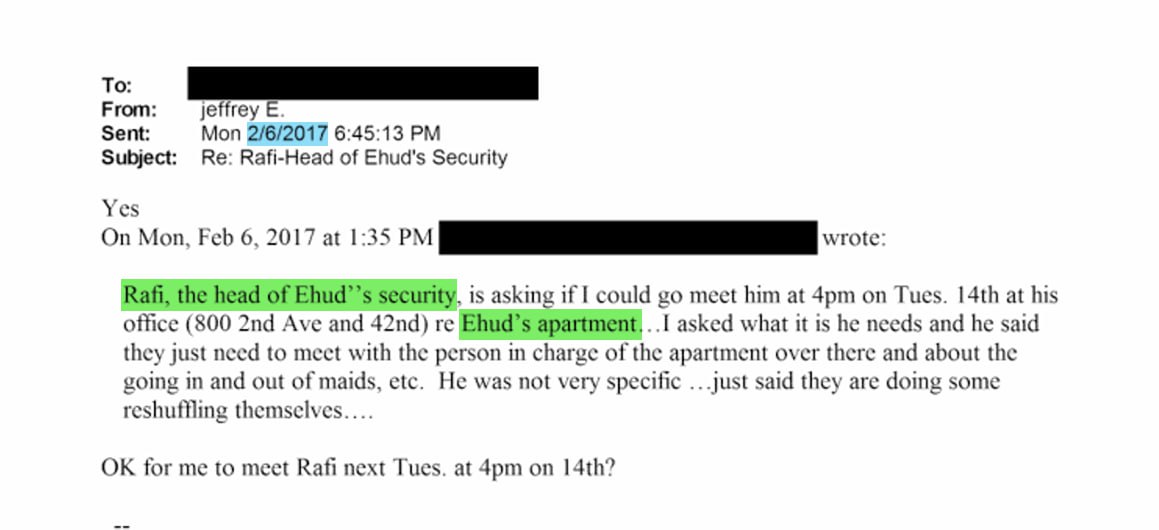
Claim Watch: Alleged Israeli security surveillance at an Epstein-linked Manhattan apartment

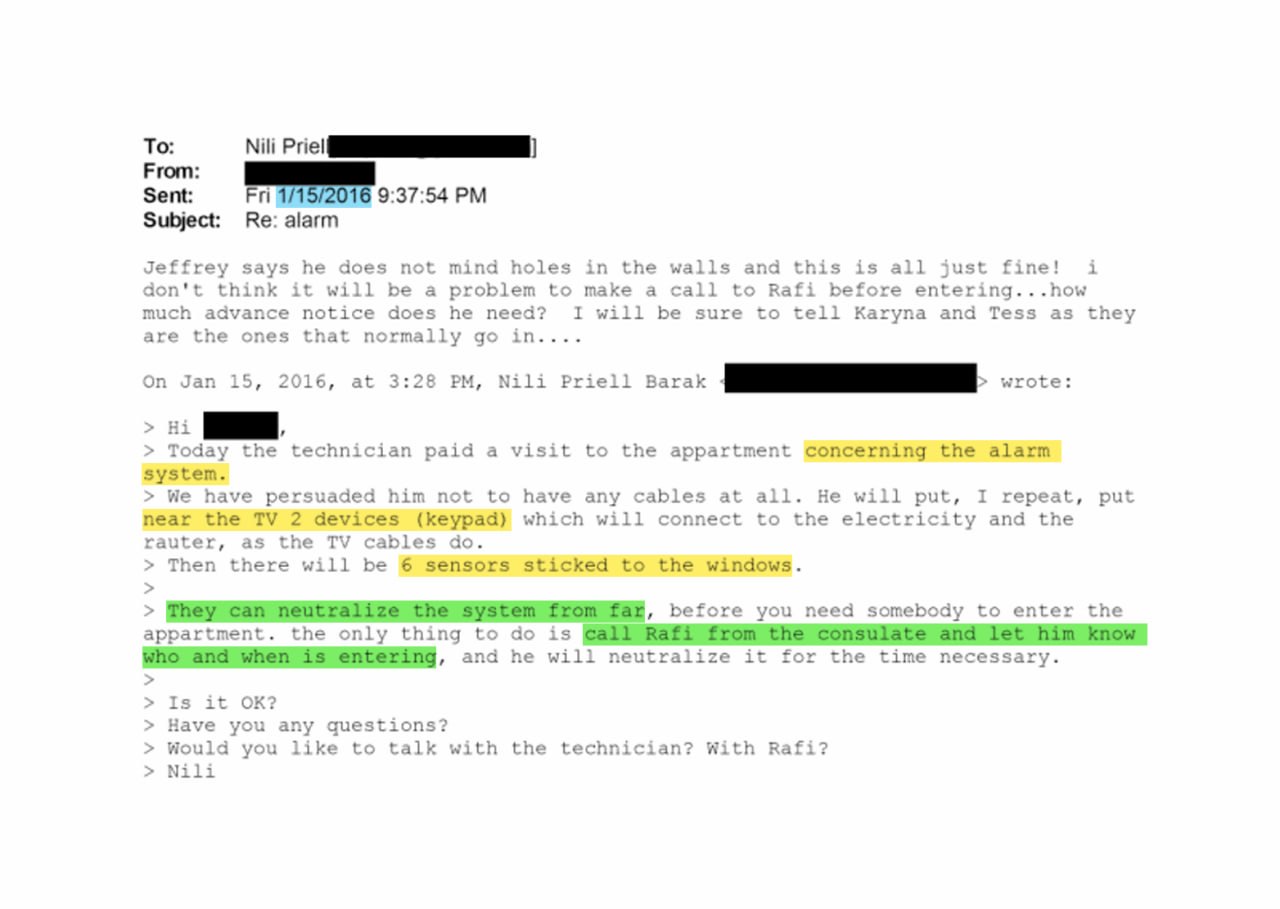
A new allegation circulating online claims security personnel linked to Israel installed surveillance equipment at a Manhattan apartment controlled by Jeffrey Epstein, allegedly set up for visits by former Israeli PM Ehud Barak, and kept active for around two years in coordination with Epstein’s staff.

At this stage, the specific “Israeli security installed surveillance” claim is not independently verifiable from a clearly attributable, public, unredacted DOJ document or corroborated reporting that identifies the exact document/serial/docket reference needed to validate the email context.

What is documented in mainstream reporting is that Barak’s contacts with Epstein have drawn scrutiny, and senior Israeli figures have publicly rejected broader claims that Epstein worked for Mossad, calling them categorically false.

What to watch next: release (or publication) of the underlying document ID(s) (full email headers + attachments, docket/serial numbers) or an on-the-record clarification from relevant authorities. Until then, treat the allegation as unconfirmed.


More Others news

Day Trade Signals

BoE-cut bias: simple trade scenarios for GBPUSD + EURGBP

One rule: GBP trades the UK front-end. If UK 2Y gilt yield keeps drifting lower, stay GBP-bearish; if it bounces, GBP shorts get harder. UK 2Y is around 3.60% now, with a key “more-cuts priced” pivot near 3.55%.

Next BoE decision: Thursday, 19 March 2026.

Current spots (for reference): GBPUSD ~1.355; EURGBP ~0.874.

GBPUSD (more USD noise — use this only if you also have a USD view)

▶️ Scenario A — GBP downside (clean):

Trigger: UK 2Y falls (especially toward/through 3.55%) and USD stays firm.

Entry: Sell on a 4H close below the last 2–3 day low (use your chart level).

Invalidation: 4H close back above the last 2–3 day high.

▶️ Scenario B — GBP short squeeze:

Trigger: UK 2Y bounces + “cut path” gets priced less (or USD softens).

Entry: Buy on a 4H close above the last 2–3 day high.

Invalidation: Back below the breakout level.


EURGBP (cleaner BoE expression — best for “BoE cut = GBP weaker”)

▶️ Scenario A — BoE cut / dovish path = EURGBP up:

Trigger: Break/hold above ~0.8741 (day top area) or just sustained trade above the ECB reference ~0.8733.

Entry: Buy the breakout / buy the retest.

Invalidation: A move back below ~0.8724 (day low area).


▶️ Scenario B — BoE pushes back / GBP resilient = EURGBP down:

Trigger: Rejection and close back below ~0.8724 + UK 2Y firming.

Entry: Sell the breakdown.

Invalidation: Back above ~0.8741.


Gold Intraday: Rebound Bias Above 4875

  • Pivot: 4875
  • Plan: Long above 4875
  • Targets: 4944 then 4970 (extension)

Alternative: Below 4875, look for downside toward 4842 then 4820

Momentum: RSI suggests upside momentum (supports the rebound bias)

USD/JPY Intraday: Further Advance Above 153.20

  • Pivot: 153.20
  • Plan: Long above 153.20
  • Targets: 153.90 then 154.15 (extension)

Alternative: Below 153.20, look for downside toward 152.90 then 152.65

Momentum: RSI is bullish, supporting further upside

Dow Jones (H6) Intraday: Bullish Bias Above 49400

  • Pivot: 49400
  • Plan: Long above 49400
  • Targets: 49720 then 49830 (extension)

Alternative: Below 49400, look for downside toward 49230 then 49050

Momentum: RSI is mixed-to-bullish, still supportive of the upside bias

Nasdaq 100 (H4) Intraday: Bullish Bias Above 24600

  • Pivot: 24600
  • Plan: Long above 24600
  • Targets: 24850 then 24980 (extension)

Alternative: Below 24600, look for downside toward 24450 then 24300

Momentum: RSI lacks downward momentum, supporting the upside bias

EUR/AUD Intraday: Bearish While Below 1.6775

  • Pivot / Resistance: 1.6775
  • Plan: Short bias while below 1.6775
  • Targets: 1.6749 (20-MA area) then 1.6757 (50-MA area) as the first reaction zone; continuation lower remains favored while capped.

Alternative: Above 1.6775, look for 1.6828 then 1.6859

Momentum: RSI < 50, MACD negative and below signal, and price below 20/50 MAs (1.6749 / 1.6757) → overall negative configuration

USD/CAD Intraday: Key Resistance at 1.3670

  • Pivot / Resistance: 1.3670
  • Plan: Short below 1.3670
  • Targets: 1.3620 then 1.3600 (extension)

Alternative: Above 1.3670, look for upside toward 1.3690 then 1.3710

Comment: Upside is likely capped by the 1.3670 resistance unless price breaks and holds above it

NVIDIA Intraday: Short-Term Rebound (Pivot 181.2)

  • Pivot: 181.2
  • Plan: Rebound / long bias while above 181.2
  • Targets: 183.79 (20-MA) then 186.47 (50-MA) as the next upside caps; extension only if momentum improves.

Alternative: Below 181.2, look for downside toward 176.8 then 174.2

Momentum check: RSI > 50 (supportive), MACD above signal but still negative → upside is tactical, and a stronger bullish signal needs MACD > 0.

Trend context: Price is above 20-MA (183.79) but below 50-MA (186.47) → rebound inside a still-mixed trend.

Tesla Intraday: Short-Term Rebound Toward 431.4 (Pivot 401)

  • Pivot: 401
  • Plan: Rebound / tactical long while above 401
  • Target: 431.4 (rebound objective)
  • Risk caps on the way: 411.39 (20-MA) and 417.05 (50-MA) — likely reaction/resistance zones before 431.4

Alternative: Below 401, look for downside toward 389.6 then 382.6

Momentum / setup: Mixed — RSI < 50 (weak momentum), MACD negative but above signal (early stabilization), price below 20/50 MAs → rebound is possible, but it’s counter-trend until back above the MAs.

More Day Trade Signals news

Iran

Thousands Mark “40th Day” Memorials for Protest Victims, Chant Against Islamic Republic Officials

Reports and images received from Iran indicate that, during the 40th-day memorial ceremonies for those killed in the Dey protests, thousands gathered at victims’ graves, commemorated their memory, and chanted slogans against officials of the Islamic Republic.

At the same time, Islamic Republic institutions in Tehran and several other cities held state-organized ceremonies on 18 and 19 Dey, attended by government officials and selected participants, in parallel with the public memorial gatherings.

Reuters: Iran Fortifies Parchin Site With Concrete Shield, Buries Isfahan Tunnel Entrances

Satellite imagery reviewed by Reuters suggests Iran has recently built a concrete protective shield over a new facility inside the Parchin complex (about 30 km southeast of Tehran) and then covered it with soil, a move analysts say would make the structure harder to detect and potentially more resilient against attack.

Reuters also pointed to new satellite evidence—flagged by the Institute for Science and International Security (ISIS)—showing renewed work in late January to backfill/bury tunnel entrances at the Isfahan nuclear complex, which Reuters notes was bombed by the U.S. in June 2025.

In a Feb. 9 imagery update, ISIS said all entrances to the Esfahan tunnel complex were completely buried, arguing that backfilling can dampen the effects of potential airstrikes and also make ground access—including a special-forces raid to seize or destroy any highly enriched uranium—significantly more difficult.

Ynet: Tehran Pressures Hezbollah to Join if a Wider War Erupts

Israeli outlet Ynet reported that Tehran has been pressing Hezbollah to join any potential war against Israel if one breaks out—amid heightened fears of escalation tied to U.S.–Iran tensions. The report was relayed in an Israeli live update and did not cite sources.

The claim lands as Hezbollah officials have publicly warned they would not remain “neutral” in a war targeting Iran, while mediators have cautioned the group that it could be targeted if conflict expands.

U.S. Moves to Bar 18 Iranian Telecom & Regime Figures Over Speech Crackdown

The U.S. State Department said Secretary of State Marco Rubio is taking steps to impose visa restrictions on 18 Iranian regime officials and telecommunications industry leaders—measures that would bar entry to the United States. Identities and case details were not disclosed.

In a related press statement, the policy is framed as targeting individuals believed complicit in serious human-rights violations, including inhibiting Iranians’ rights to freedom of expression, and also covers immediate family members.

The move lands amid heightened focus on Iran’s communications controls after reports of a near-total internet shutdown during recent unrest, while separate reporting has highlighted U.S.-backed efforts to expand access to uncensored connectivity tools such as Starlink terminals and VPN-related services.

Pezeshkian: Iran Wants to Avoid War, but “Won’t Bow” to Bullying

Iranian President Masoud Pezeshkian said Tehran is not seeking war and wants to avoid conflict, but stressed Iran “will not bow” in the face of bullying, coercion, or humiliation, according to Iran’s state broadcaster IRIB.

Geneva Summit Hands 2026 Courage Award to “Heroes of Iran”; Masih Alinejad Accepts

The Geneva Summit for Human Rights and Democracy awarded its 2026 Courage Award to the “Heroes of Iran”, honoring Iranians resisting repression, according to the summit’s official program and coverage of the event.

Iranian journalist and activist Masih Alinejad accepted the award on behalf of Iranians, as the summit’s ceremony segment listed the award presentation to “The Heroes of Iran.”

Iran Schools Threaten Families by SMS After Class Boycott Leaves Rooms Empty

Iran’s Education Ministry and school officials have reportedly sent threatening text messages to families after a protest boycott of classes left classrooms largely empty, according to Iran International.

A screenshot shared with the outlet shows a school acknowledging a student’s absence on 28–29 Bahman and warning of disciplinary action if it continues. Iran International also reported earlier messages from families saying some schools threatened grade penalties for non-attendance.

The boycott is described as linked to protests and 40th-day memorials for those killed, while videos and reports cited by the outlet show students in some schools tearing down or burning images of Iran’s leaders and chanting patriotic songs.

More Iran news

Oceania

Australia Wages Hold Firm: WPI Steady at 0.8% QoQ, Edges Up to 3.4% YoY

Australia’s wage growth stayed resilient in Q4, with the Wage Price Index unchanged at 0.8% QoQ (in line with expectations and prior). On an annual basis, wages ticked up to 3.4% YoY (from 3.3%).

Market lens: A steady wage profile keeps the RBA focused on services inflation persistence, offering mild support to AUD if broader inflation remains sticky.

New Zealand Producer Prices Undershoot: Input Costs Fall, Output Prices Barely Rise

New Zealand’s Q4 producer prices came in softer than expected, pointing to easing pipeline inflation. PPI Input fell -0.5% QoQ (vs +0.4% expected; prior +0.2%), while PPI Output rose just +0.1% QoQ (vs +0.6% expected; prior +0.6%).

Market lens: Softer PPI supports a cooling inflation narrative and can keep NZD sensitive to dovish repricing risks.

Australia Leading Index Turns Negative: -0.1% MoM

Australia’s MI Leading Index slipped to -0.1% MoM in January (from +0.1%), hinting at softer forward momentum.

Market lens: A weaker leading signal can temper optimism on growth and cap upside for AUD if risk sentiment fades.

RBNZ Holds at 2.25%, Pushes Back on Hawkish Hype—Kiwi Slips, Swaps Drop

New Zealand’s central bank kept rates unchanged and dialed down expectations for a near-term hawkish pivot, arguing policy needs to stay accommodative to support a fragile recovery. In its first meeting chaired by Governor Anna Breman, the Reserve Bank of New Zealand (RBNZ) held the Official Cash Rate (OCR) at 2.25%, as expected.

The RBNZ pulled forward its projected timing for a first hike to around year-end (from mid-2027 in its November forecasts), but the guidance was still more dovish than market pricing that had leaned toward a hike as soon as September/October. Markets repriced quickly: the kiwi fell 0.5% to about $0.60, and 2-year swap rates dropped 8 bps to 2.9245%, the lowest since mid-January.

The bank said policy is likely to remain accommodative “for some time” if the economy evolves as expected, while projecting inflation—after rising to 3.1% last quarter—to return to the 1%–3% target band this quarter. The updated OCR track points to 2.38% by year-end, implying a small probability of a hike, which Breman acknowledged in her post-decision remarks.

More Oceania news

Equities

Santos to Cut ~10% of Staff, Launch 2026 Portfolio Review After Profit Slump

Australia’s No. 2 oil and gas producer Santos said it will cut about 10% of its workforce and conduct a strategic review of its Australian integrated oil and gas portfolio in 2026, after reporting a sharp fall in annual profit. Shares closed 0.6% lower at A$6.63, after falling as much as 3.8% earlier in the session.

Underlying earnings for FY2025 dropped 25% to $898 million, slightly below the Visible Alpha consensus of $904 million, pressured by weaker commodity prices and a delay in ramping up the Barossa LNG project due to a technical issue. Santos also reported FY2025 revenue down 8% to $4.94 billion.

Despite weaker results, the company declared a final dividend of 10.3 cents per share, matching the FY24 payout and beating market expectations of 10 cents. Santos did not provide details on the scope or timing of the 2026 portfolio review.

Japan Stocks Bounce: Nikkei +1.1%, TOPIX +1.4% as Tech Rebounds on Bargain Buying

Japanese equities staged a recovery, with the Nikkei 225 up 1.1% and the TOPIX up 1.4%, clawing back some of the steep losses seen earlier this week. Tech shares led the rebound on the Nikkei after weeks of heavy selling, while broader gains were supported by bargain buying following two sharp down sessions triggered by disappointing Q4 GDP data released Monday.

Sentiment also got a lift from stronger-than-expected January trade data released Wednesday, which showed Japan’s key exports surged well above forecasts, helping stabilize the growth narrative after the GDP shock.

ASX 200 Extends Gains, Led by CSL as Miners and Energy Names Drag

Australia’s ASX 200 rose 0.4%, extending the prior session’s advance, as CSL helped lift the index—up 0.6% after announcing a licensing deal with Eli Lilly.

But the upside was capped by heavyweight decliners: BHP fell 1.6% from record highs even after delivering strong first-half earnings on Tuesday. In energy, Santos slid 1.7% after reporting a 25% drop in annual profit, while Suncorp also fell following weaker earnings.

Market lens: The move looks like a selective “risk-on” session—healthcare strength offset by profit-taking in cyclicals and earnings-driven selling.

Nifty Treads Water as Indian IT Sinks on AI-Agent Disruption Fears

India’s Nifty 50 was little changed to slightly lower in early Wednesday trade as heavyweight software names struggled to stabilize after a bruising February selloff. The pressure was concentrated in tech: Reuters noted the Nifty IT index fell about 2.4%, with all constituents in the red and Infosys down ~3%.

The drag reflects a growing narrative that AI agents and new “agentic” software could compress the traditional IT services/consulting value chain—fears that have intensified after Anthropic rolled out fresh upgrades and tools around its Claude ecosystem, adding to global tech volatility.

More Equities news

USA

US Housing Finance Pulse: Mortgage Rates Dip, Refi Jumps While Purchases Ease

U.S. mortgage data showed a mixed read: the MBA 30-year mortgage rate edged down to 6.17% (from 6.21%), helping total mortgage applications rise +2.8% WoW (from -0.3%). The pickup was led by refinancing: Refinance Index 1,375.9 (from 1,284.6), while purchase demand softened with the Purchase Index at 157.1 (from 161.5). The broader Mortgage Market Index rose to 339.0 (from 329.9).

Market lens: Lower rates are reactivating refi faster than new purchase demand—consistent with affordability still constraining buyers.

US Housing Surprise: Starts Jump to 1.404M in December as Permits Improve

U.S. housing construction accelerated at year-end, with Housing Starts (Dec) rising to 1.404M, beating 1.310M expectations and up from 1.272M prior. Starts also posted a strong +6.2% MoM in December (prior -4.2%), signaling a firmer building pulse despite tight financing conditions.

Forward-looking activity improved as well: Building Permits (Dec) increased to 1.448M, above 1.400M expected and up from 1.388M previously suggesting builders are keeping pipelines active.

Market lens: Stronger starts and permits point to housing resilience, but sustainability will hinge on mortgage rates and affordability.

US Factory Orders Mixed in December: Headline Dips, But Core and Capex Proxy Beat

U.S. durable goods data for December showed a soft headline but firmer underlying demand, especially outside volatile categories. Durable Goods Orders (MoM) fell -1.4% (better than -1.8% expected, but a sharp reversal from +5.4% prior).

Under the hood, the “core” measures strengthened:

  • Core Durable Goods Orders (MoM): +0.9% (vs +0.3% expected; prior +0.4%)
  • Durables ex-Transport (MoM): +0.9% (vs +0.3% expected; prior +0.4%)
  • Nondefense Capital Goods Orders ex-Air (MoM): +0.6% (vs +0.5% expected; prior +0.8%) — a key business investment proxy
  • Durables ex-Defense (MoM): -2.5% (prior +6.6%)

Market lens: The headline drop likely reflects volatility (transport/large-ticket categories), while the strong core and capex proxy suggest business demand remains more resilient than the top line implies—supportive for a “steady growth” narrative if confirmed by ISM and capex spending.

US Data Pulse Firms: Industrial Output Beats, Retail Gauge Hot; GDPNow Edges Lower

U.S. activity data sent a mostly strong signal. The weekly Redbook retail gauge accelerated to 7.2% YoY (from 6.5%), pointing to firm consumer demand. Industrial data also beat expectations: Industrial Production rose 0.7% MoM in January (vs 0.4% expected; prior 0.2%) and Manufacturing Production rose 0.6% MoM (vs 0.4% expected; prior 0.0%). Annual industrial output printed 2.28% YoY (prior 1.30%).

The one soft spot was utilization: Capacity Utilization came in at 76.2%, below 76.6% expected (prior 75.7%). Meanwhile, the Atlanta Fed GDPNow (Q4) estimate nudged down to 3.6% from 3.7%.

Market lens: Strong production and retail momentum can keep “higher-for-longer” rate pricing in play, even as GDPNow signals only a modest cooling from recent estimates.

More USA news

Commodities

Oil Stabilizes After Tuesday Slide: Brent Near $67.51, WTI $62.40

Crude prices edged higher in early trade after sharp losses the previous session. Brent April futures rose 0.1% to $67.51/bbl, while WTI gained 0.1% to $62.40/bbl. The modest rebound follows Tuesday’s pullback, when Brent fell nearly 2% and WTI dropped 1%, highlighting a market still searching for direction after the recent risk-premium swings.

EU Presses Kyiv for Druzhba Repair Timeline as Hungary & Slovakia Scramble for Oil Alternatives

The European Commission is pressing Ukraine for a timeline to repair the Druzhba oil pipeline route that crosses Ukrainian territory and has been a key conduit for Russian crude into Hungary and Slovakia, Sky News reported.

The line has been shut since January 27 after damage linked to the war: Ukraine has said the outage followed a Russian attack on the infrastructure, while Hungary and Slovakia have accused Kyiv of deliberately holding back supply despite the route being technically operable.

Despite the disruption, the Commission has said there is no immediate short-term supply risk, with Hungary and Slovakia able to lean on mandatory emergency stocks (typically 90 days under EU rules) if needed, even as both countries explore alternatives such as Croatia’s Adria route and limited reverse-flow options via the Czech Republic.

Slovakia Declares Oil Emergency, Taps Reserves as Slovnaft Halts Diesel Exports to Ukraine

Slovakia has declared an oil emergency after the disruption of Russian crude flows via the Druzhba pipeline, and approved releasing up to 250,000 tonnes of crude from state emergency stocks as a loan to Slovnaft, the country’s only refinery, to keep domestic supply stable.

The refinery says the volume should cover at least one month of operations while it ramps up alternative imports via the Adria route, a process estimated at 20–30 days; the loan is to be backed by a financial guarantee and is expected to run no later than September with gradual repayment of the borrowed crude.

Prime Minister Robert Fico said Slovnaft will stop diesel exports to Ukraine (and other exports) and redirect output to the domestic market, arguing there is no imminent risk of fuel shortages inside Slovakia.

More Commodities news

Europe

France Inflation Stays Ultra-Low: January Prices Fall on the Month, CPI Holds at 0.3% YoY

France’s January inflation data reinforced a very soft price backdrop, with both CPI and HICP declining m/m and annual inflation remaining near zero.

  • French CPI (MoM, Jan): -0.3% (in line; prior +0.1%)
  • French HICP (MoM, Jan): -0.4% (in line; prior +0.1%)
  • French CPI (YoY, Jan): 0.3% (in line; prior 0.8%)
  • French HICP (YoY, Jan): 0.4% (in line; prior 0.7%)
  • Inflation ex-tobacco (YoY, Jan): 0.3% (prior 0.7%)

Market lens: With inflation well below typical ECB comfort levels, the data keeps the disinflation narrative intact and supports expectations for a policy path that remains growth-sensitive.

Lagarde Early-Exit Talk Hits the Tape; ECB Pushes Back

A Financial Times report said ECB President Christine Lagarde is expected to consider stepping down before her non-renewable term ends in October 2027, potentially ahead of France’s April 2027 election, which could shape the political timing of her successor’s selection.

But ECB officials moved quickly to cool the story: ECB Executive Board member Piero Cipollone said he has no indication Lagarde plans an early resignation, while an ECB spokesperson said she is focused on her mission and no decision has been taken.

German Bund Demand Firms: 10Y Auction Clears at 2.730%

Germany’s 10-year Bund auction cleared at 2.730%, down from 2.850% previously—signaling a lower yield stop-out and steadier demand at the long end.

Market lens: A softer auction yield can support the broader “rates easing” tone in core Europe, with spillovers into EUR rate spreads.

More Europe news

Japan

Japan Trade Shock: Deficit Narrows as Exports Surge, Imports Slip

Japan’s January trade data came in much stronger than expected on the flow side. The trade balance showed a smaller deficit of -¥1,152.7B versus -¥2,142.1B expected (prior +¥113.5B). Exports jumped 16.8% YoY (vs 12.0% expected; prior 5.1%), while imports fell -2.5% YoY (vs +3.0% expected; prior 5.2%). The adjusted trade balance swung to a surplus of ¥0.46T (vs -¥0.18T expected; prior -¥0.06T).

Market lens: Strong exports plus weaker imports can be supportive for JPY at the margin, though FX reaction still depends on rates and risk sentiment.

Reuters Tankan Improves: Japan Business Sentiment Rises to 13

Japan’s Reuters Tankan Index rose to 13 in February from 7, signaling a stronger business sentiment pulse.

Market lens: Improving sentiment can support the case for firmer activity, but markets will look for confirmation in hard data and wages.

More Japan news

UK

Wednesday, February 18, 2026 — UK Inflation Cools to 3.0%, But Core Sticks at 3.1%

UK price data for January reinforced a disinflation trend in the headline, while core inflation remained a touch firmer—keeping the Bank of England’s “wait-and-see” bias intact. CPI (YoY) printed 3.0% (in line with expectations; down from 3.4%), while Core CPI (YoY) came in at 3.1% (slightly above 3.0% expected; down from 3.2%). On the month, CPI fell -0.5% (in line; prior +0.4%) and Core CPI fell -0.6% (a bit less negative than -0.7% expected; prior +0.3%).

Pipeline pressures looked mixed-to-softer: PPI Input (MoM) +0.4% (in line; prior -0.5%), but PPI Output (MoM) 0.0% (below +0.2% expected; prior -0.1%). Yearly producer measures eased too (PPI Output YoY 2.5%, PPI Input YoY -0.2%). Retail inflation cooled: RPI (YoY) 3.8% (in line; prior 4.2%) with RPI (MoM) -0.5% (slightly softer than expected).

Market lens: Headline cooling helps the BoE easing narrative, but sticky core means policymakers will likely demand more confirmation before declaring victory.

UK House Prices Surprise Higher: HPI +2.4% YoY

The UK housing data beat expectations, with the House Price Index (YoY) rising 2.4%, above 1.8% expected, though slightly below the prior 2.5%.

Market lens: A firmer house-price signal can support sentiment, but the broader outlook still hinges on rates and affordability.

More UK news

Cryptocurrency

Wednesday, February 18, 2026 — Crypto Opens Mixed: BTC $67.6K Slips While DOGE and ADA Tick Up

Crypto markets were mixed on Wednesday morning, with Bitcoin easing to $67,605 (-0.22%) and Ethereum essentially flat at $1,998.40 (-0.03%). Among major alts, XRP weakened to $1.4780 (-0.38%) and Solana dipped to $84.92 (-0.33%), while pockets of green showed up in Dogecoin $0.1011 (+0.10%) and Cardano $0.2826 (+0.07%)—a “selective risk” tone rather than broad momentum.

More Cryptocurrency news

Russia

Russia Producer Prices Sink Deeper: PPI -5.0% YoY, -2.5% MoM

Russia’s January producer prices fell more sharply, with PPI -5.0% YoY (prior -3.3%) and PPI -2.5% MoM (prior -1.6%), signaling deeper deflationary pressure at the factory gate.

Market lens: Softer PPI can ease pipeline inflation, but currency, fiscal dynamics, and sanctions-related supply constraints still dominate the macro picture.

More Russia news