IFC Markets Live Quotes

Market news roundup: Monday, 16 February 2026

91 short market news items, grouped by 13 sections.

Iran

Iran FM Ministry: Araghchi–Grossi Meeting in Geneva Focused on “Technical Issues”

Iran’s Foreign Ministry said a meeting between Abbas Araghchi and IAEA Director General Rafael Grossi was held at the Iranian foreign minister’s residence in Geneva, where the two sides discussed “certain technical matters” linked to Iran–IAEA cooperation within the framework of Iran’s safeguards commitments and “in accordance with the law passed by Parliament.”

The ministry also said Iran presented its technical views related to the indirect Iran–U.S. nuclear talks during the meeting.

Iran International: At Least 14 Protesters Sentenced to Death in “Online” Court Sessions

Iran International reports that Abolqasem Salavati, head of Branch 15 of Iran’s Revolutionary Court, has issued death sentences for at least 14 detained protesters in online proceedings, including Abolfazl Karimi.

According to the report, Karimi told his family he was subjected to beatings, torture, and a forced confession, saying he was made to sign confession papers while blindfolded and without proper medical treatment for his injuries.

Sources also say Salavati has been holding simultaneous virtual hearings for protesters in groups of 14.

Karimi, 35, is described as a motorbike courier in east Tehran and the father of a young child. The report says he was detained on Dey 16 while returning from work after trying to help two wounded women in the Hengam neighborhood of Tehran—women who had reportedly been shot in the leg. It adds that officers fired pellet shots at Karimi’s leg and arrested him alongside the two injured women.

After about a month in Tehran's Greater Prison, the report says Karimi was recently transferred with around 50 other protesters to Qezel Hesar Prison.

Iran International also notes it previously received information indicating Salavati issued a death sentence for Mohammad-Amin Biglari, a 19-year-old detained on Dey 18 on Tehran’s Damavand Street, and that his case has reportedly been sent to Iran’s Supreme Court.

Le Monde: Iran’s Intensifying Crackdown Tied to Khamenei Succession Crisis

France’s Le Monde, in an analysis titled “Ali Khamenei, or the Twilight of an Autocrat,” argues that the regime’s escalating repression is directly linked to a growing succession crisis around Iran’s supreme leader. The article frames the crackdown not only as a response to dissent but as part of a broader effort to control the transition and prevent fractures within the power structure as the post-Khamenei era comes into view.

Grossi: “In-Depth Technical Talks” With Araghchi Wrap Up Ahead of Geneva Negotiations

IAEA Director General Rafael Grossi said he has completed in-depth technical discussions with Iranian Foreign Minister Abbas Araghchi in Geneva, framing the meeting as preparation for important negotiations scheduled for tomorrow.

Grossi added that the talks focused on preparing positions and clarifying technical issues tied to upcoming Iran–U.S. (indirect) nuclear negotiations expected to take place in Geneva on Tuesday, February 17, 2026.

Sayyadmanesh Scores vs Antwerp, Refuses Celebration in Solidarity With Iran

Iranian forward Allahyār Sayyadmanesh found the net for KVC Westerlo in a 2–0 win away to Royal Antwerp, scoring the opener and later providing the assist for Westerlo’s second goal.

According to Iran International, Sayyadmanesh did not celebrate his goal as a gesture of support for the people of Iran and those killed in the ongoing unrest, and later posted on Instagram: “My heart is in Iran; my body is in exile.”

The report also pointed to a similar moment involving Iranian international Mehdi Ghaedi, who scored for Al Nasr against Al Ain and reportedly refrained from celebrating, hiding his face in his shirt.

Rasoul Khadem’s Zurkhaneh Message: “Our People Are Unprotected”

Iranian Olympic wrestling champion Rasoul Khadem appeared at Tehran’s Firefighting Zurkhaneh on Sunday, 26 Bahman 1404, joining a group of traditional athletes dressed in black as they performed to the patriotic tasnif “Az Khun-e Javanān-e Vatan, Lāleh Damideh.”

Addressing attendees, Khadem offered a stark prayer for Iran’s public: “God, our people are trapped, financially strained, unprotected… whoever, in any position, anywhere in the world, steals this people’s rights and oppresses them—show their disgrace and humiliation to all the people of the world.”

Reformist Figure Shakouri-Rad Moved to General Ward as Security Crackdown Expands

The defense lawyer for detained reformist activist Ali Shakouri-Rad says he has been transferred to the general ward of Tehran Greater Prison.

Iranian media had reported on Monday, February 9 (20 Bahman) that Shakouri-Rad—an executive council member of the Ettehad-e Mellat (Nation Alliance) Party—was arrested as part of what authorities described as action against an “overthrow and riot-instigating circle.”

Shakouri-Rad has previously challenged the state’s “riots” narrative, arguing that a significant portion of the violence was not the result of spontaneous protester actions, but rather the product of deliberate “injection of violence” by security forces to justify harsher repression.

Iran International: Arak Cemetery Closed as Families Face Tight Controls During “40th Day” Memorials

Families of some “Javidnams” say Arak cemetery was shut down around the time of 40th-day memorial ceremonies for those killed in Iran International’s coverage of the “Iranian National Revolution.” Before the closure, reports described a heavy security atmosphere and pressure on families to play Quran recitations instead of music and to avoid gathering.

According to information received by Iran International, the birthday commemoration for Parastoo Jarrahian on Sunday, 26 Bahman, was held under intense security control at her burial site, with officers reportedly allowing visitors to stand at the grave for no more than two minutes.

Witnesses said people who came to pay respects were immediately warned and forced to leave, with the cemetery environment becoming so securitized that holding a ceremony—or even remaining freely at the grave—was effectively impossible.

Other families also reportedly were not allowed extended presence at their loved ones’ graves. The families of Mehrdad Moshtaqi, Ehsan Akbari, and Esmail Ganjgoli said the closure forced them to cancel or reschedule the 40th-day memorials.

Iran MP: 28% of Detainees Were Under 20; No Clear Count of Student Deaths

Iranian lawmaker Farshad Ebrahimpour, a member of parliament’s Education Commission, said around 28% of those detained during the “National Revolution” were under the age of 20, adding that most have been released and returned to their universities and classrooms.

He said a small number have not returned due to “special issues,” but claimed they are being held in conditions suited to their age.

Ebrahimpour also said the incidents were mainly tied to Thursday and Friday, Dey 18–19, and that some of those arrested were students. He added: “I don’t have precise statistics” on how many under-20s or school students were killed.

‘Tehran’ Producer Dana Eden Dies Suddenly in Athens While Season 4 Filmed in Greece

Israeli TV producer and Tehran co-creator Dana Eden (52) was found dead in a hotel room in Athens, where she had traveled to closely oversee filming of the show’s fourth season in Greece, according to Israel’s public broadcaster Kan and reports carried by Israeli media.

The Times of Israel reported that Eden’s brother began searching for her after she stopped responding to messages and later found her in the hotel; local authorities have ordered an autopsy and are reviewing security footage and witness accounts.

Greek police officials told Reuters the investigation is ongoing and the case is being treated as a suspected suicide, citing evidence and testimonies, including pills found at the scene; a coroner also noted bruising on her neck.

The show’s production company, Donna and Shula Productions, urged the public and media not to spread unverified claims, saying rumors of a criminal or nationalistic motive are unfounded.

Iran Judiciary Chief Pushes Faster Indictments as Arrests Expand, Reports Say

Iran’s judiciary head Gholamhossein Mohseni-Ejei said authorities should not delay issuing indictments related to what he called the “main elements” of the protests, arguing that the public has “legitimate expectations” for these individuals to be tried and punished.

He also suggested cases could take longer to build, saying the investigation and documentation process may be prolonged because the alleged actions involve multiple layers.

Reports say tens of thousands have been detained during the ongoing unrest, with arrests continuing. Separately, The Washington Post reported that detentions have persisted for weeks, citing raids on homes and workplaces across both major cities and smaller towns and rural areas—indicating a crackdown spanning wide sections of Iranian society.

According to the report, those detained include university students, doctors, lawyers, teachers, actors, business owners, athletes, filmmakers, and reformist figures linked to Masoud Pezeshkian. It also cited activists monitoring arrests who say detainees are often kept in solitary confinement for days or weeks, cut off from family and legal counsel, leaving families scrambling to locate loved ones.

Iran’s Oil Exports Slide Into 2026 as U.S. Sanctions Pressure Tightens and China Demand Softens

New tanker-tracking data reviewed by Iran International, citing Kpler, show crude loadings from Iran’s Persian Gulf terminals fell below 1.39 million bpd in January 2026, a 26% drop from a year earlier—extending a steady decline since October rather than a one-off disruption.

The weakness is most visible in China, Iran’s primary (and effectively only) large buyer under sanctions: daily discharges at Chinese ports fell to 1.13 million bpd last month, down from about 1.4 million bpd in 2025, while unsold barrels are increasingly parking at sea.

This comes as Washington escalates enforcement on Iran’s “shadow fleet” and related networks (including new U.S. sanctions announced on Feb 6), and as U.S. officials signal a push to further curb Iran’s oil sales to China—raising fresh questions about the durability of Tehran’s core revenue stream in 2026.

Night Chants Continue Across Tehran, Mashhad, and Isfahan

Reports and videos cited by Iran International say nightly rooftop/window chants continued on Saturday, 25 Bahman (Feb. 14) in Tehran, Mashhad, and Isfahan—with footage pointing to chants in Tehran neighborhoods (including Tehransar and areas around Chitgar/Persian Gulf Lake), in Isfahan’s Khorzouq, and in Mashhad’s Vakilabad and Haft-Tir.

The same reporting also described heightened pressure and deterrence tactics, including a case in Karaj where a resident said security forces shot toward windows after chants were heard from inside homes.

Armored Raid Reported in Chenar Village, Hamedan — Residents Detained and Access Sealed Off

Reports linked to Iran International say security forces raided Chenar village in Asadabad (Hamedan) with dozens of armored vehicles and heavy weapons, detaining large numbers of residents in what witnesses described as highly violent arrests, with some people reportedly injured and abducted.

The same reporting says entry and exit routes to the village have been placed under tight security control, limiting movement as the situation remains fluid and hard to independently verify from inside the area.

New Price Shock Hits Iran’s Dairy and Basic Goods

Reports say a new—and steeper—round of price hikes took effect today, hitting dairy products and other essential items, adding fresh strain to household budgets already squeezed by food inflation. The move comes as upstream costs—especially raw milk—have surged, with Iranian reporting pointing to raw milk prices above 46,000 tomans/kg and warning of 40–53% jumps in dairy products as the increase passes through supply chains.

Analysts also point to a broader pattern of repeated increases and uneven enforcement, with some outlets noting sharp cumulative rises across the past year and periodic “off-schedule” price adjustments by producers/retailers—raising concerns about affordability and a further drop in dairy consumption.

Reports: Iran’s Data Centers Told to Go Back on Standby for Possible Internet Cut

Reports circulating online say Iran’s Security Council has issued a directive to domestic data centers to return to standby status for a potential internet shutdown if a “security incident” occurs.

The claim comes amid heightened sensitivity after Iran’s major communications blackout that began on January 8, 2026, which drew international criticism and calls to restore access.

Reza Pahlavi: Feb. 14 Rallies and Bahman 25–26 Night Chants Showed “National Unity”

Iran’s exiled Crown Prince Reza Pahlavi said the nighttime chants on Bahman 25–26 and the February 14 “Global Day of Action” gatherings were a clear display of national unity, praising protesters inside Iran and diaspora crowds abroad.

He described demonstrations stretching from Australia and New Zealand to London, Munich, Toronto, Vancouver, Washington, and Los Angeles as an echo of Iran’s “Lion-and-Sun” movement, saying the global turnout strengthened morale inside the country and amplified international attention.

Iran FM Meets Oman’s Foreign Minister in Geneva

Iranian media reported that Abbas Araghchi, Iran’s foreign minister, held talks in Geneva with Badr Albusaidi, Oman’s foreign minister. No further details were provided on the agenda or outcomes of the meeting.

Iran MP: “We’re Not Afraid of War” as Tehran Defends Talks

Mohammadreza Mohseni Sani, a member of Iran’s parliament National Security Commission, said the Islamic Republic entered negotiations to “convince the international community” and—at the insistence of some regional countries—but stressed Tehran “does not fear the outbreak of war,” according to an interview with Rooydad24. The comments underscore a dual-track messaging: maintaining a diplomatic channel while projecting deterrence and readiness for escalation.

Hana Rights Group Says It Verified Identities of at Least 24 Children Killed in Iran’s “National Revolution”

The Hana Human Rights Organization said it has verified the identities of at least 24 children killed during the “Iranian National Revolution,” alleging they died from direct gunfire by state forces following field investigations and multi-source verification.

In its report, Hana said the shootings were not isolated incidents but reflected a “systematic and continuous” pattern, with many cases involving strikes to vital areas of the body. The group said the victims include a three-year-old child.

Hana argued that the use of military-grade weapons against children constitutes a serious violation of the right to life and obligations under the Convention on the Rights of the Child, which Iran has joined. The organization added that if the scale and organization of these acts are proven, they could amount to crimes against humanity.

The report places responsibility on the governing structure and security institutions of the Islamic Republic and calls on the international community to launch independent, international investigations, pursue accountability for those who ordered and carried out the killings, and preserve evidence for future legal proceedings.

Boroujerdi: Iran Negotiates to Avoid Being Labeled as “Refusing”—Nuclear and Missile Capabilities Non-Negotiable

Alaeddin Boroujerdi, a member of Iran’s parliamentary National Security and Foreign Policy Commission, said Tehran will engage in talks following Donald Trump’s proposal—along with the reported dispatch of Trump’s son-in-law—so Iran is not accused of dodging negotiations.

At the same time, Boroujerdi stressed that preserving Iran’s nuclear and missile capabilities is a red line and not up for negotiation. He also warned that if the United States attacks Iran, Tehran would strike U.S. bases in response.

India Seizes 3 U.S.-Sanctioned Tankers Tied to Iran, Tightens Coastal Surveillance

India has seized three U.S.-sanctioned oil tankers—Stellar Ruby, Asphalt Star, and Al Jafzia—and stepped up maritime surveillance to curb illicit trade in its waters, a source told Reuters.

New Delhi is aiming to prevent ship-to-ship (STS) transfers in its maritime zone—an evasive method often used to mask the true origin of oil cargoes.

According to Reuters’ source, the vessels repeatedly changed identities to evade oversight, and their owners are based outside India. Reuters also noted that OFAC previously sanctioned vessels whose IMO numbers match the ships India seized, and that two of the tankers are linked to Iran (including Al Jafzia carrying Iranian fuel oil to Djibouti in 2025, and Stellar Ruby flagged in Iran), while Asphalt Star largely operated around China.

The enforcement push comes as U.S.–India ties improve, with Washington moving toward cutting tariffs on Indian goods to 18% from 50% under a trade understanding announced earlier this month—though key details, including references to Russian oil, have varied across statements and follow-up frameworks.

Cage-Bar Vehicles and a Predawn Raid: Mass Arrests Reported in Chenar, Asadabad

Iran International reported that security forces raided the village of Chenar in Asadabad county, Hamedan province, early Monday morning (27 Bahman) and detained hundreds of residents, allegedly using beatings and violence during the arrests.

According to information received by the outlet, detainees were paraded through the village in vehicles fitted with cage-like metal bars before being transferred to the local police station.

The report says the operation began around 4:30 a.m., involving dozens of armored vehicles and several minibuses/vans, with four DShK heavy machine guns reportedly positioned on rooftops. Residents gathering outside the station to follow up on detainees allegedly heard shouting and screams from inside.

The village had drawn attention during earlier protests for residents carrying the Lion and Sun flag and for slogans first chanted there, Iran International added.

Tehran Detention Report: Theater Actor & Stage Designer Fa’ezeh Taheri Arrested

Reports say Fa’ezeh Taheri, an Iranian theater actor and stage designer, was arrested in Tehran in mid-January. IranWire cited received information indicating she was detained on 25 Dey 1404 and transferred to an undisclosed location, with no official details on charges or her current status.

A separate report by Iran International listed a different arrest date (19 Dey), highlighting ongoing uncertainty around the timeline and circumstances.

Iran MPs Press Araghchi for a Clear Line Against “Abraham Peace” Plan

A group of 51 Iranian lawmakers, led by MP Ahmad Rastineh, urged Foreign Minister Abbas Araghchi to take an explicit, “revolutionary” stance against the “Abraham Peace” initiative they say was proposed by U.S. President Donald Trump. The lawmakers raised the demand in a formal parliamentary notice, calling for clear public positioning by Iran’s top diplomat on the plan.

Red Cross Chief Meets Iran’s Foreign Minister in Geneva

Iranian media reported that Mirjana Spoljaric Egger, President of the International Committee of the Red Cross (ICRC), met with Abbas Araghchi, Iran’s foreign minister, in Geneva. No further details were provided about the agenda or outcomes of the meeting.

IRGC Navy Official: U.S. Claims Are “Psychological Warfare,” Says Foreign Warships Are “Within Our Range”

Mohammad Akbarzadeh, political deputy of the IRGC Navy, dismissed recent U.S. statements as “psychological operations,” saying much of the American “media atmosphere and claims” should be analyzed as an effort to create fear, spread despair, and disrupt public calculations—including comments attributed to Donald Trump.

He also said foreign naval forces in the region are under “full intelligence oversight” and within the range of Iran’s defensive power, adding that Iran’s armed forces are on full readiness, monitoring movements and not ignoring threats.

Fresh Crackdown Reported on Iranian Lawyers as More Bar Association Signatories Detained

The Telegram channel “Emtedad” reported a continuing wave of pressure on Iranian attorneys, saying Hadi Sharifzadeh—secretary of the Public Relations Commission of the Fars Region Bar Association—was arrested at his home on 27 Bahman.

Emtedad also said Hamid Norouzi, a member of the same bar association, had been detained on 25 Bahman.

According to the report, both Sharifzadeh and Norouzi were among the signatories of a statement in which some members called for resignations in protest against the crackdown on protesters in the early days of the “Iranian National Revolution.”

Emtedad added that four signatories of the statement have now been detained, and that Mohammad Hadi Jafarpoor and Mehdi Ansari were released on bail last week.

Alhurra: Tehran Recruiting Volunteers via Iraqi Proxies for a Possible U.S.–Israel War

Alhurra reported that Iran is continuing to arm Iraqi armed groups and that those factions are still recruiting volunteers in preparation for a potential confrontation with the United States and Israel.

The report points to public displays of missile capabilities and renewed mobilization efforts as indicators of an Iranian plan to activate armed Iraqi proxies as a forward line of pressure if tensions escalate. Other regional reporting in recent weeks has also described Iraqi factions registering volunteers to fight alongside Iran in the event of a wider conflict.

Iran U-23 Coach Quietly Ousted After Political Fallout, Reports Say

Iran’s U-23 head coach Omid Ravankhah has been removed from his post “without fanfare,” according to Varzesh3, which reported football federation officials are already consulting on a replacement after the team’s early elimination and poor tournament output.

Iran International linked the move to Ravankhah’s public support for the “Iranian National Revolution” on the sidelines of the Asian tournament, after which he was briefly detained upon return to Tehran and had his passport confiscated, according to the outlet’s earlier reporting.

Ravankhah’s remarks—delivered in a post-match presser—were widely circulated, including the line: “It’s my social duty to stand with my people… even if it has consequences.”

Dragnet After the Bloodshed: Reports Say Iran Is Running a Nationwide Campaign to Identify Protesters

More than a month after a violent crackdown on nationwide demonstrations, targeted arrests are still spreading across Iran, with reports describing a coordinated, countrywide effort by security bodies to track, identify, and detain suspected protesters.

Recent reporting describes a mix of tactics—surveillance footage, raids, and digital monitoring—with many detainees reportedly held incommunicado and families struggling to obtain basic information amid restrictions on communication and reporting.

Summoned, Then Jailed: Monarchist Journalist Kianoush Darvishi Sent to Tehran Greater Prison

Iran International reported that Kianoush Darvishi, described as a monarchist journalist, was arrested on Monday after being summoned to the prosecutor’s office and then transferred to Tehran Greater Prison. Sources close to the family said he is the sole caregiver for his mother, who reportedly has cancer and is undergoing chemotherapy.

Abdanan Protests Start Early Ahead of “40th Day” Memorials

Reports say protests have begun in Abdanan on Monday night (27 Bahman), with residents taking to the streets a day before Tuesday’s planned 40th-day memorial ceremonies for several people killed in the city. The early turnout suggests tensions are rising ahead of the commemorations, which often become a flashpoint for renewed mobilization.

Pezeshkian Government Calls for State-Led “40th Day” Ceremony as Families Mark Protest Dead

Iran’s Masoud Pezeshkian government has invited the public to attend a state-organized event on Tuesday, 28 Bahman (February 17, 2026)—a move described as an attempt to appropriate the 40th-day memorials for those killed in the Dey 1404 protests.

The Islamic Republic has previously sought to recast people killed by state forces as Basij members or “martyrs,” but this is described as the first official effort to directly take over the “40th day” commemorations of victims of popular protests through a formal government-backed ceremony.

More Iran news

Political

Switzerland Talks, Carrier Pressure: US–Iran Nuclear Diplomacy Resumes Under a Hard Deadline

The U.S. and Iran are set to hold a second round of nuclear talks in Switzerland this week, after restarting negotiations earlier in February over Tehran’s nuclear programme.

The renewed dialogue is unfolding alongside heightened military signaling: Washington has deployed a second aircraft carrier to the Middle East, and markets see the U.S. preparing for a sustained military option if diplomacy fails. President Donald Trump has repeatedly warned Iran to accept a deal or face further military action.

Over the weekend, Iranian ministers said Tehran is ready to compromise on its nuclear programme in exchange for relief from U.S. sanctions, while signaling that the next move is now up to Washington.

Cassis: Lavrov Talks Suggest Russia Ready for a “Peace Step” as Geneva Round Nears

Swiss Foreign Minister Ignazio Cassis said Russia appears to want to “take a step toward peace” in Ukraine, following talks he held with Russian Foreign Minister Sergei Lavrov in Moscow earlier this month in his capacity as OSCE chair.

Cassis added he is cautiously optimistic, saying the Moscow meetings helped lay groundwork and “give hope” ahead of the next U.S.-brokered Geneva talks scheduled for February 17–18, 2026—even as core disputes, especially over territory, remain unresolved.

Larijani: West “Playing Divide-and-Rule” as Iran Leans on Moscow & Beijing

In comments attributed to Iranian security chief Ali Larijani in an Al Jazeera Arabic interview, he portrayed Moscow and Beijing as the partners that “stood with” Iran—while contrasting them with Germany, the UK, and France—and claimed the West is trying to create a rift between Tehran, Russia, and China.

The remarks land as Iran and the U.S. pursue indirect nuclear talks, with Larijani insisting discussions are limited to the nuclear file and warning that Israel is trying to sabotage diplomacy and trigger a wider regional war.

Taliban Signals “Full Support” for Iran If It’s Attacked

Taliban spokesperson Zabihullah Mujahid said Afghanistan would offer “all forms of support” to Iran if it comes under attack, framing it as solidarity with a neighbor while stressing the Taliban does not want war.

The statement was reported amid renewed speculation about potential U.S. military options against Iran and as Kabul and Tehran navigate a delicate relationship spanning borders, refugees, trade routes, and regional security.

Netanyahu Condemns Bnei Brak Riot: “Extreme Minority” Targeted Female IDF Soldiers

Israeli PM Benjamin Netanyahu said he “strongly condemns” violent riots in Bnei Brak directed at female IDF soldiers and police officers, calling the perpetrators an “extreme minority” that does not represent the broader Haredi community. He warned Israel “will not allow anarchy” and “will not tolerate any harm” to service members and security forces.

The statement followed an incident in which two female soldiers were surrounded/chased by a mob and rescued by police, amid tensions around ultra-Orthodox conscription and related protests; authorities reported over 20 arrests.

Israel Indicts Galilee Resident for Alleged Iran Spying Targeting Ex-Defense Minister Gallant

Israel’s Shin Bet and police say prosecutors have filed an indictment against an Israeli citizen, Fares Abu al-Hija, accusing him of spying for the Islamic Republic and collecting sensitive information related to former defense minister Yoav Gallant.

According to the joint statement as reported, Abu al-Hija—described as a resident of Kaukab Abu al-Hija in northern Israel—was detected and arrested in recent weeks while allegedly conducting a field intelligence-gathering mission, and investigators say he was in contact with an Iranian intelligence operative.

Rubio: “No One Has Ever Struck a Successful Deal With Tehran”—But Washington Will Try Anyway

U.S. Secretary of State Marco Rubio said that “no one’s ever been able to do a successful deal with Iran”, but added that Washington still wants to test the negotiation track to see what comes of it—framing diplomacy as difficult but preferable to escalation.

Rubio’s remarks come as the U.S. and Iran prepare for another round of indirect nuclear talks in Geneva, with the broader backdrop still defined by sharp disputes over uranium enrichment, sanctions relief, and regional security risks.

Sen. Hoeven: “Ayatollahs Only Understand Strength”—Says U.S. Troop Posture Is Meant to Signal “Change Must Happen” in Iran

U.S. Senator John Hoeven (R–North Dakota) told Fox News that Iran’s leadership “only understands strength,” arguing that Washington’s expanded military posture in the region is meant to make clear “this is serious” and that “change has to happen.”

In the interview, Hoeven described Iran’s ruling system as a major state sponsor of terrorism, citing support for groups including Hamas, Hezbollah, and the Houthis, and portrayed the Iranian public as suffering under a highly repressive regime.

He also pointed to the Global Day of Action demonstrations on Saturday, saying large crowds rallied worldwide against Tehran—events that included hundreds of thousands in Munich, according to reporting and police estimates.

Hoeven additionally discussed Reza Pahlavi’s potential role, suggesting it may center on facilitating a transition—while emphasizing that Iran’s future governance must ultimately reflect what Iranians choose.

Geneva Red Lines: Araghchi Says “No Submission to Threats” Ahead of U.S. Talks

Iran’s Foreign Minister Abbas Araghchi said he arrived in Geneva with “real initiatives” aimed at a fair and balanced agreement, while stressing that what is “absolutely not on the table” is submission to threats, in a post on X.

Araghchi also said he would meet IAEA Director General Rafael Grossi on Monday for “deep technical” discussions, and that he will see Oman’s foreign minister before the next round of indirect Iran–U.S. talks set for Tuesday in Geneva.

Germany’s Nuclear Taboo Re-Opens—Pistorius Warns “Great Caution” as Berlin Talks Deterrence with Paris

Germany’s Defense Minister Boris Pistorius warned that any discussion about German nuclear weapons must be handled “with great caution” and in strict alignment with international law, arguing the consequences could be enormous and could fuel wider proliferation pressures.

The remarks land as Chancellor Friedrich Merz explores ways to strengthen Europe’s nuclear deterrence without abandoning NATO’s framework. Berlin has confirmed that talks with France on nuclear deterrence are at a very early stage and are intended to supplement—not replace—the U.S. nuclear umbrella inside NATO.

Kremlin: Geneva Talks Will Go Beyond Abu Dhabi—Territory Now on the Table, Medinsky Brought In

The Kremlin said the agenda for the upcoming Russia–U.S.–Ukraine talks in Geneva will be broader than the Abu Dhabi rounds, explicitly including territorial issues alongside other Russian demands.

Kremlin spokesperson Dmitry Peskov added that presidential aide Vladimir Medinsky will attend specifically to manage this expanded scope—after Abu Dhabi discussions were framed more narrowly around security-related matters.

Rubio Seals U.S.–Hungary Civil Nuclear Pact as Trump Cheers “Golden Age” Ties

U.S. Secretary of State Marco Rubio and Hungary’s Foreign Minister Péter Szijjártó signed a civilian nuclear cooperation (intergovernmental) agreement in Budapest, a step the Hungarian government and U.S. officials framed as opening the door to deeper cooperation on nuclear energy projects and fuel/technology options.

The signing comes amid a broader political push by President Donald Trump and Rubio to highlight closer U.S.–Hungary relations ahead of Hungary’s April elections, with discussions also touching on Central Europe’s energy security and alternative supply chains.

Orbán: Hungarians Said “No” to Ukraine’s EU Bid—Accuses Kyiv of Trying to Shape Hungary’s Election

Hungarian PM Viktor Orbán said Hungarians have already made their position clear that they won’t accept Ukraine joining the EU, arguing it would drag Hungary into war and damage the economy. He claimed Ukrainians “want a government that will send them money,” and alleged that’s why they have “decided to participate” in Hungary’s election campaign.

Orbán’s comments fit his widening “war or peace” election narrative ahead of Hungary’s April 12 vote, where he has also portrayed the opposition as aligned with Brussels and Kyiv. In late January, Orbán’s government said it would summon Ukraine’s ambassador over what he called election meddling.

Hormuz Signal: IRGC Drills Near Talks, Hints at Chokepoint Leverage

Iran’s IRGC Navy says it has launched a “Smart Control of the Strait of Hormuz” exercise to test operational readiness against “possible security and military threats,” timed just ahead of the next Geneva round of indirect U.S.–Iran nuclear talks.

With tensions elevated, Tehran has again floated the threat of disrupting the Strait of Hormuz if attacked—while Washington has issued updated guidance to commercial vessels transiting the corridor.

Separately, Iranian state media has recently aired footage of missiles striking simulated sea targets during major drills in the Sea of Oman/near Hormuz—signals that markets tend to read through the lens of shipping risk and an oil “geopolitical premium.”

Geneva Talks Broaden: Russia Revives Istanbul-Era Team; InterContinental Named as Venue

Russia, the U.S., and Ukraine are set to hold the next round of talks in Geneva on February 17–18, with the Kremlin saying the agenda will be broader than Abu Dhabi and will include territorial issues—a shift that prompted Moscow to bring in presidential aide Vladimir Medinsky to handle the expanded political scope.

Russia’s delegation is expected to include senior figures spanning security and economics—reported participants include GRU chief Igor Kostyukov, Deputy FM Mikhail Galuzin, and Putin’s investment envoy Kirill Dmitriev—a lineup that overlaps with the Medinsky-led negotiating team associated with earlier Istanbul tracks.

Separately, TASS cited a source saying the talks will take place at Geneva’s InterContinental Hotel, and that visas have been approved for the Russian delegation, estimated at around 20 people.

Israel Sets 60-Day Disarm Ultimatum for Hamas, Warns Gaza War Could Resume

A senior adviser to Israeli Prime Minister Benjamin Netanyahu said Israel is prepared to give Hamas 60 days to disarm, warning that if the group does not comply, Israel would resume the war in Gaza and the IDF would “complete the mission.” The comments were made by Cabinet Secretary Yossi Fuchs, according to Israeli media reports.

Fuchs also suggested the timeline could be linked to upcoming U.S.-led diplomacy—reportedly saying the Trump administration requested the 60-day window—though details on when the “clock” starts remain fluid.

Regime-Change Drumbeat & Regional Flashpoints: Gaza Deadline, Hormuz Drills

US Senator Lindsey Graham has again amplified regime-change rhetoric—promoting the “Make Iran Great Again” line and framing Tehran’s leadership as the core driver of regional instability.

At the same time, Israel is warning Hamas it has 60 days to disarm or Israel will resume/expand operations, while Iran is showcasing readiness via IRGC naval activity in and around the Strait of Hormuz—keeping escalation risk elevated across security and energy channels.

U.S. Keeps Military Option Alive as Geneva Iran Talks Near — Nadimi

As a second round of indirect Washington–Tehran talks in Geneva approaches, U.S. military movements in the Middle East are continuing—signaling Washington is keeping a military option available if diplomacy fails.

In parallel, Reuters reported the U.S. military is preparing for the possibility of sustained, weeks-long operations against Iran if President Trump orders an attack, while recent reporting also points to an expanded U.S. posture including carrier deployments.

In a discussion with Iran International, defense and security analyst Farzin Nadimi said the buildup is meant to preserve credible leverage, and that if conflict begins it could unfold in a multi-phase pattern—starting with strikes on air defenses/radars alongside clearly defined military targets.

USS Abraham Lincoln Off Oman as Washington Signals “Plan B” Ahead of Iran Talks

Satellite imagery (including EU Sentinel-2) has placed the U.S. aircraft carrier USS Abraham Lincoln in the Arabian Sea off Oman, with BBC Verify and other open-source trackers putting it roughly 150 miles (~240 km) from Oman and around ~700 km from Iran’s coast (exact positions can be intentionally obscured for operational security).

The sighting lands as the Trump administration sustains a broader regional posture while diplomacy runs in parallel. U.S. officials have confirmed a second carrier, the USS Gerald R. Ford, has been ordered toward the Middle East to join Lincoln—an escalation framed as leverage if talks stall, despite reported maintenance-cycle concerns for Ford.

With Iran simultaneously underscoring deterrence—including activity around the Strait of Hormuz, a critical chokepoint for global oil flows—markets will keep one eye on headlines and another on shipping risk premia.

Graham in Israel: “USS Gerald R. Ford Isn’t Here for Show” as He Calls Iran “At Its Weakest”

U.S. Senator Lindsey Graham said during a visit to Israel that he is leaving “confident” the United States and Israel can deliver a “decisive blow” to Iran, according to i24NEWS. He emphasized that the deployment of the aircraft carrier USS Gerald R. Ford was not a symbolic move, insisting it was “not sent for a show of force or sightseeing.”

Graham also claimed Iran is at the “weakest point in its history” and said there is no disagreement between President Donald Trump and Prime Minister Benjamin Netanyahu on Iran policy. He warned that it would be a “disaster” if promises to the Iranian people are not fulfilled and the “Ayatollah” remains in power after the military moves.

In another part of his remarks, Graham said Trump views “regime change in Iran” as the best option, arguing that this clarifies the U.S. stance. He also referenced attending a gathering of Iranians in Munich, calling it the best experience of his life, and said participants—whom he described as 250,000 people—referred to him as “Uncle Lindsey.”

Israel’s F-35I “Adir” Gets a Range Boost—Ambassador Says Stealth Remains Intact

Yechiel Leiter, Israel’s ambassador to the United States, said Israel has upgraded its F-35I “Adir” fighter jets with additional fuel tanks that extend operational range “without compromising stealth,” in remarks to Israel Hayom cited by The Times of Israel.

Leiter also claimed Israel has added four missiles mounted on the wings, signaling broader efforts to expand the platform’s reach and payload options—though specific technical details were not disclosed.

Zero Enrichment Is the Real Flashpoint in Nuclear Talks, Analyst Says

In an interview with Iran International, Mehrzad Boroujerdi—dean of the College of Humanities at Missouri University of Science and Technology—said the core dispute in nuclear negotiations centers on whether Iran’s enrichment must be reduced to “zero” or allowed to continue.

He argued that if talks focus strictly on the nuclear file, three issues sit at the heart of the standoff: (1) continuation vs. a full halt to enrichment, (2) dilution or export of uranium enriched above 60%, and (3) permitting frequent IAEA inspections of nuclear facilities.

Boroujerdi added that Tehran has tried to tilt the negotiating climate toward economic incentives—including the possibility of U.S. investment in Iran’s oil, gas, and mining sectors—seeking to appeal to Donald Trump’s commercial approach. But he said the “main knot” remains the same three fundamentals.

Bennett to Graham: “Maximum Pressure” Moment to Push Iran’s Regime Toward Collapse

Former Israeli prime minister Naftali Bennett posted a photo with U.S. Sen. Lindsey Graham on X, saying they discussed “the situation in Iran” and options for action against the Islamic Republic.

Bennett wrote that Iran’s leadership is “weaker than ever” and argued that now is the time to apply stronger pressure to enable the fall of what he called a “murderous regime” and dismantle its regional “terror octopus.” He also claimed Israel’s political spectrum—government and opposition—would back such a move, framing it as national unity against Israel’s enemies.

Shirin Ebadi: Iran’s Protests Are Back—and the State “Couldn’t Stop Them”

Nobel Peace Prize laureate Shirin Ebadi said in an Instagram message that Iran’s “wounded society,” after suffering a heavy blow, has fused anger and grief into “two powerful arms” to lean on—rising again and raising its voice of protest less than a month later. She argued that the authorities have failed to halt the protests.

Ebadi added that nighttime slogans have resumed since the evening of 22 Bahman, and that despite forced confessions, show trials, and wide-ranging sentences, demonstrations are continuing and “the people have not fallen silent.”

Swiss–Omani Diplomacy in Geneva Ahead of U.S.–Iran Talks

Swiss Foreign Minister Ignazio Cassis met Oman’s Foreign Minister Badr Albusaidi in Geneva ahead of the next round of U.S.–Iran negotiations expected to take place there under Omani facilitation.

In a public message, Cassis praised Oman’s “constructive” role in enabling dialogue and welcomed the decision to hold the talks in Switzerland, describing it as taking place in the “heart of International Geneva.” He added Switzerland supports efforts to de-escalate tensions and remains ready to host and support further dialogue.

More Political news

Others

Royal-Linked Cancer Charity Loses Trustee After ‘Baby’ Email With Epstein Resurfaces

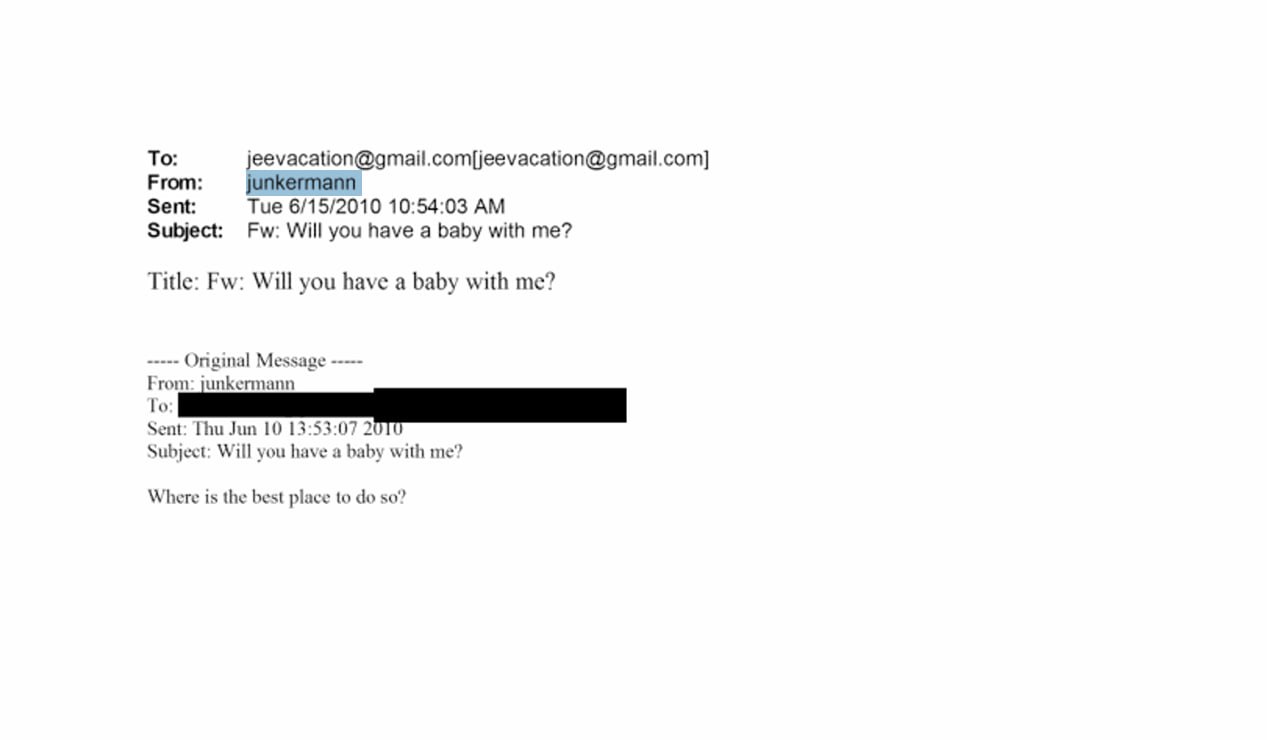
  • Countess Nicole Junkermann (Nicole Brachetti Peretti), a London-based tech investor, has stepped down as a trustee of the Royal Marsden Cancer Charity, amid renewed scrutiny over her past links to Jeffrey Epstein, according to reports.
  • The charity is royal-linked (patronage tied to the Prince and Princess of Wales), making the resignation politically and reputationally sensitive.
  • Reports say newly surfaced correspondence included a 2010 email with the subject line “Will you have a baby with me?”; Junkermann said she regrets the contact and believes she was misled by Epstein.

“I Never Killed Anybody… I’m Scared for My Son” — Panic Email to Epstein Mentions Zampolli and Producer Bill Block

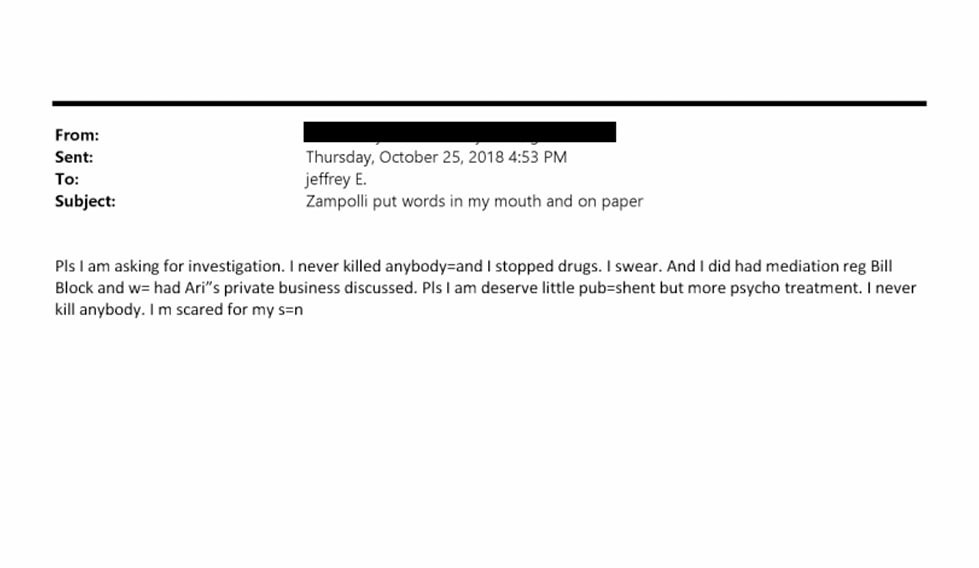
A newly circulated, redacted email dated Oct. 25, 2018 shows an unidentified sender writing directly to Jeffrey Epstein in frantic, broken English, pleading for an investigation and insisting: “I never killed anybody… I stopped drugs… I’m scared for my son.” The message claims someone named Paolo Zampolli “put words in my mouth and on paper,” references Hollywood producer Bill Block, and mentions discussions about an “Ari’s private business.”

What’s clear from the text: the sender is distressed, alleges they’re being misrepresented, and asks for “little publicity” but “more psycho treatment.” What’s not clear: who the sender is (name is redacted), what specific events they’re referring to, or whether any of the referenced names relate to wrongdoing—beyond being mentioned in the email.


Influencers Offer to Fund Zorro Ranch “Body Scans” as Epstein Burial Claim Spreads

Mario Nawfal and “Zacks Jerry Rig” say they want to fully fund ground scans and any recovery work at Jeffrey Epstein’s former Zorro Ranch, publicly tagging the property’s reported current owner Don Huffines and urging access for a search.

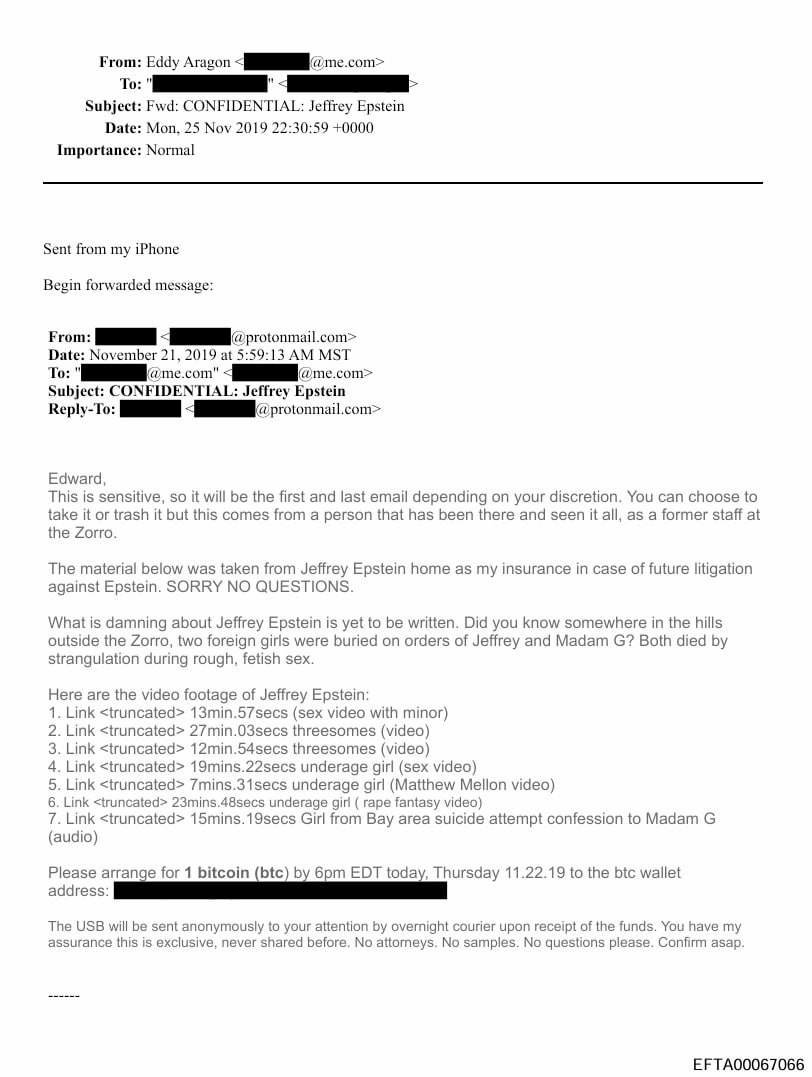
Their pitch leans on a recently amplified allegation referenced in DOJ-related materials and echoed in local reporting: an anonymous ex-staffer claim suggested two girls may be buried in hills near the ranch following “rough, fetish sex.” New Mexico’s land commissioner has formally called for law-enforcement to investigate and verify the claim.

Huffines — a Texas comptroller candidate whose family has been identified in multiple reports as the buyer of the ranch via an LLC — has not publicly responded to the funding offer as of the latest posts.

Israel Pushes Back on “Epstein Was Mossad” Claims as Barak Links Resurface

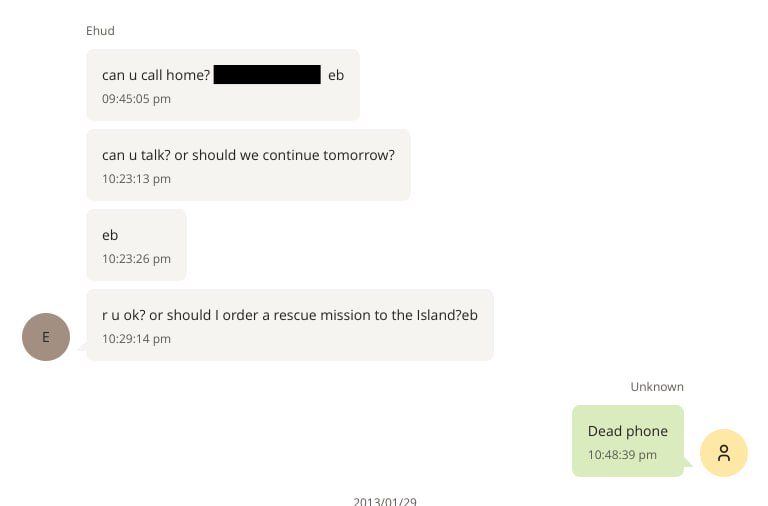
Israeli intelligence sources and senior officials are forcefully rejecting renewed claims that Jeffrey Epstein worked for Mossad, calling the allegation “baseless” in comments to Fox News Digital after the latest document releases revived scrutiny of Epstein’s long relationship with former Israeli PM Ehud Barak.

Fox reports that former Mossad director Yossi Cohen also dismissed the theory, saying Epstein had “absolutely nothing” to do with the agency. Prime Minister Benjamin Netanyahu similarly argued that Epstein’s closeness to Barak does not suggest intelligence ties.

Separately, recent coverage of the document dump continues to highlight Barak’s frequent contact with Epstein over many years; Barak has said he regrets the association and maintains he was not involved in any misconduct.

Turkey Budget Deficit Narrows in January: -214.5B TRY vs -528.1B Prior

Turkey’s January budget balance showed a smaller deficit at -214.50B TRY, improving sharply versus the prior reading (-528.10B).

Market lens: A narrower deficit can ease near-term fiscal pressure perceptions, but investors will still watch whether the improvement is structural (revenue strength/discipline) or one-off.

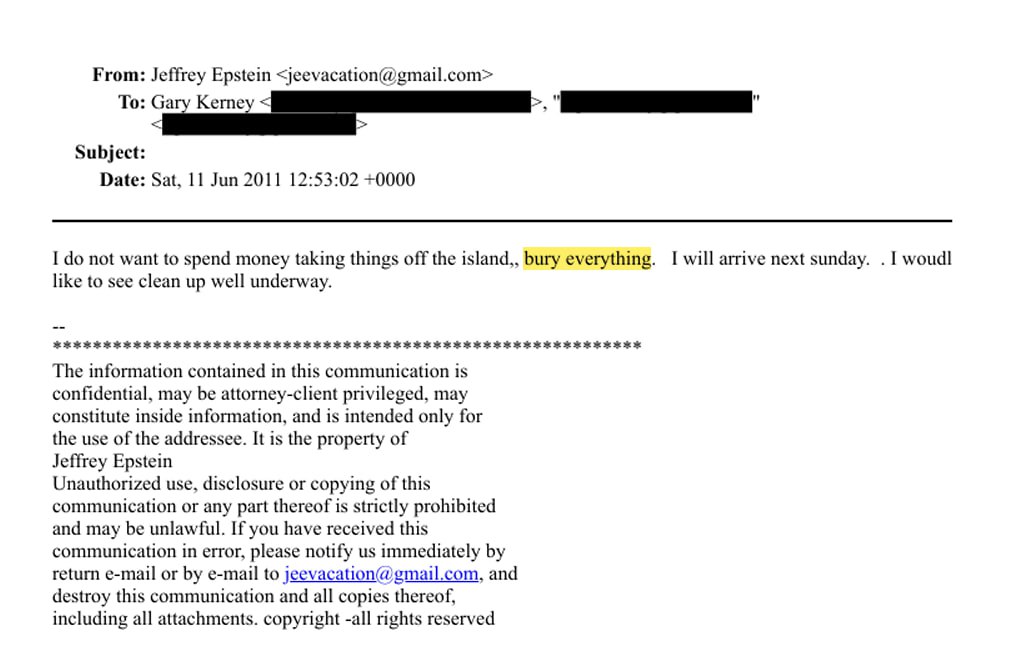
“Bury Everything” Email From Epstein Fuels New Cleanup Questions

A screenshot shared as part of the ongoing “Epstein files” chatter shows a 2011 email attributed to Jeffrey Epstein telling an associate: “I do not want to spend money taking things off the island… bury everything.” He adds that he planned to arrive the following Sunday and wanted the “clean up” well underway.

The phrase “bury everything” is explosive—but the document, as shown, doesn’t specify what is being buried or whether “bury” is literal or shorthand for conceal/destroy. On its own, the excerpt is not proof of human remains or any specific crime; it does, however, underline why investigators focus on logistics, staff instructions, and asset movement around Epstein’s properties.

What would actually clarify this:

  • Authenticity/metadata (original file, headers, chain of custody—beyond a screenshot)
  • Who the recipient is and what role they had (operations, security, maintenance)
  • Context: what “clean up” referred to (construction debris, records, devices, storage, etc.)
  • Any corroboration (witness statements, shipping logs, invoices, site work orders, geophysical surveys)

UK Police Seek Delay on Mandelson–Epstein Emails as Investigation Widens

UK police have asked the government to hold back the release of emails linked to Peter Mandelson and Jeffrey Epstein, warning that disclosure could risk prejudicing an ongoing criminal investigation.

The request follows a political scramble over who knew what—and when—after private messages (including some involving Keir Starmer’s team) became part of the wider controversy, prompting officials to coordinate any publication with investigators rather than release material piecemeal.

Police have already taken concrete steps in the Mandelson inquiry, including searches at two addresses, as scrutiny around the “Epstein files” continues to spill into UK politics.


Israel Liquidity Cools: M1 Growth Slows, Q4 GDP Normalizes

Israel’s monetary and growth gauges both eased: M1 money supply growth slowed to 2.5% YoY (Jan) from 4.5%, while Q4 GDP annualized cooled to 4.0% from 12.7%—signaling softer liquidity momentum alongside a more normalized growth pace.

SpaceX Sends 29 Starlink Satellites to Orbit in Predawn Cape Canaveral Launch

SpaceX’s Falcon 9 lifted off from Space Launch Complex 40 (SLC-40) at Cape Canaveral at 2:59:40 a.m. EST (07:59:40 UTC), deploying 29 Starlink broadband satellites to low-Earth orbit on the Starlink 6-103 mission.

The first-stage booster (B1090, on its 10th flight) returned to land on the droneship A Shortfall of Gravitas about 8.5 minutes after liftoff, and SpaceX confirmed satellite deployment roughly one hour into the mission.


Paris Police Raid Arab World Institute in Epstein-Linked Probe Into Ex-Minister Jack Lang

French police raided the Arab World Institute (Institut du Monde Arabe) in Paris on Monday as part of an investigation into its former head, ex-culture minister Jack Lang, after new “Epstein files” disclosures reignited scrutiny of his contacts with Jeffrey Epstein.

France’s National Financial Prosecutor has said the searches are tied to a preliminary probe into Lang and his daughter over suspected aggravated tax-fraud laundering, triggered by material released by the U.S. Justice Department. Lang has acknowledged corresponding with Epstein between 2012–2019 but denies wrongdoing or receiving financial benefits.

UCLA Backlash After Epstein Email Mentions Infant “Pacifier + Mother’s Voice” Research

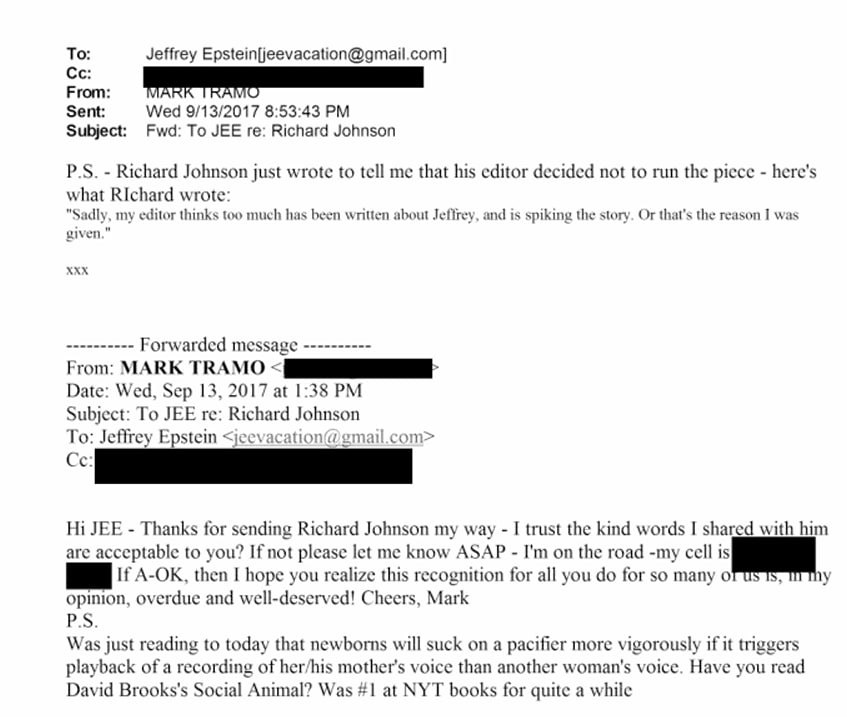
Newly released U.S. Justice Department materials have triggered a fresh campus controversy at UCLA after emails showed adjunct neurology professor Mark Tramo corresponding with Jeffrey Epstein, including a message referencing a study idea where a newborn’s pacifier sucking increases when it triggers playback of a mother’s voice.

Key points:

  • The correspondence has sparked protests and criticism at UCLA, with heightened scrutiny over why an academic would maintain any relationship with Epstein.
  • Reporting notes the documents do not accuse Tramo of a crime, and Tramo says he was engaged in donor-style outreach for research funding tied to neonatal sound/health work, adding he regrets the association.
  • UCLA-related coverage also describes additional exchanges—such as discussions involving students—that have intensified calls for institutional review.

More Others news

Japan

Japan Politics Boosts Fiscal Firepower, But JPY Faces Deficit Fears and Dovish BoJ Math

Japan’s ruling coalition supermajority is giving Takaichi a clearer legislative runway to push through more fiscal spending, reinforcing expectations for a more expansionary policy mix. But markets are also flagging the downside: concerns about stretched public finances could weigh on the yen, especially if investors demand a higher risk premium. At the same time, soft economic momentum is reducing the likelihood of additional Bank of Japan rate hikes, limiting yield support for JPY and leaving the currency more vulnerable when global risk sentiment turns.

Ueda–Takaichi First Post-Election Meet Puts BOJ Rate-Hike Timing Back in Focus

Bank of Japan Governor Kazuo Ueda and Prime Minister Sanae Takaichi are set to hold their first bilateral meeting since the ruling coalition’s landslide election win on Monday at 5:00 p.m. Tokyo time (08:00 GMT)—a closely watched check-in that could double as a venue to discuss the BOJ’s rate-hike path.

Markets have been simmering with speculation that rising living costs—partly linked to a weak yen—could push the central bank toward another hike as soon as March or April.

The last face-to-face meeting in November helped lay the groundwork for the BOJ’s December rate hike, and at that time the yen was sliding amid concerns Takaichi would resist early tightening—making Monday’s optics a fresh signal-point for JPY expectations.

Japan’s Q4 Growth Barely Crawls: Capex Miss + Flat External Demand Offset by Sticky Prices

Japan’s Q4 GDP details showed a weak growth mix: headline growth was positive but well below expectations, with business spending and external demand failing to provide a lift, while the GDP price index stayed elevated.

  • GDP (QoQ, Q4): 0.1% vs 0.4% expected (prior -0.7%)
  • GDP (YoY, Q4): 0.2% vs 1.6% expected (prior -2.6%)
  • GDP Price Index (YoY, Q4): 3.4% vs 3.2% expected (prior 3.5%)
  • GDP Capital Expenditure (QoQ, Q4): 0.2% vs 0.8% expected (prior -0.3%)
  • GDP External Demand (QoQ, Q4): 0.0% vs 0.1% expected (prior -0.3%)
  • GDP Private Consumption (QoQ, Q4): 0.1% vs 0.1% expected (prior 0.4%)

Market lens: The combination of soft real activity (capex + demand) with still-firm price pressure keeps the BoJ path finely balanced—supportive for “policy normalization” arguments, but growth fragility can still limit how fast rate expectations reprice, leaving JPY sensitive to global yields and risk tone.

Japan Factory Output Flat, But Capacity Utilization Jumps in December

Japan’s December industry data sent a mixed signal: industrial production was essentially unchanged, while capacity utilization improved sharply—suggesting factories ran more intensively even as output growth stayed muted.

  • Industrial Production (MoM, Dec): -0.1% vs -0.1% expected (prior -2.7%)
  • Capacity Utilization (MoM, Dec): +1.3% (prior -5.3%)

Market lens: Stabilizing output with a rebound in utilization can hint at early-cycle firming, but the broader trend still hinges on demand follow-through—especially exports and domestic consumption—keeping JPY sensitive to macro surprises and yields.

More Japan news

Europe

Swiss Economy Rebounds in Q4: GDP Turns Positive at +0.2% QoQ

Switzerland’s economy returned to growth in Q4, with GDP (QoQ) at +0.2%, reversing the prior quarter’s contraction (-0.5%).

Market lens: A positive print can modestly support the “soft-landing” narrative for Switzerland, though attention typically shifts to how broad-based the rebound is across consumption, exports, and investment.

Eurozone Industry Slips Again: Output -1.4% MoM (Better Than Feared), +1.2% YoY

Eurozone industrial production fell -1.4% MoM in December, slightly less negative than expected (-1.5%), but still a clear monthly contraction (prior +0.3%). On a yearly basis, output rose +1.2% YoY, matching expectations, though down from the prior +2.2%.

Market lens: The data keeps the manufacturing backdrop choppy—a softer monthly print offsets some optimism from positive YoY growth, leaving the outlook sensitive to demand and energy-cost dynamics.

Germany T-Bill Yield Dips: 12-Month Bubill at 1.985%

Germany’s 12-month Bubill auction cleared at 1.985%, slightly below the prior 2.004%—a modest pullback in short-end yields.

France Bills Steady Near 2%: BTF Yields Little Changed

France’s short-term funding costs stayed stable: 12-month BTF at 2.040% (prior 2.038%), 3-month at 2.004% (unchanged), and 6-month at 2.026% (prior 2.031%), showing minimal movement across the curve.

More Europe news

Forex

China Markets Shut for the Week, But USD/CNH Slips Toward 6.89 on Holiday Demand

Chinese markets will remain closed for the rest of the week, shifting near-term price discovery to offshore trading. In that backdrop, the yuan’s offshore pair USD/CNH fell 0.2% to 6.89, as traders positioned for seasonal yuan demand linked to the Lunar New Year holiday period—typically supported by conversion needs and cash demand.

Asia FX Softens: USD/INR Near 90.7 as USD/SGD Edges Up After Weak Singapore Exports

The Indian rupee weakened modestly, with USD/INR up 0.2% to around 90.7, signaling mild USD strength against INR. In Singapore, USD/SGD also ticked higher after non-oil exports for January came in weaker than expected, a data point that can dampen growth optimism and keep the SGD slightly on the back foot.

Yen’s Sharp Rebound Rewrites Japan’s Rate-Hike Politics

Japan’s yen rebound is prompting analysts to reassess how the government may view the desired pace of future BOJ rate hikes. After sliding close to the psychologically important 160-per-dollar level in January, the yen jumped nearly 3% last week—its largest weekly gain since November 2024—reducing immediate pressure on policymakers to “defend” the currency via faster tightening. The dollar was last at 152.66 yen in Asia on Monday, underscoring how quickly FX dynamics can shift ahead of key policy decisions.

More Forex news

Commodities

OPEC+ May Restart Output Hikes in April, Capping Oil’s Geopolitical Premium

Oil’s recent risk premium—inflated by U.S.–Iran tensions—was partly offset after Reuters reported OPEC+ is leaning toward resuming phased production increases from April, following a Q1 pause.

The logic is straightforward: higher prices improve the incentive for key members to add barrels and regain market share, but additional supply can also weigh on prices over time if it feeds oversupply concerns. A decision is expected at the group’s March 1 meeting of key producers.

Precious Metals Slide: Gold Drops Below $5,000 Spot as Silver Leads the Rout

Precious metals pulled back sharply in early trade, with spot gold down 1.2% to $4,982.10/oz and April gold futures off 0.9% to $5,001.76/oz by 00:09 ET (05:09 GMT)—putting the spotlight back on the $5,000 psychological level.

The broader complex also weakened, led by silver: spot silver tumbled nearly 3% to $75.4505/oz, while spot platinum fell 1% to $2,047.25/oz.

More Commodities news

UK

UK House Prices Stall: Rightmove Index Flat in February

The UK housing market lost momentum in February, with the Rightmove House Price Index showing no growth on both annual and monthly measures—cooling after stronger prior readings.

  • Rightmove HPI (YoY, Feb): 0.0% (previous 0.5%)
  • Rightmove HPI (MoM, Feb): 0.0% (previous 2.8%)

Market lens: A flat print suggests buyers remain cautious and affordability constraints are still biting—an input that can reinforce expectations for a gradual policy path from the BoE, with GBP staying sensitive to housing and inflation signals.

UK Weighs Under-16 Social Media Ban — Fast-Track Powers Target AI Chatbots and “Endless Scroll”

The UK government is considering an Australian-style ban on social media for under-16s that could be implemented within months after a public consultation, as ministers seek fast-track powers to respond more quickly to online harms.

Alongside the potential age ban, the package would also tighten rules on addictive design features (including infinite/endless scroll and similar engagement mechanics) and close a loophole that left some one-to-one AI chatbot interactions outside the Online Safety Act framework—bringing chatbots under clearer safety obligations and enforcement.

A government consultation on children’s social media use was launched in January, with officials signaling they want changes delivered in “months, not years.”

More UK news

India

India’s WPI Jumps Above Forecast: Manufacturing Reheats While Fuel Stays in Deflation

India’s January wholesale inflation surprised to the upside, with headline WPI rising to 1.81% YoY versus 1.25% expected (prior 0.83%). Under the hood, manufacturing inflation accelerated to 2.86% YoY (prior 1.82%), and food inflation turned positive at 1.55% YoY (prior -0.43%). The offset came from energy: fuel WPI stayed deeply negative at -4.01% YoY (prior -2.31%), keeping a lid on the overall price basket.

Market lens: The mix reads as firmer pipeline pricing led by manufacturing and food normalization, even as fuel deflation persists—potentially nudging rate-cut expectations to stay cautious.

India Trade Gap Widens: Deficit -34.68B as Imports Jump

India’s January trade balance deteriorated, with the deficit widening to -34.68B versus -26.14B expected (prior -25.04B). Exports eased to $36.56B (prior $38.51B), while imports rose to $71.24B (prior $63.55B)—driving the larger gap.

More India news

Cryptocurrency

Crypto Starts the Week Mixed: BTC Near $68.4K as Altcoins Lag

Major cryptocurrencies opened the week at mostly softer levels, with Bitcoin holding steady near $68,366 (-0.07%) while several large-cap altcoins traded lower. Ethereum was marginally higher at $1,959 (+0.03%), but XRP (-1.02%), Solana (-1.67%), Dogecoin (-0.56%), and Cardano (-0.69%) all slipped—suggesting early-week risk appetite is selective, with rotation away from higher-beta names.

Levels: BTC $68,366, ETH $1,959, XRP $1.457, SOL $84.73, DOGE $0.1018, ADA $0.2783.

More Cryptocurrency news

USA

America’s “Flyable Reactor” Moment: DOE and Pentagon Airlift a Microreactor in Logistics First

The U.S. Departments of Energy and Defense on February 15 transported a small nuclear reactor by cargo aircraft from California to Utah for the first time, aiming to demonstrate how nuclear power could be rapidly deployed for military and civilian use.

The agencies partnered with California-based Valar Atomics to fly one of the company’s Ward microreactors on a C-17 to Hill Air Force Base in Utah. The reactor was transported without nuclear fuel, alongside its components, as part of a proof-of-concept for faster deployment and on-site power resilience. Energy Secretary Chris Wright and Under Secretary of Defense Michael Duffey joined the flight and described the demonstration as a breakthrough for U.S. nuclear energy and military logistics.

More USA news

Oceania

New Zealand’s Services Cool but Stay in Expansion, While Card Spending Drops

New Zealand data painted a mixed demand picture: the Performance of Services Index eased to 50.9 in January (down from 51.7), still above 50 and signaling continued—though slower—services expansion. At the same time, electronic card retail sales fell -1.1% MoM (vs -0.3% prior), pointing to a softer short-term spending pulse. On an annual basis, card sales turned +0.4% YoY (from -0.5% prior), hinting at stabilization beneath the monthly volatility.

Market lens: The combo supports a “slowing but not stalling” narrative—potentially keeping NZD sensitive to growth surprises and RBNZ policy expectations.

More Oceania news

Canada

Canada Housing Starts Miss: 238K vs 266K Expected

Canada’s January housing starts fell short of forecasts at 238.0K, below 266.0K expected and down from 280.7K previously—pointing to a softer construction pulse.

More Canada news