IFC Markets Live Quotes

Market news roundup: Wednesday, 11 February 2026

78 short market news items, grouped by 14 sections.

Iran

Baha’i Citizen Arrested in Kerman as Detentions Rise

Reports say Iranian security agents on Tuesday, Feb 10, 2026 (21 Bahman) arrested Pouyan Gholami, a Baha’i citizen, at his workplace in Kerman. After the arrest, agents reportedly searched his home and then transferred him to an undisclosed location.

As of the time of reporting, there is no confirmed information on the reasons for the arrest, his place of detention, or the legal status of the case. The incident is described as part of a broader pattern of systematic pressure on religious and belief minorities in Iran—often involving summonses, arrests, case-building, and economic restrictions—reportedly intensifying in some areas following recent nationwide protests.


Dey Arrest Detainee Still Held; Fears of Heavy Sentence for Phone Technician

Reports say Mohammadreza Majidi (born 1991), a single mobile-phone repair technician, remains in detention after being arrested on 19 Dey outside his home. Witnesses and neighbors say agents linked to the IRGC Intelligence Organization detained him with severe beatings and removed him by vehicle.

Family sources say the accusations include “assembly and collusion against internal/external security” and “operational action in favor of the U.S. and hostile groups”—charges that can carry heavy penalties in Iran. He has reportedly been denied access to a lawyer of his choosing, and there is still no clear information on his detention conditions, interrogation process, or the alleged evidence behind the charges.

Qazvin: 17-Year-Old Student and Mother Still Held in Chubindar Prison

Rights activists report that Sarina Rezaei, a 17-year-old 11th-grade student in Qazvin, remains detained in Chubindar Prison after being arrested from school in her student uniform in connection with the Dey 1404 protests. Her mother, Zahra Torkamani, is also reportedly being held in the same prison over the same events.

The reports add that Sarina has been out of school for more than a month, and highlight the case as contradicting earlier claims by education authorities that no students were being held in prison.

Where Is He?” Tehran Hairdresser Vanishes After Arrest — Family Reports Extortion Call

Rights group Tavaana reports that Danyal Hashemi, a young hairdresser from Tehranpars, was arrested at home about two weeks ago after posting an Instagram story. A friend detained with him was reportedly released after a few hours, but Hashemi remains held and his family says they’ve received no official information on his location or legal status.

The family also reports that on the second day of detention, a caller identifying himself as a “Sardar” claimed Hashemi was in their custody and demanded 500 million tomans for his release—after which communication reportedly stopped.

Note: In such cases, families are often urged by rights groups to seek verifiable proof, document contacts, and consult trusted legal/human-rights channels.

Mosque Loudspeaker “Slip”: Anti-Khamenei Slogan Blared During 22 Bahman Event

Videos circulating on social media and covered by Persian-language outlets show a mosque loudspeaker—apparently set up to broadcast official chants for 22 Bahman—briefly playing the slogan “Death to Khamenei” instead. The clip triggered wide online reaction, with some users calling it an embarrassing blunder for authorities.

The exact location and circumstances remain unverified, but the episode comes amid reports that anniversary events in some areas have also become flashpoints for spontaneous anti-government chanting despite heavy security.

Dehloran: Landmine Blast Kills 13-Year-Old, War Remnants Still Claim Lives

A 13-year-old child was killed in Dehloran, Ilam province, after a leftover landmine from the Iran–Iraq war exploded on Tuesday, February 10, 2026 (21 Bahman) at around 4:00 p.m., in the Cham Hindi area, local emergency officials said.

The death renews attention on the continuing danger of unexploded mines and ordnance in western border regions decades after the war ended—risks that disproportionately hit children and rural residents.

Eram Prison Inmate Announces Hunger Strike for Feb. 11

Behfar Lalehzari, described in circulated posts as an inmate held in Eram Prison, says he will begin a hunger strike on February 11, 2026 (22 Bahman 1404) to protest the “killing of people” and what he called decades of continued rule in Iran.

In the statement shared online, Lalehzari frames the action as a symbolic act of resistance and solidarity with public demands, while using sharply critical language to describe the current system. Independent verification of the message and his detention conditions remains limited at this stage.

Yasuj Detentions: Shojaei Moved to Dehdasht Prison; Esmaeili Brothers Still Incommunicado

Iranian rights activists report that Mohsen Shojaei, a citizen from Dehdasht, was arrested on 18 Dey and—after 10 days held in the Yasuj intelligence detention center—has now been transferred to the quarantine ward of Dehdasht prison. The report says his family has managed only one visit over the past month and that he has a prior arrest history.

The same report says Mojtaba Esmaeili (born 1368, a drywall/“kanaf” worker) and his brother Shayan Esmaeili (born Bahman 1380, a student at Yasuj State University) were arrested on 12 Bahman, with their family still largely unaware of their conditions. Shayan is said to be held in Yasuj intelligence custody and has made only very brief calls, while Mojtaba’s exact status remains unclear.

Dehdasht Prison: Boxer Babak Armin Launches Hunger Strike Over “Torture” Claims

Iranian civil-society outlet Tavaana reports that Babak Armin (36), held in Dehdasht Prison, began a hunger strike on Feb. 7, 2026 (18 Bahman) to protest what he describes as poor detention conditions, torture, and threats to cut off phone contact.

According to the same reports, Armin was arrested on Jan. 7, 2026 (18 Dey 1404) and was beaten severely during his arrest. The case is described as his fourth arrest. Armin is also reported to be an official boxing coach and runs a small supermarket alongside his sports work.

Karaj Prison: Two Inmates Announce Week-Long Hunger Strike for Dey Protest Victims

Iranian civil-society outlet Tavaana shared an audio message in which political prisoner Zartosht Ahmadi Ragheb says he and Masoud Farhikhteh will begin a one-week hunger strike from 23 Bahman (Thursday, Feb 12, 2026) from Karaj Central Prison, dedicating it to the memory of those killed in the Dey protests.

In the recording, Ahmadi Ragheb says their demands include free elections, a new constitution, an end to killings and executions, an end to dictatorship, and respect for human dignity and human rights, and he thanks supporters inside and outside the country.

Nowshahr Protester Moved to Prison After Weeks of Silence

Amirali (Hassan) Rudgar, from Nowshahr, remains in legal limbo after being arrested following the 18 Dey (Jan 8, 2026) protests. Reports say he was previously wounded by pellet fire to the face and neck, then on 6 Bahman (Jan 26, 2026) was detained with beatings by plainclothes forces linked to IRGC intelligence.

According to information received by activists, Rudgar was held in Sari prison until 20 Bahman (Feb 9, 2026) without his family being informed, despite repeated inquiries. He was then transferred to Nowshahr prison, with no public details released about charges, case status, or any ruling. The reports also allege physical and psychological torture, saying he sounded weak and shaken during a brief call.

Two of his brothers have reportedly faced separate pressure: Hossein Rudgar (a village headman) was temporarily detained and later dismissed from his job, while Majid Rudgar was held for six days and released on bail. In his last Instagram story before arrest, Amirali wrote that any future statements attributed to him should be assumed “forced, not voluntary,” and asked people of conscience to be his voice if something happened.

“Even the White Bed Isn’t Safe”: Reports of Orders to Hand Protester Medical Files to Security

A statement attributed to the Islamic Association of Tehran University’s medical faculty says security bodies have sent letters to some medical universities and hospitals demanding clinical records and images related to people injured in the protests—raising alarms about patient safety and the independence of medical centers.

IranWire has reported obtaining an “urgent” internal letter (dated Jan. 13, 2026) instructing hospitals affiliated with Iran University of Medical Sciences to submit detailed data on injured individuals admitted since Jan. 8—a move critics say undermines medical confidentiality and could deter wounded people from seeking care.

A UN expert has also cited reports of protesters being removed from hospitals and detained, calling it a serious violation of the right to medical care, adding to concerns that hospitals are being turned from treatment spaces into enforcement nodes.

“Finger on the Trigger”: Tehran Signals Rapid Retaliation

In an RT segment featuring Rick Sanchez, Ali Asghar Shafieian—described as the Iranian president’s media adviser—said Iran is “not an easy opponent” and warned Tehran is ready to respond to any aggression, framing Iran’s posture as immediate deterrence. The message highlights readiness to strike back against U.S. regional assets if Washington escalates, a tone that typically lifts short-term geopolitical risk premium—especially across energy and safe-haven markets.

No Nukes, No Missiles: Trump Hardens Iran Red Lines Ahead of Netanyahu Meeting

U.S. President Donald Trump said Iran “will not” be allowed to have nuclear weapons or missiles, framing the standard as the baseline for any renewed agreement as he prepares to host Israeli Prime Minister Benjamin Netanyahu in Washington. Israeli media Channel 12 (N12) reported the remark, while Trump also told Fox Business that a “good deal” means “no nuclear weapons, no missiles,” language echoed in wider U.S. coverage of the same interview cycle.

The comments land as U.S.–Iran contacts continue after indirect talks in Oman, with Israel pushing to expand negotiations beyond the nuclear file to include ballistic missiles and Iranian regional proxies—a move Tehran has consistently rejected.

Trump’s posture is being paired with visible pressure: Reuters reported he has floated tougher options, including consideration of an additional aircraft carrier in the region if diplomacy stalls—keeping the risk premium elevated into the Netanyahu talks.

“People-to-People” Red Lion & Sun Network Announces in Iran, Pledges Decentralized Aid

A newly announced initiative calling itself the “People’s Groups of Iran’s Red Lion and Sun” says it is forming a grassroots relief network focused on saving lives and reducing family suffering during crisis, according to its published statement.

The group stresses it is strictly humanitarian and non-political, claiming it has no centralized command, no traceable recruitment, and no organizational hierarchy, prioritizing citizen safety and privacy. It says operations will rely on independent 3–5 person local cells built on mutual trust to enable fast, secure assistance under insecurity.

In the statement, the network cites what it describes as an unfolding national humanitarian emergency, alleging at least 30,000 citizens killed and thousands of wounded denied safe treatment, and sets out missions including safe medical aid, first-aid and psychological support training, neighborhood-based assistance, and emergency livelihood support for affected families.

The name revives the historical Red Lion and Sun emblem associated with Iran’s pre-1979 relief society (later renamed the Red Crescent after the revolution).


Missiles Off the Table: Larijani Says Iran “Checked” Israel’s Ambitions

Iran’s senior security figure Ali Larijani claimed Iran’s missile power has “put the Zionist regime in its place,” arguing it has checked Israel’s ambitions—remarks amplified by Iranian state-linked and Russian state media.

Larijani also underlined that Iran’s missile program will not be negotiated in the ongoing indirect U.S. talks, which have been mediated via Oman, as Tehran tries to keep discussions focused on the nuclear file while Washington and Israel push for a broader agenda.

Judiciary Denies “Secret Mass Executions” Claim — Rights Groups Warn of Deaths in Custody

Iran’s Judiciary Media Center has rejected reports—including an Israel Hayom claim amplified across some outlets—alleging the secret execution of thousands of detainees, saying none of the recent detainee cases have reached a final, enforceable verdict.

The denial comes as Iran International and other activists cite incoming evidence and reports suggesting some detainees have died in custody or were killed during detention—allegations that, if confirmed, could constitute extrajudicial killings (unlawful deaths in custody require prompt, effective investigation under international standards).

Europe Turns Up the Heat on Tehran: EU Parliament Debates “Systemic Repression” and Arbitrary Detentions

The European Parliament held an urgent debate on Iran’s alleged systemic repression, inhumane detention conditions, and arbitrary arrests, with lawmakers discussing reports of an intensified crackdown on protests, mass detentions, and deteriorating prison conditions.

A joint motion for a resolution on the same theme was tabled on February 11, 2026, with a vote scheduled for February 12—signaling that the discussion is moving toward a formal parliamentary position and potential calls for tougher EU action.

Bojnord Café Owner: “People Don’t Come Anymore” as Crackdown Mood Hits Small Businesses

A café owner in Bojnord told Iran International that, in the atmosphere after protests and the government crackdown, many people have stopped going to cafés, sending his sales sharply lower. He said even regular customers no longer show up, and the drop in revenue has created problems paying wages.

The account reflects a broader squeeze on everyday commerce: vendors across Iran have reported weaker household purchasing while prices keep rising, and cafés—often seen as social hubs—have also faced growing pressure from hardliners in recent years.

From Public Hangings to “Silent Deaths”? Israel Hayom Claims Hidden Killings in Iran — Tehran Denies

Israel Hayom reported—citing what it described as assessments from Western intelligence services including Mossad and agencies in Britain and Germany—that the killing of Iranian protesters is continuing covertly, alleging detainees have been shot or strangled in custody, with families told they died during demonstrations.

Iran’s Judiciary Media Center rejected the report as false, saying cases linked to recent unrest are still under judicial review and no file has reached a final, enforceable verdict, while Foreign Minister Abbas Araghchi reiterated that “no executions have taken place” and claimed over 2,000 prisoners have been pardoned.

Independent verification remains difficult, but Iran International and rights-linked sources have separately reported deaths in custody, including cases where families allegedly received bodies showing signs inconsistent with official accounts; the UN special rapporteur on Iran has said she is monitoring reports suggesting executions and in-custody deaths may be used to instill fear.

Global Spotlight, Domestic Spark: Kurdish Opposition Spokesman Links Iran Focus to Crackdown

Khaled Azizi, spokesperson for the Kurdistan Democratic Party of Iran (KDPI), told Iran International that rising attention from Washington and global public opinion toward Iran is being driven by people’s internal struggle and the regime’s recent crackdowns. He added that if current negotiations fail, other options could move onto the table, while the present phase reflects an international push to use dialogue to persuade Tehran to step back at least on its nuclear program.

Prince Reza Pahlavi: “Iranians Are America’s Friends” — Calls for a Deal With the People, Not the Regime

Prince Reza Pahlavi reposted his interview clip with Glenn Beck and wrote that “the people of Iran are friends of America,” arguing that before 1979 the two countries cooperated to keep Middle East stability, while the current ruling system has pursued chaos and violence.

He added that the time has come for an understanding with the Iranian people to restore those ties and bring peace back to the region—a message amplified as U.S.–Iran diplomacy and escalation risks remain in focus.

Araghchi: “No Executions Took Place” — Tehran Pushes Back on Israel Hayom Claim

Iran’s foreign minister Abbas Araghchi said “no executions have taken place,” that judicial processes are not yet concluded, and that more than 2,000 prisoners have been pardoned, responding on X to a report he described as being pushed by a “Miriam Adelson mouthpiece” shortly before Netanyahu’s White House visit.

The denial lands amid intense scrutiny of Iran’s post-protest crackdown. Araghchi had previously told Fox News in January there was “no plan” to hang protesters, according to Reuters.

No Letter From Tehran: Larijani Says Oman Handed Over US “Points” for Review

Ali Larijani, Iran’s top security official, said Tehran did not send any letter to the Americans, adding that Omani intermediaries instead wrote down points “on behalf of the Americans” and delivered them to Iran to be reviewed in Tehran. The remarks come amid heightened attention on Muscat’s role as a go-between in indirect Iran–US contacts, after reports suggested a “letter” had been conveyed during Larijani’s regional trip.

Missiles as the “Last Shield”: Analyst Says Tehran Won’t Trade Deterrence for a Deal

Israeli Iran analyst Raz Zimmt argues it’s unlikely Tehran will accept constraints on its ballistic missile program in any U.S. track, because the Islamic Republic sees missiles as the last credible pillar of deterrence and a hedge against what it views as unreliable U.S. guarantees.

In that logic, Zimmt says Iran’s leadership judges that even a major U.S. strike is less dangerous than dismantling missile capabilities—because concessions could quickly expose Iran to greater vulnerability and pressure, while an attack might still fail to topple the regime.

Vance Draws the Line: Regime Change Is Iran’s Call — Nukes Aren’t

U.S. Vice President J.D. Vance said Washington is not pursuing regime change in Iran, arguing that any overthrow of the government is “up to the Iranian people.” He stressed that the U.S. priority right now is preventing Iran from obtaining a nuclear weapon, as the White House keeps pressure on Tehran ahead of the next phase of nuclear diplomacy.

In the same exchange, Vance signaled the administration is keeping “another option on the table” if a deal cannot be reached—underscoring a dual-track posture of talks + contingency planning.

More Iran news

Political

Dmitriev Claims “Obama–Biden Media Machine” Controlled Minds and Elections

Kirill Dmitriev — head of Russia’s RDIF and a Kremlin special representative — posted on X alleging that “leftists under Obama/Biden built the most powerful media machine on Earth” to control “narratives, minds, and elections.”

In the same thread, Dmitriev argued social media — “thanks to Elon [Musk]” — “broke through,” and claimed the EU/UK now want to silence these platforms, while the Trump administration aims to back “truth” and freer speech online.

Trump to Iran: “Make a Deal — Or We’ll Take Out More”

U.S. President Donald Trump said he believes Iran “wants to make a deal” and would be “foolish” not to, adding that Tehran “wouldn’t talk to anybody else, but they’re talking to me.” In the same remarks, Trump reiterated his baseline for any agreement—“no nuclear weapons, no missiles”—and warned that after what he described as the U.S. taking out Iran’s “nuclear power last time,” Washington will “have to see” whether it takes out “more this time.”

The comments come as Israel’s Prime Minister Benjamin Netanyahu presses Washington to widen any Iran talks beyond the nuclear file to include ballistic missiles and Iran’s regional network, keeping diplomatic stakes—and the broader geopolitical risk backdrop—elevated.

Qassem Warns Against “American-Israeli Hegemony,” Says Lebanon Won’t Be a “Passageway”

Hezbollah’s Sheikh Naim Qassem said the region is being shaped under “American-Israeli hegemony,” adding that Lebanon will not be a passageway for “dominance” or “defeat,” in remarks circulated by RT and regional outlets.

In related comments reported this week, Qassem framed Lebanon’s core crisis as stemming from Israeli and U.S. pressure, arguing that “resistance” remains essential to preserving sovereignty—language that underscores Hezbollah’s continued rejection of outcomes it portrays as enforced regional realignment.

Trump’s May 15 Push: Ukraine Election + Peace Referendum Plan Reportedly Teed Up for Feb 24

Ukraine is weighing plans for presidential elections and a referendum on a potential peace deal with Russia by mid-May 2026, as the Trump administration reportedly links prospective U.S. security guarantees to a fast political timetable. The Financial Times reported Kyiv could announce the plan on February 24, 2026—the 4th anniversary of Russia’s full-scale invasion.

But the timeline is already being contested: a source familiar with the matter told Reuters that without a ceasefire, a concrete peace framework, and firm security guarantees, such an announcement would be premature—while Ukrainian outlets also reported pushback from within Kyiv that no Feb 24 announcement is currently planned. The biggest obstacle remains legal and practical: martial law still blocks elections, and wartime logistics (frontline voting, refugees abroad, and security) make a May vote highly difficult.

Kremlin to Trump’s “Board of Peace”: Not This First Meeting

The Kremlin is not planning to take part in the first meeting of President Trump’s Board of Peace, spokesperson Dmitry Peskov said, adding that the initiative itself is still being reviewed by Russia’s Foreign Ministry.

The inaugural leaders’ meeting is slated for February 19 in Washington, putting Russia in a “wait-and-see” posture as the format and terms are assessed in Moscow.

Order “Within Hours”: Pentagon Preps 2nd Carrier Strike Group for Middle East

The Pentagon has told a second U.S. aircraft carrier strike group to prepare for possible deployment to the Middle East, with one official saying an order could come within hours, according to the Wall Street Journal. The USS George H.W. Bush—currently finishing training off Virginia—was cited as a leading candidate, while the USS Abraham Lincoln is already operating in the region.

If executed, it would mark a return to a two-carrier posture in the Middle East for the first time in roughly a year, underscoring how quickly Washington’s Iran diplomacy could be paired with escalatory force posture.

Trump after Netanyahu meeting: “No definitive decision”—Iran talks to continue

Donald Trump said a “very good” meeting with Israeli Prime Minister Benjamin Netanyahu ended without any final decision, except that Trump insisted negotiations with Iran continue to test whether a deal is achievable—adding that a deal would be preferred if it can be reached. In the same Truth Social post, Trump warned that if diplomacy fails “we’ll have to see what the outcome will be,” referencing “Midnight Hammer” as a reminder of what he described as the last time Iran declined an agreement.

Bessent: Iran Only Understands “Brute Force” as US Shifts Military Assets Toward Tehran

US Treasury Secretary Scott Bessent said in a Fox News interview that Iran responds to “brute force”—in markets, on the battlefield, and through Treasury pressure—adding that the US will keep “maximum pressure” in place.

Asked whether President Donald Trump might need to resort to military action again, Bessent said he wouldn’t get ahead of ongoing talks, but confirmed that Trump and Secretary Pete Hegseth are “moving military assets toward Iran” and will face decisions soon.

Bessent also said Washington is tracking funds being moved abroad by Iran’s leadership and claimed the US could recover those assets “for the Iranian people” if called upon.

Italian MEP Tears Up Khamenei Photo in European Parliament, Says “Long Live the West”

Italian MEP Isabella Tovaglieri tore up a picture of Iran’s Supreme Leader Ali Khamenei during a European Parliament session on 22 Bahman, denouncing what she described as Europe’s accommodation of radical Islam and warning Lebanon-style “dominance or defeat” narratives are being normalized in Europe. She ended the gesture with the slogan “Long live the West, long live democracy.”

Tovaglieri had previously staged a similar protest outside the Parliament building, where she burned Khamenei’s photo and called for the fall of Tehran’s leadership, according to earlier reporting.

Sen. Kennedy to Iran International: Trump Will Soon Lose Patience With Tehran Talks

U.S. Republican Senator John Kennedy told Iran International’s reporter Marzieh Hosseini that President Donald Trump will follow through on his pledge to support the Iranian people and will soon become disillusioned with negotiations with the Islamic Republic.

Two-Carrier Signal: Pentagon Readies a 2nd Carrier for the Middle East

The Pentagon has instructed a second U.S. aircraft carrier strike group to prepare for possible deployment to the Middle East as tensions with Iran stay elevated, according to the Wall Street Journal citing three U.S. officials. Trump has not issued a formal deployment order and plans could still change, but officials said the carrier could sail within ~two weeks, likely from the U.S. East Coast—with the USS George H.W. Bush (currently wrapping exercises off Virginia) seen as a leading option.

One official said an order to deploy could be issued within hours, underscoring how quickly force posture could shift alongside ongoing diplomacy.

If deployed, it would join the USS Abraham Lincoln, which has been operating in the U.S. 5th Fleet area—raising the signal of two-carrier presence and boosting the short-term geopolitical risk premium watched by energy and safe-haven markets.

CENTCOM Showcases Apache Readiness in the Middle East

U.S. Central Command (CENTCOM) published new images showing U.S. Army pilots preparing to fly AH-64 Apache attack helicopters in the Middle East. CENTCOM said the Apaches can provide close air support for ground forces and deliver offensive capability through long-range missiles—a public messaging move that highlights visible combat-readiness posture in the region.


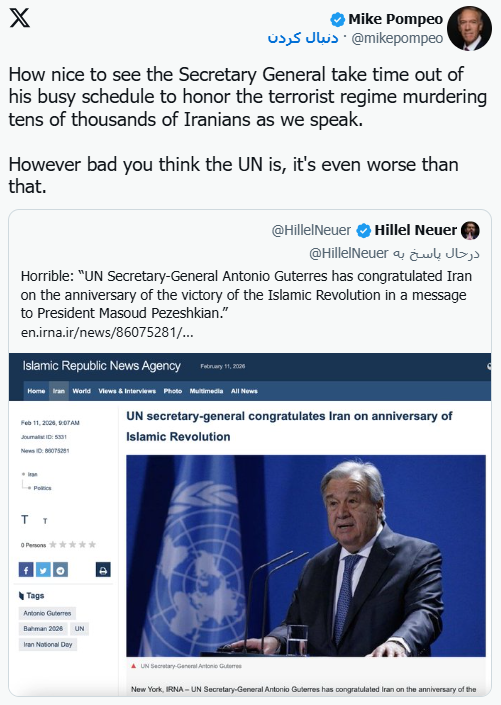
Pompeo Blasts UN ‘Congrats’ to Tehran: “Worse Than You Think”

Former U.S. Secretary of State Mike Pompeo slammed UN Secretary-General António Guterres after Iranian state media reported that Guterres sent a congratulatory message to Iranian President Masoud Pezeshkian for Iran’s National Day / Islamic Revolution anniversary. Pompeo wrote that it was “interesting” the UN chief “took time” to pay tribute to what he called a “terrorist regime,” adding that the regime is killing tens of thousands and that “however bad you think the UN is, it’s worse.”

Iran’s state outlet IRNA said Guterres’ letter offered “warmest congratulations” and framed national days as a chance to reflect on a country’s path and role in the international community. A UN spokesperson, cited in reporting, said such messages are part of a long-standing protocol and “should not be interpreted” as endorsing a government’s policies.

The dispute lands amid renewed global focus on Iran’s internal crackdown and high-stakes diplomacy over the nuclear file, with the U.S. signaling contingency planning if talks fail.

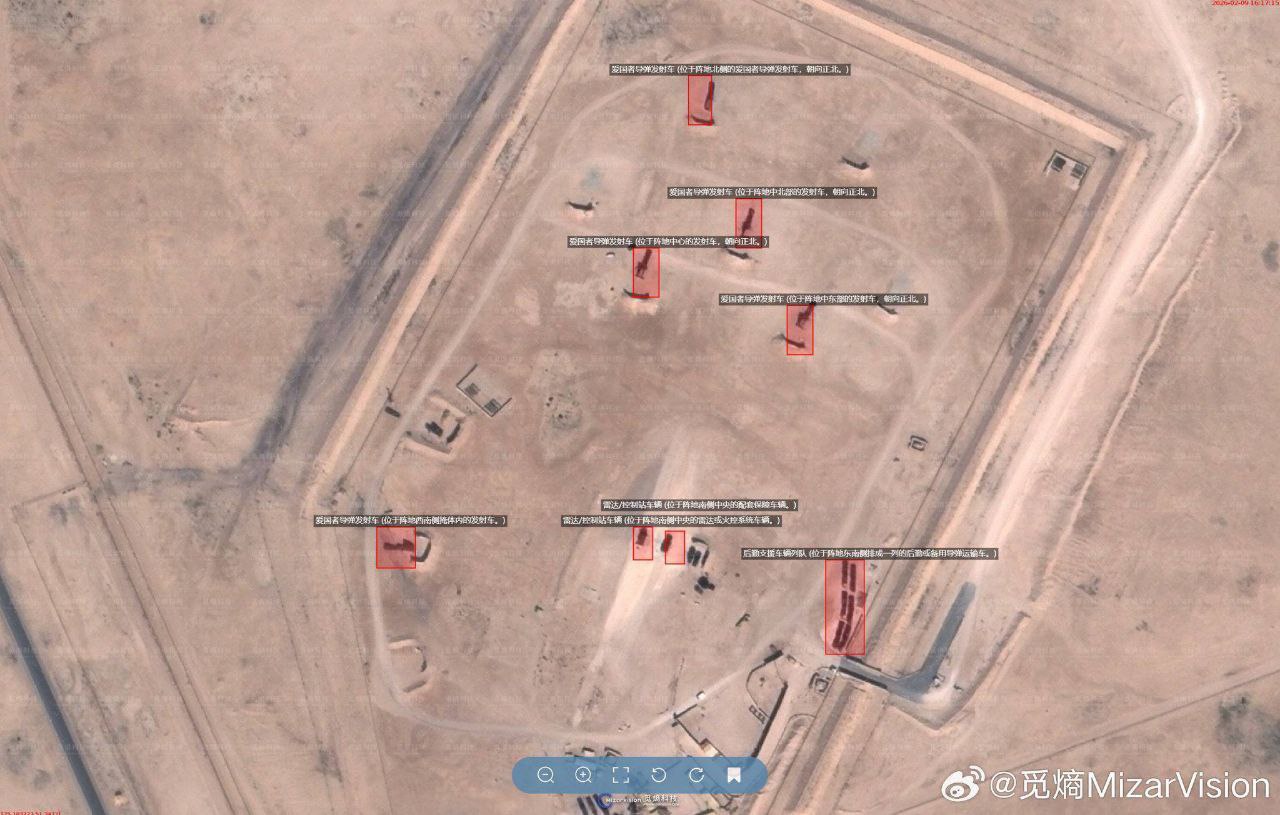
Chinese Satellite Imagery Flags Patriots at Al Udeid as U.S. Air Defenses Go Mobile

Satellite images circulating online—attributed in some reports to a Chinese commercial provider—are being used to spotlight the apparent deployment and siting of U.S. Patriot air-defense assets at Al Udeid Air Base in Qatar, framed as preparations to blunt a potential Iranian retaliation.

Separately, Reuters reported that satellite photos reviewed by a forensic imagery analyst showed U.S. forces at Al Udeid mounting Patriot missiles onto mobile HEMTT truck launchers in early February—an adjustment that increases survivability and repositioning speed if the threat picture changes.

The broader context is a visible U.S. posture shift across regional hubs, with open-source imagery showing more aircraft and equipment moving into theater as tensions with Iran rise.

Netanyahu Puts Israel’s Security First as Trump Says Iran Talks Must Continue

Israel’s Prime Minister’s Office said Benjamin Netanyahu told Donald Trump at the White House that Israel’s security needs are his top priority in the context of U.S.-Iran nuclear negotiations, adding the two leaders agreed to coordinate and stay in close contact.

Israeli media reported the closed-door meeting lasted nearly three hours. Afterward, Trump said no definitive decision was reached—except that he insisted negotiations with Iran continue to determine whether a deal is achievable, and that a deal would be his preferred outcome.

More Political news

Others

Korea’s Labor Market Tightens: Unemployment Drops to 3.0% in January

South Korea’s job market showed improvement at the start of the year, with the unemployment rate falling to 3.0% in January from 3.3% previously—signaling a firmer employment backdrop.

  • Unemployment Rate (Jan): 3.0% vs 3.3% prior

A lower jobless rate can support domestic demand confidence and reduce near-term recession concerns, though markets will still watch whether the improvement is accompanied by solid job creation and participation trends.

KRW angle:

A stronger labor signal is generally supportive for KRW at the margin via the growth channel, but the won is often more sensitive to global risk sentiment, USD direction, and semiconductor-cycle signals than one labor release.

Turkey’s Consumers Surge: Retail Sales Beat Forecasts, Annual Growth Accelerates to 16.3%

Turkey’s retail sector ended the year on a strong note, with December retail sales rising sharply month-on-month and accelerating year-on-year, pointing to resilient consumption momentum.

  • Retail Sales (MoM, Dec): +1.7% vs -0.2% expected, +1.5% prior
  • A major upside surprise, showing spending outperformed forecasts by a wide margin.
  • Retail Sales (YoY, Dec): +16.3% vs +14.2% prior
  • Annual growth re-accelerated, signaling a firm demand backdrop.

TRY angle:

Stronger retail activity can be supportive for growth sentiment, but for the lira, the dominant drivers remain inflation dynamics, real rates, and policy credibility. Robust consumption can also be a double-edged sword if it adds to inflation persistence, keeping markets sensitive to the policy mix.

Brazil FX Flows Flip to Outflow: -$0.29B Print Marks Sharp Turn From Prior Inflow

Brazil’s latest foreign exchange flows swung back into negative territory, showing a -$0.294B reading versus a strong +$4.180B previously—an abrupt reversal that signals net dollar demand and reduced external support at the margin.

For BRL, a move from sizable inflows to a mild outflow can be a near-term headwind, especially if it reflects weaker portfolio appetite or more cautious positioning. Traders will watch whether the shift persists in coming weeks and how it interacts with the broader drivers—rates/carry, risk sentiment, and commodity prices.

Mexico Consumer Sentiment Slips: Reuters/Ipsos PCSI Falls to 53.27 in February

Mexico’s Thomson Reuters/Ipsos PCSI showed a month-on-month decline in February, pointing to a slightly softer consumer mood.

  • PCSI (Feb): 53.27 vs 54.22 prior

The drop suggests households’ confidence eased at the margin, which can hint at more cautious spending behavior if the trend persists.

MXN angle:

This is usually a low-impact indicator for FX. For the peso, the bigger drivers remain rates/carry, U.S. macro, and risk sentiment—but softer confidence can add a mild headwind to the domestic growth narrative.

Brazil Consumer Mood Slips: Reuters/Ipsos PCSI Falls to 52.68 in February

Brazil’s Thomson Reuters/Ipsos PCSI signaled a weaker consumer tone in February, dropping notably from the prior month.

  • PCSI (Feb): 52.68 vs 55.14 prior

The decline suggests households are becoming more cautious, which can translate into softer discretionary spending if the trend persists—especially in a high-rate, inflation-sensitive environment.

BRL angle:

This is typically a secondary FX input, but softer confidence can be mildly BRL-negative via the growth channel. Still, the real is usually driven more by rates/carry, fiscal headlines, commodity prices, and capital flows than by sentiment surveys alone.

Mexico Industry Rebounds: Output Jumps 2.4% YoY, Beating Forecasts

Mexico’s industrial sector ended the year with a clear upside surprise, as December production grew faster than expected and marked a sharp turnaround from the prior contraction.

  • Industrial Production (YoY, Dec): +2.4% vs +1.3% expected, -0.7% prior
  • A strong swing into expansion, signaling improving factory/mining/utility momentum.
  • Industrial Production (MoM, Dec): +0.2% vs -0.2% expected, +0.6% prior
  • Monthly output stayed positive and beat expectations, though it cooled from November’s pace.

MXN angle:

Stronger industrial activity is generally MXN-supportive via the growth channel, especially given Mexico’s tight linkage to U.S. manufacturing and supply chains. Still, the peso’s near-term direction often hinges more on rates/carry and U.S. macro risk sentiment than one domestic print.

Brazil Pipeline Prices Turn Up: PPI Returns to +0.12% in December

Brazil’s producer price data showed a mild rebound in upstream inflation, with the PPI turning positive in December after a prior-month decline.

  • Brazilian PPI (MoM, Dec): +0.12% vs -0.35% prior

The shift suggests cost pressures at the producer level picked up slightly, which can feed into consumer prices over time—though the magnitude is modest.

BRL angle:

A firmer PPI is typically BRL-supportive at the margin if it reinforces “inflation stickiness” and keeps rates restrictive. But as a standalone print, it’s usually a second-tier driver versus the real’s bigger catalysts: carry, fiscal headlines, commodities, and capital flows.


Epstein’s “Little Book” Meets Washington: Files Recast Old Contacts With William Burns and a Top Obama Lawyer

Newly surfaced reporting around the latest “Epstein files” is reviving scrutiny of Jeffrey Epstein’s networking role with elite political, legal, and tech circles—particularly around William Burns and Kathryn Ruemmler.

Key point of correction up front: William Burns is not the current CIA Director. The CIA says John Ratcliffe has served as Director since Jan. 23, 2025.

What the credible reporting says: The Wall Street Journal previously reported from Epstein’s private calendar that Burns had meetings scheduled with Epstein in 2014 when Burns was Deputy Secretary of State, and later a meeting at Epstein’s townhouse was described in follow-on coverage. Being listed in a calendar does not prove the meeting occurred or imply criminality; even the WSJ-linked coverage notes the limitation that calendars are not proof of attendance or wrongdoing.

Separately, new WSJ reporting says documents show Epstein had significant contact with Kathryn Ruemmler (now Goldman’s top lawyer), portraying him as a recurring point of contact around her professional and personal matters—another example of Epstein positioning himself as a connector.

Bottom line: these files reinforce a pattern—Epstein cultivated proximity to powerful people—but the leap from “contact/calendar entries” to “proof of criminal conduct or intelligence operations” still requires primary documents and independent corroboration.

“Thank Goodness You’re Stopping Him”: ABC Publishes FBI Memo Recounting Trump’s 2006 Call on Epstein

ABC News reports that a newly surfaced FBI report summarizing a 2019 interview with former Palm Beach police chief Michael Reiter says Donald Trump called the department in 2006—after the Epstein investigation became known—and told them: “thank goodness you’re stopping him… everyone has known he’s been doing this.”

The key nuance: this is an FBI summary of what Reiter told investigators, not a recording or transcript of the alleged 2006 call. Still, it adds fuel to the political fight over what prominent figures knew about Epstein and when.


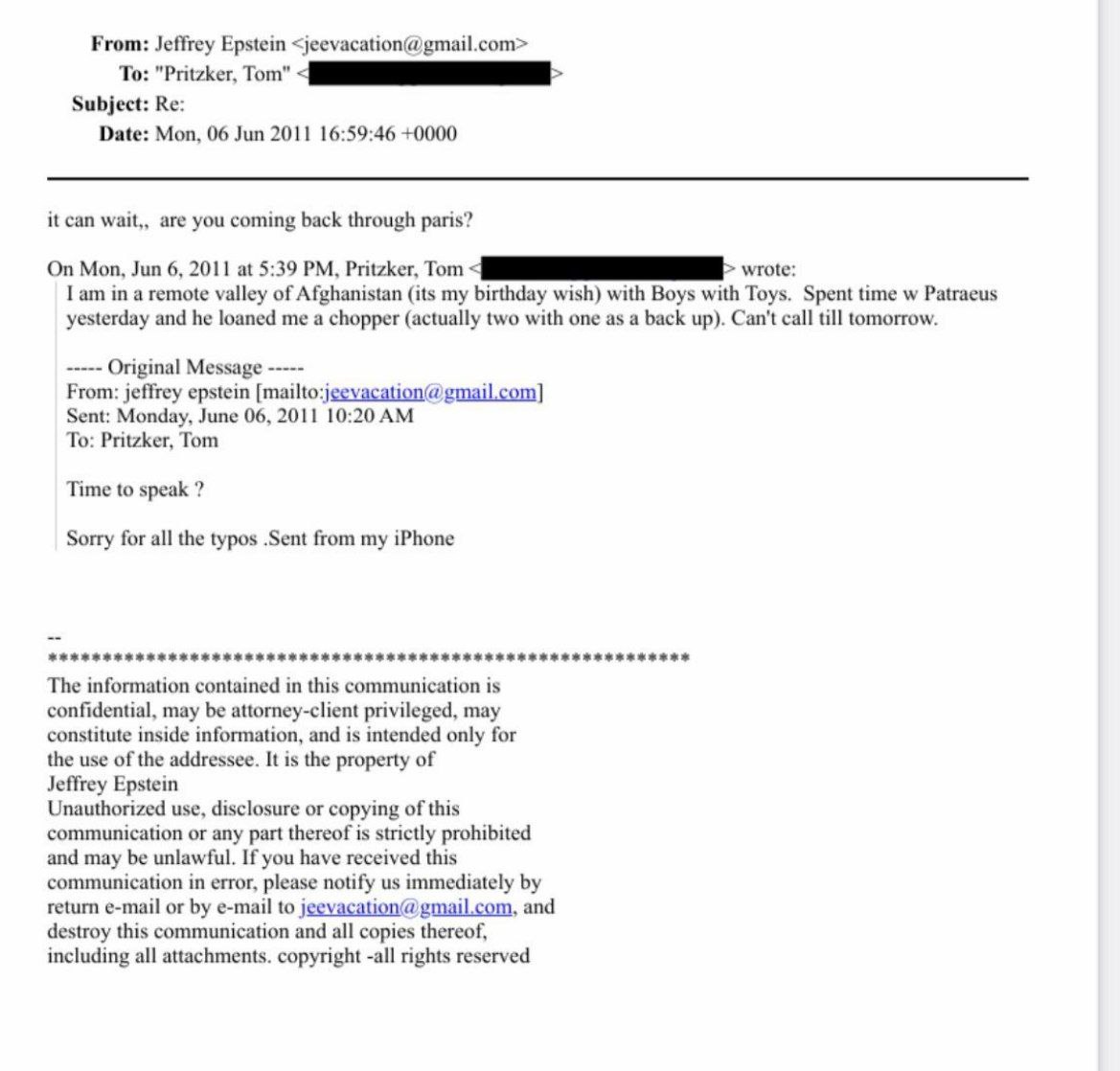
“Boys with Toys” in Afghanistan: Pritzker Email to Epstein Pulls Petraeus Into the New Files

A resurfaced DOJ-released Epstein email is being shared online showing Hyatt heir Tom Pritzker writing to Jeffrey Epstein in June 2011 that he was in “a remote valley of Afghanistan” for his “birthday wish” with “Boys with Toys,” adding that he “spent time w[ith] Patraeus” and that Gen. David Petraeus “loaned me a chopper (actually two with one as a back up).”

The excerpt is triggering renewed scrutiny over how far Epstein’s network reached—and, separately, what the email implies (or doesn’t) about elite access to military assets in an active war theater. The document text itself shows a claim made in correspondence; it does not, on its own, establish illegality or provide the operational context behind the helicopter reference.

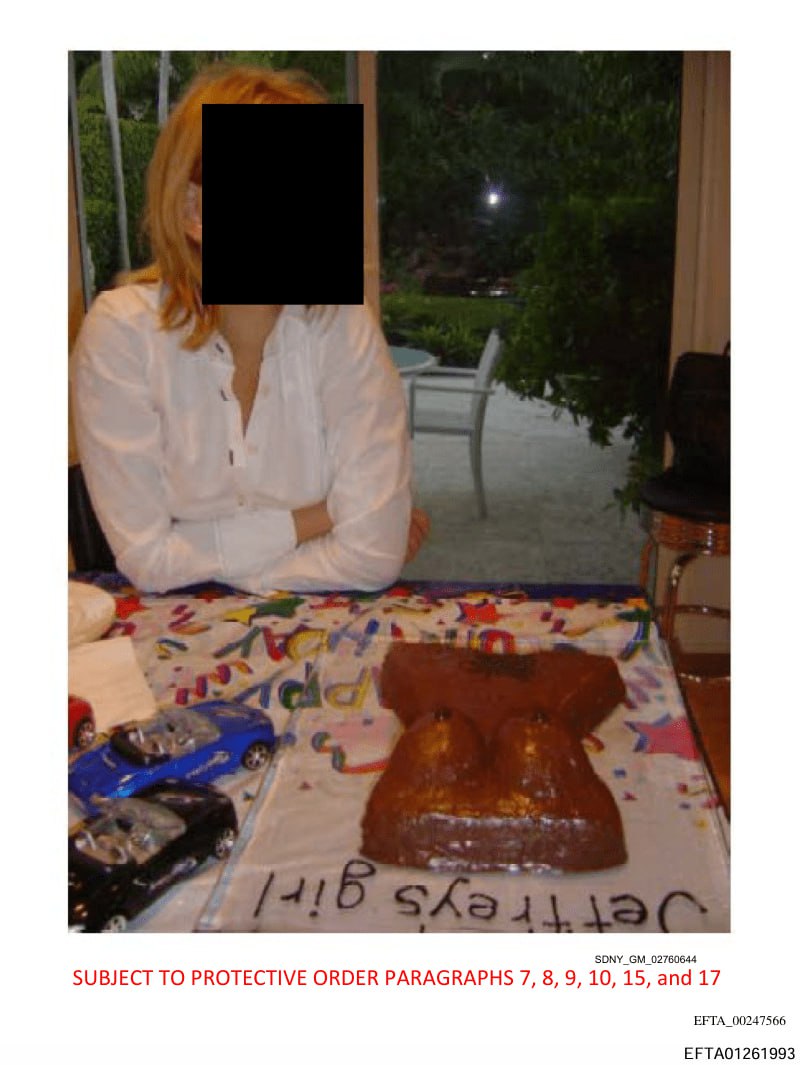
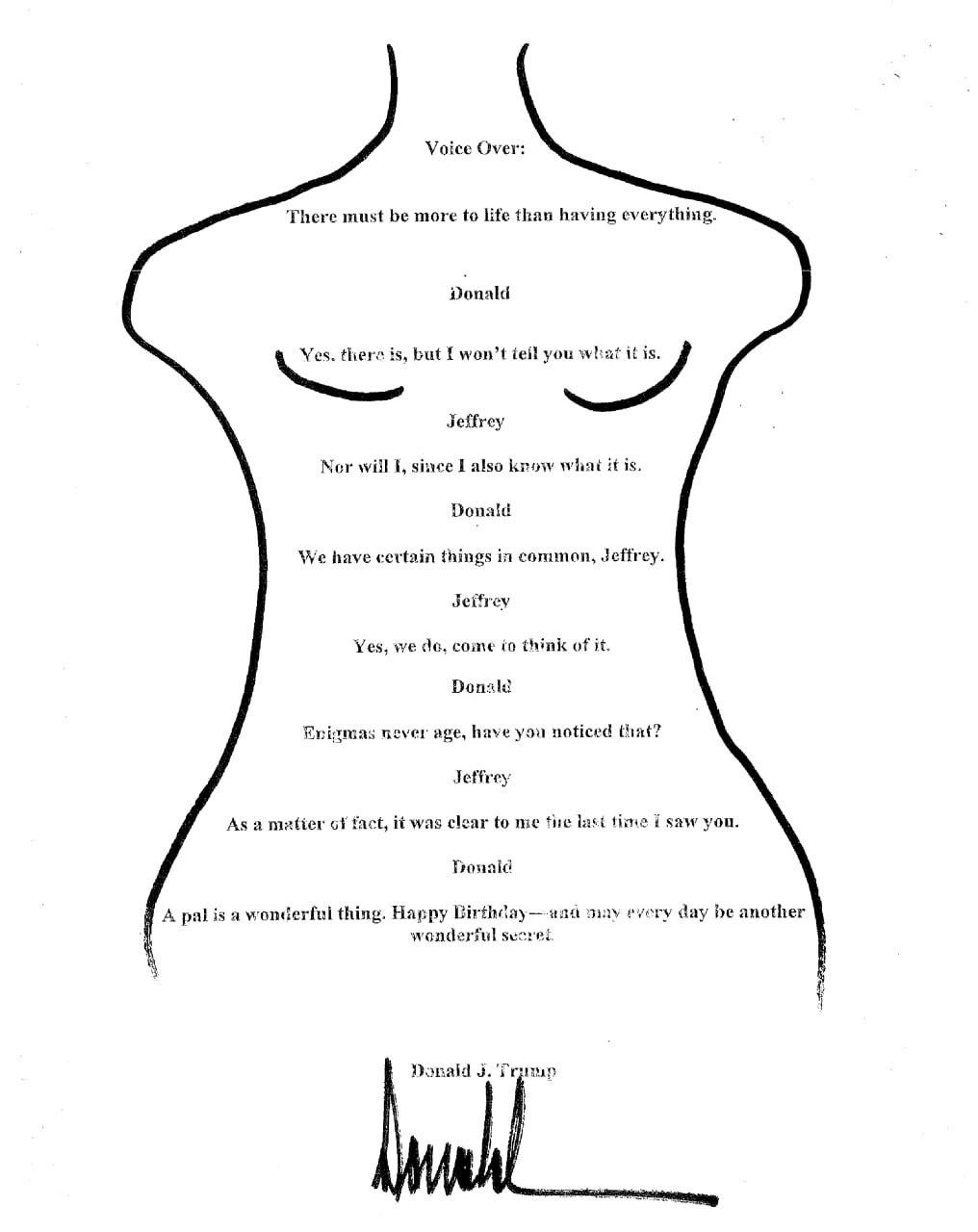
“JEFFREY’S GIRL” Cake Goes Viral — Silhouette Claims Collide With a Disputed Trump Letter

A photo of a cake iced with “JEFFREY’S GIRL” and a female silhouette is circulating online, with viral posts claiming the outline matches the nude-style silhouette shown in the alleged Trump contribution to Epstein’s 50th-birthday “birthday book.”

What’s solid vs. what’s not: the birthday book letter itself has been widely reported and images have been published after it was obtained by the House Oversight Committee; Trump denies authorship and has pushed back on authenticity claims.

But the cake image has no publicly established chain-of-custody in reputable reporting so far. Without an original source, metadata, or independent verification, the “silhouette match” remains pattern-spotting, not proof.

Practical takeaway: treat the cake as unverified until a credible outlet ties it to a specific date, event, and provenance—and be cautious about amplifying anything that could implicate victims or misidentify people.


More Others news

USA

Atlanta Fed GDPNow Slips: Q4 Growth Estimate Cut to 3.7%

The Atlanta Fed’s GDPNow model dialed back its real-time estimate for U.S. Q4 growth, signaling a softer near-term activity pulse than previously indicated.

  • Atlanta Fed GDPNow (Q4): 3.7% vs 4.2% prior (and 4.2% previously referenced)

The downgrade suggests incoming data are shaving momentum from the Q4 tracking estimate—consistent with a narrative where parts of demand and activity are cooling at the margin.

USD angle:

A lower GDPNow print can be mildly USD-negative if it pulls down growth expectations and reinforces a less hawkish rates path. The market impact is typically larger when the revision aligns with other major soft data (consumption, labor costs, inflation).

U.S. 3-Year Yield Drops at Auction: 3.518% Print Signals Easier Front-End Pricing

U.S. Treasury demand looked firmer at the front end, with the 3-year note auction stopping at a lower yield than the previous sale—pointing to slightly easier financing conditions and a softer tone in near-term rate pricing.

  • 3-Year Note Auction: 3.518% vs 3.609% prior

USD angle:

Lower short-dated yields can be mildly USD-negative at the margin via the rates channel, especially if the move reflects growing conviction in a less hawkish Fed path. If the decline is auction-specific (strong demand) and not echoed in broader yields, the FX impact is usually limited.

Treasuries Catch a Bid: 10Y Yield Hits 1-Month Low on Weak Retail Sales, Downward Revisions

U.S. government bonds rallied on Tuesday, pushing benchmark 10-year Treasury yields down nearly 6 bps and briefly to a one-month low of 4.14%. The move followed softer consumption signals: core U.S. retail sales fell 0.1% in December, and November/October were revised lower, reinforcing the narrative of cooling demand.

As bond prices climbed, yields mechanically moved the other way—yields fall when bond prices rise—with the front end and belly also drawing support as markets reassessed the near-term growth and rate path.

U.S. Jobs Surprise: Payrolls Beat Big, Wages Re-Heat, Unemployment Ticks Lower

The January U.S. jobs report landed stronger than expected on hiring and hotter on wages, a combination that can keep the Fed’s “higher-for-longer” narrative in play even as labor-market slack remains contained.

Key prints (Jan):

  • Nonfarm Payrolls: +130K (vs +66K expected; +48K prior)
  • Private Payrolls: +172K (vs +70K expected; +64K prior)
  • Unemployment Rate: 4.3% (vs 4.4% expected; 4.4% prior)
  • Avg Hourly Earnings (MoM): +0.4% (vs +0.3% expected; +0.1% prior)
  • Avg Hourly Earnings (YoY): 3.7% (vs 3.6% expected; 3.7% prior)
  • Participation Rate: 62.5% (vs 62.4% prior)
  • Avg Weekly Hours: 34.3 (vs 34.2 expected; 34.2 prior)

Under the hood, manufacturing payrolls turned positive (+5K), while government payrolls were a drag (-42K). The report also flagged benchmark-related adjustments (notably negative), which markets will watch for what they imply about the true level of employment over time.

Market takeaway: a beat on jobs + firmer wages is typically USD- and yields-supportive on first read, because it reduces the urgency for near-term easing—even if revisions/benchmarks muddy the longer-run signal.

U.S. Consumer Sentiment Steady: Reuters/Ipsos PCSI Holds Near 54 in February

The Thomson Reuters/Ipsos PCSI showed U.S. consumer sentiment essentially unchanged in February, slipping by just a hair.

  • PCSI (Feb): 53.80 vs 53.81 prior

The near-flat reading suggests households’ mood is stable rather than improving, reinforcing a “steady but cautious” demand backdrop.

USD angle: With no meaningful move, this is typically FX-neutral, unless it’s part of a broader cluster of weakening (or strengthening) consumer indicators.

U.S. Mortgage Demand Stabilizes: Rates Flat at 6.21%, Applications Slip Only -0.3% After Prior Plunge

U.S. mortgage data showed steady rates and a calmer demand picture, with applications barely down after a sharp drop the week before—though purchase activity softened while refinancing ticked higher.

  • MBA 30-Year Mortgage Rate: 6.21% (unchanged vs 6.21% prior)
  • MBA Mortgage Applications (WoW): -0.3% vs -8.9% prior
  • MBA Purchase Index: 161.5 vs 165.4 prior (purchase demand cooled)
  • Mortgage Market Index: 329.9 vs 330.8 prior (broadly flat)
  • Mortgage Refinance Index: 1,284.6 vs 1,269.7 prior (refis edged up)

USD angle:

This is generally a second-tier macro input for FX. Flat rates with stabilizing applications is a “steady housing” signal, but the dollar will still be driven primarily by Fed pricing, growth/inflation data, and risk sentiment.

Trump Weighs USMCA Exit as the July 2026 Review Clock Ticks

Bloomberg reports President Donald Trump has been privately asking White House officials why the U.S. shouldn’t withdraw from the USMCA trade pact with Mexico and Canada, a move that would reopen major uncertainty for North American supply chains just months before the agreement’s built-in review milestone.

The timing matters: USMCA’s first “joint review” is scheduled for July 1, 2026 (six years after the pact entered into force on July 1, 2020). Under the review clause, the three countries can table recommendations and decide whether to extend the agreement’s term; the review process is separate from the treaty’s withdrawal provision, which allows exit with six months’ written notice.

Markets will read any credible exit signaling as a tariff / rules-of-origin risk for autos, manufacturing, agriculture, and cross-border energy flows—typically negative for MXN and CAD risk sentiment, even before any formal notice is filed.

U.S. 10Y Auction Holds Steady; January Deficit Improves but Misses Forecast

U.S. markets got a mixed but largely low-drama fiscal-and-rates update: the 10-year Treasury auction cleared essentially unchanged, while the January budget deficit narrowed versus last year but came in a touch wider than expected.

  • 10-Year Note Auction: 4.177% vs 4.173% prior

The stop was nearly flat, signaling stable demand and pricing around current yield levels.

  • Federal Budget Balance (Jan): -$95.0B vs -$94.6B expected, -$145.0B prior

The deficit improved materially from the prior period, but slightly missed expectations.

USD angle:

With the 10Y auction basically unchanged, the immediate rates impulse is minimal. A modestly wider-than-expected deficit is usually not a day-to-day FX catalyst, but persistent fiscal gaps can matter over time through the supply and term-premium channel.

Washington’s Energy Chief Lands in Caracas as Venezuela Opens the Oil Door to Private Capital

U.S. Energy Secretary Chris Wright arrived in Venezuela and is expected to meet Acting President Delcy Rodríguez, senior government officials, and representatives from major oil companies—signaling Washington’s highest-level, energy-focused engagement with the OPEC producer in decades.

The visit comes as Venezuela advances sweeping oil-sector reforms aimed at attracting foreign and private investment and weakening PDVSA’s long-standing monopoly—including provisions that expand private control over production/marketing and add legal protections such as independent arbitration to reassure investors wary of past expropriations.

More USA news

Russia

Russia Business Mood Improves: Confidence Turns Positive at 0.7 in January

Russia’s business confidence moved into positive territory in January, rising to 0.7 from -0.3 previously—an upbeat signal suggesting firms’ near-term outlook improved at the start of the year.

  • Business Confidence (Jan): 0.7 vs -0.3 prior

A positive reading can indicate better expectations for orders, production, and activity, though markets typically treat this as a slow-moving sentiment indicator that needs confirmation from hard data.

RUB angle:

For the ruble, this is marginally supportive via the domestic-growth narrative, but RUB pricing is usually dominated by energy revenues, sanctions/flows, and policy controls rather than business sentiment alone.

Russia’s Trade Surplus Widens: December Balance Jumps to $10.02B

Russia posted a stronger external position in December, with the trade balance surplus rising to $10.02B, up from $6.80B previously—pointing to improved net export inflows.

  • Trade Balance (Dec): $10.02B vs $6.80B prior

A wider surplus typically implies more hard-currency earnings flowing into the economy, which can provide a supportive backdrop for the domestic balance of payments.

RUB angle:

A larger trade surplus is generally RUB-supportive at the margin, but ruble pricing often hinges more on energy revenues dynamics, sanctions/settlement channels, capital controls, and policy measures than on the headline trade number alone.

Russia flips the DNS switch: WhatsApp and YouTube pushed behind a VPN wall

Russia has escalated platform restrictions by removing key WhatsApp domains from the state-run National Domain Name System (NSDI) — a censorship-capable DNS infrastructure tied to the “sovereign Runet” framework — meaning many networks that rely on the official resolver can no longer translate WhatsApp’s domain into a working IP address. In practice, that leaves the messenger reachable mainly through VPNs or other circumvention setups.

A similar move hit YouTube on February 10, when reports said YouTube’s domain data was deleted from the same system, triggering widespread failures to load the site without bypass tools because requests stopped resolving through NSDI-linked pathways.

Rights groups and researchers describe NSDI as effectively the internet’s “address book” for users whose ISPs are required to route DNS through the national system — giving regulators a powerful lever to disable access without announcing a classic “ban.”

More Russia news

Commodities

API Shock: U.S. Crude Inventories Post a Massive 13.4M-Barrel Build

The American Petroleum Institute (API) reported a huge U.S. crude oil stock build of +13.4 million barrels for the week ended Feb. 7, swinging sharply against market positioning that had been leaning toward a draw of roughly -11.1 million barrels.

That kind of upside inventory surprise is typically bearish for WTI/Brent at the margin, especially if it signals weaker refinery runs, softer demand, or a short-term import/supply surge. The key market question now is confirmation: traders will look to the official EIA report to see whether the build is validated or partly reversed by differences in methodology and timing.

EIA Oil Data Flips Bearish for Crude: Big +8.53M Build, Refinery Utilization Drops; Distillates Draw Hard

The latest EIA weekly petroleum status report (week ended Feb. 6) delivered a headline-bearish crude surprise, with inventories rising far more than expected as refinery activity softened—partly offset by a sizable draw in distillates.

Supply / inventories

  • Crude Oil Inventories: +8.530M vs -0.200M expected, -3.455M prior → a major upside shock (bearish for WTI/Brent)
  • Cushing Inventories: +1.071M vs -0.743M prior → adds pressure at the WTI delivery hub
  • Gasoline Inventories: +1.160M vs -0.400M expected, +0.685M prior → demand/stocking read softer than priced
  • Distillate Stocks: -2.703M vs -1.300M expected, -5.553M prior → still a meaningful draw (supportive for diesel/heating complex)
  • Heating Oil Stockpiles: +0.202M vs -0.160M prior → small build

Flows / operations

  • Crude Oil Imports: +0.912M vs +1.101M prior → elevated imports helped feed the crude build
  • Refinery Crude Runs (WoW): -0.029M vs -0.180M expected → small decline, but still weaker activity
  • Refinery Utilization (WoW): -1.1% vs -0.4% expected → a larger-than-expected drop (bearish crude, can lift products if tightness builds)
  • Gasoline Production: +0.139M vs -0.565M prior
  • Distillate Fuel Production: +0.045M vs -0.005M prior

Market takeaway:

The combination of large crude build + Cushing build + weaker utilization is the classic near-term bearish cocktail for crude, especially if it signals refineries backing off runs while imports remain high. The distillate draw is the main bullish offset, implying the middle-distillate balance remains tight—even as gasoline stocks rise.

More Commodities news

Equities

Europe Closes Mostly Lower: CAC 40 Bucks the Trend, Spain Leads the Pullback

European equities finished yesterday’s session with a broadly softer tone, as most major benchmarks closed in the red—while France’s CAC 40 managed a small gain.

  • FTSE 100: 10,353.84 (-0.31%)
  • DAX: 24,987.85 (-0.11%)
  • CAC 40: 8,327.88 (+0.06%)
  • FTSE MIB: 46,802.99 (-0.04%)
  • IBEX 35: 18,122.10 (-0.40%) (largest drop on the board)
  • Stoxx 600: 620.97 (-0.07%)

The takeaway: risk appetite cooled slightly into the close, with Spain underperforming, Germany and the UK edging lower, and the region-wide Stoxx 600 slipping—while Paris held up as the lone notable bright spot.

Wall Street Splits at the Close: Dow Edges Up, Tech Slips as VIX Jumps

U.S. markets finished yesterday with a clear rotation feel: the Dow held up, while S&P 500 and Nasdaq fell, volatility rose, and defensive hedges caught a bid.

  • Dow: 50,188.14 (+0.10%)
  • S&P 500: 6,941.81 (-0.33%)
  • Nasdaq: 23,102.47 (-0.59%)
  • VIX: 17.79 (+2.48%)

The close signals risk appetite cooled, especially in growth/tech, while volatility and safe-haven demand (gold) strengthened—an end-of-session mix consistent with a more cautious market tone.

More Equities news

Forex

Yen Extends Post-Election Rally to 153.3 as Traders Debate Tokyo Support vs Dollar Softness

Asian FX trading was thinner with markets in Japan closed for a holiday, but the yen notched a third straight session of gains, strengthening to 153.3 per dollar. The move has traders debating whether the yen is getting an extra lift from Tokyo-related support/intervention chatter or simply riding a broader bout of U.S. dollar softness.

Since Prime Minister Sanae Takaichi’s sweeping election victory on Sunday, the yen is up about 2.5% against the dollar—confounding expectations that concerns around her stimulus plans would keep pressure on the currency and Japanese government bonds. The market takeaway: for now, politics has translated into JPY strength, not the weaker-yen/ higher-yields outcome some had positioned for.

Aussie Dollar Breaks Above $0.71 to a 3-Year High as RBA Hawk Talk Reprices Hike Odds

The Australian dollar surged to a three-year high on Wednesday after hawkish remarks from RBA Deputy Governor Andrew Hauser pushed traders to ramp up expectations for another rate hike later this year.

AUD/USD climbed 0.8%, breaking above $0.71 for the first time since early 2023, after Hauser warned that inflation pressures remain persistent and signaled the central bank would not hesitate to act again if needed to safeguard price stability. Markets read the message as reinforcing the RBA’s tightening bias, lifting near-term hike pricing.

The move comes after the RBA’s last decision to raise rates 25 bps to 3.85%, and was further supported by a softer U.S. dollar ahead of key U.S. jobs data later in the session—data that could reshape expectations for the Fed’s path.

More Forex news

Europe

Italy’s Factory Output Sends Mixed Signal: Annual Growth Jumps, But Monthly Production Turns Negative

Italy’s industrial sector delivered a split picture in December: output contracted on the month after a strong prior gain, but the year-on-year figure accelerated sharply suggesting volatility at the end of the year rather than a clean trend.

  • Industrial Production (MoM, Dec): -0.4% vs -0.6% expected, +1.5% prior
  • Production fell month-to-month, but the decline was less severe than forecast.
  • Industrial Production (YoY, Dec): +3.2% vs +1.4% prior
  • Annual growth jumped, pointing to a stronger level of output than a month earlier.

EUR angle:

The softer monthly print is a caution flag for momentum, while the stronger YoY number is a positive offset. Net impact for the euro is usually limited unless Italy’s trend is echoed across broader Eurozone production and PMI data.

Euro Rates Ease at the Margin: Italy’s 12M BOT and Germany’s 30Y Bund Yields Edge Lower

Two key European auctions pointed to a slightly softer yield tone, with both Italy’s short-dated bills and Germany’s ultra-long bonds pricing at lower yields than the prior sales.

  • Italy 12-Month BOT Auction: 2.068% vs 2.112% prior
  • A modest decline that signals slightly cheaper short-term funding for Italy.
  • Germany 30-Year Bund Auction: 3.470% vs 3.490% prior
  • A small dip in the long end, suggesting steady demand for duration and marginal easing in term premium.

EUR angle:

Lower yields can be mildly EUR-negative at the margin via the rates channel if they reflect broader easing expectations. But auction-driven moves are often FX-neutral unless echoed across the wider curve and reinforced by ECB-related catalysts.

More Europe news

Canada

Canada Confidence Dips Further: Reuters/Ipsos PCSI Slides to 47.46 in February

Canada’s consumer mood weakened again in February, with the Thomson Reuters/Ipsos PCSI falling to 47.46 from 49.28 previously—pushing sentiment deeper into a soft zone.

  • PCSI (Feb): 47.46 vs 49.28 prior

The decline suggests households are growing more cautious, which can weigh on discretionary spending and reinforce a slower-demand narrative if it persists.

CAD angle:

This indicator is usually not a major FX mover, but weaker sentiment can be mildly CAD-negative via growth expectations. For the loonie, the bigger drivers remain oil prices, U.S. macro, and Bank of Canada expectations.

Canada Construction Rebounds: Building Permits Jump 6.8% in December, Beating Forecasts

Canada’s construction pipeline strengthened at year-end, with building permits surging in December and delivering a clear upside surprise after a sharp prior-month drop.

  • Building Permits (MoM, Dec): +6.8% vs +4.9% expected, -13.2% prior

The rebound suggests new project intentions recovered and could translate into firmer construction activity in coming months—though permits can be volatile, so markets will watch for follow-through.

CAD angle:

A stronger permits print is mildly supportive for CAD via the growth channel, but the loonie is usually driven more by oil prices, U.S. macro, and Bank of Canada expectations than by a single housing indicator.

More Canada news

Oceania

Australia Credit Surges: Home Loans Jump 10.6% in Q4 as Investor Demand Cools

Australia’s housing credit pulse strengthened sharply in Q4, with home loans rising much faster than the prior quarter, while investor housing finance grew but at a slower pace—suggesting owner-occupier demand is driving the acceleration.

  • Home Loans (MoM, Q4): +10.6% vs +6.2% prior
  • A strong step-up that points to a re-acceleration in housing demand/credit.
  • Investor Housing Finance (MoM, Q4): +7.9% vs +9.2% prior
  • Investor activity remained positive but lost momentum, implying a more cautious investor bid.

AUD angle:

A stronger housing-credit impulse can be AUD-supportive via growth and may keep attention on sticky housing-related inflation—a factor that can complicate easing expectations. Still, AUD tends to trade most directly off RBA pricing and global risk sentiment, so follow-through in inflation and labor data will be key.

More Oceania news

China

China Inflation Stays Weak: CPI Misses Forecast as Producer Deflation Persists

China’s January inflation data reinforced a low-inflation / disinflation backdrop, with consumer prices undershooting expectations and producer prices still in deflation—though slightly less negative than before.

  • CPI (MoM, Jan): +0.2% vs +0.3% expected, +0.2% prior
  • Monthly inflation was steady but missed forecasts.
  • CPI (YoY, Jan): +0.2% vs +0.4% expected, down from +0.8% prior
  • A clear slowdown that signals soft demand and limited pricing power.
  • PPI (YoY, Jan): -1.4% vs -1.5% expected, improved from -1.9% prior
  • Producer deflation continued, but the pace of decline eased slightly.

CNY angle:

Weak CPI alongside ongoing PPI deflation keeps the case alive for continued policy support, which can weigh on CNY via easier domestic rates and growth uncertainty. However, with the PBOC often managing the currency via fixings and liquidity tools, near-term CNY direction will still depend heavily on policy guidance, USD trends, and capital-flow dynamics.

More China news

Cryptocurrency

Crypto Slides Across the Board: BTC Hits ~67K as Broad Risk-Off Takes Hold

Crypto is trading in a clear risk-off mode right now, with major tokens down sharply and in sync, led by losses in Bitcoin and Ethereum.

  • Bitcoin (BTC): 66,993 (-2.52%)
  • Ethereum (ETH): 1,955.73 (-2.54%)
  • XRP: 1.3686 (-1.91%)
  • Solana (SOL): 81.28 (-1.37%)
  • Dogecoin (DOGE): 0.090940 (-1.81%)
  • Cardano (ADA): 0.2569 (-1.68%)

The tape shows broad-based deleveraging/derisking, with the majors leading and alts following—typical of a market moving lower on macro or liquidity pressure rather than isolated token-specific news.

More Cryptocurrency news

India

India Liquidity Accelerates: M3 Money Supply Jumps to 12.0%, Signaling Strong Credit Pulse

India’s broad money growth picked up sharply, with M3 money supply rising to 12.0% from 10.7% previously—an acceleration that points to a firmer liquidity and credit backdrop.

  • M3 Money Supply: 12.0% vs 10.7% prior

A faster M3 print can reflect stronger deposit growth, credit creation, and overall financial conditions that remain supportive for activity—though it can also keep attention on demand-side inflation risks if liquidity feeds into spending.

INR angle:

Stronger money growth is a double-edged signal for INR: it can support growth, but if it sustains inflation pressure it may keep policy tighter for longer. Near-term INR direction still tends to be driven more by oil prices, USD trends, and RBI policy signals than by money supply alone.

More India news