IFC Markets Live Quotes

Market news roundup: Thursday, 5 February 2026

61 short market news items, grouped by 12 sections.

Political

Beit Shemesh Iran-Spy Case: 3 Years Prison for Gaza Poster Task

An Israeli court in Jerusalem sentenced Elimelech Stern, a Beit Shemesh resident, to three years in prison (plus a suspended sentence and a fine) after convicting him of contact with a foreign agent and conspiracy to issue threats tied to alleged cooperation with Iranian operatives. Israeli media say Stern carried out assignments requested by his handlers, including producing and posting posters linked to Gaza, and prosecutors had sought a much harsher sentence (reported at seven years) before the court’s final ruling.
Cairo’s Diplomatic Blitz: Abdelatty Calls Qatar, Oman, Iran — and Witkoff

Egypt’s foreign ministry says Foreign Minister Badr Abdelatty, acting on presidential directives, held intensive phone calls over the past two days with Iran’s Abbas Araghchi, Qatar’s PM/FM Sheikh Mohammed bin Abdulrahman Al Thani, Oman’s Badr bin Hamad Al Busaidi, and U.S. Middle East envoy Steve Witkoff to discuss the latest regional developments and push de-escalation via diplomacy and dialogue, warning against a broader slide into instability.

Australia’s Senate steps up pressure on Tehran crackdown

Australia’s Senate adopted a resolution on February 5, 2026 (۱۶ بهمن ۱۴۰۴) condemning what it described as the brutal repression of protesters in Iran and declaring solidarity with Iranians and the Iranian-Australian community. The motion cites reports of civilian killings, the targeting of women and children, mass arrests, and suppression of basic freedoms through internet/communications shutdowns, and urges Canberra to support independent international investigations, pursue accountability for crimes against civilians, expand targeted sanctions on responsible individuals and entities, push for an immediate end to violence, restore full connectivity and internet access, seek a permanent halt to executions, and ensure civilian protection.

Lebanon Eyes Syria Border Spillover as Iran–US War Risk Builds

Lebanon’s security establishment is reportedly worried that a U.S. strike on Iran could trigger a wider spillover—potentially opening a Lebanon–Syria front involving Hezbollah—according to a report attributed to the pro-Hezbollah daily Al-Akhbar. The report points to Syrian announcements of military drills and “unusual” activity monitored along the Lebanon–Syria border as warning signs that regional escalation could quickly spread beyond Iran and Israel, complicating Beirut’s efforts to keep the country insulated from a broader conflict.

Trump doubles down on Hamas disarmament threat

President Donald Trump said Hamas “will” disarm despite skepticism, adding that “if they don’t, they won’t be around any longer,” in remarks delivered during a wide-ranging, unscripted speech in Washington on February 5, 2026. The comments underscore the U.S. push to make Hamas disarmament a central condition for the next stage of the Gaza framework, as funding and reconstruction discussions remain constrained by uncertainty over whether disarmament talks will actually begin.

Trump: Sudan war “very close” to ending — “number nine”

President Donald Trump said the U.S. is “working hard” to end the war in Sudan and claimed Washington is “very close” to getting it done, adding it would be his “number nine” conflict resolved (depending on whether Russia–Ukraine is settled first), in remarks delivered at the National Prayer Breakfast in Washington on February 5, 2026. The comments come as U.S. officials and partners are simultaneously pushing a truce track ahead of Ramadan (Feb. 17) and ramping up humanitarian financing, amid a worsening civilian crisis and famine warnings — but with no public confirmation yet of an agreed ceasefire between the warring sides.

U.S., Russia eye 6-month “handshake” to keep New START limits alive

The U.S. and Russia have reached (or are finalizing) an informal understanding to keep observing New START’s limits and transparency measures after the treaty’s February 5, 2026, expiration, with six months reportedly on the table, according to Axios. The discussions were said to have taken place in Abu Dhabi alongside separate talks on Ukraine, and would not constitute a formal legal extension—meaning the treaty would still lapse on paper while both sides “operate in good faith” and explore an updated framework.

Israel sets up Druze “liaison” channel for Syria and Lebanon

Israel has created a new military liaison role under the IDF’s Northern Command to coordinate outreach and communication with Druze communities in Syria and Lebanon, Israeli media reported. Major General Ghassan Alian (a Druze officer and outgoing head of COGAT) is set to take the newly created post, in a move that comes as Israel has sought closer ties with Syrian Druze since the December 2024 fall of Bashar al-Assad’s regime. The step is politically sensitive: some Druze figures—including a faction linked to cleric Hikmat al-Hijri—have publicly voiced support for Israel and called for greater backing and autonomy, while other Druze leaders, including Lebanon’s Walid Joumblatt, have warned against Israeli influence.

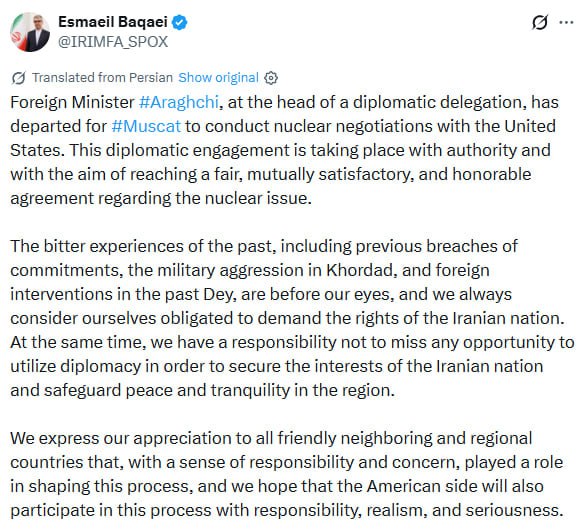
Iran heads to Muscat for U.S. nuclear talks

Iran’s Foreign Minister Abbas Araghchi has departed for Muscat, Oman, leading a diplomatic delegation for nuclear talks with the United States scheduled for Friday. Foreign Ministry spokesperson Esmail Baghaei said Tehran is pursuing a “fair, mutually satisfactory and honorable” understanding on the nuclear file, while stressing Iran’s “bitter experiences” from past breaches and saying Iran will use diplomacy to protect national interests—urging Washington to engage with “responsibility, realism and seriousness.” The talks come amid unresolved disputes over the scope of negotiations, with Iran pushing to keep them limited to nuclear issues.

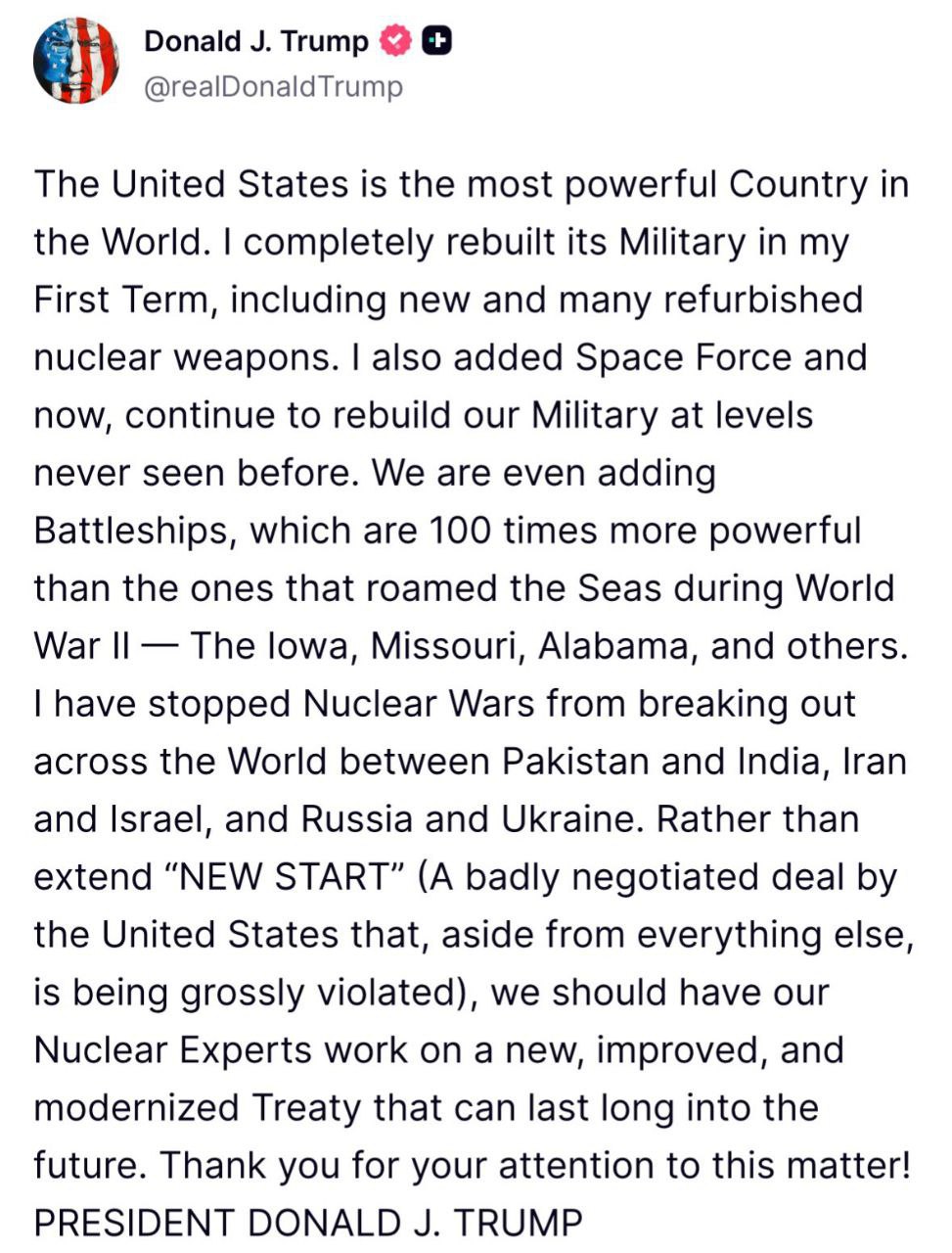
Trump rejects New START extension, urges a “new, improved” nuclear pact

President Donald Trump said the United States should not extend the New START nuclear arms reduction treaty, arguing instead that Washington should task “nuclear experts” with drafting a new, modernized agreement that can “last long into the future.” In a social-media statement issued as New START expires on Feb. 5, 2026, Trump called the accord “badly negotiated” and claimed it has been “grossly violated,” while also boasting about U.S. military modernization and asserting he prevented nuclear wars in multiple flashpoints—claims he did not substantiate in the post. The expiry ends the last major U.S.–Russia bilateral framework limiting strategic arsenals, prompting warnings from international officials that the lapse raises global nuclear risk and underscores the need for a new verifiable arrangement.

Merz urges Iran: halt threats to Israel, end nuclear program

German Chancellor Friedrich Merz said he is “deeply concerned” about a potential military escalation involving Iran, and called on Tehran to refrain from “military threats” against Israel and other countries in the region. Speaking in Doha during his Gulf trip, Merz urged Iran’s leadership to enter serious talks, end what he called “aggression,” and end its nuclear program, saying Berlin is coordinating closely with Washington as U.S.–Iran nuclear talks are set to take place in Oman.

Leavitt: Trump wants to test an Iran deal — but “many options” remain

White House press secretary Karoline Leavitt said President Donald Trump “wants to see if a deal can be struck” with Iran as high-level nuclear talks are set to take place in Oman (Muscat), but stressed the president has “many options at his disposal” beyond diplomacy. Leavitt framed the warning in military terms, describing Trump as commander-in-chief of “the most powerful military in the history of the world,” underscoring that Washington is pursuing diplomacy while keeping escalation tools on the table if negotiations fail.

More Political news

Others

Brazil Growth Stalls: Composite PMI Slides Below 50 as Services Cool (Jan)

Brazil’s January PMI readings signaled a sharp loss of momentum. The S&P Global Composite PMI fell to 49.9 from 52.1, slipping just below the 50 line and indicating a mild contraction in overall private-sector activity. The Services PMI also cooled to 51.3 from 53.7, staying in expansion but at a noticeably slower pace. For BRL, the shift toward weaker growth optics can be a mild headwind—especially if it reinforces expectations for slower domestic demand and a less restrictive policy stance over time.

Brazil Sees Stronger FX Inflows: Net Flows Rise to $4.18B

Brazil’s foreign exchange flows showed a larger net inflow, coming in at $4.180B, up from $2.215B previously. The improvement points to stronger hard-currency supply—typically supportive for BRL at the margin, especially if driven by trade/portfolio inflows and sustained across weeks.

Brazil Trade Surplus Shrinks: $4.34B vs $4.90B Expected (Jan)

Brazil’s January trade balance came in at a $4.34B surplus, below the $4.90B forecast and sharply down from $9.63B previously. The narrower surplus suggests a weaker net-export impulse at the start of the year—potentially reflecting softer commodity export volumes/prices and/or firmer imports. For BRL, a smaller trade cushion can be a mild headwind on external-balance optics, though the currency will still key off rates, risk sentiment, and capital flows.

Mexico Investment Slump Deepens: Capex Falls 6.4% YoY (Nov)

Mexico’s gross fixed investment data stayed weak in November. Investment fell -6.40% YoY (vs -5.60% expected, -5.50% prior), showing a deeper annual contraction in capex. On the month, growth slowed to +0.40% MoM (vs +0.50% expected, +0.90% prior). The mix points to softer business investment momentum heading into year-end—mildly negative for Mexico’s growth outlook and, at the margin, for MXN sentiment unless offset by stronger external demand or policy support.

Turkey’s FX Buffer Thins: Gross Reserves Slip to $84.4B

Turkey’s gross FX reserves fell to $84.41B, down from $86.20B previously, signaling a modest reduction in the headline reserve stock. The net FX reserves metric also moved lower to 93.36% from 97.37%, pointing to a weaker net position by this measure. Taken together, the data suggest slightly less reserve “cushion” — variable markets watch closely for TRY stability, especially around periods of high volatility or intervention risk.

Israel FX Reserves Rise: Holdings Climb to $233.0B (Jan)

Israel’s foreign-exchange reserves increased to $233.044B in January from $229.484B previously—an improvement of about $3.56B. The larger reserve buffer strengthens external liquidity and can help smooth currency volatility. For the ILS, the direction is modestly supportive at the margin, though broader drivers—risk sentiment, geopolitics, and rate differentials—remain dominant.

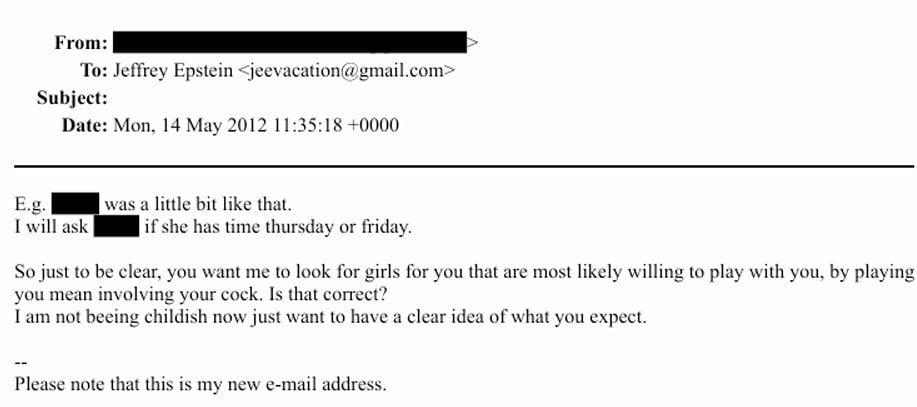
Redacted Sender, Big Accusation: No Proof Anyone Is “Protecting” Epstein’s Recruiter

That email screenshot does not identify the sender (the “From” line is fully blacked out), so it can’t be used to name a specific “pimp,” let alone prove a protection network. In the public record, the most prominent Epstein associate convicted of trafficking-related crimes is Ghislaine Maxwell, who was found guilty in U.S. federal court and sentenced to 20 years in prison—so she is not “protected” in the legal sense. The broader “files disappearing” narrative is also muddied by the Justice Department’s acknowledged need to remove and re-post material after redaction failures exposed victim-identifying information—changes in an online database can reflect privacy corrections rather than selective shielding of specific names.

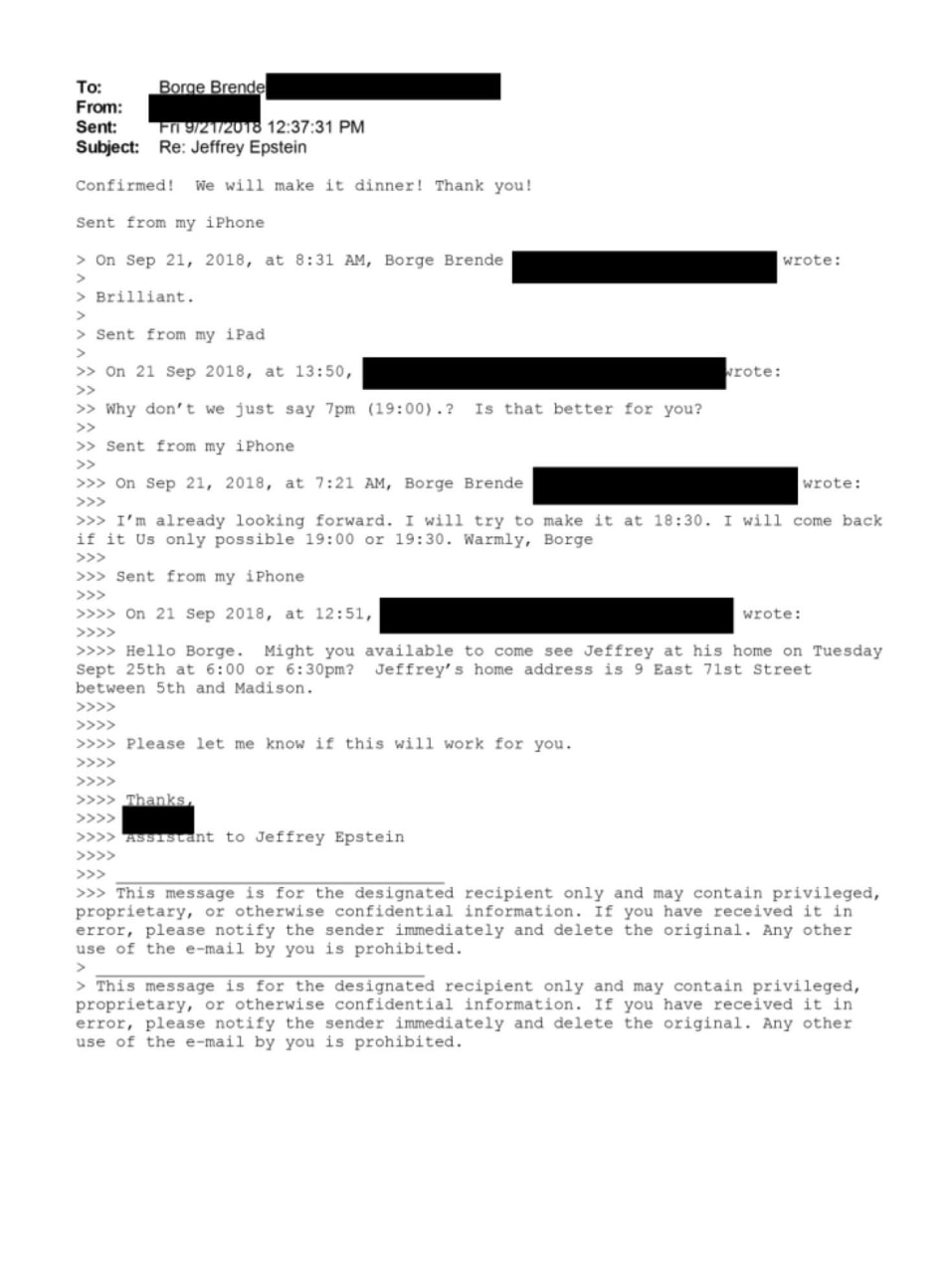
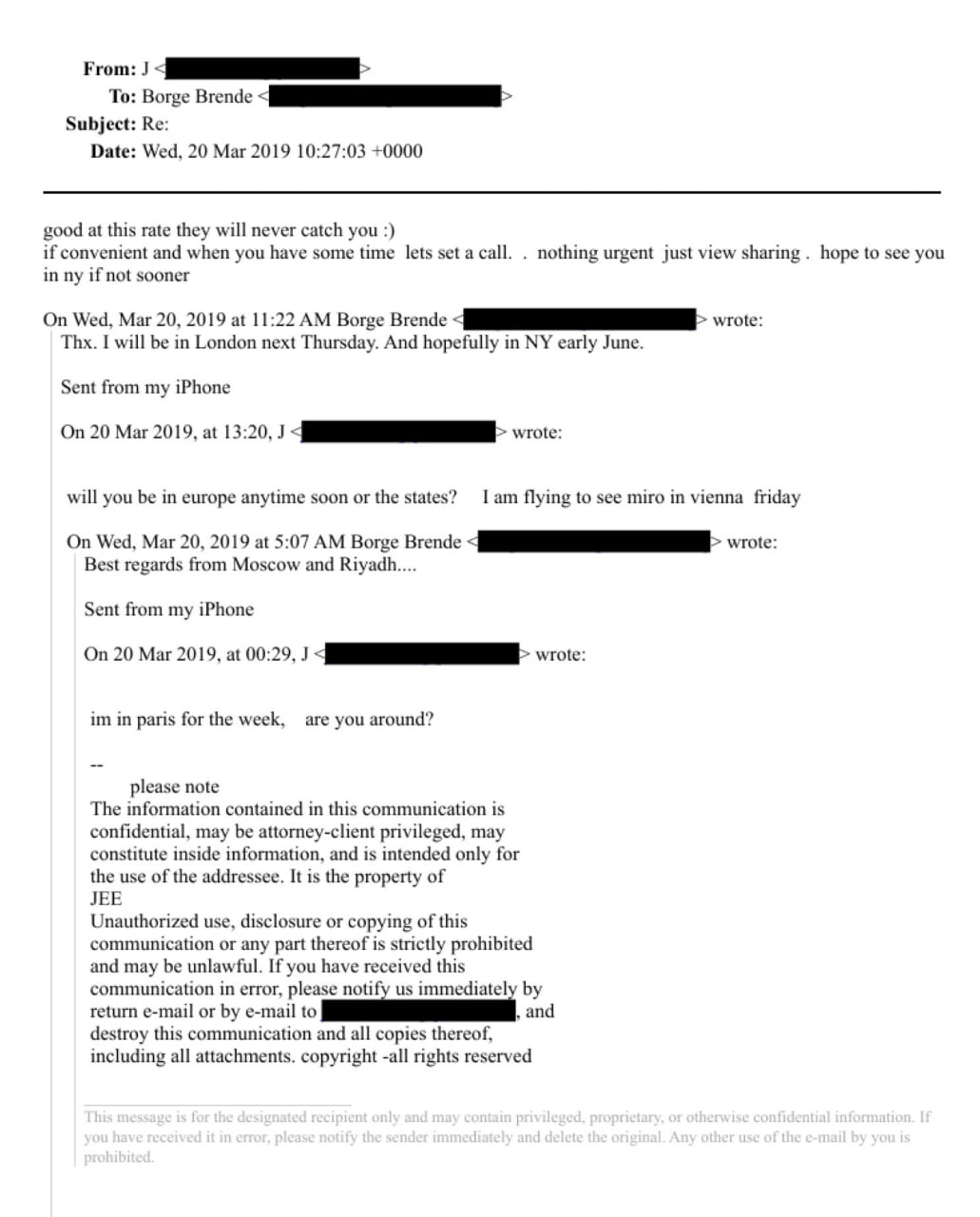
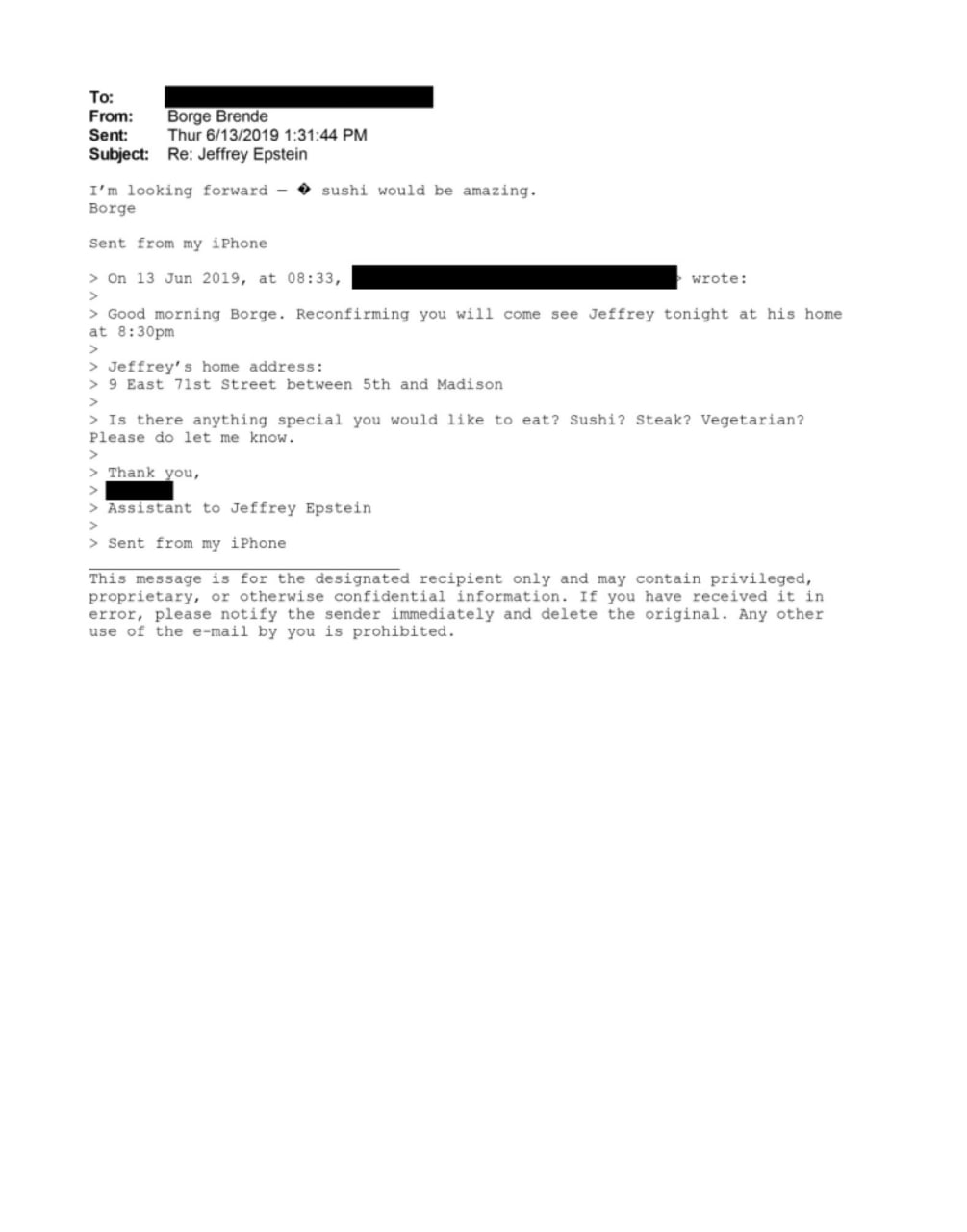
Davos Organiser Probes Its CEO After Epstein Dinner Emails Surface

The World Economic Forum (WEF) has launched an independent investigation into CEO Børge Brende after U.S. Justice Department disclosures indicated he attended three business dinners with Jeffrey Epstein in 2018–2019 and exchanged emails/texts with him. Brende says he was first invited in 2018 by former Norwegian deputy prime minister Terje Rød-Larsen, later attended additional dinners with diplomats and business figures, and claims he was unaware of Epstein’s criminal background at the time—adding that he would have declined had he known. WEF said the review “underscores” its commitment to transparency and integrity, noting Brende requested the probe, is cooperating, and will continue in his role while it proceeds.


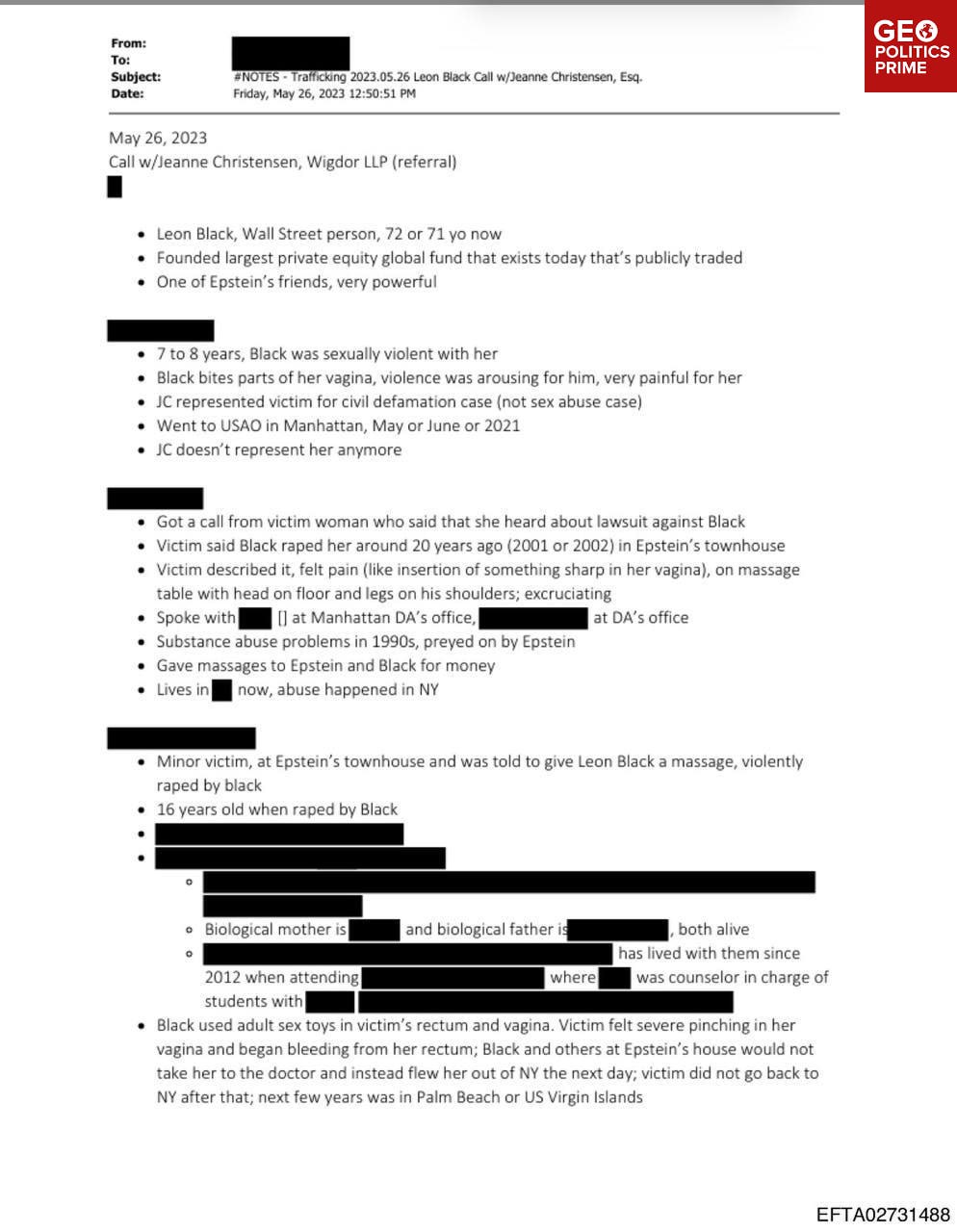
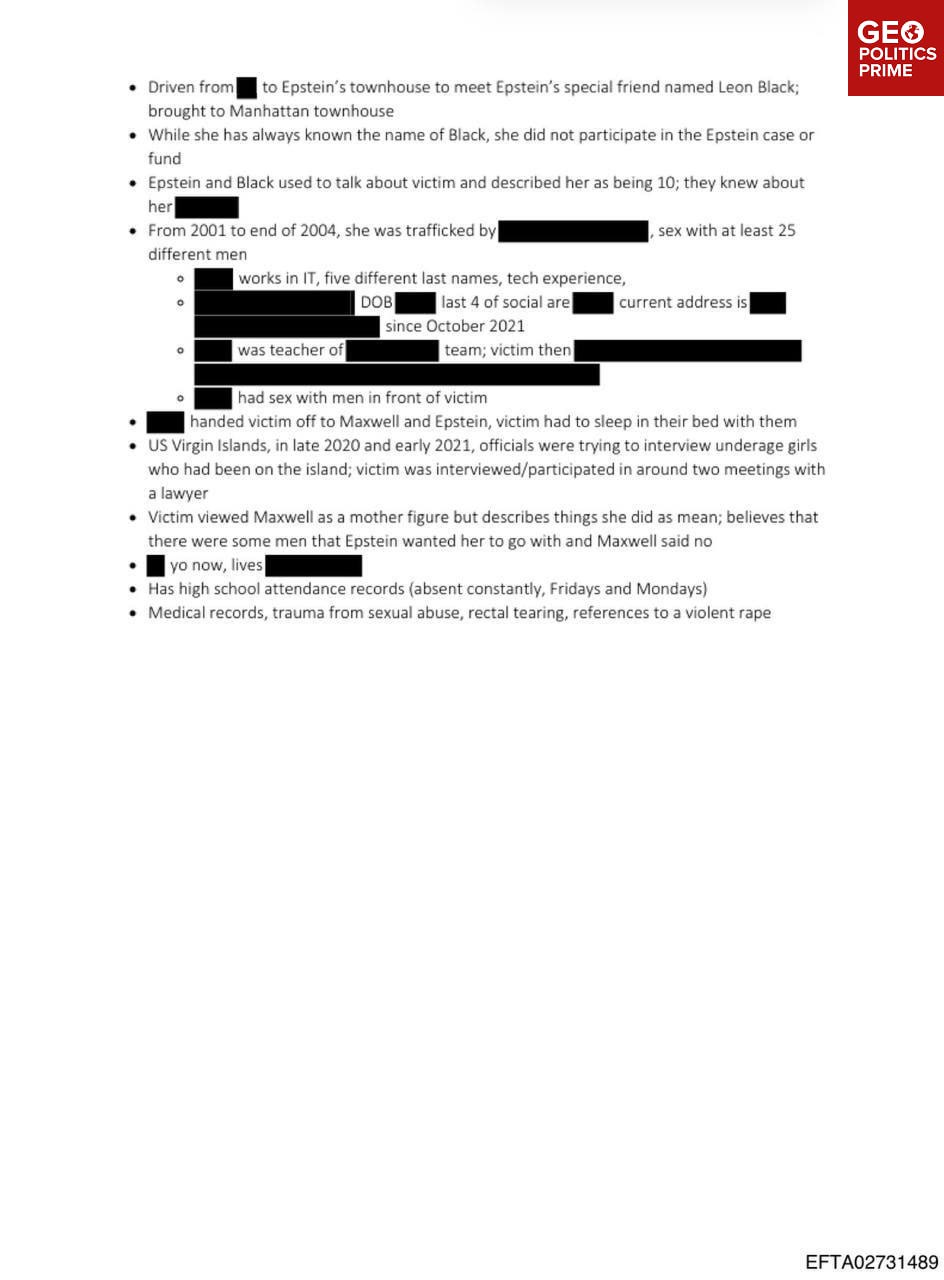
Epstein Files: “Call Notes” Circulate With New Claims Targeting Leon Black

Screenshots circulating online—tagged with “EFTA” document IDs and dated May 26, 2023—appear to summarize an attorney referral call and include serious allegations linking billionaire Leon Black (Apollo co-founder) to sexual abuse and trafficking involving a minor connected to Jeffrey Epstein. The claims are unverified from the images alone, and Black has repeatedly denied wrongdoing in past cases; a high-profile lawsuit filed in 2023 alleging he assaulted a 16-year-old at Epstein’s Manhattan townhouse later ended when the plaintiff discontinued the case. The renewed attention comes as the U.S. Justice Department’s massive Epstein-file disclosures continue—an ongoing release that has also drawn criticism for handling and redaction failures.


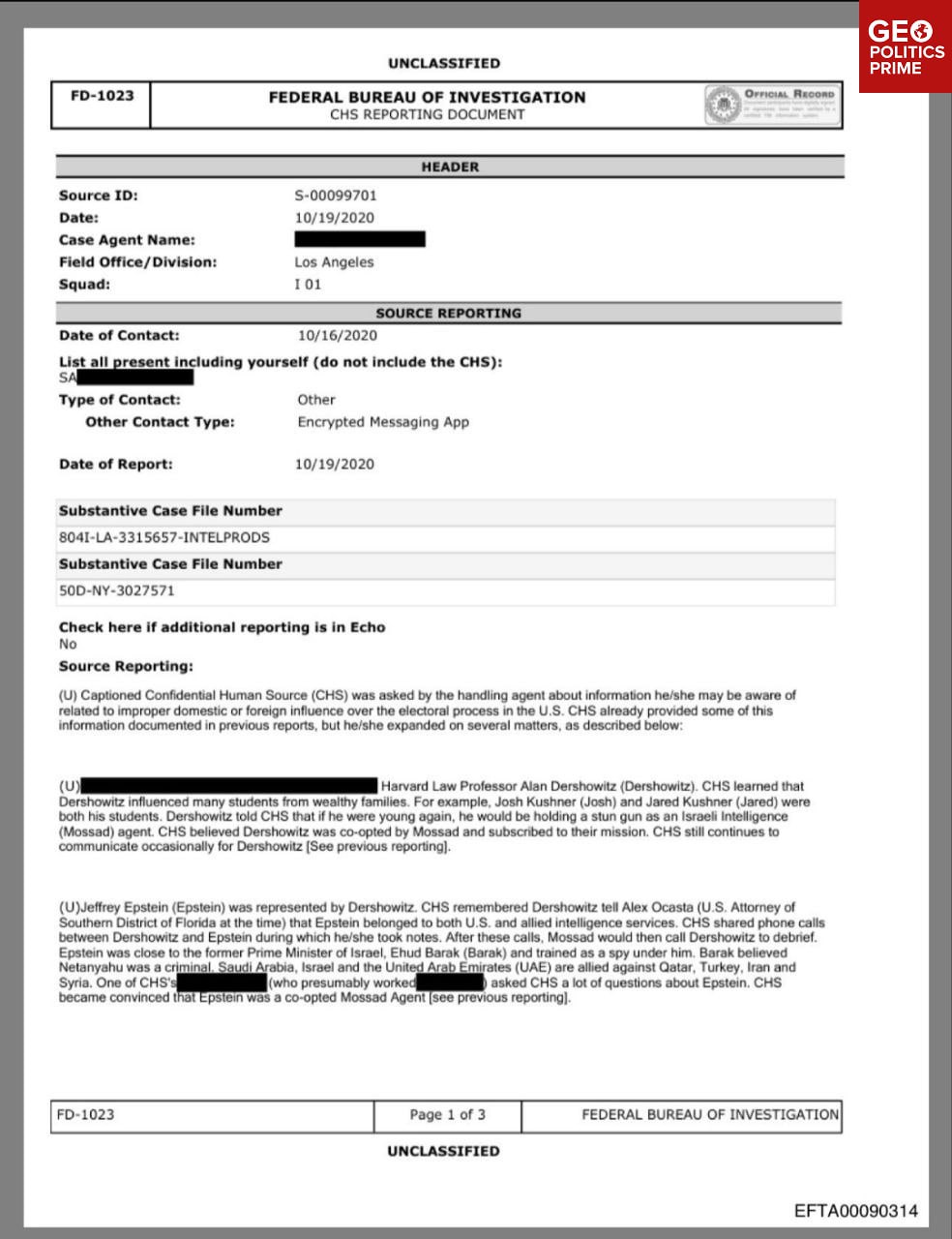
FBI “Source Memo” Reignites Epstein–Mossad Claims — But It’s Not a Confirmation

A newly circulated, unclassified FBI FD-1023 document (a confidential human source reporting form) included in the latest Epstein-file releases is being framed online as “proof” Jeffrey Epstein worked for Mossad. What the page actually shows is an informant’s account: it says the source “became convinced” Epstein was a “co-opted Mossad agent,” and it repeats claims involving Epstein’s relationship with former Israeli PM Ehud Barak and attorney Alan Dershowitz.

Crucially, FD-1023s are not vetted conclusions—they memorialize a source’s unverified statements. Oversight guidance on FD-1023 forms emphasizes they can reflect uncorroborated allegations, and DOJ’s own Epstein Library disclaimer warns the release is massive, sensitive, and imperfectly redacted.

On the pushback side, former Israeli PM Naftali Bennett has publicly called claims that Epstein worked for Mossad “totally false,” and reporting that reviewed available investigative records says no hard evidence has surfaced proving intelligence ties.

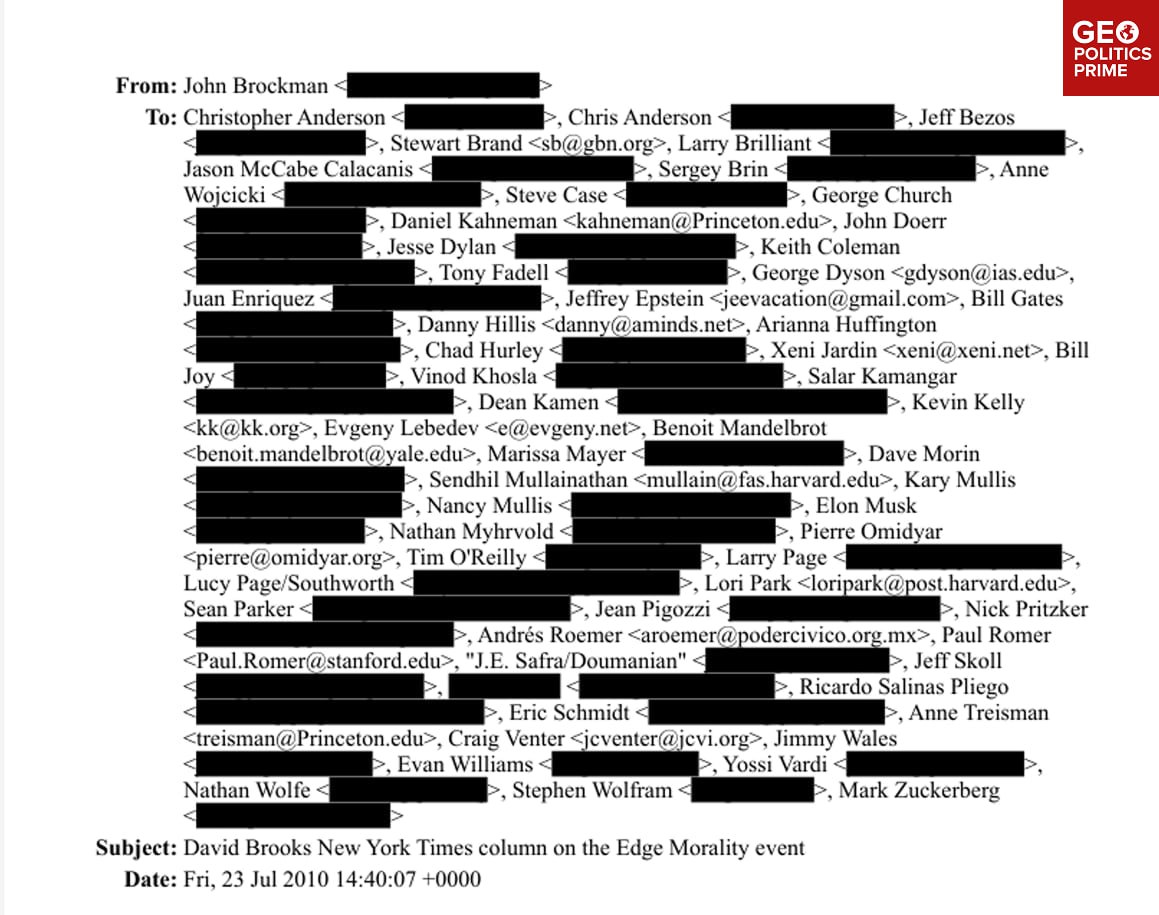
Epstein in the Inbox: Science’s Elite Network Problem

Newly released Epstein-file material is fueling fresh scrutiny of how Jeffrey Epstein embedded himself in U.S. science and tech circles—less through formal authority and more through social access and patronage. One widely shared email screenshot shows literary agent John Brockman circulating a note about a David Brooks/New York Times column to a heavyweight list of scientists and executives—with Epstein included on the distribution—illustrating how he kept proximity to influential thinkers years after his 2008 conviction. What these emails do show is networking, invitations, and credibility laundering; what they don’t prove is “unfettered access” to classified government science or any verified transfer of sensitive information. Analysts note it remains unclear whether Epstein merely sought status by cultivating scientists or attempted to shape research agendas—an ambiguity that echoes earlier reporting on his fixation with eugenics and genetics-linked “improvement” ideas.

More Others news

Europe

Eurozone Inflation Cools to 1.7% as Core Eases, Producer Prices Stay in Deflation (Jan/Dec)

Eurozone CPI slowed to 1.7% YoY in January (1.7% expected, 2.0% prior), while core CPI eased to 2.2% YoY (2.3% expected, 2.3% prior), reinforcing the disinflation trend. On the month, headline prices fell -0.5% MoM (vs +0.2% prior) and the CPI index slipped to 100.08 (from 100.63). Producer prices remained negative: PPI -2.1% YoY in December (vs -2.3% expected, -1.4% prior) and -0.3% MoM (in line with -0.3% expected, down from +0.7% prior). The complication is in the short-run “underlying” momentum you reported: HICP ex energy & food +2.2% YoY (2.3% prior), but core CPI +2.3% MoM (vs 0.3% prior) and HICP ex energy & food +2.3% MoM (vs 0.2% prior), suggesting a jump in monthly underlying pressure even as the YoY core rate cooled.

Italy Inflation Softens: CPI Holds 1.0% YoY, HICP Drops -1.0% MoM (Jan)

Italy’s January inflation data stayed subdued. CPI came in at 1.0% YoY (in line with 1.0% expected, down from 1.2% prior), while CPI rose 0.4% MoM (matching 0.4% expected, up from 0.2% prior). On the harmonised measure, HICP fell -1.0% MoM (in line with -1.0% expected, vs +0.2% prior), and HICP was 1.0% YoY (vs 0.9% expected, 1.2% prior). Takeaway: annual inflation eased, and the sharp monthly HICP drop signals a notable start-of-year price pullback on the EU-comparable measure—supportive of a softer euro-area inflation backdrop.

Germany Auto Demand Reverses: Car Registrations Fall 6.6% YoY (Jan)

Germany’s January car registrations dropped 6.6% year-on-year, a sharp swing from the prior +9.7% pace. The reversal points to a weaker start to the year for auto demand—an important cyclical signal for Germany’s manufacturing-heavy economy and a mild negative for broader euro-area growth optics if the softness persists.

ECB Stays Put: Deposit Rate Holds at 2.00% (Feb)

The European Central Bank left policy settings unchanged in February, keeping the deposit facility rate at 2.00% (2.00% expected/previous), the main rate at 2.15% (2.15% expected/previous), and the marginal lending facility at 2.40% (2.40% expected). The steady decision reinforces a “wait-and-see” stance as markets gauge how quickly disinflation feeds through and whether growth momentum stabilizes across the euro area.

Eurozone Retail Sales Slide: -0.5% MoM Signals Weak Year-End Demand (Dec)

Eurozone retail spending softened in December. Retail sales fell -0.5% MoM (vs -0.2% expected, +0.1% prior), pointing to a weaker end to 2025 consumption momentum. On the year, sales rose 1.3% YoY (vs 1.6% expected, 2.4% prior), showing growth slowed materially. The takeaway is a demand cooling signal for the euro area—mildly negative for the EUR growth narrative and supportive of a more cautious policy outlook if similar weakness persists.

Euro Sovereign Auctions Mixed: France 10Y Drops, Spain Mostly Steady

Euro-area bond auctions sent a mixed rates signal. France’s 10-year OAT cleared at 3.38%, down from 3.53% previously pointing to improved demand and slightly easier long-end funding conditions. Spain was steadier: the 10-year Obligación printed 3.223% (vs 3.199% prior, a small uptick), while the 7-year eased to 2.905% (vs 2.938% prior) and the 3-year Bonos was essentially flat at 2.341% (vs 2.342% prior). Net: France saw a clearer yield drop, while Spain’s curve was largely stable with only minor moves.

Italy Retail Sales Slip: -0.8% MoM Signals Weak December Demand

Italy’s December retail sales underperformed, falling -0.8% MoM (vs -0.4% expected, +0.5% prior), a sharp reversal that points to softer consumer demand into year-end. On an annual basis, sales rose +0.9% YoY but slowed from +1.3% previously reinforcing the cooling-consumption signal.

Eurozone Construction Slumps: Germany Drops Below 50, Region at 45.3 (Jan)

Eurozone construction remained under heavy pressure in January. The HCOB Eurozone Construction PMI fell to 45.3 from 47.4, signaling a deeper contraction across the region. The sharpest deterioration was in Germany: HCOB Germany Construction PMI dropped to 44.7 from 50.3, flipping from marginal expansion back into clear contraction territory. France was essentially unchanged but still weak, with HCOB France Construction PMI at 43.5 (vs 43.4 prior). Italy held relatively better, though still contracting, with HCOB Italy Construction PMI at 47.7 (vs 47.9 prior). Bottom line: construction remains a drag on euro-area growth, with Germany’s reversal the key negative signal.

France Factory Output Slumps: Industrial Production Falls 0.7% MoM (Dec)

France’s industrial production unexpectedly contracted in December, dropping -0.7% MoM versus +0.2% expected and +0.1% previously. The downside surprise points to a weaker year-end performance for the manufacturing/industrial sector and reinforces the broader picture of uneven momentum across the euro area.


Germany Orders Blow Past Forecast: +7.8% MoM (Dec)

German factory orders jumped 7.8% MoM in December, massively beating expectations of -1.8% and accelerating from +5.7% previously. The upside surprise signals a strong year-end rebound in demand for German industry—supportive for the near-term growth narrative—but the size of the move also hints at potential volatility (e.g., large-ticket orders), so markets will watch whether the strength persists in the next prints.

More Europe news

USA

US Mortgage Demand Drops Again as Applications Slide 8.9% (W/W)

U.S. mortgage activity weakened further. The MBA 30-year mortgage rate edged down to 6.21% (from 6.24%), but MBA mortgage applications fell -8.9% WoW (vs -8.5% prior). The pullback was broad: the Purchase Index dropped to 165.4 (from 193.3), the Mortgage Market Index fell to 330.8 (from 363.3), and the Refinance Index eased to 1,269.7 (from 1,332.2). Bottom line: even with slightly lower rates, demand cooled—suggesting affordability and buyer caution remain dominant headwinds.

US Services Hold Up, But Demand Cools and Price Pressures Re-Heat (Jan ISM)

The January ISM Services (Non-Manufacturing) PMI held at 53.8 (vs 53.5 expected, 53.8 prior), signalling steady expansion in the largest part of the U.S. economy. Under the hood, the mix turned less comfortable: Prices Paid jumped to 66.6 (vs 65.0 expected, 65.1 prior), pointing to re-accelerating input inflation in services. Meanwhile, New Orders fell to 53.1 (vs 55.0 expected, 56.5 prior), a meaningful cooling in demand momentum. The labour signal weakened too, with Employment at 50.3 (vs 52.3 expected, 51.7 prior), hovering just above the expansion line. Offsetting some of the softness, Business Activity rose to 57.4 (vs 55.2 expected), suggesting current output remains firm even as forward demand indicators cool. Net: growth is still OK, but the combination of hotter prices + softer orders/employment keeps the “sticky inflation” narrative alive for USD rates.

ADP Shock: US Private Hiring Slows to 22K in January

U.S. private-sector job growth, as measured by ADP, fell sharply short of expectations in January, rising by just 22K versus 46K expected and 37K previously. The weak print signals a notable cooling in near-term hiring momentum and puts more weight on upcoming labor-market reads (especially the official payrolls report) for clues on whether labor demand is genuinely softening.

US Auto Sales Slow: Total Vehicles Fall to 14.9M SAAR (Jan)

U.S. total vehicle sales cooled in January to 14.90M (SAAR), missing 15.50M expectations and down from 16.00M previously—signaling a softer start to the year for auto demand. The breakdown shows all car sales at 2.60M (vs 2.67M prior) and all truck sales at 12.33M (vs 13.33M prior), with the pullback driven largely by trucks/SUVs. For the broader USD macro picture, the data lean mildly growth-negative and fit with other signs of demand normalization amid still-tight financial conditions.

US Private-Sector Activity Firms: Services PMI Up to 52.7 (Jan)

U.S. January S&P Global PMIs edged higher, signaling a modest pickup in growth. The Services PMI rose to 52.7 (vs 52.5 expected, 52.5 prior), while the Composite PMI increased to 53.0 (vs 52.8 expected, 52.7 prior). Both readings remain comfortably above 50, pointing to steady expansion led by services—an incremental support for the “soft-landing” growth narrative around the USD, even as markets remain sensitive to inflation and Fed-policy risks.

Trump warns on Diego Garcia: “I retain the right” to secure the base

President Donald Trump said he has had “very productive” discussions with UK Prime Minister Keir Starmer about Diego Garcia, calling the island—home to a major U.S. military base—strategically vital to U.S. national security. In a social media post, Trump said he believes Starmer’s lease deal is “the best he could make,” but warned that if the lease ever “falls apart” or U.S. forces are threatened, he would “militarily secure and reinforce” the American presence on the island, adding he won’t allow the base to be undermined by what he called “fake claims or environmental nonsense.”

T-Bill Front End Steady: 4-Week Holds at 3.630%, 8-Week Dips Slightly

U.S. short-term Treasury funding costs were essentially unchanged. The 4-week bill auction stopped at 3.630%, flat versus the prior 3.630%. The 8-week bill printed 3.630%, a small dip from 3.635% previously (about -0.5 bps). The takeaway is a stable front end—suggesting steady cash demand and little change in near-term rate expectations.

US Jobless Claims Jump: Initial Claims Rise to 231K, Above Forecast

U.S. initial jobless claims increased to 231K (vs 212K expected, 209K prior), signaling a modest deterioration in the near-term layoffs picture. Continuing claims edged up to 1,844K (vs 1,850K expected, 1,819K prior), suggesting unemployed workers are staying on benefits slightly longer, though the level is close to expectations. The 4-week average rose to 212.25K (from 206.25K), reinforcing the message that claims are drifting higher, even if not yet pointing to a sharp labor-market break.

Russia’s War Chest Swells: FX Reserves Jump to $826.8B

Russia’s central bank reserves rose to $826.8B, up from $786.9B previously—an increase of roughly $39.9B. A larger reserves buffer typically strengthens confidence in external liquidity and can help smooth FX volatility, especially alongside heavier official market operations. For RUB, the direction is broadly supportive at the margin, though markets will still watch energy revenues, sanctions constraints, and intervention intensity.

US Labor Cracks: Layoffs Surge as JOLTS Openings Slide

U.S. labor-market signals weakened sharply. Challenger job cuts jumped to 108.435K in January (vs 35.553K prior), with layoffs up 117.8% YoY (vs -8.3% previously). At the same time, JOLTS job openings fell to 6.542M in December (vs 7.200M expected, 6.928M prior), pointing to softer labor demand. Taken together, the data tilt toward cooling employment momentum—raising the market’s sensitivity to upcoming payrolls/inflation prints and how quickly the Fed can pivot without reigniting price pressures.

More USA news

Iran

Araghchi’s Regional Dial-Out: Cairo, Muscat, Doha in One Push

Iran’s Foreign Minister Abbas Araghchi held separate phone calls with counterparts in Egypt, Oman, and Qatar to discuss the latest regional developments and de-escalation efforts, as diplomacy around heightened tensions intensifies ahead of the next U.S.–Iran track in Muscat. Readouts from the region emphasized coordination, support for calming steps, and keeping diplomatic channels active.

No “Dictated Talks”: Haddad Adel Sets a Red Line

Gholamali Haddad Adel, a member of Iran’s Expediency Discernment Council, said the Islamic Republic is not seeking negotiations “where one side sits and gives orders,” adding that Tehran hopes talks will take place and reach an outcome—language that frames Iran’s position as conditional on equal footing rather than accepting a take-it-or-leave-it agenda.

Amoli Larijani: Trump “Will Fall Like Pharaoh”

Sadeq Amoli Larijani, head of Iran’s Expediency Discernment Council, compared U.S. President Donald Trump to a “tyrannical Pharaoh” and said he would be “brought down,” framing Trump’s posture as arrogant and historically doomed—rhetoric that underscores Tehran’s hard-line messaging as U.S.–Iran tensions and diplomacy narratives collide in the region.

Karbaschi: “Even 3,000 Dead Is Not Something to Boast About”

Reformist figure Gholamhossein Karbaschi told ISNA that the country has witnessed “horrific events” he described as unprecedented not only in the Islamic Republic’s history but even in Iran’s broader history, arguing the government should have prevented such a “historic catastrophe.” While welcoming the publication of victims’ names as a step that enables verification, he said even if the death toll is “only” around 3,000, it is still too high and not an achievement to cite. Karbaschi also said Iran has been negotiating over the nuclear file since 1382 (2003) and that the long, stop-start cycle has become exhausting for people—“one day we accept, one day we don’t; one day they accept, then someone like Trump comes and breaks promises.”

Spray at the Consulate: Iranian Diaspora Protest Hits a Nerve in Los Angeles

A group of Iranian residents and political activists in Los Angeles rallied outside the consular offices of Iraq and the UAE to protest what they described as Persian Gulf states’ regional policies. Protesters alleged that staff at the Iraqi consular office used spray in an attempt to disperse the crowd, escalating tensions around the demonstration.

More Iran news

UK

UK Services Stay Strong, But PMI Miss Hints at Slight Cooling (Jan)

The UK’s January PMI data remained firmly in expansion but came in a touch softer than expected. The S&P Global Services PMI rose to 54.0 (vs 54.3 expected, 51.4 prior), while the Composite PMI printed 53.7 (vs 53.9 expected, 51.4 prior). Both are well above 50, signalling solid growth momentum—yet the small forecast misses suggest activity is rebounding strongly from December, but not quite as hot as markets had priced. For GBP, it’s broadly supportive on growth optics, though the “slightly cooler than expected” nuance can temper aggressive rate-pricing at the margin.

BoE Holds at 3.75%, but Dovish Split Widens: 4 Vote to Cut (Feb)

The Bank of England kept the Bank Rate at 3.75% in February (in line with expectations and unchanged from prior). But the vote split turned more dovish: 4 MPC members voted to cut (vs 2 expected, 5 prior), while 5 voted to hold (vs 7 expected, 4 prior), and 0 voted to hike. The takeaway is a “steady rate, easier bias”—the hold masks a growing bloc ready to ease, which can cap GBP upside and keep markets leaning toward a cut narrative if upcoming inflation and wages data soften.

UK Construction Still Contracting, But Rebound Accelerates (Jan)

The UK’s S&P Global Construction PMI improved sharply to 46.4 in January (vs 42.2 expected, 40.1 prior), signalling a faster-than-anticipated rebound in activity. However, the index remains below 50, meaning construction is still in contraction—just at a much slower pace than late 2025. For GBP, the surprise upside is supportive on growth optics, but the sub-50 level keeps the sector’s broader drag in focus.

UK Car Sales Grow, But Momentum Eases: Registrations +3.4% YoY (Jan)

UK new passenger car registrations totaled 144,127 in January, down from 146,249 previously. On a year-on-year basis, registrations were still up +3.4% YoY, but that’s slower than the prior +3.9% pace—suggesting auto demand is growing yet losing a bit of momentum at the start of the year.

More UK news

Commodities

EIA Confirms Big Draws: Distillates Plunge 5.6M as Crude Falls 3.5M (Week to Jan 31)

The EIA’s weekly petroleum status report for the week ended Jan. 31 showed a broadly bullish inventory setup. U.S. crude inventories fell -3.455M barrels (vs -2.000M expected, -2.295M prior), while Cushing stocks dropped -0.743M (vs -0.278M prior). The standout move was in products: distillate stocks plunged -5.553M (vs +0.329M prior), tightening the middle-distillate balance into peak winter demand season, even as heating oil inventories slipped -0.160M (vs +0.026M prior). Gasoline was mixed: gasoline inventories rose +0.685M (vs +0.223M prior) while gasoline production fell -0.565M (vs +0.791M prior). On the supply side, crude imports increased +1.101M (vs -1.706M prior), but refiners eased back: refinery crude runs fell -0.180M WoW (vs -0.395M prior) and utilization dipped -0.4pp (vs -2.4pp prior). Net: crude and especially distillate draws dominate the print—supportive for oil prices—while the gasoline build is a mild offset to watch.

US NatGas Draw Comes in at -360 Bcf — Bigger Than Last Week, Lighter Than Forecast

U.S. natural gas storage fell by -360B (≈ -360 billion cubic feet) in the latest weekly report, compared with -379B expected and -242B previously. The draw was larger than last week—signaling stronger net winter demand/tighter week-on-week balance—but smaller than forecast, which can read as slightly looser than priced and may cap upside for near-term gas prices unless colder weather or supply constraints re-emerge.

More Commodities news

Canada

Canada FX Reserves Rise: Total Reserve Assets Hit $128.7B (Jan)

Canada’s total reserve assets increased to $128.7B in January from $127.8B previously. The uptick suggests a modest strengthening of the reserve buffer—generally a neutral-to-supportive signal for confidence in external liquidity, though CAD is typically driven more by rates, oil, and growth differentials than by reserve levels.

Canada Services Slump Deepens: PMI Slides to 45.8 (Jan)

Canada’s S&P Global Services PMI fell to 45.8 in January from 46.5 previously, moving further below the 50 line and signaling a deeper contraction in services activity. The weaker reading points to soft demand and cautious hiring/ordering behavior in the largest part of the economy—an incremental headwind for CAD sentiment, especially if it reinforces a more dovish rates outlook.

More Canada news

Japan

Foreign Money Pours Into Japan: Bond Buying Jumps to ¥713.7B

Foreign investors sharply increased purchases of Japanese assets, with net foreign buying of Japanese bonds at ¥713.7B (vs ¥190.4B previously) and net foreign investment in Japanese stocks at ¥494.6B (vs ¥329.5B previously). The surge signals stronger overseas demand for Japan exposure; for JPY, the impulse is generally supportive, though the FX impact can depend on how much of the flow is currency-hedged and whether bond inflows compress yields or reflect a broader risk-on rotation into Japanese equities.

Japan 30-Year JGB Yield Jumps to 3.615% at Auction

Japan’s 30-year JGB auction cleared at 3.615%, up from 3.447% previously (about +16.8 bps). The higher stop-out yield signals renewed pressure at the long end—investors demanded more compensation to hold duration—an important read for Japan’s rates curve and for JPY sentiment, especially if markets interpret it as rising term premium rather than orderly normalization.

More Japan news

Oceania

Australia Trade Surplus Misses Slightly, But Improves on Month (Dec)

Australia’s December trade balance came in at A$3.373B, a touch below the A$3.420B forecast but up from A$2.597B previously. The details were mixed but supportive for the surplus: exports rose 1.0% MoM (after -4.0% prior), while imports fell -0.8% MoM (vs -0.2% prior). Net: a stronger goods-balance impulse into year-end—mildly supportive for AUD via terms-of-trade optics, even if the headline missed expectations by a small margin.

More Oceania news

Cryptocurrency

Bitcoin Breaks $67k: Burry Flags “Collateral Death Spiral” Risk

Bitcoin slid below $67,000 on Feb. 5, hitting fresh multi-month lows as the broader crypto selloff deepened and investors de-risked amid macro and tech volatility. Reuters reported BTC around $66.7k at the day’s trough, while market pricing later showed deeper downside as liquidations intensified.

Against that backdrop, “Big Short” investor Michael Burry has warned in recent commentary that a further leg down could trigger a collateral-driven cascade (his “sickening scenarios” / “death spiral” framing), arguing Bitcoin is behaving more like a purely speculative asset than a consistent hedge—raising spillover risk through leverage, forced selling, and balance-sheet stress in crypto-linked firms.

More Cryptocurrency news

Short News

Banxico Holds at 7.00% — Policy Stays Restrictive (Jan)

Mexico’s central bank (Banco de México / بانکسیکو) kept its policy rate unchanged at 7.00% in January, matching expectations and the prior reading (7.00% / 7.00% / 7.00%). The hold signals policymakers remain cautious and intend to keep financial conditions restrictive while they assess inflation progress and growth momentum. For MXN, a steady high carry backdrop is generally supportive, though the currency will still track risk sentiment and the U.S. rates path.

More Short News news