IFC Markets Live Quotes

Market news roundup: Friday, 6 February 2026

71 short market news items, grouped by 13 sections.

Political

Trump pushes voter ID, citizenship proof, limits on mail-in voting

President Donald Trump called for mandatory voter ID, proof of citizenship to register to vote, and an end to most mail-in ballots, framing the agenda as an urgent fix to U.S. election integrity. In the same remarks, Trump claimed “America’s Elections are rigged, stolen, and a laughingstock all over the world,” and warned the U.S. must “fix them” or “we won’t have a country any longer.” The proposals would mark a major shift in election administration and would likely face state-level resistance, legal challenges, and partisan gridlock, especially around federal authority over registration standards and how far mail voting can be restricted.

U.S. boosts Middle East defenses as USS Abraham Lincoln closes on Iran

The U.S. military is moving additional aircraft and land-based air defense systems into the Middle East as President Donald Trump weighs next steps on Iran alongside renewed diplomacy. U.S. officials have described the posture shift as primarily defensive—aimed at protecting U.S. forces and regional partners and deterring retaliation—rather than preparation for an imminent strike. NBC News reported the aircraft carrier USS Abraham Lincoln and its escorts are approaching a position within strike range of Iran, but officials told the network there is no specific mission planned at this stage.

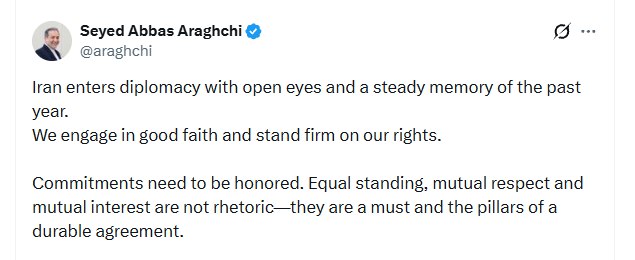
Araghchi: Iran enters talks “with open eyes”

Iran’s Foreign Minister Seyed Abbas Araghchi said Tehran is entering the upcoming Oman (Muscat) talks with the U.S. “with open eyes” and “a steady memory of the past year,” adding: “We engage in good faith and stand firm on our rights,” and stressing that “commitments need to be honored” as a basis for any durable deal. The message signals a tougher Iranian posture going into negotiations where Tehran wants the agenda kept strictly nuclear, while U.S. officials have indicated interest in a broader scope.

Bolton: U.S.–Iran talks are a “waste of oxygen”

Former Trump national security adviser John Bolton said there is “virtually no chance” of an agreement between Iran and the United States, calling the planned talks a “waste of oxygen” in comments to Al Jazeera. Bolton argued there is “no room” for a workable deal and suggested both sides are merely “going through the motions,” as negotiations are expected in Muscat, Oman, amid heightened military pressure and competing demands over the scope of any potential arrangement.

Merz shrugs off Araghchi’s jab, warns Iran on sanctions

German Chancellor Friedrich Merz downplayed Iran’s foreign minister’s criticism, saying the remarks reflect Tehran’s “nervousness and uncertainty,” during a press conference in Doha on Thursday, 16 Bahman. Merz avoided responding directly to personal insults after Iran’s Foreign Minister Abbas Araghchi accused him on social media of “political naivety” and having an “offensive personality,” while also saying Iran has traditionally welcomed strong relations with Germany and that it is “doubly regrettable” someone like Merz represents Germany globally. Araghchi’s comments came hours after Merz warned Iran would face new sanctions if it does not end violence against its own people and halt nuclear-related activities, adding Germany is ready to increase pressure. Merz said concern about regional military escalation is high, urged Iran to stop acting as a “destabilizing force,” and called on Tehran to enter talks, end “aggression,” align its nuclear program with international agreements, and protect countries such as Qatar, Jordan, and Israel from further military threats. He added talks would intensify in the coming hours and said Germany is acting in close coordination with the United States, as he continues a three-day Middle East trip including meetings with Saudi Crown Prince Mohammed bin Salman and Qatar’s Emir Sheikh Tamim bin Hamad Al Thani, with the UAE next.

Iran defense chief meets Aliyev in Baku, seeks security assurances

Iran’s Defense Minister Aziz Nasirzadeh traveled to Baku for meetings with Azerbaijani officials and held talks with President Ilham Aliyev, according to Iranian state media. The reports quote Aliyev as saying Azerbaijan will not allow “any threat” to be directed at the Islamic Republic—signaling an effort to project regional coordination and deterrence messaging amid heightened tensions around Iran.

CENTCOM chief joins U.S. delegation in Muscat

Photos/footage released from Muscat show Adm. Brad Cooper, commander of U.S. Central Command (CENTCOM), present during a meeting between the U.S. negotiating team and Oman’s foreign minister Badr al-Busaidi. The inclusion of the region’s top U.S. military commander—alongside envoys like Steve Witkoff and Jared Kushner—signals that the talks are being run with a parallel security/deterrence track in mind, as Washington and Tehran begin Omani-mediated nuclear discussions under heightened regional tension.

Australia & Germany condemn Iran crackdown, urge internet restored

Australia’s Foreign Minister Penny Wong and Germany’s Foreign Minister Dr Johann Wadephul issued a joint statement in Canberra on 5 February 2026 condemning what they called the Iranian regime’s “brutal crackdown” on protesters. They said they are following with “great concern” reports of casualties and arbitrary detentions, urged Tehran to meet its international obligations and fully uphold rights to freedom of expression, association and peaceful assembly, and called for ensuring the right to seek, receive and impart information—including by restoring internet access for all.

Saudi: US–Iran talks could make region safer

Saudi Foreign Minister Prince Faisal bin Farhan said Riyadh hopes ongoing talks between the United States and the Islamic Republic of Iran will reach a successful outcome, arguing that progress in the negotiations could make the region more secure. The remarks signal Saudi Arabia’s preference for de-escalation via diplomacy as tensions remain elevated across the Gulf.

CENTCOM: U.S.–Saudi naval drill wraps up, USS Delbert D. Black involved

U.S. Central Command said U.S. Naval Forces Central Command and Saudi Arabia’s Royal Saudi Naval Forces (West Fleet) concluded the bilateral “Indigo Defender 2026” exercise on Feb. 5. CENTCOM said more than 50 U.S. personnel took part—spanning damage control, maritime engagement, and security teams from the U.S. Navy, Marine Corps, and Coast Guard—and that the guided-missile destroyer USS Delbert D. Black (DDG-119) also participated.

Pompeo’s Red Line for Oman Talks

Former U.S. Secretary of State Mike Pompeo wrote on X as U.S.–Iran negotiations in Oman move forward that there is “only one acceptable outcome” for talks with Tehran: the verifiable destruction of Iran’s nuclear program and ballistic missiles, plus an end to Tehran’s support for terrorism. He added that anyone who thinks “the Ayatollah” would accept those terms has “a bridge in Brooklyn” for sale—underscoring hawkish pressure on any diplomatic track as the Oman talks proceed.

Berlin Urges Germans to Leave Iran as Risks Spike

Germany’s Foreign Office has updated its Iran travel and security guidance, urging German nationals to leave the country and warning that the security environment can deteriorate rapidly. The advisory highlights a serious risk of arbitrary detention and notes that the German Embassy in Tehran can currently provide only limited consular assistance. Berlin also flags the possibility of further escalation—including military confrontation—alongside sudden flight cancellations and airspace closures, while urging citizens to avoid protests and large gatherings, follow local security instructions, and exercise extreme caution with photos/videos—especially around sensitive sites or locations showing damage.

Trump Activates “Secondary Tariffs” Lever on Iran Trade

The White House says President Donald Trump has signed an executive order that reaffirms the long-running national emergency on Iran (dating to Executive Order 12957) and creates a mechanism to impose additional U.S. tariffs on imports from any country that directly or indirectly acquires Iranian goods or services—a form of “secondary tariffs” aimed at widening economic pressure beyond Iran itself. The order says an extra ad valorem duty — for example, 25% — may be applied after a determination process led by the Departments of Commerce and State (with other agencies consulted), and it gives Trump authority to modify or ease the measure if conditions change, retaliation occurs, or meaningful steps are taken to address the stated emergency. The order was signed Feb. 6, 2026, and takes effect at 12:01 a.m. EST on Feb. 7, 2026.

Wright: Cheap Oil Gives Trump Room to Squeeze Iran

U.S. Energy Secretary Chris Wright said the global oil market is “very well supplied,” arguing that keeps the risk of a “crazy spike” in crude prices contained even if U.S.–Iran tensions worsen—effectively giving President Donald Trump more geopolitical room to act against Tehran without immediately fearing an oil-price shock. The comments come as markets continue to price Middle East risk: on Feb. 6, Brent settled around $68.05 and WTI around $63.55 after earlier losses reversed on renewed conflict concerns.

Diplomacy Under a Fleet’s Shadow

Indirect U.S.–Iran talks mediated by Oman in Muscat on Friday, 6 February 2026 were framed by both sides as a “good start,” but Tehran signaled the agenda stays nuclear-only while Washington pushes to broaden talks to missiles, regional proxies, and domestic repression; the same day, the U.S. escalated pressure with an executive order imposing a 25% tariff on imports from any country that buys Iranian goods, as a U.S. naval buildup adds to regional tension. In parallel, President Donald Trump said Iran “wants to make a deal,” and highlighted a “large armada/flotilla” moving toward Iran, while indicating another meeting “early next week.” Europe is also signaling higher risk: Germany’s Foreign Office urged German nationals to leave Iran, warning of a volatile security situation, risk of arbitrary arrests, and only limited consular capacity in Tehran. U.S. hawks are drawing red lines publicly—former Secretary of State Mike Pompeo argued the only acceptable outcome is verifiable dismantlement of Iran’s nuclear and ballistic-missile programs and an end to Tehran’s support for terrorism, adding he doesn’t believe the “Ayatollah” would accept that. On the market backdrop, Energy Secretary Chris Wright argued today’s well-supplied oil market reduces the risk of a price spike, giving Trump more geopolitical room on Iran. Meanwhile, prediction-market pricing has eased: Polymarket’s contract implies roughly a high-20% chance of a U.S. strike on Iran by 28 February 2026 (with “no strike by Feb 28” around 72%), a reminder that crowd odds can move fast and aren’t a forecast.

More Political news

Others

Korea Current Account Surges: $18.7B Surplus (Dec)

South Korea’s current account swung to a larger surplus in December, coming in at $18.70B versus $12.90B previously. The wider surplus points to stronger net external earnings—typically supportive for the KRW at the margin via improved balance-of-payments dynamics, especially if driven by exports and a favorable goods balance.

South Africa FX Buffer Builds: Net Reserves Rise to $74.9B (Jan)

South Africa’s external buffer strengthened in January. Net FX reserves increased to $74.877B from $71.144B, while gross foreign reserves rose to $80.19B from $75.89B. The larger reserve stock improves external liquidity optics and can help dampen currency volatility—marginally supportive for ZAR, though the rand will still be driven mainly by risk sentiment, commodities, and domestic rates.

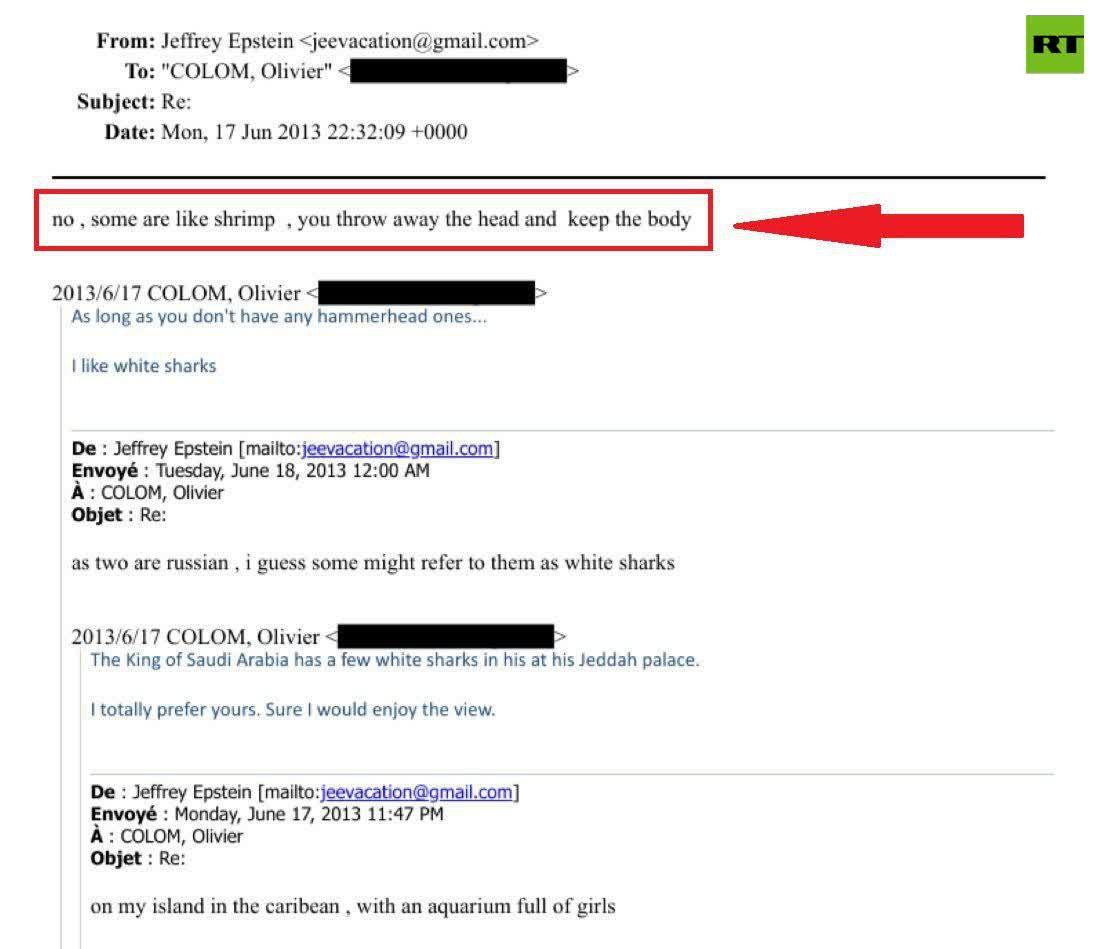
“White Sharks” in the Inbox: Epstein’s Crude Email With Sarkozy Adviser Resurfaces

Newly released Epstein-file correspondence is circulating again after an email exchange dated June 2013 between Jeffrey Epstein and Olivier Colom—described in French reporting as a former adviser to ex-president Nicolas Sarkozy—included sexist, objectifying language about women. In one message, Epstein crudely compared women to “shrimp,” implying you “keep the body,” while the thread also references “white sharks” and an “aquarium full of girls,” language now being cited as another example of how Epstein spoke about young women while cultivating elite European contacts. Authorities have not alleged any specific crime in connection with Colom based on these emails alone, but the messages are amplifying political pressure in France for clarity on who knew what—and when.

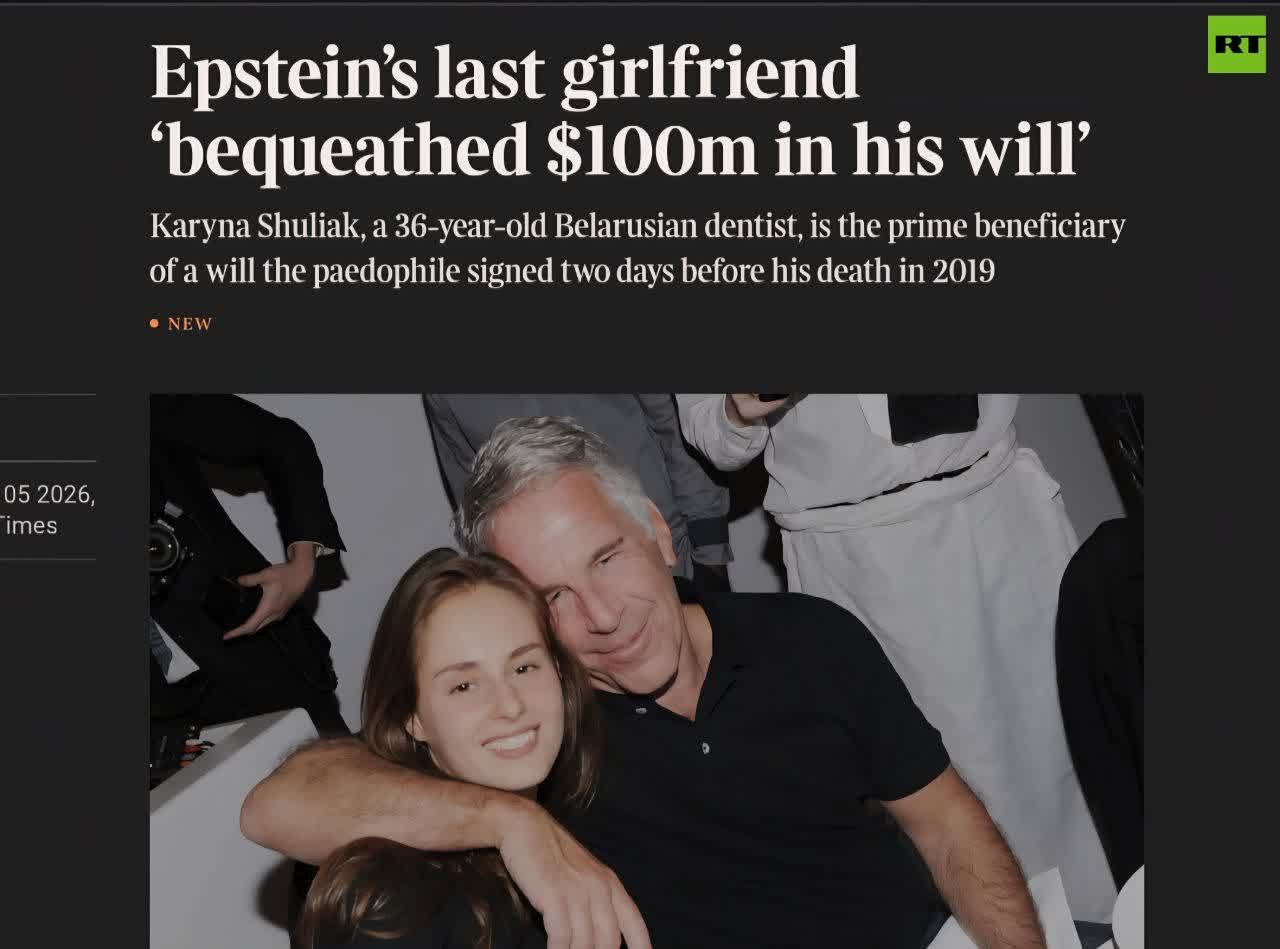
Epstein’s “1953 Trust”: Belarusian Dentist Named Top Heir—$100m on Paper, Payout Unclear

Newly released estate documents cited by The Times say Jeffrey Epstein’s final trust and will—signed two days before his 2019 death—named his then-girlfriend Karyna Shuliak (a 36-year-old Belarusian dentist) as the primary beneficiary, allocating $100 million via the so-called “1953 Trust,” including a $50 million annuity plus major property interests. Business Insider reports the same headline figure, while ABC News describes the bequest as $50 million (a discrepancy likely tied to how outlets count cash vs. total benefit and assets). In any case, multiple reports note the estate has been heavily consumed by victim settlements and legal costs, meaning the “paper” allocations may not translate into real payouts.

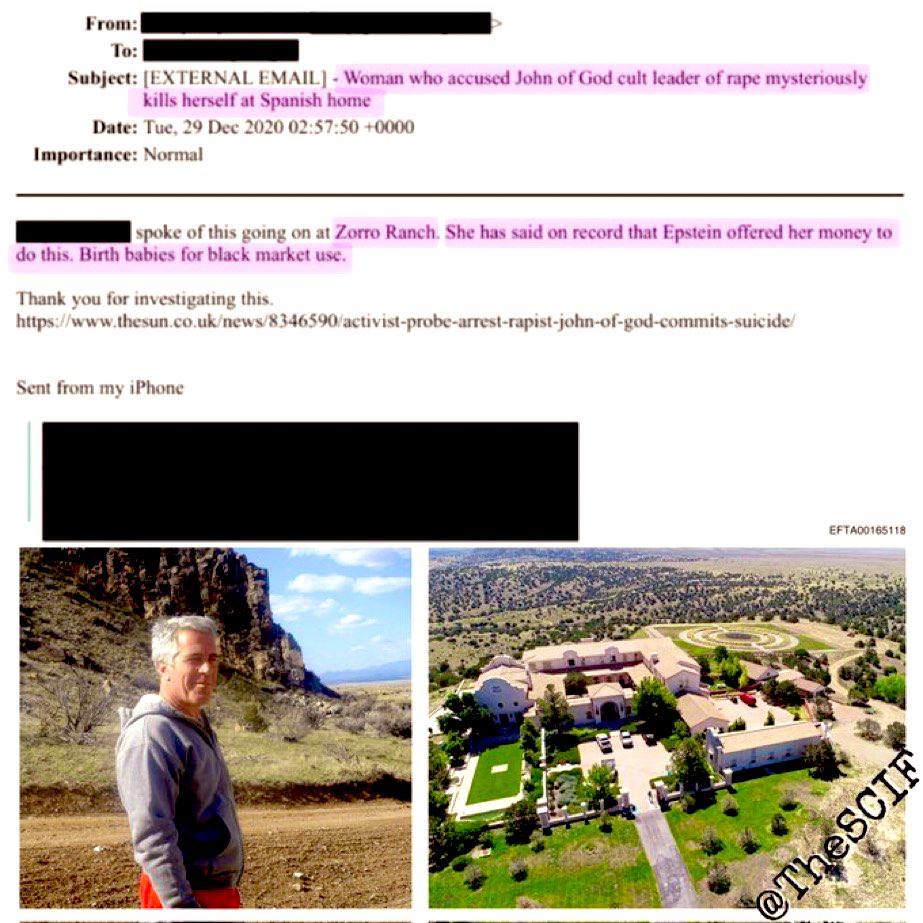
Epstein Files Revive “Baby Offer” Claims — ‘Underground Lair’ Story Unverified

A fresh wave of posts is citing newly released material from the DOJ’s rolling Epstein-file dump to claim a woman said on record that Jeffrey Epstein offered her money to have babies, with references to Zorro Ranch in New Mexico. Epstein’s broader “seed my DNA / eugenics” obsession tied to his New Mexico ranch has been reported since 2019, but the newly circulating snippets appear to be allegations/notes rather than court-established facts. Separately, some accounts splice in Brazil’s “John of God” (João Teixeira de Faria)—a faith healer charged and prosecuted for rape/sexual assault—adding claims about an underground “lair” and people being “eliminated.” Those elements are not supported by mainstream corroboration linking them to Epstein’s Zorro Ranch, and any claims of killings remain unsubstantiated.

‘Big Brother’ Shout at Thiel: Epstein Questions Go Public

A confrontation clip shared by RT and amplified by accounts like “censoredman” shows Palantir co-founder Peter Thiel being challenged in public over claims that Palantir enables “Big Brother”-style surveillance and over his name appearing in the newly released Epstein Files—with Thiel offering little to no response on camera. The context: the U.S. DOJ’s rolling disclosure includes emails/schedules that reference Thiel among other tech figures, but inclusion in the archive is not evidence of wrongdoing; Reuters has previously reported that calendars showed planned meetings with Epstein without alleging misconduct. Palantir’s government contracts and analytics platforms have long drawn civil-liberties criticism as surveillance-adjacent, which is why the “Big Brother” framing keeps resurfacing whenever Thiel is pressed publicly.

Turkey Fiscal Gap Narrows: Treasury Cash Balance Improves to -246.2B (Jan)

Turkey’s Treasury cash balance showed a smaller deficit in January, coming in at -246.190B versus -333.820B previously. The improvement suggests a better near-term cash-flow position for the state—potentially easing immediate funding pressure. For TRY, tighter fiscal cash dynamics are modestly supportive at the margin, though markets will still focus on inflation, reserves adequacy, and policy credibility.

Brazil Auto Shock: Sales Plunge 39% MoM as Production Still Falls (Jan)

Brazil’s January auto data flagged a sharp demand setback. Auto sales fell -39.0% MoM, reversing from a +17.1% gain previously. Output also remained weak, with auto production down -13.5% MoM (though less negative than -15.8% prior). The combination points to a tough start to the year for the vehicle sector—mildly negative for near-term growth momentum and, at the margin, for BRL sentiment if it feeds into softer industrial activity.

Mexico Consumer Mood Slips: Confidence Falls to 44.0 (Jan)

Mexico’s consumer confidence eased in January, with the headline index at 44.0 (down from 44.6 prior). The non-seasonally adjusted reading also dipped to 44.3 (from 44.8). The decline suggests households turned slightly more cautious at the start of the year—mildly negative for near-term consumption momentum and, at the margin, for MXN sentiment if it lines up with softer activity data.

Brazil Wholesale Inflation Ticks Up: IGP-DI Rises to 0.20% MoM (Jan)

Brazil’s IGP-DI inflation index accelerated slightly in January, rising 0.20% MoM versus 0.10% previously. The pickup suggests a modest firming in pipeline/wholesale-price pressures—something markets watch for pass-through risk into consumer inflation. For BRL, the signal is mildly supportive if it reinforces a more cautious (less dovish) inflation outlook, though the move is small.

Melinda Gates: Epstein Was “Evil Personified” — as New File Dump Fuels Fresh Questions for Bill

Melinda French Gates has again been pulled into the Epstein spotlight after her CBS Mornings interview with Gayle King resurfaced—where she said she met Jeffrey Epstein once, immediately regretted it, described him as “evil personified,” and said she had nightmares afterward, adding that Bill Gates’ continued meetings with Epstein contributed to the breakdown of their marriage. The renewed attention comes as the U.S. Justice Department’s latest Epstein-files release includes draft/unsent emails and claims attributed to Epstein about Bill Gates—reporting describes these as unverified allegations, including references to STD/medication and multiple affairs; Gates, through representatives and interviews, has denied the claims and called aspects “false/absurd,” while multiple outlets note no criminal charges against Gates have emerged from the disclosures as of early February 2026.

Epstein Files Drag Rothschild Name Back Into the Spotlight — Emails, Meetings, and an Adviser Role

The latest U.S. Justice Department “Epstein files” release shows years-long correspondence between Jeffrey Epstein and Ariane de Rothschild, head of Switzerland’s Edmond de Rothschild private bank, including repeated attempts to arrange meetings in New York and Paris and a familiarity that ran roughly 2013–2019. Reuters notes the documents do not appear to show criminal wrongdoing, but they raise fresh questions about the depth and nature of the relationship; the bank says Epstein was a “business acquaintance,” that de Rothschild had no knowledge of his conduct, and that she “unequivocally condemns” his crimes. Le Monde reports the exchanges portray Epstein as an informal go-between and unofficial adviser in bank matters during that period, including introductions and strategy discussions—while also stressing it found no material implicating de Rothschild in Epstein’s sexual crimes. As the release spreads, researchers and newsrooms are also flagging a surge in antisemitic/conspiracy framing that tries to turn any “Rothschild” mention into proof of a hidden global plot—claims that remain unsubstantiated by the documents themselves.

More Others news

Iran

U.S. Virtual Embassy: “Leave Iran now” amid outages and travel disruption

The U.S. Virtual Embassy in Iran issued a countrywide security alert urging U.S. citizens to “leave Iran now” and prepare departure plans that do not rely on U.S. government assistance. The alert cites increased security measures, road closures, public-transport disruptions, and widespread internet blockages, saying Iranian authorities continue to restrict access to mobile, landline, and national internet networks, while airlines are still limiting or canceling flights. Americans were advised to expect continued internet outages, plan alternative ways to communicate, and—if safe—consider leaving overland via Armenia or Türkiye.

Mashhad morgue video alleges detainee killings

A video shared online and described as footage from a morgue in Mashhad on Friday, 19 Dey claims it shows the bodies of people killed the day before (Thursday, 18 Dey). The accompanying account alleges that some victims had their hands bound, suggesting they may have been in custody at the time of death, and claims others showed signs of severe injury. The footage and claims cannot be independently verified from the material alone, but they are likely to intensify scrutiny of Iran’s security response and fuel further public anger if confirmed.


Ynet: Israeli commanders finalize contingency plans tied to Iran scenario

Israeli outlet Ynet reported that Air Force commander Tomer Bar and Military Intelligence chief Shlomi Binder concluded a long, pivotal meeting focused on completing readiness and approving operational plans for a potential action involving Tehran. According to the report, the meeting was framed around a scenario in which the United States attacks Iran, and Israel could be drawn in if the Islamic Republic targets Israel in retaliation—suggesting Israel is refining escalation-response options as regional military tensions rise.

Iran state TV: Tehran won’t accept “zero enrichment” in Muscat talks

A reporter for Iran’s state broadcaster said from Muscat that Tehran will not accept “zero enrichment” as an outcome of the nuclear talks, describing the discussions instead as focused on diluting Iran’s existing uranium stockpiles. The report also suggested negotiations could take longer than expected, pointing to a drawn-out process rather than a quick breakthrough—especially if Washington insists on tighter limits while Tehran frames the core trade-off around stockpile management and relief measures.

NYT: Iran fast-tracks missile-site repairs after June war

A New York Times analysis of satellite imagery indicates Iran has moved quickly to repair multiple ballistic-missile sites hit during the June 2025 “12-day war,” while reconstruction at major nuclear facilities appears slower and more limited. The imagery suggests work began at some missile-related locations shortly after the strikes—implying Tehran is treating missile production capacity as a near-term priority. Analysts also caution that satellite views are largely limited to surface-level changes, so the full scope of repairs may not be visible from space.

Lion and Sun flag raised in Richmond Hill, Canada

Iranian residents of Richmond Hill (north of Toronto) raised the Lion and Sun flag in a symbolic show of support for Iran’s national uprising, according to local organizers. The event was held in coordination with the city and council and was attended by the mayor of Richmond Hill as well as provincial and federal parliament representatives, underscoring growing diaspora visibility and political engagement in Canada.

Araghchi: “Long, intense” U.S. talks — next round hinges on capitals

Iran’s foreign minister Abbas Araghchi said the talks with U.S. officials in Muscat were “long and intensive,” adding that multiple sessions were held indirectly, with Oman’s foreign minister shuttling messages between the sides. Araghchi said both parties conveyed their views after a long gap in direct contact, Iran’s concerns were delivered “in a good atmosphere,” and Tehran also heard the other side’s positions. He described the meeting as “a good start,” but said any continuation depends on consultations in the two capitals.

IRIB: Iran–US talks “for now” concluded

Iran’s state broadcaster (IRIB) reported that the talks between Iranian and U.S. officials have ended for the time being, and that the Iranian negotiating delegation has returned to its accommodation following the conclusion of today’s sessions.

Tehran detainee’s case moved to Salavati court, family fears death sentence

Reports say Mohammadamin Beiglery, a 19-year-old detained during protests in Tehran on Jan. 8, 2026 (18 Dey), is at risk of facing a death-penalty verdict. An informed source said his پرونده was recently transferred from Branch 3 of Tehran’s Revolutionary Court to Branch 15, presided over by Judge Abolqasem Salavati—a judge activists and families often describe as especially hardline—prompting the family to fear a capital ruling based on the charges filed. Beiglery, who works at a men’s barbershop in Tehran, was reportedly arrested on Damavand Street while returning home from work. He is an only child and his mother has died; after three weeks of uncertainty, authorities reportedly informed his father of the arrest—after the father had spent days searching for him, including among bodies at Kahrizak, according to the account.

Shakouri-Rad: “Manufactured” Pro-Regime Deaths Used to Justify Crackdown

Reformist political figure Ali Shakouri-Rad, in an audio file published on the Jomhouriyat Telegram channel, alleged that during the nationwide Dey-month protests, the state pursued a “koshteh-sazi” (staged or “manufactured” deaths) narrative involving pro-regime forces as part of a broader project to intensify repression. He said demonstrations spread to around 400 cities and claimed reformists, conservatives, and security bodies did not anticipate the scale of response to Prince Reza Pahlavi’s call. Shakouri-Rad described the government’s response between 18–22 Dey as “the blackest days in Iran’s history,” asserting the average age of those killed was 15–25, and added that the trauma would not be “erased” for years, making a provocative remark that it would take a U.S. attack so destructive that the issue would be overshadowed.

Tehran Barracks Fire: Officials Blame Electrical Fault, No Injuries

Iranian media reported a fire inside Support Garrison No. 2 of the Army Joint Staff (SAMAJA) on Qodusi Street in Tehran, after online footage circulated claims of a blaze at the “Joint Staff HQ.” Tehran’s Fire Department spokesperson said the incident began around 19:00 in a carpentry workshop (in the waste/scrap area) and was contained quickly with no casualties. A separate military statement said the fire was triggered by an electrical short circuit in a roughly 300 m² woodworking/carpentry workshop; firefighters controlled it and crews were still mopping up afterward.

More Iran news

Equities

Amazon: Revenue Beat, EPS Miss—Stock Hit After Hours (AMZN)

Amazon.com (AMZN) reported EPS of $1.95 vs $1.96 expected (-0.51% surprise) while revenue came in at $213.4B vs $211.27B expected (+1.01% surprise). Despite the top-line beat, the stock was down ~4.42% in regular trade and ~9.74% after hours (to around $201.01), with a market cap near $2.38T—a setup that typically signals investors are grading forward guidance, AWS/retail margin trends, and 2026 demand visibility more than the quarter’s headline revenue strength.

Linde Posts a Clean Double-Beat, After-Hours Bounce (LIN)

Linde (LIN) delivered EPS of $4.20 vs $4.17 expected (+0.72% surprise) and revenue of $8.76B vs $8.64B expected (+1.39% surprise). Shares were down ~2.88% in regular trade but up ~0.93% after hours (around $463.95), with a market cap near $214.65B—suggesting the market is leaning into the earnings quality and guidance tone, especially around industrial demand and margin discipline.

Shell (RYDAF): EPS Miss, Revenue Beat—Shares Lower (RYDAF)

Shell (RYDAF) reported EPS of $0.57 vs $0.6189 expected (-7.90% surprise) while revenue was $64.09B vs $63.41B expected (+1.07% surprise). The stock was down ~4.03% (around $37.69), with a market cap near $213.37B—a mixed print where investors typically drill into cash flow, shareholder returns, and guidance, especially against the backdrop of commodity-price sensitivity.

Sony Edges an EPS Beat, Slight Revenue Miss—After-Hours Pop (SONY)

Sony ADR (SONY) reported EPS of $0.4029 vs $0.3999 expected (+0.75% surprise) while revenue came in at $23.68B vs $23.7B expected (-0.08% surprise). Shares were down ~3.06% in regular trade but up ~5.56% after hours (around $22.42), with a market cap near $133.58B—suggesting investors may be reacting to guidance or segment commentary (gaming, entertainment, imaging sensors) more than the tiny revenue miss.

Roblox Narrows Loss and Beats Revenue, Shares Jump After Hours (RBLX)

Roblox (RBLX) posted EPS of -$0.45 vs -$0.47 expected (+4.26% surprise), meaning the loss was smaller than forecast, while revenue rose to $2.22B vs $2.07B expected (+7.25% surprise). The market is rewarding the upside, with the stock up ~11.24% in extended trading (around $67.38). Roblox’s market cap stands near $42.52B, and investor focus typically shifts to guidance, bookings/engagement trends, and the path to improved margins.

Reddit Crushes EPS Expectations and Beats Revenue, Shares Rise After Hours (RDDT)

Reddit (RDDT) delivered a strong quarter with EPS of $1.24 vs $0.93 expected (+33.33% surprise) and revenue of $726M vs $667M expected (+8.85% surprise), beating on both earnings and sales. Shares were up ~8.18% in extended trading (around $163.41), with a market cap near $28.62B. The next key read-through is typically forward guidance, especially around ad demand, user growth/engagement, and monetization efficiency.

Toyota Motor Delivers a Big EPS Beat, Revenue Also Tops Forecasts (TM)

Toyota Motor (TM) reported EPS of $6.15 vs $4.36 expected (+41.06% surprise) and revenue of $85.81B vs $82.84B expected (+3.59% surprise). The stock was up ~2.96% (around $244.22) with +1.63% in extended hours (around $248.20), and Toyota’s market cap stands near $313.52B. With a beat this large, the market’s next focus typically shifts to forward guidance, margin outlook, and management’s read on global auto demand and pricing, including any FX sensitivity.

Philip Morris Meets EPS, Slight Revenue Beat—Stock Mostly Steady (PM)

Philip Morris (PM) posted EPS of $1.70, in line with the $1.70 forecast (0.00% surprise) and revenue of $10.4B vs $10.39B expected (+0.10% surprise). Shares were up ~0.40% (around $182.73) but down ~0.43% in extended hours (around $182.03), with a market cap near $283.53B. With results essentially on-target, the market typically pivots to guidance, volume/pricing trends, and any updates on smoke-free product momentum and margin discipline.

Biogen Surprises to the Upside on EPS, Tops Revenue—Shares Mixed After the Print (BIIB)

Biogen (BIIB) reported EPS of $1.99 vs $1.61 expected (+23.60% surprise) and revenue of $2.28B vs $2.21B expected (+3.17% surprise), delivering a clear beat on both earnings and sales. The stock was up ~8.45% around the time shown (near $201.02) but down ~3.66% in extended hours (around $193.82), with a market cap near $29.58B—a setup that typically puts the spotlight on forward guidance, product/demand commentary, and any pipeline updates that could affect 2026 growth.

More Equities news

Europe

Germany’s Surplus Widens, But Factory Output Slumps (Dec)

Germany’s data sent a mixed signal for the euro-area engine. The trade surplus rose to €17.1B in December (€14.1B expected, €13.6B prior), pointing to stronger net exports. But the production side weakened sharply: industrial output fell -1.9% MoM (-0.2% expected, +0.2% prior) and -0.55% YoY (vs +0.43% prior). Bottom line: external balances look healthier, yet domestic manufacturing momentum deteriorated into year-end—an uneven setup for EUR growth optics.

Spain Industry Stalls: Output Turns Negative at -0.3% YoY (Dec)

Spain’s industrial production slipped into contraction in December, falling -0.3% YoY after a +4.6% prior reading. The sharp swing suggests a meaningful loss of momentum in the industrial sector into year-end—an incremental negative for Spain’s growth pulse and the broader euro-area manufacturing backdrop if confirmed by upcoming releases.

Swiss Unemployment Edges Up: Jobless Rate at 3.2% (Jan)

Switzerland’s labor market softened slightly in January. The unemployment rate (n.s.a.) rose to 3.2% from 3.1%. On a seasonally adjusted basis, the unemployment rate (s.a.) printed 2.9%, a touch better than 3.0% expected and 3.0% prior. Net: a small headline uptick, but the adjusted measure suggests underlying conditions remain broadly stable. For CHF, the signal is neutral-to-slightly soft, with the bigger drivers still being global risk sentiment and SNB policy expectations.

Swiss FX Reserves Dip: Holdings Fall to $712B (Jan)

Switzerland’s foreign reserves declined to $712.0B in January from $725.4B previously, a drop of about $13.4B. A lower reserve stock can reflect valuation moves (FX/gold), balance-sheet adjustments, or reduced intervention activity. For CHF, the signal is modest and indirect, but markets may read it as consistent with less aggressive reserve accumulation/intervention compared with prior periods.

France External Gap Widens: Trade Deficit Hits €4.8B as Imports Jump (Dec)

France’s external balance deteriorated into year-end. The trade balance posted a wider €4.8B deficit in December (vs €3.8B expected, €4.0B prior), as imports rose to €57.9B (from €56.2B) outpacing exports at €53.1B (up from €52.2B). The current account also softened to a €0.60B deficit (from €0.30B), reinforcing the signal of a weaker net external contribution. One offset: France’s total reserve assets jumped in January to €409,263.0M from €362,743.0M, strengthening the reserve buffer even as the flow balances weakened.

Germany Trade Flows Rebound: Exports Jump 4.0% as Imports Rise 1.4% (Dec)

Germany’s December trade flows surprised to the upside. Exports rose 4.0% MoM (vs 1.0% expected, **-2.5% prior), signaling a strong year-end recovery in outbound demand. Imports increased 1.4% MoM (vs 0.2% expected, **0.7% prior), indicating firmer domestic absorption and/or higher energy/intermediate purchases. Net: the export surge is the key positive for growth optics, while the import rise suggests demand is not collapsing—supportive for the euro-area external picture if sustained.

More Europe news

USA

Fed Liquidity Ticks Up: Balance Sheet Rises to $6.606T, Reserves Jump to $2.94T

The Federal Reserve’s balance sheet increased to $6,606B from $6,588B, while reserve balances rose to $2.937T from $2.883T (about +$54B). The move signals a short-term uptick in system liquidity—likely reflecting operational factors (e.g., Treasury cash movements/settlement dynamics) rather than a structural shift away from QT. Markets will watch whether this is a one-off fluctuation or the start of a more persistent liquidity rebuild.

US Consumers Borrow More: Credit Jumps to $24.1B (Dec)

U.S. consumer credit surged to $24.05B in December, far above $9.00B expectations and up sharply from $4.70B previously. The jump signals households leaned more on borrowing into year-end—potentially supporting near-term consumption, but also raising questions about whether spending is being increasingly financed by credit as cost-of-living and rates remain elevated.

US Consumers Feel Better as 1-Year Inflation Fears Ease (Feb Michigan)

The University of Michigan survey showed a firmer consumer backdrop in February. Consumer sentiment rose to 57.3 (vs 55.0 expected, 56.4 prior) and current conditions climbed to 58.3 (vs 54.9 expected, 55.4 prior), both beating forecasts. Consumer expectations were essentially steady at 56.6 (vs 56.7 expected, 57.0 prior). On inflation views, 1-year inflation expectations fell to 3.5% from 4.0%, a dovish-positive signal, while 5-year inflation expectations ticked up to 3.4% from 3.3%, suggesting longer-run inflation concerns remain sticky. Net: better confidence and near-term inflation relief, but longer-run expectations are still elevated—keeping the Fed-sensitive inflation narrative alive for USD.

More USA news

Japan

Japan Consumers Pull Back: Household Spending Drops 2.6% YoY (Dec)

Japan’s household demand weakened sharply at year-end. Household spending fell -2.6% YoY in December (vs -0.5% expected, +2.9% prior) and dropped -2.9% MoM (vs -1.3% expected, **+6.2% prior). The double miss and reversal from November’s strength point to a meaningful cooling in consumption momentum—an important headwind for near-term growth. For JPY, softer domestic demand can reinforce a more cautious policy narrative unless inflation/wages stay firm enough to keep normalization on track.

Japan FX Reserves Jump to $1.395T (Jan)

Japan’s foreign reserves rose to $1,394.8B in January from $1,369.8B previously—an increase of about $25.0B. A larger reserve buffer strengthens Japan’s capacity to manage FX volatility if needed and is generally a marginal positive for JPY confidence, though day-to-day yen moves will still be driven mainly by rate differentials and risk sentiment.

Japan Signals Tentative Turn: Leading Index Beats, Coincident Still Soft

Japan’s forward-looking indicators improved marginally. The Leading Index rose 0.3% MoM in January (vs **0.1% prior), pointing to a slightly better near-term outlook. The Leading Index level for December was revised/printed at 110.2 (vs 109.8 expected, **109.9 prior), reinforcing the modest improvement in forward momentum. However, the current conditions read remains weak: the Coincident Indicator fell -0.4% MoM in December (vs **-1.0% prior), still negative even though it improved from the previous drop. Net: early signs of stabilization ahead, but the “here and now” data are still soft—an important backdrop for JPY as markets balance growth signals against policy expectations.

More Japan news

Russia

Russia Growth Rebounds as Deficit Narrows: GDP +1.9% YoY, Budget Gap -0.7% of GDP

Russia’s monthly GDP growth accelerated to +1.9% YoY in December, up from +0.1% previously, signalling a notable year-end rebound in activity. Fiscal optics also improved: the budget balance moved to -0.70% of GDP in January from -2.60% prior, indicating a substantially narrower deficit. For RUB, the combo of firmer growth and a smaller fiscal gap is supportive of fundamentals, though the currency’s path will still be heavily influenced by energy revenues, sanctions-related frictions, and official FX operations.

Russia Labor Market Still Tight: Unemployment 2.2% as Wage Growth Cools (Nov/Dec)

Russia’s labor market remained very tight in the latest prints. The unemployment rate held at 2.2% in December (in line with 2.2% expected, up slightly from 2.1% prior). Meanwhile, real wage growth slowed to 5.8% YoY in November (vs 6.1% expected, 6.1% prior), suggesting wage momentum is easing a bit even as employment conditions stay extremely tight. For RUB and inflation optics, the combo implies labor-driven pressure remains, but with a hint of cooling in real wage acceleration.

Russia Ends Year on a Strong Note: Retail Sales +3.9%, Industry +3.7% (Dec)

Russia’s December activity data surprised to the upside. Retail sales rose 3.9% YoY (vs 3.2% expected, 3.3% prior), pointing to resilient consumer demand. More notably, industrial production jumped 3.7% YoY (vs -1.0% expected, 0.4% prior), a major upside surprise that signals a sharp rebound in factory output into year-end. For RUB, the data are growth-supportive on the margin, though markets will still weigh energy revenues, sanctions constraints, and policy actions.

More Russia news

Canada

Canada Demand Turns Up: Ivey PMI Back Above 50 (Jan)

Canada’s Ivey PMI rebounded into expansion in January, rising to 50.9 (vs 49.7 expected, down from 51.9 prior). While it’s slightly softer than December, it’s still above 50, signalling improving business conditions month-to-month. The non-seasonally adjusted Ivey PMI also strengthened to 47.0 (vs **43.3 prior), indicating better underlying activity even after stripping out seasonal adjustment. For CAD, the return above 50 is mildly supportive of growth optics, especially after other recent soft spots in Canada data.

Canada Jobs Mixed: Unemployment Falls to 6.5%, But Headline Employment Drops 24.8K (Jan)

Canada’s January labor report sent a split signal. The unemployment rate fell to 6.5% (vs 6.8% expected, **6.8% prior), but employment fell -24.8K (vs +5.2K expected, **+10.1K prior). The composition shows a clear quality gap: full-time jobs rose +44.9K (vs **+50.2K expected), while part-time jobs plunged -69.7K (vs **-41.3K prior). Wage growth cooled, with average hourly wages for permanent employees at 3.3% YoY (vs **3.7% prior), and the participation rate slipped to 65.0% (from 65.4%). Bottom line: the lower jobless rate looks partly driven by a smaller labor force and a shift away from part-time work, while wage cooling points to easing inflation pressure—mixed-to-soft at the margin for CAD.

Canada Outlook Edges Up: Leading Index Rises 0.28% MoM (Jan)

Canada’s leading index ticked slightly higher in January, rising 0.28% MoM versus 0.27% previously. The small uptick suggests the forward-looking growth signal is stabilizing/improving at the margin rather than deteriorating—mildly supportive for the CAD narrative, though the move is incremental.

More Canada news

India

RBI Holds Steady: Repo 5.25%, CRR 3.00% Keeps INR Carry Intact

India’s central bank kept policy settings unchanged, holding the policy (repo) rate at 5.25% (5.25% expected/previous). The reverse repo rate stayed at 3.35%, and the cash reserve ratio (CRR) remained at 3.00% (3.00% expected/previous). The unchanged stance signals a wait-and-see approach as policymakers balance growth momentum with inflation risks. For INR, steady rates generally keep the carry backdrop stable, while markets will watch upcoming inflation and activity data for any shift in guidance.

India FX Reserves Jump: Holdings Rise to $723.8B

India’s foreign-exchange reserves increased to $723.77B, up from $709.41B previously—an improvement of about $14.36B. The larger reserve buffer strengthens external liquidity and enhances the central bank’s ability to smooth currency volatility. For INR, the move is modestly supportive at the margin, even though day-to-day direction will still hinge on risk sentiment, oil prices, and U.S. rate moves.

More India news

UK

UK Mortgage Rates Ease: Average Rate Slips to 6.62% (Jan)

UK mortgage rates edged lower in January, with the average rate at 6.62%, down from 6.77% previously. The decline suggests a modest easing in household borrowing costs, which can help stabilize housing demand at the margin—though rates remain high enough to keep affordability tight. For GBP, it’s a small positive for domestic financial conditions rather than a major market mover.

UK Housing Pops: Halifax HPI Jumps 0.7% MoM, 1.0% YoY (Jan)

UK house prices surprised to the upside in January. The Halifax House Price Index rose 0.7% MoM (vs 0.1% expected, **-0.5% prior), marking a sharp rebound. On the year, prices were up 1.0% YoY (vs **0.4% prior), suggesting the housing market is stabilizing and regaining momentum. For GBP, stronger housing data can support the domestic-growth narrative, though the market will weigh it against the BoE’s increasingly dovish vote split and broader inflation dynamics.

More UK news

Commodities

US Drilling Ticks Up: Oil Rigs Rise to 412, Total Rigs to 551

Baker Hughes data showed U.S. drilling activity edged higher. The oil rig count rose to 412 (from 411), while the total rig count increased to 551 (from 546). The uptick suggests slightly firmer upstream activity and potential future supply growth, though week-to-week moves can be noisy. For oil markets, it’s a mild supply-side headwind on the margin if the trend persists.

More Commodities news

China

Hong Kong FX Reserves Rise: Stock Climbs to $435.6B (Jan)

Hong Kong’s foreign reserves increased to $435.60B in January from $427.90B previously—an increase of about $7.70B. A higher reserves buffer supports confidence in the HKD’s stability under the peg framework and strengthens the territory’s external liquidity position.

More China news