IFC Markets Live Quotes

Market news roundup: Wednesday, 4 February 2026

85 short market news items, grouped by 13 sections.

Political

Pete Hegseth: “More Ready Than Ever” if Iran Won’t Negotiate

U.S. Defense Secretary Pete Hegseth warned Iran’s leadership on Monday that if Tehran refuses to negotiate with Washington over its nuclear program, the Pentagon is “more ready to act than ever.” Speaking to reporters after a speech at Blue Origin in Florida, Hegseth said President Donald Trump has been clear—before the “Midnight Hammer” operation as well—that Iran must not gain the capability to produce a nuclear weapon, adding that Tehran can either negotiate or the U.S. has other options “which is why the Department of Defense exists.” Referencing Trump’s summer strike on Iran’s nuclear facilities, he said neither he nor the president wants to go down that path, but readiness is the job—“and we are ready, even more than ready.” The comments come as Washington has boosted military posture near Iran in recent weeks, including the arrival of the USS Abraham Lincoln carrier strike group into the area of responsibility of U.S. Central Command, alongside additional fighter and transport deployments.

US–Iran Nuclear Talks Set for Oman on Feb. 6 — Axios Reporter Says

Axios journalist Barak Ravid said on X—citing an Arab source—that U.S.–Iran nuclear negotiations are expected to take place in Oman on February 6. Recent reporting also indicates the venue shift from Istanbul to Oman came at Iran’s request, and discussions have included the format and potential regional participation.

Kushner + Witkoff to Meet Araghchi Ahead of Friday Oman Talks — Nuclear-Only vs “Broader Deal” Clash

Ahead of Friday’s expected U.S.–Iran talks in Oman, reporting says Jared Kushner and U.S. envoy Steve Witkoff are set to meet Iranian Foreign Minister Abbas Araghchi as President Trump’s representatives. Iran is signaling it wants the agenda limited to the nuclear file, while Washington is pushing a wider package that includes ending uranium enrichment, missile constraints, and halting support for regional proxy forces. A senior official from the mediator camp warned that if Tehran arrives on Friday without concrete proposals, Iran could “very quickly” find itself in a much worse position.

Iran Hints at Walking Away as Betting Odds Wobble

Reporting around the high-stakes U.S.–Iran nuclear track suggests Tehran has signaled it could withdraw from the talks, raising the risk of a near-term diplomatic breakdown just as negotiations are being lined up in Oman. In parallel, prediction-market pricing on Polymarket implies roughly ~39% odds of a U.S.–Iran nuclear deal being reached by June 30 (odds move in real time and can swing quickly on headlines).

Chinese “Dual-Use” Research Ship Spotted Near USS Abraham Lincoln

A Chinese oceanographic research vessel — widely described by analysts as civilian on paper but potentially dual-use — was reported operating near the U.S. aircraft carrier USS Abraham Lincoln in the Arabian Sea, drawing attention to possible data-collection activity (oceanographic/maritime mapping) that can be useful for military planning. Open-source observers have pointed to the likely presence of the Chinese research ship Dayang Yihao in the area, though the vessel’s exact mission and proximity details remain based on tracking/OSINT reporting rather than official statements.

Australian Senator: We Will Act to Hold Iran’s Regime Accountable and End the Crackdown

Raff Ciccone, chair of the Parliamentary Joint Committee on Intelligence and Security, said Iran’s regime has responded to peaceful protests with “unprecedented and horrific violence” against its own people. Citing the killing of tens of thousands, the arrest of more than 80,000, and the disappearance of many Iranians, Ciccone said millions of courageous Iranians are being intimidated simply for demanding basic human rights Australians take for granted—democratic choice of government, equality and dignity for women, individual freedoms protected by the rule of law, and a government that serves its people. He added that the regime has sought to hide the scale of violence through nationwide internet and communications shutdowns, a tactic aimed at spreading fear and silencing witnesses. Stressing that Iran’s protests are not about short-term economic grievances but reflect deep, long-standing opposition to repression and corruption, Ciccone said Australia’s message is clear: violence against civilians, silencing dissent, and systematic denial of human rights will not be met with indifference. “We will act with our international partners to hold Iran’s regime accountable and to end its repression and destabilising behaviour,” he said, praising the courage of the Iranian people.

Ex-CIA Iran Desk Chief: Tehran Will Keep Backing Proxies—Even While Talking Diplomacy

Norman Roule, a former CIA official who led the agency’s Iran mission, wrote on X that Iran’s proxy strategy is likely to remain predictable: publicly reassuring regional armed partners they will continue to receive support, while simultaneously pursuing diplomatic tracks to preserve those groups inside domestic political systems and secure their long-term survival as part of state structures. Roule argued that, behind the scenes, Tehran will also seek to rebuild its regional leverage through a multi-year program driven by the IRGC Quds Force, which he described as still effective, resourced, and fully backed by Iran’s leadership. He added that regional powers worry any sanctions relief—granted in exchange for nuclear or missile limits—could end up strengthening the Quds Force and reconstituting networks such as the Houthis, Hezbollah, Hamas, Iraqi militias, and even new proxy structures in Africa, noting this was also a major criticism of the JCPOA. Roule said this is not an argument against a deal, but a reality negotiators must address directly—and one he believes Tehran’s foreign ministry and allies may try to downplay. He concluded that if Iran truly wants to change its regional posture, it would need to fundamentally alter the Quds Force’s mission and function.

Tammy Bruce: “The Outcome Will Be What Trump Wants”

Tammy Bruce, the U.S. deputy ambassador to the United Nations, told Fox News that the outcome of the upcoming negotiations between the United States and Iran will ultimately be what Donald Trump wants. She said Trump brings everyone to the table “one way or another,” and that he made clear from the start that Tehran must not obtain a nuclear weapon and must not enrich uranium. Bruce added that Trump remains committed to the Iranian people, arguing the issue now is Middle East stability and that Trump’s objectives are guiding U.S. policy. She said Iran also knows who is in charge right now—and that is why it has come to negotiations.

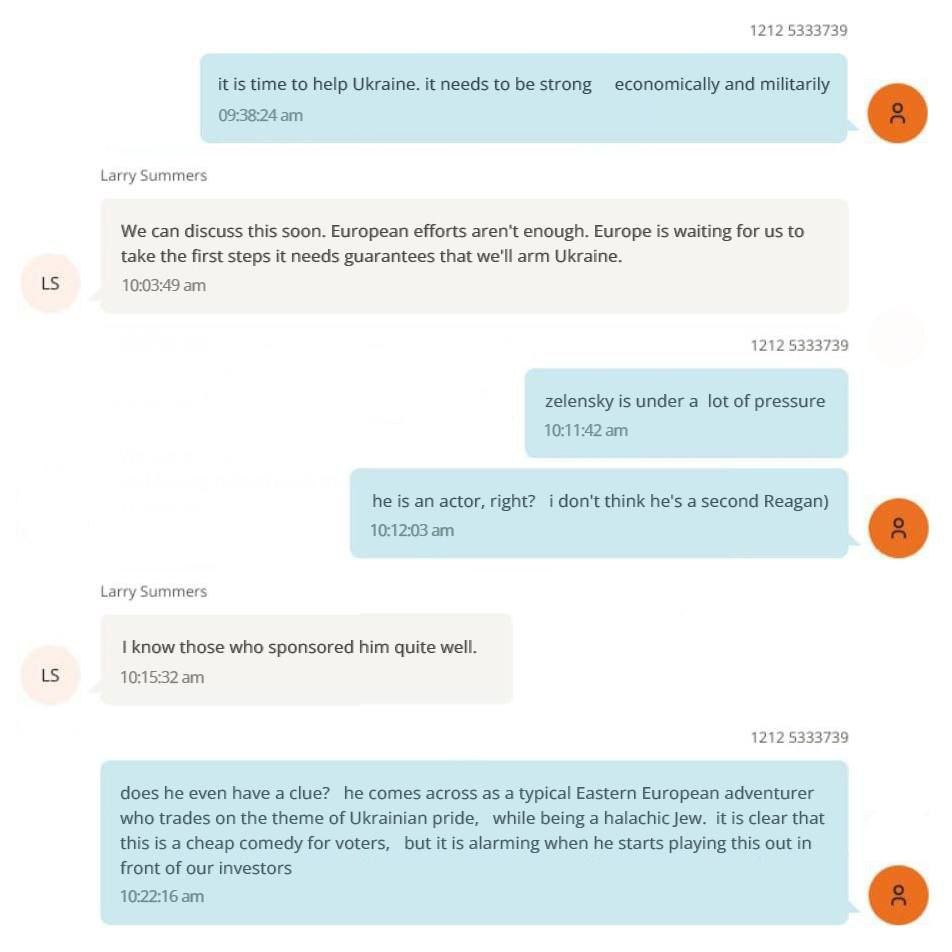
Purported 2019 Epstein–Summers Texts: “Arm Ukraine,” Doubts on Zelensky

A screenshot circulating as part of the so-called “Epstein files” purports to show a May 2019 text exchange between Jeffrey Epstein and economist Larry Summers about Ukraine and Volodymyr Zelensky. In the messages, Epstein urges helping Ukraine become “strong economically and militarily,” while “Summers” replies that European efforts “aren’t enough,” arguing Europe is waiting for the U.S. to take first steps and provide guarantees that Ukraine will be armed. The thread then pivots to Zelensky, with Epstein questioning his credibility and making a derogatory remark that references Zelensky’s Jewish identity and investor optics; “Summers” responds that he knows “those who sponsored him.” The image provides no visible date stamp or verifiable metadata, so its authenticity cannot be confirmed from the screenshot alone.


Putin to Xi: “For Russia–China ties, any season is spring”

Vladimir Putin held a video conference with Xi Jinping, framing their early-New-Year call as a continuation of a “good tradition” to review results and set plans. Putin used Spring Festival symbolism from the Chinese folk calendar—“the arrival of spring” and “renewal”—to argue that Russia–China relations remain in a constant “spring” season, and he congratulated Xi and the Chinese people on New Year 2026 and the upcoming Spring Festival. He also referenced the “red fire horse,” describing it as a symbol of strength, energy, and forward momentum—traits he said characterize the two countries’ ties.

Ukraine Talks Move to Abu Dhabi—Behind Closed Doors

A Ukrainian delegation has arrived in Abu Dhabi for negotiations involving the United States and Russia, according to a source cited by Russia’s RIA Novosti. The talks are expected to follow the previous format and be held in a closed (non-public) setting, with no immediate details released on the agenda, participants, or timing.

Graham to Trump: “Send Tomahawks to Ukraine”

Sen. Lindsey Graham urged President Donald Trump to start the process of delivering Tomahawk missiles to Ukraine, arguing current pressure on Vladimir Putin to come to the negotiating table and halt large-scale attacks “is not working.” Graham said Trump’s idea of targeting Putin’s oil customers who help fund Russia’s war machine should be “vigorously implemented” by the U.S. and Europe, and claimed Tomahawks would be a “military turning point” after what he described as a massive overnight attack. He added that pressure on Putin must rise in the coming days and weeks, warning that negotiations perceived as rewarding aggression could trigger “disasters around the world.”

Netanyahu to Washington: Don’t Trust Tehran’s “Promises”

Israeli Prime Minister Benjamin Netanyahu warned U.S. officials that Iran’s pledges have repeatedly proven unreliable, urging caution as Washington explores renewed diplomacy with Tehran. In talks with U.S. special envoy Steve Witkoff, Netanyahu also pushed Israel’s Gaza endgame: full Hamas disarmament and Gaza demilitarization before any reconstruction, while rejecting a governing role for the Palestinian Authority—part of broader U.S.–Israel coordination on Gaza arrangements and on potential responses to what Israel frames as rising Iran-linked threats.

Kremlin on Abu Dhabi: “No Readouts,” War Continues

Russia says the “doors” to a peaceful Ukraine settlement remain open, but claimed Kyiv has not taken the “necessary decisions,” so Moscow will keep pursuing its “special military operation,” Kremlin spokesman Dmitry Peskov said at today’s briefing. Peskov added the Kremlin will not comment publicly on the progress/results of the Abu Dhabi talks, argued Russia’s position is “unequivocal” and understood by both Kyiv and Washington, and said Moscow is grateful for U.S. negotiators’ efforts. He also defended ongoing strikes by saying Russian forces hit facilities they deem connected to Ukraine’s military effort, including energy targets Russia links to Kyiv’s war operations.

Lavrov’s Line Before Abu Dhabi: “Peace Would End Zelensky’s Career”

Russian Foreign Minister Sergey Lavrov claimed that President Volodymyr Zelensky has no incentive to end the war because a peace deal would “mean the end” of Zelensky’s political career, adding that Zelensky is focused on “survival” and saying he was unsure what proposals Ukraine’s side would bring to the Russian delegation in Abu Dhabi. Lavrov also suggested that if Kyiv arrives with security-guarantee demands similar to those NATO Secretary General Mark Rutte voiced in Ukraine’s parliament, it would again show Zelensky “doesn’t want peace”—a clear attempt to frame Ukraine’s security asks as the obstacle even as U.S.-brokered talks resume in Abu Dhabi.

EU Envoys Sign Off €90bn Ukraine Loan Blueprint

EU ambassadors agreed the mechanics for a €90 billion Ukraine support loan covering 2026–27, setting the rulebook for how funds will be raised and spent: the European Commission would borrow in capital markets, with proceeds split roughly two-thirds for military support and one-third for budget funding. The deal also tightens (but doesn’t fully lock) procurement rules—prioritising suppliers in the EU/Ukraine/EEA-EFTA, while allowing exceptions and opening a pathway for vetted third-country firms (including the UK) where supply, speed, or eligibility conditions are met. Final sign-off still needs the European Parliament, with the first disbursement targeted for early April.

Russia Claims Staroukrainka Capture Near Huliaipole

Russia’s Defence Ministry and state media say “East/Vostok” group units seized Staroukrainka in Ukraine’s Zaporizhzhia region after “fierce fighting,” naming the 114th Regiment (127th Motor Rifle Division, 5th Army) as a key assault element. Moscow claims it secured a defensive sector of ~5 km², destroyed “up to two platoons” from Ukraine’s 225th assault unit and 108th territorial defence brigade, and knocked out ~10 pieces of equipment plus 14 “Baba Yaga” hexacopters—figures that cannot be independently verified and have not been confirmed by Ukraine. Ukrainian reporting and Reuters coverage indicate the Huliaipole–Zaporizhzhia axis has seen intensified pressure and civilian evacuations in nearby areas in recent weeks.

Sanctions on Standby: US Preps New Russia Measures as EU Lines Up Feb. 24 Package

European officials told Bloomberg the U.S. has drafted additional Russia sanctions, but they see no signs Washington is moving to implement them yet, even as the war grinds on and diplomacy continues. In parallel, EU officials say a new EU package is being readied for Feb. 24, 2026 (the four-year anniversary of the full-scale invasion), with a renewed focus on tightening the net around Russia’s “shadow fleet”—though officials privately describe the approach as incremental (“a slow puncture”), not an immediate “fire-for-fire” escalation. Recent EU actions show what that looks like in practice: additional designations and service/port-access restrictions aimed at oil-shipping workarounds, plus coordinated warnings to tankers over documentation, flagging, safety and insurance compliance.

“Steer the Giant Ship”: Xi Tells Trump Both Sides Have “Concerns”

China’s Foreign Ministry confirmed a phone call between President Xi Jinping and U.S. President Donald Trump, saying Xi urged both leaders to “steer the giant ship of China–U.S. relations” through “winds and storms” and to deliver “more big things and good things” in 2026. The readout stressed that “just as the U.S. has its concerns, China also has concerns,” and included a warning that “it is always right to do a good thing, however small, and always wrong to do a bad thing, however small,” while calling for more dialogue, managed differences, and practical cooperation; Xi also underscored Taiwan as the “most important issue” and urged prudence on U.S. arms sales to Taiwan.

Friday in Oman? Iran Pushes Nuclear-Only Talks, Calls Rumor Mill “Psy-Ops”

Iranian officials and state-linked media say Iran–U.S. nuclear talks are expected to go ahead this Friday, 6 February 2026, with Oman positioned as host/mediator after Tehran pushed to move the meeting away from Istanbul and keep the agenda narrowly focused on the nuclear file and sanctions relief. At the same time, Tehran has sought to tamp down market-moving speculation that the meeting could be derailed—one senior Iranian government official described the surrounding “news-making” as closer to psychological operations aimed at steering markets and public opinion than genuine reporting—while U.S. officials have signaled they want a broader agenda (missiles/regional activity), leaving venue and scope still politically contested in some coverage.

Diplomacy Whiplash: Friday US–Iran Talks “Canceled” — But Reporting Splits

Israeli outlet Ynet reported that the next round of U.S.–Iran talks scheduled for Friday, 6 February 2026 has been canceled after Tehran demanded negotiations be limited to the nuclear file, with U.S. envoy Steve Witkoff said to be leaving the region and U.S. officials describing the gaps as too large to bridge; the report also said Washington signaled Israel not to take “rash steps.” At the same time, other reporting paints a more fluid picture: Reuters has described talks as at risk amid a dispute over venue (Turkey vs Oman) and scope, with Washington pushing to expand the agenda beyond nuclear issues while Iran insists missiles/defense are non-negotiable. Axios, meanwhile, reported the talks were back on after regional diplomacy and pressure from Arab leaders, underscoring that the status remains volatile and politically contested.

Nine-Country Lobby Revives Oman Talks

U.S.–Iran nuclear talks are back on for Friday, February 6, 2026, in Oman (Muscat) after at least nine regional countries urgently pressed the Trump administration at the highest political levels not to cancel the meeting, according to two U.S. officials cited by Axios. One official said regional partners asked Washington to “keep the meeting and listen” to Iran’s position, while stressing the U.S. remains “very skeptical” about any outcome; a second official said the U.S. agreed to proceed out of respect for regional allies and to keep the diplomatic track alive. Axios also reports Iran had pushed to narrow the agenda to nuclear issues only, and Iran’s foreign minister said the talks are scheduled for around 10 a.m. Friday in Muscat.

Rubio’s Four-Point Test for Iran Talks

U.S. Secretary of State Marco Rubio said Washington is prepared to engage with Iran, but argued that any talks “that actually lead to something meaningful” must cover more than the nuclear file—specifically Iran’s ballistic-missile range, what he called Tehran’s sponsorship of “terrorist organizations” across the region, the nuclear program, and Iran’s treatment of its own people. The comments underline the core gap going into the next round: the U.S. is signaling a broader agenda, while Iran has publicly pushed to keep negotiations strictly nuclear-focused.

Trump to NBC: Khamenei “Should Be Very Worried” Ahead of Oman Talks

U.S. President Donald Trump told NBC News that Iran’s Supreme Leader Ali Khamenei “should be very worried,” adding that “they’re negotiating with us,” as Washington and Tehran prepare for a Friday meeting in Oman while still clashing over the scope of the talks—U.S. officials want to broaden the agenda beyond the nuclear file (including missiles and regional issues), while Iran has insisted negotiations stay focused on nuclear matters amid heightened regional tensions and U.S. force buildup.

More Political news

Iran

Mashhad: Air-Defense Fire Likely Behind “Explosions” Reports

Reports on social media said that around 19:20 on Tuesday, 14 Bahman, loud blasts and gunfire-like sounds were heard in Mashhad near Shahid Borunsi garrison (IRGC Imam Reza base) and the Khatam al-Anbiya air-defense area. Follow-up posts claimed the noise was air-defense firing rather than explosions. There is no official confirmation so far, and the cause, target, damage, or casualties remain unverified.

Video Claim: Close-Range Shooting of Two Unarmed Civilians in Mashhad

A user-submitted video described as “Mashhad, Friday 19 Dey” alleges that government security forces opened direct fire at very close range on two unarmed civilians. The footage and its caption are not independently verified, and there is no confirmed public information in this report on identities, injuries, or the exact circumstances of the incident.


Iran Bar Official: Reports of Lawyer Arrests, No Verified Details Yet

A vice president of Tehran’s Central Bar Association said there are reports of several lawyers being arrested in Tehran and other cities, but that no reliable, official information is yet available on the reasons for the arrests. Separate coverage in Iranian and diaspora outlets has echoed a similar point—saying the Bar does not yet have a precise count, while follow-ups mention ongoing efforts to track cases.

Motaki: Don’t Expect Concrete Gains—Talks May Only Deter War

Iranian MP Manouchehr Motaki said there should be no expectation of practical, tangible outcomes from negotiations with the United States, arguing the main value of talks is that they could discourage Washington from imposing a war and reduce the probability of conflict—a framing that signals a defensive, risk-management rationale rather than optimism about a deal.

Ex-US Hostages Urge Washington to Halt Deportations of Iranian Refugees

Barry Rosen and John Limbert—two former U.S. embassy hostages in Iran—wrote in an English-language Iran International op-ed that the U.S. should stop deporting Iranian asylum seekers and vulnerable Iranian nationals, arguing it is incompatible to encourage Iranian protesters and warn Americans about Iran’s hostage-taking record while simultaneously sending at-risk people back into Iran’s “violent repression.” They also urged the U.S. Congress to demand explanations from the administration over the deportations.

Nurses’ House Demands Transparency on Arrested, Injured, and Killed Medical Staff

Mohammad Sharifi-Moqaddam, secretary-general of Iran’s Nurses’ House, wrote on X addressing the health minister and the head of the Nursing Organization, urging them to publicly disclose the names of nurses who have been killed, injured, or detained in recent incidents, even if they do not intend to pursue the cases. Shargh newspaper reported on Monday (13 Bahman) that it has published the names of 25 detained doctors and nurses linked to the nationwide protests, adding that the status of most remains unclear and that the exact number of detained healthcare workers is still unknown. Iran International also reported that at least 32 healthcare workers have been arrested and that case details remain unavailable. Separately, Iran Human Rights said hospitals and medical centers were turned into part of the state’s repression apparatus during the Dey 1404 crackdown, with doctors and nurses who treated the wounded threatened, summoned, and in some cases detained.

Sunni Friday-Prayer Imam in Saravan Denies Signing Pro-Khamenei Statement

The human-rights group Hal Vash reported that Molavi Hafezollah Raisi, the Sunni Friday-prayer imam of Bakhshan, Saravan and a prominent Sunni cleric in Sistan and Baluchestan, has rejected claims that he signed the so-called “statement of 600 Sunni scholars” supporting Ali Khamenei. According to the report, Raisi published a note on his official channel denying any link to the statement dated 8 Bahman, saying he was unaware of such a text and that his name and signature were added without his knowledge or consent. Hal Vash also said Molavi Abdolrahman Malazehi (Chabahari), the Sunni Friday-prayer imam of Chabahar, had previously denied signing the same statement, and that the official outlet of the Ein-ol-Oloum seminary in Gosht, Saravan likewise rejected the attribution of Molavi Seyyed Abdolkarim Hosseinpour to the signatories list.

Ali Nassirian: “I Share Your Grief” on His 91st Birthday

Veteran Iranian cinema and theatre actor Ali Nassirian marked his 91st birthday with a message saying he is “sharing the grief” of the Iranian people. The statement—posted on Parviz Parastouei’s Instagram page—said his “worn body and soul” in old age and illness cannot bear the “terrible blow” that has hit his compatriots, adding that he knows no other way to empathize but to weep in private: “I share your grief, my dear compatriots.” Parastouei wrote that Nassirian has no personal social-media page and asked him to publish the message on his behalf, offering wishes for Nassirian’s health and peace for bereaved families.

Photographer Yalda Moeiri Summoned After IRGC Intelligence Raid — Reports

Reports say photographer Yalda Moeiri has been summoned to the Moqaddas Ardebili Prosecutor’s Office in Tehran, after an alleged raid on her home by around 10 IRGC Intelligence agents on Wednesday, 13 Bahman. According to these reports, officers searched the house and seized her electronic devices, including her mobile phone, and took them away.

~80 Republican Activists: “Only Way to Save Iran Is Ending the Current System”

Around 80 Iran-exiled republican political and civil activists said in a joint statement that the “only way to save Iran” is to end what they called the country’s “unrepublican and inhuman” ruling system. They voiced hope for forming a broad national front to hold a referendum and establish a constituent assembly, arguing this would allow Iranians of all political views to decide their country’s political future through a democratic and informed process. The signatories said they support aligned statements issued by 17 activists, Mir-Hossein Mousavi, and others. They also described Ali Khamenei and the governing structure as the main party responsible for the “horrific killings” in Dey, calling the mass bloodshed an “organized state crime against humanity.” The statement lists numerous signatories, including Sheila Entesari, Asef Bayat, Alan Tofiqi, Behrouz Khaliq, Soroush Dabbagh, Taghi Rahmani, Maryam Sotoudeh, Mansoureh Shojaei, Farzaneh Azimi, Kazem Alamdari, Ahmad Alavi, Reza Alijani, Mehdi Fattapour, Masoud Fathi, Mansour Farhang, Kazem Kordvani, Akbar Karmi, Behzad Karimi, Ali Keshtegar, Mahdieh Golrou, Hassan Nayeb-Hashem, and Mehdi Nourbakhsh.

Report: Saif al-Adl Sounded Out Taliban on Temporary Al-Qaeda Leadership Base in Afghanistan

Afghanistan International, citing informed sources, reported that Saif al-Adl (described as al-Qaeda’s leader) sent a letter to Taliban leader Mullah Hibatullah to discuss the possibility of temporarily relocating al-Qaeda’s leadership to Afghanistan if Iran’s Islamic Republic were to fall. The report says the letter argues that, in such a scenario, al-Qaeda might ultimately be forced to shift leadership to places like Iraq or Syria, but is seeking temporary residence in Afghanistan until the situation becomes clearer. Sources said the Taliban leader has not yet decided and is waiting to see how events in Iran evolve. (These claims are not independently verified.)

“Still Watching, Still Shocked”: Former UN Iran Coordinator Condemns Crackdown Clip

Gary Lewis, who previously served as the UN Resident Coordinator in Iran, said he remains “shocked” by what Iran’s authorities do to their own people after resharing a circulating video that appears to show security forces using a vehicle against protesters. In his post on X, Lewis wrote that he knows “worse” incidents have happened recently in Iran, yet he keeps watching the footage—stunned by the state’s treatment of civilians—adding fresh international-profile criticism as scrutiny of Iran’s crackdown narratives intensifies.

Prince Pahlavi: “Lion-and-Sun Revolution” Shows a United Nation Under One Flag

Prince Reza Pahlavi said Iran’s “majestic national revolution”—which he described as the “Lion-and-Sun Revolution”—has become a symbol of nationwide unity, arguing that despite the Islamic Republic’s efforts to sow division, Iranians across provinces, languages, and beliefs are speaking with one voice. He praised protesters’ resilience amid a violent crackdown, said their courage has “shaken” the regime and “awakened the world,” and reiterated a transition vision built on Iran’s territorial integrity, individual freedoms and equal citizenship under the law, and a secular democracy based on separation of religion and state, while insisting accountability for those responsible for killings is inevitable.

Hunger Strike for a Phone Call: Narges Mohammadi Protests Isolation in Detention

Nobel Peace Prize laureate Narges Mohammadi has begun a hunger strike (reported as starting Monday, 2 February 2026 / دوشنبه ۱۳ بهمن ۱۴۰۴) to protest her continued detention and what her supporters describe as a total ban on phone calls and family visits, after her violent arrest in Mashhad in December during a memorial for human-rights lawyer Khosrow Alikordi. Her family and the Narges Foundation have warned that her health is fragile—citing a history of heart issues/chest pain, high blood pressure, and serious back/spinal problems—and CNN reported her husband saying authorities were pressuring her to make calls only if she claimed “all is well,” which she refused. The hunger strike comes as other detainees from the same memorial case, including Sepideh Gholian, remain in legal limbo in reported temporary detention.

Tehran’s New Playbook: Blame Pahlavi for Protest Deaths

Saeed Ghasseminejad, a senior adviser to Prince Reza Pahlavi, told The Jerusalem Post that there are reports Supreme Leader Ali Khamenei has directed Iran’s cyber apparatus to mobilize around a specific narrative aimed at discrediting Pahlavi—claiming Pahlavi is responsible for protesters’ deaths—and he added that he has heard the same framing echoed by some Western journalists.

Trump to NBC: Khamenei “Should Be Very Worried” as Oman Talks Wobble

U.S. President Donald Trump told NBC News that Iran’s Supreme Leader Ali Khamenei “should be very worried,” adding, “as you know, they’re negotiating with us,” in remarks aired as uncertainty swirled around the next round of U.S.–Iran talks—reportedly set for Friday in Muscat, Oman—and as Washington continues to signal pressure on Tehran while debating whether talks should expand beyond the nuclear file.

More Iran news

Equities

Futures Up, Software Hit by AI Fears as Gold Catches a Bid

U.S. stock futures edged mostly higher as markets braced for major tech earnings, with Alphabet set to report after the close and investor focus squarely on new AI signals. At the same time, software stocks stayed under pressure amid growing worries that AI-driven disruption could reshape pricing power and market share, extending recent selloffs in several large software names. Gold moved higher as investors rotated toward safe-haven assets amid ongoing volatility and heightened geopolitical tension.

AMD Beats, but Stock Drops After Hours

Advanced Micro Devices (AMD) reported EPS of $1.53 vs $1.32 expected and revenue of $10.3B vs $9.64B expected, beating on both lines. Despite the upside surprise, the stock was down ~9.75% in extended trading, with AMD’s market cap at $394.17B—a reminder that the market is likely grading forward guidance, AI/data-center momentum, and margin outlook more than the headline beat.

PepsiCo Posts a Narrow Beat and Holds Up After Hours

PepsiCo (PEP) delivered a modest upside with EPS of $2.26 vs $2.24 expected and revenue of $29.34B vs $28.98B expected. The stock was up ~0.12% in extended hours, and PepsiCo’s market cap stands at $222.56B. Attention now typically shifts to management’s demand, pricing, and cost outlook for the next quarter.

Novo Nordisk Beats Estimates, Shares Slide After Hours

Novo Nordisk (NVO) reported EPS of $1.02 vs $0.92 expected and revenue of $12.53B vs $11.99B expected, topping forecasts on both profit and sales. Even with the beat, the stock was down ~4.41% in extended trading, with a market cap of $212.99B—suggesting investors are likely focused on guidance, growth durability, and near-term execution risks.

Amgen Delivers Strong Beat, Slight After-Hours Dip

Amgen (AMGN) posted a clear beat with EPS of $5.29 vs $4.73 expected and revenue of $9.9B vs $9.46B expected. The stock was down ~0.71% after hours, and Amgen’s market cap is $182.32B—so the market’s read is likely hinging on forward guidance and segment-level commentary rather than the headline numbers alone.

Pfizer Beats on Both Lines, Shares Edge Up

Pfizer (PFE) reported EPS of $0.66 vs $0.58 expected and revenue of $17.58B vs $16.91B expected, beating across both metrics. The stock was up ~0.31% in extended hours, and Pfizer’s market cap stands at $146.52B. Next focus typically moves to guidance, pipeline updates, and margin/cost trajectory.

Toyota Industries Beats Estimates, Shares Dip Despite Solid Upside (TYIDY)

Toyota Industries (TYIDY) reported EPS of $2.05 vs $1.83 expected (+12.02% surprise) and revenue of $7.12B vs $6.71B expected (+6.11% surprise), delivering a clean beat on both earnings and sales. Despite that, the stock was down ~0.88% at the time shown, with a market cap around $37.27B—suggesting investors may be weighing forward guidance, demand visibility across industrial/auto-linked segments, and margin/cost trends more than the headline beat.

PayPal Misses Q4 Estimates on EPS and Revenue, Shares Edge Up After Hours (PYPL)

PayPal (PYPL) reported EPS of $1.23 vs $1.29 expected (-4.65% surprise) and revenue of $8.68B vs $8.79B expected (-1.25% surprise), missing on both the bottom line and sales. Despite the double miss, the stock was up ~0.22% in extended trading (around $41.79), with a market cap near $38.36B—suggesting investors may be responding to guidance, cost discipline/margin outlook, or confidence signals on transaction trends and monetization rather than the headline quarter alone.

New York Times Beats Q4 Estimates, Shares Slip on the Day (NYT)

The New York Times (NYT) reported EPS of $0.89 vs $0.86 expected (+3.49% surprise) and revenue of $802.3M vs $785.68M expected (+2.12% surprise), beating on both earnings and sales. Despite the upside, the stock was down ~1.67% at the time shown (around $66.50), with a market cap near $10.94B—suggesting investors may be prioritizing forward guidance, digital subscription momentum, advertising trends, and cost discipline over the headline beat.

Arm Smashes Q4 Estimates on EPS, Revenue Slight Beat—But Shares Drop After Hours (ARM)

Arm (ARM) reported EPS of $0.43 vs $0.32 expected (+34.38% surprise) and revenue of $1.24B vs $1.22B expected (+1.64% surprise), delivering a big profit beat with a modest top-line upside. Despite that, the stock was down ~8.16% in extended trading (around $96.34), with a market cap near $111.88B—signaling the market is likely reacting more to forward guidance, licensing/royalty momentum, and AI/PC/smartphone demand expectations than the quarter’s headline beat.

Qualcomm Beats Q4 Estimates, Shares Drop After Hours (QCOM)

Qualcomm (QCOM) reported EPS of $3.50 vs $3.40 expected (+2.94% surprise) and revenue of $12.25B vs $12.11B expected (+1.16% surprise), beating on both lines. Despite the upside, the stock was down ~8.15% in extended trading (around $136.76), with a market cap near $160.12B—suggesting investors are likely focused on forward guidance, handset/Android demand signals, and AI/edge chipset momentum more than the quarter’s headline beat.

Uber Misses EPS, Revenue Slightly Beats; Stock Flat After Hours (UBER)

Uber (UBER) posted EPS of $0.71 vs $0.80 expected (-11.25% surprise) while revenue came in at $14.4B vs $14.32B expected (+0.56% surprise). The stock was up ~0.09% in extended trading (around $73.99), with a market cap near $153.01B—implying investors may be weighing guidance, bookings/ride demand, take-rate, and margin trajectory more than the mixed quarter.

UBS Misses EPS Sharply but Beats Revenue; Shares Rise After Hours (UBS)

UBS Group (UBS) reported EPS of $0.37 vs $0.5306 expected (-30.27% surprise) while revenue was $12.2B vs $11.65B expected (+4.72% surprise). The stock was up ~0.81% in extended trading (around $45.21), with a market cap near $141.84B—suggesting the market may be responding to top-line strength and/or outlook, while scrutinizing the drivers behind the EPS shortfall (costs, provisions, or one-offs).

Alphabet Beats Q4 Estimates on EPS and Revenue, Shares Dip (GOOGL)

Alphabet (GOOGL) reported EPS of $2.82 vs $2.64 expected (+6.82% surprise) and revenue of $113.8B vs $111.12B expected (+2.41% surprise), beating on both profit and sales. Despite the beat, the stock was down ~1.40% at the time shown (around $328.39), with a market cap near $4.02T—suggesting investors are likely focusing on forward guidance, cloud growth, and margins, and AI-driven capex/monetization more than the headline quarter.

Eli Lilly Beats on Both Lines with a Strong Revenue Surprise, Shares Slightly Lower (LLY)

Eli Lilly (LLY) posted EPS of $7.54 vs $7.20 expected (+4.72% surprise) and revenue of $19.3B vs $17.87B expected (+8.00% surprise), delivering a clear beat—especially on the top line. The stock was down ~0.32% at the time shown (around $1,103.59), with a market cap near $991.45B, implying the market is likely grading guidance, demand visibility for key therapies, and the margin/cost trajectory into 2026.

More Equities news

Others

Korea FX Reserves Dip to $425.9B (Jan)

South Korea’s foreign-exchange reserves fell to $425.91 billion in January from $428.05 billion previously, a decline of about $2.14 billion. The drop can reflect valuation effects and/or interventions and liquidity operations; for KRW, the level remains sizable, but the direction will be watched if reserve drawdowns persist.

South Africa Manufacturing Hits Breakeven: PMI Jumps to 50.0 (Jan)

South Africa’s S&P Global Manufacturing PMI surged to 50.0 in January from 47.7 previously, lifting the sector to the breakeven line after a period of contraction. While 50.0 signals stabilization rather than clear growth, the move is a meaningful improvement in factory momentum—an incremental positive for ZAR sentiment if follow-through shows up in output and new orders.

Viral “Epstein Spirit Cooking” Claim Recycles Old Art Footage

A viral post claims “shocking 2023 footage” shows celebrities and politicians at Jeffrey Epstein parties taking part in “Spirit Cooking” rituals allegedly staged by performance artist Marina Abramović—and adds that Abramović was “recently appointed Ukraine’s ambassador” under President Volodymyr Zelensky. The problem: the visuals most often circulated with this narrative have been fact-checked as misattributed, including a widely shared image that comes from a 2013 New York charity art event, not Epstein’s island or “rituals.” In parallel, multiple outlets have documented how “Spirit Cooking” (an Abramović performance concept) has been repeatedly misrepresented in conspiracy-driven narratives, including claims linking her, Lady Gaga, and Epstein/Maxwell without evidence.

As for the “ambassador” claim, Abramović has said Zelensky invited her to act as an “ambassador” to support efforts such as rebuilding schools—best understood as a cultural/charity envoy-type role, not a diplomatic ambassadorship—and this does not substantiate allegations about Epstein parties.

UK Cabinet Office Refers Mandelson–Epstein Emails to Police

The UK Cabinet Office has referred material to police after an initial review of newly surfaced “Epstein files” correspondence linked to Lord Peter Mandelson, with Sky News reporting the documents appear to include market-sensitive/confidential information from the 2008 financial crisis era and suggest official safeguards may have been compromised. Police said they will decide next steps after assessing the information, as the Metropolitan Police confirmed it has opened an investigation into alleged misconduct in public office connected to the disclosures. Reports have also highlighted claims that Mandelson may have tipped Epstein in 2010 about a planned €500bn EU stabilisation facility, though the details remain under investigation and not adjudicated.

“This Year in Jerusalem”: Netanyahu Hosts Israel–Azerbaijan AI Pact

Israel and Azerbaijan signed a memorandum of understanding on artificial intelligence in Jerusalem, with Prime Minister Benjamin Netanyahu attending the ceremony. The MoU was signed by Azerbaijan’s digital development and transport minister Rashad Nabiyev and Israel’s national AI chief Erez Eskel/Askel, and is set to focus on high-performance (supercomputing) infrastructure, AI applications in key civilian sectors, human-capital development, and joint research. Netanyahu also asked that his “warmest greetings” be conveyed to President Ilham Aliyev and invited him to visit—adding the line: “We always say ‘next year in Jerusalem’ — tell him ‘this year in Jerusalem.’”

Poland Opens Probe Into “Epstein–Russia” Allegations

Poland’s government has ordered an official review of newly released Epstein-related files, with Prime Minister Donald Tusk saying authorities will examine whether there were any Polish victims/links and whether there is any basis to suspicions of involvement by Russian secret services—a claim he framed as growing “speculation” rather than an established fact. The work will be handled by a government team involving the justice ministry and security services; officials say they may seek additional material from U.S. authorities once the initial screening is complete. Importantly, this is not a confirmed finding that Epstein “was a Russian spy”—it’s an inquiry into allegations; and other countries (including Latvia and Lithuania) have also announced parallel checks.

Starmer Strips Mandelson’s Privy Council Status in Epstein Fallout

UK Prime Minister Keir Starmer said former UK ambassador to the US Peter Mandelson will be removed from the Privy Council amid the Epstein-linked scandal, after Starmer said Mandelson “lied repeatedly” during vetting and brought the body into disrepute. Starmer also said documentation around Mandelson’s appointment will be published, with sensitive elements handled through parliamentary intelligence oversight and withheld where disclosure could harm national security (and related considerations).

“Eastern European Adventurer”: Zelensky Namechecks Surface in Epstein–Summers Messages

Screenshots circulating online and attributed to newly released “Epstein files” claim Jeffrey Epstein derided Ukraine’s President Volodymyr Zelensky as an “Eastern European adventurer” in a 2019 exchange with former U.S. Treasury Secretary Lawrence Summers, while Summers allegedly replied that Zelensky had received substantial financial backing. The broader DOJ document dump does include Ukraine-related correspondence and references to Zelensky and Summers, but the specific screenshots and wording are not independently verifiable from the images alone and should be treated as unconfirmed until authenticated against the original records.

Epstein Files Takedown Sparks “Rothschild Scrubbed” Claims—But DOJ Cites Victim-Data Errors

Social-media posts are claiming the online “Epstein files” total has fluctuated and that some entries mentioning the Rothschilds “disappeared,” presenting it as evidence of coordinated censorship. What’s confirmed so far is different: the U.S. Justice Department has acknowledged pulling thousands of documents/media from its Epstein files site after redaction failures exposed victim-identifying information, and a federal judge said the DOJ and victims’ lawyers reached an agreement on steps to better safeguard identities—meaning files can be temporarily removed while being corrected and re-posted. Separately, mainstream reporting indicates Rothschild-related names have appeared in the newly released material (e.g., Nat Rothschild referenced in the Mandelson email fallout), which cuts against the idea that “Rothschild mentions” were uniquely scrubbed. Bottom line: there’s no independent confirmation that Rothschild references were selectively deleted; the most evidenced driver of “missing” documents right now is the ongoing cleanup of privacy/redaction mistakes.

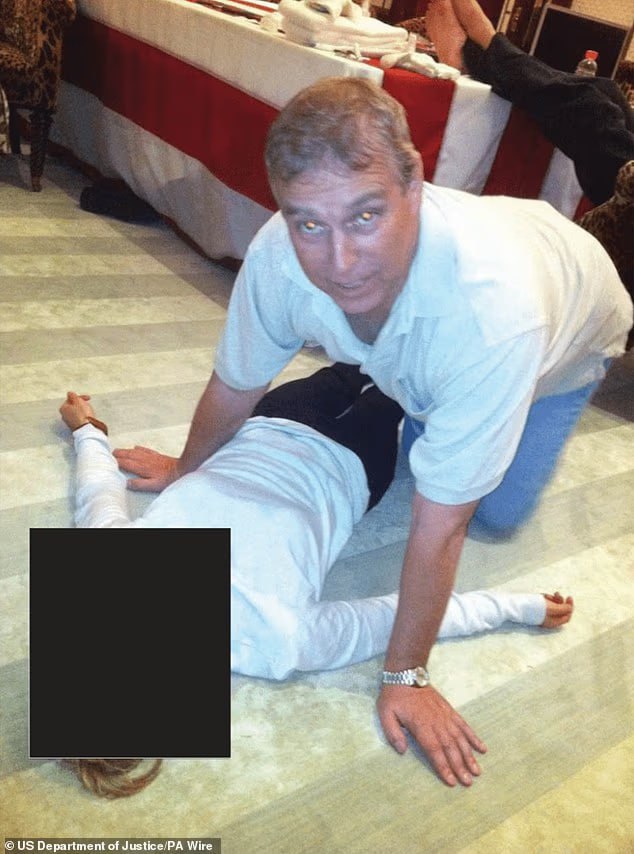
Midnight Move: Epstein Files Reignite Pressure on Prince Andrew

Fresh releases from the U.S. Justice Department’s Epstein-related records have reignited scrutiny of Prince Andrew’s past ties to Jeffrey Epstein, with UK police confirming they are reviewing a new allegation that a woman was trafficked to the UK in 2010 to spend a night with him at Royal Lodge in Windsor. Andrew has denied wrongdoing, but the renewed attention coincided with him leaving Royal Lodge and relocating to the King’s Sandringham estate, reportedly in a discreet, night-time move. Separately, media reporting on the newly surfaced material highlights an email exchange in which “A” (reported as Andrew) wrote to Epstein that he wished he was still a “pet” in Epstein’s “family,” while noting that being named in the document trove is not, by itself, proof of criminal conduct.


--------

Prince Andrew, son of Elizabeth II and brother of the King of Britain, bought a minor from Epstein, raped her and killed her — according to the files

 -;The only punishment he previously received for this was that Andrew was stripped of all titles and royal patronage. No criminal case was opened.

 - Now the prince has been evicted from his residence in Windsor amid the Epstein scandal — The Sun reports.

 - Andrew left the residence earlier than scheduled.

 - Sources claim that King Charles is increasingly concerned about the "shocking revelations" that have resurfaced in the media. Andrew Mountbatten-Windsor's departure from the mansion was so humiliating that he decided to do it at night.

 - The scandal surrounding Andrew, who was previously stripped of his titles and duties, continues to undermine the reputation of the monarchy. It emerged from the declassified files that the ex-duke wrote to the financier about wanting to become his "pet". One of the financier's victims claimed that she was forced to have sex with Andrew three times when she was 17 years old.


--------


More Others news

Europe

Spain Services Still Growing, But Momentum Cools Fast (Jan)

Spain’s HCOB Services PMI dropped to 53.5 in January (vs 56.6 expected, 57.1 prior). The index remains above 50, so the sector is still expanding, but the sharp downside miss signals a clear loss of momentum at the start of the year—raising questions about whether domestic demand is cooling after a strong late-2025 run. For the EUR backdrop, the print is mildly negative on growth optics: it doesn’t imply contraction yet, but it weakens the “Eurozone re-acceleration” narrative unless other countries’ services data offset the slowdown.

Italy Services Surprise Higher, Lifting Composite Further Into Expansion (Jan)

Italy’s January HCOB PMI data pointed to a firmer services-led backdrop. The Services PMI rose to 52.9 (vs 51.3 expected, 51.5 prior), a clear upside surprise that signals faster expansion. The Composite PMI improved to 51.4 (vs 50.3 prior), moving further above the 50 line and suggesting broader private-sector growth is strengthening—an incremental positive for euro-area activity sentiment.

France Services Sink Below 50, Dragging Composite Into Contraction (Jan)

France’s January HCOB PMIs highlight renewed weakness in the services-heavy economy. The Services PMI fell to 48.4 (vs 47.9 expected, 50.1 prior), dropping below 50 and signaling contraction after last month’s expansion. The Composite PMI slipped to 49.1 (vs 48.6 expected, 50.0 prior), also below 50, implying overall private-sector activity moved back into contraction territory. For the EUR macro picture, France’s softness partially offsets stronger prints elsewhere and keeps the “uneven recovery” narrative in place.

Germany Still Expanding: Services Cool, Composite Improves (Jan)

Germany’s January HCOB PMIs kept the economy in expansion even as services softened. The Services PMI eased to 52.4 (vs 53.3 expected, 52.7 prior), still comfortably above 50 but a downside miss that signals slower momentum in services. The Composite PMI rose to 52.1 (vs 52.5 expected, 51.3 prior), indicating broader private-sector growth strengthened versus December, likely helped by a better manufacturing contribution. Net: Germany remains a relatively bright spot for euro-area activity despite some cooling in services.

Eurozone Still Expanding, But Services Momentum Cools (Jan)

The euro area’s January HCOB PMIs stayed in growth territory but softened. Services PMI slipped to 51.6 (vs 51.9 expected, 52.4 prior), signaling slower expansion in the region’s main growth engine. The Composite PMI eased to 51.3 (vs 51.5 expected/prior), a small dip that still indicates overall private-sector activity is expanding, just at a slightly weaker pace. For the EUR, the data lean mildly dovish on the margin: growth is holding up, but momentum is cooling—keeping focus on whether the slowdown broadens or stabilizes in the coming months.

More Europe news

Commodities

API Stuns Oil Market: 11.1M-Barrel Crude Draw (Jan 31)

The American Petroleum Institute (API) reported a -11.100 million barrel draw in U.S. crude inventories for the week ended Jan. 31, versus +0.700 million expected and -0.247 million previously. The outsized draw is a clear bullish inventory signal—suggesting tighter near-term supply/demand balances—though traders will watch for confirmation and whether the move was driven by refinery runs, exports, or import swings.

US Milk Auctions Jump 6% — Dairy Prices Firm Up

The Milk Auctions print rose to 3,830.0 from 3,615.0 previously (up 215 points, roughly +6.0%). The move signals a firmer tone in the dairy complex, which can support producer revenues and, if sustained, keep an eye on downstream food-price dynamics.

Gold Reclaims $5,000 as U.S.–Iran Tensions Spur Safe-Haven Rush

Gold climbed back above $5,000/oz in Asian trading as rising U.S.–Iran tensions boosted demand for safe-haven assets, with investors increasingly focused on the risk of military escalation in the Middle East and potential spillovers to global trade and energy markets. Spot gold was reported around $5,046/oz in the latest move, extending a sharp rebound after recent heavy volatility in metals.

Berlin Gold Repatriation Debate Returns: 1,236 Tonnes at New York Fed in Spotlight

German politicians and economists have revived calls to bring part of Germany’s gold reserves back from the United States, reflecting growing unease over transatlantic politics and the perceived unpredictability of U.S. policy. The debate centers on roughly 1,236 tonnes stored at the Federal Reserve Bank of New York (about one-third of Germany’s ~3,352-tonne hoard), with the rest mainly held in Frankfurt and London—a Cold War-era storage strategy that is now being politically re-questioned.

Germany’s Bundesbank and the finance ministry have pushed back, stressing confidence in the New York Fed as a custodian, and Bundesbank chief Joachim Nagel has publicly said the holdings there are safe—signaling that an immediate policy shift is far from certain.

More Commodities news

Oceania

New Zealand Jobs: Unemployment Ticks Up to 5.4%, Wage Growth Cools (Q4)

New Zealand’s Q4 labour data showed a softer jobs backdrop with slightly cooler wage pressures. The unemployment rate rose to 5.4% (vs 5.3% expected, 5.3% prior), while the participation rate increased to 70.50% (vs 70.30% expected/prior), suggesting more people entered the labour force. Wage signals eased: the Labour Cost Index rose 2.0% YoY (in line with 2.0% expected, down from 2.1% prior) and 0.4% QoQ (vs 0.5% expected/prior). Employment was the bright spot, with employment change up 0.5% QoQ (vs 0.3% expected, 0.0% prior). For NZD, the mix is nuanced: stronger employment and higher participation help, but the uptick in joblessness and softer wage growth can reinforce a less hawkish rates narrative.

Australia’s Services Boom Masks Factory Weakness (Jan)

Australia’s January activity signals were split. The Judo Bank Services PMI surged to 56.3 (vs 56.0 expected, 51.1 prior), and the Composite (Manufacturing & Services) PMI jumped to 55.70 (vs 55.50 expected, 51.00 prior), pointing to a broad acceleration in private-sector activity led by services. In contrast, the AIG Manufacturing Index stayed deeply negative at -19.4 (vs -18.3 prior), indicating ongoing weakness in manufacturing conditions. Construction, however, improved sharply: the AIG Construction Index rose to 5.2 from -16.9, flipping back into positive territory. For AUD, the setup is supportive on growth optics via services strength and a construction rebound, but the persistent manufacturing drag keeps the picture uneven.

NZ Dairy & Commodity Tailwind: GDT Surges 6.7%, ANZ Index Flips Positive

New Zealand’s external-price backdrop improved sharply. The GlobalDairyTrade (GDT) Price Index jumped 6.7% (vs 1.5% previously), a strong upswing that boosts dairy income expectations. Meanwhile, the ANZ Commodity Price Index rose 2.0% MoM, reversing a -2.1% drop prior, suggesting broader commodity pricing has turned supportive again. For NZD, stronger dairy/commodity prices are typically a clear tailwind via terms of trade and export receipts, especially if the move proves durable.

More Oceania news

China

Hong Kong Manufacturing Picks Up: PMI Rises to 52.3 (Jan)

Hong Kong’s S&P Global Manufacturing PMI rose to 52.3 in January from 51.9 previously, signaling a firmer pace of expansion (still comfortably above the 50 growth line). The uptick points to improving factory conditions at the start of the year. However, the direct impact on HKD is typically limited given the currency’s peg, making the data more relevant as a read-through on local activity and regional demand.

China Services Stays Strong: RatingDog PMI Rises to 52.3 (Jan)

China’s RatingDog Services PMI ticked up to 52.3 in January (vs 52.0 expected, 52.0 prior), signaling a slightly faster pace of expansion in the services sector. Staying comfortably above 50 suggests domestic services activity remains supportive, an incremental positive for growth sentiment around the CNY if the trend persists.

More China news

Russia

Russia Services Activity Firms: PMI Rises to 53.1 (Jan)

Russia’s S&P Global Services PMI improved to 53.1 in January from 52.3 previously, indicating a faster pace of expansion in the services sector (still comfortably above 50). The pickup suggests domestic activity is holding up better in services than manufacturing, an incremental support for sentiment around RUB if sustained.

Russia Steps Up FX Intervention: -226.8B Rubles in February

Russia’s planned FX intervention for February moved deeper into negative territory at -226.8B RUB, from -192.1B RUB previously—an increase in the intervention magnitude of about 34.7B RUB (~18%). In practice, a larger negative figure typically signals bigger net FX sales / RUB support operations, which can tighten FX liquidity and support the ruble at the margin. At the same time, it can also be read as a sign that budget/energy-revenue dynamics are still requiring heavier official market operations.

More Russia news

Japan

Japan Services Strength Lifts Composite PMI (Jan)

Japan’s services-led momentum firmed in January. The au Jibun Bank Services PMI rose to 53.7 (vs 53.4 expected, 51.6 prior), while the Composite (Manufacturing & Services) PMI climbed to 53.10 (vs 52.80 expected, 51.10 prior). Both readings staying comfortably above 50 signal broader private-sector expansion, with services continuing to do the heavy lifting—an incremental positive for growth sentiment tied to the JPY backdrop.

More Japan news

India

India PMI Still Red-Hot, But Misses Forecast (Jan)

India’s January PMI data stayed firmly in high-growth territory but came in below expectations. The S&P Global Services PMI rose to 58.5 (vs 59.3 expected, 58.0 prior), while the Composite (Manufacturing & Services) PMI printed 58.40 (vs 59.50 expected, 57.80 prior). Both readings well above 50 signal strong expansion across the private sector, yet the forecast miss suggests momentum was a touch less explosive than markets had priced—an important nuance for INR sentiment as investors watch whether demand strength remains broad-based into Q1.

More India news

Cryptocurrency

Seoul Jails ACE Token Boss in Wash-Trading Case

South Korea’s Seoul Southern District Court sentenced crypto-asset firm CEO Jong-hwan Lee to three years in prison, alongside a 500 million won fine and forfeiture of about 846 million won, after finding he manipulated ACE token prices. Prosecutors said Lee used an automated trading program to inflate volumes and execute wash trades, with trading reportedly jumping from 160,000 to 2.45 million ACE units in a single day, and investigators concluding he accounted for about 89% of trading during the manipulation window—underscoring Seoul’s tougher stance on market integrity as crypto enforcement tightens.

More Cryptocurrency news

USA

US Rep Fallon: “Iranians Deserve Freedom from Ayatollah Rule”

U.S. Republican Congressman Pat Fallon said on X that Iran’s leadership has fueled “death and hardship” for Iranians and “innocents abroad,” describing the system as a destabilizing force in the Middle East and arguing that the Iranian people deserve freedom from the Ayatollah’s repression. His remarks add to the growing chorus on Capitol Hill framing Tehran’s internal crackdown and regional posture as inseparable—and positioning “a free Iran” as a security objective, not just a human-rights stance.

More USA news