IFC Markets Live Quotes

Market news roundup: Tuesday, 6 January 2026

102 short market news items, grouped by 15 sections.

Iran

Tehran Grand Bazaar Call Circulates for “Bread and Dignity” Mobilization Toward Parliament

A statement circulating online and attributed to Tehran Grand Bazaar merchants calls for a coordinated, lane-by-lane shutdown and “neighborhood-based” mobilization at 12:00 p.m. on Tuesday, January 6, 2026 (16 Dey), with participants urged to converge toward Iran’s parliament under the slogan “bread” and “dignity.” If realized at scale, bazaar participation would represent a meaningful escalation because it couples street pressure with commercial disruption—signaling that economic grievance and political protest are increasingly converging into organized, time-specific collective action.

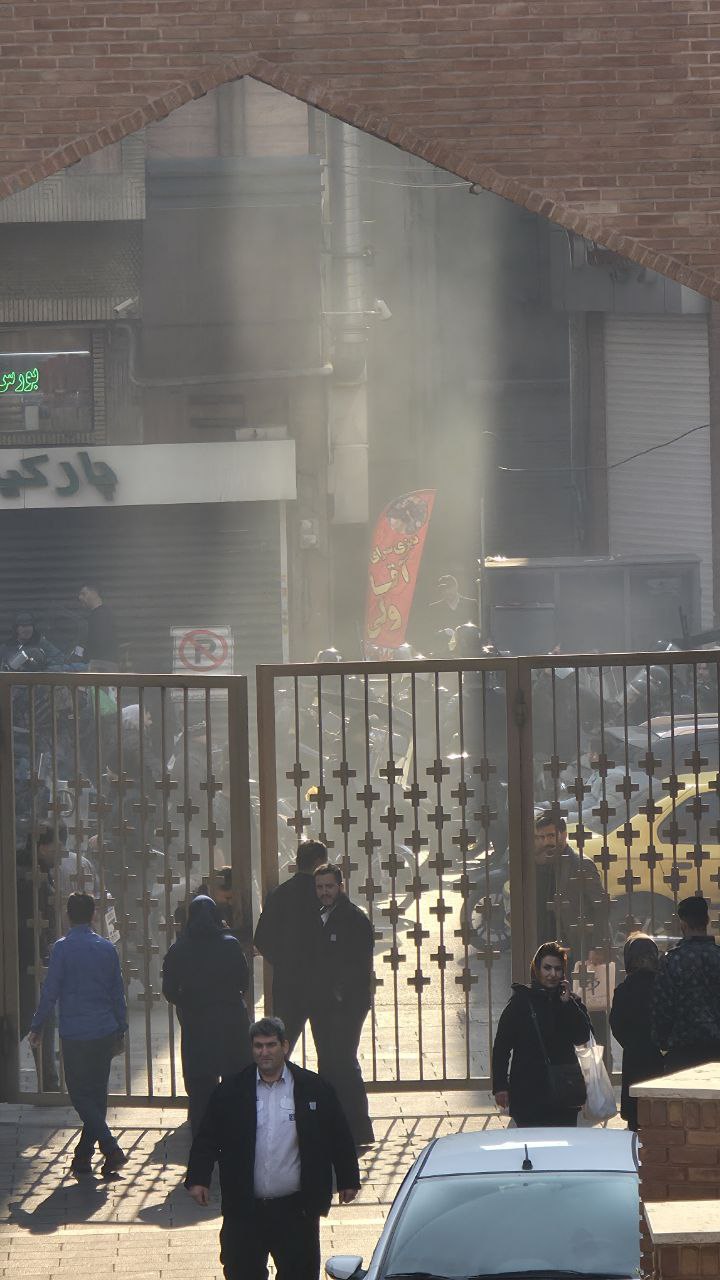
Tehran Grand Bazaar Protest Videos Show Anti-Price Chants, “Freedom” Calls, and Tear Gas on Tuesday

Videos circulating online—captioned as “today’s protests at Tehran’s bazaar, Tuesday 16 Dey” (January 6, 2026)—show crowds chanting “We have no water, no bread—damn this inflation,” repeated calls of “Freedom,” and slogans praising Reza Shah, alongside scenes indicating tear gas use. The footage suggests heightened tension in a key commercial hub, with cost-of-living anger and broader political grievances appearing to converge in the streets.


Iran Rial Slide Accelerates as USD Hits 150,000 Toman Amid Tehran Bazaar Strike

Iran’s economic crisis is intensifying at an unprecedented pace, with the rial’s drop described as “by the second.” On Tuesday, 16 Dey (January 6, 2026), the U.S. dollar reportedly climbed to 150,000 toman in Tehran’s market by midday, as merchants remained on strike. Despite government and central-bank claims of efforts to stabilize the currency, the sharp acceleration in the exchange rate reportedly began on Monday and has continued since.

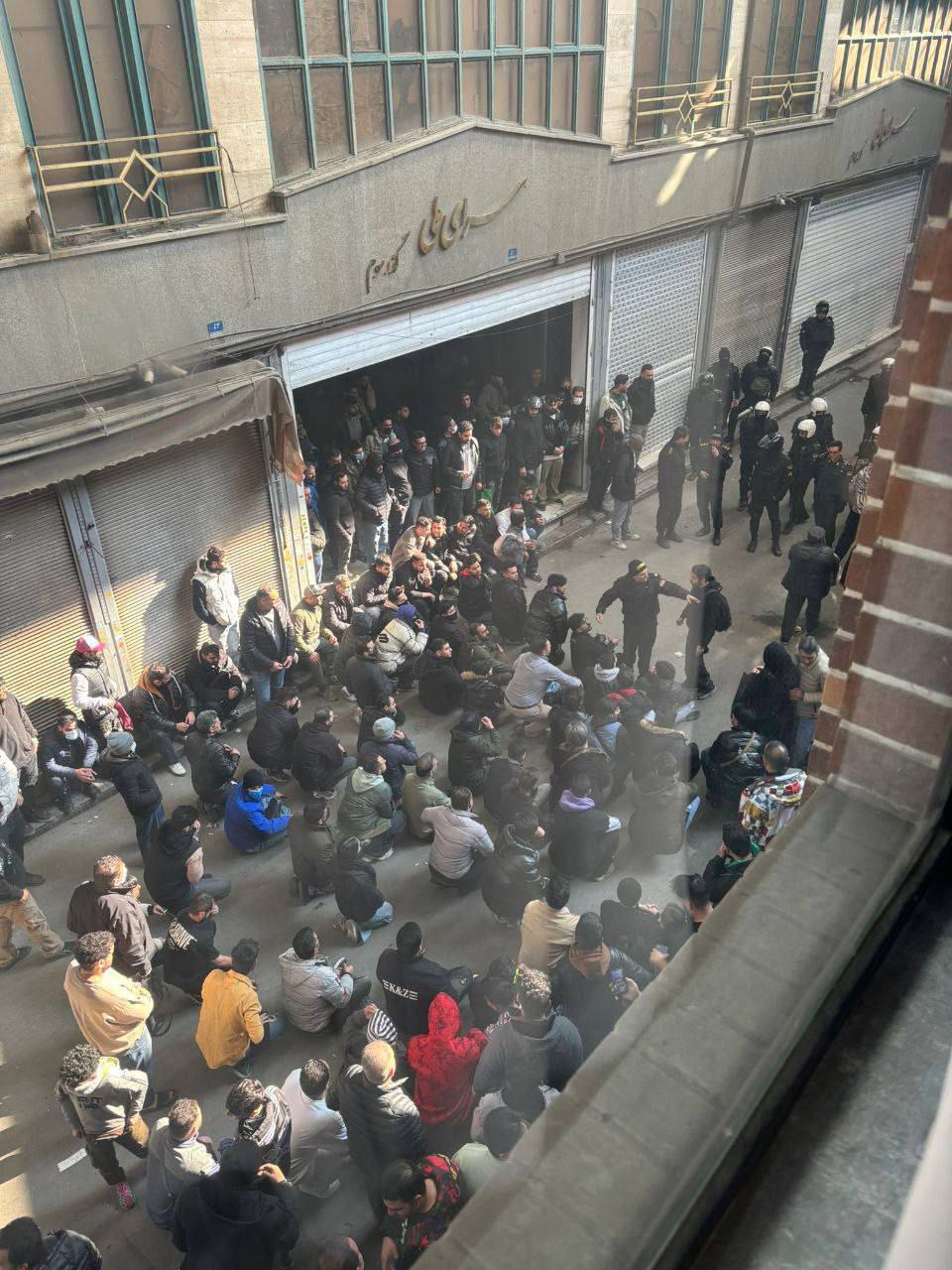
Tehran Grand Bazaar Strike: Videos Show Protesters Sitting Facing Security Lines

As Tehran’s Grand Bazaar merchants staged a strike on Tuesday, 16 Dey (January 6, 2026), videos shared online show protesters sitting in front of a line of security forces positioned opposite them. The imagery signals a tense standoff and suggests the strike is being met with a visible security deployment, raising the risk of escalation if authorities attempt to disperse crowds or force a reopening.

Iran Protests: Wildlife Photographer Says He Was Shot With Pellets, With One Still Lodged in His Eye

Sadegh Parvizadeh, an Iranian wildlife photographer and videographer, said in videos posted on his Instagram page that he was struck in the face and eye by pellets (saachmeh) during the Dey 1404 protests. Displaying a pellet, he described it as the kind used in hunting shotguns—typically fired in a spread—adding that the person who shot him was a “very young” individual. In a separate clip, Parvizadeh said emergency medics removed multiple pellets from his head and face, but one pellet remains inside his eye, causing a severe infection and requiring surgery, while he claims he cannot safely go to a hospital due to the presence of security personnel.


Iran’s “Emami” Gold Coin Jumps to ~170 Million Toman as Protest-Driven Volatility Lifts Inflation Hedge Demand

Ten days into Iran’s nationwide protests, the new-design “Emami” gold coin reportedly hit a fresh record near 170 million toman, rising by roughly 10 million toman in the past 24 hours. The rally extended across the bullion market, with 18k gold also climbing above 16.1 million toman per gram, underscoring intensifying currency/inflation hedge demand as confidence erodes. The move comes despite last week’s central-bank messaging that stepped-up coin عرضه to the market was intended to “balance” prices—suggesting policy supply efforts are being overwhelmed by liquidity stress and fast-moving FX expectations.

Shahrekord Protests: Videos Show Anti-Regime Chants, Water Cannons, and Reports of Baton Beating

On Tuesday, 16 Dey 1404 (January 6, 2026)—the tenth day of the Dey protests—demonstrators in Shahrekord reportedly took to the streets chanting against the Islamic Republic. Footage circulating online shows riot police and special units deploying heavy vehicles and water cannons to disperse crowds and seal off streets. One received clip—captioned “Shahrekord, Abii Square, Tuesday 16 Dey”—claims an elderly man was beaten with batons, highlighting escalating street-level confrontations as security forces intensify dispersal tactics.


Tehran’s Saadi Street: Videos Show Tear Gas Fired as Protests Persist on Tuesday

Videos received and shared online—captioned “Saadi Street, Tehran, and tear gas firing, Tuesday 16 Dey” (January 6, 2026)—show security forces deploying tear gas on a central Tehran thoroughfare, indicating continued efforts to disperse gatherings and control movement in the city. The footage adds to a broader pattern of reported crowd-control escalation on Day 10, raising the risk of wider disruption if confrontations spread across multiple districts simultaneously.


Chenar (Asadabad) Protest Video Echoes Elon Musk’s “Zehī Khiyāl-e Bātel” Reply to Khamenei

A video circulating online—described as coming from Chenar village in Asadabad, Hamedan—shows protesters chanting “Khamenei is a killer—zehī khiyāl-e bātel!”, a slogan that mirrors the Persian phrase Elon Musk used in a recent X reply to a post by Iran’s Supreme Leader. While the footage cannot be independently verified, the reuse of a viral social-media phrase underscores how online moments are being rapidly absorbed into street-level protest messaging.


Tehran Bazaar: Videos From “Hammam-Chal Alley” Show “Javid Shah” and “Death to the Dictator” Chants

Videos received and shared online—captioned “Hammam-Chal alley, Tehran bazaar, Tuesday 16 Dey” (January 6, 2026)—show protesters chanting “Javid Shah” and “Death to the dictator,” indicating continued anti-regime messaging inside and around the Grand Bazaar area. The footage suggests sustained mobilization in a sensitive commercial district, where street slogans, strikes, and security deployments are increasingly intersecting.


Tehran’s Azari District: Caterpillar Commercial Complex Merchants Rally, Chant “Death to the Dictator”

Merchants at the Caterpillar Commercial Complex in Tehran’s Azari neighborhood reportedly gathered on Tuesday, 16 Dey (January 6, 2026) and chanted “Death to the dictator,” adding to signs that protest activity is spreading across multiple commercial nodes of the capital. The development reinforces the link between street demonstrations and merchant mobilization, a combination that can intensify economic disruption risks if shutdowns broaden or persist.


Reports: Yazdanshahr (Najafabad) Crowds Grow as Families of Detainees Call for Rally to Seek Releases

A message received from Yazdanshahr, Najafabad says the area has become “very crowded,” after families of detainees reportedly called on residents to gather and demand the release of their children. While the situation cannot be independently verified from the message alone, the report points to a shift from street protest to family-led mobilization around arrests, a dynamic that can widen local participation and raise the risk of further security deployments if crowds continue to build.

Tehran Bazaar Protests: Reports of Tear Gas Fired Inside 15 Khordad Metro Station

Images circulating on social media show what appears to be tear gas discharged inside Tehran’s 15 Khordad metro station in the Grand Bazaar area, with multiple passengers reportedly suffering breathing difficulty and severe eye irritation. The footage is being linked to Tuesday, 16 Dey 1404 (January 6, 2026)—Day 10 of the protests—when Tehran bazaar merchants reportedly closed shops and chanted against the Islamic Republic, and security forces moved to disperse crowds with tear gas in and around the market district.


Tehran: Reports of Security Lockdown and Tear Gas Thrown Into Sina Hospital in Hassanabad

Videos and messages circulating online—attributed to Sina Hospital in Hassanabad, Tehran, on Tuesday, 16 Dey 1404 (January 6, 2026)—claim security forces sealed the hospital entrances, with gunfire-like sounds audible in the background. A separate received clip is captioned as showing tear gas being thrown into the hospital, with the allegation pointing to an escalation that risks affecting civilians and medical access; the footage and claims have not been independently verified.

Tehran: “Close It, Close It” Chants Reported at Imam Hossein Square as Street Tensions Persist

Videos received and shared online—captioned “Imam Hossein Square, Mazandaran Street, Tehran, Tuesday 16 Dey, 17:15” (January 6, 2026)—show crowds chanting “Bebandid, bebandid!” (“Close it, close it!”), suggesting efforts to push for shop or street shutdowns as part of protest pressure. The footage indicates continued mobilization into the late afternoon in a major Tehran junction, where calls to “close” can signal attempts to broaden economic disruption or obstruct security movement.


Mashhad: Videos Claim Security Used Paintball Guns Against People Amid Protests

Videos circulating online—captioned “In Mashhad they’re shooting people with paintball guns, Tuesday 16 Dey” (January 6, 2026)—allege the use of paintball markers as a crowd-control tactic. While the footage cannot be independently verified, paintball rounds are often used to mark individuals for later identification and can still cause injury at close range, signaling a shift toward more targeted dispersal methods as protests continue.


Mashhad Protests: “Don’t Be Afraid, We’re All Together” Chants as Tear Gas Reported and Bazaar Strike Talk Grows

Social-media footage attributed to Mashhad on Tuesday, 16 Dey 1404 (January 6, 2026) shows protesters chanting “Don’t be afraid, don’t be afraid—we’re all together,” as reports say security forces used tear gas against crowds. Separately, it is claimed that Mashhad bazaar merchants joined the strike on Day 10, a notable development if sustained because it links street demonstrations with commercial shutdown pressure in a major provincial center.

Ilam’s Malekshahi: Funeral of Two Protest Victims Spurs Fresh Anti-Regime Chants on Day 10

On Tuesday, 16 Dey 1404 (January 6, 2026)—the tenth day of protests—mourners and demonstrators in Malekshahi, Ilam province, reportedly continued their protests during and after the burial of two people described as killed in earlier unrest. According to the report, the crowd moved from the funeral site into the town, chanting against the Islamic Republic and shouting “Death to Khamenei.” The two individuals named as being buried were Mohammadreza Karami and Fares Aghamohammadi, said to have been among those killed during the 13 Dey crackdown.

Abdanan (Ilam) Sees Large Turnout on Day 10 as Protesters Demand End to Islamic Republic Rule

On Tuesday, 16 Dey 1404 (January 6, 2026)—the tenth day of Iran’s anti-government protests—reports say a large crowd in Abdanan, Ilam province took to the streets calling for an end to the Islamic Republic’s rule. The development adds to signs of sustained mobilization in parts of western Iran, where repeated street gatherings can intensify local security pressure and deepen disruption risks if protests spread across additional districts and commercial areas.

Shahrekord: Video Shows Unarmed Girl Standing in Front of Riot Police Water Cannon

A video circulating online—captioned “Shahrekord, Tuesday 16 Dey” (January 6, 2026)—shows a young girl, unarmed, standing in front of a special forces water-cannon vehicle, a stark image that has spread widely on social media. While the footage cannot be independently verified, the scene underscores the escalating confrontational atmosphere on Day 10, where crowd-control measures such as heavy vehicles and water cannons are increasingly visible in provincial cities.


Iran Day 10: Merchants Shut Shops as Strikes Spread From Tehran to Multiple Cities

On Tuesday, 16 Dey 1404 (January 6, 2026)—the tenth day of Iran’s nationwide protests—reports say merchants and bazaar shopkeepers in several cities closed their stores and joined strike action, including Tehran, Shahrekord, Shiraz, Karaj, Isfahan, Marvdasht, and Kavar. The widening participation of commercial hubs signals a potential escalation from street demonstrations to broader economic disruption, increasing pressure on authorities if closures persist or expand to additional sectors.

Seven Iranian Kurdistan Parties Call for General Strike in Kurdish Regions on Thursday

Seven political parties from Iran’s Kurdistan issued a joint statement backing the nationwide protests and condemning what they described as the regime’s “crimes” in Kermanshah, Ilam, and Lorestan, while calling for a general strike across Kurdistan and Kurdish-populated areas on Thursday, 18 Dey (January 8, 2026). If broadly observed, a coordinated work stoppage would expand the protest footprint beyond street mobilization into sustained economic disruption, potentially raising security pressure and regional spillover risks.

Amnesty Condemns Ilam Hospital Assault, Says Attacking Medical Facilities Violates International Law

Amnesty International condemned reports of Iranian security forces attacking a hospital in Ilam where injured protesters were seeking medical care or shelter, warning that targeting a medical facility and those inside constitutes a violation of international law. The rights group said information it gathered indicates security units surrounded the hospital, fired tear gas, and used force inside the premises—an escalation that, if confirmed, raises serious concerns over access to emergency treatment and the protection of medical staff and patients during the unrest.

Sweden Deputy PM: “Freedom’s Cry Can’t Be Silenced” as Stockholm Urges United Support for Iranians

Sweden’s Deputy Prime Minister Ebba Busch said Sweden stands with the “brave struggle of the Iranian people for freedom,” arguing that the call for liberty cannot be silenced and that Iranians’ demands should be met with “united and collective support.” The remarks add to growing European political messaging around the Iran unrest, reinforcing external pressure narratives even as events on the ground remain volatile.

Night Protests in Tehran’s Naziabad: Videos Show “Pahlavi” Chants and “Death to Khamenei” Slogans

A received video from Naziabad, Tehran shows protesters taking to the streets on Tuesday night, chanting “Pahlavi, Pahlavi” and shouting “Death to Khamenei.” The footage suggests continued mobilization into the evening hours in southern Tehran neighborhoods, indicating that protest activity is not limited to daytime bazaar closures and is spreading across multiple districts.

Night Protests in Neyshabur: “Reza Shah, May Your Soul Rest in Peace” Chants Reported

A received video from Neyshabur shows protesters gathering on Tuesday night, 16 Dey (January 6, 2026) and chanting “Reza Shah, may your soul rest in peace.” The footage points to continued nighttime mobilization outside major metropolitan centers, highlighting how protest messaging is spreading across cities and persisting beyond daytime strike activity.

Abdanan (Ilam) Night Protests Grow: Videos Show Large Crowds After Daytime Demonstrations

Received videos from Abdanan in Ilam province—dated Tuesday, 16 Dey (January 6, 2026)—show a large поток of protesters on the streets at night, indicating that the daytime demonstrations in the city carried into the evening. The footage suggests sustained momentum and broader participation, raising the likelihood of extended local disruption if crowds remain active after dark.

Torbat-e Heydariyeh Night Protests: “This Is the Final Battle—Pahlavi Will Return” Chants Reported

Received videos from Torbat-e Heydariyeh—dated Tuesday, 16 Dey (January 6, 2026)—show protesters chanting “This is the final battle—Pahlavi will return,” indicating sustained nighttime mobilization and increasingly explicit monarchical restoration slogans in some gatherings. The footage adds to reports that protest activity is extending beyond daytime actions into the evening across multiple cities.

Saman (Chaharmahal & Bakhtiari): Night Protest Videos Show “Javid Shah” Chants

Based on received videos from Saman in Chaharmahal & Bakhtiari province, protesters were on the streets on Tuesday night, 16 Dey (January 6, 2026) chanting “Javid Shah.” The footage adds to a growing stream of reports indicating that protest activity is continuing after dark across multiple cities, with royalist-leaning slogans appearing in some gatherings.

Tehran’s Abusaid Intersection: Night Protest Video Shows “This Year Is the Year of Blood—Seyed Ali Will Be Brought Down” Chant

Received videos from Abusaid intersection (Chaharrah Abusaid), Tehran—dated Tuesday, 16 Dey (January 6, 2026)—show protesters chanting “Emسال سال خونه، سیدعلی سرنگونه” (“This year is the year of blood—Seyed Ali will be brought down”). The footage points to sustained nighttime mobilization in central Tehran corridors and reflects increasingly confrontational protest rhetoric as demonstrations continue beyond daytime strikes and clashes.

Borujerd Night Protests: “This Is the Final Battle—Pahlavi Will Return” Chants Reported

Received videos from Borujerd show protesters taking to the streets on Tuesday night (January 6, 2026 / 16 Dey) and chanting “This is the final battle—Pahlavi will return.” The footage adds to a widening pattern of nighttime demonstrations across multiple cities, with similar slogans appearing in different locations, suggesting coordinated messaging or rapid cross-city diffusion through social media.

Mashhad’s Fallahi Boulevard: Night Rally Chants “Don’t Be Afraid” and Urges Shops to “Close”

A received video from Fallahi Boulevard in Mashhad shows protesters gathering on Tuesday night (January 6, 2026 / 16 Dey) and chanting “Don’t be afraid—we’re all together,” while also shouting at shopkeepers “Close it, close it,” signaling an effort to widen participation through shop shutdowns alongside street mobilization. The scene adds to reports of sustained nighttime protests in Mashhad and suggests coordination between crowd activity and strike-style economic pressure.

Sari Night Protests: Videos Show “Javid Shah” Chants on Tuesday Evening

A video shared in social media shows protesters in Sari gathering on Tuesday night, 16 Dey (January 6, 2026) and chanting “Javid Shah.” The footage adds to a broader pattern of nighttime demonstrations across multiple cities, with royalist slogans appearing in some locations as protests continue beyond daytime strikes and street clashes.

Borujerd: Videos Claim Security Forces Attacked Protesters on Tuesday

Videos circulating on social media allege that Iranian security forces moved against and attacked protesters in Borujerd on Tuesday, 16 Dey (January 6, 2026). While the footage cannot be independently verified, the reports point to escalating confrontations on the ground, with a growing number of cities seeing both nighttime gatherings and more forceful dispersal tactics.

Shahrekord Night Protests: “Final Battle—Pahlavi Will Return” and “Death to This Velayat” Chants Reported

A received video from Shahrekord shows protesters taking to the streets on Tuesday night (January 6, 2026 / 16 Dey) chanting “This is the final battle—Pahlavi will return” and “Death to this Velayat,” signaling continued nighttime mobilization and sharpened anti-system rhetoric. The footage adds to the day’s earlier reports from Shahrekord of heavy security presence and crowd-control deployments, suggesting the city remained active after dark.

Tehransar Night Protest: “Neither Gaza Nor Lebanon—My Life for Iran” Chants Reported

Videos circulating on social media show protesters in Tehransar, Tehran gathering on Tuesday night, 16 Dey (January 6, 2026) and chanting “Neither Gaza nor Lebanon—my life for Iran.” The slogan highlights a renewed focus on domestic priorities and opposition to external spending, and the nighttime footage indicates continued mobilization across multiple Tehran districts beyond the bazaar-centered daytime actions.

Lahijan Night Protests Continue as Videos Show One Protester Standing His Ground Against Security Forces

Videos circulating online from Lahijan show a nighttime confrontation in which one protester is seen standing firm in front of government security forces, with other demonstrators rallying behind and supporting him. The clips are captioned “Saturday, 16 Dey”—a date label that appears inconsistent with the 1404 calendar (as 16 Dey 1404 corresponds to Tuesday, January 6, 2026)—but the footage nonetheless points to continued nighttime street activity and collective crowd support dynamics in the city.

Alvand (Qazvin) Night Protest: Videos Show “Javid Shah” Chants on Tuesday

Videos circulating on social media from Alvand, Qazvin province show protesters gathering on Tuesday night, 16 Dey (January 6, 2026) and chanting “Javid Shah.” The footage adds to the broader pattern of nighttime demonstrations across multiple cities, with similar royalist slogans appearing in different locations as protests continue into the evening.

Yazd: Videos Report Heavy Security Deployment and a Tense Atmosphere on Tuesday Night

Videos circulating on social media suggest that on Tuesday night, 16 Dey (January 6, 2026), Iranian security forces were deployed across streets in Yazd, with reports describing a heightened security climate in the city. While the footage cannot be independently verified, the claimed posture indicates authorities may be moving to pre-empt or contain gatherings as nighttime protest activity expands across multiple provinces.

Tehran’s Saadi Street Near the Bazaar: Night Protesters Chant “Javid Shah”

Reports and videos indicate that on Tuesday night, 16 Dey (January 6, 2026), a group of citizens gathered on Saadi Street in Tehran, near the Grand Bazaar area, chanting slogans including “Javid Shah.” The scene reinforces the pattern of nighttime mobilization in the capital, with protest activity persisting beyond daytime bazaar closures and spreading across multiple central corridors.

Prince Pahlavi’s first public call

Today, I am sharing my first call to action with you. This Thursday and Friday, January 8th and 9th, starting precisely at 8 p.m. wherever you are, whether in the streets or even from your own homes, I call on you to begin chanting exactly at this time. 

Based on your response, I will announce the next calls to action.


Tehran’s Haft-Hoz District: Night Protesters Chant “This Is the National Slogan—Reza Reza Pahlavi”

Videos circulating on social media show a group of protesters in Haft-Hoz (Tehran) taking to the streets on Tuesday night, 16 Dey (January 6, 2026) and chanting “This is the national slogan—Reza Reza Pahlavi.” The footage points to continued nighttime mobilization across multiple Tehran neighborhoods, with pro-monarchy messaging appearing in some gatherings as protests broaden beyond daytime bazaar actions.

Bandar Abbas: Video Shows Street Blocked by Fire During Tuesday Night Protests

A viewer-submitted video from Bandar Abbas shows that during Tuesday night protests, 16 Dey (January 6, 2026), a street was reportedly blocked after a fire was lit, disrupting traffic and movement in the area. While the footage cannot be independently verified, the use of fires to obstruct streets would indicate a shift toward more disruptive tactics as protests extend into the evening across multiple cities.

More Iran news

Equities

Tesla Offers 0% and Ultra-Low APR Loans in China Through Jan. 31

Tesla is rolling out fresh financing incentives in China, offering zero-interest loans for up to five years and ultra-low-rate loans for up to seven years on Model 3, Model Y and Model YL purchases made before January 31, according to checks of the company’s website. The move highlights continued use of pricing/financing levers to defend demand amid intense competition in the world’s largest EV market.

Market impact: Near-term supportive for Tesla China volumes, but potentially margin-negative—aggressive financing typically signals demand sensitivity and can intensify competitive pressure across the China EV space.

Tesla’s China Shipments Fall 7% in 2025 as BYD Pulls Ahead

Tesla shipped 851,732 vehicles from its Shanghai plant in 2025, down about 7% y/y, despite a late-year bump that included 97,171 shipments in December, according to preliminary China auto-industry data. The weaker China export+domestic shipment trend comes as Tesla faces intensifying competition—most notably BYD overtaking Tesla as the world’s top EV seller—and as Europe demand has softened amid competition and a reported consumer backlash tied to Elon Musk’s political profile. Tesla has leaned more heavily on demand levers in China, including 0% and ultra-low-rate financing offers through January 31 on key models, as it tries to stabilize volumes in the world’s most competitive EV market.

Market impact: Near term, volume support but margin risk—more aggressive incentives can steady deliveries, but typically pressure profitability and reinforce “price-war” dynamics across China EVs. For TSLA, the key market question is whether financing-led demand is sustainable without a deeper margin reset, while BYD’s scale advantage keeps competitive pressure elevated.

Global Stocks Push to New Highs as Asia Tech Rally Accelerates; Venezuela Shock Fails to Dent Risk Mood

Global equities extended their record run on Tuesday, Jan. 6, 2026, with Tokyo, Taipei and Seoul pushing to fresh peaks after the Dow set a new high overnight on Wall Street. Early signals also pointed to Europe’s FTSE, DAX and STOXX 600 extending their own record streaks as trading got underway. Notably, the political upheaval in Venezuela has not shaken the momentum; instead, investors have treated it as a sectoral opportunity—buying energy and defence shares—while broader risk appetite remains largely intact.

Market impact: Near-term risk sentiment remains constructive, with leadership skewing toward semiconductors/tech and energy/defence. The key risk to the rally is a shift from “contained event” to “wider spillover”—via oil-flow disruption, sanctions escalation, or a jump in volatility that forces de-risking.

Asia Extends Record Rally as Japan Tech Leads; Korea Pauses Near Highs Ahead of Samsung Earnings

Asian equities pushed further into record territory on Tuesday (Jan. 6), with Japan’s market setting fresh highs as the regional technology/semiconductor rally extended into the first full week of 2026. South Korea traded choppily near peaks as investors positioned ahead of Samsung’s results later this week, while broader risk appetite stayed firm despite Venezuela’s political shock—an event markets have largely treated as sector-specific, favoring energy and defense rather than derailing equities. In the U.S., Wall Street closed higher on Monday, helped by energy-led gains after the U.S. raid in Venezuela, with oil’s move fading quickly as traders judged near-term supply disruption risk as contained.

Market impact: Risk sentiment remains constructive and tech leadership is intact, but the rally’s durability hinges on (1) chip-cycle guidance (Samsung and peers), (2) whether Venezuela headlines evolve into oil-flow or sanctions spillovers, and (3) U.S. macro data that could reprice rates and tighten financial conditions.

TOPIX Hits New Record as Broad Buying Lifts Japan; Chip Stocks Extend Rally

Japan’s TOPIX jumped 1.5% to a fresh record 3,534.46, driven by broad-based demand across technology, industrials, and export-oriented shares. The Nikkei 225 rose 0.7%, hovering near record highs, with heavyweight semiconductors and electronics continuing to anchor the move. In chipmakers, Renesas Electronics gained 3%, while Rohm added more than 2%, extending the sector’s strong start to 2026.

Market impact: Supportive for Japan risk sentiment and a constructive signal for Asia’s tech-led rally. Follow-through remains sensitive to JPY direction (yen strength can weigh on exporters) and any shift in global rates that could reprice growth/tech valuations.

Tech and Chip Stocks Extend AI-Led Rally on Data-Center Demand and Supply Tightness

Technology and semiconductor shares continued to lead market gains, extending momentum built late last year as investors positioned for a sustained AI demand upswing—particularly from data centres and advanced computing. A lingering supply crunch in several key chip segments is also reinforcing pricing power, supporting margin resilience and lifting earnings expectations for major producers, which in turn keeps capital rotating toward the AI supply chain.

Market impact: Supportive for global risk sentiment and Asia tech equities—AI-linked semis remain a leadership pocket, but valuations stay sensitive to any shift in rates or signs that the supply squeeze is easing.

Hong Kong Tech Leads as Hang Seng Rises; Mainland China Indexes Edge Higher

Hong Kong stocks advanced, with the Hang Seng up 1.2% and the Hang Seng TECH sub-index climbing nearly 2%, signaling renewed appetite for growth and platform names. In mainland China, gains were more measured: the CSI 300 rose 0.5% and the Shanghai Composite added 0.6%, pointing to a steady but less aggressive risk bid onshore versus Hong Kong.

Market impact: Mildly supportive for China/HK risk sentiment and tech-linked cyclicals; a stronger HK tech tape can improve regional risk tone, but follow-through remains sensitive to policy headlines, yuan stability, and the durability of the global tech rally.

KOSPI Dips from Record Highs as Traders De-Risk Ahead of Samsung Earnings

South Korea’s KOSPI slipped 0.4% from the prior session’s record highs as investors took profits and turned more cautious ahead of Samsung Electronics’ earnings later this week. The market focus is on management commentary around memory-chip pricing and the durability of AI-driven demand, which has been the core support for the recent semiconductor-led rally. Despite the pullback, the index remains near elevated levels, suggesting the broader tone is still constructive unless the earnings outlook signals a clear inflection in pricing power or end-demand.

Market impact: Slightly risk-off for KR equities in the very near term, but directionally Samsung guidance is the key catalyst—positive memory/AI signals could re-ignite inflows, while cautious pricing commentary could widen volatility across Asia tech.

Singapore Outperforms as Australia Slips; India Nifty Futures Slightly Lower

Singapore’s Straits Times Index rose 0.8% on Tuesday, extending the region’s generally constructive tone. In contrast, Australia’s S&P/ASX 200 fell 0.4%, suggesting a modest pause even as broader Asia risk appetite stayed firm. In India, Nifty 50 futures traded marginally lower ahead of the cash open, pointing to a softer start despite the wider tech-led rally elsewhere.

Market impact: Mixed for regional risk—Singapore’s strength supports Asia sentiment, while Australia’s dip and softer India futures signal selective positioning. FX spillover is typically limited, but a stronger risk tape generally supports AUD/NZD/INR at the margin unless commodities or U.S. rates move against them.

Nvidia Unveils Vera Rubin Early at CES, Framing Chips for “Physical AI” Training in Simulation

Nvidia used CES 2026 to unveil its next-generation Vera Rubin AI computing platform earlier than previously expected, with CEO Jensen Huang saying Rubin is in “full production” and positioned as a step-change after Blackwell. Rubin combines a new CPU/GPU and interconnect stack, with Nvidia claiming the Rubin GPU can deliver ~5x AI training performance versus Blackwell, alongside large efficiency gains in training “mixture of experts” models—while partners are expected to roll out Rubin-based systems in 2H 2026. Nvidia tied the early launch to its “physical AI” strategy—training models in simulated/virtual environments using synthetic data—highlighting new “world model” and robotics tooling meant to accelerate training before deployment in the real world.

Market impact: Supportive for NVDA and the broader AI infrastructure trade (semis, networking, cooling, data-center capex) and raises competitive pressure on rivals. Near term, execution risk remains the swing factor—Rubin’s impact on financials depends on delivery timelines and how much demand can be pulled forward via roadmap confidence versus current-generation Blackwell revenue.

More Equities news

USA

U.S. Cuts Universal Childhood Vaccine List to 11; Trump Claims “72 Jabs” Era Is Over

The Trump administration has ordered a major overhaul of the U.S. childhood immunization schedule, reducing universally recommended childhood vaccines from 17 to 11 and shifting several vaccines (including flu, rotavirus, hepatitis A/B, RSV, and some meningitis strains) to high-risk-only or shared clinical decision-making categories. Trump framed the move as “common sense” and said babies would no longer get “72 jabs”—a figure often used to describe the total number of vaccine doses through age 18 under prior recommendations (including annual shots such as flu, and in some counts COVID), though the number of actual injections can be lower due to combination/oral vaccines. Physician groups and public-health experts have sharply criticized the change and warned it could increase preventable disease risk, while noting the process bypassed standard advisory review.

Market impact: Potentially negative for vaccine manufacturers and related healthcare supply chains on U.S. demand expectations, while raising policy and litigation headline risk across healthcare. Broader macro impact is likely limited unless changes materially affect outbreaks, hospital capacity, or state-level coverage rules.

Rubio: U.S. Will Keep Striking Suspected Drug Boats and Seizing Venezuela-Linked Tankers

U.S. Secretary of State Marco Rubio said Washington’s Venezuela campaign is “not over,” telling NBC that the U.S. will continue to seize sanctioned oil tankers and reserve the right to strike vessels suspected of transporting drugs toward the United States, keeping maritime pressure in place until U.S. conditions are met. The message reinforces that near-term market transmission is likely to run through energy flows, shipping risk, and sanctions enforcement, rather than a rapid change in Venezuela’s on-the-ground production capacity.

Market impact: Modestly supportive for near-term crude risk premia and energy volatility; negative for LatAm risk sentiment at the margin, with spillover potential into shipping costs and safe-haven demand if enforcement escalates.

Musk Posts Trump Dinner Photo, Signaling Thaw After 2025 Feud

Elon Musk shared a photo from a dinner with President Donald Trump and First Lady Melania Trump, calling the evening “lovely” and saying, “2026 is going to be amazing.” The post reinforces signs of a détente after a high-profile 2025 split, with the two also appearing publicly together at Charlie Kirk’s memorial service on September 21, 2025—a notable reset point in the relationship narrative.

Market impact: Likely limited for broad markets, but potentially supportive for “political-access premium” in Musk-linked equities and suppliers (regulatory/tender optics). Any sustained follow-through would matter more if it translates into concrete policy signals on tech regulation, government contracts, or industrial strategy.

Kashkari Flags Unemployment Risk, Nudging Fed Easing Bets Higher

The U.S. dollar was pressured on Monday after Minneapolis Fed President Neel Kashkari told CNBC he sees a risk the unemployment rate could “pop” higher, a dovish signal for a 2026 FOMC voter. Rate-cut expectations edged up modestly: Fed funds futures still imply an 82.8% probability the Fed holds at the Jan. 27–28 meeting, down slightly from 83.4% on Friday (CME FedWatch), suggesting markets are inching toward a higher sensitivity to labor-market cooling.

Market impact: Mildly USD-negative and Treasury-supportive at the margin; risk assets can benefit if more officials echo a labor-slowdown narrative, but follow-through depends on incoming jobs and inflation data.

U.S. T-Bill Yields Ease as 3M and 6M Auctions Stop Lower

U.S. Treasury bill auction yields edged down, signaling steady demand for front-end paper. The 3-month bill stopped at 3.540% (prior 3.570%), while the 6-month bill cleared at 3.475% (prior 3.500%). The modest decline suggests slightly softer near-term rate expectations and/or improved liquidity demand, consistent with markets leaning marginally toward an easier policy path versus prior pricing.

Market impact: Mildly supportive for Treasuries and slightly USD-negative at the margin—lower front-end yields can cap dollar carry support. Impact is usually limited unless the move is echoed across the curve or reinforced by dovish Fed messaging and softer macro data.

Atlanta Fed GDPNow Slips to 2.7%, Signaling Softer Q4 Growth Tracking

The Atlanta Fed’s GDPNow estimate for Q4 eased to 2.7% (3.0% expected, 3.0% prior), implying slightly softer real-time growth tracking versus the previous update. A move of this size typically reflects incremental data inputs—often from consumption, trade, or inventory components—rather than a regime change, but it does reinforce a “cooling, not collapsing” growth narrative.

Market impact: Mildly supportive for Treasuries and slightly USD-negative at the margin—lower growth tracking can reduce pressure for higher yields, though the bigger driver remains how inflation prints evolve. Equities may take it as neutral-to-positive if it supports a soft-landing path without triggering recession fears.

U.S. Vehicle Sales Beat Expectations, Signaling Resilient Consumer Demand into Year-End

U.S. total vehicle sales rose to an annualized 16.00M units in December (15.70M expected, 15.60M prior), surprising to the upside and pointing to firmer auto demand as 2025 ended. The beat suggests consumers were still willing to spend on big-ticket items, potentially helped by improved supply availability and incentives—an important signal given the sensitivity of autos to financing costs.

Market impact: Mildly supportive for USD and U.S. cyclicals at the margin—stronger sales lean against recession narratives, though it can also keep markets alert to demand-driven inflation stickiness. Treasuries may see a modest headwind if the data adds to “growth resilience” pricing.

U.S. Redbook Retail Growth Cools Slightly, Still Strong YoY

U.S. Redbook same-store retail sales growth eased to 7.1% y/y (prior 7.6%), signaling a modest deceleration in near-term consumer spending momentum while still pointing to solid demand in level terms.

Market impact: Mildly supportive for Treasuries at the margin and slightly USD-negative—cooler retail momentum helps the “soft landing” narrative, but the still-high YoY pace limits any sharp repricing toward aggressive Fed easing.

U.S. Services Momentum Cools as S&P Global PMIs Miss Expectations

U.S. December PMI data still points to expansion, but the growth pulse softened. The S&P Global Composite PMI eased to 52.7 (53.0 expected, 54.2 prior), while the Services PMI slipped to 52.5 (52.9 expected, 54.1 prior). The downshift suggests demand and activity in the services-heavy U.S. economy cooled into year-end, reducing the upside pressure on near-term growth expectations even as the readings remain comfortably above the 50 expansion line.

Market impact: Mildly supportive for Treasuries and slightly USD-negative at the margin—cooler services momentum can reinforce a “soft-landing/cooling” narrative, though sub-53 readings are unlikely to change Fed pricing on their own without corroboration from jobs and inflation data.

More USA news

Political

Suspect Detained After Vandalism at JD Vance’s Home; Tabloids Spotlight Family Politics and Online “Julia” Name

U.S. Secret Service officials said a 26-year-old suspect, William D. DeFoor, was detained after allegedly using a hammer to break windows and damage property at Vice President JD Vance’s Ohio residence, with the Vance family not home at the time; authorities cited roughly $28,000 in damage and said federal charges include damaging government property and resisting officers. Separately, tabloid coverage has emphasized DeFoor’s family background and claimed he has used the name “Julia” on social media; however, those personal details are not central to the official incident summary, and authorities have not publicly framed the case around gender identity or partisan affiliation.

Market impact: Limited direct market relevance, but adds to the broader U.S. political-security headline backdrop; the more actionable channel is risk sentiment if political violence concerns intensify or spill into policy escalation.

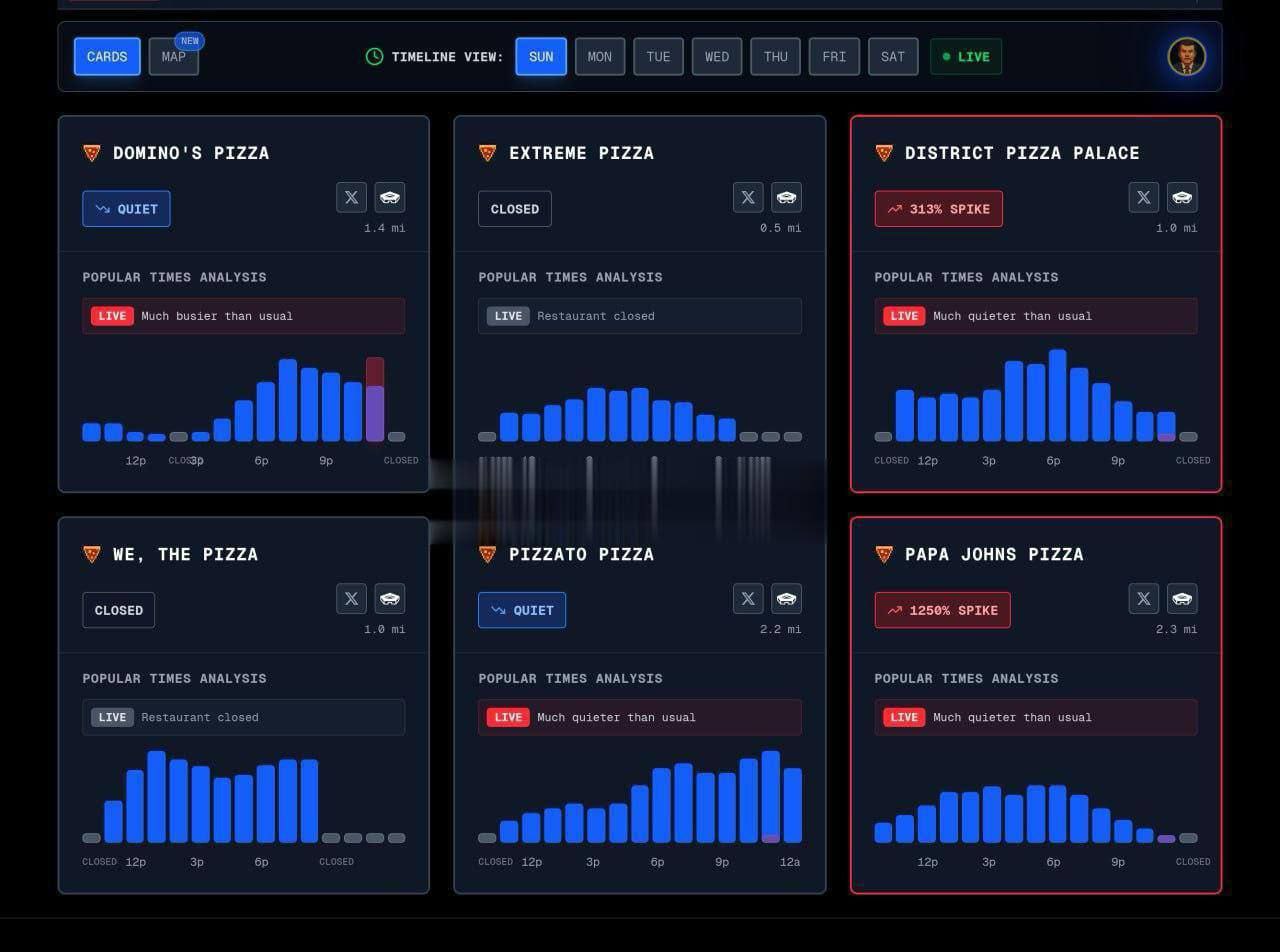
“Pentagon Pizza Index” Posts Claim 1,250% Spike, Reviving a Dubious OSINT Signal

Social-media accounts tracking Google Maps “live busyness” near the Pentagon are claiming a sharp jump—sometimes framed as a 1,250% surge—at nearby pizza chains, with some posts comparing it to an alleged ~700% bump cited during the recent Venezuela operation narrative. The claim is not independently verified and the underlying metric is a proxy for foot-traffic/activity (not confirmed order volumes), making it highly vulnerable to noise, timing effects, and confirmation bias. The Pentagon has previously dismissed “pizza index” speculation as coincidental and noted there are plenty of internal food options, underscoring that the signal remains meme-adjacent rather than a reliable indicator of imminent action.

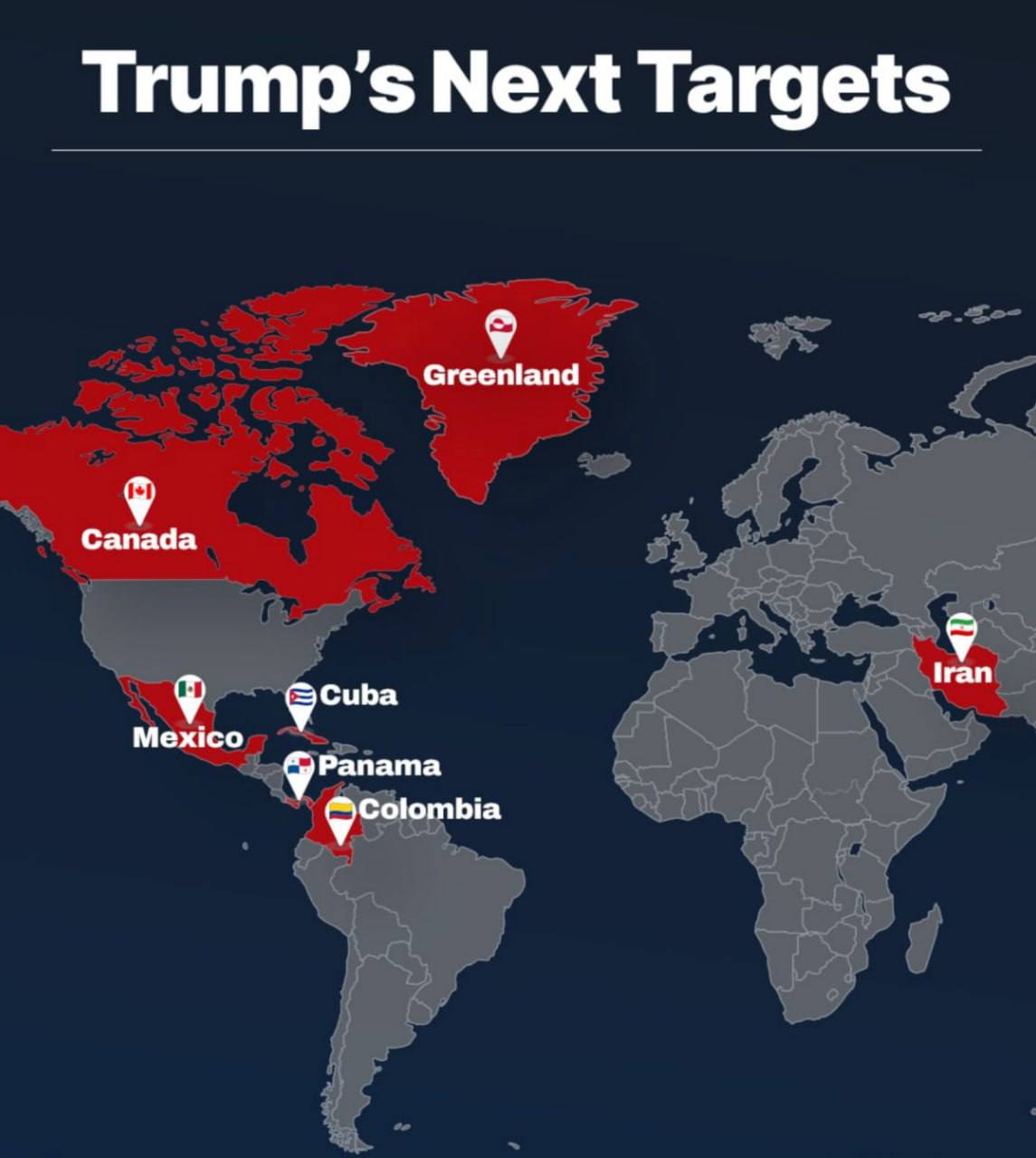
Clash Report Map Sparks Speculation Over Possible Next U.S. Targets

Clash Report circulated a graphic listing Greenland, Cuba, Iran, Mexico, Colombia, Panama, and Canada as potential “next targets,” amplifying online speculation in the wake of Washington’s recent Venezuela operation and a broader wave of commentary about further U.S. coercive actions. While the map reflects media/social speculation rather than any official U.S. announcement, the narrative itself can matter for markets by lifting geopolitical tail-risk premia—most directly around energy (Iran risk), regional trade and FX sensitivities (Mexico/Canada), and strategic transit/sovereignty headlines (Panama).

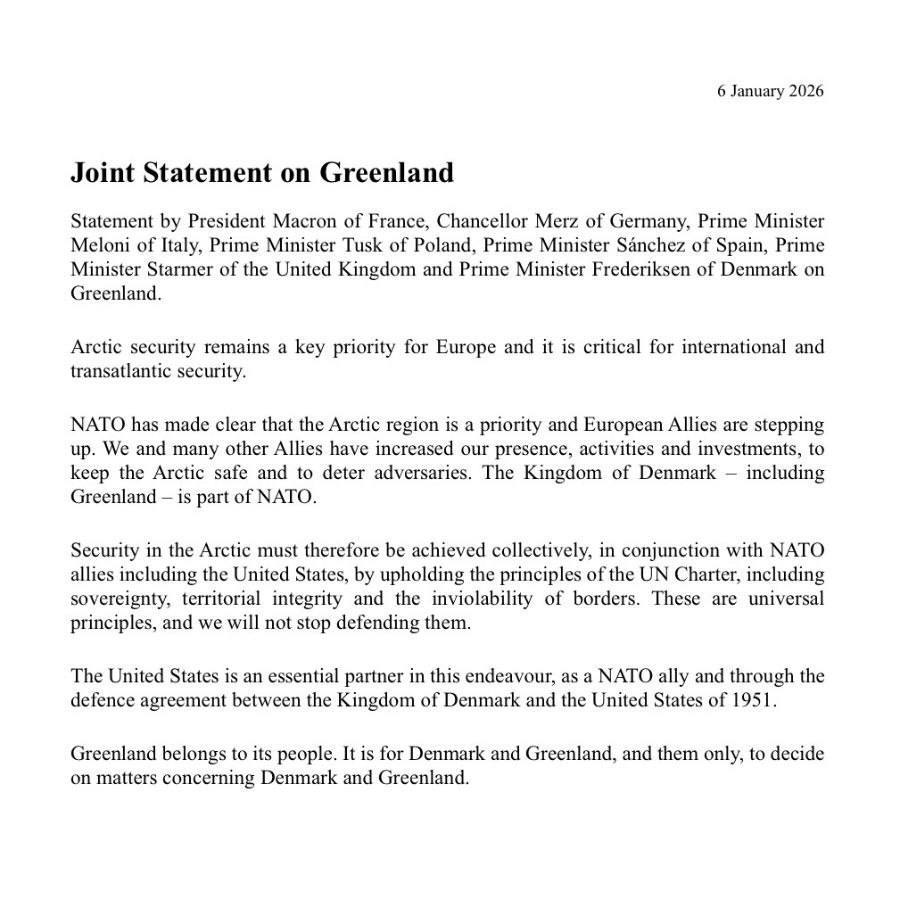
European Leaders Back Greenland, Warn Against Any Aggression on NATO Territory

France’s Emmanuel Macron, the UK’s Keir Starmer, Italy’s Giorgia Meloni, and Poland’s Donald Tusk—alongside Denmark’s Mette Frederiksen and other European leaders—issued a joint statement reaffirming that Greenland “belongs to its people” and that decisions about its future rest with Greenland and Denmark alone. The statement also underscored that the Kingdom of Denmark (including Greenland) is part of NATO, framing Arctic security as a collective responsibility and rejecting any notion of coercion or aggression against allied territory.

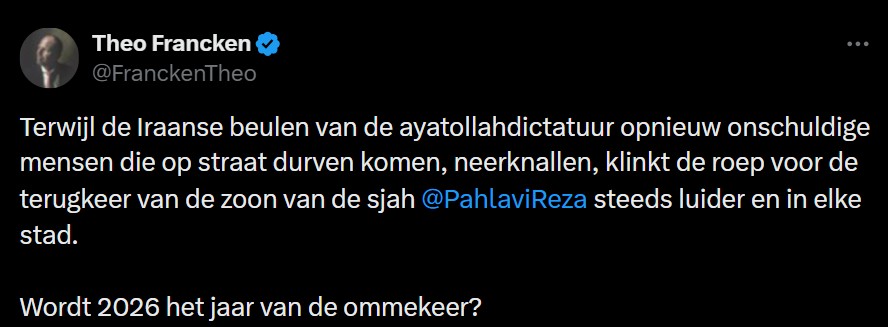
Belgium’s Defence Minister Says Protests in Iran Include Growing Calls for the Shah’s Son to Return

Belgian Defence and Foreign Trade Minister Theo Francken said in a recent post that as Iran’s security forces “shoot” protesters, the call for the return of the “son of the Shah” (Prince Reza Pahlavi) is “getting louder in every city,” framing 2026 as a potential turning point. Iran’s mission to the EU publicly condemned his remarks, underscoring how external political commentary is increasingly feeding into the international narrative around the protests.

Israeli Media: Trump Said to Back Potential Hezbollah Operation, as Israel Steps Up Lebanon Strikes

Israeli outlets, including i24NEWS, reported that President Donald Trump has given Israel a “green light” for a possible military operation against Hezbollah in Lebanon, with the Israeli military said to be prepared and Prime Minister Benjamin Netanyahu holding the final timing decision. The reporting aligns with other Israeli-media accounts that Trump told Netanyahu the U.S. would support Israeli action if Lebanon’s army fails to disarm Hezbollah—though no public confirmation from the White House was immediately evident. The report lands as Israel has already escalated its posture, launching strikes on what it described as Hezbollah and Hamas targets in Lebanon after issuing evacuation orders for several villages, amid growing U.S.-Israel pressure on Beirut to accelerate Hezbollah disarmament under the post-2024 truce framework.

Market impact: Higher short-term geopolitical risk premium—supportive for defense and selective energy plays, and potentially bid for safe havens (USD, gold) if escalation broadens. Regional FX/credit (notably ILS and Lebanon-linked risk) would be most sensitive, while global risk impact likely stays contained unless operations expand materially or trigger wider regional spillovers.

U.S. Weighs COFA-Style Pact for Greenland as Trump Revives Acquisition Push

U.S. officials have discussed offering Greenland a Compact of Free Association (COFA)—alongside options such as an outright purchase—as President Donald Trump re-energizes efforts to bring the strategically located Arctic territory into Washington’s orbit. Under COFA-style arrangements (used with Micronesia, the Marshall Islands, and Palau), the U.S. provides financial support and assumes responsibility for defense in exchange for expanded strategic access; a Greenland version would likely stop short of full U.S. sovereignty but still mark a major shift in the Denmark–Greenland–U.S. relationship. Separate reporting also suggests Washington has explored direct talks with Nuuk, effectively sidelining Copenhagen, even as Danish and Greenlandic leaders reiterate that the island is not for sale.

Market impact: A modest pickup in geopolitical risk premium around the Arctic—supportive for defense and potentially critical-minerals/rare-earth narratives, while adding headline risk for Denmark/European politics. Broader market spillover is likely limited unless rhetoric escalates into concrete policy steps (sanctions, basing changes, or treaty negotiations).

More Political news

Others

Musk’s Trillionaire Path Seen Running Through SpaceX, Not Tesla Pay

Analysts arguing Elon Musk could reach $1 trillion net worth are increasingly pointing to his private-asset stack—especially SpaceX—rather than relying on any new Tesla compensation. Recent reporting puts SpaceX around an $800 billion valuation after a tender offer, with separate coverage suggesting a potential 2026 IPO could seek a valuation north of $1 trillion—a step-change that would dominate Musk’s wealth math given his large stake. The thesis remains highly valuation-sensitive: private marks can move quickly, and execution, regulatory and market conditions will determine whether lofty IPO/secondary valuations translate into durable, realizable wealth.

Market impact: Mostly sentiment-driven for TSLA near term (headline risk vs. fundamentals), but potentially constructive for space/defense supply chains and private-market “IPO optionality” narratives if SpaceX’s valuation trajectory is validated by real capital raising and public-market demand.

South Korea FX Reserves Dip in December, Still Remain Ample

South Korea’s foreign exchange reserves fell to $428.05B in December from $430.66B previously, indicating a modest drawdown. The level remains substantial by historical standards, suggesting Korea still has a strong liquidity buffer even as markets remain sensitive to global dollar cycles and risk sentiment.

Market impact: Largely neutral for KRW—a small monthly decline is not a stress signal on its own. FX direction will remain more driven by global risk appetite, U.S. rate expectations, and Korea’s trade/semiconductor cycle than by this reserve move.

South Africa Manufacturing PMI Slips Further into Contraction

South Africa’s S&P Global Manufacturing PMI fell to 47.7 in December (prior 49.0), signaling a deeper contraction in factory activity into year-end. The decline suggests weaker demand and softer output/order dynamics, keeping the manufacturing sector under pressure and reinforcing the broader theme of uneven growth momentum.

Market impact: Mildly negative for ZAR at the margin—softer manufacturing can weigh on growth sentiment and reinforce risk sensitivity. However, currency direction will remain more driven by global risk appetite, commodity prices, and domestic policy signals than by this single PMI print.

Turkey Exports Jump in December, but Trade Deficit Widens

Turkey’s external trade data showed a strong rise in exports alongside a wider deficit. Exports climbed to $26.40B in December (prior $22.50B), pointing to a notable pickup in outbound shipments into year-end. However, the trade balance deteriorated to -$9.40B (prior -$7.98B), implying imports likely rose as well and/or energy and intermediate goods costs kept the import bill elevated, offsetting the export improvement.

Market impact: Mixed for TRY—stronger exports are supportive, but a wider deficit can keep external financing needs in focus. For rates, a larger trade gap can reinforce sensitivity around FX stability and disinflation credibility, leaving CBRT messaging and reserve dynamics as key market drivers.

Brazil IPC-Fipe Inflation Picks Up in December, Signaling Firmer Price Momentum

Brazil’s IPC-Fipe inflation index rose 0.32% m/m in December, accelerating from 0.20% previously. The uptick points to slightly firmer near-term price pressures at the margin, consistent with a less straightforward disinflation path and keeping attention on how quickly inflation converges in early 2026.

Market impact: Mildly supportive for BRL via a firmer inflation backdrop, but potentially a headwind for local bonds if markets price a slower easing cycle. In practice, BRL remains highly sensitive to global risk appetite, commodity prices, and Brazil’s fiscal/policy headlines.

Mexico Consumer Confidence Ticks Higher in December, Signaling Slightly Firmer Household Sentiment

Mexico’s consumer confidence improved modestly in December. The headline index rose to 44.7 (prior 44.2), while the non-seasonally adjusted measure increased to 44.8 (prior 44.0). The uptick suggests household sentiment firmed at the margin into year-end, consistent with steady domestic demand conditions, though confidence levels remain moderate in absolute terms.

Market impact: Mildly supportive for MXN and local consumer-linked equities at the margin, but the FX impact is typically limited. Peso direction remains more sensitive to global risk appetite, U.S. rates, and Banxico policy expectations than to this single sentiment print.

Brazil PMIs Jump Back into Expansion as Services Re-Accelerate

Brazil’s activity indicators strengthened sharply in December, led by services. The S&P Global Services PMI rose to 53.7 (prior 50.1), while the Composite PMI climbed to 52.1 (prior 49.6), moving both measures firmly back into expansion territory. The rebound points to improved demand conditions and a stronger end-of-year growth pulse, reversing the prior month’s near-stall/soft patch.

Market impact: Mildly supportive for BRL and Brazil risk assets at the margin—stronger activity can reduce near-term growth concerns, though it may also keep markets attentive to inflation persistence and the path of policy easing. Local rates could see a modest headwind if investors price a slower disinflation trajectory.

More Others news

Europe

France Car Registrations Drop Sharply, While Italy Shows Modest Growth in December

European auto demand diverged in December. France’s car registrations fell 5.8% y/y (prior -0.3%), a marked deterioration that points to softer consumer demand and potentially tighter financing sensitivity into year-end. Italy’s registrations rose 2.2% y/y (prior 0.0%), indicating a mild improvement and comparatively better momentum versus France.

Market impact: Slightly negative for France-linked autos and broader euro-area demand sentiment at the margin, while Italy’s small gain offers limited offset. For EUR, the impact is typically low—markets will focus more on euro-area inflation, ECB expectations, and broader activity indicators than on a single month of auto registrations.

French Inflation Softens in December, Reinforcing Eurozone Disinflation Signal

France’s December inflation came in slightly below expectations, underscoring a continued cooling trend. CPI rose 0.1% m/m (vs 0.2% expected, -0.2% prior) and 0.8% y/y (vs 0.9% expected, 0.9% prior). On the harmonised measure, HICP increased 0.1% m/m (vs 0.2% expected, -0.2% prior) and slowed to 0.7% y/y (vs 0.8% expected, 0.8% prior), keeping France at the low end of euro-area inflation dynamics and adding weight to the broader disinflation narrative.

Market impact: Mildly supportive for core bonds (lower front-end yields) and slightly EUR-negative at the margin—softer French inflation strengthens the case for a more dovish ECB path if confirmed by wider euro-area prints.

Eurozone Growth Pulse Slows as PMIs Miss Expectations

Eurozone activity remained in expansion in December but cooled more than forecast. The HCOB Composite PMI eased to 51.5 (51.9 expected, 52.8 prior), while the Services PMI slipped to 52.4 (52.6 expected, 53.6 prior). The still-above-50 readings indicate continued growth, but the downshift suggests softer demand momentum into year-end—consistent with a gradual cooling in the services-led engine.

Market impact: Mildly supportive for core eurozone bonds and slightly EUR-negative at the margin, as softer momentum reinforces expectations of a more accommodative ECB path if confirmed by broader data.

German 2-Year Schatz Yield Rises to 2.11%, Signaling Firmer Front-End Rates

Germany’s latest 2-year Schatz auction cleared at 2.110%, up from 2.050% at the prior auction, indicating a modest repricing higher in euro-area front-end yields. The move suggests investors are demanding slightly more compensation at the short end—consistent with markets balancing softer growth signals against the timing and pace of eventual ECB easing.

Market impact: Mildly supportive for EUR at the margin via higher front-end yields, while also a small headwind for core bond prices. Broader direction will still be driven by euro-area inflation prints and ECB guidance rather than a single auction result.

Germany Car Registrations Accelerate, Signaling Firmer Auto Demand into Year-End

Germany’s car registrations rose 9.7% y/y in December (prior 2.5%), a notable acceleration that points to improving auto demand and/or easier year-end comparisons. The strong print suggests the German consumer and fleet cycle held up better into year-end than earlier in the quarter, providing a marginally brighter spot amid an otherwise uneven euro-area growth backdrop.

Market impact: Mildly supportive for Germany-linked autos and domestic cyclicals at the margin; impact on EUR is typically limited unless the strength is echoed across broader activity data and shifts ECB expectations..

German Inflation Cools Sharply in December, Strengthening Disinflation Case

Germany’s December inflation prints came in decisively below expectations, reinforcing the euro area’s disinflation narrative. CPI rose 0.0% m/m (0.3% expected, -0.2% prior) and slowed to 1.8% y/y (2.0% expected, 2.3% prior). On the harmonised measure, HICP increased 0.2% m/m (0.4% expected, -0.5% prior) while HICP y/y fell to 2.0% (2.2% expected, 2.6% prior). The broad downside surprise suggests price pressures eased meaningfully into year-end, keeping the focus on whether core and services inflation follow through lower in early 2026.

Market impact: Supportive for Bunds and slightly EUR-negative at the margin—softer German inflation can pull front-end yields down and reinforce expectations of a more dovish ECB path if confirmed by wider euro-area data.

More Europe news

Forex

Dollar Slips for Second Day as Venezuela Risk Premium Fades and Dovish Fed Talk Lifts Risk Appetite

The U.S. dollar weakened for a second straight session in Asian trade on Tuesday, as jitters tied to Washington’s Venezuela operation eased and softer Fed tone encouraged risk-taking. The dollar index fell about 0.2% to ~98.22, extending losses after a four-day rally and as investors rotated into higher-beta assets amid firmer equity sentiment.

Market impact: A softer USD is typically supportive for risk FX and commodities at the margin, but follow-through will hinge on whether upcoming U.S. data reasserts “higher-for-longer” pricing—any upside surprises could quickly stabilize the dollar and cap EM/Asia FX gains.

Dollar Dips vs Yen After Solid 10-Year JGB Auction Keeps Rates Steady

The U.S. dollar slipped 0.1% to 156.255 yen, easing slightly after Japan’s 10-year JGB auction attracted demand in line with the past-year average. The steady bid suggests the market is still comfortable absorbing duration at current yield levels, helping cap any immediate upside pressure in long-end yields and giving the yen modest support on the margin.

Market impact: Mildly supportive for JPY and JGBs—stable auction demand can dampen rate volatility, but USD/JPY direction remains primarily driven by BOJ tightening expectations and U.S. yield moves.

USD/JPY Slips After Solid JGB Auction; AUD and NZD Lifted by Record Copper

The U.S. dollar eased 0.1% to 156.255 yen, ticking lower after Japan’s 10-year JGB auction drew demand broadly in line with the past-year average, helping steady local rates. Meanwhile, commodity-linked currencies firmed: AUD/USD rose 0.1% to $0.6724 (a one-week high, near multi-month peaks) as copper hit a record, while NZD/USD added 0.2% to $0.5798.

Market impact: Mildly supportive for JPY at the margin via steadier JGB demand, while AUD/NZD remain leveraged to the commodities impulse—follow-through depends on whether copper’s breakout holds and whether global risk sentiment stays constructive.

Dollar Softens as Offshore Yuan Firms; Euro and Pound Grind Higher

The U.S. dollar eased broadly in Asian trade, slipping 0.1% versus the offshore yuan to 6.9769 in Hong Kong. G10 FX also reflected a softer greenback tone, with the euro up 0.1% to $1.1737 and sterling up 0.2% to $1.3562, consistent with a modest risk-on tilt and slightly more dovish Fed expectations after recent commentary.

Market impact: Mildly negative for USD at the margin—supports EUR and GBP near term and can be constructive for risk FX/commodities, but follow-through remains sensitive to U.S. data and rate expectations.

More Forex news

Cryptocurrency

Bitcoin and Ether Edge Lower as Crypto Consolidates

Bitcoin dipped 0.3% to $93,772.04, while ether fell 0.4% to $3,225.96, pointing to a mild pullback amid broader consolidation after recent gains. The move looks more like routine positioning and profit-taking than a clear risk-off impulse, with traders still anchored to the cross-currents of U.S. rate expectations, dollar direction, and risk appetite.

Market impact: Mildly negative for crypto sentiment at the margin, but not a trend signal on its own. A softer USD and easing rate expectations are typically supportive for crypto, while renewed USD strength or higher real yields can cap upside.

Japan Signals Support for Crypto Trading Via Stock Exchanges

Japan’s finance minister Satsuki Katayama said the government supports integrating cryptocurrency trading through regulated stock and commodity exchanges, marking a notable step toward bringing digital assets further inside traditional market infrastructure. The comments come as Japan continues to refine its crypto framework—seeking tighter “regulated rails” even while exploring broader participation and product access for households and institutional investors.

Market impact: Constructive for Japan-listed crypto/fintech infrastructure themes and could marginally support crypto sentiment via perceived regulatory legitimization; near-term market response will still hinge on implementation details (product scope, custody, investor protections) and how authorities balance innovation with tighter oversight.

XRP Jumps 12% to Highest Since Mid-November, Outpacing Broader Crypto

XRP rallied about 12%, lifting it to its highest level since mid-November and briefly pushing spot pricing toward ~$2.40–$2.41 as liquidity returned to large-cap altcoins. The move extends a run of relative strength versus the broader market and is being linked to continued spot XRP ETF inflows and improving expectations around the U.S. regulatory backdrop—factors that can amplify momentum when positioning is light and volatility rises.

Market impact: Supportive for near-term crypto risk appetite and altcoin beta, but the move is prone to sharp retracements; sustained upside likely requires ongoing ETF inflows and a steady macro backdrop (rates/USD).

More Cryptocurrency news

Japan

Japan’s Monetary Base Falls for First Time Since 2007 as BOJ Normalisation Bites

Japan’s average monetary base fell 4.9% y/y in 2025, the first annual decline in 18 years, reflecting the Bank of Japan’s continued exit from ultra-loose policy after ending its long stimulus era in March 2024. In December, the monetary base dropped 9.8% y/y to ¥594.19tn, slipping below ¥600tn for the first time since September 2020—consistent with reduced JGB buying and the termination of lending-incentive funding schemes as policy normalisation proceeds.

Market impact: Mildly supportive for JPY and higher JGB yields over time—shrinking base liquidity reinforces the “normalisation” narrative. Near-term, the signal is more about liquidity withdrawal than growth, and market sensitivity will remain highest around BOJ guidance and inflation/wage follow-through.

Japan Monetary Base Shrinks Faster Than Expected as BOJ Normalisation Drains Liquidity

Japan’s monetary base continued to contract sharply in December, underscoring the BOJ’s ongoing pullback from ultra-loose policy. The monetary base fell -9.8% y/y (-8.0% expected, -8.7% prior), a larger-than-forecast decline that suggests liquidity is being withdrawn faster than markets anticipated. The print is consistent with reduced JGB purchases and the BOJ’s broader normalisation trajectory as it steps away from the decade-long stimulus framework.

Market impact: Mildly supportive for JPY and higher JGB yields over time—faster base shrinkage reinforces the tightening/normalisation narrative. Near term, the key driver for USD/JPY remains the U.S.–Japan rate differential, but sustained liquidity withdrawal can amplify rate volatility and keep Japan rates in focus.

Japan 10-Year JGB Auction Clears at 2.095%, Marking a Sharp Step-Up in Long-End Yields

Japan’s latest 10-year JGB auction cleared at 2.095%, up from 1.872% at the prior auction, underscoring a notable repricing higher in the long end of the curve as investors demand more yield in a BOJ-normalisation environment. The higher stop-out rate reinforces that duration is being absorbed at meaningfully higher levels, consistent with markets keeping tighter policy expectations and term premia elevated into early 2026.

Market impact: Supports higher JGB yields and can be JPY-supportive at the margin via widening Japan-rate momentum; however, USD/JPY remains primarily driven by U.S.–Japan rate differentials and global risk tone.

More Japan news

UK

UK Shop Price Inflation Edges Up, Signaling Slightly Firmer Retail Pricing

UK retail pricing pressures ticked up modestly, with the BRC Shop Price Index rising 0.7% y/y (prior 0.6%). The increase suggests retailers are still passing through some cost pressures and/or seeing enough demand resilience to hold pricing, even as broader UK disinflation dynamics remain uneven across categories.

Market impact: Mildly supportive for GBP at the margin via a slightly firmer inflation backdrop, but the print is too small to shift BoE expectations on its own. For Gilts, it is a minor headwind if followed by broader inflation firmness; otherwise, markets will stay focused on wage growth and official CPI.

UK Car Registrations Rebound in December, but Monthly Volumes Ease

UK new car demand improved on an annual basis in December, even as the absolute number of registrations slipped versus last year’s month. Car registrations rose 3.9% y/y (prior -1.6%), signaling a clear turnaround in momentum. However, new passenger car registrations totaled 146,249 versus 151,154 previously, indicating volumes were still slightly lower in level terms—likely reflecting mix/base effects and seasonal factors.

Market impact: Mildly supportive for UK consumer and auto-linked equities at the margin, but FX impact is limited. For GBP, the data is secondary to inflation, wages, and BoE policy guidance; for UK demand, it suggests resilience but not a surge.

UK Services and Composite PMIs Miss Expectations, Signaling Only Modest Growth

UK business activity held in expansion in December but fell short of forecasts. The S&P Global Services PMI printed 51.4 (52.1 expected, 51.3 prior) and the Composite PMI also came in at 51.4 (52.1 expected, 51.2 prior). The data implies the UK economy continued to grow, but only at a modest pace, with momentum weaker than markets anticipated despite a slight improvement versus November.

Market impact: Mildly supportive for Gilts and slightly GBP-negative at the margin—an expectations miss reinforces a softer growth narrative and can keep BoE easing expectations alive, though the still-above-50 level limits downside concerns.

More UK news

Canada

Canada Reserve Assets Hold Steady at C$127.8B in December

Canada’s total reserve assets were unchanged in December at C$127.8B, indicating a stable external liquidity position with no notable drawdown or accumulation over the month. The flat reading suggests no immediate stress signal and aligns with Canada’s generally steady reserve management profile.

Market impact: Largely neutral for CAD—reserve levels are not typically a primary market driver for Canada. FX direction will remain more sensitive to oil prices, risk appetite, and Bank of Canada rate expectations than to this reserves print.

Canada Services PMI Improves, but Stays in Contraction

Canada’s Services PMI rose to 46.5 in December from 44.3 previously, indicating conditions improved at the margin but the sector remained in contraction (still below 50). The reading suggests the pace of decline slowed into year-end, yet demand and activity are still soft, keeping the services backdrop fragile.

Market impact: Mildly negative for CAD at the margin—sub-50 services data reinforces a softer growth narrative and can keep Bank of Canada easing expectations in play. However, CAD direction will remain more sensitive to oil prices, U.S. rates, and overall risk appetite than to a single PMI print.

More Canada news

Commodities

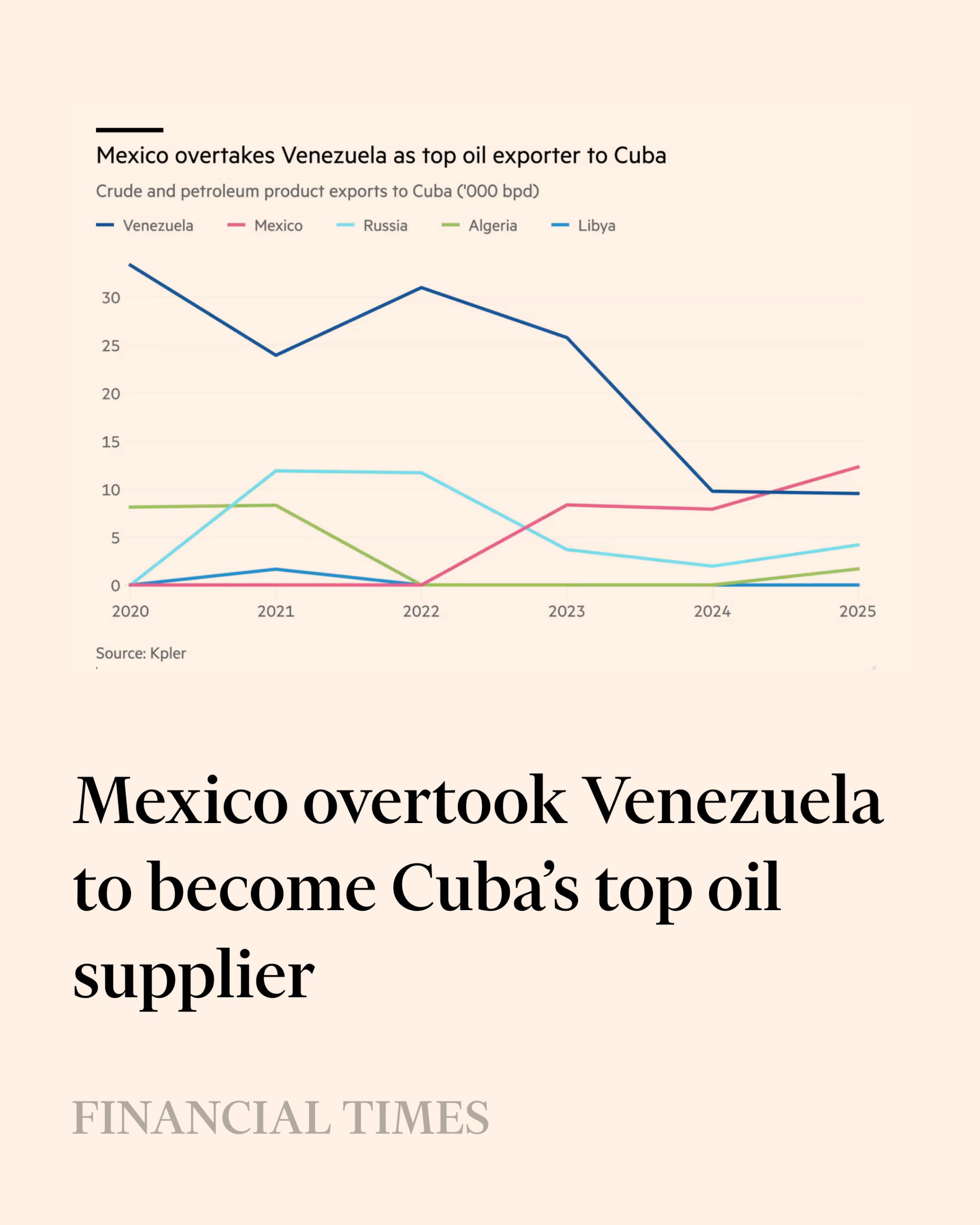
Mexico Overtakes Venezuela as Cuba’s Top Oil Supplier, Raising U.S.–Mexico Pressure Risk

Mexico became Cuba’s largest crude supplier in 2025, averaging 12,284 bpd—about 44% of Cuba’s crude imports—as Venezuelan deliveries fell to 9,528 bpd. The shift provided a key energy lifeline for Havana, but it also sharpens U.S.–Mexico friction at a sensitive moment, with President Donald Trump publicly renewing threats tied to Mexico’s cartel fight while Washington signals a tougher stance on Cuba and oil flows in the wake of Nicolás Maduro’s capture.

Market impact: Modestly bullish for geopolitical risk premium in the Americas—watch for spillovers into Mexico sovereign risk, USMCA review rhetoric, and Caribbean oil/shipping enforcement. Energy pricing impact is likely second-order unless sanctions or interdictions expand materially.

Gold Rises as a Reserve Asset, but the U.S. Dollar Still Leads

Claims that gold “surpassed the U.S. dollar” as the world’s largest reserve asset by end-2025 are not supported by the latest widely cited official breakdowns. The ECB’s most recent assessment shows gold’s share rose sharply—overtaking the euro to become the second-largest reserve asset by market value at end-2024 (about 20%), but the U.S. dollar remained #1 (about 46%). Separately, IMF COFER data through 2025Q3 indicates only limited change in the currency composition of FX reserves, underscoring that any “gold > dollar” headline likely reflects misinterpretation or incomplete/ nonstandard comparisons rather than a confirmed shift in global reserve dominance.

Market impact: Supportive for gold’s structural bid (official-sector diversification + geopolitical hedging), but USD’s reserve dominance implies limited near-term FX impact unless the pace of reserve reallocation accelerates materially; watch central-bank purchase data and policy/sanctions risk for the next leg.

More Commodities news

Oceania

Australia PMI Momentum Slows in December as Services Cool

Australia’s December PMI data signaled a softer growth pulse, driven by cooling services activity. The Manufacturing & Services PMI eased to 51.0 (51.1 expected, 52.6 prior), staying in expansion but slowing noticeably from November. The Judo Bank Services PMI edged up to 51.1 (51.0 expected) but remained well below the prior 52.8, indicating the services sector is still growing, just at a more moderate pace into year-end.

Market impact: Mildly negative for AUD at the margin—slower services momentum can temper growth optimism, but the above-50 readings limit downside. Rates and commodities remain the dominant drivers for AUD direction, with PMI data mostly influencing the short-term tone.

More Oceania news

India

India Services PMI Cools, but Growth Stays Strong in Expansion Territory

India’s December PMI data showed momentum eased from very strong levels, but activity remained robust. S&P Global Services PMI fell to 58.0 (59.1 expected, 59.8 prior), while the Composite (Manufacturing & Services) PMI slipped to 57.8 (58.9 expected, 59.7 prior). Both readings are still well above 50, indicating rapid expansion, but the downside surprise suggests growth cooled into year-end—likely reflecting a moderation in new business growth after a strong run.

Market impact: Mildly negative for INR at the margin and a small headwind for India risk assets on the “momentum” narrative, but the high absolute PMI levels remain supportive for medium-term growth expectations. Directionally, INR remains more sensitive to oil prices, global risk appetite, and U.S. rates than to a single PMI print.

More India news

Short News

European Services Diverge: Spain Surges, Italy Slows Sharply; France Flat, Germany Moderates

European PMI signals for December were mixed, with a clear north–south divergence. Spain’s Services PMI jumped to 57.1 (54.8 expected, 55.6 prior), pointing to strong demand and a notable upside surprise. Italy cooled materially, with Services PMI at 51.5 (54.2 expected, 55.0 prior) and the Composite PMI sliding to 50.3 (prior 53.8), indicating momentum is fading and growth is close to stalling. France was essentially flat at the margin: Composite 50.0 (50.1 expected, 50.4 prior) and Services 50.1 (50.2 expected, 51.4 prior), suggesting near-zero growth. Germany remained in expansion but moderated, with Composite 51.3 (51.5 expected, 52.4 prior) and Services 52.7 (52.6 expected, 53.1 prior), consistent with steady-but-slower services activity into year-end.

Market impact: Mixed for EUR—Spain’s strength supports the growth narrative, but Italy’s sharp slowdown and France’s near-stagnation reinforce the case for continued ECB caution and keep downside growth risks on the radar. Rate markets may read this as supportive for a gradual easing bias if softer momentum persists.

More Short News news