IFC Markets Live Quotes

Market news roundup: Wednesday, 25 February 2026

48 short market news items, grouped by 12 sections.

Political

Smotrich Warns Hamas: Disarm in “Days” — or Israel Moves to Full Takeover

Israel’s far-right Finance Minister Bezalel Smotrich said Hamas is expected to be given an ultimatum “in the coming days” to disarm and fully demilitarize Gaza, warning that if it refuses, the IDF will “enter and conquer” the territory and move toward full control.

In the same remarks, Smotrich argued that a refusal to disarm would provide Israel with broader international legitimacy and U.S. backing to escalate operations, and he reiterated his stance that Israel would ultimately occupy Gaza—including calls to reestablish Israeli settlements there.

Source: Smotrich interview/comments to Israel’s public broadcaster KAN, as reported by multiple outlets.
Geneva Clock Ticks: Pezeshkian Sees “Good Outlook” as Iran Heads to U.S. Talks

Iranian President Masoud Pezeshkian said he sees a “good outlook” for upcoming talks with the United States as a delegation led by Foreign Minister Abbas Araqchi traveled to Geneva for what is being described as the third round of negotiations over Iran’s nuclear program.

Pezeshkian said Iran has tried—“with the guidance of the Supreme Leader”—to manage the process in a way that removes the country from a “no war, no peace” situation.

The meeting is reported as scheduled for Thursday, Feb. 26, 2026 (which corresponds to 7 Esfand 1404). Some Persian reposts circulate “7 Bahman,” but given the context (“Wednesday, 6 Esfand” followed by “tomorrow/Thursday”), the date is widely reported as 7 Esfand.

Reuters also reported (citing a senior U.S. official) that U.S. envoy Steve Witkoff and Jared Kushner are slated to meet the Iranian delegation in Geneva.

Source: Reuters; corroborating Iranian/Persian-language reporting (including Radio Farda and Iranian outlets citing state media).

Diplomatic Bag Dispute: Netherlands Summons Iran Envoy After Tehran Airport Seizure

The Dutch Foreign Ministry has summoned Iran’s ambassador in The Hague to protest the seizure and search of a Dutch diplomat’s luggage at Tehran’s international airport—calling the incident “unacceptable” and a breach of international rules on diplomatic immunity.

Dutch officials say the bag was taken upon the diplomat’s arrival and that the Netherlands has repeatedly demanded the immediate return of the seized items; the summons reportedly came after Iran published footage of the incident.

Iranian state-linked reporting has claimed the suitcase contained “unauthorized communications equipment,” including items such as satellite phones and a portable satellite-internet device; Dutch officials have rejected those allegations and argue that even if such a claim were made, handling of diplomatic luggage must follow diplomatic protocols.

Source: Dutch Foreign Ministry statement / Reuters; Iranian state-media reporting cited by regional outlets.

Vance to Iran: Take Thursday’s Talks Seriously

U.S. Vice President J.D. Vance said in a Fox News interview that he hopes Iran takes Thursday’s negotiations seriously, emphasizing that President Donald Trump still prefers a diplomatic solution.

Vance said Trump has been “crystal clear” that Iran cannot have a nuclear weapon, and that Washington will try to achieve that objective through diplomacy, while also noting the president has other tools available if needed.

Asked whether preventing Iran from obtaining a nuclear weapon implies removing Iran’s leader, Vance said the decision is ultimately up to the U.S. president.

Source: Fox News interview, as reported by Reuters.

Araqchi: Trump “Fooled by Fake News” on Missiles — Defends 2,000km Cap and Nuclear Rights

Iran’s Foreign Minister Abbas Araghchi told India Today that President Donald Trump has become a “victim of fake news” regarding claims about Iranian missile development allegedly capable of reaching U.S. territory.

Araghchi said Iran has “deliberately” capped its missile range at 2,000 km, insisting the program is defensive and designed for deterrence, not offensive purposes; he also argued Iran was not the initiator in recent clashes and framed Tehran’s actions as “legitimate defense.”

He also disputed Trump’s claim of 32,000 protest-related deaths, saying Iranian authorities have published a list totaling 3,117 victims and calling the loss of life “very regrettable.”

On the nuclear file, Araghchi said “negotiation and diplomacy is the only option,” adding Iran is ready to address concerns but will not give up what it calls its right to the peaceful use of nuclear technology—remarks made ahead of talks expected in Geneva.

Source: India Today interview (as cited above).

No “Sunset Clauses”: Witkoff Pushes for a Permanent Iran Nuclear Deal

U.S. special envoy Steve Witkoff said the current U.S.–Iran talks are focused for now on nuclear issues, and that the Trump administration wants any future nuclear agreement with Iran to last indefinitely—with no “sunset” provisions that phase out restrictions over time.

Axios reported Witkoff made the remarks in a private meeting, arguing the U.S. position starts from the premise that Iran must commit to the deal’s core constraints permanently, unlike the 2015 accord, whose key limits were designed to expire over 8 to 25 years.

Witkoff also said that if a nuclear deal is reached, Washington would seek follow-on talks covering Iran’s missile program and support for regional proxies, and would want other countries in the region involved at that stage.

Source: Axios; Reuters (reporting on the Axios account).

London Sets Up Ukraine Force HQ, Fast-Tracks £200m for Troop Readiness

The UK has announced additional support for Kyiv (Kiev) and confirmed that planning for a post-peace multinational force is already moving from concept to structure, after the UK signaled it would deploy British troops to Ukraine once peace is secured.

According to the UK government, a 70-person headquarters is already up and running for the proposed Multinational Force for Ukraine, and preparations for UK forces are backed by £200 million in funding.

Alongside the readiness push, the UK also detailed a new support package including: £20m emergency energy support, £5.7m humanitarian aid, training in the UK for Ukrainian pilots, and £5m for justice/accountability support.

Source: UK Government (GOV.UK / Ministry of Defence); Reuters.

Salam to Hezbollah: Don’t Drag Lebanon Into a U.S.–Iran War

Lebanese Prime Minister Nawaf Salam has urged Hezbollah to avoid a military response if a war breaks out between Iran and the United States, warning against pulling Lebanon into another conflict as regional tensions rise.

In comments reported from an interview with Nida Al Watan, Salam pointed to the heavy domestic cost of past escalations and argued Lebanon should not be drawn into a new “adventure” tied to wider regional confrontations.

Source: Nida Al Watan, as cited by Reuters.

Russia’s SVR has alleged that France and the UK

Russia’s SVR has alleged that France and the UK are covertly working to help Ukraine obtain a nuclear weapon (or at least “components/technology”), while claiming Germany “refused” to take part—but the SVR provided no evidence, and Kyiv and Paris have rejected the allegations.

According to Reuters, Ukraine called the claims “absurd”, and France’s embassy in Moscow described them as “an outright lie.”

The SVR’s statement has circulated specific examples like France’s TN-75 warhead associated with France’s sea-based deterrent (M51 SLBM family), but this is presented as an allegation—not confirmed reporting.

Any transfer of nuclear weapons by a nuclear-weapon state to another recipient would directly conflict with NPT Article I commitments.

Source: Reuters (denials and lack of evidence); Anadolu Agency (SVR’s “Germany refused” claim); UN (NPT text); NTI/CSIS (TN-75/M51 background).

Rubio: Iran’s Nuclear and Missile Programs Remain a “Serious Threat”

U.S. Secretary of State Marco Rubio said Iran’s nuclear and missile programs pose a threat to the United States and its interests, stressing that President Donald Trump prefers diplomacy but views Tehran as a long-standing security challenge.

Speaking to reporters on Wednesday night, Feb. 25, 2026 (6 Esfand), Washington time, Rubio described Iran’s nuclear program as the “first and most important” threat, claiming Iran is trying to rebuild nuclear facilities after they were destroyed in a U.S. attack. He said Iran is not currently enriching, but is working to reach a point where it can resume enrichment.

Rubio also highlighted Iran’s ballistic missile arsenal, especially short-range ballistic missiles, which he said threaten U.S. forces and bases in the region as well as regional partners—including bases in the UAE, Qatar, and Bahrain. He added that Iran’s naval capabilities threaten shipping and seek to challenge the U.S. Navy.

He further argued that Iran is pursuing pathways to an intercontinental ballistic missile (ICBM) capability, citing activities such as satellite launches, and said the major problem is Iran’s refusal to discuss its ballistic missile program.

Draft Deal Lines: Iran Said to Offer 3.6% Enrichment Cap, Stockpile Fight Remains

Iran is reportedly prepared to cut uranium enrichment to ~3.6%—a level broadly associated with the JCPOA—according to Israel’s KAN network, citing an Arab diplomat familiar with key clauses in a draft document Tehran is expected to present at Thursday’s Geneva talks.

The diplomat said the U.S. side did not insist on “zero enrichment” in the previous round. In the reported Iranian draft, Tehran proposes a 7-year suspension framework on enrichment-related activity, while Washington is said to be pushing for a 10-year commitment to be written into any final agreement.

A major unresolved dispute is Iran’s existing uranium stockpile, estimated at several hundred kilograms. The report says Tehran opposes transferring the material outside Iran and would only accept lowering its enrichment level, while the U.S. is said to be pressing for the stockpile to be moved out of the country.

Source: KAN (Israel), citing an Arab diplomat,

Vance: U.S. Sees Signs Iran Is Rebuilding Its Nuclear Program

U.S. Vice President J.D. Vance told reporters the United States has evidence indicating Iran is trying to rebuild its nuclear program following last summer’s attack. He reiterated Washington’s core red line: “Iran cannot have a nuclear weapon.”

Vance added that Jared Kushner and Steve Witkoff will assess on Thursday whether reaching an agreement with Iran is possible.


US Senate Republicans: “Killer Ayatollahs” Must Drop Nuclear Ambitions

The U.S. Senate Republicans’ official account on X posted a sharply worded warning toward Iran’s leadership, saying the “killer ayatollahs” must abandon nuclear ambitions and stop funding proxy terrorist groups that “kill Americans.”

The post added that President Donald Trump is “a man who does what he says,” signaling a message of heightened pressure and deterrence as tensions around Iran’s nuclear file continue.

Source: U.S. Senate Republicans’ X account,

More F-22s En Route: U.S. Stealth Fighter Flow to the Middle East Continues

The U.S. military has reportedly begun transferring six additional F-22 stealth fighters toward the Middle East, according to The Times of Israel, citing analysts who monitor flight-tracking data.

The report says the six aircraft are expected to be stationed at a southern Israel air base, where 11 other F-22s reportedly landed on Monday, 5 Esfand. A 12th jet that was supposed to arrive reportedly turned back due to a technical issue.

Flight-tracking data cited in the report indicates the six F-22s departed the U.S. on Wednesday, 6 Esfand, flying with tanker support toward RAF Lakenheath in the UK.

Source: The Times of Israel, citing open-source flight-tracking analysts

More Political news

Europe

Germany’s Q4 Growth Ticks Up, but Consumer Mood Deteriorates

Germany’s economy posted a steady Q4 expansion in line with expectations, but household sentiment weakened again heading into March.

  • GDP (QoQ, Q4): 0.3% (vs 0.3% expected; prior 0.0%)
  • GDP (YoY, Q4): 0.4% (vs 0.4% expected; prior 0.3%)
  • GfK Consumer Climate (Mar): -24.7 (vs -23.0 expected; prior -24.2)

Source: Destatis; GfK

rance Consumer Confidence Improves, Signaling a Firmer Household Pulse

French consumer sentiment edged higher in February, suggesting a slightly better household backdrop.

  • French Consumer Confidence (Feb): 91 (vs 90 expected; prior 90)

Source: INSEE

Spain Producer Prices Stay Deeply Negative, Keeping Pipeline Inflation Soft

Spain’s producer-price inflation remained in deflationary territory in January, pointing to continued softness in upstream price pressures.

  • Spanish PPI (YoY, Jan): -2.9% (prior -3.0%)

Source: INE (Spain)

Swiss ZEW Sentiment Flips Positive, Signaling a Confidence Turn

Switzerland’s ZEW expectations index rebounded sharply into positive territory in February, marking a notable improvement in forward-looking sentiment.

  • ZEW Expectations (Feb): 9.8 (prior -4.7)

Why it matters: a move back above zero typically points to improving expectations for the economic outlook—though follow-through in hard data is the real confirmation.

Source: ZEW Financial Market Survey (Switzerland)

Italy Front-End Funding Eases as 6-Month BOT Yield Dips

Italy’s short-term funding costs edged lower, with the 6-month BOT auction clearing at a slightly reduced yield.

  • Italian 6-Month BOT Auction: 2.032% (prior 2.040%)

Why it matters: small moves at the front end suggest stable near-term financing conditions, with the bigger driver still being ECB-rate expectations and risk sentiment.

Source: Italy Treasury (MEF)

Eurozone Inflation Holds, but Monthly Prints Cool Sharply

Euro area inflation data for January kept the annual picture broadly stable, but the monthly breakdown came in weaker—pointing to softer near-term price momentum.

  • CPI (YoY, Jan): 1.7% (in line with 1.7% expected; 1.9% prior)
  • Core CPI (YoY, Jan): 2.2% (in line with 2.2% expected; 2.3% prior)
  • CPI (MoM, Jan): -0.6% (vs -0.5% expected; 0.2% prior)
  • Core CPI (MoM, Jan): -1.1% (prior 0.3%)
  • HICP ex Energy & Food (YoY, Jan): 2.1% (vs 2.2% expected; 2.3% prior)
  • HICP ex Energy & Food (MoM, Jan): -0.8% (prior 0.2%)
  • CPI ex Tobacco (YoY, Jan): 1.6% (prior 1.9%)
  • CPI ex Tobacco (MoM, Jan): -0.6% (prior 0.2%)
  • CPI (n.s.a., Jan): 100.05 (vs 100.08 expected; 129.54 prior)

Why it matters: With headline CPI at 1.7% and core easing to 2.2%, the inflation trend continues to look contained. The softer MoM prints reinforce the narrative that underlying pressures are not re-accelerating—supportive for a more dovish ECB bias if growth remains fragile.

Source: Eurostat (Euro area CPI/HICP release)

More Europe news

Iran

Iran’s Student Protests Stretch Into Day Five Despite Heavy Security

Students at several Iranian universities held demonstrations for a fifth consecutive day, defying what activists describe as an intense security atmosphere on campuses.

On Wednesday, 6 Esfand, gatherings were reported at Iran University of Art, Pars Art & Architecture University, Shahid Beheshti University, Ferdowsi University of Mashhad, University of Shiraz, and Kharazmi University of Tehran—signaling continued coordination across multiple cities and institutions.


Iran Judiciary Signals Crackdown on Campus Protests, Warns “Higher Costs”

Iran’s judiciary chief Gholamhossein Mohseni Ejei warned that the judicial system will intervene following student protest gatherings at several universities, saying that if officials do not report alleged crimes, the judiciary will step in directly—and “the cost will naturally be higher.”

Speaking on Wednesday, 6 Esfand, Ejei said the judiciary had warned the ministers of Science and Health about the need to “organize and control” student protest assemblies. He added that authorities are expected to inform the judiciary if a crime occurs on campus; otherwise, the judiciary will act on its own legal mandate.

Shargh Reports Mass Summons of Students After Campus Protests in Tehran

Iranian daily Shargh reported that at least 180 students at Tehran universities have been summoned to disciplinary committees following recent protest gatherings on campuses.

According to the report, since Monday, 3 Esfand, at least 180 students have received text messages stating that their participation in the recent demonstrations was “against educational and disciplinary regulations.” The messages reportedly add that the students are barred from entering their universities until their disciplinary committee sessions are held.

Source: Shargh

“All Options on the Table”: Iran Parliament Speaker Replies to Trump

Iran’s parliament speaker Mohammad Bagher Ghalibaf responded to U.S. President Donald Trump’s remarks in Congress, saying “all options are on the table”—including “dignified diplomacy” and a “regret-inducing defense.”

Ghalibaf said Iran is prepared to negotiate if diplomacy is pursued in a way that respects Iran’s dignity and mutual interests, but warned that if Washington repeats past approaches—such as acting “with deception” and “wrong analysis”—Iran would respond decisively.

Source: Tabnak (citing ISNA); IRNA.

The Man Who Gave Cyrus a Persian Voice Has Passed Away

Abdolmajid Arfaee, one of Iran’s most prominent scholars of ancient languages and a leading reader of Elamite and Akkadian cuneiform, has died in Tehran on Wednesday, 6 Esfand.

Arfaee is widely credited as the first Iranian to translate the Cyrus Cylinder into Persian directly from the original Neo-Babylonian text, rather than via secondary translations—an achievement that helped set a higher scholarly standard for Persian access to key Achaemenid-era sources.

Born on 9 Shahrivar 1318 in the Bandar Abbas area (Kuh-e Genu), he spent years in the U.S. studying at the University of Chicago under Richard Hallock, working closely with Elamite texts and the Persepolis administrative tablets.

Source: Iranian media reports (including IRNA, as republished by Asr Iran) and biographical references.

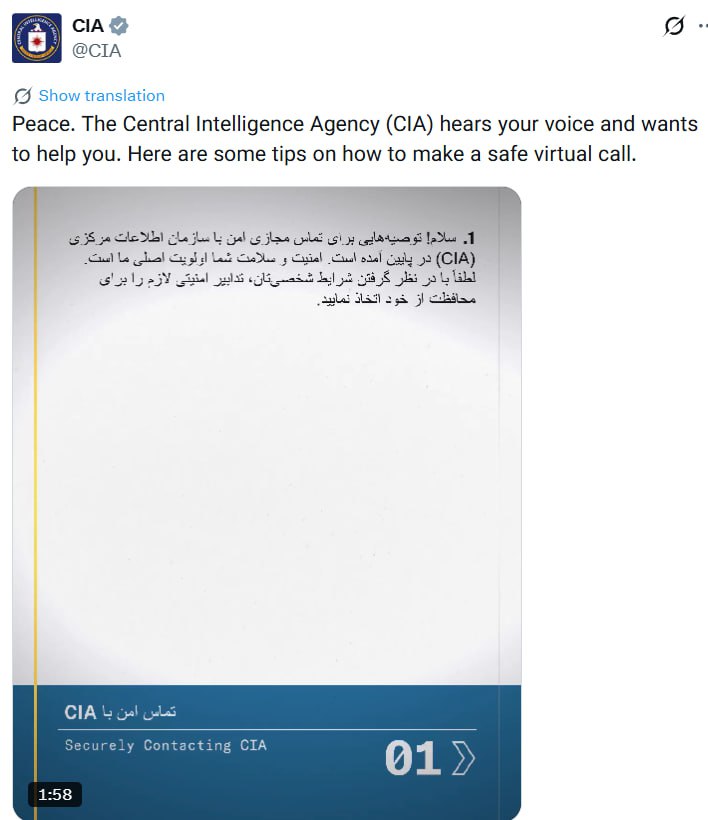
CIA Goes Public in Persian With “Safe Contact” Guidance

The CIA’s verified X account (@CIA) published a Persian-language, step-by-step guide on how to make a “safe virtual call” to the agency, framing the message with “Peace” and saying it “hears your voice and wants to help you.”

The first slide of the Persian guide emphasizes that the agency prioritizes personal safety and urges viewers to take security precautions based on their individual circumstances. The content is being widely circulated online as an unusually explicit, public-facing outreach to Persian speakers—with some interpreting it as an attempt to encourage direct contact with the agency.

Source: CIA official X account (@CIA)


More Iran news

Others

Brazil Consumers Lose Confidence as Bank Lending Turns Negative

Brazil’s household mood weakened in February and credit growth slipped in January, pointing to a softer demand backdrop.

  • FGV Consumer Confidence (Feb): 86.1 (prior 87.3)
  • Bank Lending (MoM, Jan): -0.2% (prior 1.8%)

Why it matters: weaker confidence plus contracting lending can translate into slower consumption momentum, especially if rates stay restrictive.

Source: FGV; Banco Central do Brasil (as reported)

Mexico’s External Balance Improves in Q4 Despite an Expectations Miss

Mexico’s Q4 current account moved to a stronger surplus, signaling improved external balance even though the headline undershot market expectations.

  • Current account (% of GDP): 1.60% (prior 0.50%)
  • Current account (USD): $7.702B (vs $11.520B expected; prior $1.556B)

Source: Banco de México.

Brazil Sees Continued Net FX Inflows

Brazil reported stronger foreign exchange inflows, a supportive signal for near-term currency stability when risk sentiment and carry remain favorable.

  • Foreign exchange flows: $1.870B (prior $1.783B)

Source: Banco Central do Brasil (BCB).

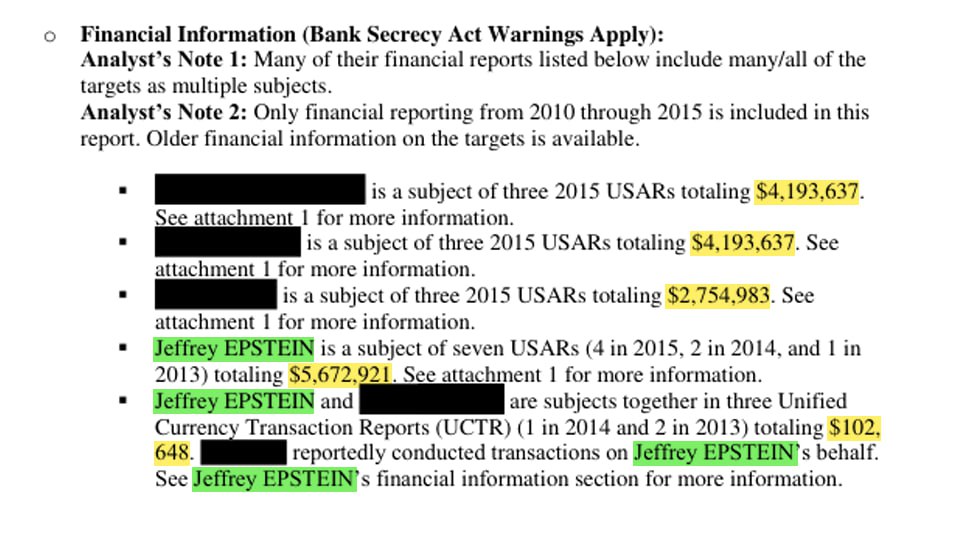
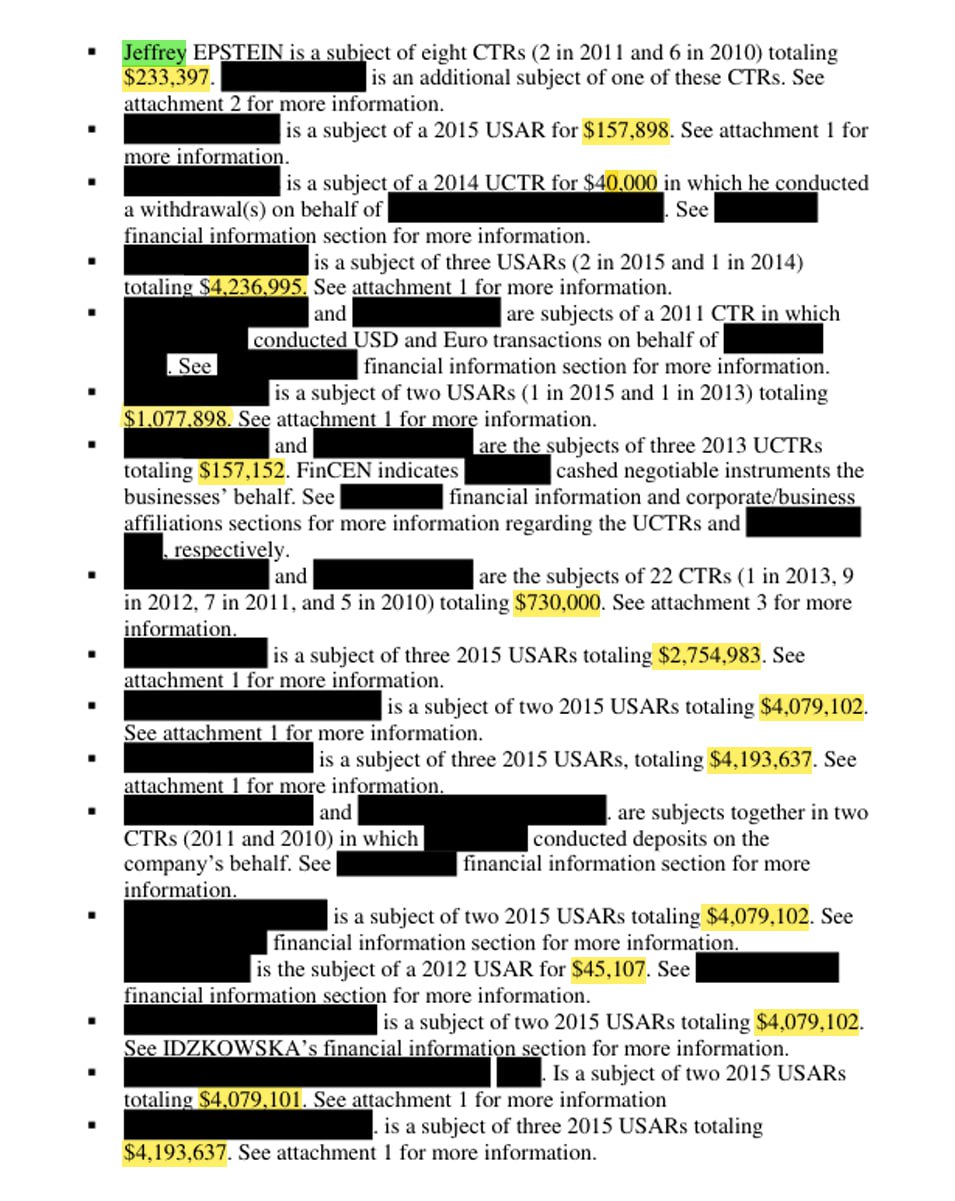
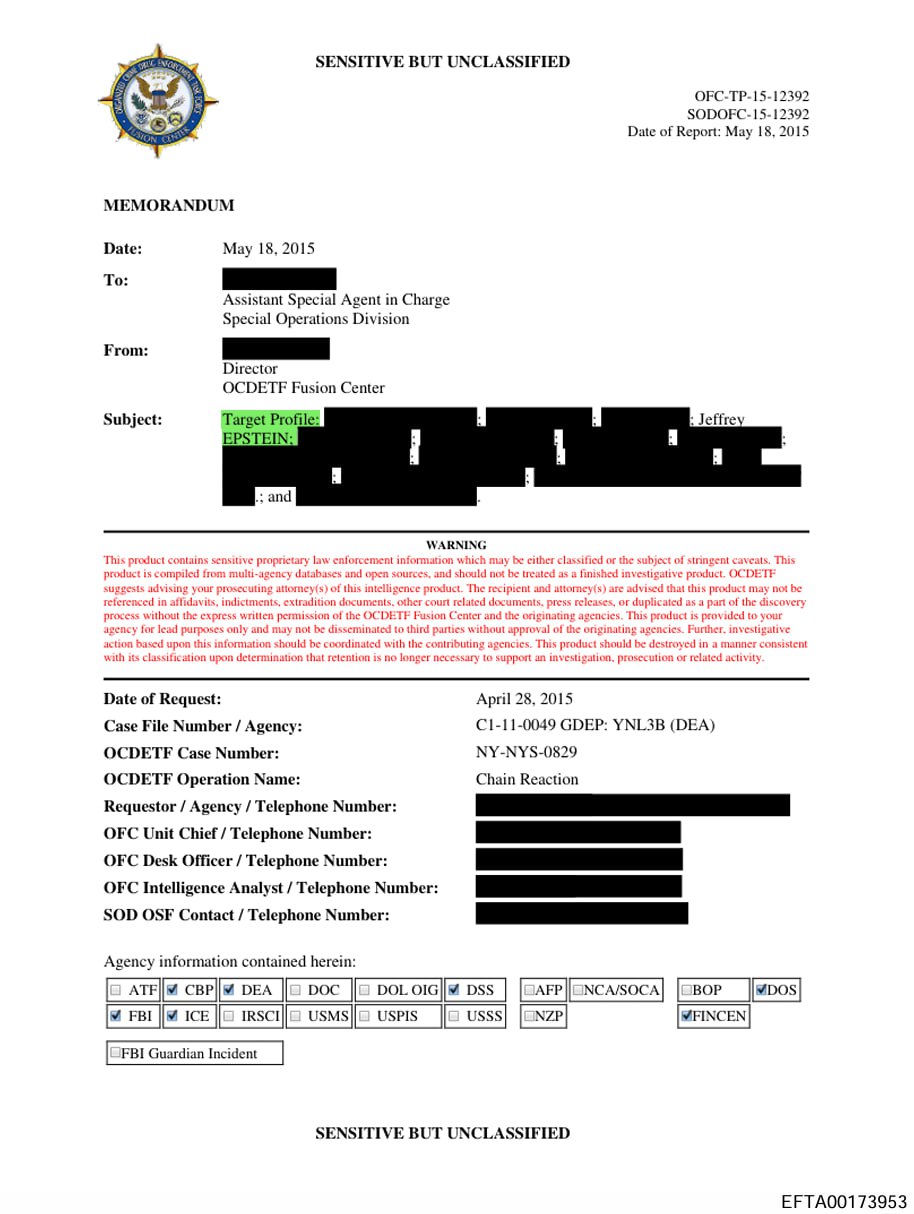
A DEA “Chain Reaction” Memo Puts Epstein in a Drug-Nexus Financial Probe

Newly released DOJ material includes a “Sensitive But Unclassified” DEA/OCDETF memo from May 2015 showing Jeffrey Epstein listed in a multi-target financial probe (“Operation Chain Reaction”) built around suspicious wire activity that investigators believed could be tied to illicit drugs and/or prostitution. The memo is heavily redacted, but it summarizes multiple bank-reporting flags on Epstein, including seven USARs totaling $5,672,921 (2013–2015), three UCTRs totaling $102,648 (2013–2014) and eight CTRs totaling $233,397 (2010–2011). Across the full investigation, CBS News reports the tracked suspicious transfers amounted to about $50 million across 15 targets, and sources told CBS that opening a DEA case implies a drug nexus—though the document itself doesn’t show charges or final outcomes from that probe.

Source: according to the U.S. Department of Justice “Epstein files” release and reporting by CBS News / The New Republic.


“No Arrests Coming”: Mace Clashes With DOJ’s ‘No New Charges’ Stance on Epstein Files

Rep. Nancy Mace says she has little confidence the Epstein disclosures will lead to new arrests or indictments in the U.S., arguing Congress may have to force answers through oversight hearings and demands for more records (including from the CIA).

Mace has also floated—without presenting public proof—that Epstein may have been an intelligence asset, which she suggests could explain why the case “ends” without broader prosecutions. That claim remains speculation, not an established finding.

On the DOJ side, a senior official (Deputy AG Todd Blanche) has publicly said the newly released tranche does not establish grounds for new criminal charges and that DOJ previously reviewed the materials and found no basis for further criminal investigations—unless new, credible evidence emerges.

So is it “over”? Not really—but the U.S. criminal track may be effectively frozen for now, while Congressional investigations and foreign probes continue to widen (and are already producing arrests/searches abroad in related misconduct-in-office cases).

More Others news

Commodities

API Shock Build Hits Crude Sentiment

The latest API Weekly Statistical Bulletin flagged a much larger-than-expected rise in U.S. crude inventories, a bearish near-term signal for oil pricing if confirmed by official data.

  • API Weekly Crude Oil Stock (week ended Feb. 21): +11.4M barrels
  • vs +1.85M expected
  • prior -0.609M

Why it matters: A build of this size typically suggests weaker implied demand, stronger inflows (imports), or softer refinery runs—and can pressure crude until the market sees confirmation (or a reversal) in the EIA report.

Source: American Petroleum Institute (API)

Gold Rebounds as Tariff Anxiety Returns and Iran Talks Loom

Gold edged higher in Asian trading on Wednesday, recovering after a profit-taking pullback the prior session, as markets assessed the impact of newly imposed U.S. tariffs and looked ahead to U.S.–Iran talks later this week.

  • Spot gold: +0.8% to $5,184.55/oz
  • U.S. gold futures: +0.5% to $5,203.10/oz

Gold had dropped 1.6% on Tuesday after four straight sessions of gains, as traders locked in profits.

Precious Metals Catch a Bid: Silver and Platinum Surge

Precious metals extended the upswing, with silver and platinum posting outsized gains as the complex firmed broadly.

  • Silver: +1.6% to $88.59/oz
  • Platinum: +2.3% to $2,224.60/oz

EIA Shock Build: Crude Surges as Refineries Step Back

U.S. crude inventories posted a huge build in the week ended Feb. 21, while refinery activity and throughput fell—an oil-bearish mix that can pressure WTI/Brent near-term unless demand signals improve.

Key prints (week/week):

  • Crude oil inventories: +15.989M bbl (vs +1.800M expected; prior -9.014M)
  • Cushing crude inventories: +0.881M bbl (prior -1.095M)
  • Refinery crude runs: -0.416M bpd (prior +0.077M bpd)
  • Refinery utilization: -2.4pp (prior +1.6pp)
  • Crude oil imports: +0.412M bpd (prior -1.132M bpd)
  • Gasoline inventories: -1.011M bbl (prior -3.213M)
  • Distillate stocks: +0.252M bbl (prior -4.566M)
  • Heating oil stockpiles: -0.119M bbl (prior +0.362M)
  • Gasoline production: -0.223M bpd (prior +0.290M bpd)
  • Distillate fuel production: -0.136M bpd (prior +0.028M bpd)

Market read-through

  • The crude build is amplified by lower refinery utilization/runs (less crude processed) and higher imports—typically bearish for front-month oil and time spreads.
  • The gasoline draw is the main offset (potentially supportive), but it came alongside lower gasoline output, suggesting supply-side tightening rather than a clear demand surge.
  • Cushing rising adds a bearish undertone for WTI (delivery-point stocks matter for prompt pricing).

Source: U.S. Energy Information Administration (EIA), Weekly Petroleum Status Report (week ended Feb. 21).

More Commodities news

USA

US Mortgage Rates Dip, Refi Activity Pops—but Purchase Demand Softens

U.S. mortgage data showed slightly cheaper borrowing costs, a modest rebound in applications, and a stronger refinance response—while purchase demand stayed lower.

  • MBA 30-Year Mortgage Rate: 6.09% (prior 6.17%)
  • Mortgage Applications (WoW): 0.4% (prior 2.8%)
  • Purchase Index: 149.7 (prior 157.1)
  • Mortgage Market Index: 340.2 (prior 339.0)
  • Refinance Index: 1,432.9 (prior 1,375.9)

Why it matters: lower rates tend to lift refinancing first; the softer purchase index suggests homebuying demand remains rate-sensitive and uneven.

Source: MBA (Mortgage Bankers Association)

Five-Year Auction Prints Lower, Easing Yield Pressure

The U.S. 5-Year Treasury Note auction cleared at 3.615%, down from 3.823% previously pointing to lower intermediate yields versus the last auction print and suggesting demand was firm enough to accept a lower stop-out rate. Market focus now shifts to how the 5s segment trades post-auction (curve shape, real yields, and USD sensitivity).

Source: U.S. Treasury (auction results)

Decoy Slices: Pentagon Boss Jokes About “Random Pizza Nights”

U.S. Defense Secretary Pete Hegseth joked that he’s considered ordering “lots of pizza on random nights” to throw off the viral “Pentagon Pizza Report”—an online tracker that watches near-Pentagon pizza activity as a supposed open-source signal of looming military moves.

Hegseth made the comment during a Fox News appearance, suggesting that a sudden spike in Domino’s orders could simply be him “on an app,” deliberately confusing the tracker.

The “Pentagon Pizza Report” phenomenon typically relies on publicly visible indicators such as Google Maps “popular times” / live visit trends near major defense sites to infer late-night activity.

Source: The Hill (quoting Hegseth’s Fox News remarks).

More USA news

Japan

Japan’s Services Inflation Holds Steady

Japan’s Corporate Services Price Index (CSPI) stayed unchanged, suggesting services-side price pressure remains sticky but not accelerating.

  • CSPI (YoY): 2.6% (vs 2.6% expected; 2.6% prior)

Source: Bank of Japan (CSPI)

BoJ Core CPI Cools Further, Easing Price Pressure

Japan’s BoJ core CPI slowed more than expected, reinforcing the view that underlying inflation pressure is moderating.

  • BoJ Core CPI (YoY): 1.7% (vs 1.8% expected; 1.9% prior)

Source: Bank of Japan

More Japan news

China

Hong Kong Growth Holds Up into Year-End

Hong Kong’s Q4 GDP met expectations, showing steady momentum rather than a late-year slowdown.

  • GDP (YoY, Q4): 3.8% (vs 3.8% expected; 3.7% prior)
  • GDP (QoQ, Q4): 1.0% (vs 1.0% expected; 0.9% prior)

Source: Hong Kong Census and Statistics Department

Hong Kong Inflation Cools More Than Expected

Hong Kong’s January inflation came in softer, with both the monthly and annual prints easing versus the prior reading—and the YoY rate undershooting expectations.

  • CPI (MoM, Jan): 0.20% (prior 0.30%)
  • CPI (YoY, Jan): 1.10% (vs 1.20% expected; prior 1.40%)

Why it matters: cooling inflation keeps the near-term price backdrop benign, which can help real consumption dynamics even as growth remains sensitive to external demand.

Source: Hong Kong Census and Statistics Department

More China news

Equities

Asia’s AI Supply Chain Is Minting the Capex Boom

South Korea, Taiwan, and Japan are increasingly the “picks-and-shovels” winners of the AI cycle—benefiting from surging global AI capex because they manufacture much of the equipment and components that AI runs on.

Markets are already reflecting that dynamic:

  • KOSPI: up ~5% this week to a fresh record, taking 2026 gains to ~44%.
  • Taiwan equities: up ~5% this week and ~22% in 2026 so far.

The message from the tape: while U.S. tech can be hostage to valuation swings, the hardware supply chain is being priced like the direct earnings transmission of the AI buildout—hence the “Eat your heart out, Nasdaq” punchline.

Japan Re-Rating Trade Gets a New Catalyst: Homecoming Flows

Japan’s Nikkei is up about 15% year-to-date, drawing renewed bullish calls for a re-rating of Japan Inc. as analysts point to improving earnings and corporate governance.

Deutsche highlights a potential “flow shock” catalyst: Japanese investors are estimated to hold roughly $2.25 trillion in foreign equities. Even a modest rotation back into domestic stocks could be a meaningful tailwind for both the Nikkei and the yen, via stronger local equity demand and potential FX repatriation effects.

Source: Deutsche Bank research note;

More Equities news

Day Trade Signals

BTCUSD: Recovery Setup Above 62,000

  • Pivot: 62,000
  • Plan: Buy above 62,000 (recovery / short-term rebound bias)
  • Targets: 68,500 → 70,000
  • Extensions: 76,000 → 82,000

Alternative: Below 62,000, look for downside toward 60,000 then 57,000

Momentum / signal: MACD + EMA cross is flashing a recovery signal, at least for the short term

Gold Intraday: Turning Up Above 5125

  • Pivot: 5125
  • Plan: Long above 5125
  • Targets: 5235 then 5290 (extension)

Alternative: Below 5125, look for downside toward 5090 then 5045

Momentum: RSI calls for a bounce, supporting the turn-up bias

More Day Trade Signals news

Oceania

Australia’s Inflation Stays Firm as Construction Slips

Australia printed hotter inflation details alongside a surprise contraction in construction activity, a mixed backdrop for the RBA.

  • Construction Work Done (QoQ, Q4): -0.1% (vs 1.2% expected; 0.1% prior)
  • CPI (YoY, Jan): 3.8% (vs 3.7% expected; 3.8% prior)
  • Trimmed Mean CPI (YoY, Jan): 3.4% (vs 3.3% expected; 3.4% prior)
  • Monthly CPI Indicator (YoY, Jan): 3.80% (vs 3.70% expected; 3.80% prior)
  • Weighted Mean CPI (YoY, Jan): 3.6% (prior 3.2%)
  • CPI Index Number (Jan): 101.33 (prior 100.30)

Source: Australian Bureau of Statistics (ABS)

More Oceania news

Canada

Canada Wholesale Sales Slip, Adding to Growth-Softening Signals

Canada’s preliminary wholesale sales fell in January, reversing the prior month’s strength.

  • Wholesale Sales (MoM, Jan, P): -0.6% (prior 2.0%)

Why it matters: weaker wholesale activity can feed into softer near-term GDP tracking, especially if inventories and manufacturing are also cooling.

Source: Statistics Canada

More Canada news