IFC Markets Live Quotes

Market news roundup: Friday, 16 January 2026

112 short market news items, grouped by 15 sections.

Iran

Iran FM Araghchi Discusses Protest Crackdown With China’s Foreign Minister — Report

Abbas Araghchi, the Islamic Republic’s foreign minister, held a call with China’s foreign minister to discuss Iran’s crackdown on domestic protests, according to reports. Araghchi also raised the Trump administrations reported 25% tariff measure targeting countries that trade with Iran.

Persepolis’ Reza Shekari Released After Airport Detention, Iranian Media Says

Iranian outlets reported that Persepolis player Reza Shekari was detained at Tehran’s international airport after the team returned from a training camp in Qatar, and later released following questioning. Iran International said it first reported the detention, while IRGC-linked Fars alleged the case stemmed from an Instagram story Shekari posted on 18 Dey reacting to a state TV host who mocked Prince Reza Pahlavi and protesters—an allegation framed by Fars as a “death threat.”

Gingrich: “Oppressors Must Go” or Protester Killings Will Continue

Newt Gingrich, former Speaker of the U.S. House of Representatives, wrote on X that when Iran’s Islamic Republic claims it will stop executing people, it is “plainly lying.” He added: “Either the oppressors must go, or the killing of protesters will continue.”

Iran’s Defense Minister Blames Protest Deaths on “Industrial Drugs,” Echoing a Familiar Authoritarian Playbook

During Iran’s 1404 protests, Islamic Republic Defense Minister Aziz Nasirzadeh claimed “rioters” had consumed “industrial drugs,” and even suggested some victims “died without any injuries” because they had overused substances. The narrative does not remove responsibility for the killings; it is presented as an attempt to deny and distort the reality of state repression. The pattern is not new: Libya’s former leader Muammar Gaddafi made similar claims during the 1389 protests, saying those who took to the streets against his rule had taken “narcotic pills”—a recurring tactic aimed at discrediting protesters, dehumanizing victims, and rationalizing state violence.

Iranian Oscar-Winning Filmmakers: When a State Wars on Its People, “Non-Intervention” Is Complicity

Hossein Molayemi and Shirin Sohani—Oscar winners for Best Animated Short for In the Shadow of the Cypress—wrote in a guest column for The Wrap that while no one welcomes foreign military intervention in their own country, when a government wages war on its people and mass killing becomes policy, non-intervention is no longer neutrality but complicity. They argued that decisive international action is a “moral responsibility” in such circumstances.

Reports of “Martial Law” Conditions in Iran: Checkpoints, Phone Searches, CCTV Seizures

Multiple citizen accounts from across Iran say security controls have intensified after the large-scale crackdown and killings reported on Thursday and Friday, with daily movement and activity increasingly policed under what residents describe as “martial law.” A source in Aluni (Khanmirza county) said IRGC and Basij forces set up checkpoints from 22 Dey, searching vehicles and civilians. In Borujen, residents report large vans deployed in streets and soldiers checking phones. In Isfahan, witnesses say security forces patrol alleys, enter residential complexes, and remove stored CCTV footage to identify protesters; another resident said the city feels effectively under “martial law” after 6 p.m. Similar accounts came from Torbat-e Jam—where one resident said people are allowed out only to shop—and from Mashhad, where checkpoints reportedly stop cars and search phones for protest photos and videos.

Protester Account: Sari Under “Martial Law” Conditions, Heavy Security Presence

A protester’s account from Sari, the capital of Mazandaran province, shared with Iran International, says the city—like other parts of Iran—is being controlled under what residents describe as “martial law,” with streets saturated by security and paramilitary forces. The source said main roads, including Farhang and Qارن streets and routes leading to Clock Square, are blocked from 4 p.m., while paramilitary personnel are stationed at virtually every intersection until 11 p.m., with many reportedly masked. Sari has been among the cities with significant protest turnout, where residents have chanted slogans such as “Death to Khamenei” and “Pahlavi will return.”

Rights Group: Football Youth Coach Milad (Mehdi) Lavasani Killed by Live Fire in Narmak Protests

Hengaw, a human-rights group, reported that on the night of 18 Dey (Jan. 8, 2026), Milad (Mehdi) Lavasani—a youth football coach in Iran—was killed by live ammunition during protests in Tehran’s Narmak district. A relative told IranWire that Lavasani lived in Pasdaran but said he was going to see family in Narmak before joining friends to protest; the source said he met friends in the Dardasht area, where security forces first used tear gas and then opened sustained automatic fire after the crowd dispersed. The relative added the family learned he had been shot after a call to a family member’s phone, and that Lavasani was still alive when relatives reached him but died en route to hospital in a car.

Protester Account: IRGC Vehicle Opened Fire, Killing 14 “On the Spot” in Savadkuh

As accounts of automatic and heavy-weapons fire used to suppress protests continue to grow, a resident from Savadkuh told Iran International that on Thursday night, 18 Dey (Jan. 8, 2026), 14 people were killed in a single incident after IRGC forces opened direct fire. The source said roughly 500 people had gathered in one part of the town to protest the detention of a young woman and demand her release, when an IRGC armored vehicle moved toward the crowd and began shooting, leaving 14 dead at the scene. The witness added that others were wounded and some later died in hospital, amid broader reports that security forces used heavy weapons and sustained gunfire over Thursday and Friday, 18–19 Dey.

Iranians Rally in Christchurch, New Zealand in Support of Iran’s National Revolution

Videos shared on social media show Iranians gathering in Christchurch, New Zealand, on 26 Dey (Jan. 16, 2026) to voice support for Iran’s national revolution, with demonstrators holding signs and chanting in solidarity with protesters inside Iran.

“Death to Khamenei” Chants Heard at Funeral of Maryam and Majid Salehi Siavoshani — Video

Videos received by Iran International show mourners chanting “Death to Khamenei” on 21 Dey (Jan. 11, 2026) at Tehran’s Behesht-e Zahra cemetery during the funeral for Maryam and Majid Salehi Siavoshani, a young couple killed amid Iran’s national revolution protests. One attendee said the area around their burial site also contains the graves of many other young victims killed during the unrest.

Women Ululate at Funeral of Young Couple Killed in Tehran Protest Shooting — Reports

Videos received by Iran International show the funeral of Maryam and Majid Salehi Siavoshani, a young couple killed during Iran’s national revolution protests, held on Sunday, 21 Dey (Jan. 11, 2026) at Tehran’s Behesht-e Zahra cemetery. Witnesses said a grieving mother asked mourners to stop chanting “La ilaha illallah,” after which a group of women ululated. According to accounts, Maryam was shot on Thursday night, 18 Dey (Jan. 8) in the Tehranpars area; Majid then threw himself over her body to shield her from further gunfire but was also hit, severely wounded, and died the next day in hospital. Attendees described Behesht-e Zahra as exceptionally heavy and sorrowful that day, with many other young victims being buried at the same time—scenes some compared to a “real Karbala.” Some mourners reportedly avoided extensive filming over fears security forces were present in the crowd, leaving only short, limited clips from the ceremony.

Prince Reza Pahlavi: Action Against Islamic Republic Would Cut Funding for Terror Networks

Prince Reza Pahlavi said the Islamic Republic’s alleged terrorist operations abroad underscore that Tehran is a growing threat and should not be allowed to cause further damage. He argued that action against the regime would not only help Iranians overcome it but would also disrupt the flow of revenues and financial resources the government uses to fund “sleeper cells” and wider terrorist networks.

Prince Reza Pahlavi Calls for Targeted Strikes to Dismantle IRGC Repression Machine

Prince Reza Pahlavi said the urgent question is what would most damage the Islamic Republic, arguing that crippling the IRGC’s repression apparatus and its military and paramilitary assets would be most effective. He said he is calling for targeted strikes on “legitimate targets” that would hinder domestic repression and prevent terrorism both inside and outside Iran.

Prince Reza Pahlavi: A Democratic Iran Will Seek Strong Ties With Countries Committed to Freedom

Prince Reza Pahlavi pointed to former Indian Prime Minister Indira Gandhi’s visit to Iran during the reign of Mohammad Reza Shah as an example of longstanding ties, saying Iran and India share deep cultural links. He added that a democratic Iran would be committed to building the best possible relations—grounded in sovereignty and freedom—with any country that upholds those values.

Prince Reza Pahlavi: World Must Replace Silence With Action for Iranians to Win

Prince Reza Pahlavi, speaking at a press conference on Friday, 26 Dey (Jan. 16, 2026), urged the international community to move beyond statements and support practical measures, citing the courage, unity, and mass participation of Iranians on the ground. Responding to a question from Iran International journalist Ardavan Roozbeh, he told the world: “Replace silence with action so the Iranian nation has a chance to prevail.”

Prince Reza Pahlavi to France: A Free Iran Benefits Europe, Not a “Terrorist Regime’s” Survival

Prince Reza Pahlavi appealed to the French government and President Emmanuel Macron, arguing that an “Iran that is free” would align with French and broader European interests more than the continued survival of what he called a “terrorist regime.” He said that if Iran becomes free, other countries would no longer be able to weaponize energy to blackmail Europe, and the Islamic Republic would lose its ability to “take Europe hostage.”

Kurdish Parties: UN and Governments Must Act Now to Stop Protest Killings in Iran

A coalition of Iranian Kurdistan political parties said in an open letter to the UN Human Rights Council, governments, and international rights bodies that the Islamic Republic has committed “crimes against humanity” during more than three weeks of protest repression. The signatories said Tehran has used internet shutdowns and communications blockades to conceal mass killings and widespread abuses, with reports citing thousands killed—including women and minors—tens of thousands detained, and large numbers wounded. The letter says Iranian Kurdistan has been placed under a militarized security clampdown that hinders reporting, funerals, and even the return of bodies to families, and argues the state has a long record of violent suppression in Kurdish مناطق; it adds that in recent protests, hundreds were allegedly killed with semi-heavy weapons in Ilam, Kermanshah, and Lorestan, even as a region-wide general strike underscores continued resistance. Warning of an imminent risk of larger-scale massacres, the parties said diplomacy has failed so far and urged immediate international action to halt the crackdown, support Iranians, and uphold the right of peoples to self-determination. The letter was signed by seven groups, including the Kurdistan Democratic Party of Iran (KDPI), Komala variants, PJAK, PAK, and the Khabat Organization of Iranian Kurdistan.

Germany’s Bundestag VP: IRGC’s “Shadow Economy” May Be Bigger Than Iran’s Official Economy

Omid Nouripour, a vice president of Germany’s Bundestag, wrote on X that the Islamic Revolutionary Guard Corps runs a vast “shadow economy” that may be larger than Iran’s official economy. He argued that this parallel financial system enables the regime to bankroll its repression machinery by generating and moving resources outside normal oversight.

US Bank Reserves Rise: Fed Reserve Balances Climb to $3.062T

Reserve balances held at Federal Reserve Banks increased to $3.062T, up from $3.023T previously. A move of this size typically reflects short-term liquidity dynamics—Treasury cash movements, settlement flows, and the interaction between QT runoff and money-market operations—rather than a change in the Fed’s policy rate stance.

Market impact: Generally supportive for front-end funding stability (more reserves can ease stress in money markets) and usually neutral for the USD. Traders will watch whether higher reserves persist alongside QT and Treasury issuance, as sustained swings can affect repo conditions and bill pricing.

Reports: Aida Aghili, 34, Killed by Live Bullet in Tehran; Body Identified in Kahrizak

Media reports say Aida Aghili, a 34-year-old Tehran resident, was killed after being hit in the head by live ammunition. Sources close to her family said her body was identified after several days of searching among bodies transferred to Kahrizak. Aghili was active on social media; her last story reportedly showed an AI-generated image of her embracing Iran.

Iranians Rally in Copenhagen to Back Iran’s National Revolution and Honor Victims

Iranians gathered in Copenhagen to show support for Iran’s national revolution and to keep the memory of those killed alive, according to reports and circulating images from the event. The rally adds to a widening series of diaspora demonstrations across Europe aimed at sustaining international attention on the crackdown and commemorating victims of the unrest.

Prince Reza Pahlavi: Action Against Islamic Republic Would Cut Funding for Terror Networks.

Prince Reza Pahlavi said the Islamic Republic’s alleged terrorist operations abroad underscore that Tehran is a growing threat and should not be allowed to cause further damage. He argued that action against the regime would not only help Iranians overcome it, but would also disrupt the flow of revenues and financial resources the government uses to fund “sleeper cells” and wider terrorist networks.

Prince Reza Pahlavi: A Future Constitution Must Safeguard Human and Civil Rights

Prince Reza Pahlavi said durable unity among opponents of the Islamic Republic depends on guarantees embedded in a new constitution that protects human rights and full citizenship rights. He argued that such a constitutional framework would restore these protections and enable all people to live in a unified country with complete freedom and equal citizenship.

Iranian Artists and Activists Issue Urgent Warning Over Protest Killings and Execution Risk for Detainees

In an urgent statement, a group of Iranian artists, writers, and cultural activists warned of widespread killings during the Dey 1404 uprising and a serious risk that detained protesters could face execution. Condemning what they described as violent repression and the use of lethal force against civilians, the signatories said independent sources report thousands have been killed, with many more wounded or arrested. They said mass arrests have disproportionately targeted young people and raised acute concerns over detainees’ conditions, access to due process, and the likelihood of charges such as moharebeh (waging war against God), terrorism, or espionage—accusations that can carry the death penalty under Iranian law. Citing recent judicial threats and a record of extrajudicial practices, the statement warned of an elevated risk of rushed, severe sentences—including executions—while describing the killing of unarmed protesters, unlawful detentions, and an atmosphere of intimidation as “systematic violence” and clear violations of core human rights, including the right to life, free expression, and peaceful protest. The signatories warned that global silence and inaction could lead to an irreversible catastrophe, urging governments, human-rights bodies, international organizations, and independent media to respond urgently and help protect thousands of detainees said to be at grave risk.

Iranian Director Mohammad Rasoulof Condemns World’s Silence on Iran Protest Crackdown

Iranian filmmaker Mohammad Rasoulof criticized what he described as global inaction over the suppression of protests in Iran, saying Iranians took to the streets “empty-handed” for freedom, were met with repression and gunfire, and “the world only watched.”

Report: Former Political Prisoner Mohsen Hajimohammadi Arrested in Tehran Workplace Raid

The “Professional Challenge of Iran’s Teachers” channel, which tracks arrests and the suppression of teachers’ labor rights in Iran, reported that Mohsen Hajimohammadi—a political activist and former political prisoner—was arrested on Friday, 26 Dey 1404 (Jan. 16, 2026). The outlet said security forces raided the workshop where he worked in Tehran and detained him.

Ex-President Khatami Calls Protests a “U.S.-Israel Plot,” Praises Pezeshkian’s Early Response as “Civic”

Former Iranian president Mohammad Khatami, a leading reformist figure, said in a statement released Friday, 26 Dey (Jan. 16, 2026) that the recent protests are a “plot by Israel and the United States,” and described the Masoud Pezeshkian government’s actions in the early days of the unrest as “civic conduct.” The remarks come as multiple reports from inside Iran have described security forces using live fire against protesters from the outset, with fatalities reported across several cities.

IranWire: 17-Year-Old Mehrab Golestani Killed by Live Fire in Isfahan; Family Told to Bury “in Silence”

IranWire reported that Mehrab Golestani, a 17-year-old, was killed by live ammunition during protests in Isfahan on Friday, 19 Dey 1404 (Jan. 9, 2026). Golestani’s family—originally from Kerman and living in Isfahan—was reportedly forced to wait six days before receiving his body, and was required to sign a pledge to hold a “silent burial.” He was buried on Thursday, 25 Dey (Jan. 15, 2026), according to the report.

Cassidy: Khamenei Cut the Internet to Kill Iranians “Without Witnesses”

U.S. Republican Sen. Bill Cassidy wrote on X that Iran’s Supreme Leader Ali Khamenei shut down the internet so the regime could kill its own people “without witnesses.” He called Iran’s leadership “pure evil.”

Prince Reza Pahlavi Tells The Economist He’s Ready to Take Transitional Authority as a “Neutral Arbiter”

Prince Reza Pahlavi said in an interview with The Economist that he is ready to assume real authority during a transition period, arguing the phase requires a trusted “neutral arbiter.” He outlined two core principles—Iran’s territorial integrity and a clear separation of religion and state—and described the role as a voluntary step taken at the public’s request rather than through an interim government election, saying people need someone they can trust, “and at this moment, that person is me.”

Prince Reza Pahlavi: My Role Is to Lead the Transition—Keep the State Running From Day One

Speaking at a press conference in Washington on Friday, 26 Dey 1404 (Jan. 16, 2026), Prince Reza Pahlavi said the post–Islamic Republic system would determine how executive leadership is chosen—if Iran becomes a republic, a president would be elected; if it becomes a monarchy, a prime minister would be chosen. He said his role is to lead the transition by bringing all components together and ensuring basic governance functions continue from the first day—“trash must be collected, trains must run on time, essential services must be provided.” He added that the aim at this stage is maximum participation and the fastest possible transition.

Comedian Max Amini Condemns Iran Crackdown, Urges Global Support for Protesters

Iranian-American stand-up comedian Max Amini, in a video from one of his shows, said the world is in a “crazy time” and needs unity, while accusing Iran’s regime of committing “one of the biggest crimes.” He claimed authorities cut internet, electricity, and water in recent days, then opened fire and killed more than 12,000 protesters in Iran’s streets. Amini said Iranians are demanding human rights and urged world leaders and governments to support them, arguing the benefits extend beyond Iran; he added that regime change in Iran would bring global peace and said he hopes President Donald Trump follows through on earlier remarks about backing Iranians and delivering a “hard blow” if protesters are killed.

Ted Cruz Thanks Iranian Protesters, Says Trump “Has Your Back” as Diplomacy Speculation Grows

U.S. Republican Sen. Ted Cruz, in a video posted to his X account, thanked Iranian protesters for their courage and said the Iranian people are standing for freedom against “ayatollahs and mullahs.” Cruz said the United States stands with their struggle and that “President Trump has your back,” adding that “these tyrants will fall” because of protesters’ “incredible bravery.” The remarks come amid growing speculation about possible U.S.–Iran talks after President Trump said he had been told from inside Iran that killings had stopped and executions would not take place, even as U.S. officials continue to insist Trump has not abandoned support for Iranian protesters and that “all options are on the table.”

Wounded Protester’s Final Call: Family Reached the Scene, but Ahmed Abbasi Died as His Mother Held His Body Overnight

After being wounded, Ahmed Abbasi reportedly made it to an alley, handed his phone to a passerby, and asked them to “call the last person on the contacts list.” By the time his family arrived on Pirouzi Street, he had died. Amid what was described as severe security conditions and the absence of an ambulance, his mother held his body in her arms through the night until morning to prevent security forces from taking it away.

EASA Warns EU Airlines to Avoid Iranian Airspace

The European Union Aviation Safety Agency (EASA) has told EU air operators not to operate in Iran’s airspace (Tehran FIR/OIIX) at any altitude or flight level, and urged carriers to exercise caution and contingency planning when routing through neighboring airspace—particularly where U.S. military bases are located—citing elevated civil-aviation risk amid regional tensions. The warning comes as many European airlines have already been rerouting around Iran and Iraq despite Tehran’s brief airspace closure and reopening earlier this week.

IranWire: Zahedan Residents March After Friday Prayers Despite Heavy Security Reports

Videos shared with IranWire show groups of citizens in Zahedan marching in the streets after Friday prayers on 26 Dey 1404 (Jan. 16, 2026), despite reports of a tightened security atmosphere in the city. Earlier, independent rights sources, including the Baloch Activists Campaign, had warned of heavy security measures in Zahedan around the prayers. Separately, Sunni cleric Molavi Abdolhamid Esmaeelzehi said in a message published on 23 Dey (Jan. 13) that the killing of thousands of protesters in Tehran and other cities over recent days was a horrifying and unprecedented tragedy.

Molavi Abdolhamid Calls for Release of Detainees, Urges Dialogue With Protesters and Political Prisoners

In video from his Friday prayer sermon on 26 Dey 1404 (Jan. 16, 2026), Zahedan’s Sunni Friday prayer leader Molavi Abdolhamid Esmaeelzehi offered condolences to families of those killed in the protests and called for the release of detainees, including the wounded and political prisoners. He urged the Islamic Republic to engage in dialogue with protesters and political prisoners. The Baloch Activists Campaign reported earlier that morning that security and military forces were deployed around the Makki Mosque. Reports also say the Islamic Republic imposed an internet shutdown starting Thursday, 18 Dey, during a crackdown in which thousands were killed or injured, while authorities claimed “armed terrorists” were responsible—an account eyewitnesses have disputed.

Axios: Mossad Chief David Barnea Arrives in U.S. for Iran Consultations

Axios reported, citing informed sources, that Mossad director David Barnea arrived in the United States early Friday, Jan. 16, 2026 (26 Dey 1404), for high-level consultations with U.S. officials on Iran. The visit comes amid intensified U.S.–Israel coordination over Iran’s internal crisis and the range of U.S. options, with Axios also noting Barnea is expected to meet U.S. envoy Steve Witkoff in Florida.

Tasnim: Fajr Sepasi–Persepolis Match in Shiraz Barred to Spectators

IRGC-linked Tasnim reported—citing Iran’s League Organization—that Sunday’s Week 16 match between Fajr Sepasi and Persepolis, scheduled for 28 Dey 1404 (Jan. 18, 2026) in Shiraz, will be played without fans, with no official reason given. IranWire said it had previously reported on an IRGC Intelligence directive anticipating closed-door top-flight games amid the ongoing unrest, while Iran International framed the decision as part of heightened concern over protests spilling into stadiums.

Fars Claims IRGC Intel Arrested “Raha Parham” as Iran’s Internet Blackout Drags On

IRGC-affiliated Fars News published a 5:35 video on its social-media accounts—despite Iran’s nationwide internet shutdown continuing for an eighth consecutive day—claiming IRGC intelligence arrested a woman it called “Raha Parham,” alleging her “real name” is Nazanin Baradaran. The outlet framed her as a would-be face of the protests and said more details would follow, in a pattern critics describe as propaganda claims during the crackdown.

X-Ray Images Shared From Shiraz Claim Protester Blinded; Reports Point to Surge in Eye Injuries

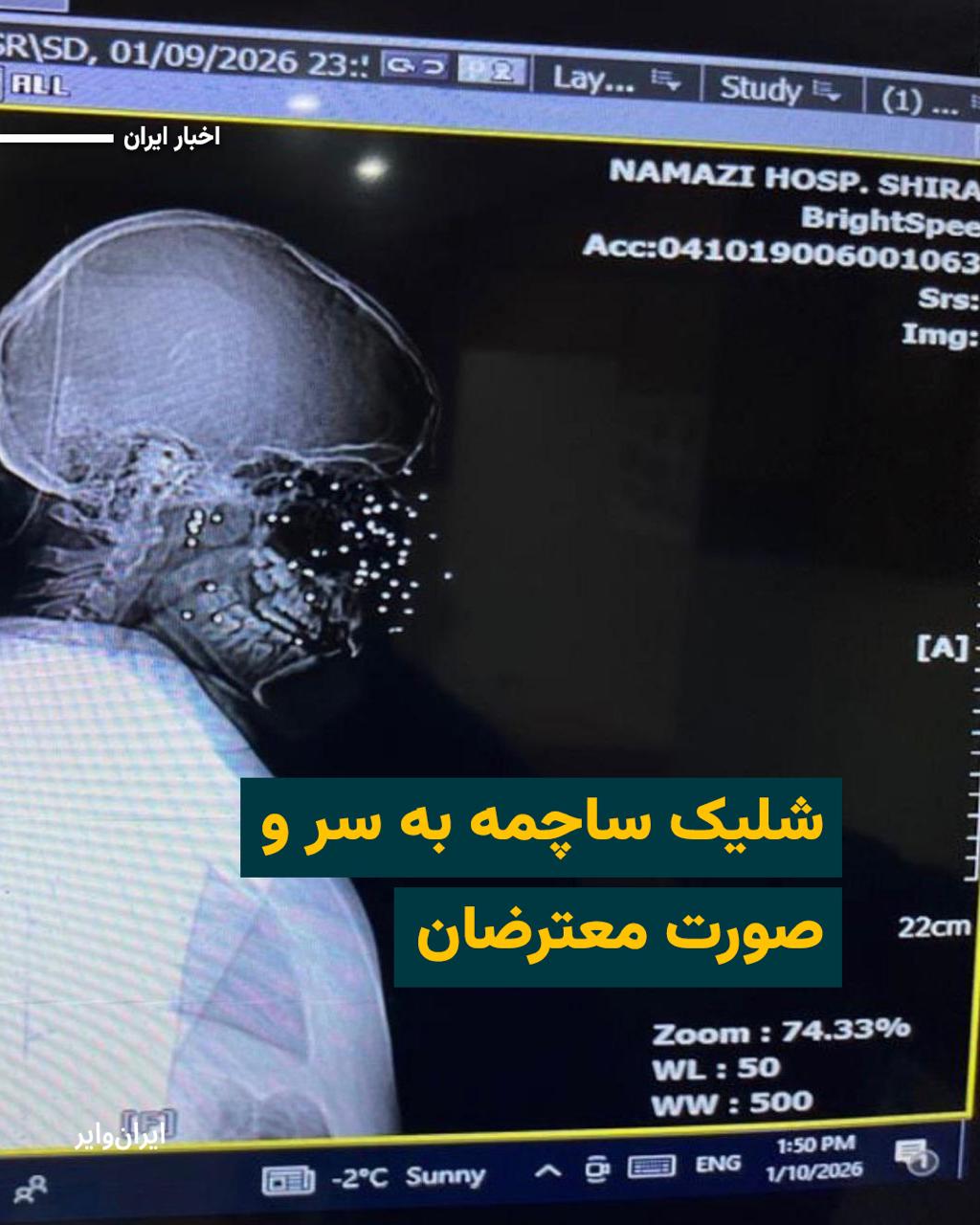
A user on X posted radiology images of the head and face of a female protester in Shiraz, saying the scans are from Friday, 19 Dey 1404 (Jan. 9, 2026) at Namazi Hospital and alleging the woman has been left blind in both eyes. Separately, IranWire cited confirmations from medical staff sources—before Iran’s internet blackout began and ahead of the major Thursday–Friday crackdown—that at least 500 people with eye injuries had already sought treatment at Tehran’s Labafinejad, Farabi, and Moheb Kosar hospitals. Medical personnel said they believe the number of people who lost one or both eyes during the two nights of intensified repression is far higher.

Videos Show Bodies at Kahrizak Forensic Medicine Center, Labeled “Friday 9 January 2026”

Videos received and circulated with the caption “Friday, 19 Dey 1404 (Jan. 9, 2026)” appear to show bodies at the Kahrizak Forensic Medicine Center, amid mounting reports of large-scale fatalities during the recent crackdown. The footage, as described, points to growing pressure on morgues and forensic facilities as families search for missing relatives.


Madonna Backs Iranians: “Hold Tight… I Stand With Iran”

Pop icon Madonna voiced support for Iranians in an Instagram post, saying she is thinking of people “fighting a much-needed revolution” and urging them to “hold tight,” adding: “I stand with Iran. Let their voices be heard.” She also wrote that Iranians have long been denied basic freedoms and said she cannot claim to fully understand their suffering, but that her “thoughts and prayers” are with them.

Mohsen Rezaee: Security Chiefs Skipped Regime Funerals Over Fear of an Attack

Mohsen Rezaee, a former IRGC commander, said in an interview that senior military and security commanders avoided attending a government-organized funeral ceremony for slain regime personnel because they feared a possible “attack against the Islamic Republic.” The remarks come as the Islamic Republic claims some of its forces were killed by protesters, even while independent estimates of protester deaths run into the thousands. Rezaee’s admission of security anxiety also recalls the recent “12-day war” period referenced by critics, when multiple IRGC and security figures were reportedly targeted while operating from concealed locations.

Video Captioned “Tehran’s Pirouzi St., Thursday 18 Dey”: Voice Cries Out Under Live Fire

A video received and circulated with the caption “Pirouzi Street, Tehran — Thursday 18 Dey (Jan. 8, 2026)” includes a voice shouting amid apparent gunfire: “People, pray— they’re shooting at us! We’ve taken cover! One of us is dead!” The clip is being shared as part of a growing stream of footage and testimony alleging the use of live ammunition during the crackdown in Tehran.


Tehran Friday Prayer Leader Ahmad Khatami Calls for Executions of Detained Protesters

Ahmad Khatami, Tehran’s Friday prayer leader appointed by Iran’s supreme leader and a member of both the Assembly of Experts and the Guardian Council, called for death sentences for detained protesters and urged the arrest of anyone who supported the protests “in any way.” In his sermon, he portrayed protesters as “Netanyahu’s servants” and “Trump’s soldiers,” warning both leaders to expect “harsh revenge” and saying Americans and “Zionists” should not expect peace. Khatami also cited damage figures from the unrest, claiming 350 mosques, 126 prayer halls, and 20 other holy sites were harmed, along with 80 Friday prayer leaders’ residences.

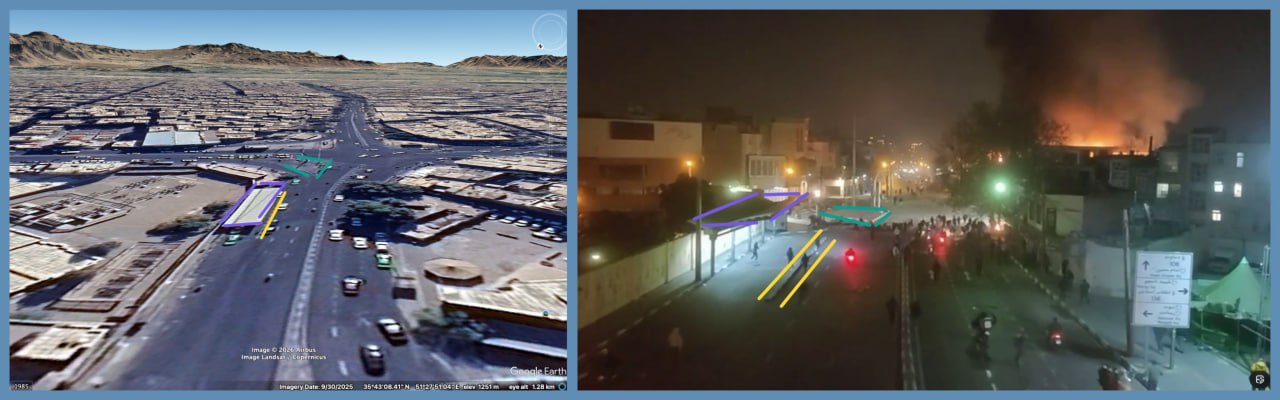
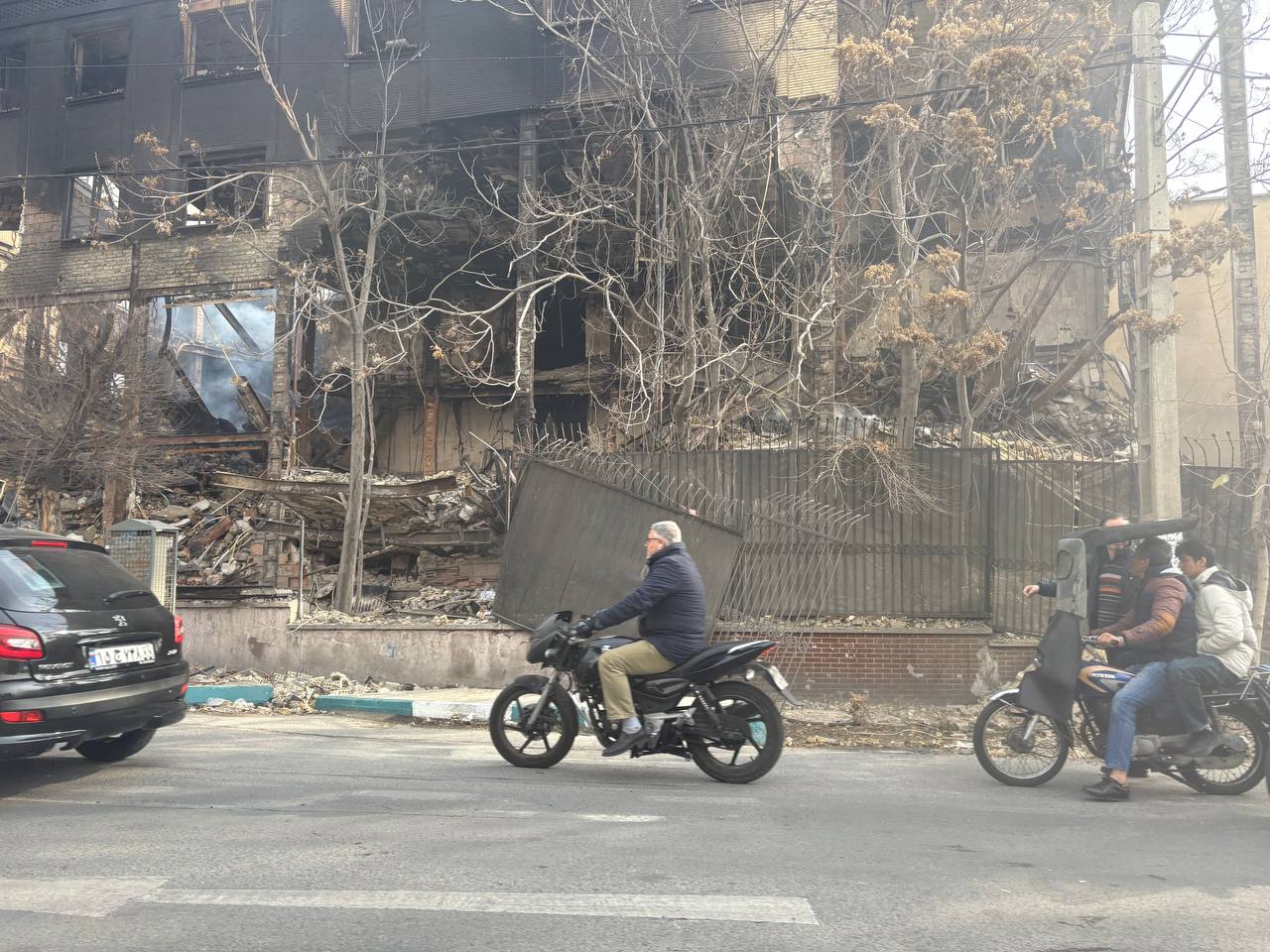
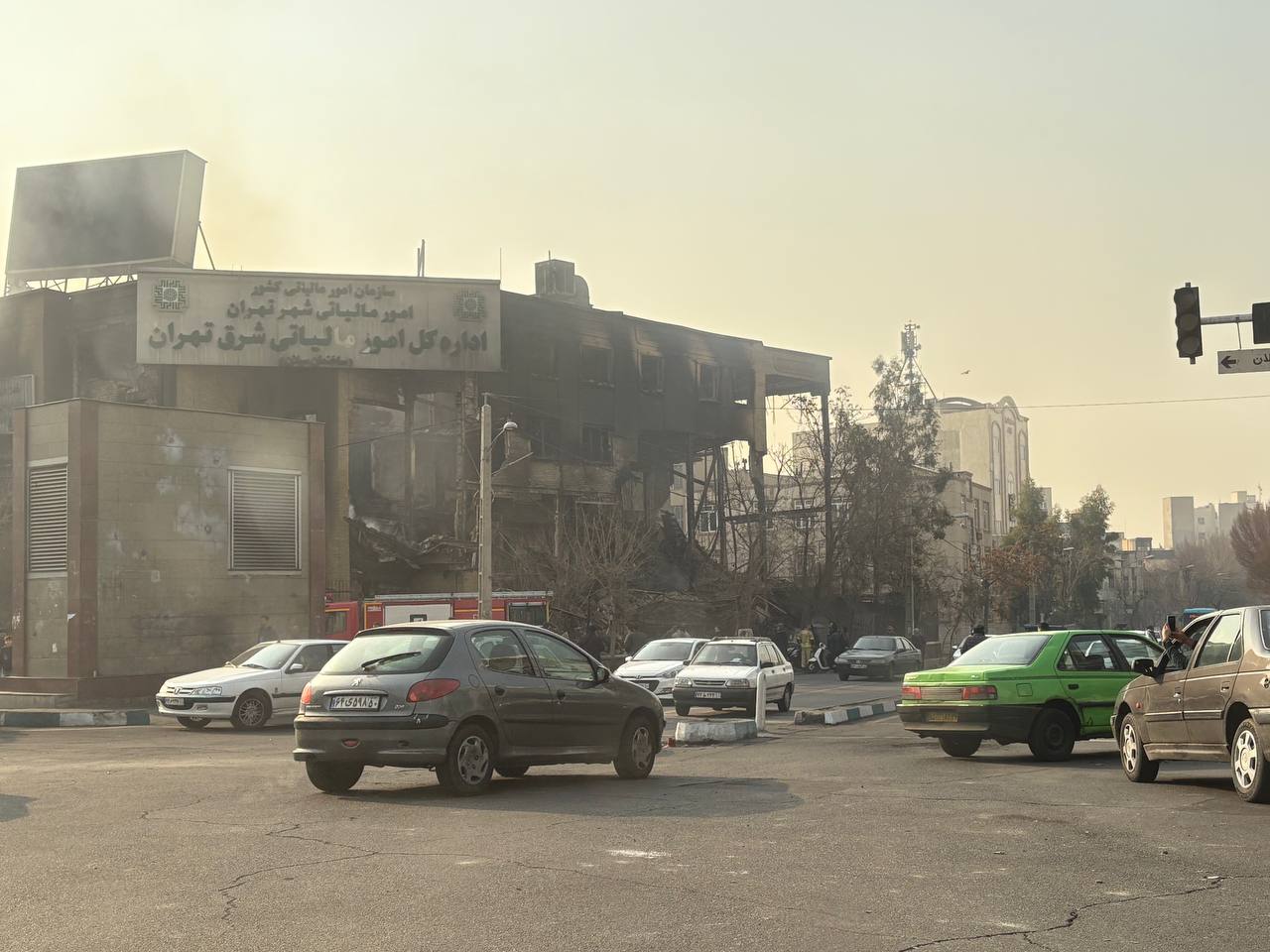
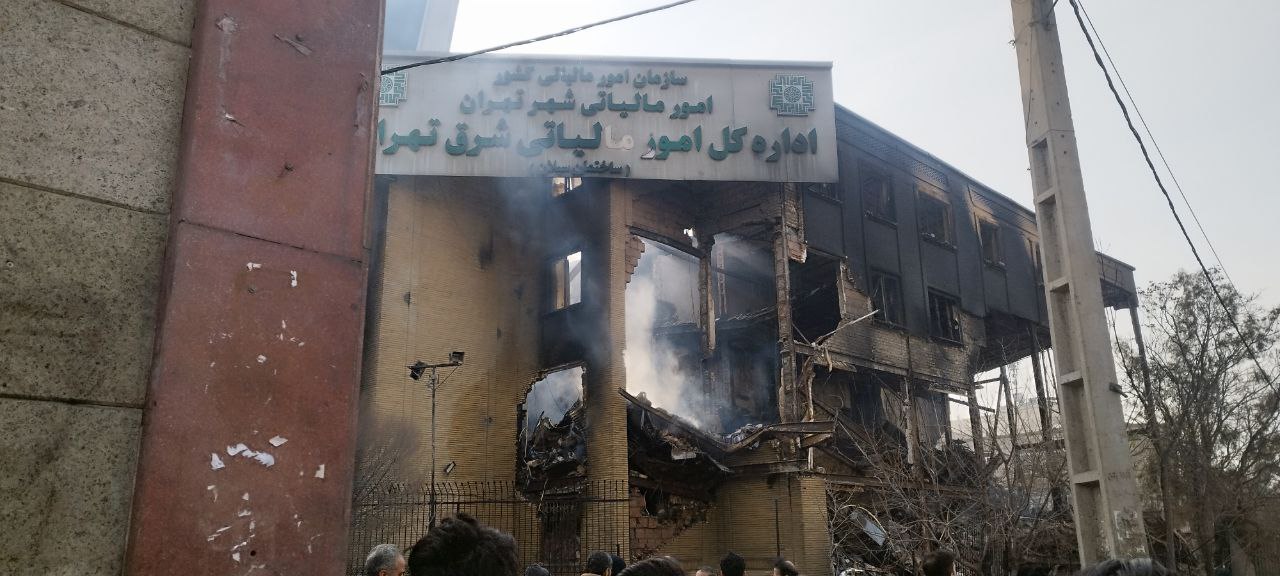
Video Captioned “East Tehran Tax Office Destroyed”: Fire Seen Near Sabalan–Madani Intersection

A received video circulating with the caption “Destruction of the East Tehran General Tax Affairs Office — 19 Dey 1404” is said to have been filmed on Sabalan Street in Tehran on Thursday, 18 Dey (Jan. 8, 2026). In the footage, flames are visible on the right side of the frame, described as coming from the East Tehran tax office building near the intersection of Sabalan and Madani (Nezamabad).

IranWire: Videos From Tehran’s Afsariyeh Show Youth Chanting “Freedom” in Thursday Night Protests

IranWire said it received videos from Afsariyeh in southeast Tehran in which young protesters chant “Azadi, Azadi, Azadi” (“Freedom, freedom, freedom”). The sender said the clips are from the evening protests on Thursday, 18 Dey 1404 (Jan. 8, 2026). In one video, protesters also chant “Delhaye ma khounie” (“Our hearts are bleeding”), referencing reported killings during the crackdown.


Delayed-Received Video From Fardis (Karaj): Blood Trail Seen as Woman Films and Chants “This Is the Year of Blood”

Videos that reportedly reached activist Ilya Hashemi several days late are said to be from Thursday, 18 Dey 1404 (Jan. 8, 2026) in Fardis (Karaj). The footage is described as showing a woman filming while moving along a protest route, noticing a “trail of blood” on the ground yet continuing forward and shouting: “Emسال سالِ خونه، سیدعلی سرنگونه” (“This is the year of blood; Seyed Ali will be brought down”). The clip is being circulated as both evidence of violence during the crackdown and a symbol of protesters’ resilience.


NetBlocks: Iran’s Total Internet Blackout Passes 180 Hours, Longer Than November 2019 Shutdown

Internet-monitoring group NetBlocks said on Friday, 26 Dey 1404 (Jan. 16, 2026) that Iran’s complete internet blackout has exceeded 180 hours and has now surpassed the duration of the nationwide communications shutdown during the November 2019 (Aban 1398) crackdown. NetBlocks said there are still no signs of even partial or regional restoration after more than seven days, warning—based on the 2019 precedent—that the true scale of killings, detentions, and abuses often becomes clear only once connectivity returns, making blackout tactics a tool for concealing widespread human-rights violations and cutting off citizens’ access to information, communication, safety, and accountability.


HRANA: At Least 52 Prisoners Executed in 42 Iranian Prisons Amid Protests and Internet Blackout

HRANA, the news arm of the Human Rights Activists in Iran (HRAI), reported that amid nationwide protests and under conditions of widespread internet disruption, at least 52 prisoners were executed across 42 prisons in Iran. The executions reportedly took place between 15 and 24 Dey (Jan. 5–14, 2026), when public access to information was sharply restricted, and independent oversight of legal proceedings and executions was effectively impossible. HRANA said executions continued without interruption during the communications shutdown, heightening concerns about systematic human-rights violations and the use of an internet blackout to obscure the true scale of state violence. The report also stressed that sustained reporting and international visibility are critical when Iranians’ communications are deliberately silenced, warning that silence and lack of information can enable further repression.

Baloch Activists Campaign: Security Forces Deployed Around Zahedan’s Makki Mosque

The Baloch Activists Campaign shared images on Friday, 26 Dey 1404 (Jan. 16, 2026), reporting a tightened security atmosphere in Zahedan as military and security forces were stationed around the Makki Mosque and the streets leading to it. The outlet said the buildup reflects authorities’ concern that large Friday prayer gatherings could spill into renewed street protests by Baloch citizens against the Islamic Republic.


More Iran news

Political

Former U.S. House Speaker Gingrich: “Oppressors Must Go”

Newt Gingrich, the former Speaker of the U.S. House of Representatives, wrote on X that when Iran’s Islamic Republic dictatorship claims it will no longer execute anyone, it is “flatly lying.” He added: “Either the oppressors must go, or the killing of protesters will continue.”»

White House: Iran Halted 800 Executions; Trump Warns “All Options” Remain

White House Press Secretary Karoline Leavitt said on Thursday, January 15, 2026, that “800 executions” in Iran that were scheduled for “yesterday” were halted, while warning that “if the killing continues” there will be “grave consequences.” Leavitt added that President Trump is “closely monitoring” developments and repeatedly stressed that “all options remain on the table,” while also saying only Trump knows what he will ultimately do regarding Iran.

Iran’s Rezaee Warns Trump to “Step Back,” Says U.S. Bases in Gulf “Won’t Be Safe”

A senior Iranian official, Rezaee, warned President Donald Trump to “step back” and not escalate further, comparing Washington’s pressure to “Hitler’s armies getting stuck in Russian snows” and arguing “Iran is the same as the snow in Russia”—meaning the more Trump advances, the worse his position will become. Rezaee said Iran is exercising “decency and strategic patience” and claimed Tehran maintains “brotherhood” with Saudi Arabia, Bahrain, and Qatar, but cautioned that “no base” belonging to the U.S. would be safe in those countries. He added he hopes “wise men” in America steer Trump toward another path, while stressing Iran must also be prepared for war and is ready.

Araghchi Discusses Protest Crackdown With China’s FM, Mentions Trump Tariff Threat

Abbas Araghchi, Iran’s foreign minister, said he spoke with China’s foreign minister about Iran’s crackdown on protests. He also raised a reported 25% tariff threat by the Trump administration targeting countries that continue trading with Iran.

White House: “800 Executions Halted,” Trump Keeps “All Options” on Iran

White House press secretary Karoline Leavitt said Iran “halted 800 executions” yesterday, but warned that if the killing continues there will be “grave consequences.” Leavitt repeatedly stressed that “all options remain on the table,” adding that only President Trump knows what he will do next and that he is closely monitoring the situation.

Rezaee Warns Trump to “Step Back,” Says Iran Is “Ready for War”

A senior Iranian official, Rezaee, likened U.S. pressure to “Hitler’s armies getting stuck in Russian snows,” arguing that “Iran is the same as the snow in Russia” and that Trump’s position will worsen the more he advances. He said Iran is exercising “strategic patience” and maintaining “brotherhood” with Saudi Arabia, Bahrain, and Qatar—while warning that “no base of yours will be safe in these countries,” and adding that Iran must be prepared for war and is ready.

WSJ: Trump Delays Iran Strike as U.S. Firepower Repositions

The Wall Street Journal reported that President Trump’s consideration of major strikes tied to Iran’s crackdown and support for protesters was constrained by limited U.S. “in-theater” combat power—after a major naval shift to the Caribbean that left no U.S. carrier strike group deployed in the Middle East, complicating fast assembly of a large “strike package.” The report also said Trump was warned an attack would not guarantee regime collapse and could escalate into a wider war; the Pentagon is meanwhile moving to bolster posture, including plans for the USS Abraham Lincoln carrier strike group to head toward the region, a transit expected to take about a week.

US Lawmakers Push Secure Internet Access for Iranians Amid Crackdown

Rep. Claudia Tenney, a Republican member of the U.S. House, said Iran’s regime is trying to suppress peaceful protests by cutting people off from the outside world. She said lawmakers have introduced a bipartisan proposal calling for immediate U.S. action to support secure communications and internet freedom for the Iranian public. Separately, U.S. Sen. Tim Sheehy wrote on X that the regime is “a bunch of murderous criminals” that has long chanted “Death to America” and killed Americans, adding: “It’s time for the trash to be taken out.”

WSJ: U.S. Could Hit Iran With Tomahawks From Middle East Destroyers, Backed by Long-Range Airpower

The Wall Street Journal reported the Pentagon could order Tomahawk cruise-missile strikes from U.S. destroyers deployed in the Middle East and also employ combat aircraft—such as regional jet fighters and bombers capable of reaching Iran from bases in the U.S. and abroad—if President Trump decides to authorize military action. The report notes that while the absence of a U.S. aircraft carrier strike group in the region complicates assembling a large, carrier-enabled “strike package,” U.S. officials argue Washington still retains options to execute limited or standoff strikes.

AFP: Saudi Arabia, Qatar, Oman Urged Trump to Hold Off Iran Strike — Riyadh Source

Saudi Arabia, Qatar, and Oman led an intensive last-minute diplomatic push to dissuade President Donald Trump from launching military strikes on Iran, AFP reported, citing an anonymous source in Riyadh. The source said the Gulf trio warned of severe regional blowback and urged Washington to “give Iran a chance,” as the White House weighs options amid Iran’s crackdown and broader escalation risks; separate reporting has similarly described regional warnings that an attack could trigger wider conflict and expose Gulf-based U.S. assets to retaliation.

NYT: Netanyahu and Arab Allies Urged Trump to Delay Iran Strike Amid Retaliation Fears

Israeli Prime Minister Benjamin Netanyahu urged President Donald Trump in a call on Wednesday, January 14, 2026, to postpone any U.S. plans to attack Iran, according to The New York Times as cited by multiple outlets; officials from Qatar, Saudi Arabia, Oman and Egypt have also pressed Washington to hold off, warning an attack could ignite a wider regional conflict and trigger Iranian retaliation. The reported appeals follow Tehran’s warning that it would target U.S. bases in neighboring countries hosting American forces if the U.S. strikes Iran—raising anxiety across Israel and Gulf states about spillover and counterstrikes.

Kremlin: Putin Tells Netanyahu Russia Is Ready to Mediate on Iran

The Kremlin said Russian President Vladimir Putin and Israeli Prime Minister Benjamin Netanyahu held a phone call on Friday, Jan. 16, 2026 (26 Dey), focused on developments in Iran and the broader Middle East. According to the Kremlin readout, Putin told Netanyahu Moscow is prepared to help mediate on Iran and voiced support for strengthening political and diplomatic efforts aimed at ensuring regional stability and security.

Germany’s Bundestag VP urges EU to freeze Iranian elite assets and move on IRGC listing

Omid Nouripour, a vice president of Germany’s Bundestag, has called for a tougher European response to Iran’s crackdown, urging the EU to freeze the assets of Iran’s ruling elites and finally designate the Islamic Revolutionary Guard Corps (IRGC) as a terrorist organization. In German media appearances, he also pushed Berlin to open direct channels to Iran’s opposition and civil society and argued that supporting secure connectivity for Iranians should take priority over military options, warning that negotiations risk handing the regime legitimacy.

Hamburg Parties Call for Tough Action Against Iran-Linked Structures After Protest Crackdown

Hamburg’s Social Democrats (SPD), Christian Democrats (CDU), and Greens in the city-state parliament strongly condemned what they described as the systematic suppression of protesters in Iran and called for decisive action against structures and networks in Hamburg seen as close to the Islamic Republic. The parties said authorities should scrutinize and restrict regime-linked organizations and activities as part of a tougher local response alongside broader European pressure.

Western Intel: China Buys Most of Iran’s Export Oil, Some Payments Reportedly Settled in Weapons

A Western intelligence official told Euractiv that China is purchasing roughly 90% of Iran’s oil exports—keeping a key financing lifeline for the IRGC and helping Tehran circumvent Western sanctions—while alleging that part of the compensation is delivered as weapons and that Beijing has been a main backer in rebuilding Iran’s ballistic-missile program. The report adds that despite Iran’s economic strain, the Islamic Republic retains the capacity to fund regional proxies, including Hezbollah, supported by sanctions-evasion tools such as a “shadow fleet” for disguised oil shipments and alternative financial channels, including cryptocurrency and gold-trade conduits.

Graham: “Historic Moment” to End Iran’s Clerical Regime Must Not Be Missed

U.S. Republican Sen. Lindsey Graham said upon arriving in Israel that his trip is aimed at holding Iran’s Islamic Republic accountable for “killing its own people,” state support for terrorism, and efforts to obtain a nuclear weapon. In a post on X, Graham said he traveled to ensure Washington does not “look the other way” as he described Iran’s leadership as a “criminal ayatollah regime” and “the world’s largest state sponsor of terrorism,” adding it has “American blood on its hands.” Praising President Donald Trump’s Iran policy, Graham said Trump “chose the Iranian people over the ayatollahs,” argued Iranian protesters are fully justified in seeking the regime’s end, and warned the current inflection point should not be squandered—likening a potential Islamic Republic collapse to the fall of the Berlin Wall. He added: “Trump is not Obama; he’s Reagan plus,” and said he would discuss with Israeli officials how to sustain and build on the “momentum” generated by Trump’s approach.

Iran Slams G7 Warning on Protest Crackdown

Iran’s foreign ministry condemned a G7 foreign ministers’ statement on Iran’s protest crackdown as “interventionist,” after the bloc warned it is ready to impose additional restrictive measures if repression continues and Iran violates international human-rights obligations. The G7 message adds to mounting Western pressure at a moment when Tehran is facing sustained scrutiny over the scale and tactics of the security response.

Prince Reza Pahlavi: Russia and China Are Also Weighing Regime Collapse

Prince Reza Pahlavi said Russia and China are “also assessing the fall of the regime,” arguing that major powers are recalibrating as instability deepens. He stressed that a democratic Iran would not be hostile to any country’s legitimate interests, but would seek fair relations, saying Iranians want agreements in which they are not “extorted or swindled” through one-sided deals.

Trump: Iran Canceled More Than 800 Planned Executions for Thursday

U.S. President Donald Trump said in a post on Truth Social that more than 800 executions scheduled in Iran for Thursday have been canceled. Trump thanked the Islamic Republic’s leaders in the post while framing the move as a significant reversal amid intense international scrutiny of Iran’s crackdown.

Bolton: U.S. Can Support Iranians Without Deploying Ground Troops

Former U.S. National Security Adviser John Bolton wrote on X that Washington does not need to send ground forces to support Iran’s opposition and can instead assist through intelligence and communications capabilities. He argued that backing the Iranian people is possible without direct military intervention.

Axios: Trump and Netanyahu Held Thursday Night Call on Iran

Axios reported, citing two sources with knowledge of the matter, that U.S. President Donald Trump and Israeli Prime Minister Benjamin Netanyahu spoke by phone on Thursday night, January 15, 2026, to discuss Iran. The call was described as part of intensified U.S.–Israeli consultations as Washington weighs next steps amid escalating regional tensions and scrutiny of Tehran’s crackdown.

Senate Foreign Relations Chair: UN Silence on Iran Crackdown Is a Global Failure

U.S. Sen. Jim Risch, chair of the Senate Foreign Relations Committee, wrote on X that the United Nations’ silence in the face of protests and repression in Iran amounts to a “global failure.” He argued that Tehran has for decades armed and financed Hamas and pursued openly destabilizing policies, and said the lack of meaningful international pressure on the Islamic Republic underscores the broader breakdown of global accountability.

Munich Security Conference Withdraws Invitation to Iran’s Foreign Minister After Protest Crackdown

Germany’s Munich Security Conference (MSC) said on Friday, January 16, 2026, it has rescinded its invitation to Iran’s Foreign Minister Abbas Araqchi for this year’s gathering, citing Iran’s crackdown on nationwide protests. MSC organizers said invitations had been extended to Iranian government representatives weeks earlier, but would not be maintained “in light of current events”; the conference is scheduled for February 13–15. Reuters also reported Germany’s foreign ministry opposed hosting Iranian officials amid reports of large-scale deaths during the suppression.

Witkoff: “Killings Have Stopped,” Diplomacy Possible—But “Alternative Will Be Bad”

U.S. special envoy Steve Witkoff, speaking at the Israeli-American Council gathering in Florida, said President Donald Trump has directed outreach to Islamic Republic officials amid concern over mass executions in Iran, adding that—as the president has stated—the killings have now stopped and he hopes a diplomatic solution is within reach. Without referencing the human-rights crackdown directly, Witkoff framed the U.S.–Iran agenda around four files: the nuclear program, missiles, roughly 2,000 kilograms of enriched material (ranging from 3.6% to 60%), and Tehran’s proxy forces, arguing Iran is “staggering” under economic strain; he said it would be ideal if Iran rejoined the international community and these issues were resolved diplomatically, but warned the fallback option “will be bad.”

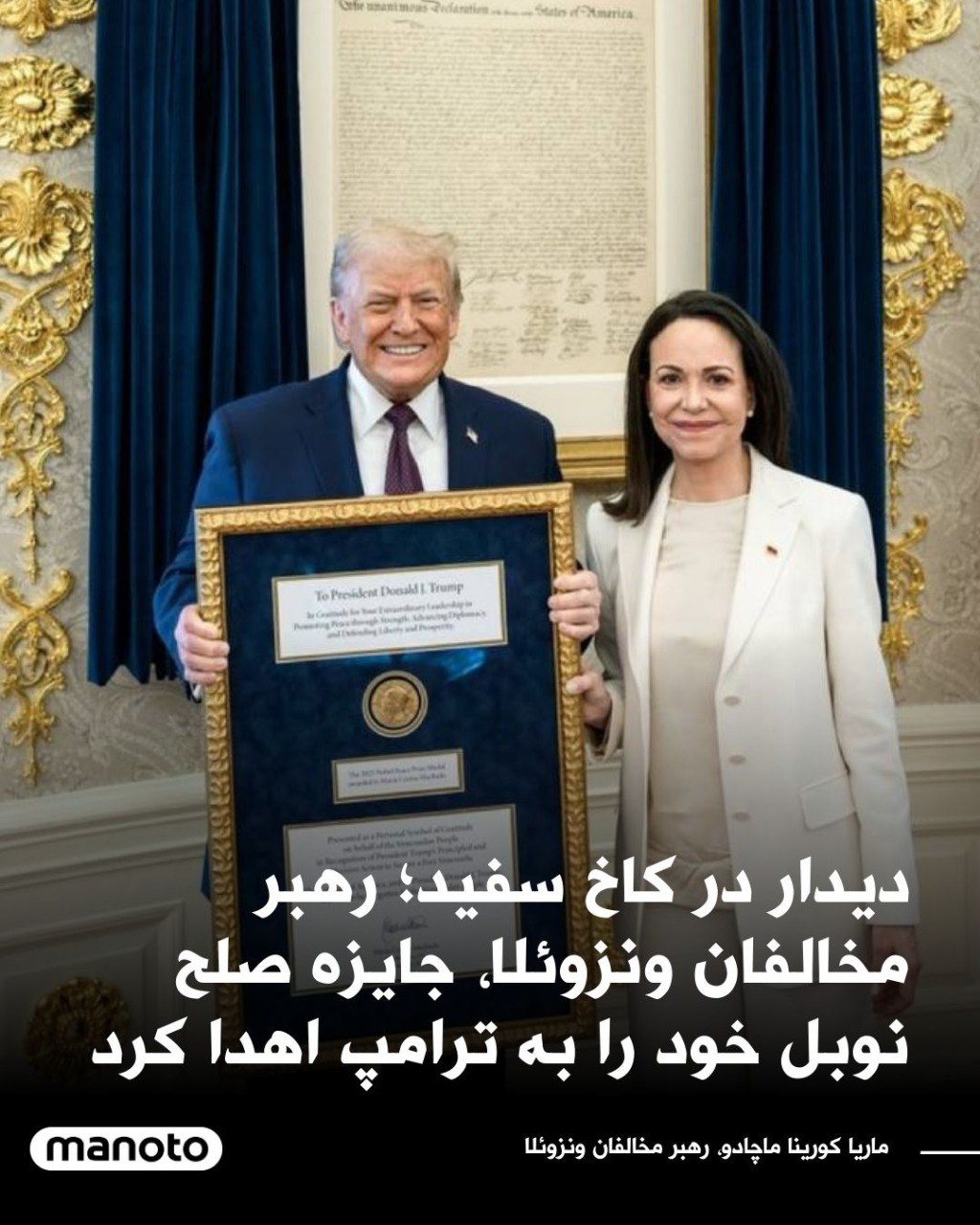
White House: Trump Meets Venezuela’s Maria Corina Machado, Presented With Her Nobel Peace Prize Medal

The White House said President Donald Trump met Venezuelan opposition leader Maria Corina Machado in the Oval Office, with its official accounts stating she presented the president with her Nobel Peace Prize medal as a gesture of appreciation. Machado described the meeting as “a historic day” for Venezuelans, while the Nobel Institute has emphasized that while a medal can be handed over, the Nobel laureate title and prize itself are not transferable.

CNN: Iraqi Militias Enter Iran to Bolster Crackdown, Sources Say

CNN reported—citing an Iraqi security source and a European military source—that Iraqi militia fighters have crossed into Iran in recent weeks to assist Tehran’s security forces in suppressing nationwide protests. The Iraqi source said nearly 5,000 entered via the Shaib crossing in Maysan and the Zurbatiya crossing in Wasit, while the European source estimated about 800 fighters from Diyala, Maysan, and Basra moved under the cover of religious pilgrimages before being deployed; Iranian officials have not publicly commented, according to the report.

Trump Defends Keeping Maduro-Era Officials, Citing Iraq’s Post-Invasion Purge and ISIS Rise

Asked why his team is again relying on figures connected to Nicolás Maduro’s government in Venezuela, Donald Trump said he remembers what happened in Iraq after the U.S. takeover, when security forces—including the police and army—were dismissed en masse. He argued that the sweeping purge helped create a vacuum that later fueled the emergence of داعش, framing the Venezuela approach as a lesson learned from Iraq.


Barrasso: “Standing With Freedom Makes the World Safer”—Voices Support for Iran’s Protesters

U.S. Sen. John Barrasso, a senior Republican in the Senate, said he stands with Iran’s “brave people,” arguing that when America stands with freedom, the world becomes safer. Referring to the wave of unrest in Iran, he said the country is experiencing a historic uprising for freedom and accused the Islamic Republic of responding with “mass killing.” Barrasso claimed that over the past two weeks, protests have spread to 185 cities across all 31 provinces, calling it unprecedented in a generation, and said Iranians are rejecting poverty, repression, and the ruin of four decades of authoritarian rule. Citing what he described as credible reporting, he said estimates suggest **thousands—possibly tens of thousands—**have been killed, exceeding prior crackdowns, while tens of thousands more have been arrested and sent to prisons; he argued that internet and phone shutdowns indicate the regime fears exposure of its actions to global public opinion.

More Political news

USA

Foreign Demand Surges: US TIC Shows $220B Long-Term Inflows in November

U.S. TIC data pointed to a major pickup in foreign capital moving into U.S. assets. Net long-term transactions jumped to $220.2B in November ($48.7B expected, $30.9B prior), and overall net capital flow printed $212.0B versus - $22.5B previously. The magnitude suggests strong foreign appetite for U.S. securities (often Treasuries and agency debt, but also equities), reinforcing the view that the U.S. continues to attract global savings—supportive for funding conditions and the external financing backdrop.

Market impact: Typically USD-supportive (strong capital inflows help finance the deficit) and can be Treasury-supportive if the inflows are concentrated in bonds, though price action will still be dominated by Fed expectations and inflation. The key follow-up is the composition (Treasuries vs equities) and whether the strength persists beyond one month.

Foreigners Flip to Buying: Net +$85.6B in US T-Bonds

Foreign investors swung back into U.S. Treasuries in November, with net foreign buying of T-bonds at +$85.6B, reversing the prior -$60.1B net selling. The sharp turn suggests renewed overseas demand for U.S. duration—potentially driven by attractive yields, risk hedging amid macro uncertainty, or portfolio rebalancing—helping underpin the U.S. bond market’s absorption capacity.

Market impact: Typically Treasury-supportive and mildly USD-supportive at the margin (stronger foreign demand supports funding conditions). Follow-through depends on whether buying persists and whether it extends across the curve (bills/notes) as rate expectations evolve.

Fed Balance Sheet Ticks Up: Assets Rise to $6.582T

The Federal Reserve’s balance sheet edged higher, with total assets at $6,582B versus $6,574B previously. Small weekly moves are common and typically reflect routine changes in reserve balances, Treasury/agency holdings runoff mechanics, and short-term liquidity operations rather than a meaningful shift in policy stance.

Market impact: Usually market-neutral. The bigger driver remains the pace and composition of QT, funding-market conditions, and how balance-sheet runoff interacts with Treasury issuance and money-market liquidity.

US Factories End 2025 Firm: Output Beats on the Month, Utilization Ticks Up

U.S. industrial activity finished December on a stronger footing. Industrial production rose 0.4% m/m (0.1% expected, 0.4% prior), showing momentum held up into year-end. Manufacturing production increased 0.2% m/m (-0.2% expected, 0.3% prior), a clear upside surprise that points to steadier factory output. Capacity utilization increased to 76.3% (from 76.0% expected and 76.1% prior), consistent with slightly tighter use of industrial capacity. Year-over-year, industrial production increased by 1.99% (down from 2.68% previously), indicating that the annual pace cooled even as the monthly trend improved.

Market impact: Mildly USD-supportive and Treasury-bearish at the margin (firmer activity can reduce urgency for near-term easing), while equities often take it as supportive for industrials/cyclicals. The key question is whether the improvement persists in orders and ISM/PMI data.

US Homebuilder Sentiment Slips: NAHB Falls to 37, Missing Forecasts

U.S. builder confidence weakened in January, with the NAHB Housing Market Index dropping to 37 (40 expected, 39 prior). The decline signals a softer tone in new-home conditions—typically reflecting the drag from financing costs, affordability constraints, and buyer sensitivity to mortgage-rate volatility. At this level, sentiment remains subdued, implying builders are still cautious despite pockets of resilient demand.

Market impact: Mildly growth-negative at the margin for housing-related activity and slightly bond-supportive, while it can weigh on homebuilder stocks if corroborated by slower sales/permits. Broader USD impact is usually limited unless the housing slowdown becomes more pronounced in hard data.

More USA news

Others

South Korea Consumer Mood Slips: Ipsos PCSI Falls to 44.81

South Korea’s Thomson Reuters/Ipsos PCSI declined to 44.81 in January from 47.26, signaling a notable deterioration in consumer sentiment at the start of the year. The level remains well below 50, consistent with households staying cautious—often a headwind for discretionary spending—especially amid currency weakness, higher living-cost sensitivity, and growth uncertainty.

Market impact: Mildly KRW-negative at the margin and a potential drag for domestic-demand equities if sentiment weakness persists. For rates, softer sentiment can support a more dovish bias over time, though the BoK’s near-term focus may remain on financial stability and FX conditions.

Turkey Inflation Expectations Sink: Year-End CPI Forecast Drops to 23.23%

Turkey’s end-of-year CPI forecast fell sharply in January to 23.23%, down from 31.17% previously. The move signals a meaningful improvement in inflation expectations—either reflecting a better disinflation outlook, tighter financial conditions, and/or reduced FX pass-through concerns—though expectations can remain volatile and highly sensitive to currency dynamics and administered prices.

Market impact: Mildly TRY-supportive and bond-positive at the margin, as falling inflation expectations can lower required risk premia. For policy, a sustained downtrend in expectations strengthens the case for keeping a restrictive stance long enough to lock in disinflation, but credibility will still be judged by realized inflation prints and FX stability.

Brazil IGP-10 Reaccelerates: Inflation Index Rises 0.3% in January

Brazil’s IGP-10 inflation index rose 0.3% m/m in January, up from 0.0% previously, signaling a modest re-acceleration in wholesale/producer-linked price pressures. As IGP measures are more sensitive to commodities and FX, the pickup can reflect firmer input costs even if consumer inflation remains more stable—making it a useful “pipeline” signal rather than a direct read on household prices.

Market impact: Mildly BRL-supportive if it reinforces a higher inflation floor, but rates-bearish at the margin as it can temper expectations for aggressive easing. The broader reaction will depend on whether CPI measures confirm the move and whether it’s driven by tradables/FX or domestic pricing.

Brazil Activity Surprises Up: IBC-Br Jumps 0.7% as PPI Stays Negative

Brazil’s November data sent a clear pro-growth signal while upstream inflation remained soft. The IBC-Br economic activity index rose 0.70% m/m (0.30% expected, -0.20% prior), a strong upside surprise that points to firmer momentum in the real economy. Meanwhile, Brazilian PPI remained in deflation, falling -0.37% m/m (vs -0.47% prior), indicating producer-price pressures are still negative even as activity improves.

Market impact: The mix is broadly BRL- and risk-supportive (stronger growth), while still bond-friendly at the margin given negative PPI. For policy expectations, stronger activity can temper aggressive easing bets, but soft pipeline inflation helps keep the disinflation narrative intact.

More Others news

Oceania

New Zealand PMI Jumps to 56.1, Signaling Factory Sector Re-Accelerates

New Zealand’s BusinessNZ Manufacturing PMI surged to 56.1 in December (from 51.4), moving deeper into expansion territory and signaling a clear improvement in manufacturing momentum. A print at this level typically points to stronger activity and orders, suggesting the sector is gaining traction into year-end after a more modest pace in the prior month.

Market impact: Mildly NZD-supportive and constructive for domestic risk sentiment, as stronger PMI momentum can reduce near-term recession concerns. Rates impact is mixed: it can temper aggressive easing expectations, but the RBNZ reaction will still hinge on inflation and labor-market conditions.

New Zealand Food Prices Ease: FPI Falls -0.3% in December

New Zealand’s Food Price Index (FPI) declined -0.3% m/m in December, slightly firmer than the -0.4% prior drop. The pullback points to easing food-cost pressure at year-end, helping temper near-term inflation risks—though volatility across categories means the trend needs confirmation in coming prints.

Market impact: Mildly NZD-neutral to supportive at the margin, as softer food prices can ease headline inflation pressure. For rates, it modestly supports a less hawkish near-term bias, with the RBNZ still focused on broader inflation and labor-market signals.

Australia Consumer Confidence Jumps: Ipsos PCSI Rises to 53.89

Australia’s Thomson Reuters/Ipsos PCSI climbed to 53.89 in January from 50.80, moving decisively above the 50 line and signaling a stronger consumer mood at the start of the year. The move suggests improving household confidence—potentially helped by easing inflation anxiety, real-income stabilization, and a less restrictive-looking rate outlook—though sustained follow-through will depend on labor market conditions and household cash-flow pressures.

Market impact: Mildly AUD-supportive and constructive for domestic cyclicals (retail, discretionary) if sentiment translates into spending. For rates, stronger confidence can slightly temper aggressive easing expectations, but the RBA reaction will still be anchored to inflation and wages.

More Oceania news

Forex

Yen Rebounds on Hawkish BOJ Chatter, but 160 Line Still in Focus

The yen firmed on Friday after a Reuters report said some Bank of Japan policymakers see scope to raise rates sooner than markets expect—potentially as early as April—as officials worry a weaker yen could reinforce inflation via higher import costs. Even so, USD/JPY remains uncomfortably close to the psychologically important 160-per-dollar area after this week’s slide revived intervention talk, with Japan’s finance minister also hinting that joint action with the U.S. is among the options. Political risk is adding fuel: the prospect of a snap election as soon as February 8 has pushed investors to price in more fiscal stimulus under Prime Minister Sanae Takaichi, a mix that can weaken the yen while lifting volatility.

Market impact: Near-term JPY direction is policy-driven—hawkish BOJ signals support the yen, while election/fiscal-stimulus expectations and any renewed yield differentials work the other way. The closer USD/JPY trades to 160, the higher the perceived tail risk of official FX action, which can compress carry appetite and add two-way volatility to JPY crosses.

Dollar Near 6-Week High as Traders Push Back Fed Cuts

The U.S. dollar held near a six-week high as investors dialed back expectations for Federal Reserve rate cuts after a run of upbeat U.S. data. According to the CME FedWatch framework cited in market commentary, traders are now pricing a 67% probability the Fed holds rates in April (up from 37% a month ago), while the odds of a no-change outcome in June have risen to 37.5% (from 17% last month). The shift underscores a “higher-for-longer” repricing at the front end, with the dollar supported by reduced urgency for easing.

Market impact: USD-supportive, Treasury yields biased higher at the margin, and a modest headwind for rate-sensitive risk assets if the repricing extends—though equity direction will still hinge on whether inflation confirms the stronger-growth narrative.

More Forex news

Equities

BlackRock Closes 2025 at Record $14T AUM, Underscoring Scale Advantage

BlackRock ended 2025 with a record ~$14.0 trillion in assets under management (AUM) (about $14.04T at year-end), highlighting the firm’s continued expansion and dominance in global asset management. The milestone was driven by strong markets and large client inflows—with BlackRock reporting record full-year net inflows of $698B (including $342B in Q4)—reinforcing its structural advantage in ETFs and broader platform distribution as risk appetite improved.

Market impact: Generally positive for BLK sentiment—bigger AUM supports fee scale and product breadth, and strong inflows can be read as a constructive signal for broader asset-gathering across public markets and alternatives. Near-term share reaction still depends on fee rates, margins/expenses, and mix (ETFs vs higher-fee private markets).

PNC Financial Delivers Strong Q4 2025, Beats EPS and Revenue Estimates

PNC Financial (PNC) reported EPS of $4.88 per share, well above expectations of $4.19, while revenue came in at $6.1B versus $5.95B forecast. The beat signals a firmer quarter than consensus anticipated, with outperformance across both earnings and the top line pointing to healthy core banking dynamics and disciplined execution. PNC’s market capitalization stands at $87.50B, reinforcing investor confidence as the bank enters 2026.

More Equities news

Commodities

Oil Slides, Gold Rally Pauses as Trump Signals Caution on Iran

Oil prices extended their sharp declines, while gold and silver stalled after U.S. President Donald Trump adopted a wait-and-see stance on unrest in Iran, dialing back earlier intervention rhetoric. Trump said he was told that killings in the crackdown were easing and that there was no current plan for large-scale executions, easing immediate geopolitical risk premia that had buoyed energy and safe havens.

Market impact: Bearish for oil near term as risk premia fade; neutral-to-soft for gold/silver as haven demand cools. Volatility remains headline-driven, with prices sensitive to any shift back toward escalation signals.

US Oil Rigs Tick Up: Baker Hughes Count Rises to 410

U.S. drilling activity was broadly steady, with the Baker Hughes oil rig count inching up to 410 from 409. The total rig count slipped slightly to 543 from 544, indicating only a marginal week-to-week change in overall upstream activity. The data suggest U.S. supply growth remains more driven by productivity and completion pace than any sharp shift in rig additions.

Market impact: Typically market-neutral in the near term. Unless the rig trend turns decisively, oil pricing remains dominated by demand expectations, geopolitics/OPEC+ signals, and inventory data rather than a one-rig move.

More Commodities news

China

China Defies Tariffs: 2025 Trade Surplus Hits Record ~$1.2T

China’s external sector stayed remarkably resilient in 2025, with the trade surplus rising to a record near $1.2 trillion despite higher U.S. tariffs. Reporting based on official customs figures indicates exports were supported by diversion toward non-U.S. markets, helping offset weaker U.S.-bound shipments and keeping the surplus elevated even as trade frictions persisted.

Market impact: Supportive for China growth optics and industrial supply chains in the near term, but it can intensify protectionism risk (more tariff/threat escalation) and keep pressure on the CNY policy mix if external demand becomes a larger share of the growth engine.

China Consumer Sentiment Strengthens: Ipsos PCSI Rises to 72.75

China’s Thomson Reuters/Ipsos PCSI increased to 72.75 in January from 70.42, signaling a firmer consumer mood into the new year. At these levels, the index points to comparatively strong confidence, suggesting households are feeling more secure about near-term conditions—potentially aided by policy support, improving labor expectations, or stabilizing inflation dynamics.

Market impact: Mildly CNY- and China risk-supportive at the margin, particularly for consumer-facing sectors, if sentiment translates into actual spending. The key watch is follow-through in retail sales, services activity, and credit demand.

More China news

Japan

Foreigners Pour Into Japan: Equity Inflows Jump to ¥1.14T, Bond Buying Turns Positive

Foreign flows into Japan strengthened sharply. Foreign investment in Japanese equities surged to ¥1,141.4B (vs ¥124.9B previously), pointing to a major pickup in overseas risk appetite for Japan—often linked to equity momentum, governance/earnings narratives, and currency-hedging dynamics. Foreign bond buying also flipped positive at ¥101.1B, reversing prior net selling of -¥223.6B, suggesting improved demand for JGBs alongside the equity bid.

Market impact: Supportive for Japanese equities and, at the margin, can be JPY-supportive if flows are unhedged. If flows are heavily hedged, the FX impact can be muted even as equities benefit. For rates, renewed foreign bond buying can help cap JGB yields, though the dominant driver remains BOJ expectations and domestic duration supply.

Japan Confidence Ticks Up, Still Subdued: Ipsos PCSI at 41.37

Japan’s Thomson Reuters/Ipsos PCSI edged higher to 41.37 in January from 40.96, signaling a small improvement in consumer sentiment. Even with the uptick, the level remains deeply subdued, consistent with households staying cautious amid higher living costs and currency-driven import-price pressure.

Market impact: Generally JPY-neutral and only modestly relevant for rates. For equities, any improvement is marginally constructive for domestic demand themes, but the broader drivers remain wages, inflation, and BOJ policy expectations.

More Japan news

India

India Consumer Confidence Improves: Ipsos PCSI Rises to 60.73

India’s Thomson Reuters/Ipsos PCSI increased to 60.73 in January from 59.31, pointing to a firmer consumer mood at the start of the year. The move suggests households remain relatively upbeat versus many peers, which can be supportive for near-term consumption—though durability will still depend on inflation trends, jobs, and borrowing conditions.

Market impact: Mildly INR- and domestic-equities supportive at the margin, especially for consumer-facing sectors, if confidence translates into spending. The impact is usually limited unless paired with a clear shift in inflation or growth data.

India FX Reserves Edge Higher: Holdings Rise to $687.19B

India’s foreign exchange reserves increased slightly to $687.19B, up from $686.80B previously. The marginal rise suggests continued reserve stability, which helps buffer INR volatility and supports confidence in India’s external liquidity position—especially amid periods of global risk swings and commodity-price shocks.

Market impact: Generally INR-supportive at the margin (strong reserves reduce external vulnerability) and supportive for sovereign risk perception. Near-term INR direction will still be dominated by oil prices, portfolio flows, and RBI policy signals.

More India news

Europe

Germany Inflation Cools Sharply: CPI Drops to 1.8% as HICP Falls to 2.0%

Germany’s December inflation data confirmed a meaningful step-down in price pressure. CPI was flat at 0.0% m/m (in line, vs -0.2% prior) and slowed to 1.8% y/y (in line, down from 2.3%). On the harmonized measure, HICP rose 0.2% m/m (in line, vs -0.5% prior) but fell to 2.0% y/y (in line, down from 2.6%). The sharp year-on-year deceleration reinforces the Eurozone disinflation narrative, suggesting less urgency for restrictive policy—especially if services inflation and wages also cool.

Market impact: Mildly EUR-negative / bond-supportive at the margin, as softer German inflation strengthens the case for easier ECB policy over time. The reaction is usually modest unless it shifts expectations for the Eurozone-wide inflation path and the ECB’s cut timeline.

Italy Inflation Nudges Up: CPI/HICP Hold at 1.2% as Core Edges Higher

Italy’s December inflation prints were in line, with a mild firming in underlying measures. CPI and HICP both rose 0.2% m/m (in line, vs -0.2% prior) and held at 1.2% y/y (in line, vs 1.1% prior). The CPI excluding tobacco ticked up to 1.1% y/y (from 1.0%), suggesting a modest uptick in underlying price momentum even as headline inflation remains relatively contained versus much of the Eurozone.

Market impact: Broadly EUR-neutral. The slightly firmer underlying print is a small hawkish input, but Italy’s inflation remains low enough that the ECB’s policy path will still be driven by Eurozone-wide core/services inflation and wages.

More Europe news

Russia

Russia FX Reserves Slip: Central Bank Holdings Fall to $752.5B

Russia’s central bank reserves fell to $752.5B, down from $763.9B previously. A move of this size typically reflects a mix of valuation effects (gold prices and FX moves), liquidity operations, and changes in external cash flows, rather than a single policy signal. Even after the decline, the reserve stock remains large in headline terms, but market attention is usually on accessibility/encumbrances, intervention capacity, and sanctions-related constraints—not just the total number.

Russia Inflation Cools: CPI Slows to 5.6% YoY, Undershooting Forecasts

Russia’s December inflation print came in softer than expected, reinforcing a cooling trend. CPI rose 0.3% m/m (0.5% expected, 0.4% prior) and slowed to 5.6% y/y (5.8% expected, 6.6% prior). The downside surprise suggests easing price momentum into year-end—potentially reflecting base effects and/or a moderation in goods inflation—even as inflation dynamics remain sensitive to FX, sanctions-related supply frictions, and administered prices.

Market impact: Mildly RUB-supportive and bond-positive at the margin, as softer inflation can reduce pressure for further tightening. However, FX and geopolitical risk premia remain the dominant drivers for RUB assets.

More Russia news

Canada

Canada Housing Re-Accelerates: Starts Jump to 282K, Beating Forecasts

Canada’s housing starts rose sharply in December to 282.4K, well above 257.0K expected and up from 254.6K previously. The upside surprise points to improved near-term construction momentum and suggests builders are still bringing supply to market despite elevated borrowing costs—potentially helped by policy support, supply constraints, and a focus on multi-unit projects.

Market impact: Mildly CAD-supportive and a modest positive for Canada growth optics, while potentially bond-bearish at the margin if it feeds a stronger activity narrative. The bigger macro read-through will depend on whether starts translate into completions and whether demand holds up as rates evolve.

Canada Capital Flows Cool: Foreign Buying Slows to C$16.3B as Canadians Turn Net Buyers Abroad

Canada’s cross-border portfolio flows softened in November. Foreign purchases of Canadian securities slowed to C$16.33B (C$24.61B expected, C$46.62B prior), indicating reduced foreign demand for Canadian assets versus recent levels. Meanwhile, Canadian purchases of foreign securities swung to C$16.49B from -C$11.58B previously, signaling a turn toward outbound investment as domestic investors increased foreign exposure.

Market impact: Mildly CAD-negative at the margin, as weaker foreign inflows combined with stronger outbound flows can reduce near-term support for the currency. For rates and risk assets, the signal is typically secondary unless the trend persists and aligns with broader deterioration in external financing conditions.

More Canada news

Short News

Video From Dezful’s Clock Square Said to Show Protesters Raked by Gunfire, Dated “19 Dey”

A video circulating from Clock Square in Dezful—said to be from 19 Dey 1404 (Jan. 9, 2026)—is described as showing protesters being hit by sustained gunfire. The clip is being shared alongside claims that Iran’s internet shutdown has been used to prevent evidence from leaving the country, and that even the limited number of videos reaching journalists and activists points to severe abuses during the crackdown.


More Short News news