IFC Markets Live Quotes

Market news roundup: Thursday, 1 January 2026

19 short market news items, grouped by one section.

Iran

Hengaw: At Least 15 Protesters Detained as Arrests Expand Across Multiple Iranian Cities

The Hengaw Organization for Human Rights reported that at least 15 protesters have been detained amid demonstrations and strike-linked gatherings across several Iranian cities. The group and affiliated reporting describe the detentions as part of a widening security response as protests spread beyond initial commercial closures into broader street activity; exact figures and identities remain fluid and difficult to independently verify in real time.
Hemmati Blames Inflation on Budget Deficits, Targets Weak Banks and FX Rents

In his first public remarks as Iran’s central bank governor, Abdolnaser Hemmati said inflation is being driven primarily by budget deficits and structural financial distortions, and pledged a tougher line on unbalanced/weak banks. He also promised to stabilize the FX market and to dismantle the multi-tier exchange-rate system that he said fuels corruption and rent-seeking, signaling a push toward a more unified, “cleaner” FX regime over time.

Iran Protests Expand Into More Cities on Night Four, Reports Say

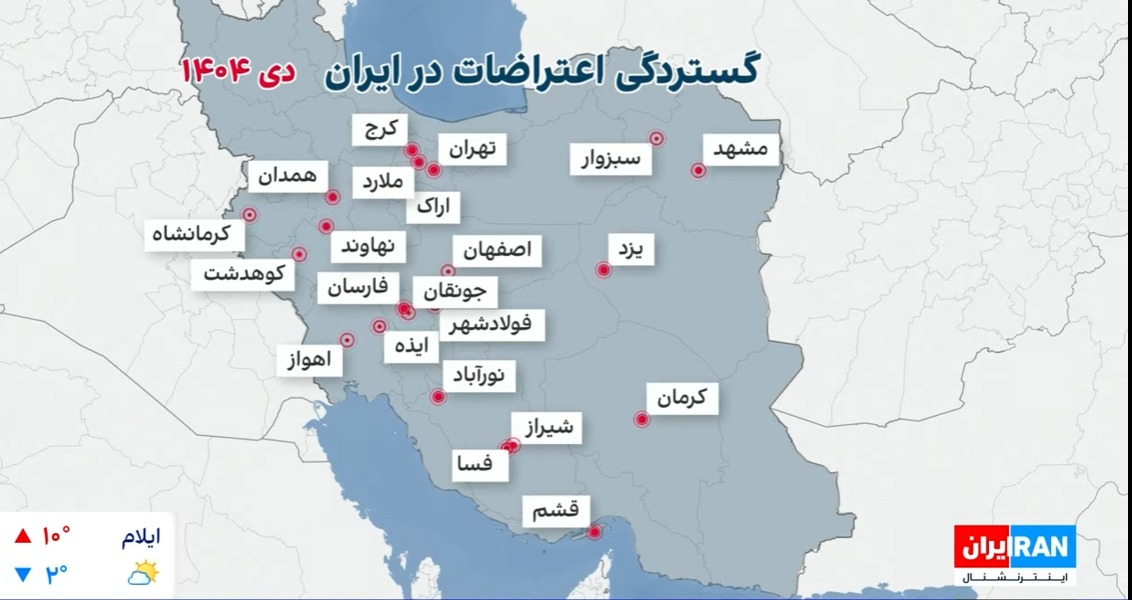
Iran International’s day-four coverage said protests continued on Wednesday, December 31, 2025, with reported nighttime activity in multiple locations—citing gatherings in Isfahan and reporting security-force responses (including reports of gunfire/tear gas) in places such as Nahavand. Separately, Iran International published videos it said showed protests in Isfahan and Kermanshah, underscoring the widening geographic footprint, though independent verification can be constrained in real time.

Note: Earlier Iran International reporting also described shop closures/strike action in Shiraz, indicating spillover beyond Tehran even before night-four coverage.

Multi-Rate FX Reform Talk Signals Cleaner Market Structure—but Volatility Risk Is High

Growing discussion around removing Iran’s multi-rate FX system is market-relevant: if the plan is credible and enforced, it can gradually reduce distortions, rent-seeking, and mispricing across trade and capital allocation. However, the transition phase typically brings short-term volatility—through price repricing, tighter rationing, enforcement shocks, and a reset of expectations—especially if liquidity is thin and confidence in policy execution is uneven.

Iran Unrest Spreads Nationwide as Strikes and Protests Broaden Beyond Tehran

The latest wave of protests and strike action—described in some reporting as among the widest in years—has expanded from Tehran’s bazaars into major cities including Isfahan, Shiraz, Kermanshah, Yazd, and other areas, driven by soaring inflation, a plunging rial, and deepening economic hardship. Participation has widened beyond merchants to include students and parts of the urban middle class, underscoring a broader, cross-sector cost-of-living backlash.

Iran Protests Turn Deadly as Clashes Spread in Western Provinces

Rights groups and multiple media outlets reported several fatalities as cost-of-living protests escalated into confrontations with security forces. Separately, Iranian state-linked reporting said a Basij paramilitary volunteer was killed in Kuhdasht, Lorestan, during clashes, marking the first officially acknowledged death tied to the unrest in some coverage. Other reports cited two protesters killed in Lordegan (Chaharmahal and Bakhtiari) amid gunfire and street violence, signaling a notable escalation as demonstrations expand beyond commercial strikes into more confrontational flashpoints.

Iran Signals Limited Dialogue While Tightening Control of Public Space

Iranian authorities have offered limited dialogue with merchant and protest-linked representatives as unrest spread, while simultaneously signaling firmness through warnings and security measures. In parallel, officials have used temporary shutdowns/holiday-style suspensions and university closures to manage public spaces—often officially framed as responses to extreme cold weather and energy constraints, even as protests and strike action continued in multiple cities.

Iran President Says Government Will End Subsidized FX Allocations Amid Unrest

Iranian President Masoud Pezeshkian said the government will stop distributing the heavily subsidized “28,500-toman dollar”—one of Iran’s preferential exchange rates—arguing the system has fueled rent-seeking and failed to protect household purchasing power despite high fiscal costs. He said subsidies will not be eliminated outright but redirected toward end-consumers rather than intermediaries, as officials try to contain currency-market distortions and inflation pressure during a period of widening protests and strikes.

Broadening Iran Protests Signal Wider Discontent Beyond Bazaar Grievances

The unrest has moved from Tehran’s bazaars into a broader cross-section of society—drawing in students and, in some reporting, salaried workers and middle-class households—suggesting the movement is no longer confined to narrow economic complaints. As participation widens across social groups and geographies, the pressure on authorities increases and containment becomes more complex, with chants and messaging in some locations shifting from cost-of-living demands toward overt political criticism.

Rising Fatalities Raise Political-Economic Risk by Hardening State Response

The reported escalation in violence and fatalities—particularly when security personnel are among the dead—typically raises the probability of a tougher state posture and a narrower set of policy options. That dynamic can reduce near-term flexibility on economic concessions, increase the likelihood of heavier enforcement (curfews, shutdowns, broader arrests), and elevate political-economic risk premia across FX, inflation expectations, and capital flight behavior as uncertainty rises.

Iran’s Dual-Track Response: FX Subsidy Reform and Dialogue, With Limited Immediate Relief

Policy signals around ending preferential FX handouts and offering selective dialogue reflect a dual strategy aimed at calming currency-market panic while lowering social temperature. However, the near-term effectiveness is likely to be constrained if inflation remains elevated and FX depreciation pressures persist—particularly given execution risks around reform sequencing, credibility, and the short-term volatility that often accompanies any transition away from multi-rate exchange mechanisms.

Rial at Record Lows Deepens Inflation Uncertainty Heading Into H1 2026

Iran’s currency slide—marked by repeated record lows and ongoing depreciation—has intensified inflation expectations and widened pricing uncertainty for importers, particularly across staples and other FX-sensitive goods. With pass-through pressures building and visibility on effective FX policy tightening limited, the currency-inflation loop is becoming a key swing factor for macro forecasts and risk scenarios in the first half of 2026.

Iran Risk Premia Stay Elevated as Unrest and Policy Ambiguity Persist

Heightened political unrest, security volatility, and unclear policy execution are likely to keep risk premia elevated across Iran-linked exposures—particularly trade finance, counterparty risk, and any instruments tied to FX settlement and payment channels. That environment typically raises the cost of financing, shortens tenor availability, increases compliance and operational risk for intermediaries, and deters incremental investment until there is clearer evidence of stabilization in the currency and the security backdrop.

Reports Claim Seminary Set Ablaze in Farsan Amid Growing Unrest

Social-media posts and videos circulating online alleged that a religious seminary (hawza) in Farsan, Chaharmahal and Bakhtiari province was set on fire during the latest unrest. While Persian-language coverage has separately reported nighttime protests in Farsan, there has been no clear official confirmation of a seminary arson incident, and independent verification of the footage and attribution remains limited.

Isfahan Protesters Hold Streets With Fires Lit Overnight

Reports from Isfahan say protesters have remained in the streets into the night, lighting fires at multiple points along roadways as gatherings continued. With independent verification limited, the scale and exact locations remain unclear, but the imagery is consistent with a pattern seen in other cities where crowds use street fires to maintain presence after dark and complicate dispersal efforts.

Mashhad Night Protesters Chant “Pahlavi Will Return,” Reports Say

Reports and social-media clips from Mashhad describe nighttime demonstrations in which protesters chanted “This is the final battle; Pahlavi will return.” The scale, timing, and full context of the footage cannot be independently verified, but the slogan reflects the increasingly political tone seen in some locations as the unrest continues.

Reports of Gunfire Heard in Ramhormoz as Night Unrest Continues

Incoming reports from Ramhormoz say the sound of gunfire has been heard as nighttime unrest continues. Details on who fired, where exactly the shots were heard, and whether there were injuries remain unclear, and the reports cannot be independently verified at this stage.

Tehran Murals Amplify Threat Messaging Toward Israel

Recent state-linked mural/billboard unveilings in Tehran—especially around Palestine Square—have carried overt warning messages aimed at Israel. One widely shared design referenced Nahariya in northern Israel and included the line “Prepare for the next war,” alongside additional threats tied to the Lebanon front, while another mural was rolled out with the slogan “We are ready—are you ready?” in the context of regional military speculation. The messaging does not confirm operational intent on its own, but it reinforces escalation rhetoric and is being interpreted by observers as signaling readiness for confrontation.

Hengaw Reports 3 Killed in Azna, Including a Minor, as State Media Blames “Disarm Attempt”

The Hengaw human-rights group reported that three people—Shayan Asadollahi, Vahab Mousavi, and a minor identified only as Mostafa—were killed in Azna (Lorestan) during street protests, and said 17 others were wounded, alleging the deaths resulted from direct fire by security forces. Separately, Iran’s Fars-linked reporting (carried by regional outlets) claimed the clash escalated after protesters tried to disarm officers during an attack on a police headquarters and armory. Independent verification of the casualty details and competing accounts remains limited.

More Iran news
Market news roundup: Thursday, 1 January 2026