IFC Markets Live Quotes

Market news roundup: Wednesday, 31 December 2025

63 short market news items, grouped by 11 sections.

Iran

Iran Replaces Central Bank Governor as Currency Slide Fuels Inflation Anger

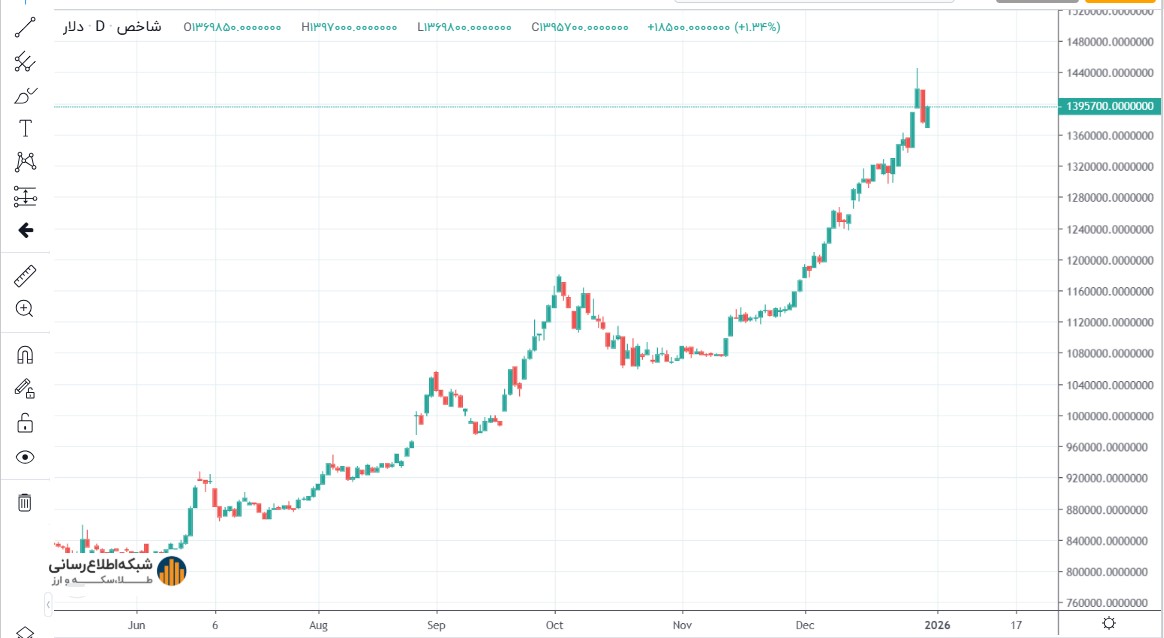
Iran has appointed Abdolnaser Hemmati as central bank governor after Mohammad Reza Farzin resigned, as the rial hit fresh record lows (reported around 1.38 million per U.S. dollar) and inflation stayed near the ~40% range—intensifying a fast-moving cost-of-living backlash, including strikes and shop closures in major cities. The leadership change underscores mounting pressure on policymakers to stabilize the exchange rate and curb price growth amid sanctions-driven economic stress and rising public frustration.

Iran Protests Spread From Tehran Bazaar to Universities as Slogans Turn Political

Protests that started with bazaar merchants and widespread shop closures in Tehran have broadened into multiple cities and campuses, with students joining demonstrations and some chants shifting from economic grievances—currency weakness, surging prices, and inflation—toward direct criticism of the political leadership. Authorities have signaled a mix of pressure and outreach, including public warnings and offers of dialogue, as the unrest widens beyond the merchant base that initially anchored the strike action.

Iran Signals Dialogue While Maintaining Hard-Line Response to Protests

Iranian authorities have paired dialogue messaging with a more coercive security posture as demonstrations broadened, with President Masoud Pezeshkian publicly acknowledging protesters’ “legitimate demands” and officials signaling engagement with trade and university representatives, while judicial and prosecutorial figures issued warnings against unrest and property damage. On the ground, multiple outlets reported police using tear gas to disperse crowds in some areas, underscoring the state’s dual-track approach of de-escalation rhetoric alongside enforcement.

Iran Rial Slides to ~1.4M per Dollar as Inflation Shock Intensifies

The Iranian rial was reported around ~1.4 million per U.S. dollar on private exchange platforms—a fresh record low cited across multiple reports—while inflation is widely described as above 40% (with some accounts pointing closer to ~50%), reinforcing a “purchasing power shock” backdrop that has fueled public anger over the cost of living.

Iran Orders Cold-Weather Closures as Protests Fuel Suspicion Over Motives

Multiple reports say Iranian authorities have ordered temporary closures—including schools/universities and some government offices—with officials framing the steps as energy-saving measures during cold weather and strained electricity/gas supply. At the same time, some residents and activists argue the shutdowns are occurring alongside the unrest to reduce mobility and make gatherings harder, but those claims are not independently verified and are disputed by the government’s official rationale.

Sanctions Tighten on Iran as EU “Snapback” and New U.S. Measures Add Economic Pressure

In late September 2025, the EU Council reimposed nuclear-proliferation-related restrictive measures on Iran via the “snapback” mechanism—effectively restoring a set of sanctions that had been suspended under the JCPOA—with EU institutions also publishing compliance guidance for operators. Separately, on December 30, 2025, the U.S. Treasury announced new sanctions on individuals and firms in Iran and Venezuela tied to alleged drone and ballistic-missile procurement networks, reinforcing the “maximum pressure” framing in coverage. Taken together, the moves tighten trade/finance constraints and increase compliance risk for counterparties, adding to macro pressure already evident in FX and inflation dynamics.

Bazaar Strikes Spread Across Iran as Student Protests Grow

Bazaar merchants and shop owners in several Iranian cities continued their protest movement into a fourth day, keeping shops closed and joining strike action. Street gatherings were reported in Tehran, Kermanshah, Shiraz, and a number of smaller cities, while students at multiple universities also joined the demonstrations.

Social-media videos circulating online appear to show security forces firing directly toward protesters on Tehran’s Mellat Street; the footage and circumstances have not been independently verified.

Tehran Bazaar Chants “Freedom” as Shopkeepers March in Bani Hashem District

Videos shared from Tehran show groups in the Grand Bazaar chanting “Freedom, freedom, freedom,” while shopkeepers in the Bani Hashem area in eastern Tehran reportedly closed their stores and marched in the street, chanting slogans including “Reza Shah, your soul be blessed.” The footage has circulated widely online, but the videos’ authenticity, timing, and full context cannot be independently verified.

Reports of Nighttime Clashes Grow as Protests Continue Across Iranian Cities

As protests extended into the night, reports emerged of security forces firing at protesters in the cities of Fasa and Kuhdasht. In Fasa, helicopters were also reported to be flying overhead as the situation escalated. These accounts are based on reports circulating from the ground and online, and the details have not been independently verified.

U.S., EU Voice Support for Protesters as Iran Unrest Spreads

The U.S. State Department said it is “deeply concerned” by reports and videos showing intimidation, violence and arrests targeting peaceful protesters in Iran, urging authorities to respect citizens’ rights and end repression. The EU, in a statement by the High Representative, also warned that Iranian authorities’ use of arbitrary detention to suppress critical voices breaches international obligations, underscoring the need to safeguard freedoms including peaceful assembly and expression. The unrest has been fueled by the cost-of-living shock—amid inflation described above 40% and a rial trading around record lows near ~1.3–1.45 million per USD in open-market reporting—after protests that began with bazaar closures spread to universities and multiple cities. In parallel, external pressure has intensified: the EU reimposed nuclear-related restrictive measures via a “snapback” process in late September 2025, while Washington announced fresh sanctions on networks tied to Iran’s drone and missile activity on December 30, 2025.

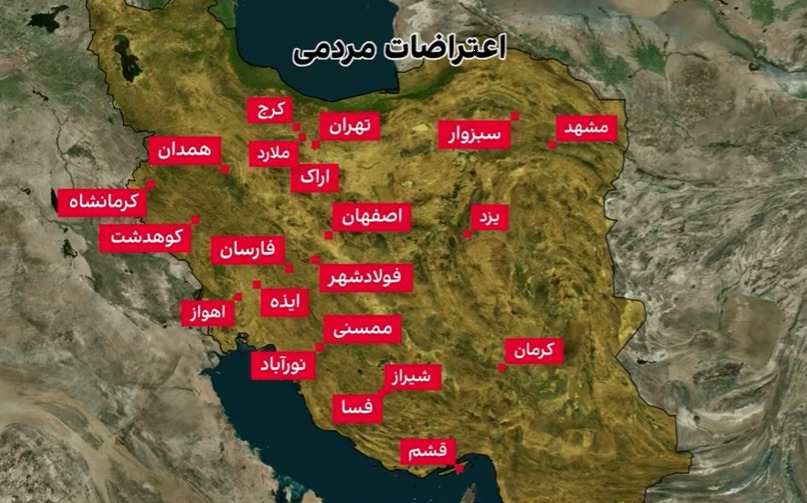
Iran Protests Spread Further as Day 4 Map Shows Wider Footprint

Reports indicate the protest movement has expanded into additional cities and neighborhoods, suggesting a broader geographic spread compared with earlier days. The map below highlights the locations where demonstrations were reported on the fourth day, underscoring the pace at which the unrest is extending beyond initial hotspots.

Report of First Protest Fatality in Fasa Contested as Officials Deny Death?

Social-media posts and some outlets reported that an 18-year-old protester, Mehdi Samavati, was killed by direct fire in Fasa (Fars province)—in some accounts described as the first reported death in this protest wave. However, the Fasa judiciary publicly denied that anyone was killed in the incident and said several people were detained, while additional local reporting also framed the fatality claim as a rumor. Independent verification of the death claim is not currently possible from publicly available evidence.

Khamenei Appoints Ahmad Vahidi as IRGC Deputy Commander-in-Chief

Iran’s Supreme Leader Ayatollah Ali Khamenei has appointed Ahmad Vahidi as the Islamic Revolutionary Guard Corps’ deputy commander-in-chief, replacing Ali Fadavi. Iranian media said the handover ceremony was held in Tehran with IRGC Commander-in-Chief Mohammad Pakpour in attendance; reports also noted Fadavi has been reassigned to lead an advisory group under the IRGC commander.

Protesters Try to Enter Fasa Governorate Building on Day 4, State Media Says

Iranian state media reported that demonstrators in Fasa (Fars province) attempted to force entry into the local governorate building on the fourth day of protests, with broadcast footage showing people trying to break open the gate. Iranian media cited local officials saying four people were detained and three security personnel were wounded during the incident.

More Iran news

Commodities

Silver Surges 161% in 2025, Smashes $80/oz as Gold Also Posts Strong Gains

Silver soared 161% in 2025, breaking above $80 per ounce for the first time, dramatically outperforming gold, which rose 66% over the year. The rally reflects a powerful mix of monetary easing expectations, dollar weakness, and strong investment and industrial demand dynamics across precious metals.

Market impact: Bullish for precious metals complex—silver’s outsized move reinforces momentum and speculative interest, while gold’s strong performance continues to support hedging demand and broader metals sentiment.

Oil Slides ~15% in 2025 as Rising Supply Overwhelms Geopolitical Disruptions

Brent and WTI crude are down around 15% this year, with Brent on track for its longest run of annual declines, pressured by rising global supply. Losses persisted despite disruptions from Ukraine’s strikes on Russian energy infrastructure and U.S. measures on Venezuelan oil, underscoring the dominance of surplus concerns. OPEC+ has paused output increases for Q1 2026 after adding roughly 2.9 mb/d to the market since April 2025.

Market impact: Bearish bias for crude—oversupply and inventory risk cap rallies, with any upside likely reliant on deeper OPEC+ restraint or a clearer demand recovery.

Copper Hits Record High on AI and Energy Demand

Copper prices on the London Metal Exchange surged to a record $12,960 this week, extending a powerful rally that has lifted prices by nearly 44% in 2025. The move has been driven by a weaker U.S. dollar, structurally rising demand linked to artificial intelligence infrastructure and renewable energy investment, and persistent mine supply disruptions that have tightened the physical market.

Market impact: Elevated copper prices reinforce the bullish case for industrial metals, support mining equities, and add to input-cost pressures for manufacturers, with potential spillovers into inflation-sensitive assets.

Cocoa Slumps After Last Year’s Boom

Cocoa emerged as the biggest loser of 2025, tumbling 48% over the year. The sharp rally in the previous year led to demand destruction for cocoa-based products while simultaneously encouraging higher supply, reversing the tightness that had driven prices higher.

In 2024, cocoa was among the strongest-performing commodities, with New York prices surging 178%, largely due to poor harvests in West Africa, the world’s key cocoa-producing region. Improved supply conditions and softer demand dynamics have since shifted the balance decisively.

Market impact: The cocoa downturn eases cost pressures for chocolate producers and food manufacturers but weighs on producer revenues and agricultural commodity sentiment.

Soybeans Recover as China Trade Flows Resume

Chicago soybean prices are set to close 2025 in positive territory, with China’s renewed imports from the U.S. erasing most of the losses seen earlier in the year when Beijing–Washington trade tensions were elevated. In contrast, wheat and corn are heading for a weaker year-end finish, as ample global supplies continue to cap prices and limit upside momentum.

Market impact: Improved U.S.–China trade dynamics support soybean demand and pricing, while surplus conditions in wheat and corn keep pressure on broader grain markets.

Palm Oil and Rubber Under Pressure in 2025

Benchmark Malaysian palm oil is down about 9% in 2025, weighed by plentiful global supplies. However, the market is expected to find some support from Indonesia’s biodiesel blending mandates, which should underpin demand. Rubber has also fallen around 9% this year, as improved weather conditions in Thailand boosted supply, while weak demand from the global automobile industry reduced tyre consumption.

Market impact: Biodiesel policies may help stabilize palm oil prices, but oversupply and weak auto-sector demand keep pressure on rubber markets.

Gold Shines as Markets Defy Traditional Risk Signals

Gold, the market’s ultimate safe haven, has surged nearly 70% in 2025, marking its strongest annual performance since the 1979 oil crisis. The rally has unfolded alongside a nearly 10% decline in the U.S. dollar and an almost 17% drop in oil prices. At the same time, high-risk junk bonds have posted strong gains, highlighting an unusual coexistence of risk aversion and aggressive yield-seeking across global markets.

Market impact: The divergence between soaring safe havens and strong demand for high-yield debt underscores distorted risk pricing and elevated uncertainty in the global macro environment.

U.S. Oil Rig Count Rises Again, Signaling Steady Upstream Activity

U.S. Baker Hughes data showed the oil rig count increased to 412 from 409, while the total rig count edged up to 546 from 545. The move points to slightly firmer upstream activity and suggests U.S. supply growth risks remain present, even if the change is modest on a week-to-week basis.

Market impact: Mildly bearish for WTI on the margin—higher rig counts can reinforce supply-side pressure and cap rallies, especially when inventories are building and demand signals are mixed.

API Reports Smaller U.S. Crude Build, Easing Near-Term Supply Pressure

API data for the week ended Dec. 26 showed U.S. crude inventories rose by 1.70 million barrels, smaller than the prior 2.40 million build. The moderation suggests slightly tighter near-term balances versus last week’s print, though markets typically wait for confirmation from the official EIA report to validate the direction.

Market impact: Mildly supportive for WTI/Brent—smaller crude builds can reduce bearish inventory pressure, with follow-through dependent on EIA confirmation and implied demand/export signals.

EIA: Crude Draw, but Massive Product Builds Signal Softer Demand Balance

EIA data for the week ended Dec. 26 showed crude inventories fell -1.934M (vs +0.500M expected, prior +0.405M), but the bullish crude draw was outweighed by outsized product builds: gasoline inventories surged +5.845M (vs +2.000M expected, prior +2.862M) and distillate stocks jumped +4.977M (vs +2.000M expected, prior +0.202M). Cushing rose +0.543M (prior +0.707M). Imports declined (-0.957M, prior +0.609M). Refining activity improved modestly with crude runs +0.071M and utilization up +0.1% (prior -0.2%), while gasoline and distillate production fell (-0.352M and -0.076M, respectively), pointing to a demand-side issue and/or timing effects rather than a pure supply surge.

Market impact: Bearish for WTI/Brent near term—despite the crude draw, the scale of gasoline and distillate builds (and a Cushing build) typically pressures prices and sentiment, keeping focus on implied demand, export flows, and whether product inventories continue to accumulate.

More Commodities news

Others

Brazil Unemployment Falls to 5.2%, Beating Expectations

Brazil’s unemployment rate declined to 5.2% in November, below 5.4% expected and improving from 5.4% previously. The stronger labor-market reading points to tighter employment conditions and resilience in domestic activity, even as markets remain attentive to inflation and fiscal signals.

Market impact: Mildly supportive for BRL on the margin—tighter labor conditions can be interpreted as growth-resilient and potentially inflation-relevant, which may temper aggressive rate-cut pricing if reinforced by wages and CPI.

Extreme Winners Highlight 2025’s Market Distortions

Global markets in 2025 delivered unusually sharp divergences. South Korean equities surged around 70%, while defaulted Venezuelan bonds generated near-100% returns, reflecting aggressive risk-taking in distressed assets. Precious metals were standout performers, with silver up roughly 165% and platinum gaining about 145%, supported by dollar weakness and safe-haven demand. In bond markets, a combination of three U.S. rate cuts, President Donald Trump’s repeated criticism of the Federal Reserve, and growing concerns over sovereign and fiscal debt reshaped yield dynamics and volatility across global fixed income.

Market impact: The scale of these moves underscores elevated risk appetite, weakening confidence in fiat currencies, and rising sensitivity to U.S. monetary and fiscal policy credibility.

Argentina Markets Whipsawed by Politics, Then Trump Boost

Argentina emerged as a standout market amid sharp, politically driven volatility. Assets sold off heavily after President Javier Milei suffered a decisive regional election defeat in September, only to surge weeks later after a reported $20 billion pledge from U.S. President Donald Trump bolstered confidence and helped Milei secure a strong victory in national midterm elections. The reversal underscored the market’s sensitivity to political backing and external funding signals.

Market impact: Argentine assets remain highly volatile, with rallies driven by political support and financing prospects rather than fundamentals, keeping risk premia elevated.

Brazil Job Creation Beats Expectations as CAGED Adds 85.9K in November

Brazil’s CAGED net formal payroll jobs increased by 85.86K in November, above the 75.0K expectation and slightly higher than the 85.15K prior reading. The print signals steady labor-market resilience and continued hiring momentum in the formal sector, supporting the view that domestic activity remains firm.

Market impact: Mildly supportive for BRL—solid employment can underpin growth sentiment and limit aggressive rate-cut pricing if it feeds into wages and services inflation.

Mexico Fiscal Deficit Widens Sharply in November

Mexico’s fiscal balance posted a -200.52B deficit in November, a significant deterioration versus the -16.75B prior reading. The sharp swing points to heavier spending and/or weaker revenues late in the year, raising near-term questions around budget execution and financing needs, even as broader EM sentiment has been supportive.

Market impact: Mildly negative for MXN and local rates at the margin—wider deficits can lift risk premia and borrowing costs unless offset by strong growth, credible consolidation plans, or favorable external conditions.

South Korea Inflation Steadies Near Target in December

South Korea’s CPI held at 2.3% y/y in December, matching expectations and easing slightly from 2.4% previously. On a monthly basis, prices rose 0.3% m/m, above the 0.2% forecast and rebounding from -0.2% prior, pointing to some short-term price firming while overall inflation remains broadly controlled.

Market impact: Neutral for KRW—stable year-on-year inflation keeps policy expectations steady, though the firmer monthly print may temper near-term easing expectations at the margin.

South Africa Money and Credit Growth Accelerate, Signaling Firmer Liquidity Impulse

South Africa’s monetary and credit indicators strengthened in November, with M3 money supply growth rising to 8.26% y/y (prior 7.52%) and private sector credit expanding 7.79% y/y (prior 7.26%). The pickup suggests a firmer liquidity and lending impulse heading into year-end, which can support activity but may also keep policymakers attentive to inflation and financial conditions.

Market impact: Neutral-to-mildly supportive for ZAR—stronger credit growth can underpin domestic demand and bank earnings, but could also temper aggressive rate-cut expectations if it feeds into inflation pressures.

Turkey Trade Deficit Widens Slightly as Exports Miss Forecasts

Turkey’s exports came in at $22.50B in November, below the $22.70B forecast and down from $23.90B previously. The trade balance posted a -$7.98B deficit, wider than both the -$7.80B expectation and the -$7.58B prior print, indicating a modest deterioration in the external trade position.

Market impact: Mildly negative for TRY—softer exports and a wider deficit can add pressure to the external financing narrative, though FX direction remains heavily influenced by inflation dynamics, CBRT policy, and broader risk sentiment.

South Africa Trade Surplus Widens Sharply in November

South Africa’s trade balance improved markedly in November, posting a ZAR 37.73B surplus, up from ZAR 15.58B previously. The stronger external position points to favorable export dynamics and/or softer imports, improving the near-term balance-of-payments backdrop.

Market impact: Supportive for ZAR—an expanding trade surplus strengthens external fundamentals and can help cushion the currency against global risk swings, with durability depending on commodity prices and import demand.

More Others news

USA

U.S. Redbook Retail Sales Growth Accelerates, Signaling Firm Consumer Demand

U.S. Redbook same-store retail sales rose 7.6% y/y, up from 7.2% previously, pointing to a pickup in consumer spending momentum. The stronger reading suggests household demand remains resilient, helping offset concerns around tighter financial conditions and supporting near-term growth expectations.

Market impact: Mildly supportive for USD and U.S. equities—firmer consumption data can underpin growth and earnings sentiment, though implications for rates depend on whether strength feeds through to broader inflation and official retail sales prints.

Fed Minutes Expose 2026 Rate Path Divisions, Adding to Market Uncertainty

Minutes from the Federal Reserve’s December meeting revealed sharp divisions among policymakers over the interest-rate trajectory in 2026. While the Fed delivered a 25 bp cut, some officials urged caution on further easing due to sticky inflation and an uncertain outlook, while others warned that keeping policy too restrictive for too long could overly slow growth. The split underscores heightened data dependence and a less predictable policy path.

Market impact: Volatility-supportive—mixed signals complicate rate-cut pricing, potentially pressuring equities at the margin while keeping rates and FX sensitive to incoming inflation and growth data.

U.S. Long-Term Yields Rekindle Term-Premium Jitters

The U.S. president’s “big, beautiful” spending plans pushed the 30-year Treasury yield above 5.1% in May, its highest level since 2007. Although yields have since eased back to around 4.8%, the renewed widening between long-term and short-term rates—known among bankers as the “term premium”—is again unsettling markets, reflecting concerns over fiscal expansion and longer-run inflation and debt risks.

Market impact: Rising term premia increase borrowing costs across the economy, pressure equity valuations, and heighten sensitivity in rates, FX, and risk assets to U.S. fiscal policy signals.

Fed Minutes Expose Deep Split on 2026 Rate Path

The release of minutes from the Federal Reserve’s December policy meeting unsettled markets, revealing sharp divisions among policymakers over the trajectory of interest rates in 2026. Although the Fed delivered a 25-basis-point rate cut, several officials signaled growing caution about further easing due to persistent inflation pressures and heightened economic uncertainty, while others warned that keeping policy overly restrictive for too long could unduly slow growth.

Market impact: Heightened policy uncertainty increases rate volatility and keeps risk assets sensitive to incoming inflation and labor-market data, with bond yields and the dollar likely to react sharply to Fed communication shifts.

U.S. House Prices Show Modest Monthly Firming, Annual Growth Softens

U.S. house prices posted a mixed October picture. The FHFA House Price Index rose 0.4% m/m (vs 0.1% expected, -0.1% prior), lifting the index to 436.7 (prior 435.2), while y/y growth eased to 1.7% (prior 1.8%). The S&P/Case-Shiller 20-city index showed 0.3% m/m (s.a.), but -0.3% m/m (n.s.a.), with y/y at 1.3%—signaling near-term resilience alongside cooling annual momentum amid higher mortgage-rate sensitivity.

Market impact: Neutral-to-slightly supportive for USD—firmer monthly prints temper downside growth concerns, but softer y/y trends limit hawkish rate repricing; housing-sensitive equities remain rate-dependent.

U.S. Regional Activity Improves, but Manufacturing Still in Contraction

U.S. regional data sent a mixed-but-slightly-better signal in December. Chicago PMI rose to 43.5 (vs 39.8 expected, 36.3 prior), improving materially but still below 50—indicating manufacturing remains in contraction. In Texas, services showed modest stabilization: Dallas Fed Services Revenues ticked up to 0.1 from -2.5, while the Texas Services Sector Outlook stayed negative at -3.3 (prior -2.3), implying sentiment remains cautious even as activity metrics firm.

Market impact: Mildly supportive for risk sentiment at the margin—better-than-expected Chicago PMI can ease recession fears, but sub-50 readings keep Treasuries supported and cap USD upside unless broader national indicators confirm a turn.

U.S. Jobless Claims Drop Sharply, Signaling Ongoing Labor-Market Resilience

U.S. initial jobless claims fell to 199K, well below 219K expected and down from 215K previously, pointing to continued strength in near-term labor conditions. Continuing claims also declined to 1,866K from 1,913K, suggesting fewer workers are staying on unemployment rolls. The 4-week average ticked up to 218.75K (from 217.00K), but remains consistent with a tight labor market.

Market impact: Mildly supportive for USD and front-end yields—softer layoff dynamics can reduce the urgency for rapid easing, though markets will still focus on inflation and broader employment reports for confirmation.

More USA news

Equities

Wall Street Extends Late-December Pullback as Major Indexes Close Lower

U.S. equities finished broadly weaker on Tuesday, extending the late-December pullback that has pressured sentiment. The S&P 500 fell 0.1%, while the Dow Jones Industrial Average and NASDAQ Composite both closed 0.2% lower, reflecting cautious positioning and profit-taking into year-end amid thinner liquidity.

Market impact: Mild risk-off signal—near-term pressure on equities, with flows sensitive to macro headlines, rate expectations, and year-end positioning dynamics.

Global Stocks Extend Strong Run in 2025

World equity markets have rebounded sharply from April’s “Liberation Day” tariffs-driven selloff, with global stocks up around 21% in 2025. The rally marks the sixth year of double-digit gains in the past seven, underscoring resilient risk appetite despite ongoing trade and policy uncertainty.

Market impact: Sustained equity strength supports global risk sentiment and keeps capital flows tilted toward stocks, though valuations and policy risks remain key watch points.

Magnificent Seven Momentum Fades as Risk Appetite Cools

The so-called “Magnificent Seven” U.S. technology giants have shown signs of losing momentum since Nvidia became the world’s first $5 trillion company in October. The cooling in tech leadership has coincided with a sharp correction in cryptocurrencies, with bitcoin losing roughly one-third of its value, signalling a broader pullback in high-beta and speculative assets after a strong run earlier in the year.

Market impact: The combination of softer mega-cap tech performance and a steep crypto sell-off points to a shift toward more selective risk-taking and heightened sensitivity to valuation and liquidity conditions.

European Defence and Banks Surge on Rearmament Shift

Shares of European weapons manufacturers have surged around 55%, driven largely by signals from U.S. President Donald Trump that Washington may scale back its military protection of Europe. The prospect of reduced U.S. security guarantees has pushed European countries and other NATO members toward accelerated rearmament, sharply boosting defence-sector valuations. The shift has also supported financials, helping European banking stocks post their strongest annual performance since 1997.

Market impact: Rising defence spending expectations are reshaping European equity leadership, lifting defence and banking stocks while reinforcing a structural shift toward higher fiscal outlays and credit demand.

AI Capex Surge Led by Hyperscalers

Goldman Sachs estimates that major AI “hyperscalers” have invested nearly $400 billion in 2025 and are set to increase spending to almost $530 billion in 2026. The scale of capital expenditure underscores the intensifying race to build AI infrastructure, spanning data centers, advanced chips, and cloud capacity, with significant spillovers into semiconductors, power demand, and industrial supply chains.

Market impact: Sustained AI-driven capex supports semiconductor, data center, and infrastructure-related equities, while reinforcing long-term demand for energy and industrial metals.

China and Hong Kong Equities Post Strong 2025 Gains

Mainland and Hong Kong equity markets are closing 2025 with solid advances, with China’s Shanghai Composite on track for an 18% annual rise and Hong Kong’s Hang Seng Index up nearly 28%. The gains reflect improved investor confidence, policy support, and stronger performance in technology and cyclical sectors.

Market impact: Strength in Chinese and Hong Kong equities supports regional risk appetite, though sustainability will depend on follow-through from policy stimulus and earnings momentum.

Asia-Pacific Equities End 2025 with Solid Gains

Equity markets across the Asia-Pacific region are set to close 2025 higher, with Australia’s S&P/ASX 200 on track for a 7% annual rise and India’s Nifty 50 heading for a 10% gain. Singapore’s Straits Times Index has outperformed regional peers, advancing roughly 23% over the year, supported by financials and resilient domestic demand.

Market impact: Broad-based equity gains reinforce Asia-Pacific risk sentiment, though market leadership divergence may shape capital flows into 2026.

More Equities news

Forex

Euro and Pound Hold Firm into Year-End, Set for Best Annual Gains in Eight Years

The euro was steady at $1.1747, while sterling traded at $1.3463 on the final trading day of the year. Both currencies are on track for their largest annual gains in eight years, reflecting sustained dollar weakness, shifting rate expectations, and improved relative outlooks in Europe and the UK.

Market impact: Supportive for EUR and GBP—strong annual performance underscores positive momentum into year-end, though near-term moves remain sensitive to Fed, ECB, and BoE policy signals.

Yuan Breaks Below 7 per Dollar for First Time in 2½ Years, Capping Strong Year

China’s yuan strengthened past the key 7-per-dollar level on Tuesday for the first time in 2½ years, defying softer central bank guidance. The move puts the currency on track for a ~4% gain this year, marking its strongest annual performance since 2020, supported by improved sentiment, policy backing, and a weaker U.S. dollar.

Market impact: Supportive for CNY and China-linked assets—currency strength can boost confidence and capital flows, though sustained gains will depend on PBoC tolerance, growth follow-through, and global risk conditions.

Aussie Dollar Near $0.67, Set for Best Year Since 2020; Kiwi Snaps Losing Streak

The Australian dollar traded around $0.66965, on track for an over 8% gain this year, marking its strongest annual performance since 2020. The New Zealand dollar eased slightly to $0.57875, but remains set for a 3.4% yearly rise, ending a four-year losing streak, supported by improved risk sentiment and a softer U.S. dollar.

Market impact: Supportive for AUD and NZD—strong annual gains reflect improved risk appetite and dollar weakness, though near-term direction remains sensitive to global growth signals and commodity price dynamics.

Dollar Slide Lifts Major FX Peers in 2025

The U.S. dollar’s broad decline has driven sizable gains across major currencies in 2025, with the euro up nearly 14% and the Swiss franc stronger by about 14.5%. China’s yuan has broken through the key 7-per-dollar level, signaling renewed confidence and policy support, while the Japanese yen—despite sharp December weakness—has returned to roughly flat on the year, highlighting divergent FX dynamics amid shifting rate expectations.

Market impact: Dollar weakness supports EUR, CHF, and CNY sentiment, while FX volatility remains elevated as markets reassess global rate paths and relative growth outlooks.

Rouble Rallies on Trump–Putin Re-Engagement Signals

Renewed engagement between U.S. President Donald Trump and Russian President Vladimir Putin has helped drive a sharp rebound in the rouble, which has surged about 40%. Despite the strong move, the currency remains heavily constrained by international sanctions and capital controls, and its performance has been eclipsed by Ghana’s cedi, which has rallied roughly 34% alongside gains in gold-related revenues.

Market impact: Rouble strength may improve near-term domestic sentiment but remains fragile under sanctions, while broader EM FX performance continues to be shaped by commodity prices and geopolitical shifts.

CEE and EM FX Post Strong Gains Despite Trade Tensions

Several Central and Eastern European and emerging-market currencies have posted strong gains, with Poland’s zloty, the Czech crown, and the Hungarian forint all up between 15% and 20%. Taiwan’s dollar surged 8% in just two days in May, while Mexico’s peso and Brazil’s currency delivered double-digit gains, largely brushing aside trade-war volatility and benefiting from resilient capital inflows and relative policy credibility.

Market impact: Broad EM FX strength reflects reduced dollar pressure and sustained carry appeal, supporting local asset performance while increasing sensitivity to shifts in global risk sentiment.

More Forex news

China

China Signals More Proactive Policy Stance for 2026 as Growth Targets Are Met

China will roll out more proactive policies in 2026 to support long-term growth, President Xi Jinping said, with the economy expected to meet Beijing’s ~5% growth target this year. Xi added that China’s economy likely expanded to around 140 trillion yuan ($20 trillion) in 2025, underscoring confidence in the near-term outlook and setting the tone for continued policy support.

Market impact: Supportive for China-linked assets—policy easing expectations can bolster equities, credit, and industrial commodities, with spillovers positive for regional growth-sensitive FX if follow-through measures are announced.

China Boosts Consumption with ¥62.5bn Allocation for Trade-In Scheme

China’s central government has earmarked 62.5 billion yuan from special treasury bond proceeds for local governments to fund the consumer goods trade-in programme next year. The move confirms Beijing’s commitment to stimulating household demand via targeted fiscal support, reinforcing a consumption-led policy tilt alongside broader pro-growth measures.

Market impact: Supportive for China equities and consumer-linked sectors—fiscal backing for consumption can lift retail demand, aid earnings visibility, and provide modest tailwinds to regional growth-sensitive assets.

China Unveils Early 2026 Investment Plans with ¥295bn in Central Funding

China’s state planner released early investment plans for 2026, highlighting two major construction projects backed by around 295 billion yuan in central government funding. The announcement reinforces Beijing’s push to front-load investment and stabilize growth, complementing recent measures aimed at boosting consumption and improving confidence.

Market impact: Supportive for China infrastructure, materials, and industrials—early capex visibility can lift project pipelines and sentiment, with positive spillovers for industrial commodities and regional growth-sensitive assets.

China Unveils Early 2026 Investment Plans

China’s state planner has released early investment plans for 2026, including two major construction projects worth about 295 billion yuan in central budget funding, as Beijing steps up efforts to support investment and economic growth. The National Development and Reform Commission said it has also approved or cleared several large infrastructure projects—such as Guangzhou’s new airport, water resource facilities, and major scientific research platforms—with total investment exceeding 400 billion yuan.

Market impact: Front-loaded public investment signals continued policy support for growth, underpinning infrastructure demand and improving near-term sentiment toward China-linked assets.

China PMIs Return to Expansion in December, Signaling Broader Activity Stabilization

China’s activity gauges improved in December, with the Composite PMI rising to 50.7 (prior 49.7) and both the official Manufacturing PMI at 50.1 (prior/exp 49.2) and Non-Manufacturing PMI at 50.2 (prior 49.5; exp 49.6) moving back above the 50 expansion threshold. The Caixin Manufacturing PMI also held in expansion at 50.1 (exp 49.8; prior 49.9), reinforcing a message of stabilization across both state and private surveys and suggesting policy support is gaining traction into year-end.

Market impact: Supportive for China equities, industrial metals, and growth-sensitive FX—PMI breadth above 50 improves sentiment, though durability will hinge on new orders, property stabilization, and follow-through in credit/consumption.

More China news

Japan

Japan 30-Year Yields Hit Records as Calm Masks Bond Market Shifts

Japan’s 30-year government bond yields have returned to record highs, underscoring structural pressures from policy normalization and fiscal concerns. The contrast is striking: global bond market volatility has fallen to a four-year low, while local-currency emerging market debt is posting its strongest annual performance since 2009—highlighting a sharp divergence between developed-market duration risk and EM carry demand.

Market impact: Elevated long-end yields in Japan add pressure to global rates, while low volatility and strong EM debt performance continue to support carry trades and risk appetite.

Asian Equities Post Exceptional Annual Gains

Japan’s equity market is closing the year with strong performance, with the Nikkei 225 on track to rise more than 26%. South Korea’s KOSPI has delivered an even more dramatic rally, surging over 75% amid strong gains in technology and export-linked stocks, underscoring Asia’s standout equity performance in 2025.

Market impact: Strong equity momentum in Japan and South Korea supports regional risk sentiment, though valuations and profit-taking risks rise after such outsized annual gains.

More Japan news

Political

Ukrainian Drone Strike Hits Russia’s Tuapse Oil Refinery, Causing Limited Damage

A Ukrainian drone attack struck the Tuapse oil refinery in Russia’s Krasnodar region, injuring two people and sparking a fire that was quickly extinguished, according to regional authorities. The strike damaged refinery equipment, one port berth, and five residential properties, underscoring the refinery’s vulnerability despite its location roughly 350 km from Ukraine’s mainland across the Sea of Azov.

Market impact: Mildly supportive for crude prices at the margin—any disruption risk to Russian refining and Black Sea infrastructure adds a geopolitical risk premium, though limited damage caps immediate supply concerns.

More Political news

Europe

Swiss Official Reserves Increase in November, Signaling FX Management Activity

Switzerland’s official reserve assets rose to CHF 852.4B in November from CHF 844.9B previously, indicating a pickup in reserve accumulation. The increase may reflect valuation effects and/or foreign-exchange operations as authorities manage currency conditions amid a strong franc backdrop.

Market impact: Neutral-to-mildly supportive for CHF—higher reserves suggest active management, but near-term FX direction remains driven by global risk sentiment and SNB policy guidance.

More Europe news

India

India Fiscal Deficit Widens in November, Raising Funding and Consolidation Focus

India’s federal fiscal deficit widened to 9,766.71B in November from 8,251.44B previously, signaling a softer near-term fiscal position. The larger gap suggests either higher spending, weaker revenues, or both, and keeps attention on borrowing requirements and the pace of fiscal consolidation heading into 2026.

Market impact: Mildly negative for INR and local bonds—wider deficits can raise term premia and supply concerns, though the impact depends on growth resilience, inflation, and the government’s credibility on consolidation targets.

More India news
Market news roundup: Wednesday, 31 December 2025