 English
 پارسی


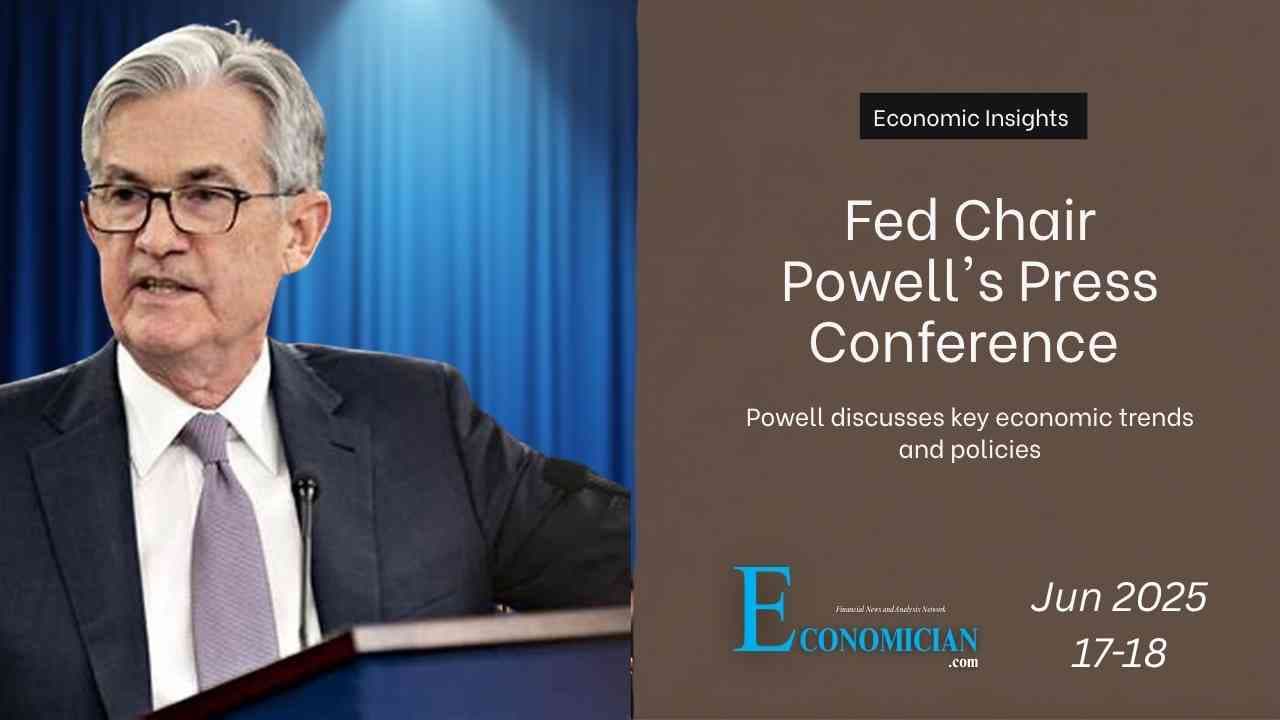
Chair Powell (Opening Statement):
In support of our goals, today the Federal Open Market Committee decided to leave our policy interest rate unchanged. We believe the current stance of monetary policy leaves us well positioned to respond in a timely way to potential economic developments. I will review economic developments briefly.
Following growth of 2.5 percent last year, GDP edged down in the first quarter due to swings in net exports caused by businesses importing ahead of potential tariffs. Private domestic final purchases grew at a solid 2.5 percent rate. Spending moderated and investment rebounded. Surveys show declining sentiment and elevated uncertainty largely related to trade concerns. It remains to be seen how these developments will affect future spending and investment. In our SEP, the median participant projects GDP growth of 1.4 percent this year and 1.6 percent next year.
Labor market conditions remain solid: payroll gains averaged 135,000 per month over the past three months; the unemployment rate is 4.2 percent and stable; wage growth has moderated but still outpaces inflation. Overall, labor conditions are balanced and not a source of inflation.
Inflation has eased from the highs of mid-2022 but remains somewhat elevated. Total PCE prices rose 2.3 percent over the 12 months ending in May; core PCE rose 2.6 percent. Near-term inflation expectations have increased, driven largely by tariff impacts, though longer-term expectations remain consistent with our 2 percent goal. Median SEP projections are 3 percent this year, 2.4 percent in 2026, and 2.1 percent in 2027.
In line with our mandate, the Committee decided to maintain the federal funds rate range at 4.25–4.50 percent and continue reducing the balance sheet. We will determine future policy based on incoming data, evolving outlook, and risk balance.
Trade, immigration, fiscal, and regulatory policy changes continue with uncertain economic impacts. Tariff effects depend on final levels and timing. Tariffs this year are likely to raise prices and weight on activity. Inflation effects may be short-lived or more persistent—contingent on tariff size, pass-through timing, and anchored expectations. We must prevent a temporary price-level shift from becoming ongoing inflation. Our dual mandate may create tension, in which case we will evaluate which goal is farther from target and over what timeframe. For now, we are well positioned to wait for more data before adjusting policy.
In the SEP, participants forecast a median federal funds rate of 3.9 percent at year-end—unchanged from March—falling to 3.6 percent in 2026 and 3.4 percent in 2027. These projections carry typical uncertainty and are not a committee plan.
We also continued our five-year review of the monetary policy framework, including assessing risks and outreach. We expect to finalize updates to our Statement on Longer‑Run Goals by late summer, with enhancements to our communication tools forthcoming.
Our mandate remains maximum employment and stable prices. We are committed to achieving these goals, understanding our actions affect all Americans. We will do everything we can. Thank you; I look forward to your questions.
Q&A Session
Q: What will trigger rate cuts given tariff-driven inflation uncertainty?
A: We need confidence inflation is sustainably declining. Tariffs cause pass-through that someone pays—likely consumers. Service inflation is easing nicely, but we need more clarity on tariff impacts before making policy changes. We’re forward-looking, and this is a reminder of that principle.
Q: What about consumer relief on mortgages and loans given rising prices over past five years?
A: Our aim is restoring price stability (2 percent) and maximum employment. Policy is modestly restrictive; we’ll reduce rates only when we’re confident inflation is trending down sustainably.
Q: Will there be economic pain in second half of the year?
A: Not necessarily. The U.S. economy remains solid—4.2 percent unemployment, real wage gains, healthy growth. We wait to reduce rates until we see tariff-related inflation. Most forecasters expect some tariff impact on prices; we’ll take time.
Q: How do staff reductions and data integrity concerns affect decisions?
A: Currently, our data is sufficient. But cuts to key surveys may increase volatility. Strong data is a public good, helping everyone understand the economy. We worry about degradation of data quality.
Q: Could the Israel‑Iran conflict and energy prices impact inflation?
A: We’re monitoring. Energy-price spikes tend to be temporary; the U.S. is less vulnerable than in the 1970s.
Q: Does AI risk large-scale job loss?
A: It's uncertain—AI may augment and support job creation as well. It has transformative potential, but we can’t yet say how labor markets will adjust.
Q: Is the labor market showing slack with slower payroll growth?
A: At 4.2 percent unemployment, the labor market is still strong. Job creation has slowed because labor supply is also reduced. There is no significant slack, but we’re watching closely.
Q: Could we ever hike again?
A: Not our base case. We review forecasts and risks; future policy depends on data.
Comments